Is It Us Or Are Babies Always In A Sleep Regression?

Name two words parents dread more than sleep regression… we’ll wait.

We often hear about them in Whatsapp groups (why is my baby suddenly not sleeping?! Send coffee!), or in books about child development, with most agreeing the first sleep regression happens around the age of four months. Then eight months. Then 18 months and finally, two years.

But for lots of parents, it can feel like every week you’re starting a new sleep regression with a baby. And even when they’re toddlers, you’ll get the odd night where they sleep through in their cot (and you’ll pop some Prosecco in the morning to celebrate), but you’ll also get lots of occasions where they’ll wake up, end up in your bed, pull your hair, grab your lips and shout “DADDY!” approximately 59 times at 3.30am.

So what are sleep regressions – and why oh why does it feel like you’re constantly in one?

It turns out most sleep specialists don’t really consider sleep regression a thing, per se – the concept is not really used in scientific or medical contexts when discussing child sleep. That said, sleep specialists do recognise that lots of parents are aware of them.

“The only ‘regression’ with any science behind it, that I recognise, is the one that happens around four months old when babies’ sleep cycles actually change and become more like adult sleep,” says Emily Houltram, founder of The Sleep Chief. “But even that one divides professionals!”

Explaining what a sleep regression is, Lauren Peacock, a sleep consultant at Little Sleep Stars, says that “it generally refers to a sudden perceived deterioration in a child’s sleep pattern, typically characterised by difficulty settling at sleep onset and/or night-waking that is happening more frequently and possibly for an increased duration”.

Sleep isn’t linear, she explains, and like all other aspects of development, it matures over time with a noticeable change occurring in the first six months. “Once this change occurs, periodic night-waking becomes a normal part of the sleep pattern,” she says.

Then, whenever children hit a significant stage of their development – so that could be crawling, walking, talking, starting childcare, becoming a sibling, getting sick or teething (the list goes on), there is potential for their sleep to be impacted. Again, and again, and again.

Peacock suggests the term ‘regression’ is actually very misleading because none of these events occur as a result of a child going backwards – “they are only ever moving forwards,” she adds.

But for parents who aren’t sleeping that well, it can definitely seem like a step backwards compared to those halcyon days of newborn sleep when you could ease them gently back into slumber with a mere cuddle and a bit of milk.

Most babies will be impacted by a disruption to sleep at some point in their first few years, but some will be less impacted than others.

“All babies experience changes to their sleep pattern and many will go through phases where sleep feels more challenging,” says Peacock. “Some little ones do have a trickier relationship with sleep than others and so whilst some children will experience more frequent and persistent sleep disruption, others will navigate through these inevitable ups and downs much more smoothly.”

If you’re very much in the camp of surviving the day on four hours’ sleep and feeling like you might never get a good night’s kip ever again, we have some good news – and some bad news.

The good news is that this won’t last forever. When they’re teenagers they’ll be sleeping for lengthy stretches to the point where you’ll probably worry they’re sleeping too much.

The bad news is that even as your baby becomes a toddler, and then a young child, there’ll probably be a few bumps in the road as far as their sleep is concerned. (Like we said: basically one big sleep regression.)

Signs your baby might be entering a so-called sleep regression include:

:: Becoming more difficult to settle at bed or nap time

:: Waking more frequently than was previously typical

:: Waking in the night and then staying awake for a long period – something sleep experts refer to as a “split-night”

:: Waking up a lot earlier.

Vera Livchak via Getty Images

There is a popular narrative around sleep regressions occurring at specific ages: so typically we hear four months, eight months, 18 months and two years as inevitable points that sleep will deteriorate, says Peacock.

“However, some families will feel that their child never experiences a ‘regression’, whereas others will feel that they are hit hard by every single one – with some extra ones thrown in for good measure,” she says.

“There are ages that it is more common to see sleep challenges crop up, and they do tend to coincide with children making big developmental shifts which are more common in the baby and toddler phases, but even older children can hit bumps with their sleep.”

If you are struggling right now, infant sleep expert Katie Palmer, from Infant Sleep Consultants, suggests maintaining good sleep hygiene to get your child into the best position possible to navigate the next few months (and years, if you’re really lucky) of sleep disruption.

“This involves a good routine in the day, well-timed naps, a good bedtime routine and allowing your child to self settle,” she says. “They will always find this easier at the onset of sleep but if you know they can do it at the start of the night, there is no reason why they can’t for the rest of the night.”

The sleep specialist adds that if a child is going through a developmental leap, they may be more unsettled when it comes to drifting off – and if you’re finding this, you can help them by keeping familiar routines and boundaries in place.

Of course, there are certain points where a parent might think: is there something drastically wrong with my child because they literally do not sleep? And if you’re feeling that, it’s definitely worth speaking to a sleep specialist about it – or at the very least your GP.

“There are ages that it is more common to see sleep challenges crop up, and they do tend to coincide with children making big developmental shifts which are more common in the baby and toddler phases, but even older children can hit bumps with their sleep.”

– Lauren Peacock

If a child’s sleep is good enough most of the time – both in terms of quality and quantity – then sometimes just knowing that more challenging periods are biologically normal, and will pass, is all the reassurance parents need, says Peacock.

“All children will, sooner or later, reach the stage of sleeping through the night,” she adds.

But if a child isn’t managing well with the sleep they are getting – for example, if they are regularly tired and irritable throughout the day, or it’s taking hours to settle them at bedtime every night – that’s indicative of a more pervasive challenge with sleep rather than a short-term ‘regression’, she explains.

“Sometimes these challenges are underpinned by physiological aspects such as digestive discomfort or daytime naps not being optimal,” she says. “Other times, the patterns of behaviour that have developed around sleep aren’t helping a child to sleep well.

“The question really is whether things are working well enough, most of the time. If the answer to that is no, there are lots of ways that children can be supported towards better sleep.”

Share Button

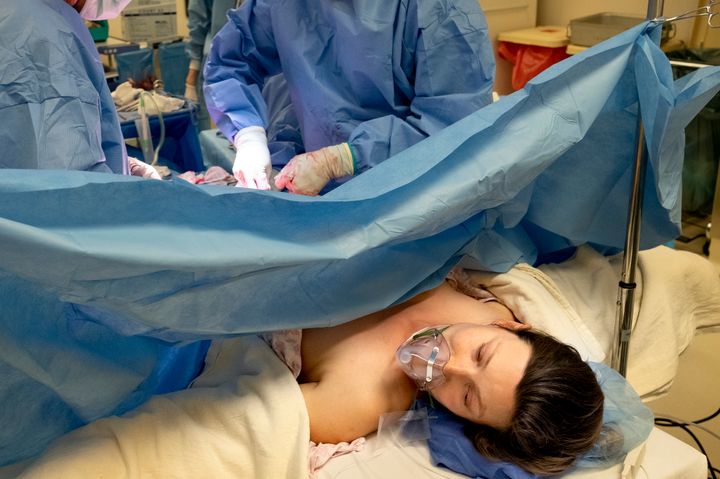
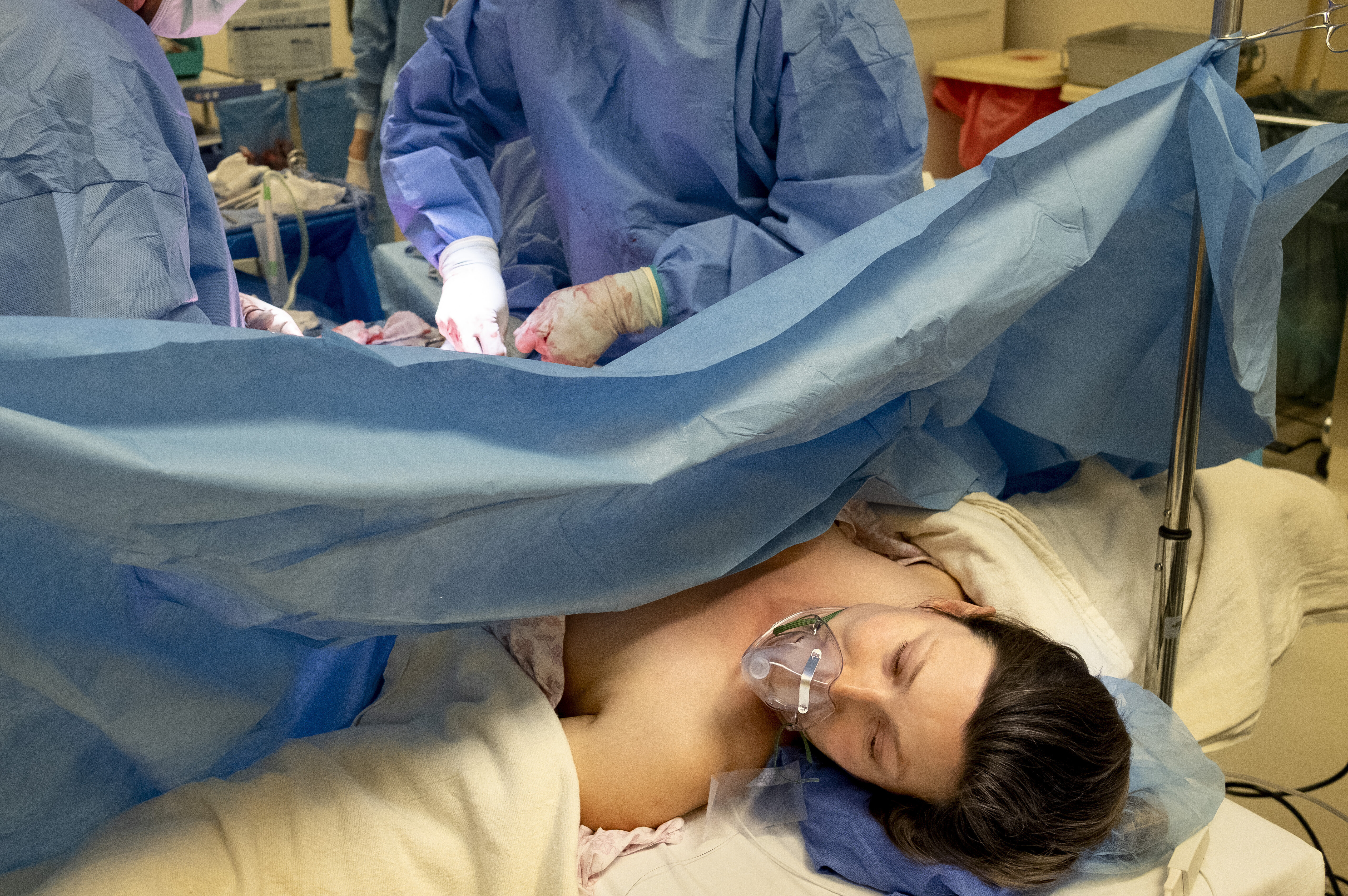
Obstetrician Explains What Actually Happens Behind The Curtain During A C-Section

We all know vaguely what happens when you have a caesarean section – you’re given anaesthetic, a cut is made in your abdomen and then, minutes later, your baby is pulled out and passed to you. It’s a magical medical moment.

But it turns out there’s actually a hell of a lot going on from the obstetrician’s perspective. More than you could possibly know.

A fascinating Tiktok video explaining the anatomy of a C-section has been viewed more than 11 million times after showing just how complicated the surgery can be.

Using various sheets of coloured fabric and paper, Tina (@mamma_nurse) explained how there are various layers that surgeons have to cut through, before moving muscle out of the way and then manoeuvring past organs – and that’s before you’ve even reached the area where the baby is.

Most information given on C-sections by healthcare providers is lacking in details. Probably for good reason.

But if you’re the type of person who likes to be super informed ahead of birth – or you’re just really curious as to what the surgery involves – we asked Meg Wilson, an obstetrics and gynaecology consultant at London Gynaecology and the Whittington Hospital, to walk us through the process.

(Just a head’s up, there are some quite graphic images below.)

What happens during a C-section

First up, you’ll be given some pain relief – either a regional or general anaesthetic – and a catheter is fitted. Your abdomen will be cleaned and a drape will be put up so you won’t be able to see the surgery unfold.

An obstetrician will make a 10 to 15cm cut along the skin at the bottom of your abdomen, just at the top of your pubic hairline.

The first layer they cut through is the skin, and that cut also goes through a layer of fat. “Then you come down on to the rectus sheath – a white fibrous layer – that is covering the muscles of the abdomen,” says Wilson.

They’ll make a cut in that as well and all these cuts will be done in the same direction: horizontally.

Byba Sepit via Getty Images

Next up, they come to the rectus muscles “which people know as their six pack muscles,” says the obstetrician.

These two muscles run as a strip down the abdomen and where they join together is something called the linea alba. It’s a weak area which surgeons can basically “poke through” to open it up, says the obstetrician.

“That takes you into your abdomen, by making that little hole, and then you’re into what we call the peritoneal cavity which is the proper wet inside of your tummy.”

Surgeons will make the hole a bit bigger by basically moving the two muscles apart.

“You’re pulling them out to the side to make a hole there,” says Wilson. “I think it’s really important that people know you’re not actually cutting muscles, you’re just shifting them apart.”

When in the peritoneal cavity, surgeons will get a nice view of the surface of your bladder and then the main event: the womb itself.

Now comes the really interesting bit. They have to actually move organs to get to where they need to be – so yes, they shift your bladder out of the way.

“You lift up a little bit of something called the peritoneum,” she explains, which is “like a sheet that runs over the womb and the bladder.” Surgeons will make a small hole in that “sheet” and this allows them to see where the bladder is attached to the womb.

“It allows you to push the bladder out of the way and push it downwards a little bit,” Wilson says, noting it only gets moved about 1-2cm.

In the operating room, they have a specially designed surgical instrument that goes in to protect the bladder and hold it down and out of the way.

The surgeon cuts into the womb (again, a horizontal cut in the same direction as the skin cut). The womb is a muscle so they expect to have some bleeding at this point as muscles have a strong blood supply.

In cases where a parent has placenta previa – where the placenta completely or partially covers the opening of the uterus – it might be a bit more complicated, she adds, and they might have to cut higher up in the womb or even through the placenta, which could result in more blood loss.

“Then you’re going to hit the membranes around the baby – the amniotic sac – and you see that bulging out when you reach it,” Wilson continues. “You keep going and make a little hole in that with the scalpel and usually lots of amniotic fluid all comes spilling out in a big gush.”

At this point it’s all about getting the baby out. In a straightforward pregnancy the baby will be in a head down position, so they’ll get a nice view of that.

The retrieval process involves a bit of teamwork. “You put your hand in and slip your hand around the baby’s head – like a cupping action – and your assistant will put lots of pressure on the top of the woman’s tummy, pushing right at the top of womb where the baby’s feet are, and you’ve got your hands acting as a little slide for the baby to come out,” she says.

The head pops out, then comes the neck, and then there’ll be a bit more gentle pulling to deliver the shoulders one at a time, and then the body “slips out relatively easily after”.

Doctors work to remove a baby from a woman's uterus during a c section.

Michael Hanson via Getty Images

Doctors work to remove a baby from a woman’s uterus during a c section.

At this stage the curtain is often lowered and the parent(s) can see their baby and hold them. They tend to let the umbilical cord pulsate for at least a minute to give the baby beneficial nutrients and then they’ll clamp the cord, cut it and hand the baby to the midwife who will wrap them up and dry them off.

“Then it’s a case of removing the placenta, which is still stuck on to the lining of the inside of the womb,” says Wilson. “We pull a little bit on the cord and the placenta will be detaching.”

After the placenta has been removed, surgeons will then clean out the inside of the womb which Wilson says is “a very simple action” of rubbing a swab around the insides of the cavity “to make sure there’s no little bits of membrane or last little threads of placenta that are still there”.

The mum will still be bleeding at this point so time is of the essence to get the womb stitched up again. Once that’s done, surgeons will take a moment to do a check and assess that there’s no additional bleeding anywhere.

bymuratdeniz via Getty Images

At this stage, she says, they clean away any spilt fluid and blood that may have collected in the sides of the pelvis using a swab. They also check the womb is contracted and that the ovaries and fallopian tubes look normal.

“It’s just an opportunity to do a health check because you’ve got the tummy open and it’s a relatively straightforward thing to do,” she adds.

The instrument protecting the bladder is then taken out and “then you allow everything to fall back into place,” adds Wilson. “The bladder will go back to where it was originally placed and those two rectus muscles that you held open to get into the cavity of the tummy will fall back into place as well.

“You don’t routinely close the rectus muscles … they will come back together naturally and reform their meeting point.”

The next layer that’s surgically closed is the rectus sheath, which is the layer just beneath the fat. “We sometimes put a stitch in the fat layer but for most women we then just close the skin with another running stitch,” she adds.

“By routine we remove all the drapes and clean any collected blood that’s in the vagina,” she adds, “and make sure there’s no clots of blood or anything.”

At this point they might put in a painkiller suppository and a dressing is placed over the c-section wound. The whole process is complete in less than an hour.

Share Button