Just 3 In 10 Brits Still Think It Was Right To Leave The EU In Record Low

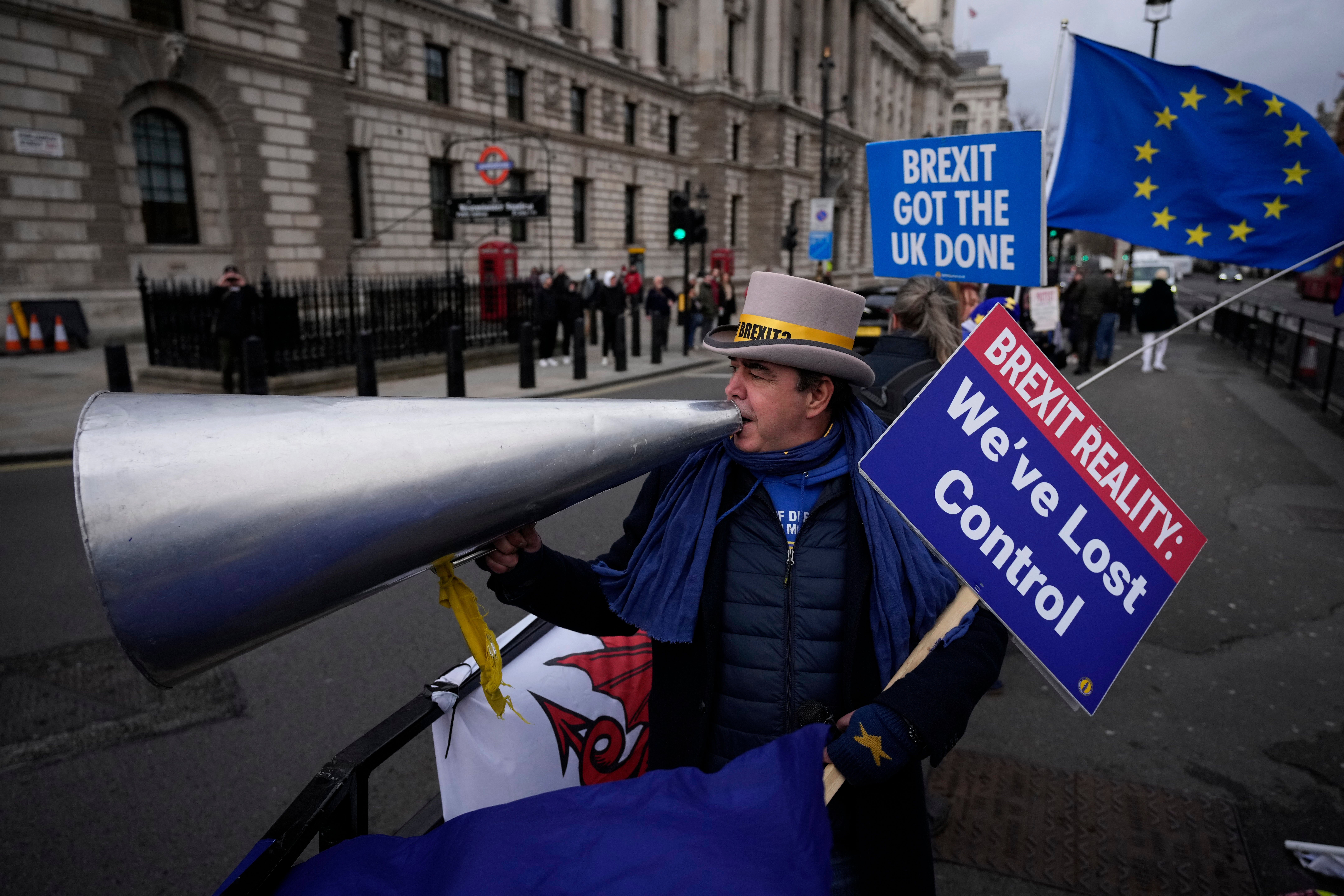
Only three in 10 Brits still say it was right for the UK to leave the European Union, according to a new poll.

That’s the lowest support for Brexit recorded since 2016, when the EU referendum happened and the country narrowly voted (52% to 48%) to leave.

The YouGov findings were released on the eve of the fifth anniversary of the UK formally quitting the bloc.

The data also found that 55% of Brits think it was wrong for the UK to choose Brexit nine years ago.

And that number only increases when looking at the results from the younger generation.

Among those who were not able to vote in 2016, who are now aged 18-24, 75% say Brexit was a mistake compared to just 10% who say it was a good idea.

Even one in six Leave voters (18%) now say it was wrong for the UK to leave the EU, although 66% of Leavers still think it was the right move.

Meanwhile, 88% of Remainers stand by their vote to stay in, compared to 7% who now think it was right to leave.

Overall, a total of 62% of Brits think Brexit has been a failure so far, with just 11% saying it was a success.

Dr Mike Galsworthy, chair of the anti-Brexit think tank the European Movement UK, said the survey shows voters are “becoming increasingly fed up with the negative impacts that leaving the EU is having on our country”.

He said being outside the European single market costs the UK economy £115 billion a year, and the public finances more than £40 billion a year.

He added: “We have seen soaring import costs, increased workforce shortages and reams of new red tape.

“No wonder exports to the EU by our small businesses are down by 30%, and 20,000 small firms across UK have stopped all exports to the EU.”

He also pointed out that research from LSE shows a £27bn decline in exports sent to the EU – noting that sum exceeds the £22bn black hole Labour say the Tories left behind in the public finances.

He added: “Politicians must now face the facts – five years on, Brexit is still an ongoing accident, and its damage is far from done.”

It comes as Labour faces growing pressure to move closer to the bloc and set up a youth mobility scheme which would enable young people from the EU to live in the UK and vice versa.

However, prime minister Keir Starmer has already ruled out setting up such a programme.

In August, he said he was “absolutely clear” that the government wanted to reset relations with Europe.

But he added: “We do not have plans for a youth mobility scheme but do have plans for closer relationship between us and the EU.”

He continued: “That does not involve reversing Brexit or re-entering the single market or the customs union.

“But it does mean a closer relationship on a number of fronts, including the economy, including defence, including exchanges.”

Share Button

‘Life-changing’ tablet for dust mite allergies

The National Institute for Healthcare and Care Excellence backs a tablet for dust mite allergies.

Share Button

Algorithm study 90% accurate predicting bowel cancer

The method could be used to develop a blood test to identify inflammatory-bowel-disease patients most at risk.

Share Button

Bad hair bears! Greasy hair gives polar bears fur with anti-icing properties

An international team of scientists has discovered the anti-icing secret of polar bear fur — something that allows one of the planet’s most iconic animals to survive and thrive in one of its most punishing climates. That secret? Greasy hair.

After some polar sleuthing, which involved scrutiny of hair collected from six polar bears in the wild, the scientists homed in on the hair “sebum” (or grease) as the all-important protectant. This sebum, which is made up of cholesterol, diacylglycerols, and fatty acids, makes it very hard for ice to attach to their fur.

While this finding sheds fascinating new light on our understanding of polar bear — and even Inuit — ecology, it may also have a suite of unrelated applications, with a similar concoction of artificially made sebum promising to be useful as an anti-ice surface coating, or in next-gen ski skins used by skiers and snowboarders.

Julian Carolan, PhD Candidate from Trinity College Dublin’s School of Chemistry and the AMBER Research Ireland Centre, is the first author of the journal article, which has been published today as the cover story in leading international journal Science Advances.

He said: “We measured ice adhesion strength, which is a useful measure of how well ice sticks to fur; hydrophobicity, which dictates whether water can be shed before it freezes; and freezing delay time, which simply shows how long it takes for a drop of water to freeze at certain temperatures on a given surface. We then compared the performance of the polar bear hair with that of human hair and two types of specialist human-made ‘ski skins’.

“The sebum quickly jumped out as being the key component giving this anti-icing effect as we discovered the adhesion strength was greatly impacted when the hair was washed. Unwashed, greasy hair made it much harder for ice to stick. In contrast when the polar bear hair was washed and the grease largely removed it performed similarly to human hair, to which ice sticks easily whether it is washed or greasy.”

That finding led the team to perform a detailed chemical analysis of polar bear sebum. As well as identifying the key components (cholesterol, diacylglycerols, and fatty acids), they were surprised to find “squalene” was absent. This fatty metabolite is present in human hair, and in the hair of other aquatic animals, like sea otters, which suggests its absence in polar bear hair is very important from an anti-icing perspective.

Dr Richard Hobbs, Assistant Professor and Royal Society-Science Foundation Ireland University Research Fellow in Trinity’s School of Chemistry and the AMBER Research Ireland Centre, is a senior author of the journal article. He added: “Animals living in polar habitats have emerged as a source of inspiration for the development of new anti-icing materials.

“For example, Anne Kietzig’s group at McGill recently found that the hierarchical structure of Gentoo penguin feathers afforded them anti-icing properties that relied on the feather structure rather than the preen oil coating. Our work shows that polar bear fur provides an alternative strategy to produce an anti-icing surface based on the characteristic blend of lipids present in their fur sebum or hair grease.

“This work not only represents the first study of the composition of polar bear fur sebum, but it also resolves the question of why polar bears don’t suffer from ice accumulation. Despite having thick layers of insulating blubber and fur, and spending extensive periods in water at sub-zero temperatures, it seems that the fur grease provides a natural route for polar bears to easily shed ice when it forms due to the low ice adhesion on their fur.

“We expect that these natural lipid coatings produced by the bear will help us to develop new more sustainable anti-icing coatings that may replace problematic ‘forever chemicals’ like PFAS that have been used as anti-icing coatings.”

In addition to the structural explanations, these interesting discoveries also help us better understand hunting behaviours — both of polar bears and of native Inuit populations.

Prof. Bodil Holst, University of Bergen, is a senior author of the journal article. She added: “One of the polar bears’ main hunting strategies is ‘still hunting’, where they lay motionless beside a breathing hole on sea ice waiting for seals to surface. Still hunting frequently develops into an ‘aquatic stalk’ with the polar bear using its hind paws to slide into the water to pursue its prey, and the lower the ice adhesion, the less noise generated and the faster and quieter the slide.

“Our findings also help us understand the subtlety of the steps taken by Inuit people to optimise hunting strategies to mimic the polar bear method of still hunting. Inuit hunting stools are sometimes shod with polar bear fur on the feet to avoid noise when moving on the ice, while people also sometimes wear ‘polar bear trousers’, ensuring the entire contact area with the ice is covered in low ice-adhesion polar bear fur for optimal noise reduction.”

Notably, the traditional Inuit preparation method protects the sebum on the fur by ensuring the hair-covered side of the skin is not washed. This is unlike, for example, a fox skin, which would traditionally be cleaned by rubbing the hair side with soapstone or dry clay.

Share Button

The benefits of speaking multiple languages

Encouraging bilingualism at home can have many cognitive benefits, which may be particularly helpful to kids with autism spectrum disorder (ASD), new research from the University of Miami College of Arts and Sciences indicates.

A team of researchers led by Celia Romero, a graduate student in clinical psychology, along with associate professor Lynn Perry, professor Michael Alessandri, and former University professor Lucina Uddin, explored the role of bilingualism in 112 children, including typically developing children and children with autism, between the ages of 7 to 12 years old. Overall, they found that children who spoke two or more languages often had stronger executive functioning skills. This means they are able to control impulses and to switch between different tasks more easily than children who only spoke one language.

“We discovered that multilingualism is associated with improvements in executive function, which in turn is associated with improvements in autism symptoms,” Perry said. “There were hints of this in the literature before, but it was exciting to see how far reaching those differences were in this research.”

Published in the journal Autism Research, the results are significant because executive functioning skills are a key challenge for children on the spectrum but are important for all kids to thrive in school and later in the workplace. Yet, the team found the benefits of speaking more than one language were not limited to children with autism.

Key features of autism include social communication difficulties and restrictive and repetitive behaviors, as well as difficulty with executive function skills. These are mental processes that help us plan, focus, remember instructions, and manage multiple tasks effectively. While executive function skills develop and improve across the lifespan, individuals with autism often struggle with executive functioning, impacting their ability to manage daily tasks and adapt to new situations.

The study also looked at the impact of multilingualism on core symptoms of autism, including perspective taking, restricted and repetitive behaviors, and social communication.

“We also found that multilingual children have enhanced perspective taking skills, or the ability to understand someone else’s thoughts or point of view,” Romero added.

An idea called joint activation from the field of neuroscience can help explain the results. Prior research suggests that the bilingual brain has two languages constantly active and competing. As a result, the daily experience of shifting between these languages is associated with enhanced executive control. This concept is also known as the “bilingual advantage” and is a topic of much debate.

“If you have to juggle two languages, you have to suppress one in order to use the other. That’s the idea, that inhibition — or the ability to stop yourself from doing something — might be bolstered by knowing two languages,” said Uddin, now a professor at the University of California, Los Angeles, and director of the Brain Connectivity and Cognition Laboratory.

Romero realized she wanted to explore this topic while working in Uddin’s neuroscience lab on campus that was doing brain imaging research on children with autism. She noticed that some bilingual families did not speak to their child in their native language because they thought it may be too challenging and harmful for their child to learn more than one language.

“I started investigating this to let families know there’s no detriment for their child to learn another language, whether or not they have a neurodevelopmental disorder,” she said. “We know this through research, but often it takes time to translate that to families, so I hope this study helps address that.”

In his work as executive director of the University’s Center for Autism and Related Disabilities, Alessandri said this question often comes up with parents.

“It is wonderful to have sound research supporting our general recommendation to not restrict language exposures to children in multilingual homes,” Alessandri said. “This will surely bring a sense of relief to many of our families living with loved ones with autism.”

Romero and Perry are now doing further research with preschool children to see if bilingualism also has an impact on kids’ peer interactions, which are crucial for children’s social and cognitive development. And at UCLA, Uddin is currently conducting a large follow-up study to further investigate the impact of multilingualism on brain and cognitive development in children with autism.

Share Button

A less ‘clumpy,’ more complex universe?

Across cosmic history, powerful forces have acted on matter, reshaping the universe into an increasingly complex web of structures.

Now, new research led by Joshua Kim and Mathew Madhavacheril at the University of Pennsylvania and their collaborators at Lawrence Berkeley National Laboratory suggests our universe has become “messier and more complicated” over the roughly 13.8 billion years it’s been around, or rather, the distribution of matter over the years is less “clumpy” than expected.

“Our work cross-correlated two types of datasets from complementary, but very distinct, surveys,” says Madhavacheril, “and what we found was that for the most part, the story of structure formation is remarkably consistent with the predictions from Einstein’s gravity. We did see a hint for a small discrepancy in the amount of expected clumpiness in recent epochs, around four billion years ago, which could be interesting to pursue.”

The data, published in the Journal of Cosmology and Astroparticle Physics and the preprint server arXiv, comes from the Atacama Cosmology Telescope’s (ACT) final data release (DR6) and the Dark Energy Spectroscopic Instrument’s (DESI) Year 1. Madhavacheril says that pairing this data allowed the team to layer cosmic time in a way that resembles stacking transparencies of ancient cosmic photographs over recent ones, giving a multidimensional perspective of the cosmos.

“ACT, covering approximately 23% of the sky, paints a picture of the universe’s infancy by using a distant, faint light that’s been travelling since the Big Bang,” says first author of the paper Joshua Kim, a graduate researcher in the Madhavacheril Group. “Formally, this light is called the Cosmic Microwave Background (CMB), but we sometimes just call it the universe’s baby picture because it’s a snapshot of when it was around 380,000 years old.”

The path of this ancient light throughout evolutionary time, or as the universe has aged, has not been a straight one, Kim explains. Gravitational forces from large, dense, heavy structures like galaxy clusters in the cosmos have been warping the CMB, sort of like how an image is distorted as it travels through a pair of spectacles. This “gravitational lensing effect,” which was first predicted by Einstein more than 100 years ago, is how cosmologists make inferences about its properties like matter distribution and age.

DESI’s data, on the other hand, provides a more recent record of the cosmos. Based in the Kitt Peak National Observatory in Arizona and operated by the Lawrence Berkeley National Laboratory, DESI is mapping the universe’s three-dimensional structure by studying the distribution of millions of galaxies, particularly luminous red galaxies (LRGs). These galaxies act as cosmic landmarks, making it possible for scientists to trace how matter has spread out over billions of years.

“The LRGs from DESI are like a more recent picture of the universe, showing us how galaxies are distributed at varying distances,” Kim says, likening the data to the universe’s high school yearbook photo. “It’s a powerful way to see how structures have evolved from the CMB map to where galaxies stand today.

By combining the lensing maps from ACT’s CMB data with DESI’s LRGs, the team created an unprecedented overlap between ancient and recent cosmic history, enabling them to compare early- and late-universe measurements directly. “This process is like a cosmic CT scan,” says Madhavacheril, “where we can look through different slices of cosmic history and track how matter clumped together at different epochs. It gives us a direct look into how the gravitational influence of matter changed over billions of years.”

In doing so they noticed a small discrepancy: the clumpiness, or density fluctuations, expected at later epochs didn’t quite match predictions. Sigma 8 (σ8), a metric that measures the amplitude of matter density fluctuations, is a key factor, Kim says, and lower values of σ8 indicate less clumping than expected, which could mean that cosmic structures haven’t evolved according to the predictions from early-universe models and suggest that the universe’s structural growth may have slowed in ways current models don’t fully explain.

This slight disagreement with expectations, he explains, “isn’t strong enough to suggest new physics conclusively — it’s still possible that this deviation is purely by chance.”

If indeed the deviation is not by chance, some unaccounted-for physics could be at play, moderating how structures form and evolve over cosmic time. One hypothesis is that dark energy — the mysterious force thought to drive the universe’s accelerating expansion — could be influencing cosmic structure formation more than previously understood.

Moving forward, the team will work with more powerful telescopes, like the upcoming Simons Observatory, which will refine these measurements with higher precision, enabling a clearer view of cosmic structures.

Share Button

Scientists trial patch to mend failing hearts

The technology could give patients with advanced heart failure new hope, based on early trial results.

Share Button

Cardiff uni job cuts ‘threaten supply of nurses’

Some lecturers at Cardiff University have begun getting letters advising them their post is at risk.

Share Button

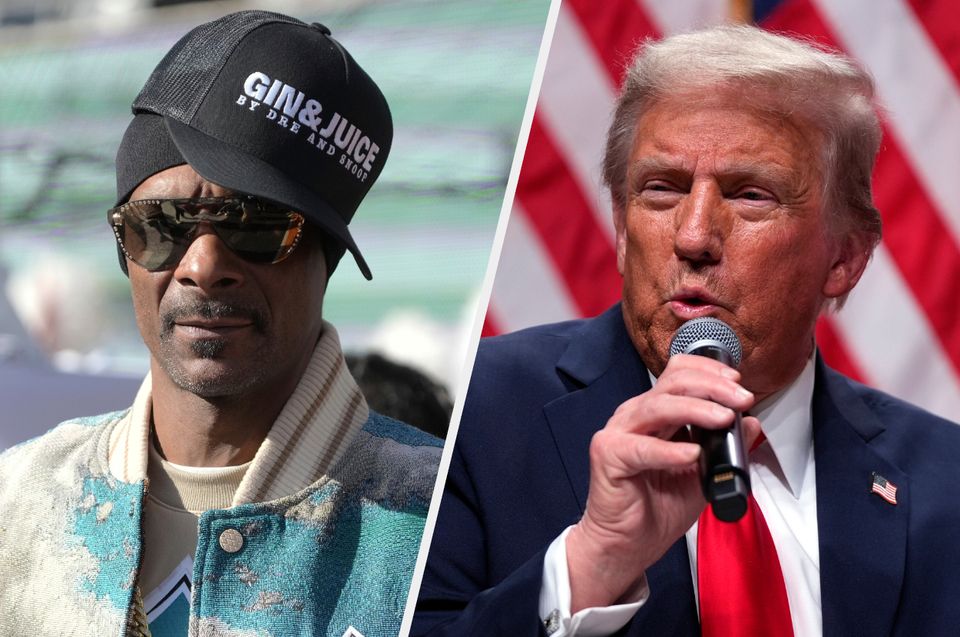
Snoop Dogg Responds To Critics After Backlash Over Performance At Pro-Trump Event

Snoop Dogg has responded to the backlash surrounding his performance at an event celebrating the inauguration of Donald Trump.

While the Grammy-nominated rapper did not perform at the inauguration itself, he was part of the line-up for the Crypto Ball, held in Washington D.C. two days before Trump was sworn in as president for the second time.

Since then, Snoop has faced a severe backlash, and seen his Instagram followers plummet by half a million in the space of just over a week.

Addressing the controversy in an Instagram video, Snoop said: “Y’all can’t hate enough, I love too much.

“Get your life right, stop worrying about mine. I’m cool. I’m together.”

Insisting he’s “still a Black man”, Snoop concluded: “All out, till you ball out. or till you fall out.”

See more of Snoop’s comments in the Entertainment Tonight report below:

<div class="js-react-hydrator" data-component-name="YouTube" data-component-id="6242" data-component-props="{"itemType":"video","index":10,"contentIndexByType":1,"contentListType":"embed","code":"

","type":"video","meta":{"author":"Entertainment Tonight","author_url":"https://www.youtube.com/channel/UCdtXPiqI2cLorKaPrfpKc4g","cache_age":86400,"description":"Snoop Dogg addresses his ongoing backlash on Instagram, a week after performing at President Donald Trump’s inauguration. While the rapper previously voiced criticism of the new Head of State during his first term, Snoop — along with Nelly, Jason Aldean and more music stars – was part of the presidential celebration in Washington D.C. last week. Snoop tells fans, ‘We gotta learn how to pick each other up, rather than put each other down.’","options":{"_cc_load_policy":{"label":"Closed captions","value":false},"_end":{"label":"End on","placeholder":"ex.: 11, 1m10s","value":""},"_start":{"label":"Start from","placeholder":"ex.: 11, 1m10s","value":""},"click_to_play":{"label":"Hold load & play until clicked","value":false}},"provider_name":"YouTube","thumbnail_height":720,"thumbnail_url":"https://i.ytimg.com/vi/9BdjP-n8rIs/maxresdefault.jpg","thumbnail_width":1280,"title":"Snoop Dogg Addresses Trump Inauguration Performance BACKLASH","type":"video","url":"https://www.youtube.com/watch?v=9BdjP-n8rIs","version":"1.0"},"flags":[],"enhancements":{},"fullBleed":false,"options":{"theme":"news","device":"desktop","editionInfo":{"id":"uk","name":"U.K.","link":"https://www.huffingtonpost.co.uk","locale":"en_GB"},"originalEdition":"uk","isMapi":false,"isAmp":false,"isAdsFree":false,"isVideoEntry":false,"isEntry":true,"isMt":false,"entryId":"679a06f5e4b0535cbc5fab01","entryPermalink":"https://www.huffingtonpost.co.uk/entry/snoop-dogg-addresses-backlash-donald-trumo-event-inauguration_uk_679a06f5e4b0535cbc5fab01","entryTagsList":"donald-trump,snoop-dogg","sectionSlug":"entertainment","deptSlug":null,"sectionRedirectUrl":null,"subcategories":"politics","isWide":false,"headerOverride":null,"noVideoAds":false,"disableFloat":false,"isNative":false,"commercialVideo":{"provider":"custom","site_and_category":"uk.entertainment","package":null},"isHighline":false,"vidibleConfigValues":{"cid":"60afc140cf94592c45d7390c","disabledWithMapiEntries":false,"overrides":{"all":"60b8e525cdd90620331baaf4"},"whitelisted":["56c5f12ee4b03a39c93c9439","56c6056ee4b01f2b7e1b5f35","59bfee7f9e451049f87f550b","5acccbaac269d609ef44c529","570278d2e4b070ff77b98217","57027b4be4b070ff77b98d5c","56fe95c4e4b0041c4242016b","570279cfe4b06d08e3629954","5ba9e8821c2e65639162ccf1","5bcd9904821576674bc55ced","5d076ca127f25f504327c72e","5b35266b158f855373e28256","5ebac2e8abddfb04f877dff2","60b8e525cdd90620331baaf4","60b64354b171b7444beaff4d","60d0d8e09340d7032ad0fb1a","60d0d90f9340d7032ad0fbeb","60d0d9949340d7032ad0fed3","60d0d9f99340d7032ad10113","60d0daa69340d7032ad104cf","60d0de02b627221e9d819408"],"playlists":{"default":"57bc306888d2ff1a7f6b5579","news":"56c6dbcee4b04edee8beb49c","politics":"56c6dbcee4b04edee8beb49c","entertainment":"56c6e7f2e4b0983aa64c60fc","tech":"56c6f70ae4b043c5bdcaebf9","parents":"56cc65c2e4b0239099455b42","lifestyle":"56cc66a9e4b01f81ef94e98c"},"playerUpdates":{"56c6056ee4b01f2b7e1b5f35":"60b8e525cdd90620331baaf4","56c5f12ee4b03a39c93c9439":"60d0d8e09340d7032ad0fb1a","59bfee7f9e451049f87f550b":"60d0d90f9340d7032ad0fbeb","5acccbaac269d609ef44c529":"60d0d9949340d7032ad0fed3","5bcd9904821576674bc55ced":"60d0d9f99340d7032ad10113","5d076ca127f25f504327c72e":"60d0daa69340d7032ad104cf","5ebac2e8abddfb04f877dff2":"60d0de02b627221e9d819408"}},"connatixConfigValues":{"defaultPlayer":"8b034f64-513c-4987-b16f-42d6008f7feb","clickToPlayPlayer":"5a777b9b-81fe-41a6-8302-59e9953ee8a2","videoPagePlayer":"19654b65-409c-4b38-90db-80cbdea02cf4"},"topConnatixThumnbailSrc":"data:image/png;base64,iVBORw0KGgoAAAANSUhEUgAAAAEAAAABCAQAAAC1HAwCAAAAC0lEQVR42mNkYAAAAAYAAjCB0C8AAAAASUVORK5CYII=","customAmpComponents":[],"ampAssetsUrl":"https://amp.assets.huffpost.com","videoTraits":null,"positionInUnitCounts":{"buzz_head":{"count":0},"buzz_body":{"count":0},"buzz_bottom":{"count":0}},"positionInSubUnitCounts":{"article_body":{"count":10},"blog_summary":{"count":0},"before_you_go_content":{"count":0}},"connatixCountsHelper":{"count":0},"buzzfeedTracking":{"context_page_id":"679a06f5e4b0535cbc5fab01","context_page_type":"buzz","destination":"huffpost","mode":"desktop","page_edition":"en-uk"},"tags":[{"name":"Donald Trump","slug":"donald-trump","links":{"relativeLink":"news/donald-trump","permalink":"https://www.huffingtonpost.co.uk/news/donald-trump","mobileWebLink":"https://www.huffingtonpost.co.uk/news/donald-trump"},"relegenceId":2789214,"section":{"title":"News","slug":"news"},"topic":{"title":"Donald Trump","slug":"donald-trump","overridesSectionLabel":false},"url":"https://www.huffingtonpost.co.uk/news/donald-trump/"},{"name":"Snoop Dogg","slug":"snoop-dogg","links":{"relativeLink":"news/snoop-dogg","permalink":"https://www.huffingtonpost.co.uk/news/snoop-dogg","mobileWebLink":"https://www.huffingtonpost.co.uk/news/snoop-dogg"},"relegenceId":1123921,"url":"https://www.huffingtonpost.co.uk/news/snoop-dogg/"}],"isLiveblogLive":null,"isLiveblog":false,"cetUnit":"buzz_body","bodyAds":["

\r\n\r\n HPGam.cmd.push(function(){\r\n\t\treturn HPGam.render(\"inline-1\", \"entry_paragraph_1\", false, false);\r\n });\r\n\r\n","

\r\n\r\n HPGam.cmd.push(function(){\r\n\t\treturn HPGam.render(\"inline\", \"entry_paragraph_2\", false, false);\r\n });\r\n\r\n","

\r\n\r\n HPGam.cmd.push(function(){\r\n\t\treturn HPGam.render(\"inline-2\", \"entry_paragraph_3\", false, false);\r\n });\r\n\r\n","

\r\n\r\n HPGam.cmd.push(function(){\r\n\t\treturn HPGam.render(\"inline-infinite\", \"repeating_dynamic_display\", false, false);\r\n });\r\n\r\n"],"adCount":0},"isCollectionEmbed":false}”>

In the early years of Trump’s political career, Snoop had been one of his most vocal critics, and branded any Black artist willing to perform at the 2017 inauguration an “uncle Tom” in an Instagram post.

Later that year, Snoop pointed a toy gun at a clown-like Trump lookalike in the music video for his song Lavender, prompting the president to suggest on the website then known as Twitter that the (in his words) “failing” rapper should face “jail time”.

However, last year, Snoop insisted he had “nothing but love and respect for Donald Trump”, after he pardoned Michael Harris, the co-founder of Death Row Records, who was in prison on drug offences, before leaving office three years prior.

Other artists to have faced criticism for performing at pro-Trump events in the wake of his victory in last year’s presidential election include American Idol winner Carrie Underwood, country star Billy Ray Cyrus and rapper Nelly.

Share Button