‘What is that?’ Scientists explain white patch that appears near northern lights

A whitish, grey patch that sometimes appears in the night sky alongside the northern lights has been explained for the first time by researchers at the University of Calgary.

The article, which was published on Dec. 30 in the journal Nature Communications, explores a “structured continuum emission” that’s associated with aurora borealis.

“You’d see this dynamic green aurora, you’d see some of the red aurora in the background and, all of a sudden, you’d see this structured — almost like a patch — grey-toned or white toned-emission connected to the aurora,” says Dr. Emma Spanswick, PhD, lead author on the paper and an associate professor with the Department of Physics and Astronomy in the Faculty of Science.

“So, the first response of any scientist is, ‘Well, what is that?'”

Spanswick says the white patch has been referenced in scientific papers before, but it has never been explained.

Her team’s paper concludes it’s “most certainly a heat source” and says it suggests that the aurora borealis are more complex than previously thought.

Spanswick says the discovery was made possible because an advancement in camera technology allows both amateur photographers and scientists to see true colour images of the night sky.

“Everyone has noticed the advancement in digital photography. Your cellphone can now take pictures of the aurora,” she says. “That has flowed to the commercial sensor market now.

“Those types of sensors can now be found in more commercial, more robust sensors that we would use in science.”

The team’s research came after there was a renewed interest in continuum emission with the discovery and observations of the long, glowing ribbon of purple light known as STEVE — or Strong Thermal Emission Velocity Enhancement.

“There are similarities between what we’re seeing now and STEVE,” explains Spanswick. “STEVE manifests itself as this mauve or grey-toned structure.

“To be honest, the elevation of the spectrum between the two is very similar but this, because of its association with dynamic aurora, it’s almost embedded in the aurora. It’s harder to pick out if you were to look at it, whereas STEVE is separate from the aurora — a big band crossing the sky.”

The latest research is also significant because it includes three UCalgary students, including undergraduate Josh Houghton who was initially hired as an intern on the project.

“I was still learning things at the time,” he says. “I had just started my internship, and I very quickly got involved. It’s just very, very cool.”

Spanswick says Houghton did a lot of the analysis on the research, which led to his participation in the Nature paper as an undergraduate student.

“He’s had one heck of an internship experience,” she says.

Houghton will continue the research as part of his undergrad honours thesis, before taking on his master’s degree at UCalgary next year.

The research was made possible by the Transition Region Explorer (TREx), which is a UCalgary project jointly funded by the Canadian Foundation for Innovation, the Government of Alberta and the Canadian Space Agency.

The TREx RGB and Spectograph instruments are operated and maintained by Space Environment Canada with the support of the Canadian Space Agency through its Geospace Observatory (GO) Canada initiative.


Share Button

New insights into acoustic bubbles give boost to future applications

Active bubbles hold potential in fields ranging from water purification to medicine. Researchers can generate microbubbles by exposing liquids to high-intensity ultrasonic waves, a process known as sonication, and these energy waves heat up and pressurize the bubbles. For example, when bubbles in water are adiabatically collapsed by ultrasonic waves, the temperature inside the bubbles reaches more than several thousand degrees and the pressure several hundred atmospheres.

These bubbles are called active bubbles or acoustic bubbles. Osaka Metropolitan University researchers have now found key indicators to assess the chemical activity and temperature of these microbubbles.

The group led by Professor Kenji Okitsu of the Graduate School of Sustainable System Sciences showed that, when water is undergoing sonication, the amount of hydrogen is a more important indicator of the chemical activity of acoustic bubbles than hydrogen peroxide during thermal decomposition of the water.

The team also conducted experiments using an aqueous t-butanol (tertiary alcohol) solution to investigate the temperature and number of active bubbles generated when exposed to ultrasonic waves. As the temperature of the solution and the concentration of inorganic salts increased, the temperature of the active bubbles became lower and the number of active bubbles produced decreased.

“Our research provides new insights into the relationship between bubble temperature and chemical activity,” Professor Okitsu exclaimed. “As the characteristics of active bubbles become clearer, more precise control of chemical reactions will become possible. We expect further applications and progress in water purification technology and nanotechnology, such as the decomposition of persistent organic pollutants and the synthesis of highly functional, high value-added nanomaterials.”

The findings were published in Ultrasonics Sonochemistry.

Share Button

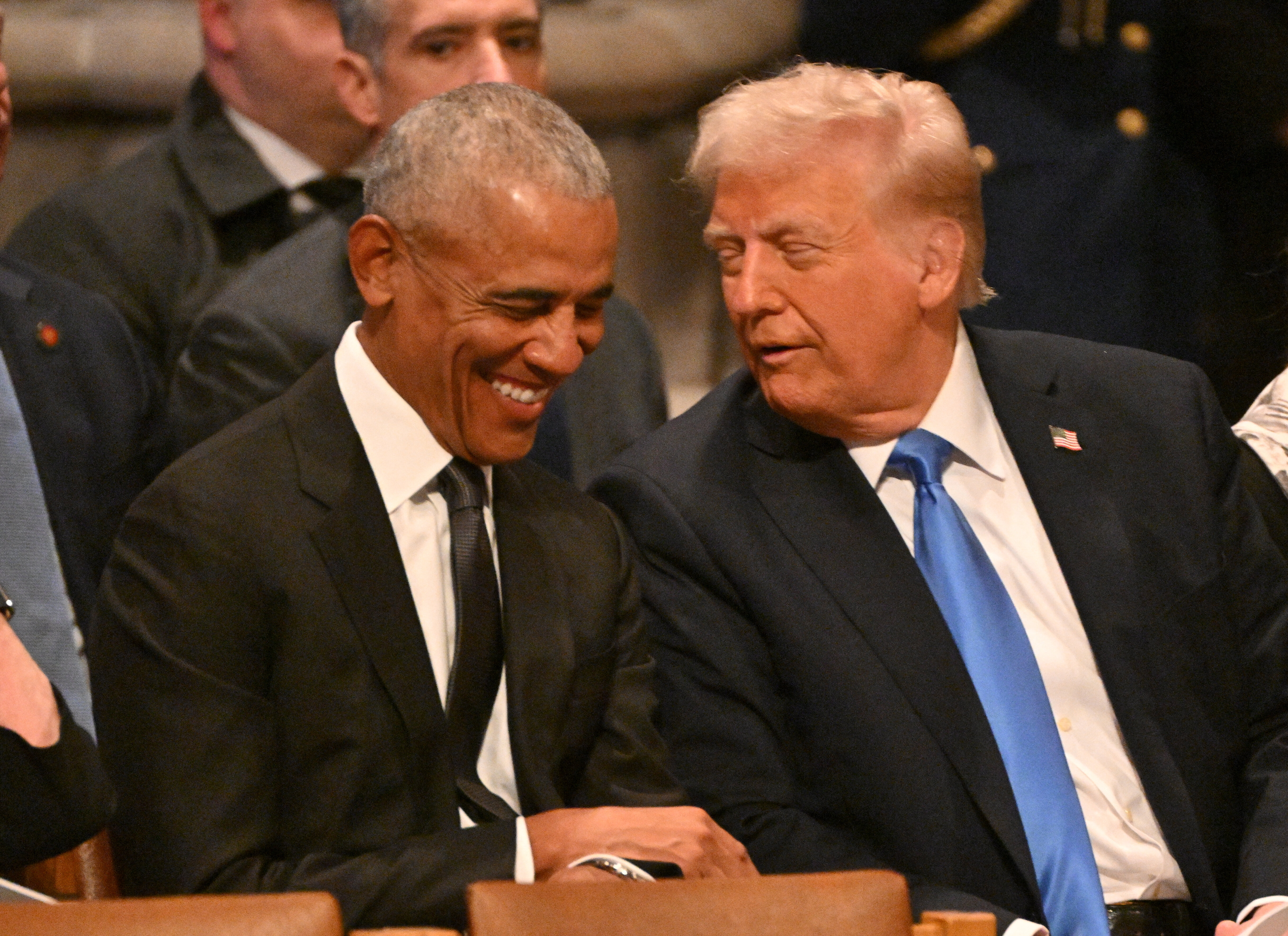
Donald Trump Addresses That Viral Video With Chuckling Barack Obama

Asked at a presser on Thursday about the details of the exchange, the president-elect replied:

“It did look very friendly, I must say. I didn’t realise how friendly it looked. I saw it on your wonderful network just a little while ago before I came in and I said, ‘Boy, they look like two people who like each other.’”

“And we probably do,” Trump continued. “We have a little different philosophies, right? But we probably do. I don’t know. We just got along. But I got along with just about everybody. We met backstage, as you know, before we went on. And I thought it was a beautiful service. But we all got along very well, which is good.”

Obama himself has not commented on the interaction.

But the 44th president drew some criticism for what some said looked like his friendly demeanour to the man who for years pushed the racist Birther conspiracy theory that Obama was not born in the United States. Others suggested he was only humoring Trump.

Trump repeatedly drew Obama’s ire during the 2024 election, with Obama at one point slamming his successor in the White House as a “billionaire who has not stopped whining about his problems since he rode down his golden escalator nine years ago.”

Share Button

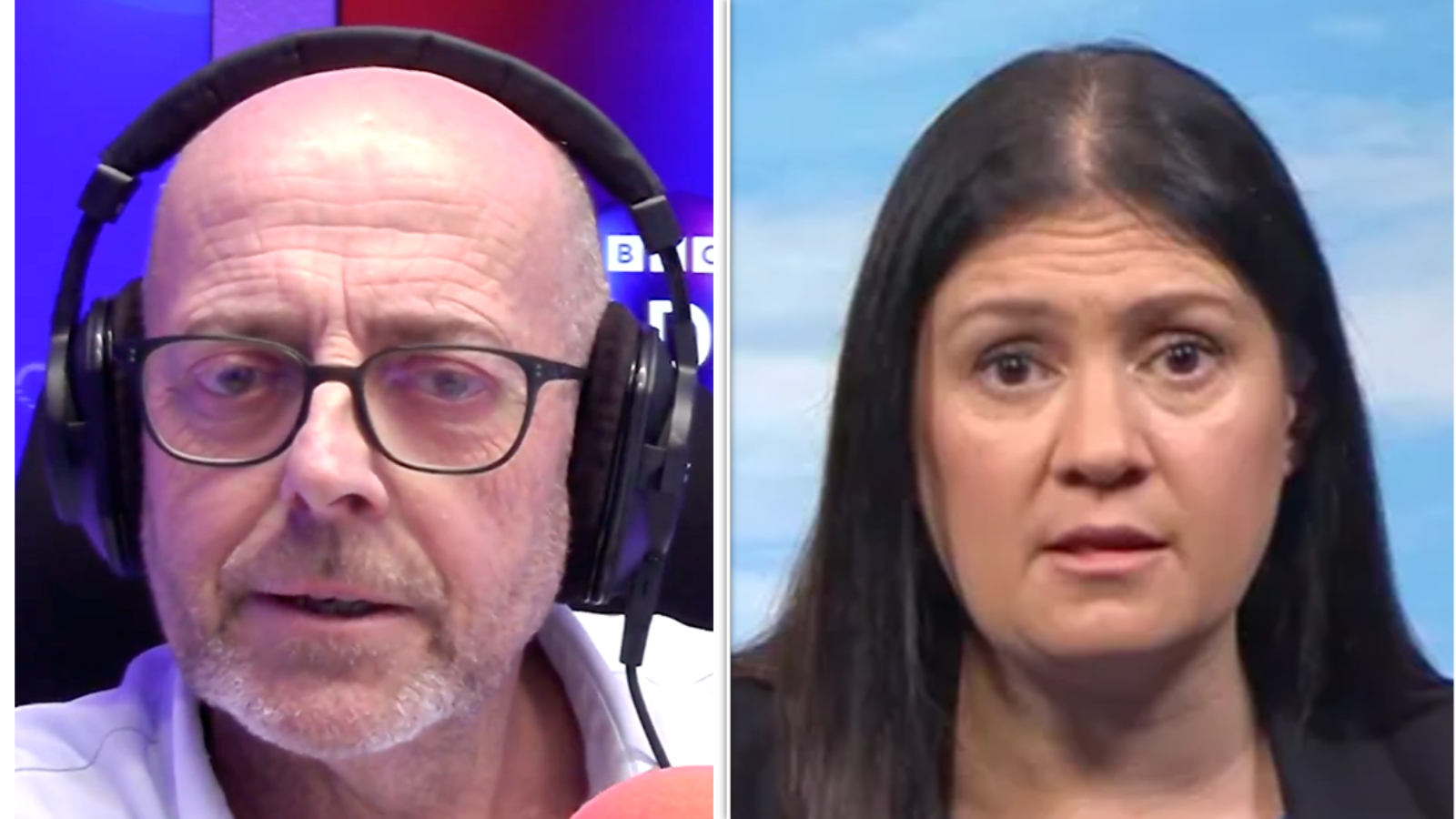
‘You Sound In Denial’: Nick Robinson Savages Cabinet Minister Over State Of The Economy

BBC presenter Nick Robinson accused a cabinet minister of being “in denial” after she tried to paint a rosy picture of the UK economy.

Lisa Nandy, the culture secretary, insisted there were positive signs amid the gloomy news about soaring government borrowing costs, rising inflation, slugging growth and the falling value of the pound.

On Radio 4′s Today programme, Robinson told her: “Consumer confidence is down, business confidence is down and growth is down and inflation is going up.”

But Nandy said: “We inherited an economy where it was hard to see who had confidence, both to invest and particularly for consumers to feel that they could spend, given the huge fluctuations that we’d seen, particularly after the Liz Truss/Kwasi Kwarteng Budget.

“The chancellor has been absolutely clear that we are not going back to those bad old days. We’ve had two interest rate cuts since she became chancellor and we have worked very hard to restore economic credibility.

“Only a few months after we took office we were able to welcome investors from all over the world, who announced £63 billion-worth of investment in the UK economy. That is a huge vote of confidence, and we’re not only confident that we are on track, but the OECD is confident that we are on track to become the fastest growing economy in Europe.”

Robinson hit back: “There’s a danger, isn’t there, that you sound in denial. We can’t find an economist who would come on this programme to say that you will not either have to put taxes up, cut spending or break your borrowing rules.

“There isn’t an economist on the planet who believes you’ve got an alternative to doing one of those things, and yet you come on the programme and say it’s all going swimmingly.”

Nandy replied: “I’m not for a moment saying it’s all going swimmingly because my measure of success is whether people feel better off. I think there isn’t a single person in this country who said they felt better off after 14 years of Tory government, and our intention is that in the next few years people will start to feel significantly better off in their own lives and for the prospects for their children.”

Share Button

The Masked Singer Host Joel Dommett Teases Show’s First Ever Celeb Walk-Off

The Masked Singer viewers are apparently in for something new during this weekend’s show.

According to The Sun, Saturday night’s instalment of the ITV singing competition will see the first ever celebrity contestant storm off when they don’t take too kindly to being eliminated so early on in the series.

In the first ever diva strop of its kind for The Masked Singer, the unidentified character apparently throws a strop and walks off stage, eventually having to be coaxed back on to reveal their identity on camera.

An audience member reportedly described the scene as “absolutely bonkers”, recalling: “Usually the celeb with the lowest votes takes off their mask and then chats to the panel and sings again. But instead this character turned around and shuffled off stage, which was hilarious in their costume obviously — but we were all stunned.”

ITV declined to comment when contacted by HuffPost UK, but host Joel Dommett confirmed the incident took place during an interview with Principle magazine published last weeK.

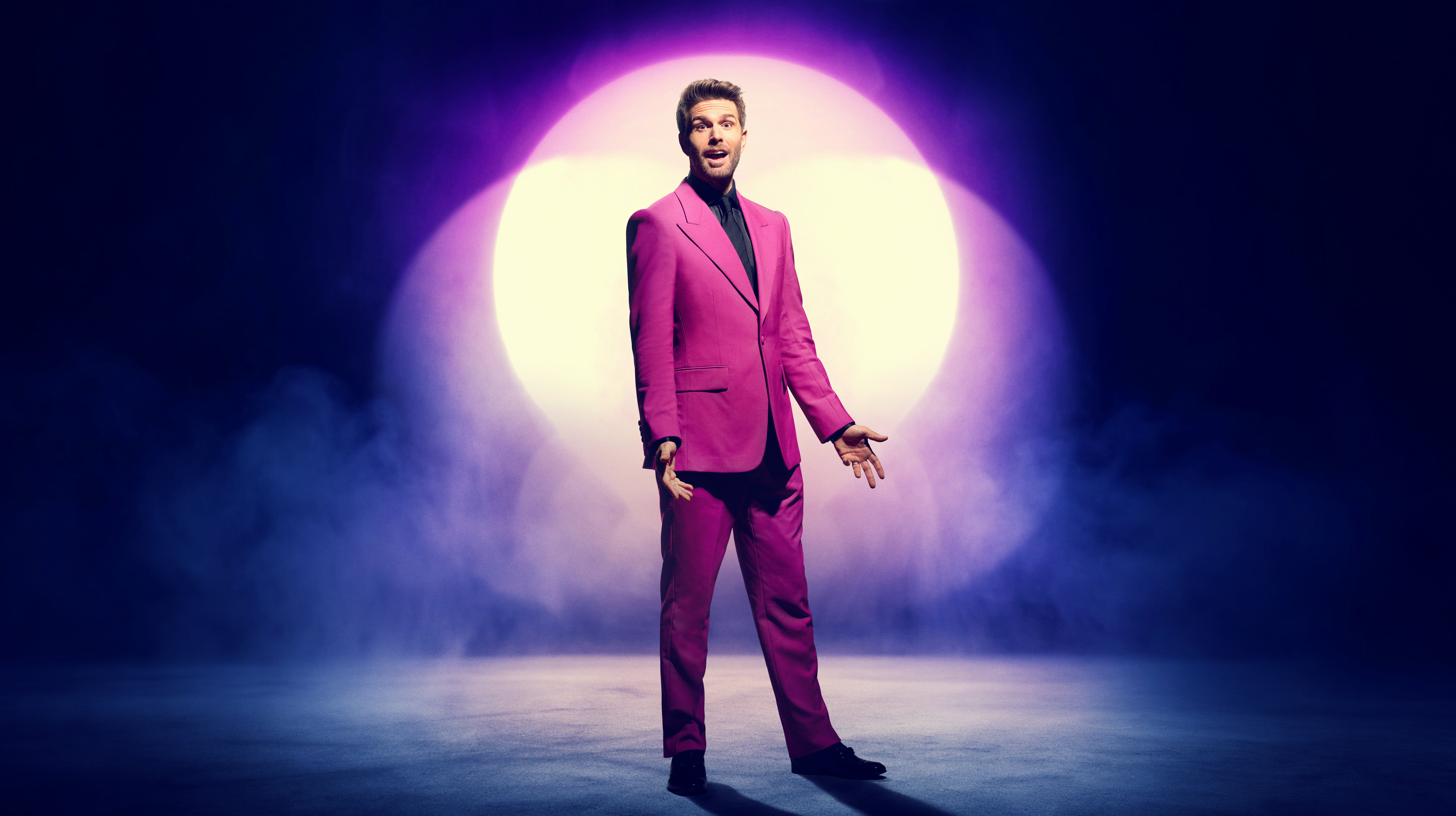
The Masked Singer host Joel Dommett

Kieron McCarron/Shutterstock

“That is gonna be my favourite reveal forever, I think,” he said. “One of the characters gets voted off and they are really not happy about it. Like genuinely.”

Joel continued: “They were really upset that they did not win it. There’s something hilarious about seeing someone in a massive costume storm off.

“What they’re gonna show of it, I have no idea. But even if they don’t show it, I know, and that’s amazing.”

So far this series has seen daytime star Kate Garraway and Great British Bake Off judge Prue Leith being unmasked.

The identities of the remaining contestants are still being kept firmly under wraps, with fan theories suggesting that comedian Harry Hill, Grammy winner Macy Gray and Wet Wet Wet frontman Marti Pellow are among the concealed stars still in the competition.

The Masked Singer continues on Saturday night at 7pm on ITV1.

Share Button

I woke from a coma to find my baby had been born

Atlanta McIntyre hopes to raise awareness of hyperemesis gravidarum, a condition that affects 1 in 100 pregnant women.

Share Button

‘I paid fake doctor thousands for fillers – now I look like a gargoyle’

Cosmetics clinic says it has “totally reviewed all procedures” since treating Andrea.

Share Button

Inside the UK’s first legal drug consumption room

The Thistle will open its doors next week after nearly a decade of deadlock over drug laws.

Share Button

Researchers find betrayal doesn’t necessarily make someone less trustworthy if we benefit

Imagine this scenario: Two people cheat on their partners with each other and then leave their partners to be together. Should they trust each other, or “once a cheater, always a cheater”?

Intuition and past research suggest that whether people deem someone trustworthy depends on that person’s past behavior and reputation for betrayal. But now, new work from psychologists at UCLA and Oklahoma State University is helping to explain why people might nevertheless trust certain cheaters and other betrayers.

When we benefit from someone’s betrayal, we tend to still regard that person as inherently trustworthy, the psychologists reported in a study published in Evolution and Human Behavior. Their experiments found that, although subjects tended to regard people who betrayed others as generally less trustworthy, when a person’s betrayal benefited the subject, that person was still thought to be worthy of trust.

At question is the role concepts like “trustworthiness” play in our relationships. According to the research team, inferences about someone’s trustworthiness are used for making adaptive choices — that is, choices that benefit us. So, while people might be attuned to whether someone has betrayed others in the past, the researchers predicted that people would also be attuned to certain relationship-based factors that impact how that person is viewed/trusted.

“Making decisions about whom to trust based only on whether that person has betrayed someone else might not be the best way to determine whether or not I can trust someone,” said study co-author and UCLA professor of psychology Jaimie Krems.

“Sure, if someone betrays other people, that could be a valuable cue that they might betray me — but not always. For example, think about that friend who always tells you other friends’ secrets but doesn’t share yours. This friend is betraying other people but enriching you with information,” Krems added.

This was the researchers’ main contention: The mind should be attuned to whether someone has a reputation for betrayal, yes, but also to how someone’s betrayal affects you.

The researchers designed experiments to test whether people deemed targets more trustworthy when the targets avoided betrayal — but also when the betrayal had different impacts on the subject.

In one series of experiments, participants were randomly assigned to read one of three vignettes describing their interaction with a target. The first experiment involved sharing secrets among friends, while the second involved romantic infidelity. The third described an interaction in the context of international relations, with participants acting as CIA agents attempting to cultivate a French official as a source.

The targets exhibited one of three behaviors: they did not betray anyone when they had the opportunity; they betrayed another person to the participant or betrayed the participant to someone else. For example, some targets did not share a secret, others shared a secret about someone else with the participant, and still others shared the participant’s secret with a third party. After reading the vignettes, participants rated the target’s trustworthiness on a 7-point scale with questions such as, “I would trust the target to keep my secrets.”

As intuition would predict, across all types of relationships, participants regarded targets as more trustworthy if they did not betray anyone and less trustworthy if they did. But people who betrayed were not all deemed equally untrustworthy. When betrayal benefited the participants, they still considered the target trustworthy. This pattern was largely consistent across friendships, romantic relationships and professional relationships.

The findings upheld the researchers’ hypothesis that judgments of trustworthiness are partly a reflection of the person’s disposition and idiosyncratic factors specific to the participant and the person at hand.

The findings show that while people might start with lofty ideals when it comes to trusting people, what they do in practice is often based more on self-interest.

The research was funded by the National Science Foundation.

Key takeaways

  • Both intuition and past research suggest that whether people deem someone trustworthy depends on that person’s past behavior and reputation for betrayal.
  • In a series of experiments, psychologists found that subjects regarded those who previously exhibited that behavior as less trustworthy. However, when the betrayal benefited them or had no effect on them, participants regarded the betrayer as trustworthy.
  • This pattern was largely consistent across the types of relationships studied: friendships, romantic relationships and professional relationships.
Share Button

Rapid return of water from ground to atmosphere through plants

A new study led by scientists in the Schmid College of Science and Technology at Chapman University provides the first comprehensive global estimates of the amount of water stored in Earth’s plants and the amount of time it takes for that water to flow through them. The information is a missing piece of the puzzle in understanding the global water cycle and how that cycle is being altered by changes in land use and climate.

The study, published today, January 9, in the journal Nature Water, finds that Earth’s vegetation stores about 786 km3 of water, only about 0.002% of the total amount of freshwater stored on Earth. The study also finds that the time it takes for water to flow through plants (referred to as transit or turnover time) and return to the atmosphere is among the fastest in the global water cycle, ranging from just five days in croplands to 18 days in evergreen needleleaf forests. The transit of water through plants is particularly fast in croplands, grasslands and savannas. The results underscore vegetation’s dynamic role in the water cycle. In comparison to the global annual median of 8.1 days for water to transit through plants from entry to exit, the water in lakes is estimated to take 17 years, and the water in glaciers is estimated to take 1600 years.

“We have known for a long time that most of the water that returns from the ground to the atmosphere does so through plants, but until now, we did not really know how long it took for that water to transit through plants. Our results show that the transit of water through plants occurs on the order of days, rather than months, years, or centuries, as it does in other parts of the water cycle,” said the study’s lead author Dr. Andrew Felton, who carried out the work as part of a U.S. Department of Agriculture Fellowship while at Chapman University and is now a professor at Montana State University.

The research team notes that by combining estimates of the transit of water through plants with the transit of water through the atmosphere (about 8-10 days) and the transit time of water through soil before being taken up by plants (about 60 to 90 days), they can begin to estimate the complete amount of time it takes for a drop of water to move through the terrestrial water cycle.

“Plants are the forgotten part of the global water cycle,” said Felton. “In many cases, plants are not even represented on water cycle diagrams, which is ironic because we already know they play this critical role in returning water from the ground to the atmosphere.”

To generate the estimates, the research team first calculated the amount of water stored in plants using data from NASA’s Soil Moisture Active Passive Mission (SMAP) satellite mission, which provided high-resolution estimates of the water in soils. The SMAP mission originally saw plants as interfering with the soil moisture measurements, and was correcting for their presence. The Chapman researchers found those corrections actually held valuable information for understanding the water cycle. The team combined estimates of plant water storage with cutting-edge estimates of the rates at which water is leaving plants to determine the transit time of water through vegetation. The result was five years of monthly water storage and transit time estimates at a spatial resolution of 9 km2.

The research team also found that the transit time of water through vegetation varied considerably across different land cover types, climate and seasons. The transit time of water through croplands was significantly and consistently the fastest, with water transiting through plants in less than a day during the peak of the growing season.

“One important observation is that croplands around the world tend to have very similar and very fast transit times,” said Dr. Gregory Goldsmith, senior author and an associate professor of Biological Sciences at Chapman University. “This indicates that land use change may be homogenizing the global water cycle and contributing to its intensification by more rapidly recycling water back to the atmosphere where it can turn into heavy rain events.”

“The results suggest that the transit time of water through plants is likely to be very sensitive to events such as deforestation, drought and wildfire, which will fundamentally change the time it takes for water to flow through the water cycle,” Felton said.

Share Button