Dangerous bacterial biofilms have a natural enemy

If your teeth have ever felt fuzzy after skipping a brushing, you’ve encountered biofilm — a slimy bacterial layer that clings to surfaces. In medical settings, biofilms make infections harder to treat when they form protective shields for bacteria on devices like catheters and implants.

UC Riverside scientists have now discovered a chemical that plants produce when they’re stressed prevents biofilm from forming. The breakthrough offers potential advances in healthcare as well as preventing equipment corrosion in industrial settings.

“In simple terms, biofilms are communities of microorganisms, like bacteria or fungi, that stick together and form a protective layer on surfaces,” said Katayoon Dehesh, distinguished professor of molecular biochemistry at UCR, and corresponding author of a study about the discovery.

“You’ve probably seen them as the slimy layer on river rocks or the plaque on your teeth. While they’re a natural part of many ecosystems, biofilms can cause big problems.”

The study, published in the journal Nature Communications, highlights the importance of a particular metabolite, which is a molecule produced during life-sustaining chemical reactions inside plants, as well as bacteria and even some parasites, like the one that causes malaria.

In plants, this metabolite, MEcPP, plays a critical role not only in producing essential compounds but also in stress signaling. For example, when a plant is damaged in some way and too much oxygen enters its cells, it accumulates MEcPP. This molecule then triggers protective responses within the plant. The researchers discovered that this same molecule has a surprising effect on bacteria like E. coli: it disrupts biofilm development by interfering with its ability to attach to surfaces.

In medical settings, biofilms grow on devices like catheters, stents, or implants, making infections harder to treat because the microbes in biofilms are highly resistant to antibiotics. In industrial contexts, they clog pipes, contaminate food processing equipment, and cause corrosion.

“By preventing the early stages of biofilm development, this molecule offers real potential to improve outcomes in any industries reliant on clean surfaces,” Dehesh said.

Bacteria rely on hair-like structures called fimbriae to anchor themselves to surfaces, a critical step in biofilm initiation. Fimbriae help bacteria latch onto medical implants, pipes, or even teeth, where they secrete a protective matrix that shields them from antibiotics and cleaning agents. Without fimbriae, biofilm formation cannot begin.

“Biofilms are like fortresses for bacteria,” said Jingzhe Guo, UCR project scientist and first author of the paper. “By disrupting the initial phase of attachment, MEcPP essentially disarms the bacteria’s ability to establish these fortresses.”

Through genetic screenings of more than 9,000 bacterial mutants, the research team identified a key gene called fimE, which acts as an “off switch” for fimbriae production. MEcPP enhances the activity of this gene and increases the expression of fimE. This, in turn, prevents the bacteria from producing fimbriae and forming biofilms.

“Our discovery could inspire biofilm prevention strategies across a wide range of industries,” Guo said. “From cleaner water systems to better dental care products, the possibilities are immense.”

Biofilms are not only a medical concern but also a costly problem in industrial settings. They contribute to clogged pipelines, corroded machinery, and contamination in food processing facilities. Traditional methods for managing biofilms often rely on harsh chemicals or expensive treatments, which can be harmful to the environment or ineffective over time as bacteria adapt.

“This study is a testament to the unexpected connections between plant biology and microbiology,” Guo said. “It’s thrilling to think a molecule that plants use to signal stress might one day help humans combat bacterial threats.”


Share Button

How Bad Is It To Walk Around Barefoot At Home? Doctors’ Answers May Surprise You.

When you walk in the door and kick off your shoes, does it actually hurt the health of your feet to walk around barefoot on hard floors? It’s not the most comfortable feeling, but doctors say there can be some benefits — with a few caveats.

First, let’s start with a definition of barefoot: According to the Cambridge Dictionary — and experts ranging from podiatrists to dermatologists — walking barefoot means having no shoes or socks on.

“Barefoot is skin to ground,” explained licensed clinical podiatrist Dr. Robert Conenello. “Anything else is considered to be shod, as even socks alter the mechanics of movement.”

There are benefits to going barefoot at home.

“I’m a big advocate for going barefoot at home,” Conenello said. “[The practice] increases intrinsic muscular strength within the feet.”

He explained that the primary benefit of walking barefoot is the reinforcement of the muscles in the feet, which tend to weaken “as we age and wear shoes.” These muscles are closely linked to our overall mobility, so their deterioration can contribute to reduced movement as we get older.

“Many of the pathologies that I see in my practice are due to the inability to engage these muscles for normal movements and metabolic efficiency,” Conenello added.

Dermatologist Dr. Hannah Kopelman agreed with that overall assessment, and also mentioned that going barefoot at home can have some unexpected benefits for the skin on your feet.

“Walking barefoot at home … allows your skin to breathe, which can help prevent moisture buildup and reduce the risk of fungal infections like athlete’s foot,” she explained.

Although not directly related to dermatology, walking barefoot at home can also offer a secondary skin-related advantage, one connected to sensory stimulation and overall wellness.

“Feeling the texture of different surfaces underfoot can be grounding and relaxing, almost like a mini reflexology session,” Kopelman said. “For those without underlying skin or foot conditions, this can be a natural way to connect with your environment and promote mindfulness.”

To put it concisely, opting to go shoeless and sockless in your clean home helps fortify your feet, providing long-term rewards while also reducing the risk of skin conditions. Additionally, it offers a kind of natural massage, which can be surprisingly relaxing.

But there are some potential downsides.

One potential downside of walking barefoot indoors is the increased exposure to irritants or allergens on the floor, such as dust, pet dander or cleaning chemicals, as Kopelman pointed out. For individuals with sensitive skin or chronic conditions like contact dermatitis or eczema, this could be a significant concern.

While Conenello acknowledges similar risks — such as stepping on pathogens like fungi in moist environments — he is quick to emphasise that “proper hygiene can help mitigate these risks.”

“Wash your feet frequently, dry them thoroughly and moisturise,” he advised.

Other painful risks associated with going barefoot include the potential for slipping on slick or wet surfaces, or stepping on something hard and sharp that could cause injury. As anyone who has ever stubbed a toe or accidentally stepped on a Lego can attest, such incidents can be excruciating. Kopelman points out that individuals with diabetes or poor circulation are more vulnerable to severe consequences, as “even a minor foot injury can lead to serious health issues.”

It's a good idea to wear something protective on your feet if you're standing to cook for a long period of time.

Vladimir Vladimirov via Getty Images

It’s a good idea to wear something protective on your feet if you’re standing to cook for a long period of time.

Kopelman also noted that, while walking barefoot can help strengthen muscles, the repeated practice of doing so on hard surfaces could potentially lead to foot fatigue or plantar fasciitis, a condition where the tissue connecting the heel bone to the toes becomes inflamed.

“Over time, the lack of cushioning can put stress on the joints, especially in those who already have foot or joint issues,” she explained.

There are times when you should wear shoes or socks.

Though Conenello is generally a proponent of going barefoot, he advises wearing foot support when engaging in tasks that involve standing for extended periods of time — like when cooking.

“When standing for long periods barefoot, there can be excessive load to one area of the foot,” he said. “Even my professional cooks usually benefit from a shoe that allows them to balance weight over their entire foot.”

To illustrate the concept further, he made an analogy. “[Let’s say] that you developed some decent core strength through performing some planks,” he said. “I would not suggest you start adding significant time or weight to your exercise routine prematurely.”

There is, of course, a middle ground: socks.

According to Conenello, “there is nothing wrong with wearing socks.” They’ll simply decrease the benefits associated with being barefoot. “There is now a filter between the ground and the foot,” he said.

Kopelman added that socks can offer “minimal protection from minor abrasions or allergens while still allowing your feet to feel relatively free.” Direct contact with surfaces that may harbor bacteria or irritants is also minimised when wearing socks.

Taking all the pros and cons into account, walking barefoot at home — especially on clean and well-maintained floors — is not only safe, but generally healthy … unless you’re dealing with some sort of skin condition (think psoriasis, eczema or athlete’s foot, for example) that could be exacerbated by the presence of bacteria.

“Likewise, individuals with diabetes, neuropathy or poor circulation should avoid barefoot walking due to the increased risk of unnoticed injuries or infections,” Kopelman said.

Going barefoot selectively seems to be the best option. Moderation is, indeed, key.

Share Button

This Is How Long You’re Only Meant To Sit On The Toilet For

I hope this isn’t too disgusting to share, but honestly, I’ve long maintained that a sneaky five-minute sit-and-scroll on the loo is one of the greatest pleasures in life.

But if colorectal surgeon Karen Zaghiyan, MD, is to be believed, we all need to ensure we’re not sitting on the loo for too long.

In a video, the surgeon shared ten things she’d never do as a colorectal surgeon. Along with not using wet wipes and avoiding colonics, Zaghiyan says she “would never sit [for] more than five minutes on the toilet.” (gulp).

Why?

It’s all to do with strain ― which you should avoid where possible when going number two.

Many of us will be aware that not drinking enough water or eating enough fibre can cause constipation, hard-to-pass stools, and subsequent fissures, haemorrhoids, and more.

But it turns out that simply sitting on the can might take its own toll on your tushy.

“Sitting, especially if you are finished having a bowel movement or waiting to have a bowel movement and you’re just sitting there and scrolling the internet looking at social media, is really bad for your haemorrhoids,” the surgeon shared.

That’s because “there’s a vacuum effect on the toilet that pulls on the hemorrhoidal veins and aggravates them.”

So, your seemingly harmless number two routine could be causing you more bowels more harm than good ― especially if you’re sitting for more than five minutes.

What if I need that much time to get the job done?

“If you have not finished or begun your bowel movement in five minutes, get up, come back another time when you have the urge to go again,” Zaghiyan says.

“But do not sit there a long time ― obviously, this varies and it’s different for people that have gut conditions, have had surgeries, etc. ― I’m not talking about that, I’m talking about the average Joe who’s just sitting there spending half an hour in the toilet. Do not do that,” she finished.

Well, that’s us told…

Share Button

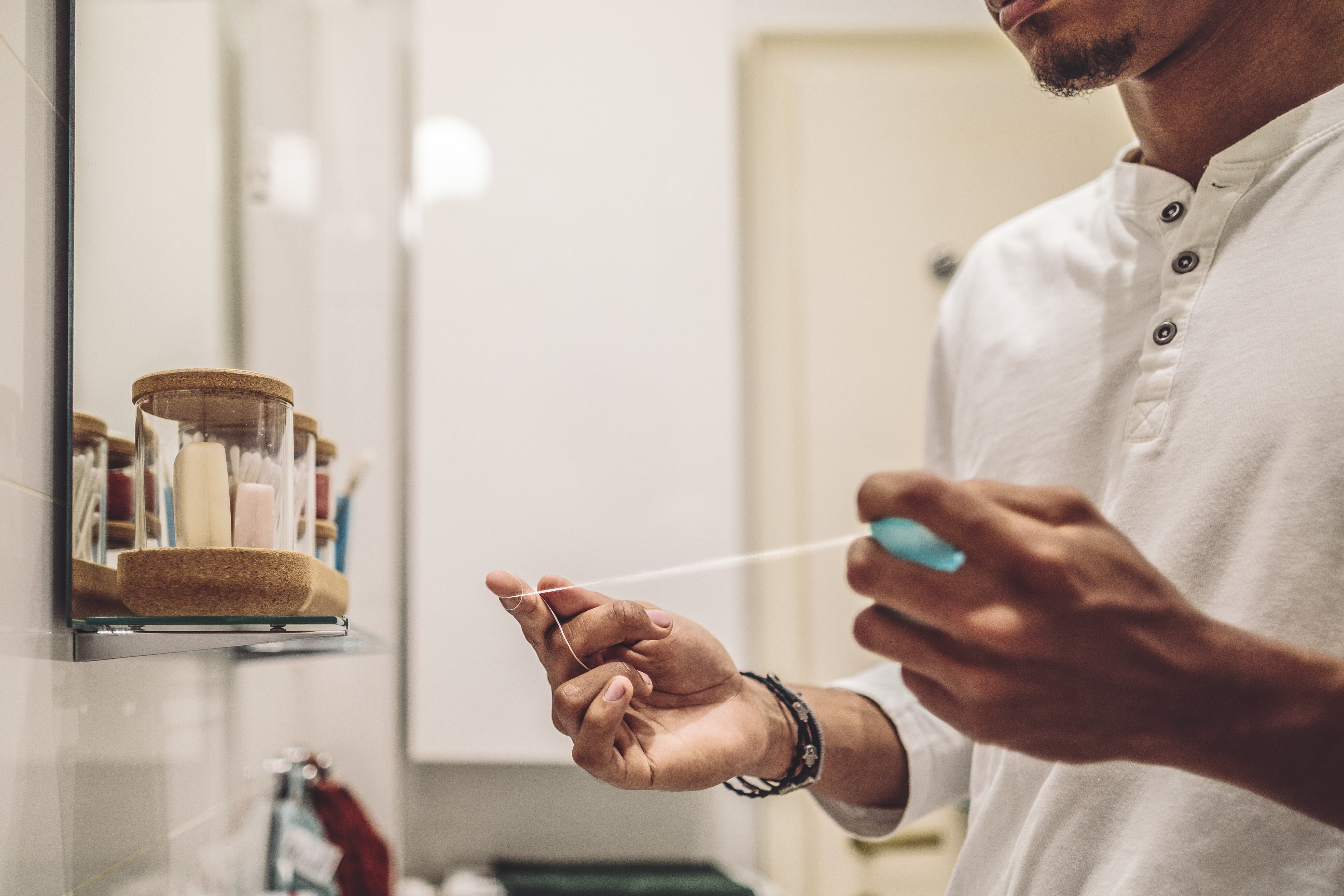
Dental Hygienist Warns Against The 1 Flossing Mistake We All Make

I saw a tweet (well, post on X) in which someone advised, “only floss the teeth you want to keep”. I reached for the minty spool pretty swiftly after reading that.

But, after viewing a TikTok post from dental hygienist Anna Peterson, I’ve realised my efforts may have been in vain ― turns out, I’ve been flossing my teeth wrong for years.

“Do you know how deep you’re meant to go with floss?” Peterson began the video, quoting a question that had been asked of her in the comments of another TikTok video.

“The only way for me to properly answer is to show it to you,” the dental hygienist revealed.

Spoiler ― it’s further than you think

Tearing off a length of dental tape, Anna Peterson said, “when it comes to flossing, it’s really important that you do go to the right depth, or you won’t be doing it effectively, and you could still have gum disease, even though you’re flossing.”

She then revealed that “the floss needs to go to the gum level and then some more,” sharing a closeup that revealed a thin strip of dental floss sliding into the curve at the top of her tooth (I was surprised, too).

That’s possible, she says, because “the gum is not attached to the actual crown of the tooth, and the crown of the tooth is the bit that we can actually see.”

Instead, the gum attaches to the root of the tooth ― there’s no direct attachment between the front of your gnashers and your gums. I’m still reeling from that.

“This means that bacteria are in between that bit of gum and crown of the tooth that we can’t see,” the dental hygienist said. “And it’s why it’s so important that with the floss, we are going right up and under.”

She then shared that, if your gums are healthy, you can go about 1-3mm in depth. “Keep doing it, even if it’s bleeding,” she advises.

Well, that’s changed how I clean my teeth forever…

Share Button

Could a mango-flavoured pill end intestinal worms?

The pill is a combination of two existing anti-parasitic drugs that, used together, appear more effective.

Share Button

A fast-moving belly flop: Researchers unveil the unique skills of cricket frogs

Several species have fascinated observers with their abilities to skip side-to-side and leap into the air from the surface of a pond as if the water were land. One such breed native to Virginia and North Carolina is the cricket frog. The way these frogs move in the water could bring insights to tools for the future of robotics, watercraft, and more.

Jake Socha, the Samuel Herrick Professor in Mechanical Engineering, leads a research team that studies the cricket frog’s unique ability to “skitter,” another name for jumping multiple times in succession. The team’s findings were published in the Journal of Experimental Biology, with graduate researcher Talia Weiss serving as first author.

“Skittering is not actually a well-defined word for this behavior — one naturalist used it to describe a ‘jumping on water’ behavior in frogs in 1949, and since then, it’s been used for this type of locomotion in all the following literature,” Weiss said. “Part of this research is not only studying this behavior in cricket frogs, but to try and give ‘skittering’ a more precise, scientific definition.”

How do they do it? In their studies, Socha’s team members found that popular opinions generally state that the frog crosses the water without sinking, but doing so might still require a highly specialized anatomy. What does this frog have that other frogs don’t?

“Our lab has studied a range of animals, and many exhibit fascinating behaviors in navigating their environment,” Socha said. “The humble cricket frog lives nearby, and yet it still surprised us with its cabilities, further motivating our curiosity to understand the living world.

High-speed video for high-speed frogs

Cricket frogs are one of the smallest frogs in North America, easily sitting on the thumb of an average adult’s hand. To observe the cricket frog in motion, team members used high-speed videography. They recorded how the frog leaps on land as well as in the water, watching the movement of their legs as they navigated both.

The team found that the frogs actually sink with each jump. While “skittering” gives a picture of the frogs freely leaping about while only their feet penetrate the water’s surface, the recordings showed a different picture. Socha, Weiss, and their teammates saw that each time a frog came down from a leap, its entire body would submerge. The movement was less like a frog leaping and dancing across the water freely, and more like a plop and a jump. Their movements might more appropriately be called, “porpoising,” after the movement that a porpoise or dolphin uses: leaping into the air from beneath the surface of the water.

Launching from underwater

The reason that cricket frogs have previously appeared to dance across the water when viewed by eye is largely because of their rapid motion.

To record this ultra-fast motion, the team used a 20-gallon glass tank and released the frogs into it. High speed cameras shooting up to 500 frames per second were aimed from the side of the glass tank to capture the action above and below the water’s surface. As the frogs leapt, the team captured their getaway.

The footage was then slowed down to a small fraction of the original speed. When they watched the footage, team members made their surprising observation: The frogs did indeed sink.

“It’s fascinating how easily we can be fooled by fast animal movements,” said Socha. “Here, we’re fooled by a frog that appears like a skipping stone, but is actually jumping and dunking multiple times in a row. Frogs are great jumpers, but most of them don’t exhibit this porpoising behavior, and we still don’t know why. Is there something special about the frog’s leap, or is it simply a matter of small body size?”

By observing them in slow motion, team members could observe the motion of the frog as it retracted and extended its limbs. They also noticed that the angle of its body to the waterline played a factor, giving it the ability to balance itself in the water. They broke each jump cycle down to:

  • Takeoff, from a submerged position
  • Aerial, or time in the air following a jump
  • Re-entry, back into the water
  • Recovery, resetting for the next jump

In a little more than a single second, the frog would take off while completely submerged, extending its feet in an underwater push to propel its body above the surface. Its rear legs stayed extended while moving through the air, and its front legs moved from pressing against its body to reach forward. The extended front legs are the first to hit the water upon re-entry, and the back legs are still extended as it sinks. As it sinks, the back legs retract and bend back into a leaping position. Another jump is executed, repeating the movement.

It’s basically a belly flop.

The team observed frogs doing as many as eight jumps in a row, each being fully executed in less than a second.

Understanding skittering is an important discovery for the realm of biology, but it holds other keys as well. This discovery provides a new physical basis for the future of bio-inspired robotics. It could be applied to a water testing system that is needed to be rapidly deployed, or an amphibious drone taking water depth measurements. Those futuristic devices can take cues from nature to use well-tested methods that frogs have been using for centuries.

Share Button

Light, flexible and radiation-resistant: Organic solar cells for space

Radiation testing suggests that solar cells made from carbon-based, or organic, materials could outperform conventional silicon and gallium arsenide for generating electricity in the final frontier, a study from the University of Michigan suggests.

While previous research focused on how well organic solar cells converted light to electricity following radiation exposure, the new investigation also dug into what happens at the molecular level to cause drops in performance.

“Silicon semiconductors aren’t stable in space because of proton irradiation coming from the sun,” said Yongxi Li, first author of the study to be published in Joule and a U-M associate research scientist in electrical and computer engineering at the time of the research. “We tested organic photovoltaics with protons because they are considered the most damaging particles in space for electronic materials.”

Space missions often land on gallium arsenide for its high efficiency and resistance to damage from protons, but it’s expensive and, like silicon, is relatively heavy and inflexible. In contrast, organic solar cells can be flexible and are much lighter. This study is among those exploring the reliability of organics, as space missions tend to use highly trusted materials.

Organic solar cells made with small molecules didn’t seem to have any trouble with protons — they showed no damage after three years worth of radiation. In contrast, those made with polymers — more complex molecules with branching structures — lost half of their efficiency.

“We found that protons cleave some of the side chains, and that leaves an electron trap that degrades solar cell performance,” said Stephen Forrest, the Peter A. Franken Distinguished University Professor of Engineering at U-M, and lead corresponding author of the study.

These traps grab onto electrons freed by light hitting the cell, preventing them from flowing to the electrodes that harvest the electricity.

“You can heal this by thermal annealing, or heating the solar cell. But we might find ways to fill the traps with other atoms, eliminating this problem,” Forrest said.

It’s plausible that sun-facing solar cells could essentially self-heal at temperatures of 100°C (212°F) — this warmth is enough to repair the bonds in the lab. But questions remain: for instance, will that repair still take place in the vacuum of space? Is the healing reliable enough for long missions? It may be more straightforward to design the material so that the performance-killing electron traps never appear.

Li intends to explore both avenues further as an incoming associate professor of advanced materials and manufacturing at Nanjing University in China.

The research is funded by Universal Display Corp and the U.S. Office of Naval Research.

The devices were built in part at the Lurie Nanofabrication Facility, exposed to a proton beam at the Michigan Ion Beam Laboratory, and studied at the Michigan Center for Materials Characterization.

The team has applied for patent protection with the assistance of U-M Innovation Partnerships. Universal Display has licensed the technology from U-M and filed a patent application. Forrest has a financial interest in Universal Display Corp.

Share Button

Study shows how plant roots access deeper soils in search of water

Scientists have discovered how plants adapt their root systems in drought conditions to grow steeper into the soil to access deeper water reserves.

Plant scientists from the University of Nottingham, in collaboration with Shanghai Jiao Tong University, have identified how abscisic acid (ABA), a plant hormone known for its role in drought response, influences root growth angles in cereal crops such as rice and maize. The results have been published in Current Biology.

The study highlights how ABA and auxin, another key hormone, work together to shape root growth angle, providing a potential strategy to develop drought-resistant crops with improved root system architecture.

Drought poses a major threat to global food security, and enhancing the ability of crops to withstand water shortages is crucial. Drought, a major abiotic stressor, has caused substantial crop production losses of approximately $30 billion over the past decade. With a projected population of 10 billion by 2050 and serious freshwater depletion, developing drought-resistant crops is of paramount importance

Plants rely on their root systems, the primary organs for interacting with soil, to actively seek water. In drought conditions, water often depletes in the topsoil and remains accessible only in the deeper subsoil layers. Abscisic acid (ABA) plays an important role in helping plants adapt to these challenging conditions. This new study gives new insights into how ABA changes root growth angles to enable plants to reach out deeper subsoils in search of water.

The researchers discovered a new mechanism where ABA promotes the production of auxin, which enhances root gravitropism to grow them at steeper angles in response to drought. Experiments showed that plants with genetic mutations that block ABA production had shallower root angles and weaker root bending response to gravity compared to normal plants. These defects were linked to lower auxin levels in their roots. By adding auxin externally, the researchers restored normal root growth in these mutants, showing that auxin is key to this process.

The findings were consistent across both rice and maize, suggesting that this mechanism could apply to other cereal crops as well.

Dr Rahul Bhosal, Assistant Professor from the School of Bioscience is one of the lead authors on the study, he said: “Finding ways to tackle food insecurity is vital and the more we understand the mechanisms that control plant growth, the closer we are to designing systems to help plants to do this and improve crop yields during droughts.”

Share Button

Dementia with Lewy bodies has been difficult to diagnose early, but comprehensive cognitive testing could change that

Cognitive profiles for early diagnosis of Dementia with Lewy bodies (DLB) have been outlined in a new study, out today in Alzheimer’s & Dementia. Although DLB is the second most common neurodegenerative dementia following Alzheimer’s Disease, it is usually misdiagnosed, preventing affected people from accessing care better tailored to their prognosis.

“Criteria for better identifying DLB exists in research settings, but we wanted to pull research studies together to establish something applicable for clinical settings,” says Ece Bayram, MD, PhD, assistant professor of neurology at the University of Colorado Anschutz Medical Campus and study lead author. “By pooling information from available publications, we were able to establish a cognitive profile that can differentiate DLB from Alzheimer’s before the dementia stage hits, which could better help inform the direction of care for people with these diseases.”

Researchers were able to identify consistencies in cognitive symptoms among people with DLB compared to people with Alzheimer’s in a meta-analysis of pre-dementia stage diagnoses. At the pre-dementia stage, people with DLB demonstrated more diminished attention, processing speed and executive function as well as better immediate recall and memory compared to people with Alzheimer’s.

“Identifying cognitive profiles gave us the outcome necessary to suggest guidelines that practitioners could easily be trained in to better tailor plans of care,” says Bayram. “Furthermore, providing framework for clinical assessment versus biomarker testing means more accessibility for practitioners. It is easier and cheaper to train in providing cognitive assessments than administering imaging or invasive biomarker tests,” says Bayram.

Researchers say identifying the form of dementia early can guide future planning for both the person with dementia and their care partners, and ease disease by providing proper symptomatic treatment. People with DLB, for instance, are reactive to certain types of commonly prescribed medications for psychosis, such as haloperidol, that tend to worsen their condition. Dr. Bayram says, overall, this study provides a promising step in advancing dementia prevention and care.

“We are seeing more and more treatment trials that are focused on disease modification for both Alzheimer’s and Lewy body diseases. Having validated clinical criteria to diagnose DLB before dementia hits means we can prevent it from happening instead of reacting to it after significant loss in the brain has occurred. These types of clinical assessments provide opportunities for everyone to receive care even without access to a specialty center.”

Share Button

A battle of rafts: How molecular dynamics in CAR T cells explain their cancer-killing behavior

A study published in Science Advances shares new insights into how two of the most common types of chimeric antigen receptor (CAR) T cells kill cancer. Investigators from Baylor College of Medicine, Texas Children’s Cancer Center and the Center for Cell and Gene Therapy at Baylor, Houston Methodist Hospital and Texas Children’s Hospital examined how molecular dynamics at the immune synapse — where CAR T cells bind to cancer cells — affect anticancer activity.

In this study, researchers aimed to understand how CAR T cells with different signaling domains work at the molecular and cellular levels to lay the foundation for designing CAR molecules that maximize antitumor activity beyond B cell malignancies.

“We looked at two different types of CAR T cells. The first, CD28.ζ-CART cells, are like sprinters. They kill cancer cells quickly and efficiently, but their activity is short-lived. The second, 4-1BB.ζ-CART cells, are like marathon runners. They kill cancer cells consistently over a long period,” said senior author Dr. Nabil Ahmed, professor of pediatrics — hematology and oncology at Baylor and Texas Children’s. “We need to understand what’s happening at the molecular level so we can engineer CAR T cells to adapt their killing behavior to target hard-to-treat malignancies, such as solid tumors.” Ahmed also is a member of the Center for Cell and Gene Therapy and the Dan L Duncan Comprehensive Cancer Center.

Led by first author Dr. Ahmed Gad, postdoctoral associate in Ahmed’s lab, the research team examined molecular dynamics at the immune synapse. The team biopsied the CAR T cell immunological synapse by isolating the membrane lipid rafts — cholesterol-rich molecules on the cell surface where most molecular interactions between cells take place.

They found that CD28.ζ-CAR molecules shuttle through the immune synapse quickly, working within minutes to kill cancer cells. This enabled fast CAR T cell recovery and a mastery of “serial killing” of cancer cells. In contrast, researchers found that 4-1BB.ζ-CAR molecules linger in the lipid rafts and immune synapse. The 4-1BB.ζ-CAR T cells multiply and work together, resulting in sustained “collaborative” killing of tumor cells.

“Observing the distinct pattern of dynamics between single molecules helps us understand the big picture of how these products work,” Gad said. “Next, we are studying how to dynamically adapt these CAR T cells at the synapse level to make them more effective.”

“Tumors are very sophisticated. We need to adapt our tools to the biology of the disease. This may involve using multiple tools that work in different ways at different stages,” Ahmed added.

Other authors who contributed to this work include Jessica S. Morris, Lea Godret-Miertschin, Melisa J. Montalvo, Sybrina S. Kerr, Harrison Berger, Jessica C.H. Lee, Amr M. Saadeldin, Mohammad Abu-Arja, Shuo Xu, Spyridoula Vasileiou, Rebecca M. Brock, Kristen Fousek, Mohamed F. Sheha, Madhuwanti Srinivasan, Yongshuai Li, Arash Saeedi, Kandice Levental, Ann M. Leen, Maksim Mamonkin, Alexandre Carisey, Navin Varadarajan, Meenakshi Hegde, Sujith K. Joseph, Ilya Levental and Malini Mukherjee. They are affiliated with one or more of the following institutions: Baylor College of Medicine, Texas Children’s Hospital, Center for Cell and Gene Therapy, the Dan L Duncan Comprehensive Cancer Center, the University of Houston, and the University of Virginia.

This work was supported by the National Institutes of Health U54 Moonshot Grant, the National Cancer Institute, the Cancer Prevention and Research Institute of Texas, the Be Brooks Brave Fund St. Baldrick’s Foundation Fellowship, Stand Up To Cancer, the St. Baldrick’s Pediatric Cancer Dream Team Translational Research Grant, Triumph Over Kids Cancer Foundation, the Alex Moll Family Fund, and The Faris Foundation.

Share Button