Noticing This While Walking May Be An Early Sign Of Dementia

You may already know that shuffling your feet while walking can be an early sign of dementia, affecting someone’s ability to, say, go up the stairs.

But scientists may have identified another possible early symptom that shows up in your stride.

A 2022 study, published in JAMA Network Open, didn’t look at walking on its own; they compared older people’s hiking styles to their memory.

The changes in walking didn’t mean much without a decline in certain cognitive skills, they say.

But those who notice differences in their walk alongside cognitive changes, referred to by the study as “dual decliners,” had a higher risk of developing dementia than the rest of the participants.

How did it work?

Researchers looked at data from 16,855 older participants in Australia and the US.

They examined gait speed in two-year intervals across seven years, and again in the final year.

They also looked at cognitive changes (in memory, verbal fluency, mental processing speed, and “global” cognition) at years 0, 1, 3, 5, and at the close-out of the test.

They found that people who both saw a slowing of their walking speed and a decline in their cognitive ability (especially memory) were far more likely to have dementia.

“Association between domains, such as processing speed and verbal fluency, with gait have been explained by the crossover in the underlying networks or pathology,” the paper says.

It continues, “Of domains examined, the combination of decline in gait speed with memory had the strongest association with dementia risk. These findings support the inclusion of gait speed in dementia risk screening assessments.”

Does this mean walking more slowly over time is a dementia sign?

No ― again, it was only relevant when paired with cognitive changes.

If you suspect dementia in yourself or a loved one, the NHS advises you to see a GP as soon as possible.

Bringing up the topic with a loved one can be hard, they say, so be sure you approach the topic gently, in a situation they’re familiar with, and without rushing.

“A diagnosis of dementia can also help people with these symptoms, and their families and friends, make plans so they’re prepared for the future,” they add.

Share Button

Assisted dying could lead to coercion – Streeting

The health secretary says changing the law could lead to ill people being “guilt-tripped” into ending their own lives.

Share Button

Man’s brain tumour shrinks by half in therapy trial

A doctor who designed a new radioactive treatment for glioblastoma says the result is “remarkable”.

Share Button

Chancellor sets out new funding for extra NHS appointments

The government says it will invest £1.57bn in new equipment and buildings, in a bid to increase appointments.

Share Button

Deadly new drugs found in fake medicines in the UK

A mother says she remains in “disbelief” at the lack of testing for the drugs when someone has died.

Share Button

Can AI make life easier for people with dementia?

AI projects are underway to help ease the challenges of dementia.

Share Button

When is a heat wave just a heat wave, and when is it climate change?

When extreme weather events occur, can we tell if they’re directly attributable to climate change? A new study used the 2023 heat wave in Texas and Louisiana as a test case for establishing processes that tease out whether particular weather events are climate related.

“Our main goal with this project is to be able to tell communities that are affected by extreme weather events whether they will continue to see more events like this in the future,” says Carl Schreck, senior research scientist with North Carolina State University’s North Carolina Institute for Climate Studies (NCICS). “Getting this information to them in a timely manner will help them make informed decisions about hardening infrastructure or rebuilding after a weather event.”

Schreck and a team of scientists from NC State, the National Oceanic and Atmospheric Administration (NOAA), the University of Colorado, Boulder and Princeton University set out to establish a routine process for evaluating extreme weather events. 

The test case for the study was an extreme heat wave that occurred in Texas and Louisiana in 2023. The event was notable for its duration – it lasted almost the entire summer. Most heat wave measurement metrics are designed for events that last three to seven days.

“The other interesting piece of this event is that it occurred within the daytime warming hole,” Schreck says. “The warming hole refers to an area in the central U.S. where temperatures have not warmed at the same rate that we see over most other places. This is because increased precipitation there has kept afternoon temperatures from warming.”

The scientists used a two-step process to determine whether the heat wave was an anomaly or part of a new pattern. First, they took historical data from heat monitoring stations across the U.S. from the past 100 years to see how unusual 2023 was. Then they compared that data with the frequency of heat waves in both past and present predictive computer models.

Comparing those predictive models can indicate whether climate change is playing a role in the event.

“A similar drought wouldn’t have been as hot 50 years ago,” Schreck says. “That tells us the heat wave is directly related to climate change and that we will see even hotter heat waves in the future.”

Now that these methods have been established, the researchers plan to use them to determine the role of climate change in future heat waves.

The work appears in Environmental Research: Climate and was supported by NOAA’s Climate Program Office and the U.S. Department of Commerce. David Coates and John Uehling, research associates at NCICS, and NC State research professors Xiangdong Zhang and Kenneth Kunkel are co-authors. David R. Easterling and Russell S. Vose, NOAA/National Centers for Environmental Information; Joseph J. Barsugli, University of Colorado Boulder; Andrew Hoell, NOAA/Physical Science Laboratory; Nathaniel C. Johnson, NOAA/Geophysical Fluid Dynamics Laboratory; and Zachary M. Labe, Princeton University, are also co-authors.  

Share Button

RSV vaccines effective, but more people need to get them

Since their introduction last year, researchers have been monitoring the real-world impact of the new respiratory syncytial virus (RSV) vaccines. In a recent commentary in The Lancet, Angela Branche, MD, an infectious diseases researcher at the University of Rochester Medical Center (URMC), details what has been learned during the vaccine’s first season.

“The evidence is clear; individuals should get vaccinated if they have conditions that place them at risk for severe disease. For older adults and those with chronic conditions, RSV should be considered as serious as the flu, and they should get vaccinated,” said Branche.

RSV is a significant cause of severe respiratory illness among older adults, especially those with underlying health conditions. Worldwide, RSV causes millions of infections, hundreds of thousands of hospitalizations, and tens of thousands of deaths annually in adults aged 60 and older. In the US, adults over 65 experience high rates of RSV-related hospital visits, intensive care unit admissions, and deaths. Older people with RSV are at higher risk of severe illness compared to those with influenza or COVID.

Vaccines Protect Against Severe Symptoms and Keep People Out of the Hospital

In 2023, the FDA approved three RSV vaccines for older adults. Studies have shown these vaccines to be effective, with the Pfizer, GSK, and Moderna vaccines preventing RSV pneumonia and bronchitis in more than 80 percent of participants.

A recent study published in The Lancet assessed the effectiveness of RSV vaccines using data from a large electronic health record network involving the Centers for Disease Control and Prevention (CDC) and multiple US healthcare systems. The study found that RSV vaccines were 80 percent effective in preventing hospitalization, ICU admission, and death among adults aged 60 and older. Vaccine effectiveness was consistent across age groups, including those 75 and older, and among immunocompromised individuals. The study did not find evidence of waning vaccine protection within the season.

However, the uptake of the RSV vaccine in the 2023-2024 winter season was low. An estimated 24 percent of US adults aged 60 years and older received the vaccine, compared to influenza vaccination rates, which approach 50 percent each year for the same group. “Providers were not sure how to apply the shared clinical decision-making recommendations in the first season, and there remains a general lack of knowledge among the medical community and the public on what constitutes a risk for severe disease and who needs to be protected,” said Branche.

Boosting Rates and Better Vaccines

Based on these findings, the US Advisory Committee on Immunization Practices (ACIP), a group of medical and public health experts that advises the CDC, updated guidelines in June 2024 to recommend RSV vaccination for all adults aged 75 and older, those 60 and older in long-term care facilities or with chronic and high-risk health conditions.

“This new data enabled the ACIP to make more definitive recommendations, which will build public confidence in the effectiveness of these vaccines and make implementation a lot easier for providers and pharmacies,” said Branche.

New research shows that vaccines that target multiple strains of the RSV virus, called bivalent vaccines, may provide longer protection. URMC infectious disease experts Edward Walsh, MD, and Ann Falsey, MD, helped lead an international study of a bivalent RSV vaccine developed by Pfizer, the results of which were recently detailed in the New England Journal of Medicine. The vaccine effectively prevented severe RSV-related lower respiratory tract illnesses over two RSV seasons, with an overall efficacy of more than 80 percent. The experimental vaccine was particularly effective in individuals aged 60-79.

Share Button

Potential of MXenes for nanotech applications

A research team led by University of Nebraska-Lincoln materials scientists is exploring the physical properties of MXenes, a fast-growing family of two-dimensional materials with potential for many nanotechnology applications.

The team’s work builds on about two decades of research into graphenes, another family of 2D materials with important uses across many domains but which exhibit some shortcomings compared to MXenes (pronounced “maxenes”).

MXenes are made of atomically thin layers of transition metal carbides, nitrides or carbonitrides. They originate in what’s called the MAX phase, whose name describes its signature components: the “M,” a transition metal such as titanium or chromium; an “A” element such as aluminum; and the “X,” representing carbon or nitrogen atoms. The components are packed into a layered structure. To synthesize MXenes, chemists have used acidic solutions to etch away the layers of “A” elements while leaving the other layers intact — a relatively simple, high-yield technique.

Several dozen MXenes with different combinations of “M” and “X” elements have been synthesized. The Nebraska team has focused on one little-studied version that contains chromium, titanium and carbon atoms, said Alexander Sinitskii, professor of chemistry and lead researcher.

“The field is rapidly growing,” Sinitskii said.

MXenes have proved useful in storing energy, purifying water, protecting against electromagnetic interference, biomedical applications and more.

The keys to their usefulness are their chemical and structural diversity, as well as their scalability and processability, said Sinitskii, who also is affiliated with the Nebraska Center for Materials and Nanoscience, a nationally recognized center of excellence that draws upon research expertise from three of the four University of Nebraska campuses.

MXenes have a large surface area and are easily tunable. They also have a strong response to light and are hydrophilic — attracted to water — due to their oxygen- and hydroxyl-terminated surfaces.

Sinitskii’s team has discovered that the MXene containing chromium and titanium has “a certain set of properties not seen in others.” Previous research by the Nebraska team on other MXene materials revealed their n-type (electron-rich) character and decreased conductivity in response to light. In contrast, the new material is the first MXene with demonstrated p-type (electron-deficient) property and increasing conductivity under illumination.

“These are very unusual characteristics for MXenes,” Sinitskii said. “In many electronic applications, both n- and p-type materials are required and used in combination. Previously studied MXenes were all n-type, but now we demonstrate the first p-type MXene. This should enable complex structures where complementary MXenes are used together to achieve new electronic functionalities.”

His team also has been able to produce larger, more uniform flakes of the chromium/titanium carbide MXene than previously available, which makes them easier to research and use.

The team’s research was published in the Oct. 1 issue of the journal Matter.

Other Husker authors are Saman Bagheri, postdoctoral research associate, chemistry; Michael J. Loes, graduate student, chemistry; Haidong Lu, research assistant professor, physics and astronomy; Rashmeet Khurana, graduate student, chemistry; Md. Ibrahim Kholil, graduate student, chemistry; and Alexei Gruverman, Mach Professor of physics and astronomy. Co-authors, all from the South Dakota School of Mines and Technology, are Alexey Lipatov, Khimananda Acharya and Tula R. Paudel.

Share Button

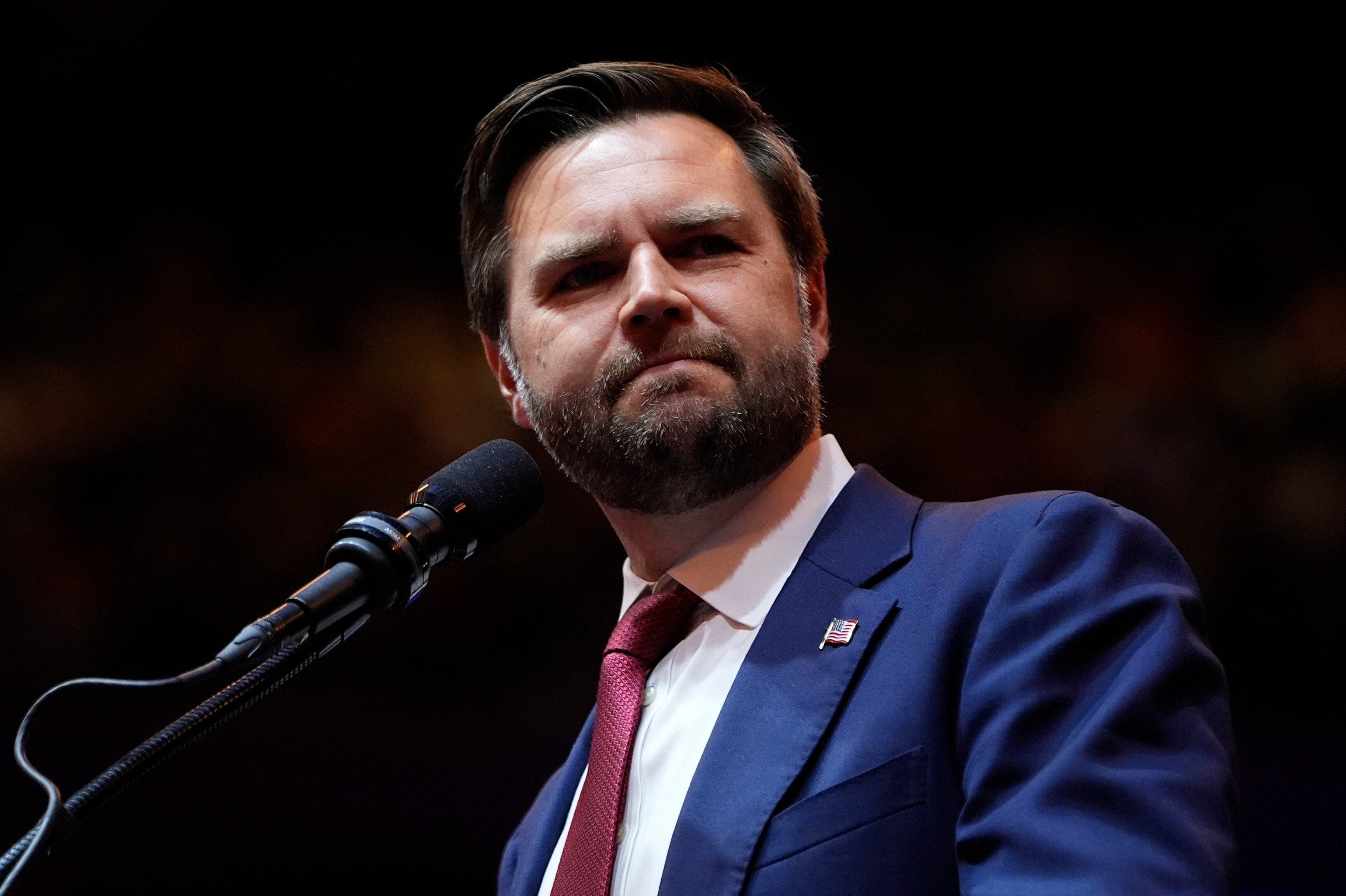
JD Vance Declines To Label Russia’s Vladimir Putin An ‘Enemy’ Of The US

Senator JD Vance (Republican, Ohio) would not concede that Vladimir Putin is an “enemy” of the United States during an interview broadcast on Sunday, claiming that the country needs to be strategic about the way it speaks about the Russian president.

The Republican vice presidential nominee told NBC’s Meet The Press Putin is “clearly an adversary” and a “competitor,” but suggested it would be wrong to antagonise him by using stronger language against him that could hinder diplomacy efforts when it comes to the ongoing war in Ukraine.

“Well, we’re not in a war with him, and I don’t want to be in a war with Vladimir Putin’s Russia. I think that we should try to pursue avenues of peace,” he said.

Vance noted the US “obviously” has “adversarial interests” with Russia.

“We can condemn Russia’s invasion of Ukraine, and I have, and of course the president has. But we also need to engage in some smart diplomacy if we’re ever going to get out of the mess that [Vice President] Kamala Harris has left us in and get back to a posture of peace,” he continued.

Former President Donald Trump has blamed both Ukrainian President Volodymyr Zelenskyy and President Joe Biden for the war breaking out. He has also said negotiating a peace deal between Russia and Ukraine would be one of his first orders of business as president-elect if he secures reelection.

Trump has also criticised the Biden administration’s efforts to continue sending assistance to Kyiv, while reportedly maintaining a cozy relationship with Putin, fuelling concern among Democratic lawmakers and US allies about the future of US aid to Ukraine in the event that he wins in November. The two men allegedly spoke on the phone several times since he left office, and Trump reportedly sent Putin Covid tests for his “personal use” in 2020, according to journalist Bob Woodward’s new book War.

While Trump’s campaign has denied the allegations contained in the book, the former president refused to answer whether he has spoken to Putin since January 2021.

“I don’t comment on that,” Trump told Bloomberg’s editor-in-chief John Micklethwait earlier this month. “But I will tell you that if I did, it’s a smart thing. If I’m friendly with people, if I can have a relationship with people, that’s a good thing and not a bad thing in terms of a country.”

Meanwhile, in the NBC interview, Vance insisted that the US would remain in the NATO military alliance under a Trump presidency.

But he also went on to say Americans “can’t be the policemen of the world,” claiming some NATO members, including Germany, need to spend more on defense, echoing Trump’s words.

“I think a very significant difference between Kamala Harris and Donald Trump is Kamala Harris would like to use our tax dollars and our troops to subsidise Europeans not taking care of their own security,” Vance said. “Donald Trump wants Europe to step up big time to become a real ally of the United States and not just a dependent.”

This year, Germany met NATO’s target for members to spend at least 2% of their GDP on defence spending for the first time since the end of the Cold War in response to the Ukraine-Russia conflict, according to Reuters.

<div class="js-react-hydrator" data-component-name="YouTube" data-component-id="1261" data-component-props="{"itemType":"video","index":17,"contentIndexByType":1,"contentListType":"embed","code":"

","type":"video","meta":{"author":"NBC News","author_url":"https://www.youtube.com/channel/UCeY0bbntWzzVIaj2z3QigXg","cache_age":86400,"description":"In an interview with Meet the Press, Republican VP candidate JD Vance tells Kristen Welker that Russian President Vladimir Putin is “clearly an adversary” but stops short of calling him an enemy.\n\n» Subscribe to NBC News: http://nbcnews.to/SubscribeToNBC\n» Watch more NBC video: http://bit.ly/MoreNBCNews\n\nNBC News Digital is a collection of innovative and powerful news brands that deliver compelling, diverse and engaging news stories. NBC News Digital features NBCNews.com, MSNBC.com, TODAY.com, Nightly News, Meet the Press, Dateline, and the existing apps and digital extensions of these respective properties. We deliver the best in breaking news, live video coverage, original journalism and segments from your favorite NBC News Shows.\n\nConnect with NBC News Online!\nNBC News App: https://apps.nbcnews.com/mobile\nBreaking News Alerts: https://link.nbcnews.com/join/5cj/breaking-news-signup?cid=sm_npd_nn_yt_bn-clip_190621\nVisit NBCNews.Com: http://nbcnews.to/ReadNBC\nFind NBC News on Facebook: http://nbcnews.to/LikeNBC\nFollow NBC News on Twitter: http://nbcnews.to/FollowNBC\nFollow NBC News on Instagram: http://nbcnews.to/InstaNBC\n\n#jdvance #putin #republican","options":{"_cc_load_policy":{"label":"Closed captions","value":false},"_end":{"label":"End on","placeholder":"ex.: 11, 1m10s","value":""},"_start":{"label":"Start from","placeholder":"ex.: 11, 1m10s","value":""},"click_to_play":{"label":"Hold load & play until clicked","value":false}},"provider_name":"YouTube","thumbnail_height":720,"thumbnail_url":"https://i.ytimg.com/vi/U9y7rIZYbB0/maxresdefault.jpg","thumbnail_width":1280,"title":"JD Vance says Putin is ‘clearly an adversary’ but doesn’t call him an enemy","type":"video","url":"https://www.youtube.com/watch?v=U9y7rIZYbB0","version":"1.0"},"flags":[],"enhancements":{},"fullBleed":false,"options":{"theme":"news","device":"desktop","editionInfo":{"id":"uk","name":"U.K.","link":"https://www.huffingtonpost.co.uk","locale":"en_GB"},"originalEdition":"uk","isMapi":false,"isAmp":false,"isVideoEntry":false,"isEntry":true,"isMt":false,"entryId":"671fc90be4b07a6029bab11c","entryPermalink":"https://www.huffingtonpost.co.uk/entry/jd-vance-declines-to-label-russias-vladimir-putin-an-enemy-of-the-us_uk_671fc90be4b07a6029bab11c","entryTagsList":"us-news,vladimir-putin,jd-vance,2024-elections,@us_huffpost_now,@widget-imported","sectionSlug":"politics","deptSlug":null,"sectionRedirectUrl":null,"subcategories":"","isWide":false,"headerOverride":null,"noVideoAds":false,"disableFloat":false,"isNative":false,"commercialVideo":{"provider":"custom","site_and_category":"uk.politics","package":null},"isHighline":false,"vidibleConfigValues":{"cid":"60afc140cf94592c45d7390c","disabledWithMapiEntries":false,"overrides":{"all":"60b8e525cdd90620331baaf4"},"whitelisted":["56c5f12ee4b03a39c93c9439","56c6056ee4b01f2b7e1b5f35","59bfee7f9e451049f87f550b","5acccbaac269d609ef44c529","570278d2e4b070ff77b98217","57027b4be4b070ff77b98d5c","56fe95c4e4b0041c4242016b","570279cfe4b06d08e3629954","5ba9e8821c2e65639162ccf1","5bcd9904821576674bc55ced","5d076ca127f25f504327c72e","5b35266b158f855373e28256","5ebac2e8abddfb04f877dff2","60b8e525cdd90620331baaf4","60b64354b171b7444beaff4d","60d0d8e09340d7032ad0fb1a","60d0d90f9340d7032ad0fbeb","60d0d9949340d7032ad0fed3","60d0d9f99340d7032ad10113","60d0daa69340d7032ad104cf","60d0de02b627221e9d819408"],"playlists":{"default":"57bc306888d2ff1a7f6b5579","news":"56c6dbcee4b04edee8beb49c","politics":"56c6dbcee4b04edee8beb49c","entertainment":"56c6e7f2e4b0983aa64c60fc","tech":"56c6f70ae4b043c5bdcaebf9","parents":"56cc65c2e4b0239099455b42","lifestyle":"56cc66a9e4b01f81ef94e98c"},"playerUpdates":{"56c6056ee4b01f2b7e1b5f35":"60b8e525cdd90620331baaf4","56c5f12ee4b03a39c93c9439":"60d0d8e09340d7032ad0fb1a","59bfee7f9e451049f87f550b":"60d0d90f9340d7032ad0fbeb","5acccbaac269d609ef44c529":"60d0d9949340d7032ad0fed3","5bcd9904821576674bc55ced":"60d0d9f99340d7032ad10113","5d076ca127f25f504327c72e":"60d0daa69340d7032ad104cf","5ebac2e8abddfb04f877dff2":"60d0de02b627221e9d819408"}},"connatixConfigValues":{"defaultPlayer":"8b034f64-513c-4987-b16f-42d6008f7feb","clickToPlayPlayer":"5a777b9b-81fe-41a6-8302-59e9953ee8a2","videoPagePlayer":"19654b65-409c-4b38-90db-80cbdea02cf4"},"topConnatixThumnbailSrc":"data:image/png;base64,iVBORw0KGgoAAAANSUhEUgAAAAEAAAABCAQAAAC1HAwCAAAAC0lEQVR42mNkYAAAAAYAAjCB0C8AAAAASUVORK5CYII=","customAmpComponents":[],"ampAssetsUrl":"https://amp.assets.huffpost.com","videoTraits":null,"positionInUnitCounts":{"buzz_head":{"count":0},"buzz_body":{"count":0},"buzz_bottom":{"count":0}},"positionInSubUnitCounts":{"article_body":{"count":6},"blog_summary":{"count":0},"before_you_go_content":{"count":0}},"connatixCountsHelper":{"count":0},"buzzfeedTracking":{"context_page_id":"671fc90be4b07a6029bab11c","context_page_type":"buzz","destination":"huffpost","mode":"desktop","page_edition":"en-uk"},"tags":[{"name":"us news","slug":"us-news","links":{"relativeLink":"news/us-news","permalink":"https://www.huffingtonpost.co.uk/news/us-news","mobileWebLink":"https://www.huffingtonpost.co.uk/news/us-news"},"relegenceSubjectId":981465,"url":"https://www.huffingtonpost.co.uk/news/us-news/"},{"name":"Vladimir Putin","slug":"vladimir-putin","links":{"relativeLink":"news/vladimir-putin","permalink":"https://www.huffingtonpost.co.uk/news/vladimir-putin","mobileWebLink":"https://www.huffingtonpost.co.uk/news/vladimir-putin"},"relegenceId":3697205,"url":"https://www.huffingtonpost.co.uk/news/vladimir-putin/"},{"name":"jd vance","slug":"jd-vance","links":{"relativeLink":"news/jd-vance","permalink":"https://www.huffingtonpost.co.uk/news/jd-vance","mobileWebLink":"https://www.huffingtonpost.co.uk/news/jd-vance"},"url":"https://www.huffingtonpost.co.uk/news/jd-vance/"},{"name":"2024 elections","slug":"2024-elections","links":{"relativeLink":"news/2024-elections","permalink":"https://www.huffingtonpost.co.uk/news/2024-elections","mobileWebLink":"https://www.huffingtonpost.co.uk/news/2024-elections"},"url":"https://www.huffingtonpost.co.uk/news/2024-elections/"}],"isLiveblogLive":null,"isLiveblog":false,"cetUnit":"buzz_body","bodyAds":["

\r\n\r\n HPGam.cmd.push(function(){\r\n\t\treturn HPGam.render(\"inline-1\", \"entry_paragraph_1\", false, false);\r\n });\r\n\r\n","

\r\n\r\n HPGam.cmd.push(function(){\r\n\t\treturn HPGam.render(\"inline\", \"entry_paragraph_2\", false, false);\r\n });\r\n\r\n","

\r\n\r\n HPGam.cmd.push(function(){\r\n\t\treturn HPGam.render(\"inline-2\", \"entry_paragraph_3\", false, false);\r\n });\r\n\r\n","

\r\n\r\n HPGam.cmd.push(function(){\r\n\t\treturn HPGam.render(\"inline-infinite\", \"repeating_dynamic_display\", false, false);\r\n });\r\n\r\n"],"adCount":0},"isCollectionEmbed":false}”>


Share Button