This Is When You Should Worry About Heart Palpitations

If you’ve experienced heart palpitations, you’ll be all too familiar with how concerning they can be.

The rapid and unusual beating of your heart can often lead to anxious thoughts and before you know it, you’re in an overwhelming cycle between your body and brain. This can also feel like pounding, thumping or even fluttering heartbeats.

However, as difficult as this can feel, these palpitations are often actually quite harmless and not a sign of anything more concerning.

When should you worry about heart palpitations, though?

The heart health experts at British Heart Foundation advised: “If you’re experiencing what feels like frequent or prolonged episodes of palpitations, or you’re also having symptoms such as chest pain or dizziness when you have these episodes, it’s a good idea to talk to your GP.

“They can organise some tests to check whether these are harmless palpitations or a sign of a heart rhythm problem, support you with managing your palpitations or refer you to a specialist if needed.”

The NHS states that common causes of heart palpitations include strenuous exercise, lack of sleep, stress and anxiety, medicine, caffeine, alcohol and recreational drugs.

However, less frequently, they can be caused by anaemia, an overactive thyroid, a heart rhythm problem or even menopause.

If you also feel chest pain, shortness of breath or faint, call 999 or go to A&E.

How to manage heart palpitations

If you’re not in immediate danger, managing your heart palpitations is pretty simple.

NHS Inform recommends reducing stress levels, practising deep breathing exercises, drinking less caffeinated drinks and eating a healthy diet.

Help and support:

  • Mind, open Monday to Friday, 9am-6pm on 0300 123 3393.
  • Samaritans offers a listening service which is open 24 hours a day, on 116 123 (UK and ROI – this number is FREE to call and will not appear on your phone bill).
  • CALM (the Campaign Against Living Miserably) offer a helpline open 5pm-midnight, 365 days a year, on 0800 58 58 58, and a webchat service.
  • The Mix is a free support service for people under 25. Call 0808 808 4994 or email help@themix.org.uk
  • Rethink Mental Illness offers practical help through its advice line which can be reached on 0808 801 0525 (Monday to Friday 10am-4pm). More info can be found on rethink.org.
Share Button

Covid ambulance crews faced ‘crucial PPE delays’

Crews say they faced crucial delays trying to save dying patients because of the time it took to put on equipment.

Share Button

A Tory Leadership Contender Has Revealed The Bizarre Middle Name He Gave His Daughter

A Tory leadership candidate has revealed the bizarre middle name he gave his daughter as a tribute to a former prime minister.

Robert Jenrick admitted the youngster’s middle name is Thatcher because she was born in 2013, the same year her famous namesake died.

“I thought it was a good way of reminding her of a great prime minister,” he told a question and answer session at the Tory conference in Birmingham.

Margaret Thatcher was prime minister between 1979 and 1990, winning three general elections along the way.

Jenrick is currently the bookies’ favourite to succeed Rishi Sunak as Conservative Party leader.

However, he has been at the centre of a major row after claiming in a campaign video that the SAS kill terrorists rather than capturing them because they could be released by the European Court of Human Rights.

He has been condemned by his leadership rivals James Cleverly and Tom Tugendhat, both of whom served in the Army before entering politics.

Appearing on stage after Jenrick this afternoon, Cleverly said: “I’ve never accused the British armed forces of murdering anybody…anyone who makes that assertion better back it up.”

Share Button

Steep fall in young smokers in past decade

Nearly 12% of UK adults smoked in 2023 – the lowest level since 2011, the Office for National Statistics says.

Share Button

Drowned mum ‘watched cold water swimming programme’

Gaynor Lord, 55, was found in a river a week after she disappeared, an inquest hears.

Share Button

Sperm donor cash rises by £10 as UK faces shortage

The £10 rise comes into effect in England, Wales and Northern Ireland from 1 October.

Share Button

Frequent fizzy or fruit drinks and high coffee consumption linked to higher stroke risk

Frequent drinking of fizzy drinks or fruit juice is associated with an increased risk of stroke, according to new findings from global research studies co-led by University of Galway, in collaboration with McMaster University Canada and an international network of stroke researchers.

The research also found that drinking more than four cups of coffee per day also increases the risk of stroke.

The findings come from two analyses of the INTERSTROKE research project which have been published — the effects of fizzy drinks, fruit juice/drink and water was reported in the Journal of Stroke; and the findings related to tea and coffee in the International Journal of Stroke.

Stroke occurs when the blood supply to part of the brain is cut-off and damages brain cells — it can either be ischemic stroke, which is usually due to a blood clot, or when there intracerebral haemorrhage, which is bleeding into the brain tissue.

INTERSTROKE is one of the largest international studies of risk factors for stroke, involving almost 27,000 people, in 27 countries, including almost 13,500 people who experienced their first stroke.

Those who took part in the study came from a broad range of geographical and ethnic backgrounds, with different cardiovascular risk profiles, including Ireland and the UK.

The study which focused on people’s consumption of fizzy drinks and fruit juice found:

  • Fizzy drinks, including both sugar-sweetened and artificially sweetened such as diet or zero sugar, were linked with a 22% increased chance of stroke, and the risk increased sharply with two or more of these drinks a day
  • The link between fizzy drinks and chance of stroke was greatest in Eastern/Central Europe and Middle East, Africa, and South America
  • The research noted that many products marketed as fruit juice are made from concentrates and contain added sugars and preservatives, which may offset the benefits usually linked with fresh fruit, and actually increase stroke risk
  • Fruit juice drinks were linked with a 37% increase in chance of stroke due to bleeding (intracranial haemorrhage). With two of these drinks a day, the risk triples
  • Women show the greatest increased chance of stroke due to bleeding (intracranial haemorrhage) linked to fruit juice/drinks
  • Drinking more than 7 cups of water a day was linked with a reduced odds of stroke caused by a clot

Lead researcher on both studies Professor Andrew Smyth, Professor of Clinical Epidemiology at University of Galway and Consultant Physician at Galway University Hospitals, said: “Not all fruit drinks are created equal — freshly squeezed fruit juices are most likely to bring benefits, but fruit drinks made from concentrates, with lots of added sugars and preservatives, may be harmful. Our research also shows that the chance of stroke increases the more often someone consumes fizzy drinks.

“As a doctor and as someone who has researched the risk of stroke, we would encourage people to avoid or minimise their consumption of fizzy and fruit drinks, and to consider switching to water instead.”

The study which focused on people’s consumption of coffee and tea found:

  • Drinking more than four cups of coffee a day increased chance of stroke by 37%, but not associated with stroke risk for lower intakes
  • Drinking tea was linked with a reduced chance of stroke by 18-20%
  • Drinking 3-4 cups per day of black tea — including Breakfast and Earl Grey teas, but not green tea or herbal teas — was linked with a 29% lower chance of stroke
  • Drinking 3-4 cups per day of green tea was linked with a 27% lower chance of stroke
  • Adding milk may reduce or block the beneficial effects of antioxidants that can be found in tea. The reduced chance of stroke from drinking tea was lost for those that added milk
  • There were important geographical differences in the findings — tea was linked with lower chance of stroke in China and South America but higher chance of stroke in South Asia

Professor Martin O’Donnell, Executive Dean of College of Medicine, Nursing and Health Sciences at University of Galway and Consultant Stroke Physician at Galway University Hospitals, co-leads the INTERSTROKE study in partnership with Professor Salim Yusuf of the Population Health Research Institute at McMaster University, Canada.

Professor O’Donnell said: “A key goal of the INTERSTROKE study is to provide usable information on how to reduce one’s risk of stroke. While hypertension is the most important risk factor, our stroke risk can also be lowered through healthy lifestyle choices in diet and physical activity. The current study adds further information on what constitutes healthy choices on daily intake of beverages.”

Share Button

The Vikings were part of a global network trading in ivory from Greenland

New research from the University of Copenhagen shows that the Vikings travelled more than 6,000 kilometres to the Arctic to hunt for walrus. DNA analyses reveal that walrus ivory from Greenland was brought to Europe and probably as far as the Middle East via extensive trade networks.

In Medieval Europe and the Middle East, merchants from faraway places traded in rare, precious commodities. One of the most popular commodities was ivory, which came from places few could have imagined.

Because when the Crusades temporarily prevented trade in ivory from elephants, walrus ivory became a popular commodity, and seeing as walruses only live in icy-cold parts of the world, it must have been brought to European markets from faraway places.

New research from the University of Copenhagen shows that the Vikings were (the first) part of a network that supplied not just Europe and the Middle East, but probably also East Asia with walrus ivory.

“Our study shows that the Vikings regularly travelled the around 6,000 kilometres to Pikialasorsuaq in Northwest Greenland, an area characterised by harsh climatic conditions. And they probably didn’t do it for the thrill of it, but to obtain this precious commodity, which they brought to Northern Europe and other parts of the world,” says Associate Professor Morten Tange Olsen from the Globe Institute at the University of Copenhagen, who is one of the authors of the new study.

The researchers conducted DNA analyses, which show that the Vikings covered a greater distance than previously believed in their search for walruses.

The study is a collaboration between researchers at the University of Copenhagen, the University of Lund in Sweden and the University of Groningen in the Netherlands and international partners from Greenland, Iceland and Canada.

Trade and exchange of hunting techniques

To prove that the Vikings did indeed cover such a great distance, the researchers studied fragments of walrus skulls mainly, obtained from excavations of Viking villages in Europe and settlements in Greenland and Canada.

“DNA sequences from these fragments provided us with a genetic map of the place of origin of various Arctic walrus populations at the time of the Vikings. This enabled us to show in which part of the Arctic the animals were caught,” says Morten Tange Olsen.

The study also demonstrates that the Vikings probably had more dealings with indigenous Arctic populations than previously assumed, including the Thule and Dorset cultures.

“Our research shows that the Vikings were extremely well-travelled and had a well-established network that covered a larger area than previously believed and which in time and place must have overlapped with early Greenlandic and Canadian cultures,” says Morten Tange Olsen, who is a marine mammal biologist and geneticist. He believes the cross-disciplinary collaboration between archaeologists, biologists and geneticists is what has made the study a success.

The new study once again shows that the Vikings had a remarkable ability to navigate and survive in harsh climatic conditions, and that they helped create a global trade network that reached beyond the borders of Europe.

“Now, for the first time ever, we have a clear genetic map of Arctic walrus populations, which tells us where the Norsemen went to obtain the precious commodity, ivory.”

Morten Tange Olsen and his colleagues hope the study will open our eyes to the Vikings’ complex and extensive trade network and interaction with other cultures.

Share Button

A new and unique fusion reactor comes together with PPPL’s contributions

Like atoms coming together to release their power, fusion researchers worldwide are joining forces to solve the world’s energy crisis. Harnessing the power of fusing plasma as a reliable energy source for the power grid is no easy task, requiring global contributions.

The Princeton Plasma Physics Laboratory (PPPL) — a U.S. national laboratory funded by the Department of Energy (DOE) — is leading several efforts on this front, including collaborating on the design and development of a new fusion device at the University of Seville in Spain. The SMall Aspect Ratio Tokamak (SMART) strongly benefits from PPPL computer codes as well as the Lab’s expertise in magnetics and sensor systems.

“The SMART project is a great example of us all working together to solve the challenges presented by fusion and teaching the next generation what we have already learned,” said Jack Berkery, PPPL’s deputy director of research for the National Spherical Torus Experiment-Upgrade (NSTX-U) and principal investigator for the PPPL collaboration with SMART. “We have to all do this together or it’s not going to happen.”

Manuel Garcia-Munoz and Eleonora Viezzer, both professors at the Department of Atomic, Molecular and Nuclear Physics of the University of Seville as well as co-leaders of the Plasma Science and Fusion Technology Lab and the SMART tokamak project, said PPPL seemed like the ideal partner for their first tokamak experiment. The next step was deciding what kind of tokamak they should build. “It needed to be one that a university could afford but also one that could make a unique contribution to the fusion landscape at the university scale,” said Garcia-Munoz. “The idea was to put together technologies that were already established: a spherical tokamak and negative triangularity, making SMART the first of its kind. It turns out it was a fantastic idea.”

SMART should offer easy-to-manage fusion plasma

Triangularity refers to the shape of the plasma relative to the tokamak. The cross section of the plasma in a tokamak is typically shaped like the capital letter D. When the straight part of the D faces the center of the tokamak, it is said to have positive triangularity. When the curved part of the plasma faces the center, the plasma has negative triangularity.

Garcia-Munoz said negative triangularity should offer enhanced performance because it can suppress instabilities that expel particles and energy from the plasma, preventing damage to the tokamak wall. “It’s a potential game changer with attractive fusion performance and power handling for future compact fusion reactors,” he said. “Negative triangularity has a lower level of fluctuations inside the plasma, but it also has a larger divertor area to distribute the heat exhaust.”

The spherical shape of SMART should make it better at confining the plasma than it would be if it were doughnut shaped. The shape matters significantly in terms of plasma confinement. That is why NSTX-U, PPPL’s main fusion experiment, isn’t squat like some other tokamaks: the rounder shape makes it easier to confine the plasma. SMART will be the first spherical tokamak to fully explore the potential of a particular plasma shape known as negative triangularity.

PPPL’s expertise in computer codes proves essential

PPPL has a long history of leadership in spherical tokamak research. The University of Seville fusion team first contacted PPPL to implement SMART in TRANSP, a simulation software developed and maintained by the Lab. Dozens of facilities use TRANSP, including private ventures such as Tokamak Energy in England.

“PPPL is a world leader in many, many areas, including fusion simulation; TRANSP is a great example of their success,” said Garcia-Munoz.

Mario Podesta, formerly of PPPL, was integral to helping the University of Seville determine the configuration of the neutral beams used for heating the plasma. That work culminated in a paper published in the journal Plasma Physics and Controlled Fusion.

Stanley Kaye, director of research for NSTX-U, is now working with Diego Jose Cruz-Zabala, EUROfusion Bernard Bigot Researcher Fellow, from the SMART team, using TRANSP “to determine the shaping coil currents necessary for attaining their design plasma shapes of positive triangularity and negative triangularity at different phases of operation.” The first phase, Kaye said, will involve a “very basic” plasma. Phase two will have neutral beams heating the plasma.

Separately, other computer codes were used for assessing the stability of future SMART plasmas by Berkery, former undergraduate intern John Labbate, who is, now a grad student at Columbia University, and former University of Seville graduate student Jesús Domínguez-Palacios, who has now moved to an American company. A new paper in Nuclear Fusion by Domínguez-Palacios discusses this work.

Designing diagnostics for the long haul

The collaboration between SMART and PPPL also extended into and one of the Lab’s core areas of expertise: diagnostics, which are devices with sensors to assess the plasma. Several such diagnostics are being designed by PPPL researchers. PPPL Physicists Manjit Kaur and Ahmed Diallo, together with Viezzer, are leading the design of the SMART’s Thomson scattering diagnostic, for example. This diagnostic will precisely measure the plasma electron temperature and density during fusion reactions, as detailed in a new paper published in the journal Review of Scientific Instruments. These measurements will be complemented with ion temperature, rotation and density measurements provided by diagnostics known as the charge exchange recombination spectroscopy suite developed by Alfonso Rodriguez-Gonzalez, graduate student at University of Seville, Cruz-Zabala and Viezzer.

“These diagnostics can run for decades, so when we design the system, we keep that in mind,” said Kaur. When developing the designs, it was important the diagnostic can handle temperature ranges SMART might achieve in the next few decades and not just the initial, low values, she said.

Kaur designed the Thomson scattering diagnostic from the start of the project, selecting and procuring its different subparts, including the laser she felt best fits the job. She was thrilled to see how well the laser tests went when Gonzalo Jimenez and Viezzer sent her photos from Spain. The test involved setting up the laser on a bench and shooting it at a piece of special parchment that the researchers call “burn paper.” If the laser is designed just right, the burn marks will be circular with relatively smooth edges. “The initial laser test results were just gorgeous,” she said. “Now, we eagerly await receiving other parts to get the diagnostic up and running.”

James Clark, a PPPL research engineer whose doctoral thesis focused on Thomson scattering systems, was later brought on to work with Kaur. “I’ve been designing the laser path and related optics,” Clark explained. In addition to working on the engineering side of the project, Clark has also helped with logistics, deciding how and when things should be delivered, installed and calibrated.

PPPL’s Head of Advanced Projects Luis Delgado-Aparicio, together with Marie Skłodowska-Curie fellow Joaquin Galdon-Quiroga and University of Seville graduate student Jesus Salas-Barcenas, are leading efforts to add two other kinds of diagnostics to SMART: a multi-energy, soft X-ray (ME-SXR) diagnostic and spectrometers. The ME-SXR will also measure the plasma’s electron temperature and density but using a different approach than the Thomson scattering system. The ME-SXR will use sets of small electronic components called diodes to measure X-rays. Combined, the Thomson scattering diagnostic and the ME-SXR will comprehensively analyze the plasma’s electron temperature and density.

By looking at the different frequencies of light inside the tokamak, the spectrometers can provide information about impurities in the plasma, such as oxygen, carbon and nitrogen. “We are using off-the-shelf spectrometers and designing some tools to put them in the machine, incorporating some fiber optics,” Delgado-Aparicio said. Another new paper published in the Review of Scientific Instruments discusses the design of this diagnostic.

PPPL Research Physicist Stefano Munaretto worked on the magnetic diagnostic system for SMART with the field work led by University of Seville graduate student Fernando Puentes del Pozo Fernando. “The diagnostic itself is pretty simple,” said Munaretto. “It’s just a wire wound around something. Most of the work involves optimizing the sensor’s geometry by getting its size, shape and length correct, selecting where it should be located and all the signal conditioning and data analysis involved after that.” The design of SMART’s magnetics is detailed in a new paper.

Munaretto said working on SMART has been very fulfilling, with much of the team working on the magnetic diagnostics made up of young students with little previous experience in the field. “They are eager to learn, and they work a lot. I definitely see a bright future for them.”

Delgado-Aparicio agreed. “I enjoyed quite a lot working with Manuel Garcia-Munoz, Eleonora Viezzer and all of the other very seasoned scientists and professors at the University of Seville, but what I enjoyed most was working with the very vibrant pool of students they have there,” he said. “They are brilliant and have helped me quite a bit in understanding the challenges that we have and how to move forward toward obtaining first plasmas.”

Researchers at the University of Seville have already run a test in the tokamak, displaying the pink glow of argon when heated with microwaves. This process helps prepare the tokamak’s inner walls for a far denser plasma contained at a higher pressure. While technically, that pink glow is from a plasma, it’s at such a low pressure that the researchers don’t consider it their real first tokamak plasma. Garcia-Munoz says that will likely happen in the fall of 2024.

Support for this research comes from the DOE under contract number DE-AC02-09CH11466, European Research Council Grant Agreements 101142810 and 805162, the Euratom Research and Training Programme Grant Agreement 101052200 — EUROfusion, and the Junta de Andalucía Ayuda a Infraestructuras y Equipamiento de I+D+i IE17-5670 and Proyectos I+D+i FEDER Andalucía 2014-2020, US-15570.


Share Button

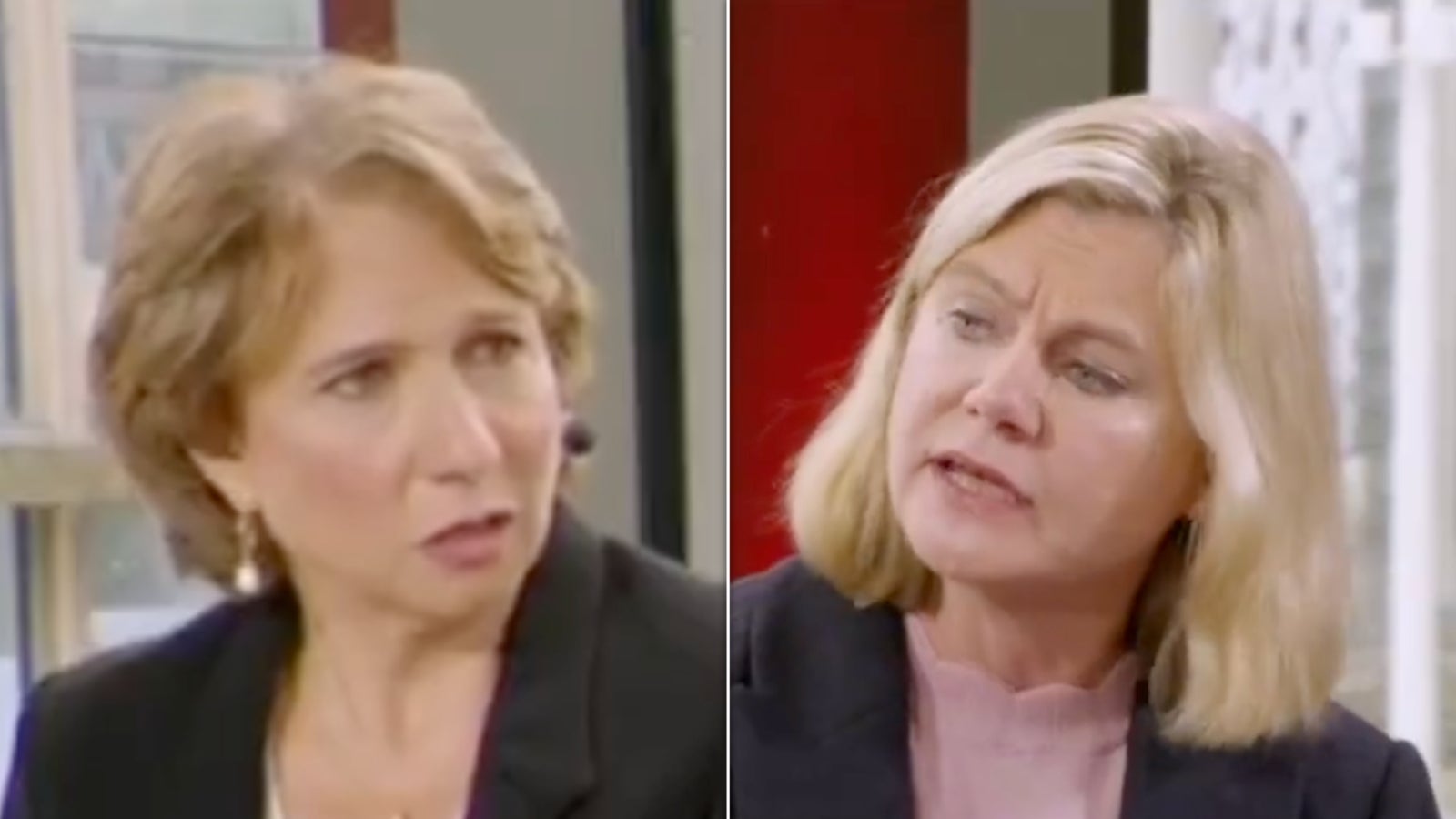
BBC Host Looks Shocked As Ex-Tory Minister Brutally Lays Into Liz Truss

A former Tory minister tore Liz Truss apart on live TV earlier today with such brutality that even the BBC presenter looked surprised.

Justine Greening, who was education secretary under Theresa may, said she was “staggered by the fact that there are still any people in the party who still take Liz Truss seriously”.

Truss, who lost her South West Norfolk seat in July less than two years after her colleagues kicked her out of No.10, spoke at a fringe event at the Conservative’s conference in Birmingham on Monday.

She told a packed room that the Tories would have secured more votes at the general election had she remained in power, and – despite no longer being an MP – claimed parliament has become a “shadow of its former self”.

Discussing the ex-PM’s appearance, the host of BBC Politics Live, Jo Coburn, turned to Greening and asked: “Justine, pleased to see and hear from Liz Truss?”

“Well, I think she can call us when the shuttle lands,” Greening immediately replied.

She continued: “I mean, frankly, it’s astonishing she’s even here after a disastrous Budget that torpedoed any slim, remaining hope that the Conservative Party had at of winning the forthcoming election.

“You know, I am staggered by the fact that there are still any people in the party who still take Liz Truss seriously.”

While Greening was talking, the camera panned to Coburn, who looked shocked at the strength of the former MP’s outburst.

Greening was the MP for Putney between 2005 and 2019, and served alongside Truss in May and David Cameron’s governments.

However, Greening lost the Tory whip after blocking Boris Johnson’s no deal Brexit plan in October 2019.

But, she failed to rule out a return to parliament during her conference appearance today, saying: “I’m currently thinking about what to do.

“What is certainly true is I’m not going to give up on this fight. I think the fight of our lifetime, saving Western civilisation, and that is what I am focusing on.”

Share Button