LBC’s Iain Dale Compares Ban On Gender Identity Talks In Schools To Section 28

LBC presenter Iain Dale compared the government’s plan to ban lessons about gender identity in schools to infamous legislation from the 80s.

Speaking on BBC Question Time last night, Dale hit out at the new strategy which would prevent all children under nine from having any sex education, and stop all students from being taught about trans issues.

PM Rishi Sunak claimed this new draft guidance would stop children from being “exposed to disturbing content”.

However, Dale argued that this ban just echoes Section 28, a damaging Thatcherite policy enforced between 1988 and 2003 where schools were prevented from “promoting” homosexuality.

Dale told BBC Question Time: “Young people always have questions.”

He continued: “In an ideal world, our parents would be able to answer those questions. But we don’t live in an ideal world.

“There are many parents who just will not go into this area whether it’s gender identity of just sex education, so therefore it’s left to the teachers.

“What I don’t want to see is a repeat of what happened in 1988 when Section 28 was brought in and teachers weren’t even allowed to mention the word homosexuality.

“We don’t want that to be here – if young people have got questions about gender identity, they have personal issues, they should be able to approach people [like teachers] for whatever.”

Host Fiona Bruce pointed out: “So the government aren’t suggesting that it wouldn’t happen, but they’re saying it wouldn’t be taught.”

“Well, if I was a teacher I wouldn’t find that very acceptable,” Dale said.

He said that governments are always “years behind developments”, and pointed to the rapid advancement in the field of pornography as an example, saying children are exposed to it now.

He said: “Therefore, if you try to sweep this under the carpet and say nine-year-olds actually shouldn’t be taught that this [pornography] is wrong in school, I think that’s a problem.”

Dale continued: “I don’t want young people today to experience what I did in school where you have the head of needlework and head of geography doing the sex education.

“Neither of them wanted to do it, neither of them really knew anything about it.”

He said the solution was to have “professionals teach sex education”, going from school to school, and “doing it properly”.

Share Button

Rosie Jones Deletes Twitter Account As She ‘Could Not Handle The Cesspit Of Hate’

Comedian Rosie Jones has confirmed she has deactivated her account on X (formerly Twitter) as she felt she could no longer “handle” the torrent of abuse directed at her.

Before deleting her account, Rosie posted a message – which was screenshotted by fan – reading: “I’ve not felt a lot of joy from this social platform in a long time, so to come on and see I’m trending, yet again, is exhausting.

“I could say comedy is subjective but the truth is the comments are hurtful. I used to love Twitter but I don’t care for this centre of hate.”

Over on Instagram, Rosie confirmed that she had “finally deactivated Twitter”, noting: “My god do I feel good about it.”

The Trip Hazard star – who has spoken candidly on the subject of the ableist online abuse she receives on a number of occasions – explained: “[I’m] still on [Instagram], I just could not handle the cesspit of hate. I used to love Twitter, but not what it had morphed into. It’s a no from me.”

Last year, Rosie told her fans she’d be “laying low” for a brief period, after a string of TV appearances led to her receiving a wave of yet more ableist abuse.

“Comedy is subjective and it’s OK if I’m not your cup of tea. But please remember the difference between personal preference and downright ableism,” she said at the time.

A year earlier, she tweeted: “Just a reminder… if you don’t find me, or another comedian, funny, that’s totally understandable. Comedy is subjective. BUT there’s no need to write your dislike for us on here, making sure to tag us into the tweet. Just change the channel and get on with your life, yeah?”

Rosie on stage at the London Palladium last year

Joe Maher/Comic Relief via Getty Images

Before breaking through as a stand-up comic, Rosie – who has cerebral palsy – was a writer on panel shows like Would I Lie To You? and 8 Out Of 10 Cats, as well as penning an episode of the Netflix teen comedy Sex Education.

She has also acted in shows like Casualty and Call The Midwife.

The Yorkshire-born star has repeatedly used her platform to speak out about the discrimination that she and other disabled people face in modern Britain, most notably in a Channel 4 documentary released last year.

However, this doc proved to be divisive upon its release, as it featured an ableist slur in its title.

Share Button

European Organisers Respond After EU Makes An Official Complaint About This Year’s Competition

Eurovision bosses have responded to a complaint made by the European Union’s vice president about this year’s competition.

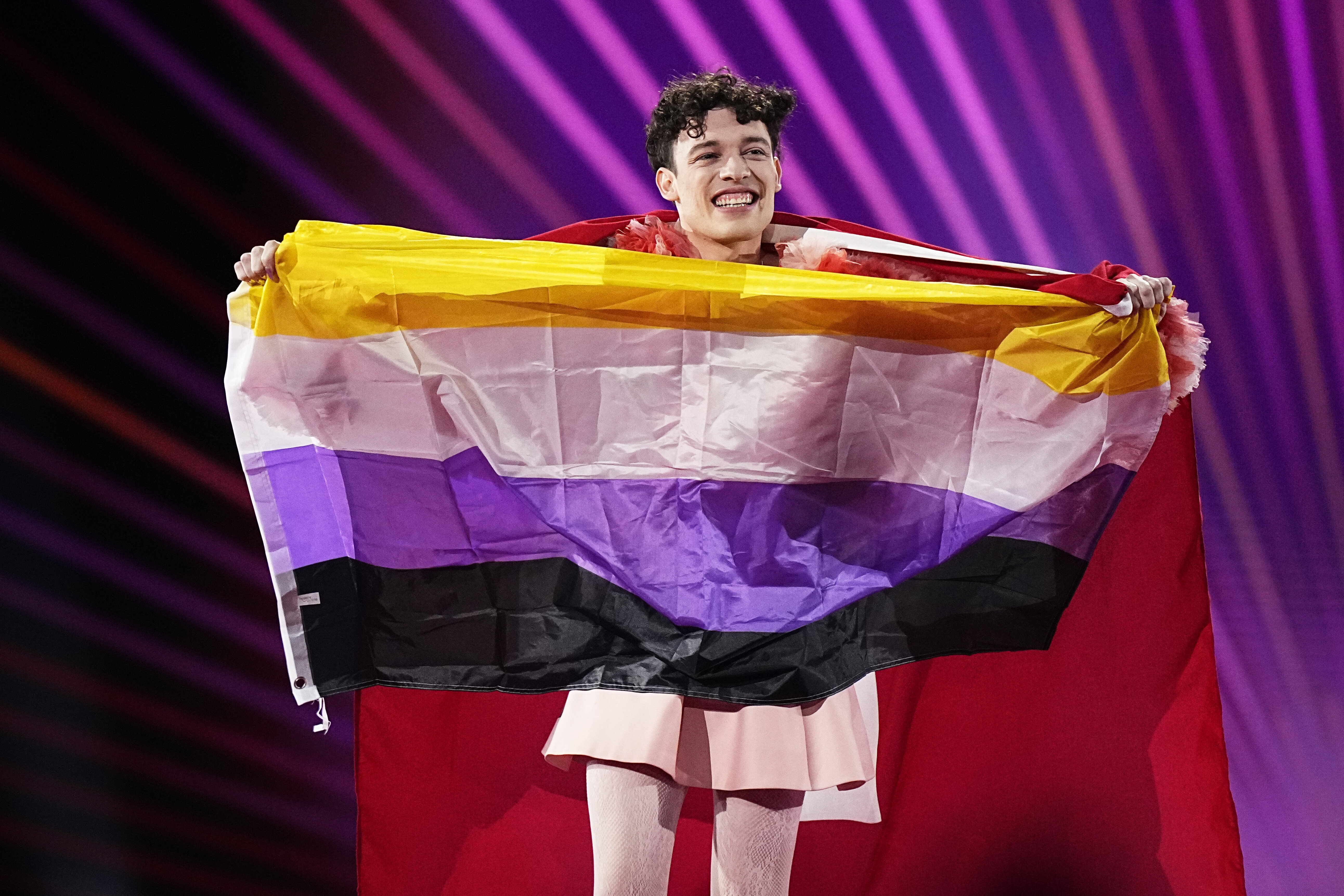
Even this year’s winner Nemo called out the European Broadcasting Union (EBU) for their “double standards” after the Swiss singer was not permitted to wave the non-binary pride flag in the arena (they smuggled one in anyway, and Eurovision later posted a picture of it to their official Instagram page).

But that’s not the only flag-related issue this year.

Eurovision winner Nemo on stage in Malmö

Martin Sylvest Andersen via Getty Images

When reports emerged claiming that the flag of the EU was also not allowed in the arena, the union’s vice president Margaritis Schinas filed an official complaint to the EBU.

On Thursday, Schinas revealed he’d already received a response about his complaint, which he shared on X.

“As you rightly note, the Eurovision Song Contest shares the same values of universality, diversity, equality and inclusivity as the European Union itself,” the letter from EBU director general Noel Curran began.

“The EBU has a proud tradition of celebrating diversity through music and in bringing European citizens together, ‘United by Music’. Our goal is to translate our ideals and values into reality, whilst endeavouring to innovate and improve all aspects of the Song Contest, together with the relevant host broadcaster.

“We are proud each year to organise a truly inclusive show that is the most watched (non-sport) entertainment event in Europe.”

The letter went on to insist that there “has never been an express ban on the EU flag at the Eurovision Song Contest”, pointing out that it has been “clearly visible in previous editions”.

“However,” Curran continued, “our general approach to the flags at the venue each year has always been based on a positive, inclusive list of the flags of participating countries only and the rainbow flag.

“It is the case that in 2024, as a result of the sensitive global political context and serious security risks on-site, the list of accepted participating country flags, along with all other security policies, was applied more strictly than ever at the entrance to the venue.”

“We wish to assure you that it was never our intention to discredit the European Union flag as such an important symbol of European unity and solidarity, and we will be sure to revisit our policy for next year.”

The EBU previously took issue with contestants and guest performers making visual displays of solidarity with Palestine during this year’s competition.

Irish act Bambie Thug claimed they were made to remove a message calling for a “ceasefire” in ancient Gaelic from their stage costume, while opening act Eric Saade was rebuked for incorporating a Palestinian keffiyeh into his stage outfit.

Eric Saade on stage during the first semi-final of Eurovision 2024

JESSICA GOW/TT via Getty Images

Eric – who is of Palestinian descent – later hit back at the EBU, claiming: “The EBU seem to think that my ethnicity is controversial. It says nothing about me, but everything about them.”

The Portuguese delegation also made an official complaint to the EBU after their performance was uploaded to YouTube later than other acts’, which organisers said was due to “pro-Palestinian elements”.

Portuguese singer Iolanda had sported nail art inspired by the traditional Palestinian keffiyeh for her performance in the final.

Share Button

Junior doctors talks need time and space – Atkins

The health secretary says renewed negotiations should take place away from deadlines and social media.

Share Button

Late education plans mean kids miss out on support in England

Many councils in England are failing to meet legal deadlines to set out the extra help pupils need to access education.

Share Button

Otters, especially females, use tools to survive a changing world

Sea otters are one of the few animals that use tools to access their food, and a new study has found that individual sea otters that use tools — most of whom are female — are able to eat larger prey and reduce tooth damage when their preferred prey becomes depleted.

The study researchers and their enlisted volunteer “otter spotters” followed 196 radio-tagged southern sea otters off the coast of California to better understand how the threatened species uses tools in a rapidly changing environment. The research team from The University of Texas at Austin, University of California, Santa Cruz, Monterey Bay Aquarium and elsewhere monitored how the marine mammals used tools — such as rocks, shells and trash — to break open prey and identified links to the animals’ dietary patterns and dental health.

For the first time, researchers found that the use of tools among male and female otters led to a reduction in tooth injuries.

“Sea otters vary in how often they use tools,” said Chris Law, a postdoctoral researcher and an Early Career Provost Fellow at UT Austin who led the study while a graduate student at UC Santa Cruz. “The females are likely using tools to overcome their smaller body size and weaker biting ability in order to meet their calorie demands. Raising pups takes a lot of energy, and the females need to be efficient in their foraging. The study shows that tool use is an important behavior for survival.”

The study is published in Science.

In the southern sea otter’s range of coastal Central California, some of the preferred prey such as large abalone and sea urchins, are not difficult to break open. However, these food resources dwindle or disappeare in many areas. This leads otters to prey more often on crabs, clams, mussels and small marine snails whose hard shells can damage the otter’s teeth in the process of prying them open.

Tooth condition is important for survival because when an otter’s teeth become too worn or damaged, they could starve. Using tools helped individual otters to meet their calorie needs by branching out into different types of prey. The study found female otters had less tooth damage than male otters did.

Research shows that female otters are more likely to use tools, and in the study, those that did were able to access harder or larger prey than otters that did not use tools. In fact, females were able to consume prey that were up to 35% harder compared with that of males that used tools.

Female dolphins, chimps and bonobos are also known to use tools more than their male counterparts, probably for the same reasons. In these species, females tend to raise offspring, and they are often the ones that pass down tool-use behavior to offspring.

Listed as a threatened species under the U.S. Endangered Species Act, southern sea otters number only about 3,000 in California, where they play a critical role in marine ecosystems preying on sea urchins that feed on kelp forests.

Rita Mehta and Tim Tinker of the University of California, Santa Cruz; Jessica Fujii, Teri Nicholson and Michelle Staedler with the Monterey Bay Aquarium; Joseph Tomoleoni of the U.S. Geological Survey; and Colleen Young of the California Department of Fish and Wildlife were also authors on the paper. Chris Law was previously a postdoctoral scholar with University of Washington.

The research was funded by the U.S. National Science Foundation, Packard Foundation, Coastal Conservancy, U.S. Fish and Wildlife Service, Pacific Gas & Electric and Bureau of Ocean Energy Management.

Share Button

Researchers wrestle with accuracy of AI technology used to create new drug candidates

Artificial intelligence (AI) has numerous applications in healthcare, from analyzing medical imaging to optimizing the execution of clinical trials, and even facilitating drug discovery.

AlphaFold2, an artificial intelligence system that predicts protein structures, has made it possible for scientists to identify and conjure an almost infinite number of drug candidates for the treatment of neuropsychiatric disorders. However recent studies have sown doubt about the accuracy of AlphaFold2 in modeling ligand binding sites, the areas on proteins where drugs attach and begin signaling inside cells to cause a therapeutic effect, as well as possible side effects.

In a new paper, Bryan Roth, MD, PhD, the Michael Hooker Distinguished Professor of Pharmacology and director of the NIMH Psychoactive Drug Screening Program at the University of North Carolina School of Medicine, and colleagues at UCSF, Stanford and Harvard determined that AlphaFold2 can yield accurate results for ligand binding structures, even when the technology has nothing to go off of. Their results were published in Science.

“Our results suggest that AF2 structures can be useful for drug discovery,” said Roth, senior author who holds a joint appointment at the UNC Eshelman School of Pharmacy. “With a nearly infinite number of possibilities to create drugs that hit their intended target to treat a disease, this sort of AI tool can be invaluable.”

AlphaFold2 and Prospective Modeling

Much like weather forecasting or stock market prediction, AlphaFold2 works by pulling from a massive database of known proteins to create models of protein structures. Then, it can simulate how different molecular compounds (like drug candidates) fit into the protein’s binding sites and produce wanted effects. Researchers can use the resulting combinations to better understand protein interactions and create new drug candidates.

To determine the accuracy of AlphaFold2, researchers had to compare the results of a retrospective study against that of a prospective study. A retrospective study involves researchers feeding the prediction software compounds they already know bind to the receptor. Whereas, a prospective study requires researchers to use the technology as a fresh slate, and then feed the AI platform information about compounds that may or may not interact with the receptor.

Researchers used two proteins, sigma-2 and 5-HT2A, for the study. These proteins, which belong to two different protein families, are important in cell communication and have been implicated in neuropsychiatric conditions such as Alzheimer’s disease and schizophrenia. The 5-HT2A serotonin receptor is also the main target for psychedelic drugs which show promise for treating a large number of neuropsychiatric disorders.

Roth and colleagues selected these proteins because AlphaFold2 had no prior information about sigma-2 and 5-HT2A or the compounds that might bind to them. Essentially, the technology was given two proteins for which it wasn’t trained on — essentially giving the researchers a “blank slate.”

First, researchers fed the AlphaFold system the protein structures for sigma-2 and 5-HT2A, creating a prediction model. Researchers then accessed physical models of the two proteins that were produced using complex microscopy and x-ray crystallography techniques. With a press of a button, as many as 1.6 billion potential drugs were targeted to the experimental models and AlphaFold2 models. Interestingly, every model had a different drug candidate outcome.

Successful Hit Rates

Despite the models having differing results, they show great promise for drug discovery. Researchers determined that the proportion of compounds that actually altered protein activity for each of the models were around 50% and 20% for the sigma-2 receptor and 5-HT2A receptors, respectively. A result greater than 5% is exceptional.

Out of the hundreds of millions of potential combinations, 54% of the drug-protein interactions using the sigma-2 AlphaFold2 protein models were successfully activated through a bound drug candidate. The experimental model for sigma-2 produced similar results with a success rate of 51%.

“This work would be impossible without collaborations among several leading experts at UCSF, Stanford, Harvard, and UNC-Chapel Hill,” Roth said. “Going forward we will test whether these results might be applicable to other therapeutic targets and target classes.”

Share Button

Bodies left decomposing in hospitals, reports find

Leeds General Infirmary among NHS hospitals criticised for storing bodies at unsuitable temperatures.

Share Button

How did sabre-toothed tigers acquire their long upper canine teeth?

In a groundbreaking study, an international team led by scientists from the University of Liège has investigated the evolutionary patterns behind the development of sabre teeth, with some unexpected results along the way. A study that enriches our understanding of the Earth’s past, but also documents the mechanisms leading to evolutionary convergence.

Sabre teeth, those iconic elongated upper canine teeth, have long fascinated both scientists and the general public, notably because they have appeared several times in the fossil record, including two particularly well-known lineages of sabre-toothed tigers: the felids (the family of our domestic cats, lions, tigers, etc.) and the nimravids (a completely extinct family). However, the process by which these lineages acquired their elongated upper canines remains rather unclear.

Narimane Chatar, lead author of the study, who completed her doctorate at the EDDy Lab at the University of Liège and is now a post-doctoral fellow at UC Berkeley in the United States, has led an ambitious study to uncover the secrets of sabre tooth evolution. Using state-of-the-art 3D scanners and analytical methods, the team meticulously collected and analysed data from a diverse set of current and extinct species. “We quantified the shape of 99 mandibles and 91 skulls, from different eras and continents, giving us a better understanding of the evolution of these animals,” explains Dr Chatar. “Unlocking the secrets of sabre tooth evolution not only enriches our understanding of the Earth’s past, but also documents the mechanisms leading to evolutionary convergence,” says Professor Valentin Fischer, Director of the EDDyLab at ULiège.

The study revealed some surprising results. The first is that rather than contrasting two distinct cranial morphologies in species with elongated upper canines and those with short teeth, there is instead a continuum of form linking the smallest present-day cats and their extinct sabre-toothed counterparts. “From a morphological point of view, the skull of a present-day small cat is just as strange and modified as that of a large sabre-toothed felid,” says Dr Margot Michaud, a researcher at the University of French Guyana in Cayenne. These are therefore the two extremes of a continuum of forms that feline predators have seen evolve over geological time. “Our study suggests that what we often think of as examples of evolutionary patterns in textbooks are actually simplified for educational purposes. However, when we immerse ourselves in statistical analyses, we discover much more complex scenarios in these cases, as suggested by the results of our convergence tests,” explains Davide Tamagnini, post-doctoral researcher at the University of Rome La Sapienza.

The second surprise concerns the path taken by evolution to produce sabre-toothed species. In fact, the team’s work has revealed that sabre-toothed species show faster rates of morphological evolution at the start of their evolutionary history than species with shorter canines. “Among other fascinating discoveries, we have shown that craniomandibular integration in sabre-toothed species is reduced, facilitating greater adaptability and diversification in the jaw and cranial morphology,” points out Margot Michaud. Thus, rapid morphological diversification and a fairly plastic skull have been identified as two key components that facilitated the emergence of elongated upper canines in both felids and nimravids. “As a result, there appears to be a common recipe for evolving into sabre-toothed feline-like predators,” says Dr Chatar.

Finally, the team’s research highlighted the decline of sabre-toothed forms as well as the broader trends of feline-like predators over the course of their evolutionary history. Despite the relatively recent extinction of sabre-toothed forms ‘only’ a few thousand years ago, feline predators have in fact been in decline since the Miocene epoch (between -23 and -5 million years ago). “Some of these feline predators, particularly the sabre-toothed species, rapidly occupied fairly specialised niches, which made them more susceptible to extinction,” explains Dr Tamagnini. This phenomenon, known as ‘ratchet’ or macroevolutionary ratchet, has been proposed as a potential driver for the decline of certain groups, where evolution favours the loss of early generalised forms, leading to the emergence of more specialised, but also more vulnerable, forms later in the history of the lineage.

“Predators have their own evolutionary pathways and risks of extinction. Studying how ancient predators prospered and declined provides us with information about the possible futures of our ecosystems,” concludes Professor Fischer.

Share Button

ADHD meds shortage is ‘isolating and frustrating’

ADHD patients are struggling with medication shortages, but the DoH says the disruption will resolve soon.

Share Button