Metalens expands Its reach from light to sound

Junsuk Rho from the Department of Mechanical Engineering, the Department of Chemical Engineering, and the Department of Electrical Engineering, Dr. Dongwoo Lee from the Department of Mechanical Engineering, and Beomseok Oh, a PhD student, from the Department of Chemical Engineering at Pohang University of Science and Technology (POSTECH) have achieved a breakthrough in surpassing the limitations of traditional acoustic metalenses. They have successfully developed the first wide field-of-hearing metalens. This research has been recently published in the international journal, Nature Communications.

Sound waves, originating from vibrations in mediums like gases and liquids, are omnipresent in our daily experiences. Notably, high-frequency ultrasound waves, imperceptible to the human ear, are utilized in medical ultrasound examinations for diagnosing tissues or organs within the body. Consequently, sound waves serve as a vital energy source not only in medicine but also in telecommunications, energy harvesting, imaging, and various other domains. Acoustic lenses are fundamental in all these applications as they are instrumental in accurately focusing sound waves.

Professor Junsuk Rho’s team, known for their work on metalens, is attracting acclaim for their advancements in optical metalens for light wave manipulation as well as acoustic metalens for sound control. Metalens, comprised of artificial structures usually smaller than the wavelength of the waves, enables unrestricted manipulation of waves while significantly reducing lens thickness. This research extends the concept of a “wide field-of-view,” currently trending in next-generation AR and VR devices and displays, into the realm of acoustics, opening avenues for novel applications of “wide field-of-hearing” technology.

Wide field-of-hearing measures the breadth of angles through which a lens can display a sound image. Traditional acoustic metalenses suffer from undesired sound distortion (aberration) when waves approach at non-perpendicular angles. The team devised a method to meticulously control the phase of the metalens, ensuring precise focusing of sound waves regardless of their angle of incidence. This marks the first successful achievement and demonstration of a wide field-of-hearing using ultra-thin metalenses, achieving up to 140 degrees of field-of-hearing without sound distortion.

Professor Junsuk Rho of POSTECH stated, “By first demonstrating the significance and necessity of field-of-hearing, we’ve established a new paradigm in the realm of acoustic metalenses.” He added, “We will continue our work to further explore its applications in acoustic imaging and high-sensitivity sensing along with explorations in energy harvesting and submarine monitoring within underwater environments.”

The research was conducted with support from POSCO N.EX.T IMPACT and an organization-specific task of the Korea Research Institute of Ships & Ocean Engineering.

Share Button

Brazilian butt lift firms banned after woman in hospital

The woman required emergency hospital treatment following the procedure in a hotel function room.

Share Button

Teenager used pills for illegal abortion, court hears

Sophie Harvey, of St Mary’s Road, Cirencester, is accused of taking the drug to end her pregnancy.

Share Button

Here’s How Actors Stay Still When Playing Dead, And It’s Not How I Thought

It doesn’t matter whether you’re into soaps, gore, rom-coms, or dramas; rare is the telly lover who’s managed to avoid seeing the on-screen death of their favourite character.

And if you’ve watched a show with a particularly high character kill-off rate, like Game of Thrones, you’ve likely witnessed post-battle scenes that’d make Napoleon feel queasy.

But once you’ve got past why your beloved character has gone to Hollywood Heaven, the question of just how actors manage to lay so convincingly still for so long during the corpse shots comes up.

Luckily, Marina Hyde, co-host of behind-the-scenes podcast The Rest Is Entertainment, has answers for us.

Which are?

Marina spoke to a producer about forensic pathology prior to the podcast and learned that yep, people do cast corpses.

She explained that “some people do freak out” when playing corpses, and not everyone can lay still enough for long enough to get a good shot, “so you have to audition [for corpse roles] by lying still.”

Ever with perfect corpse casting, though, shots used to not linger on the chest because it’s very hard not to show the rise and fall of breath.

“But now ― this is like one of the big routine instances of VFX ― they can capture it at rest (the chest) at one moment, then they layer that still in the rest of the footage.

“For those ones where there’s an open-eye corpse, the VFX is particularly useful,” Marina added.

Her co-host Richard Osman said, “Essentially there are some actors who are very very good at being still, and now they cheat the ‘not breathing’ elements.”

Woah.

I know! A Reddit thread asking people who had played dead on-screen to share their experiences also provides some gory insight.

“I was on an episode of Chicago Fire as a featured extra. I was in a rubble scene after a marathon bombing,” site user Citrous_Oyster wrote.

“The camera was on a crane facing down on the file and I was laying on my back across the rubble. I was instructed to try and hold my breath as long as I could or take short breaths. I was in a yellow jacket so it also hid some of my breathing which helped,” they shared.

“I work in post-production and can confirm I have removed breaths from actors playing dead. Not particularly complicated generally,” Redditor Jewel-jones added.

The more you know…

Share Button

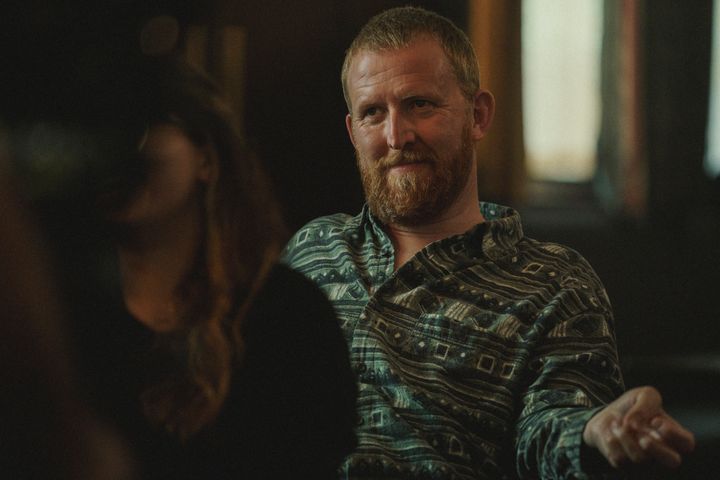
Baby Reindeer Star Richard Gadd Gets Candid About His ‘Hardest Day’ On Set

Richard Gadd has reflected on some of his more difficult days on the set of Baby Reindeer.

The hit Netflix miniseries is inspired by its creator’s real-life experiences of stalking and sexual abuse, while also exploring themes like mental health and gender identity.

Because the show was so rooted in his own trauma, Richard has admitted that it made for some hard days on set, naming the shooting of his character’s sexual assault as one such example.

Asked about his “hardest day on set”, he told The Hollywood Reporter: “It was really difficult going back there. I remember going to set for the diary days, the sexual assault days, and we sandwiched them together so it wasn’t so spread out.

“I think it was the right thing to do, so that it would only be two or three days where we had to stay in that zone.”

Richard admitted: “On the way to set those days, I would be hoping for a major traffic jam or something so I could just have another beat to prepare and wrap my head around it to think.”

“The actor who plays Darrien, Tom Goodman-Hill, what a legend. I felt really safe with him, really comfortable,” he added.

“It’s weird to shoot a scene that you know you have to shoot but don’t really want to. He was such a pro, such a good actor that he made it so much easier.”

Meanwhile, Richard recently spoke about how these scenes would often move crew members to tears while they were being filmed.

Tom Goodman-Hill plays Darrien in Baby Reindeer

Ed Miller/Netflix

Baby Reindeer was met with a hugely positive reaction from critics, and has not budged from the top spot on Netflix’s list of its most-watched shows in a number of weeks.

However, more recently, conversations have been raised about whether enough was done to conceal the identities of the real-life people who inspired characters in the show.

For his part, Richard has repeatedly spoken out against internet “sleuths” trying to decipher the real people behind the show, as has his co-star Jessica Gunning, who plays stalker Martha in Baby Reindeer.

Share Button

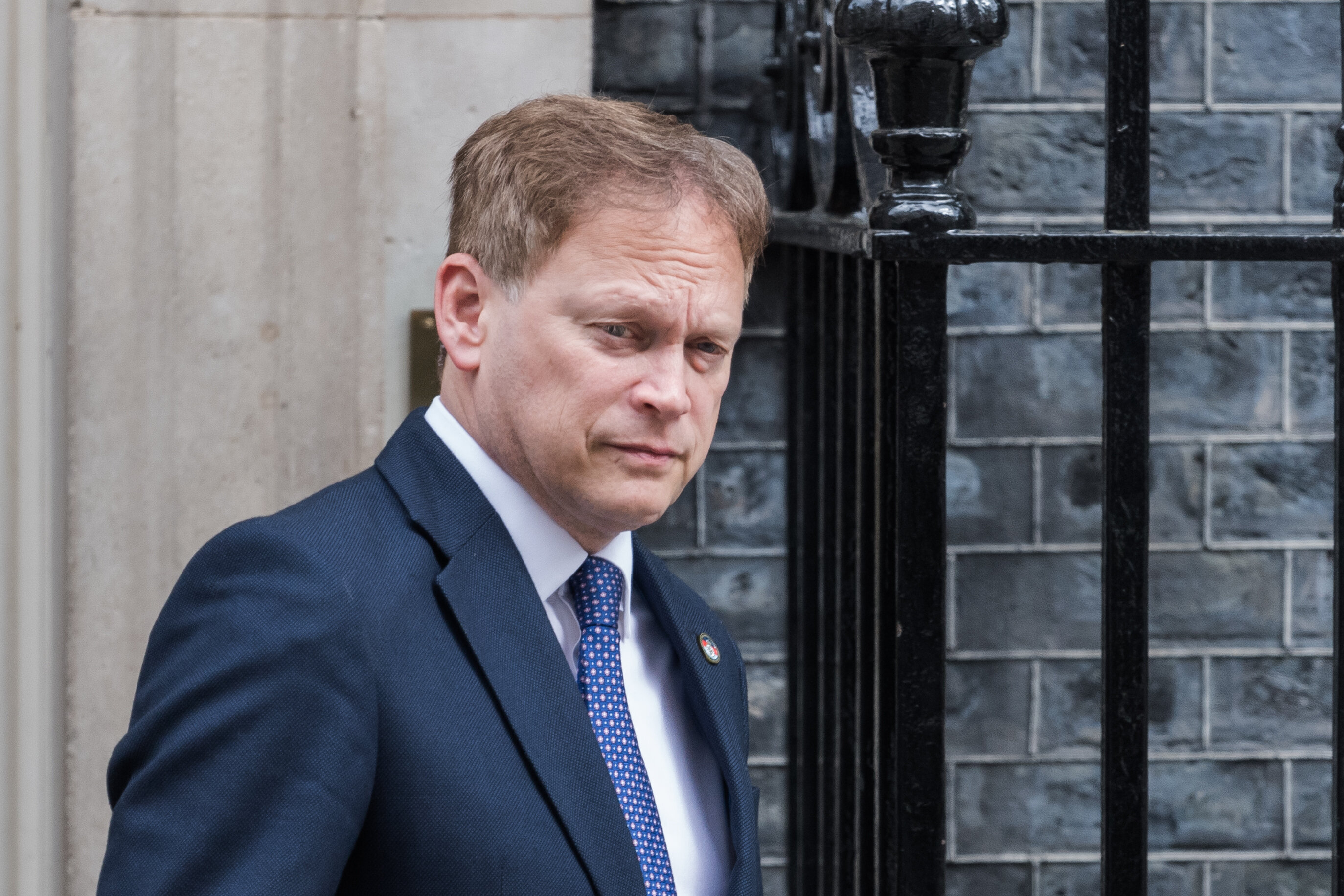
Grant Shapps Fails To Float Anyone’s Boat With Bewildering New Pledge: ‘None The Wiser’

Grant Shapps’s latest efforts to promote his government have turned into a bit of a shipwreck, judging from the online reaction.

The defence secretary was on the broadcast round this morning to discuss the “new golden age of British shipbuilding”.

He announced that the UK would be building 28 new ships and submarines for the Royal Navy, including “up to six new warships”.

But eagle-eyed critics on X (formerly Twitter) were quick to notice that Shapps was curiously inconsistent around the details.

For instance, the pledge sounded quite similar to another, relatively recent promise from the Conservatives – Boris Johnson’s famous vow to build up to 40 new hospitals.

Just last year, a review from parliament’s Public Accounts Committee concluded that it had “no confidence” the government would ever deliver on this promise.

People were also completely mystified over exactly how many ships were included in this promise.

Shapps said the government was looking to build 28 ships – but then changed it to “up to 28”.

Many critics also picked up on Shapps’s confusing conflation of the six ships the government promised to build two years ago and his current pledge.

He told journalists that the Tories had the “desire to” build these boats two years ago – but did not have the “means”.

He claimed that now the UK’s defence spending has increased, the government does have the means – and so will finally be following through on this two-year-old pledge.

So…how many is the government actually building? Social media seemed to decide it was anybody’s guess.

Share Button

Top doctor cancer-free a year after world-first therapy

Richard Scolyer has undergone a new treatment for glioblastoma, based on his own melanoma research.

Share Button

Life-saving overdose drug to be given without prescription

Addicts at risk of an opioid overdose in England will get supplies of the antidote for emergency use.

Share Button

Assisted dying set to move closer on Isle of Man

A bill to allow assisted dying for the terminally ill is expected to pass a key parliamentary stage.

Share Button

Insights into protein evolution

Rice University’s Peter Wolynes and his research team have unveiled a breakthrough in understanding how specific genetic sequences, known as pseudogenes, evolve. Their paper was published May 13 by the Proceedings of the National Academy of Sciences.

Led by Wolynes, the D.R. Bullard-Welch Foundation Professor of Science, professor of chemistry, biosciences and physics and astronomy and co-director of the Center for Theoretical Biological Physics (CTBP), the team focused on deciphering the complex energy landscapes of de-evolved, putative protein sequences corresponding to pseudogenes.

Pseudogenes are segments of DNA that once encoded proteins but have since lost their ability to do so due to sequence degradation — a phenomenon referred to as devolution. Here, devolution represents an unconstrained evolutionary process that occurs without the usual evolutionary pressures that regulate functional protein-coding sequences.

Despite their inactive state, pseudogenes offer a window into the evolutionary journey of proteins.

“Our paper explains that proteins can de-evolve,” Wolynes said. “A DNA sequence can, by mutations or other means, lose the signal that tells it to code for a protein. The DNA continues to mutate but does not have to lead to a sequence that can fold.”

The researchers studied junk DNA in a genome that has de-evolved. Their research revealed that a mutation accumulation in pseudogene sequences typically disrupts the native network of stabilizing interactions, making it challenging for these sequences, if they were to be translated, to fold into functional proteins.

However, the researchers observed instances where certain mutations unexpectedly stabilized the folding of pseudogenes at the cost of altering their previous biological functions.

They identified specific pseudogenes, such as cyclophilin A, profilin-1 and small ubiquitin-like modifier 2 protein, where stabilizing mutations occurred in regions crucial for binding to other molecules and other functions, suggesting a complex balance between protein stability and biological activity.

Moreover, the study highlights the dynamic nature of protein evolution as some previously pseudogenized genes may regain their protein-coding function over time despite undergoing multiple mutations.

Using sophisticated computational models, the researchers interpreted the interplay between physical folding landscapes and the evolutionary landscapes of pseudogenes. Their findings provide evidence that the funnellike character of folding landscapes comes from evolution.

“Proteins can de-evolve and have their ability to fold compromised over time due to mutations or other means,” Wolynes said. “Our study offers the first direct evidence that evolution is shaping the folding of proteins.”

Along with Wolynes, the research team includes lead author and applied physics graduate student Hana Jaafari ; CTBP postdoctoral associate Carlos Bueno ; University of Texas at Dallas graduate student Jonathan Martin; Faruck Morcos, associate professor in the Department of Biological Sciences at UT-Dallas; and CTBP biophysics researcher Nicholas P. Schafer.

The implications of this research extend beyond theoretical biology with potential applications in protein engineering, Jaafari said.

“It would be interesting to see if someone at a lab could confirm our results to see what happens to the pseudogenes that were more physically stable,” Jaafari said. “We have an idea based on our analysis, but it’d be compelling to get some experimental validation.”

Share Button