Just believing that an AI is helping boosts your performance

Sometimes it seems like an AI is helping, but the benefit is actually a placebo effect — people performing better simply because they expect to be doing so — according to new research from Aalto University in Finland. The study also shows how difficult it is to shake people’s trust in the capabilities of AI systems.

In this study, participants were tasked with a simple letter recognition exercise. They performed the task once on their own and once supposedly aided by an AI system. Half of the participants were told the system was reliable and it would enhance their performance, and the other half was told that it was unreliable and would worsen their performance.

‘In fact, neither AI system ever existed. Participants were led to believe an AI system was assisting them, when in reality, what the sham-AI was doing was completely random,’ explains doctoral researcher Agnes Kloft.

The participants had to pair letters that popped up on screen at varying speeds. Surprisingly, both groups performed the exercise more efficiently — more quickly and attentively — when they believed an AI was involved.

‘What we discovered is that people have extremely high expectations of these systems, and we can’t make them AI doomers simply by telling them a program doesn’t work,’ says Assistant Professor Robin Welsch.

Following the initial experiments, the researchers conducted an online replication study that produced similar results. They also introduced a qualitative component, inviting participants to describe their expectations of performing with an AI. Most had a positive outlook toward AI and, surprisingly even skeptical people still had positive expectations about its performance.

The findings pose a problem for the methods generally used to evaluate emerging AI systems. ‘This is the big realization coming from our study — that it’s hard to evaluate programmes that promise to help you because of this placebo effect’, Welsch says.

While powerful technologies like large language models undoubtedly streamline certain tasks, subtle differences between versions may be amplified or masked by the placebo effect — and this is effectively harnessed through marketing.

The results also pose a significant challenge for research on human-computer interaction, since expectations would influence the outcome unless placebo control studies were used.

‘These results suggest that many studies in the field may have been skewed in favour of AI systems,’ concludes Welsch.

The researchers will present the study at the CHI-conference on May 14.

Share Button

Cats purrfectly demonstrate what it takes to trust robots

Would you trust a robot to look after your cat? New research suggests it takes more than a carefully designed robot to care for your cat, the environment in which they operate is also vital, as well as human interaction.

Cat Royale is a unique collaboration between Computer Scientists from the University of Nottingham and artists at Blast Theory who worked together to create a multispecies world centred around a be-spoke enclosure in which three cats and a robot arm coexist for six hours a day during a twelve-day installation as part of an artist-led project. The installation was launched in 2023 at the World Science Festival in Brisbane, Australia and has been touring since, it has just won a Webby award for its creative experience.

The research paper, “Designing Multispecies Worlds for Robots, Cats, and Humans” has just been presented at the annual Computer-Human Conference (CHI’24) where it won best paper. It outlines how designing the technology and its interactions is not sufficient, but that it is equally important to consider the design of the `world’ in which the technology operates. The research also highlights the necessity of human involvement in areas such as breakdown recovery, animal welfare, and their role as audience.

Cat Royale centred around a robot arm offering activities to make the cats happier, these included dragging a ‘mouse’ toy along the floor, raising a feather ‘bird’ into the air, and even offering them treats to eat. The team then trained an AI to learn what games the cats liked best so that it could personalise their experiences.

“At first glance, the project is about designing a robot to enrich the lives of a family of cats by playing with them. ” commented Professor Steve Benford from the University of Nottingham who led the research, “Under the surface, however, it explores the question of what it takes to trust a robot to look after our loved ones and potentially ourselves.”

Working with Blast Theory to develop and then study Cat Royale, the research team gained important insights into the design of robots and its interactions with the cats. They had to design the robot to pick up toys, deploy them in ways that excited the cats, while it learned which games each cat liked. They also designed the entire world in which the cats and the robot lived, providing safe spaces for the cats to observe the robot and from which to sneak up on it, and decorating it so that the robot had the best chance of spotting the approaching cats.

The implication is designing robots involves interior design as well as engineering and AI. If you want to introduce robots into your home to look after your loved ones, then you will likely need to redesign your home.

Research workshops for Cat Royale were held at the Univeraity of Nottingham’s unique Cobotmaker Space where stakeholders were bought together to think about the design of the robot /welfare of cats. Eike Schneiders, Transitional Assistant Professor in the Mixed Reality Lab at the University of Nottingham worked on the design, he said: “As we learned through Cat Royale, creating a multispecies system — where cats, robots, and humans are all accounted for — takes more than just designing the robot. We had to ensure animal wellbeing at all times, while simultaneously ensuring that the interactive installation engaged the (human) audiences around the world. This involved consideration of many elements, including the design of the enclosure, the robot and its underlying systems, the various roles of the humans-in-the-loop, and, of course, the selection of the cats.”

Share Button

‘Horrendous birth experience left me in therapy’

Hundreds of women have contacted BBC News with their traumatic experiences of giving birth.

Share Button

Take ‘Just In Case’ Wees Before You Go Out? We Have Bad Health News

We all know to check for our keys, our phone, and our wallet before we leave the house.

And if you’re anything like me, you’ll also take what I call an insurance wee ― a last-minute pee that you impose on your bladder, regardless of whether or not you need to go, so that you aren’t caught short on the trip.

So, imagine my horror when ― while researching how long is too long to pee last week ― I found out that I actually shouldn’t be indulging in “just in case” wees at all.

What? Why?

According to York and Scarborough Teaching Hospitals NHS Foundation Trust, those in the just in case habit “may have got used to holding only a small amount of urine.”

This can help contribute towards leaky or overactive bladders.

Dr. Rachel Peck, a physical therapist who specialises in strengthening bladders, agrees. She said in a recent TikTok, “normally, the bladder fills at a certain rate, and once we get to a certain point, we’ll kind of get the first urge to go.”

We normally ignore that urge, she says, but as the bladder gets fuller, the urges get stronger.

But “when we get into the habit of always peeing ‘just in case,’ we’re going when it’s not totally full, and we’re starting to train our bladder that this is the appropriate filling spot.”

So, you might end up peeing more often ― without really needing to. That may lead to further insurance pees, which may worsen the condition.

Vicious cycle, right?

Am I doomed if I’ve ever done it?

Well, it seems to be more a question of habit than one-off exceptions. If you’re going for an insurance pee every time you leave for work, that could be an issue, for instance.

Gynaecologist Elizabeth Farrell, medical director at Jean Hailes for Women’s Health told ABC: “If you keep going ‘just in case’ too often, the bladder never fills up properly, then it shrinks a bit.” So if you must do it, try to limit it to special events.

If you’re worried you’ve got an over- or under-active bladder, speak with your doctor.

If you’re not, thought ― and want to keep it that way ― sorry, but I guess we’ll both have to leave the safety of pre-peeing for now.

Share Button

The Traitors Bosses Already Have Their Eye On 1 Famous Politician For Celebrity Series

Despite widespread rumours about it going ahead, the team behind The Traitors are keeping schtum about the much-hyped celebrity version of the show.

However, if the star-studded season does end up going ahead, they’ve already got their eye on a few potential contestants.

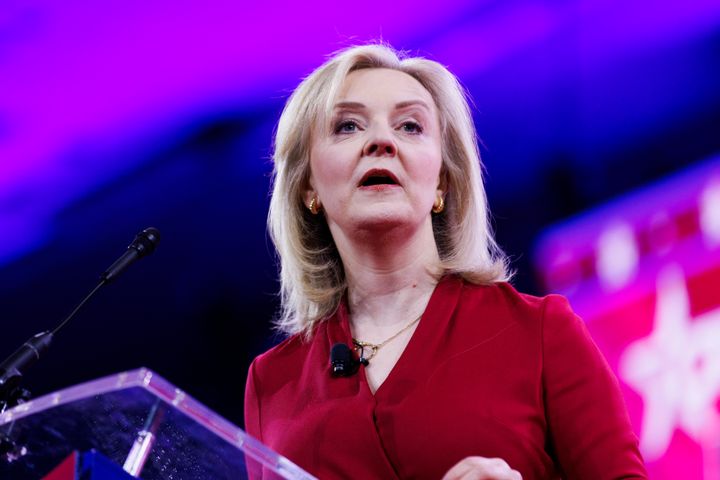
Speaking to Deadline on the red carpet of the TV Baftas, executive producer Stephen Lambert named Liz Truss as being among his dream contestants.

“She’d be great,” he said of the former prime minister. “It’s very important on that show to be able to tell the truth, and also to not tell the truth. And you know, she would be challenged, possibly.”

Truss wouldn’t be the first British politician to take up residence in the famous Traitors castle, after former speaker John Bercow took part in the show’s American counterpart last year.

Liz Truss
Liz Truss

NurPhoto via Getty Images

Meanwhile, although the team insisted they’re still only “thinking about the possibility of doing” a celebrity spin-off of The Traitors, they were much more upfront about the third season of the regular show, filming for which is currently underway.

“It’s had some amazing twists,” Stephen shared.

“It’s quite hard making season three, because the expectations get bigger and bigger. But fortunately, I think it’s going well. Touch wood.”

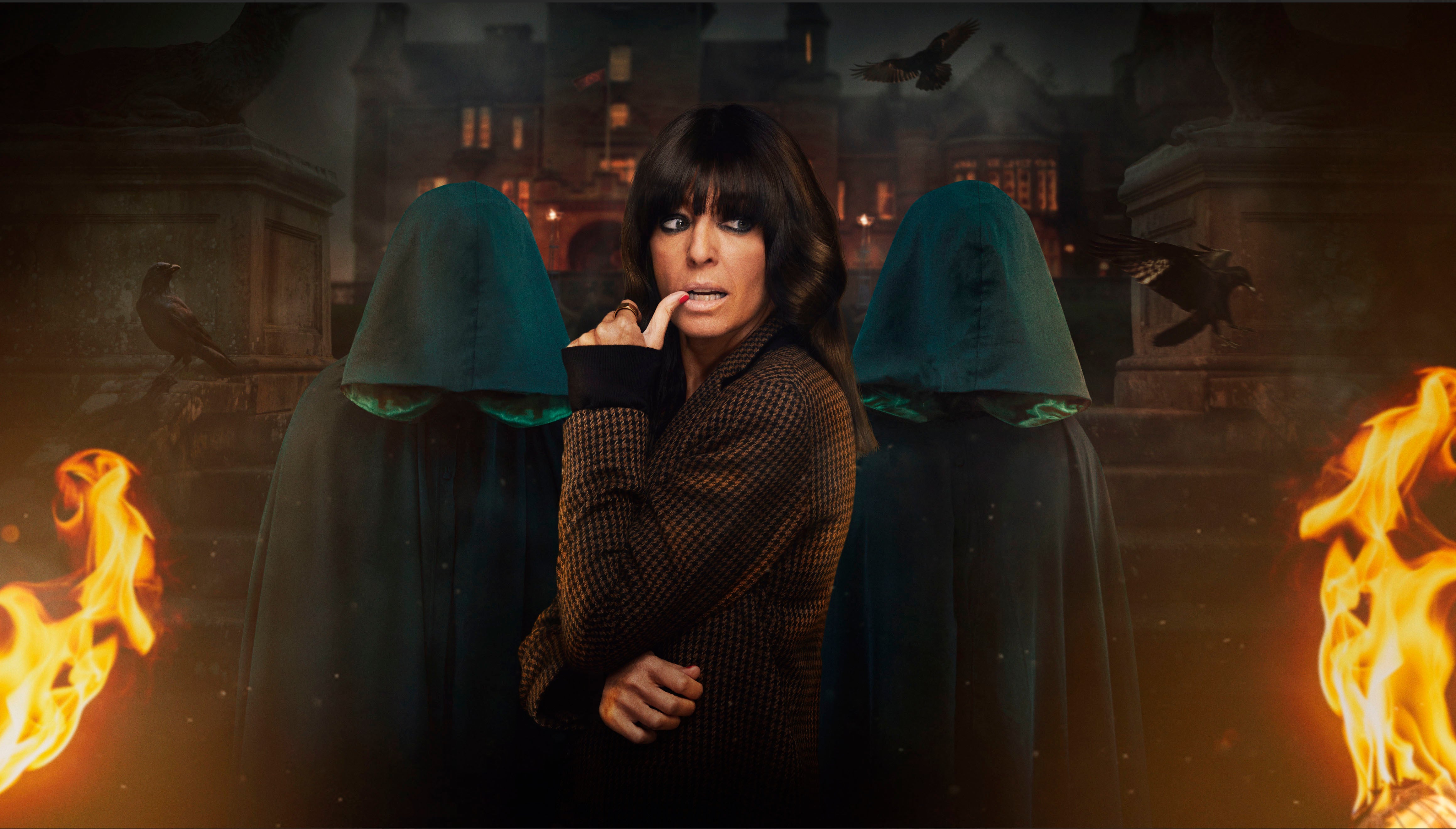
This is a concern shared by The Traitors host Claudia Winkleman, who recently admitted she almost turned down season three for that very reason.

“I was reluctant to do the second, and now I’m extra reluctant to do the third,” she shared during an interview on Good Morning Britain. “Like, guys, just leave it! It did OK, leave it. And they just say ‘no’.”

According to unconfirmed reports, the first celebrity series will reportedly film and air in 2025, once season three of the regular version of The Traitors has already been shown.

Share Button

Eurovision Suffers UK Ratings Dip Amid Controversy Over This Year’s Contest

Eurovision suffered a considerable dip in viewing figures on Saturday night compared to the previous year’s competition, amid widespread controversy around the contest.

The lead-up to this year’s Eurovision was marred with a wave of controversy around Israel’s participation, due to the ongoing conflict in Gaza.

When the European Broadcasting Union (EBU) made it clear that Israel would be taking part as usual in 2024, many fans called for a boycott of the competition, as did the Palestine-led BDS (Boycott, Divestment and Sanctions) movement.

The day after the final, Digital i reported (via The Guardian) that an average of 7.64 million people in the UK tuned in for Saturday’s live final, compared with the previous year’s 9.98 million, a dip of almost 25%.

Israeli singer Eden Golan pictured during Saturday's live final
Israeli singer Eden Golan pictured during Saturday’s live final

picture alliance via Getty Images

It’s worth pointing out that, in addition to the controversy over Israel’s involvement, last year’s Eurovision was also the first time the competition had been held in the UK for a quarter of a century, with Liverpool hosting Eurovision on behalf of 2022 winners Ukraine.

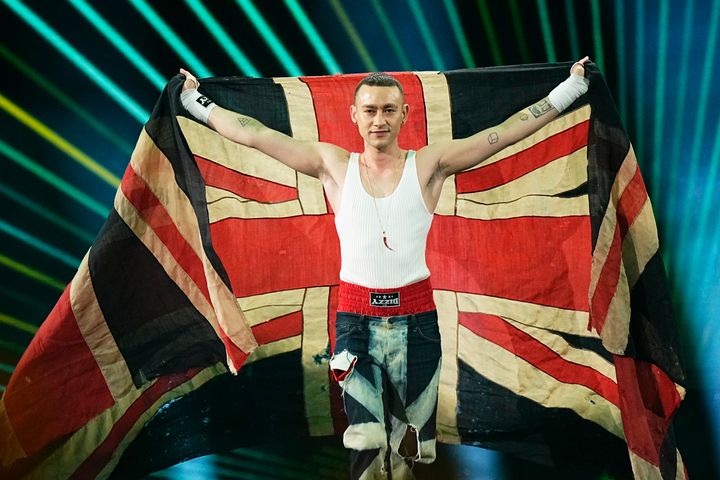
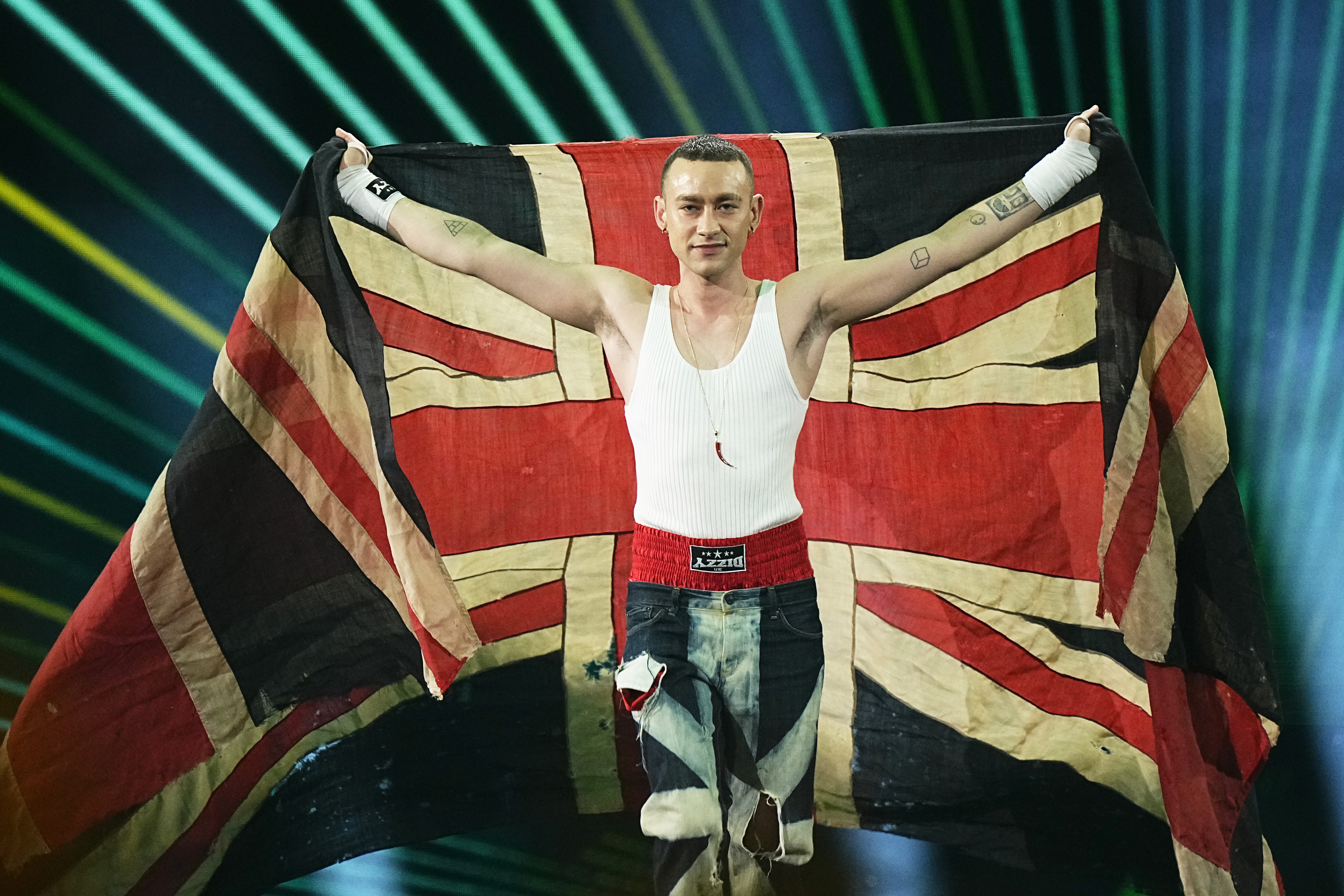
Olly Alexander represented the UK with his song Dizzy at Eurovision this year.

Prior to the competition, Olly faced pressure from fans, as well as the campaign group Queers For Palestine and the BDS movement, to pull out of the contest in solidarity with Palestine.

In response to this, the former Years & Years frontman said in March: “I wholeheartedly support action being taken to demand an immediate and permanent ceasefire in Gaza, the return of all hostages and the safety and security of all civilians in Palestine and Israel.

“I know some people will choose to boycott this year’s Eurovision and I understand and respect their decision. As a participant I’ve taken a lot of time to deliberate over what to do and the options available to me. It is my current belief that removing myself from the contest wouldn’t bring us any closer to our shared goal.

“Instead, I’ve been speaking with some of the other [Eurovision] contestants and we’ve decided that by taking part we can use our platform to come together and call for peace. I hope and pray that our calls are answered and there is an end to the atrocities we are seeing taking place in Gaza.”

Olly Alexander on stage at Eurovision

Martin Sylvest Andersen via Getty Images

The Eurovision final saw Dizzy finishing in 18th place of 25 acts, after being awarded 46 points by the international juries. However, he failed to secure any votes from Eurovision viewers.

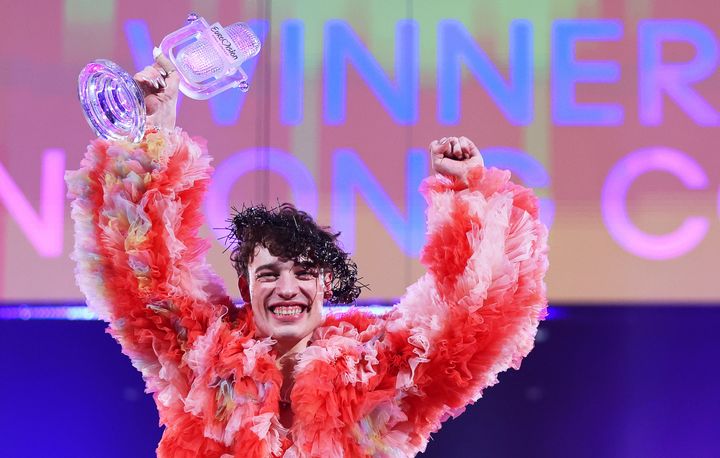
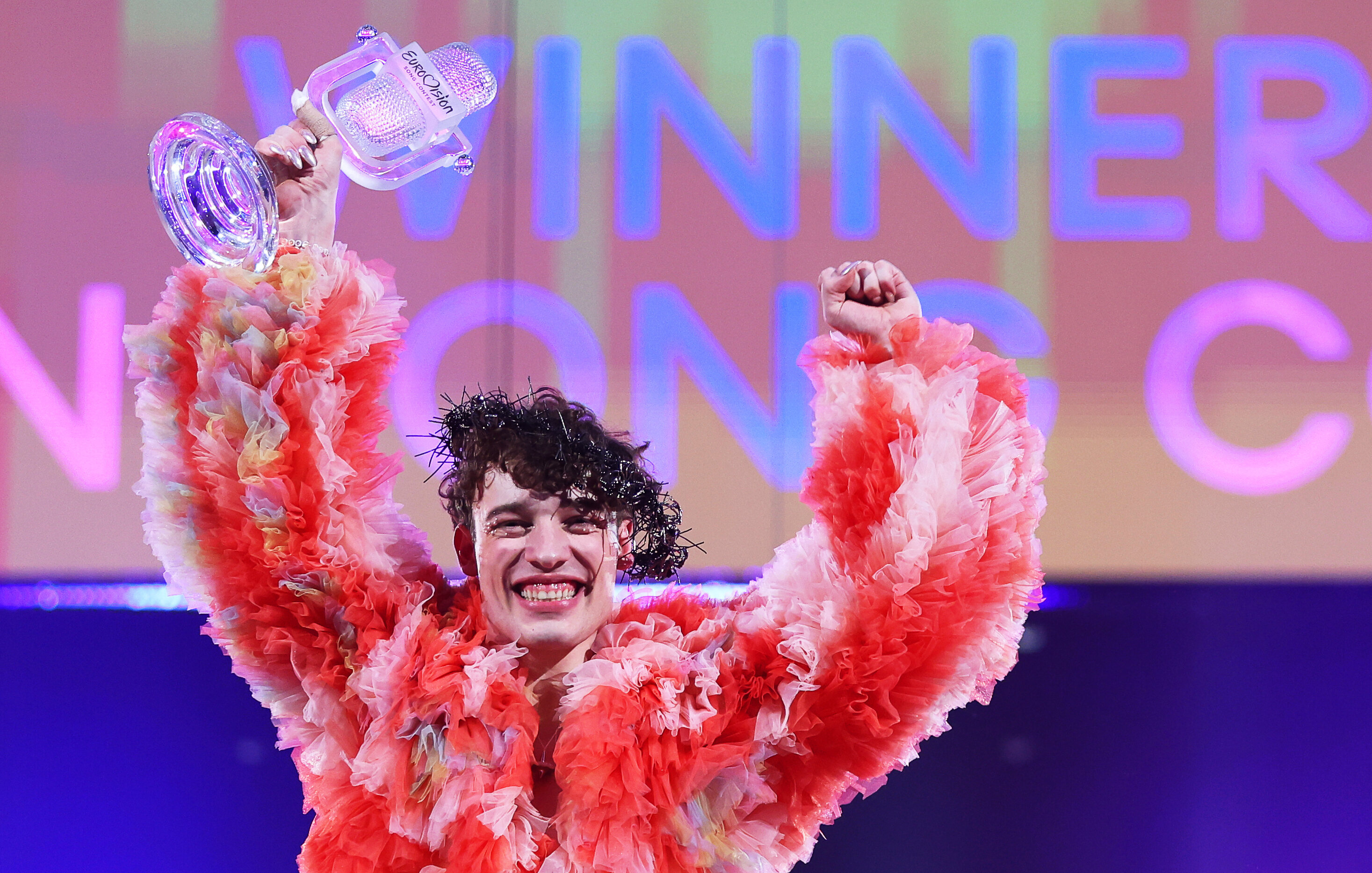
Switzerland were crowned the overall winners thanks to Nemo and their song The Code, marking the first time a non-binary performer has come out on top in the Eurovision Song Contest.

Nemo celebrating their Eurovision win

picture alliance via Getty Images

This is also the first time Switzerland has won Eurovision since Céline Dion in 1988.

Nemo secured 591 points in total, surpassing runner up Baby Lasagne, representing Croatia.

Share Button

I lost my mum, dad and baby sister to HIV in infected blood scandal

Families torn apart by the infected blood scandal break their silence to BBC Panorama.

Share Button

I lost mum, dad and sister to HIV in blood scandal

Families torn apart by the infected blood scandal break their silence to BBC Panorama.

Share Button

Man who received first pig kidney transplant dies

The US hospital which carried out the operation said Rick Slayman’s death was not a result of the transplant.

Share Button

Elphicke Defection Not An ‘Error Of Judgement’ By Keir Starmer, Says Jon Ashworth

Keir Starmer did not make an “error of judgement” when he accepted former Tory MP Natalie Elphicke into the Labour Party, shadow cabinet minister Jonathan Ashworth has said.

Elphicke, the MP for Dover, shocked Westminster when she sensationally defected to Labour on Wednesday.

But many Labour MPs are unhappy given her right-wing views on immigration and previous support for her ex-husband who was found guilty of sexual assault.

According to The Sunday Times, in 2020 Elphicke also lobbied the justice secretary, Robert Buckland, on behalf of her then husband Charlie.

Elphicke is reported to have pressed Buckland for his case to be moved to a less high profile court to avoid public scrutiny.

Challenged over the report on the BBC’s Sunday with Laura Kuenssberg programme, Ashworth said Elphicke had dismissed it as “nonsense”.

“If Robert Buckland has evidence or has more to say then let’s hear what he says,” Ashworth, the shadow paymaster general, said.

But he was asked: “Don’t these allegations start to create a sense maybe Keir Starmer and the Labour leadership team have made an error of judgement?”

Ashworth said: “No, no, no, no, no, no.”

“I think whatNatalie Elphicke’s crossing of the floor reveals is the extent to which we are witnessing a disintegrating and decaying Conservative government,” he said.

“More broadly what she has done – like thousands and thousands of conservatives across the country – she has shifted to he Labour Party because she can see after 14 years of failure its time for change.”

Labour MP Jess Philips, a former shadow domestic violence minister, told Sky News last week Elphicke’s admission to Labour was “a bit like being punched in the gut”.

While former Labour leader Neil Kinnock told the BBC that Labour should be “choosy to a degree about who we allow to join” as while it is a “very broad church” churches “have walls and there are limits”.

Share Button