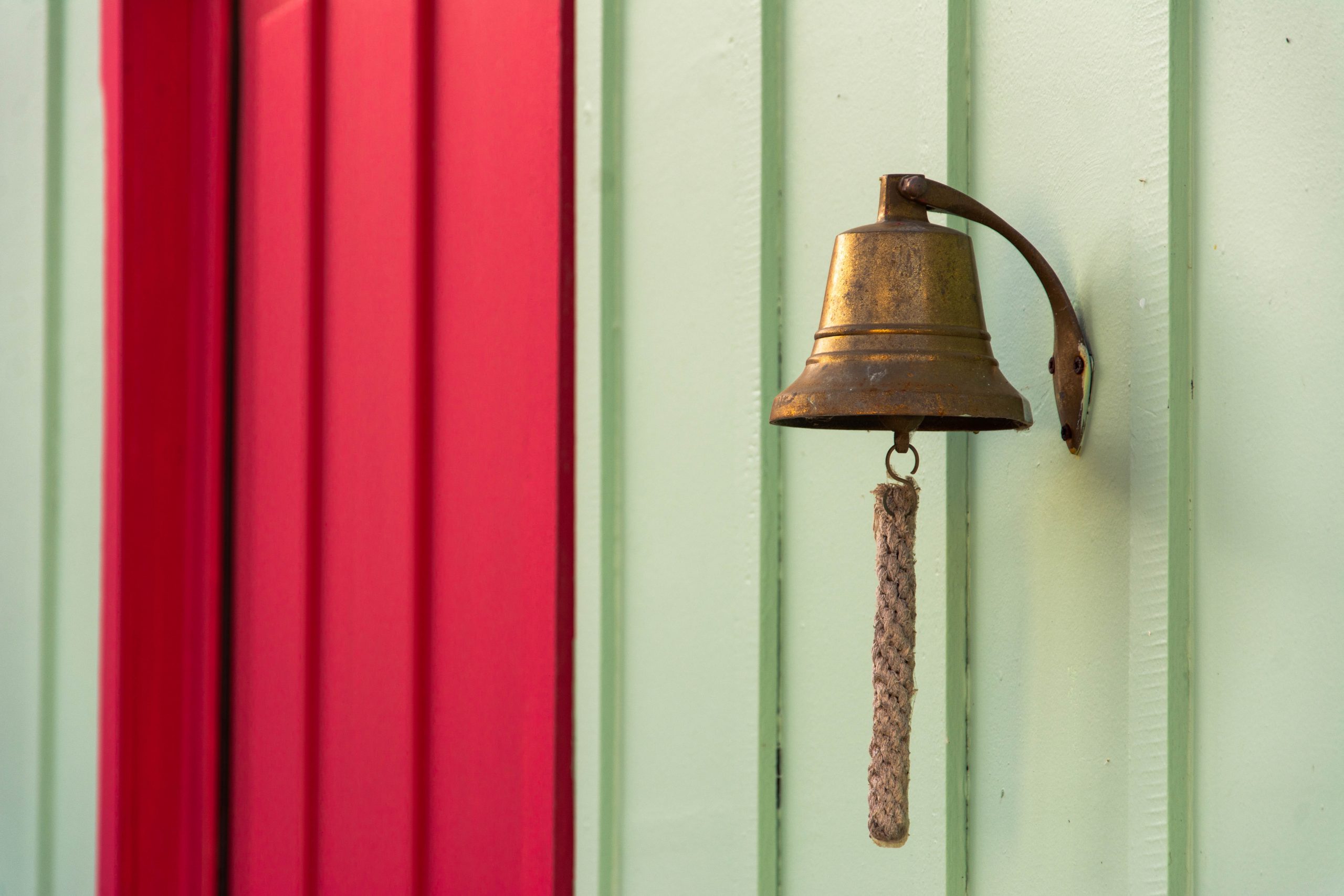
Checking in With Death

The title may sound morbid, but it can be a powerful personal growth practice to pause and ask yourself now and then:

Am I ready to die yet?

If I’m not ready to die today, what’s missing? What feels incomplete?

Then give some real thought to these questions, such as by journaling about them.

What will it take to feel that you’ve finished this life? What more do you need to do, say, achieve, or experience?

These questions can point you in the direction of meaningful goals. They can help you align the flow of your life with what really matters to you. They can prevent deep regrets too.

When I ask these questions of myself today, I actually do feel ready to die in some ways. I feel like I’ve done more than enough in terms of expressing myself creatively and doing purposeful work that serves the world.

I also feel like I’ve stretched myself a lot. I’ve faced fears. I developed many interesting skills. I’ve been in love multiple times. I exercised a lot and got good mileage from my body. I wrote and recorded lots of material to help others that can outlive me.

So I don’t feel like I’d be dying too soon in terms of these dimensions of life. I feel that career-wise I’ve contributed more than my fair share already. If death claims me today, I don’t think I’d feel like I missed out on anything critical there. I can always do more, but it doesn’t feel essential to do more or to create more in order to feel like I’m finished life in these areas.

Mainly I feel that I want to soak up more experiences – more travel to new places and more connections with interesting people. I feel that in order to finish life, I still need to see and experience more of the world, especially outside of the USA. I feel that I haven’t explored enough different modes of living yet.

I also think it would be great to spend some time living outside the USA, not just visiting places. When I check in with death, I sense that it would be wise to experience more variety in where I live and how I live. I don’t have a specific place in mind, but the idea has grown increasingly appealing during the past few years.

You may think that life in the USA is becoming too tumultuous, but actually the way I experience it is that it’s a bit predictable. Even with all the tumult, it’s remarkable how much sameness there is in the experience of living here.

You may get completely different answers, but that’s what comes up for me. I think that if I died today, my biggest regret would be that I didn’t spend enough time living and experiencing different places and connecting with different people in those places. I would love to remedy that in the years I have left.

What you learn from checking in with death may not feel urgent. It may generate some of those someday/maybe back burner desires. That’s okay. Just keep those desires in mind now and then. Keep reconnecting with them. Let them stand as open invitations, and say yes to them when you’re ready. And remain aware that the clock is ticking.

Share Button

Are You Most Loyal to Purpose or People?

Where is your greatest loyalty – to your purpose or to specific people in your life?

This is an interesting character sculpting choice, isn’t it?

If you remain loyal to the people in your life, your alignment with your purpose will be weaker. When you have a conflict between people and purpose, you’ll stick with the people and allow some misalignments with your purpose.

For example, if your purpose is focused on personal growth, but you’re loyal to the people in your life above and beyond your purpose, you’ll stick with friends who hold you back from growing. You may get sucked into pity parties or whinefests. You may decline opportunities to adopt a more aligned social circle. The upside is that the people in your life will likely see you as a loyal and stable friend.

On the flip side, suppose you’re more loyal to your purpose. Then you can expect your social circle to change more over time. From time to time, you’ll move on from social connections that feel misaligned. Some people will be aligned with your purpose, and some won’t. As your expression of your purpose changes, you may also find new people more supportive than your old friends, so your social circle will often change too.

So in this case, most of the time when you have a significant conflict between purpose and people, you’ll stick with your purpose and let your social relationships float. Some people will find you more attractive because of your purpose alignment, and some will find you less attractive. And you accept all of that.

I definitely tend to be more loyal to purpose than to specific people. You can see this in my 16 years of blogging. I’ve stuck to my purpose to explore personal growth and to share what I learn for the benefit of others. I express this purpose differently each year, but the purpose has been pretty solid since I started.

My readership changes over time though. Some people who started reading my blog in 2004 have long since abandoned my work. Meanwhile new people are discovering it each day. The audience I have today isn’t the same audience from previous years. It keeps shifting and changing.

I don’t get clingy with any particular audience or readers. I’m cool with people choosing to read or not read what I write. I tend to value new readers just as much as long-term ones. Alignment matters more to me than longevity or social loyalty.

I could have done things differently. I could have bent more in the direction some people in my audience wanted me to go, being more loyal to them instead of staying loyal to my purpose. If it were up to some of those people, and if my loyalty was to them above and beyond my purpose, then I would still be in my first marriage, for instance. I’d be a lot more narrow in my focus.

I also wouldn’t have explored Subjective Reality much, and I definitely wouldn’t have recorded the full 60-lesson Submersion course on that topic. Submersion exists because I was loyal to my purpose and therefore somewhat disloyal to the early readers of my blog, many of whom were not at all interested in SR. In fact, most of the most interesting topics on my blog were explored because I was loyal to my purpose and disloyal to my previous readers.

It probably won’t surprise you that some people really like that I’m this way, and some people really hate it. If someone has been reading my blog for 5+ years, and then I write about some topic they really don’t like, they sometimes frame it as a personal betrayal. And I let them dump me if that’s what they want to do.

There are pros and cons to both approaches. I have a less stable friendship circle because of my loyalty to personal growth, but it’s always freshened up with new connections. I have a less stable readership base. I’ve built followings on platforms and then dropped the platforms. For instance, I built up 30K+ followers on Twitter over a period of years, and then I closed my Twitter account in 2014. I no longer found Twitter to be aligned with my purpose, so I let it go and moved on. Some people thought that was crazy. To me it’s just sensible. Why keep doing what’s misaligned?

What I gain here is a stable feeling of grounding in my purpose. And I feel that’s better for a stronger relationship with life and with humanity as a whole.

I feel less attached to what happens in terms of individual relationships because I see my human relationships as being relationships with different aspects of life. I feel less bothered by criticism or threats. I can’t control what other people do or don’t do, but I can control how I express my purpose, and so that keeps me feeling grounded, centered, and positive. Even when my social circle is going through some changes, I just stay focused on my purpose, and I wait for the dust to settle.

This works for me. I’m not sure if it’s the best approach for everyone though. Some people seem to need more stability and predictability in their social circles for a sense of grounding. I tend to see the downsides of the social loyalty approach more clearly though because such people email me a lot. They tell me how stuck they are due to having misaligned social circles holding them back. They lament about various family problems that sometimes seem like bottomless pits and rampant boundary violations. But if their loyalty is to people ahead of purpose, then of course they’re going to have more problems that stem from that approach. In particular, I think such people are more vulnerable to emotional manipulation.

Sometimes you can have the best of both worlds though. That means attracting people who also strongly align with your purpose. Then you can walk a long way together. Interestingly I find that this means connecting with people who also have a strong purpose alignment.

I actually feel more secure and grounded in relationships with people who are very purpose focused, and I think they probably feel the same towards me. By contrast I think it’s hard to feel a sense of loyalty from a purpose-centered person unless you’re well-aligned with a compatible purpose. If you’re more loyal to people than purpose, you may not feel as centered or secure in your relationships with purpose-driven people.

How can someone feel more secure in a relationship with me personally or with someone else who’s very purpose-driven? Get clear about your purpose, and be loyal to that. Even if your purpose is different from mine, that’s likely to generate a lot of stability and security in relationships with other purpose-driven people.

Conscious Growth Club is designed around this idea too. The loyalty of the club is first and foremost to its purpose, which is focused on generating growth experiences and getting results for the members. So it’s always going to steer itself away from becoming too cliquish. The members who are likely to feel most aligned with it will be the ones who embrace its growth-oriented purpose.

You can do this prioritization either way in your own life. Just be aware that there are significant consequences to this choice, so it really is a biggie that you’ll want to carefully consider. I find that the best approach is to test both. When I was younger, I tested a social circle first approach. It was amazing and wild due to the people I connected with, but today I see my social circle as being better slotted into a secondary position behind a solid connection to purpose.

Share Button

Do Nice Zombies Make Worthwhile Friends?

Some people have asked me why I don’t engage with Trump supporters, try to understand them better, invite deep conversations with them, or something along those lines. I think it’s a valid question, and the answer is simple: I don’t see any real potential in such relationships. For me they all land somewhere on a scale that spans from dumb to dumber to dumbest.

It’s not the people that are the issue per se, but the behavior pattern of supporting Trump during this time is so rotten to the core that I don’t see anything redeeming there. There’s no hint of depth, value, or worthwhile discovery. To the extent that I’ve engaged with such people over the past few years, the result has been various degrees of being creeped out.

Some people have said, “But some of them are nice people.” I disagree. In order to frame such people as nice, I have to stretch the definition of nice way too far for it to work. At best I’ll end up with some version of “nice and dumb” or “a nice moron” or “a really nice pile of crap.” I can’t really think of anyone as nice once they’ve been Trumpified. The Trumpification of anyone trumps any niceness, rendering it far removed from anything nice.

Imagine the nicest person you know being bitten by a zombie and turned. Will you still regard them as nice while they try to eat your brain? Does the nice zombie label really work? No, all zombies are zombies. The closest they get to nice is when they’ve been rendered mostly harmless, such as by having their lower jaws removed, so they can’t bite you. It never really makes sense to see them as nice.

Really the closest I can get to labeling such people as nice is to go with mostly harmless, which does indeed apply pretty well to some. But that’s still a pretty crappy connection offer.

When an offer is so horrendously bad, I find it best to say a blanket no to it. Toss those cards in the muck, and let’s see the next hand.

Does this mean if I went earnestly digging for nuggets of goodness among Trump supporters that I wouldn’t find anything worthwhile at all? No, I’m not saying that. Maybe there is something decent in there, but there’s just such a huge mountain of excrement, falsehoods, and ignorance to dig through that a few diamond shards aren’t gonna cut it. The stench is too repulsive to engage with.

One reason I’ve leaned in this direction is that I explored other possibilities first, and nothing quite felt aligned till I thought, Hmmm… what would happen if I took the evil exit here and just declared the whole lot of them to be a stinky pile of excrement?

At heart I’m an explorer, and I’m willing to keep trying different approaches to life to see what works best for me.

Am I saying that you have to use my approach too? Not at all. I think you should find your own path here, and if your approach is different from mine, I celebrate that difference. Don’t clone my approach. Find your own path to alignment through this. But do keep asking if what you’re doing is working well for you, and if not, be willing to change your approach repeatedly till reality seems to affirm your choice.

I noticed that when I was more tolerant of Trump supporters, their presence in this reality kept bugging me. I kept thinking, Are millions of people really this dumb? Seriously, WTF…

And 30,000+ lies later, that attitude starts wearing thin.

It’s easier to deal with a pile of shit when you see it as just a pile of shit and not as a pile of shit that might have some gold or diamonds in it. It’s the feeling that maybe it’s worth digging through that stench that causes problems. Interestingly, this stems from a scarcity mentality, right?

Do you see that? Why deal with Trump supporters socially at all, even if you think they may have some redeeming qualities? Why deal with the smell? What you’re missing is that in a different social direction, there are way more gold and diamonds that aren’t covered in shit. You just need an abundance mindset to see them.

A Trump supporter isn’t going to be a good social match for me by any stretch of the imagination. The smell is always going to be an issue, and the gold and diamonds they may offer socially will never compensate for the smell. So as I see it, it’s a sensible response to just call this a “hell no!” all around.

Once I realized that engaging with Trump supporters had to be a hell no for me, it did feel a bit extreme at first, but I’ve since gotten used to it. And the more I’ve gotten used to it, the more a different direction of social abundance started opening up to me.

I’ve been seeing a gradual increase in positive results from this mindset, which is why I continue to double-down on it. By saying no to the stenchiest stench of the social realm, reality no longer has to simulate this kind of nonsense in my close-up presence, so it can devote more resources to expanding the aspects of life that resonate with me. Consequently, I’ve seen more opening and expansion in directions that feel aligned and intelligent.

It was like I said to reality: Stop wasting resources simulating the dreadfully dumb and stinky. Reassign those resources to more aligned connections, opportunities, and invitations – anything that smells good.

And that’s been working well indeed.

As a simple recent example, yesterday I just loved the livestreamed script reading of The Princess Bride, which was also a fundraiser for the Wisconsin Democratic Party (as I mentioned in yesterday’s post). That was a superb treat! There were more than 100,000 people on the call.

I think that’s the first time in my life I’ve made a political contribution, and I was happy to finally lose my political donation virginity. I love how this invite showed up in the form it did – a chance to engage in a fun way with my all-time favorite movie and many of its cast members. That was an easy yes.

It was great to see actors standing tall against the current Trumpian nonsense too. I felt a stronger sense of oneness from that, like we’re all in this together, pushing back against a zombie horde of 30,000 lies. It’s time to shift this reality in a more positive direction. It was really wonderful to see so many comments coming in from people who are similarly aligned with creating a positive future.

By saying a firm no to 100% pure crap and the people who are wallowing in it, I see beautiful doors opening in the part of reality that isn’t crap.

I felt tremendous respect and admiration for Cary Elwes for making the event happen – one actor stepping up to bring us together in this way.

Lately I’ve been experiencing a rising sense of hope and optimism. I’m feeling better and better about the direction this reality is going.

This is common when we step up our boundary management. Say a really bigger no to the misaligned and stop engaging with it. This doesn’t mean denying the existence of the misaligned. It means acknowledging: I see that you exist – and that you really are a pile of shit that doesn’t belong anywhere near me!

When you see a pile of crap on the sidewalk, do you feel inclined to talk to it and see if you might improve your relationship with it? Or is the sight and smell enough of a turnoff for you to simply call it as you see it and step around it, or shovel it off to the side, so no one else steps in it?

Now there is a nonzero chance that some crap contains gold or diamonds. Is that enough for you to go digging into it each time?

When I label the shit as shit, I needn’t give it as much attention, which frees my attention to focus on legitimate sources of social gold. Engaging with the real gold is fun and rewarding and way less stinky.

So my preferred approach to dealing with Trump supporters isn’t to engage with them – I have zero interest in subjecting myself to the vapid nonsense they spout. I prefer to marginalize the hell out of them. Squeeze them to the borders of my reality, so I barely notice them anymore. Send them back to the simulator to repurpose as something more useful, like fresh spatulas.

Share Button

Becoming More Resilient

Please enter your name.

Please enter a valid email address.

Thanks for requesting the Extraordinary Gratitude PDF. To receive your download link, please click the confirmation link in the email that has been sent to you.

Something went wrong. Please check your entries and try again.

Share Button

Fragile Objections

Suppose you’re sitting in a Toastmasters meeting where members are practicing their speaking skills. Suppose there are about 20 members in the room, which would be pretty typical for a Toastmasters club.

Now suppose you hear a fellow member give a speech that you find objectionable, and it bothers you to hear such words spoken within your club. The topic is permitted within the club though.

What do you do?

Do you stay quiet and keep your thoughts and feelings to yourself?

Do you voice your objections to the speaker privately?

Do you privately share your concerns with some other members about the speech or the speaker?

Do you stand up during the meeting and voice your objections in front of all the members, including the speaker?

Do you sign up to give a speech, so you can disagree with the first speech?

Do you call for a vote to kick the member out?

Do you switch to a different Toastmasters club?

Do you quit Toastmasters altogether?

How you handle this depends on your personality and how you frame the situation. Your response depends on the meaning you assign.

Some assignments of meaning will cause you to have a more fragile relationship with your club, with its members, or with Toastmasters. Other meanings will give you enough resilience to maintain a long-term connection to your club or the organization.

Here’s a very fragile assignment of meaning:

What that speaker shared is totally out of line and should never be heard in this or any other Toastmasters club. If I stay in this club (or in Toastmasters), it means I’m personally condoning what this speaker said. I cannot stomach that.

That framing is pretty inflexible. It frames you into a corner, giving you few options. This sort of framing is incongruent with a long-term membership in Toastmasters.

Here’s a more resilient and flexible assignment of meaning:

A Toastmasters meeting is a growth-oriented practice space. Toastmasters is where members go to learn and build their skills. We don’t expect perfection there. We expect and even encourage mistakes. It’s expected that some members will share disagreeable ideas. It can even be good to have our viewpoints challenged sometimes. Variety can be nice.

If you’re in Toastmasters long enough, there’s a good chance you’ll encounter an objectionable speech or speaker. If you want a more resilient relationship with Toastmasters, it’s important to take these situations in stride. If you get worked up over them, you’ll have a more fragile relationship with Toastmasters, and sooner or later you’ll find a reason to ring the bell and quit.

From the outside looking in, the difference between these frames is pretty striking. You may look at the first frame and think that of course it’s not going to work long-term if someone adopts that frame. The second frame provides way more flexibility.

Here’s a key point: You always have a choice of framing. You can lean towards resilient frames, or you can choose fragile frames. By choosing a fragile frame, you increase the likelihood that you’re going to have to ring the bell and quit eventually. With the first framing above, quitting Toastmasters becomes pretty much inevitable; it’s just a matter of time.

So consider that by adopting such a fragile frame, you’re really choosing ring the bell and quit as well. Using a fragile frame is a way of inviting the final straw moment to present itself, often before you can identify a viable final straw event.

Why do this fragility dance then? Why pick a fragile meaning when it leads to such a predictable outcome?

One reason is that people often prefer a final straw objection. It provides a neat and tidy justification for a sometimes complex decision.

Like any growth-oriented space, Toastmasters is uncomfortable at times. You invite some risk when you show up. You may feel anxious at a meeting. You may face embarrassment. Now and then you may leave a meeting not feeling good about how you did. You may feel envious of peers who seem to be progressing faster than you.

It’s hard to keep showing up and facing that discomfort. It’s also hard to say that you’re leaving because you no longer want to deal with that discomfort.

Truthfully there are lots of reasons that people may choose a fragile frame. A common reason is to speed up the arrival of a final straw moment, so quitting can be justified without having to offer up a reason like, “It’s too uncomfortable” or “I felt too anxious” or even “My heart is calling me in a different direction.”

The downside of using fragile objections is that other people often won’t buy into them. While you may feel they’re solid enough reasons to explain your bell ringing, it’s fairly easy for many people to see them as self-created justifications, just as easily as you can spot the fragility of the first frame above. People will generally let you off the hook when you produce your fragile objection, but they’ll also likely conclude that it wasn’t your real reason for ringing the bell.

Ultimately fragile objections are a crutch. This crutch begins with the adoption of a fragile frame. A key personal growth challenge is to graduate from needing to use fragile frames that inevitably lead to fragile objections. If you’re going to ring the bell, can you learn to do that without needing to engineer any justification for it.

In any area of life, you can ring the bell and quit without having to explain or justify your actions. You can quit Toastmasters at any time and for any reason, for instance. You can quit your job today just because you decide it’s time.

I think another reason people use fragile objections is that it’s a less scary way to transition. Some decisions involve a lot of uncertainty, and it isn’t perfectly clear which way to go. To decide without a fragile objection, you need to trust reality or your intuition a lot more. You also have to accept that a big decision involves risk. If it feels like you have little or no choice in the matter, it takes some of the pressure off and makes you feel less responsible for the choice and its outcome.

So one solution I’ll provide is this: Be willing to be wrong. Be willing to make mistakes. Be willing to sit in the muck of bad outcomes that resulted from your decisions.

Consider that this life is much like a Toastmasters meeting. It’s a growth-oriented space where you learn by doing. You will make mistakes. You will make some decisions that leave you shaking your head afterwards. And that’s okay. It’s part of the reason you’re here.

You do not need to engineer fragile objections to ease the burden of those decisions by artificially narrowing your options. You can choose flexible frames that give you lots of options, and you can still make decisions even when facing a minefield of risk. Now and then you’ll choose wrong. Celebrate that you’re free to do that because that is an incredible gift.

Share Button

Will You Ring the Bell?

During Navy SEALs training, which is really tough, recruits can quit by ringing a bell three times. Then they get a shower and a hot meal, and they’re done with the struggle.

No more physical ordeals. No more being wet and sandy. No more sleep deprivation.

And no more opportunity to be part of a SEAL team.

Afterwards the recruits who quit can offer up any reasons they want, but it doesn’t matter in terms of results. They’ve demonstrated that they will give up on the team, so the team grows stronger when they leave.

SEAL training, especially hell week, is a filter. It separates the quitters from the committed. It separates those who align with the team from those who don’t.

The SEALs have a sense of the giant pumpkins they’re looking for, including people who won’t mentally or emotionally quit no matter what, so their training tries to filter for people with the qualities they want. It isn’t perfect, but it does filter out of a lot of people who wouldn’t be good matches for the SEALs.

While you could say that these are values-based filters, they’re really behavioral filters. It doesn’t matter why someone rings the bell – only that they ring it. It doesn’t matter why someone refuses to quit – only that they never ring the bell. Ringing the bell is a simple binary behavioral test. Quit or don’t quit.

The SEALs don’t need to do complex testing for values alignment. They can just have a simple test to see who quits and who doesn’t. They let the quitters go, and they invest in those who stay. This way they end up with a fairly aligned group – a group full of people who resist quitting.

Throughout the rest of the training, there are many more tests. At each point people either pass or they don’t. The training could be seen as a series of binary challenges.

I share this because I invite you to think of this as a lens or frame for considering some of your real-life challenges. I don’t recommend using this as your one-and-only frame, but it’s a nice one for simplifying the way you look at complex problems and cutting to the core issues quickly.

How many challenges can you reduce to binary pass-or-fail tests?

Fill in the blank: You either ______, or you rang the bell.

  • started your own business
  • asked for the date
  • wrote the book
  • took the trip
  • completed the project
  • completed the 30-day challenge
  • did the workout
  • spoke your truth
  • unfriended the Trump supporter
  • finished the song
  • seized the opportunity
  • built the website
  • launched the course
  • earned the degree

Think of a goal or challenge you’re currently facing. How does it look when you reduce it to a binary challenge? Get it done, or ring the bell. Does this help you see what kind of commitment you’ll need to avoid ringing the bell?

My 365-day blogging challenge can be reduced to a binary, pass-or-fail test. All I have to do to succeed is not ring the bell any day this year. Every day the choice is simple: create or quit. Either I ring the bell, or I don’t.

Is it always bad to ring the bell? No, sometimes it’s the right move. You just have to consider how you’ll feel about it afterwards. What meaning will you assign to it?

Ringing the bell can mean years of regret, or it could mean something very positive. You have to consider ringing the bell in the context of your big picture framing.

After six years in Toastmasters, I rang the bell and quit. To me that represented a graduation. It was a success. I had invested six years in the club and went from 7-minute speeches to designing and delivering 3-day workshops on the Vegas Strip. So that particular bell produced a glorious ringing sound to celebrate the journey and what it meant to me.

Ringing the bell on my computer games business after 10 years gave me mixed feelings. It was part joy and part sadness – the death of the old and the birth of the new. It was still a positive meaning overall but very different from leaving Toastmasters.

Note also that some people will view your bell ringing differently than you do – and differently from each other. When I left the computer games field, some people treated it like a failure while others congratulated me for making the change.

One interesting way to think about your personal relationships is to ask: What kind of person will never ring the bell on you? Who is capable of being your true, long-term friend?

This loops back to the recent article on Fragile vs Resilient Relationships. A fragile relationship will lead to someone ringing the bell and quitting. A resilient relationship is one where no one will ring the bell.

Truthfully you will have to ring the bell sometimes. You have to quit the misaligned, so you can find what’s truly commitment-worthy for you. You could see life as a process of discovering those deeper commitments where ringing the bell is simply not an option.

Share Button

Behaviors, Consequences, and Alignment

By supporting Trump a person supports:

  • Racist ideas and policies
  • Sexist ideas and policies
  • Xenophobic ideas and policies
  • Anti-science ideas and policies
  • Anti-environment ideas and policies
  • Massive amounts of outright lying (20K+ false and misleading statements in 3.5 years)
  • Massive amounts of incompetence
  • Treasonous collusion
  • Direct election interference
  • Tweeting instead of leading
  • Tons of utter bullshit that could easily populate a list 100x longer

Even if someone would otherwise be a 10 out of 10 as a human being, supporting Trump is an instant -20 added to that, meaning that the person is deep into negative territory no matter what other redeeming qualities they may have. Such a person may appear to be kind, caring, compassionate, intelligent, and possessing lots of great qualities, but this one enormous mistake in judgment is more than enough to outweigh the good.

The reasons for supporting Trump are irrelevant because it’s the behavior that invites the negative consequences and associations. It doesn’t matter what explanations or justifications are offered up. Incredible depths of ignorance, like mistaking Fox News for actual reporting, may be one cause, but the behavior alone is sufficient to fuel horrendous results, including loss of life and environmental destruction.

As Stephen Covey wrote, “When you pick up one end of the stick, you pick up the other.” When you do the behavior, you get the results of that behavior. It doesn’t matter why you picked up the stick, only that you did.

Supporting Trump invites social consequences as well, including the instant death of any friendship possibilities with many people, including me. The social consequences are added to the pile of results stemming from that behavior. This is all part of the stick too.

On the flip side, correcting that behavior reopens many doors and invites different results. And there too, the reasons for the change don’t matter. Fix the behavior patterns, and many of the social consequences can be corrected almost immediately.

When you pick up the stick, you get the whole stick. There’s no use complaining that the stick isn’t what you hoped for.

If you pick up the stick of Trump support, you invite significant consequences, including personal, social, and environmental ones. Just for starters, you invite many intelligent people to see you as a racist; there’s no getting around that because that label is part of the stick you picked up. By supporting Trump you’re supporting overtly racist ideas and racist policies, so you’re inviting some social consequences by doing so, including being labeled a racist.

If you don’t like those consequences, you can put down that stick and try a different one. There’s no mandate to pick up a stick if you don’t like what it includes.

This isn’t about finding the perfect stick since perhaps there isn’t one. But do consider the full range of consequences you’re picking up and whether you can live with those or not.

I’ve picked up many sticks where I found that I could live with the consequences because the sticks were very good overall. Others that I picked up, I set back down again, tossed away, or set ablaze because they weren’t for me.

If you currently support Trump, how do you feel about the whole stick, including the environmental damage, racial injustice, and social hatred you’re inviting? How do you feel about being a -10 in my book? You cool with that?

There are a lot of sticks out there – way more than two. If you find one that’s problematic for you, put it down and seek another. Lots of people are dropping (or burning) the Trump stick these days because it’s become obvious to them that the stick is overloaded with negative downsides, and watching things continue to get worse isn’t what people really want.

Supporting Trump damages your relationship with me and with many other people. There’s no getting around that – it’s part of the package. If you want to repair that relationship, you can. Just drop that excrement-covered stick, and pick up a different stick that doesn’t have such nasty consequences. It doesn’t matter why you do it, only that you do it.

Share Button

Fragile vs Resilient Relationships

My relationship with Rachelle is very anti-fragile. Even when one or both of us is at our worst or when there’s a lot of turmoil going on around us, there’s little risk to our relationship. We can say or do the stupidest things, and we still stick like glue.

We have plenty of freedom to express different aspects of our personalities, to explore different values, and to make significant career or lifestyle changes, and we can still stick together through it all. It’s hard to find a vulnerable edge of our relationship where one of us might want to cross a hard line for the other person.

This was true of our relationship from the beginning. When I look back on how we first connected, I don’t see a delicate risk that it wouldn’t have worked out if one of us had said or done the wrong thing at the wrong time. It felt like there were more paths where we were going to connect deeply than paths that could deflect that from happening, like we were just meant to be in each other’s lives. I think that if we didn’t connect the way we did, we just would have connected some other way at some other time. Once we got into each other’s spheres, it was only a matter of time before we got into a romantic relationship together.

I have friendships and professional relationships like this too. They were anti-fragile in the beginning and afterwards. They formed with some sense of inevitability, and it would take a huge amount of force to break them afterwards. They aren’t so delicate as to be vulnerable to either person wanting to disconnect regardless of what happens.

I suppose a relationship could have a fragile beginning and become less fragile as it grows, but my experience is that anti-fragile relationships tend to be that way from the get-go.

Resilient Relationship Properties

High compatibility is one property that makes for a resilient relationship. If the compatibility is weaker, it makes for a more vulnerable relationship. A strong alignment of deeply held values that aren’t likely to change can help a relationship stick.

Another factor is the ability to give people the benefit of the doubt. People who lean towards a negative framing of someone’s motives are more likely to have fragile relationships. They’ll find more ways to be disappointed. They’ll assign more negative meanings to events, thereby creating more reasons to leave.

People who appreciate resilient relationships often find another person’s recurring suspicion and distrust tiresome. Such a relationship isn’t such a good long-term investment because it’s probably going to break sooner or later.

Perhaps the most important factor is a capacity for forgiveness. People make mistakes. They step on each other’s toes. They say the wrong things in. the wrong ways at the wrong times.

If you can’t forgive, you won’t likely last long in a rich and meaningful relationship. It’s only a matter of time before the other person screws up in your view, and now you’re bolting because you’ve assigned an unforgivable meaning to that event. What if you could have forgiven the transgression though? Some relationships are worth keeping. Is that issue a valid reason to dump the whole relationship? Could a more forgiving person find good reasons to maintain the relationship?

Rachelle and I both make mistakes, and we’re quick to forgive each other and to give each other the benefit of the doubt. Assigning meaning to events is often ambiguous, and it’s really nice to be in a relationship with someone who defaults to seeing your intentions as being good, caring, intelligent, etc.

It can be good to apologize when you feel you made a mistake, but the capacity to forgive is more important. If you and the other person are good at apologizing, but if even one of you can’t forgive, the relationship won’t endure. You could both be bad at apologizing, however, but if you’re both good at forgiving, your relationship will be more resilient and can endure.

I don’t feel much need for apologies from other people; for me they’re on the “nice to have” list but definitely not essential. Sometimes people apologize to me when I didn’t feel they ever hurt me in the first place. And people have apologized to me years later for events I’d forgotten and imagined transgressions I’d never perceived as such. Has that ever happened to you?

Working on my ability to forgive, by contrast, has been valuable. I used to struggle with that in the past, often holding onto hurt feelings which could slide towards anger, resentment, or the desire for vengeance. Then I read that forgiveness isn’t a gift to the other person – it’s something we do for ourselves. That gave me an important mindset shift. I forgive because it’s good for me, and it’s good for my relationships. These days I see forgiveness as a way of processing stuck energy and moving it through my body and back out into the universe.

Another factor that shows up in my relationships is the ability to trust the person’s ability to grow. This is a failsafe that can preserve many relationships. If a big problem arises, can you trust the other person’s ability to grow and change? Could you also trust your own ability to grow and change? Can you see the potential for this growth and change to make your relationship stronger and more resilient over time?

Since I regularly work with growth-oriented people, I’ve seen some amazing changes in people over the years. I’ve also seen big changes in myself. So I have a deep trust in people’s ability to grow. And in fact, just knowing that someone is growth-oriented helps me trust them more.

Honoring Fragile Relationships

If you invest in a fragile relationship and it breaks, there can be some sadness and grief over that. But if the relationship was indeed lacking in the qualities necessary for long-term resilience, you could say that it would have broken sooner or later. If one final straw incident is what it takes to crack the relationship, it was too fragile to endure.

When a fragile relationship ends, try not to beat yourself up about it. Instead, honor the relationship by acknowledging what you learned from it. It had its time, and now it must move aside to make room for other relationships to come into your life.

Also consider the nature of the fragility that led the relationship to break. Where was the connection lacking resilience? This can help point you towards more resilient relationships.

Fragile relationships may be temporary, but they can still be deeply meaningful. When such a relationship comes to a close, whether or not it’s of your choosing, it’s good to reflect on it and acknowledge what it means to you. What you can appreciate about it?

Investing in Resilience

What does a resilient relationship look like for you?

Here are some qualities I’ve noticed about mine.

One critical quality is laughter. Laughter helps us bond and serves as a pressure release valve. It strengthens the capacity to forgive. It helps us focus on our commonalities instead of our differences. It gets us off our high horses and brings us down to earth. A relationship with a high capacity for laughter is more resilient. When the laughter evaporates, the relationship becomes a lot more fragile.

Another essential quality is play. See the Core of Play article for more details on that. When a relationship loses its core of play, its fragility increases. Play goes hand-in-hand with giving someone the benefit of the doubt. People can make the most ludicrous moves in life sometimes, but if you can frame their actions through the lens of play, you can forgive easily and avoid unnecessary hurt and resentment, if only by recognizing that in any game, people tend to pursue their own self-interests, and there is no need to hold that against them.

A resilient relationship gives people space to learn, grow, and reinvent themselves. If your relationship frames you or the other person into a corner, it will be more fragile. If your framing gives you and your partner some room to roam and explore, there’s less chance of running into a final straw moment that breaks the connection.

A common reason that people reject me and run, even after years of reading my blog, is that they’ve framed me into a corner of their minds. They’ve built a false image of me that doesn’t give me room to actually be myself. So when I inevitability violate their expectations (which were unreasonable to begin with), the relationship cracks on their end. Sometimes they’ll blame me for violating the false image they built, as if I was even aware that I was supposed to follow those rules.

Yet there are readers of my blog who’ve been with me since the first year or two, and nothing I’ve shared since them has caused them to bolt. Their image of me gives me space to be the explorer I am without their having to “ring the bell” and quit on me whenever I get into something new.

Fragility Testing

Some people who have a lot of relationship experience will deliberately test other people to see how resilient or fragile the connection is likely to be. This can occur at any time during a relationship, but it’s especially common at the beginning.

It’s like indirectly asking: What will it take for you to quit on me?

Personally I’m not into this as a deliberate practice because I find that this sort of testing will happen on its own. When I connect with someone new, it will be relatively easy for them to discover a reason to reject me early on. I’m open enough about my life that fragile connections tend to come to light early.

I actually like it, however, when someone does this kind of testing on me. It tells me they’re probing for fragility, and I actually see that as a respectful thing to do. It helps me them figure out whether to invest more in the relationship or if it will hit one of their fragile edges.

Even so, fragility testing won’t identify all of the potential points of fragility. How can it? Could you devise a thorough disclaimer for all the reasons someone may find to reject you and share that upfront? You’d have to identify all possible explorations you haven’t done yet (but might someday), decisions you haven’t faced (but might someday), changes you might experience, etc. So that’s an impossible task, and this means that despite all of your best efforts, you will encounter some fragile relationships, and they may not reveal their fragility right at the beginning.

Beautiful Fragility and Beautiful Resilience

Looking back with the benefit of hindsight, I can see the fragility in my first marriage was there from the beginning. I can see how easy it would have been to knock it off track in the first few weeks or months by making slightly different choices. There were forces pulling us in different directions that we had to overcome. There were near-breakups in the first few years.

Even though we stayed together for 15 years, that fragility was always present, and we had to keep avoiding the fragile edges to preserve the relationship that long… until we were no longer willing to do so because we needed to grow beyond those edges.

In my heart I honor and appreciate that relationship. Despite its fragility, it was a good relationship for us both. We learned and grew a lot together. But there’s also this feeling that breaking up was inevitable. It was just a matter of time. There’s no regret or blame about how we might have done things differently. There’s beauty in fragility.

There’s also beauty in resilience. I love the spaciousness and freedom of resilient relationships. I love the mutual trust. I love the long-term investment potential. I love the flexibility. I love how such relationships stretch and bend yet don’t break. I love feeling deeply accepted as I am.

Human relationships can be fragile or resilient. By accepting this instead of resisting it, it helps me regard my relationship with life as always resilient – by choice.

Life always maintains a resilient relationship with me on its end. It always forgives me. It always invites me to play. It always gives me the benefit of the doubt. It always unconditionally accepts me as I am.

By recognizing that this relationship is always anti-fragile on life’s side, I must acknowledge that any fragility in this relationship isn’t coming from life or from other people. It can only be coming from me.

And that reminds me that fragility is a choice.

We always have the option to tread cautiously around other people to avoid running into any fragile edges. Or we can live more like free spirits and be fully ourselves, smashing those fragile edges to smithereens whenever we encounter them. What’s left when all the fragile edges break? What’s left are powerfully resilient relationships with people and with life – the kind that we couldn’t break even if we tried.

Share Button

Stamped From the Beginning

Today I finished Ibram X. Kendi’s book Stamped From the Beginning, which is about the history of racist ideas in the USA. I found it insightful and eye-opening, and it gave me some meaningful perspective shifts on racism.

I’m glad I read this book after White Fragility because the former book was much more lightweight, a very basic starter book compared to the scope and depth of Stamped From the Beginning.

In particular I found it illuminating to consider that racist ideas ultimately arise from self-interest, which often includes economic interests but could also include social interests, political interests, career interests, and more. People and societies lean towards racist ideas when such ideas benefit the self-interest of enough people. This same self-interest leads to racist social norms and government policies as well.

I appreciated learning about the relationship between racist ideas and racist policies, and it was helpful to consider how self-interest binds them to each other. When there’s a demand for racist ideas to fuel more racist policies to advance the self-interests of enough people who want them, more racist ideas are spawned, which leads to racist policies. Then those racist policies can produce outcomes that generate even more racist ideas and in turn more racist policies.

For example, when Southerners wanted to take advantage of the demand for cotton production, this created more demand for new racist ideas to justify an increase in slavery, a racist policy.

We still have a similar pattern of self-interest fueling racist ideas today. Trump has voiced racist statements aplenty, including “Laziness is a trait in blacks,” “Go back to their huts,” and many more. And he’s promoted many racist policies, including the border wall and the “law and order” position, which negatively affect some races a lot more than others. With some people he clearly gains favor by expressing racist ideas and promoting racist policies, so this can be motivated by self-interest. The behavior persists because people keep rewarding it.

He’s certainly not alone. As the book points out, many Presidents (including Obama) have gone a similar route, promoting racist ideas and racist policies, particularly when it was politically beneficial for them to do so.

One new term I learned from the book was uplift suasion, which “was based on the idea that White people could be persuaded away from their racist ideas if they saw Black people improving their behavior, uplifting themselves from their low station in American society.”

The burden of race relations was placed squarely on the shoulders of Black Americans. Positive Black behavior, abolitionist strategists held, undermined racist ideas, and negative Black behavior confirmed them.

I don’t recall hearing this term previously, but I’m familiar with the concept behind it. It was eye-opening to consider that uplift suasion is a racist idea – and also highly ineffective at helping to create parity among races.

This book gave me a better understanding of racism and why it’s been so persistent. I don’t recall linking racism to selfishness before, but now I can see how much sense that framing makes. Now when I see racist ideas being expressed or racist policies being promoted, I’ll be inclined to ask: Who benefits from this? A good place to start would be to consider the self-interest of the very person doing the expression or the promotion.

If you’d like to learn a lot more about the history of racist ideas and policies in the USA, I can definitely recommend this book. It’s dense with details, so it’s not the type of book you’d want to rush through. I feel like it’s still generating more ripples in my thinking, and I like books that have that effect on me.

As soon as I was done, I immediately started on the book How to Be an Anti-Racist from the same author. Now that I have a better understanding of the historical context and the connection between self-interest, racist ideas, and racist policies, I want to learn more about how to apply this knowledge and act in alignment with it.

Share Button

Core of Play

While pondering an update to my mission statement, I was thinking about how to frame relationships, and this line popped into my mind:

My relationships are based on play.

My relationship with Rachelle fits this like a glove, and I think it’s why we’ve had 10+ happy years together. Same goes for my best friendships.

This applies to more than human relationships, like my relationships with work, creative projects, personal growth experiments, writing, speaking, courses, coaching, hobbies, etc. There’s a core of play when the flow is strong and healthy.

When a relationship loses its core of play, it seems to be on its way out and won’t endure, or it devolves into something not worth preserving.

What happens if you reflect upon past relationships with the lens of play? Any insights generated from that?

If you’re considering a transition in some area of life, could it be that the old path lost its core of play (or never had it to begin with)?

Consider the lens that a healthy relationship is really about play. I’m not saying that this is absolutely true. Just look at your past relationships through this lens, and see if it sparks any interesting realizations or reassessments. When you reflect upon the story arc of the relationship with respect to its changing level of playfulness over time, what do you see?

Also consider that you have a relationship with your work. When that relationship loses its core of play, does it ever work?

Consider the ripples that play generates – connection, caring, bonding, happiness, enjoyment, appreciation, respect, cooperation, etc. Those can be valuable in any relationship context – both in work and your personal life.

Injuries can still occur, but in a context of play (like a game), they’re quickly forgiven. When people lose sight of the play aspect, then an injury may be taken more seriously though.

What can be objectively accomplished with a frame of seriousness that can’t also be accomplished at least as well with a frame of play?

One way to think of play is that it maintains the intensity of seriousness but ditches the attachment. It lightens the experience of full engagement, allowing you to focus on the present moment activity without worrying so much about the outcome. The lens of play removes the clinginess without being forced to descend into goofiness.

I’ve always appreciated playful relationships more than others. That’s been true of romantic and sexual relationships, connections with colleagues, coaching or mentoring relationships, friendships, and even random acquaintances. Playfulness elevates the mundane, making it more stimulating but not stressful.

Play can be a tough value to respect unless you test it enough and see what it does for you. When you observe that investing in play generates strong results with good consistency, it’s easier to trust it. Also observe the results you get when you lose the connection to the core of play. Which results do you prefer?

Share Button