Land under water: What causes extreme flooding?

If rivers overflow their banks, the consequences can be devastating — just like the catastrophic floods in North Rhine-Westphalia and Rhineland-Palatinate of 2021 showed. In order to limit flood damage and optimise flood risk assessment, we need to better understand what factors can lead to extreme forms of flooding and to what extent. Using methods of explainable machine learning, researchers at the Helmholtz Centre for Environmental Research (UFZ) have shown that floods are more extreme when several factors are involved in their development. The research was published in Science Advances.

There are several factors that play an important role in the development of floods: air temperature, soil moisture, snow depth, and the daily precipitation in the days before a flood. In order to better understand how individual factors contribute to flooding, UFZ researchers examined more than 3,500 river basins worldwide and analysed flood events between 1981 and 2020 for each of them. The result: precipitation was the sole determining factor in only around 25% of the almost 125,000 flood events. Soil moisture was the decisive factor in just over 10% of cases, and snow melt and air temperature were the sole factors in only around 3% of cases. In contrast, 51.6% of cases were caused by at least two factors. At around 23%, the combination of precipitation and soil moisture occurs most frequently.

However, when analysing the data, the UFZ researchers discovered that three — or even all four — factors can be jointly responsible for a flood event. For example, temperature, soil moisture, and snow depth were decisive factors in around 5,000 floods whilst all four factors were decisive in around 1,000 flood events. And not only that: “We also showed that flood events become more extreme when more factors are involved,” says Dr Jakob Zscheischler, Head of the UFZ Department “Compound Environmental Risks” and senior author of the article. In the case of one-year floods, 51.6% can be attributed to several factors; in the case of five- and ten-year floods, 70.1% and 71.3% respectively can be attributed to several factors. The more extreme a flood is, the more driving factors there are and the more likely they are to interact in the event generation. This correlation often also applies to individual river basins and is referred to as flood complexity.

According to the researchers, river basins in the northern regions of Europe and America as well as in the Alpine region have a low flood complexity. This is because snow melt is the dominant factor for most floods regardless of the flood magnitude. The same applies to the Amazon basin, where the high soil moisture resulting from the rainy season is often a major cause of floods of varying severity. In Germany, the Havel and the Zusam, a tributary of the Danube in Bavaria, are river basins that have a low flood complexity. Regions with river basins that have a high flood complexity primarily include eastern Brazil, the Andes, eastern Australia, the Rocky Mountains up to the US west coast, and the western and central European plains. In Germany, this includes the Moselle and the upper reaches of the Elbe. “River basins in these regions generally have several flooding mechanisms,” says Jakob Zscheischler. For example, river basins in the European plains can be affected by flooding caused by the combination of heavy precipitation, active snow melt, and high soil moisture.

However, the complexity of flood processes in a river basin also depends on the climate and land surface conditions in the respective river basin. This is because every river basin has its own special features. Among other things, the researchers looked at the climate moisture index, the soil texture, the forest cover, the size of the river basin, and the river gradient. “In drier regions, the mechanisms that lead to flooding tend to be more heterogeneous. For moderate floods, just a few days of heavy rainfall is usually enough. For extreme floods, it needs to rain longer on already moist soils,” says lead author Dr Shijie Jiang, who now works at the Max Planck Institute for Biogeochemistry in Jena.

The scientists used explainable machine learning for the analysis. “First, we use the potential flood drivers air temperature, soil moisture, and snow depth as well as the weekly precipitation — each day is considered as an individual driving factor — to predict the run-off magnitude and thus the size of the flood,” explains Zscheischler. The researchers then quantified which variables and combinations of variables contributed to the run-off of a particular flood and to which extent. This approach is referred to as explainable machine learning because it uncovers the predictive relationship between flood drivers and run-off during a flood in the trained model. “With this new methodology, we can quantify how many driving factors and combinations thereof are relevant for the occurrence and intensity of floods,” adds Jiang.

The findings of the UFZ researchers are expected to help predict future flood events. “Our study will help us better estimate particularly extreme floods,” says Zscheischler. Until now, very extreme floods have been estimated by extrapolating from less extreme floods. However, this is too imprecise because the individual contributing factors could change their influence for different flood magnitudes.

Share Button

Girl, 10, left inoperable after surgery axed seven times

The curvature of Eva Tennent’s spine is now so severe that mum Jill Lockhart fears she will not survive.

Share Button

Britain’s Raw Sewage Dumping Scandal Leaves Fish ‘Full Of Cocaine’

The dumping of raw sewage into British waterways has left fish being “full of cocaine”, a marine expert has said.

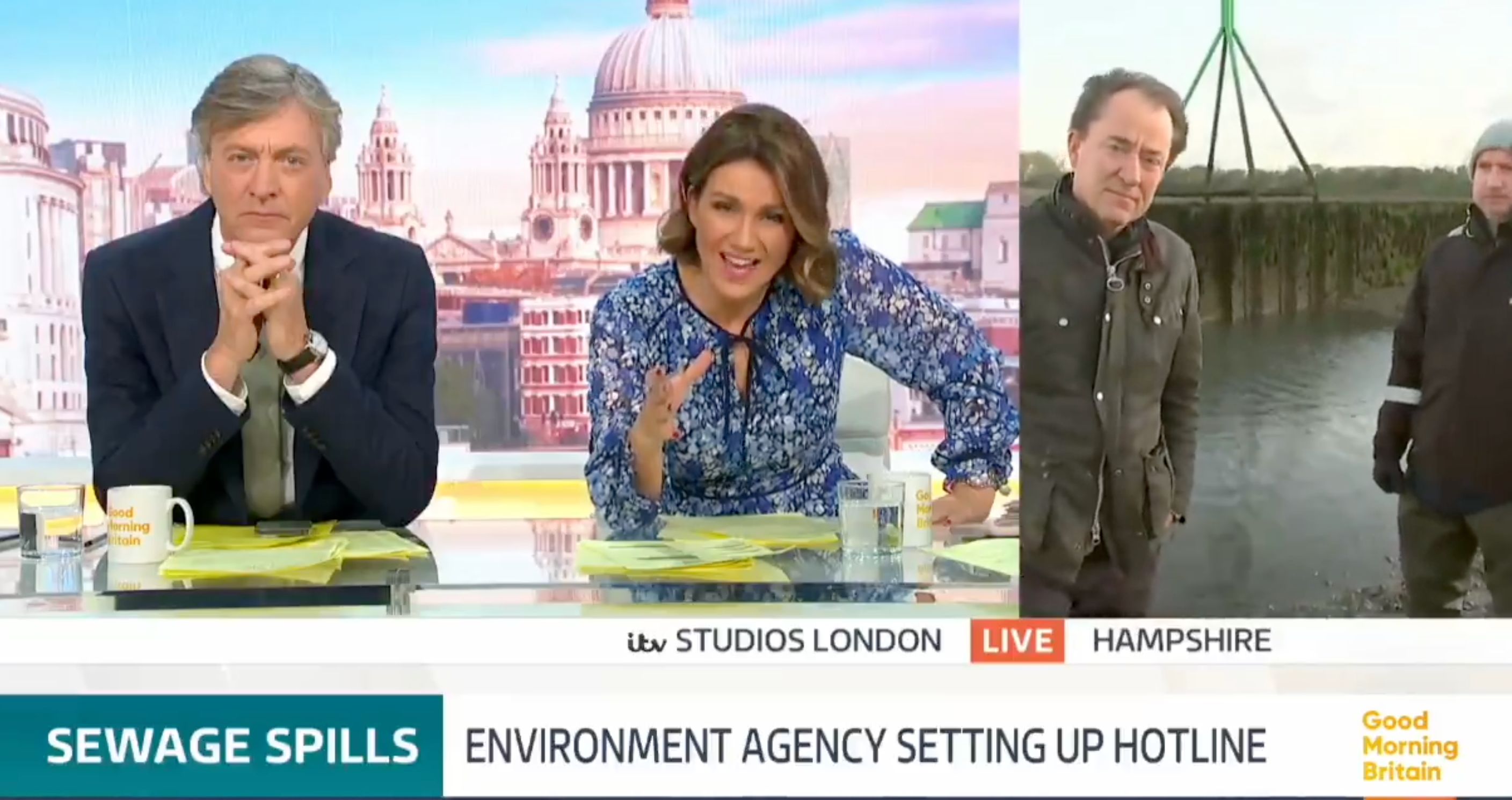
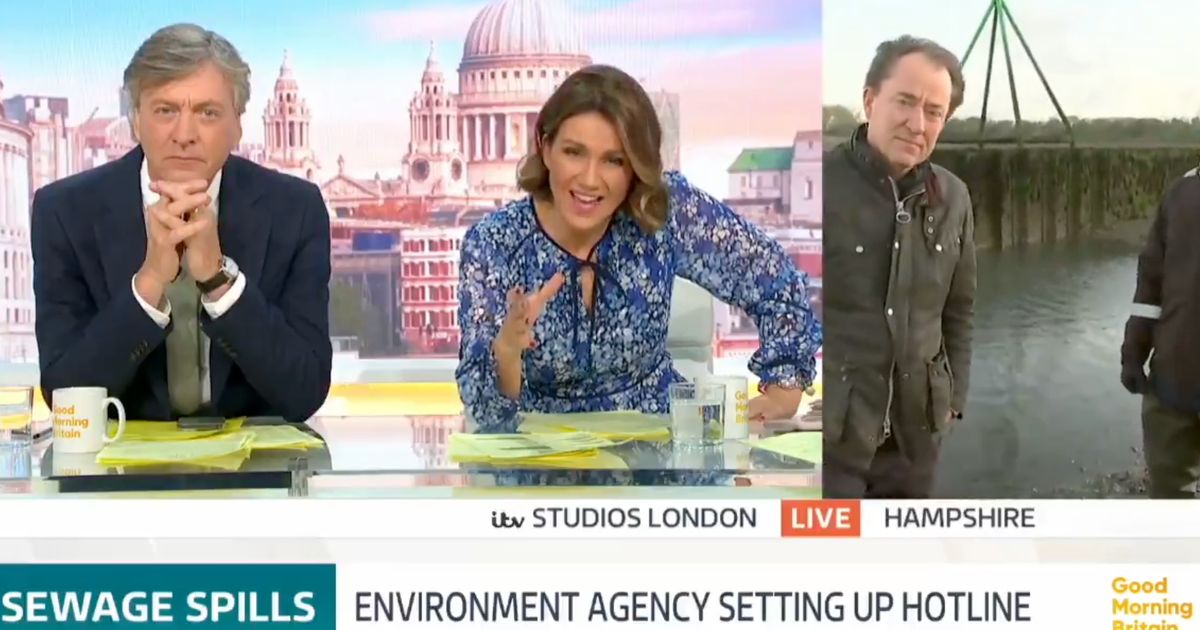
Professor Alex Ford, a marine biologist at Portsmouth University, told Good Morning Britain that the waters he analysed off the Hampshire coast contained drugs, contraceptive pills and antidepressants.

It comes as new figures fuelled more public anger over untreated sewage being discharged into the sea and rivers when the Victorian-era infrastructure cannot cope with heavy rain.

According to the Environment Agency, the number of sewage spills in England’s rivers and seas more than doubled in a year: there were 3.6 million hours of spills in 2023, compared to 1.75 million in 2022.

Ford told the broadcaster from Langstone Harbour, Hampshire: “The sewage treatment plant behind us takes in the waste of half a million people and when it can’t cope with it, it chucks it straight out here.

“In the marine life just beneath our feet, we’re actually finding they’re full of drugs. They’re full of the contraceptive pills, anti-depressants, anti-anxiety medication. Every single marine species that we’ve looked at so far is full of cocaine.”

GMB presenter Susanna Reid couldn’t quite believe what she was hearing, and asked the reporter to clarify: “Every marine species is full of cocaine, did he say?”

Water companies are permitted to discharge untreated sewage into waterways in exceptional circumstances, such as during the heavy rainfall seen this week.

The overflow systems are used to protect homes and businesses from flooding, and the water companies say only a small percentage of the discharge is wastewater.

Water UK, the industry body for sewerage companies, blamed heavy rainfall for the rising problem, but campaigners and opposition parties accused the Tory government of failing to get to grips with the problem.

On social media, the reaction was as you would expect …

Share Button

Katie Price warns about ‘damaging’ plastic surgery

The model says women have cosmetic procedures younger than she did, and they all look like “aliens”.

Share Button

Public satisfaction with NHS at lowest ever level

Just 24% of Britons say they are satisfied, citing waiting times and lack of staff in a long-running survey.

Share Button

Council spending on special needs transport doubles

The rising cost of getting children to school is a key driver of current pressure on council budgets.

Share Button

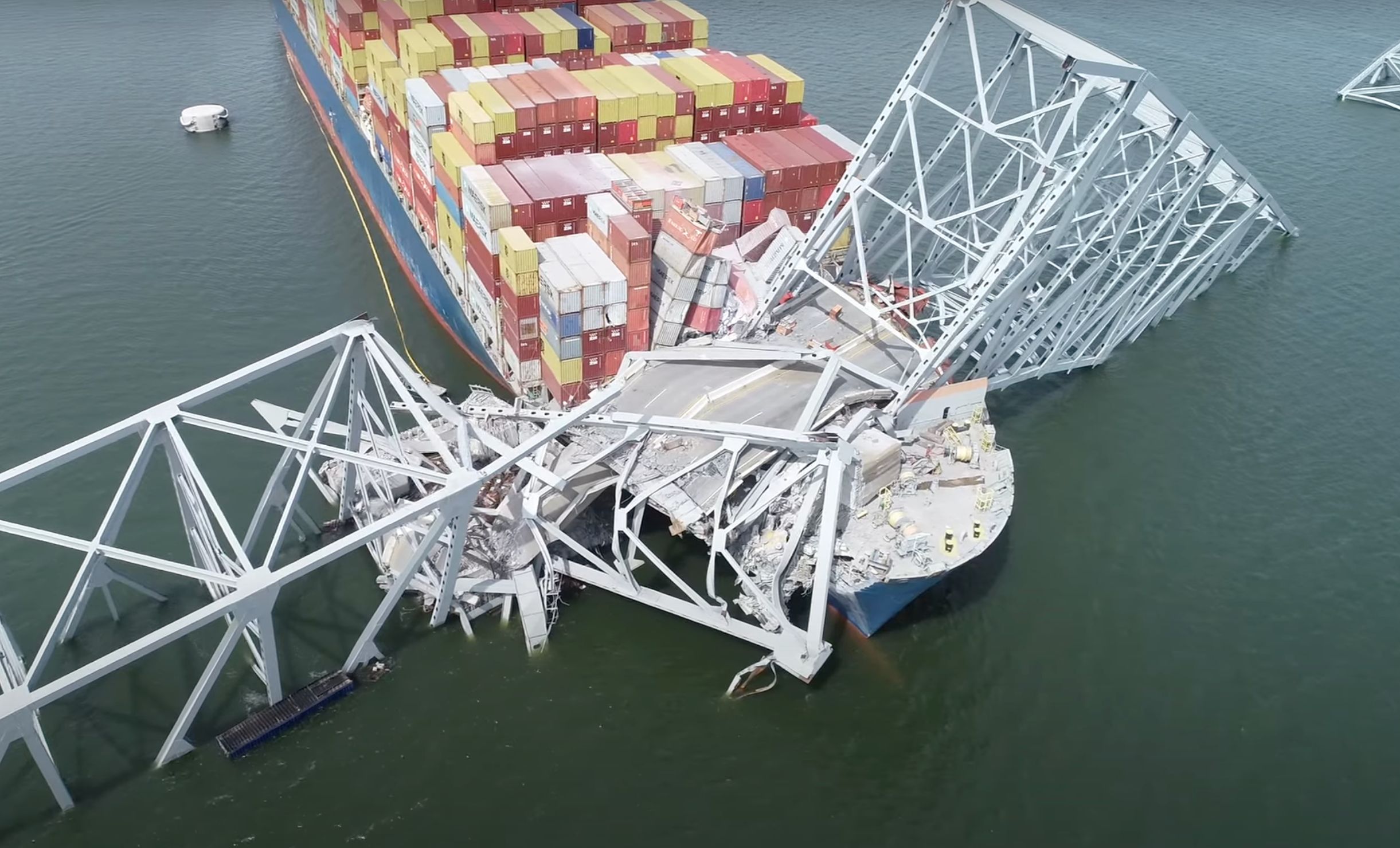
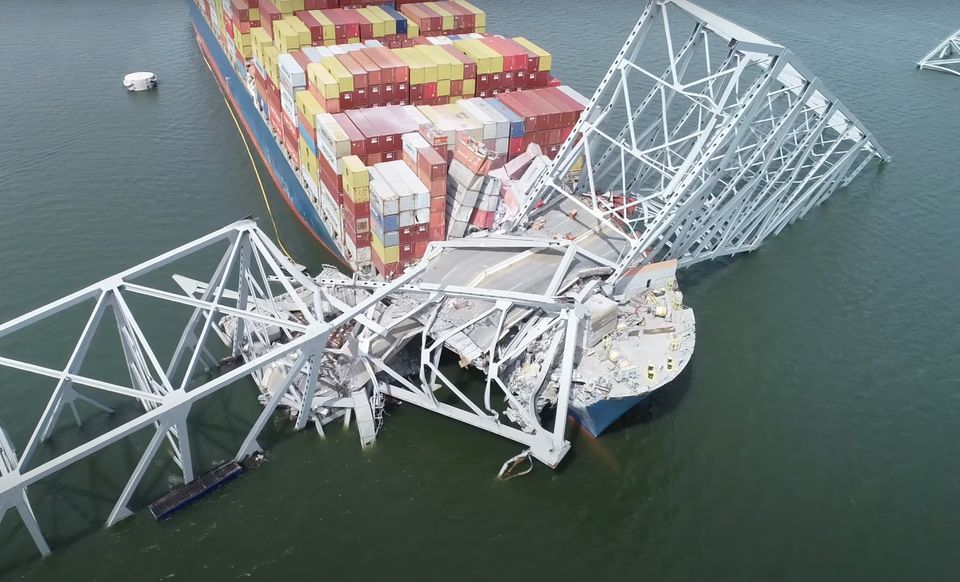
Drone Footage Shows Francis Scott Key Bridge After Ship Crashed Into It

The 7.5-minute video shows the bridge and the ship from various aerial angles, giving viewers perspective on just how bad the damage was.

Authorities are currently focused on seeking and rescuing people who may still be in the water, an amount that remains unknown, according to NTSB Chair Jennifer Homendy.

“Nobody is going by a number,” she said Tuesday afternoon. “They are just looking and searching.”

Although President Joe Biden has vowed to rebuild the bridge, US Transportation Secretary Pete Buttigieg admitted that “the path to normalcy will not be easy, it will not be quick, it will not be inexpensive, but we will rebuild together”.

You can see the video below.

Share Button

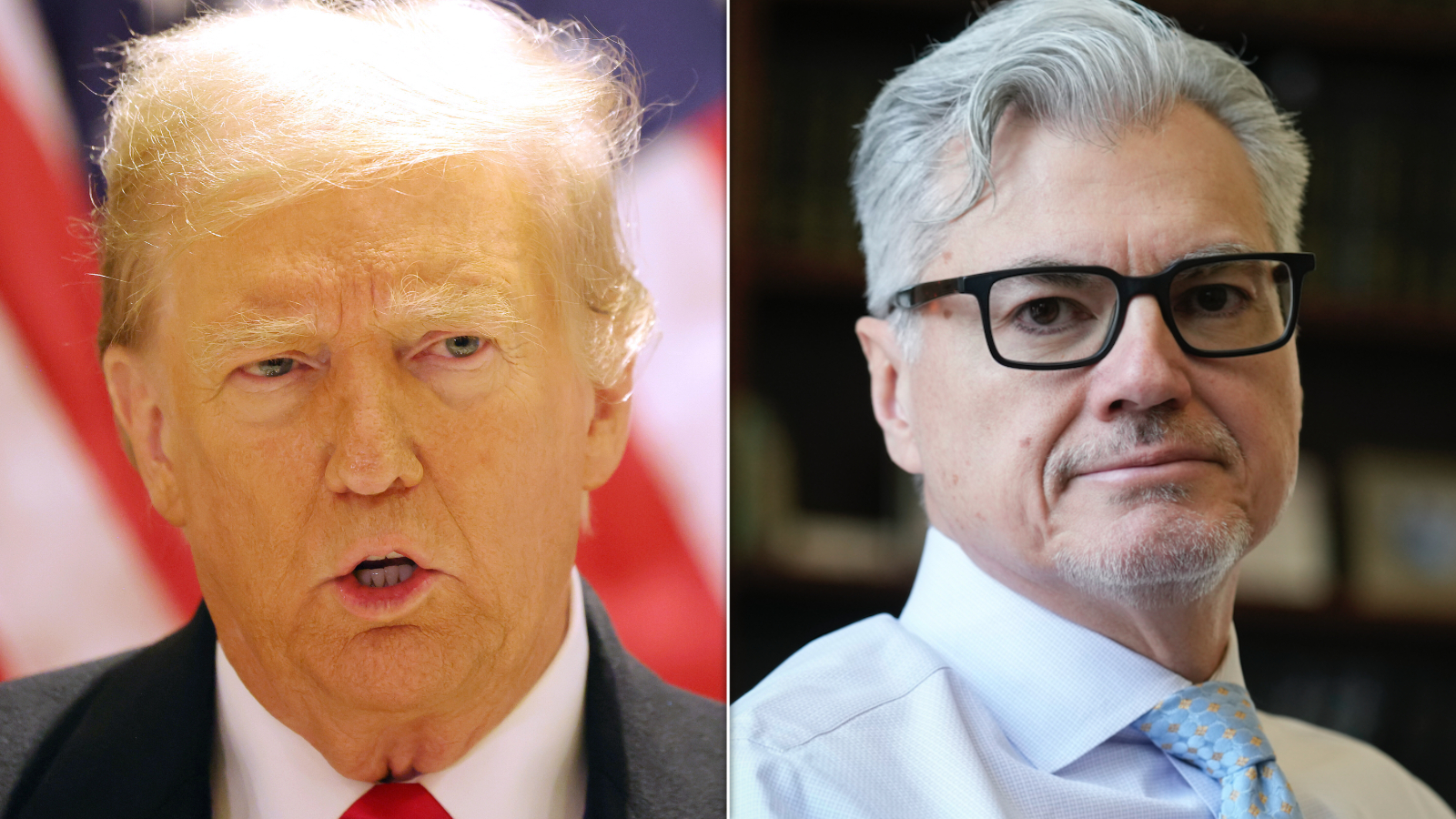
Trump Attacks Judge Who Refused To Further Delay Hush Money Trial: ‘He Hates Me!’

Former President Donald Trump went on the offensive Tuesday against the New York state judge overseeing the criminal trial over the alleged hush-money payments he made in 2016.

Judge Juan Merchan, the latest jurist to face the indicted Republican presidential candidate’s ire for doing their job, is presiding over a trial that stems from payments Trump allegedly made to porn star Stormy Daniels during his 2016 presidential campaign in order to bury accusations he had an affair. The former president was charged last year with 34 felony counts of falsifying business records related to the alleged payments.

Later Tuesday, Merchan issued a gag order against Trump in the hush money case. The order prohibits the former president from speaking publicly about witnesses, jurors, court staff or prosecutors involved in the trial.

“It is without question that the imminency of the risk of harm is now paramount,” he wrote in the order.

As Trump has done in other cases he’s charged in, the GOP presidential frontrunner has fervently denied wrongdoing in the hush-money case. This trial will be the first time a United States president is criminally prosecuted.

In a post on his social media platform, Truth Social, the presumptive 2024 GOP presidential nominee called Merchan a “very distinguished looking man” who is “nevertheless a true and certified Trump Hater who suffers from a very serious case of Trump Derangement Syndrome.

“In other words, he hates me!” Trump continued.

The post comes one day after Merchan ruled that Trump’s trial can proceed on April 15 as scheduled, denying a request by Trump’s lawyers to either further delay the case by 90 days or have it altogether dismissed.

The trial was originally set to start Monday. But Merchan delayed it until next month, after the Manhattan District Attorney’s office received a massive document dump from the federal Southern District of New York that may include new evidence in the case.

That initial delay was meant to give both sides enough time to sift through the documents, which are related to an earlier investigation. That probe centered on whether Trump instructed his then-fixer Michael Cohen to give Daniels $130,000 to stay quiet about an extramarital sexual encounter she allegedly had with the former president years ago. Prosecutors in that case decided against charging Trump, but the federal investigation did lead to Cohen pleading guilty in 2018 to to campaign finance violations, among other charges.

The upcoming hush-money trial is not the first time Merchan will be overseeing a case related to the former president or his business. The judge, a former prosecutor who often handles financial cases, previously presided over a criminal tax fraud prosecution of the Trump Organisation that resulted in a $1.6 million fine for the company. The organisation’s chief financial officer, Allen Weisselberg, pleaded guilty and served 100 days in prison for his role, though Merchan commented at the time that he wished he could impose a stricter penalty.

In his Tuesday post, Trump also attacked Merchan for “viciously” treating Weisselberg, who the former president described as “elderly and not in good health.” Nicholas Gravante, who represented Weisselberg in the plea negotiations, said Merchan was “a real listener, well-prepared, always accessible, and a man who kept his word,” according to The Associated Press.

Trump’s attorneys filed a motion in August asking Merchan to recuse himself because of the judge’s remarks about Weisselberg’s sentencing, as well as donations to Democratic groups totaling $35 in 2020 and his daughter’s employment with a political consulting firm that did digital marketing for the Biden campaign. Merchan rejected the calls for his recusal.

Tuesday’s post was the latest attack by Trump against judges overseeing his multiple court cases, as he’s repeatedly claimed the judicial system is attempting to interfere with this year’s election. Trump-appointed U.S. District Judge Aileen Cannon earlier this month rejected a bid by Trump’s lawyers to throw out the case accusing him of keeping classified government documents at his personal home in Florida.

Trump has repeatedly attacked Judge Arthur Engoron, who ordered the former president and his Trump Organisation associates to pay a hefty fine last month as part of a civil fraud case in New York. Engoron has faced a bomb threat to his home and received an envelope filled with white powder that authorities later said was harmless. The judge’s staff have also been subjected to threats and harassment.

U.S. District Judge Tanya Chutkan, who is presiding over the federal insurrection case against Trump in Washington, has also repeatedly faced his anger. She experienced a so-called swatting attempt after someone made a false emergency call about her home.

Share Button

Horror In Baltimore As Major Bridge Collapses After Collision

A search and rescue effort is underway after the Francis Scott Key Bridge on Interstate 695 in Baltimore collapsed early Tuesday when it was struck by a ship, causing a number of vehicles to plunge into the Patapsco River below.

Eight people are believed to have fallen into the water following the collapse just before 1:30 a.m. Six of those individuals remained unaccounted for as of 10 a.m. local time, authorities said at a press conference.

The eight people were part of a construction crew filling potholes, said Maryland Transportation Secretary Paul Wiedefeld. Their work had nothing to do with the structure of the bridge, which was up to code, Gov. Wes Moore said.

Two of those people were pulled from the water, said James Wallace, fire chief of Baltimore City Fire Department (BCFD), at an earlier press conference. One person was uninjured and refused treatment, while the other was transported to a local trauma center and is in “very serious condition.”

Footage shared on social media showed the moment of the collapse:

The ship lost power and sent out a mayday call immediately before colliding with the bridge. This alert prompted workers on the bridge to stop vehicles from continuing onto it, said Moore.

“These people are heroes,” he said of those workers.

Dive teams were at the scene, with sonar having detected the presence of submerged vehicles, Wallace said earlier. The temperature at the port was around 30 degrees Fahrenheit at the time of the incident.

BCFD’s Wallace, speaking with CNN, said they had detected three passenger vehicles, a cement truck and a fifth vehicle submerged in the water using infrared and sonar technology. Authorities have not said whether there could be people trapped inside.

“This is an unthinkable tragedy,” Mayor Brandon Scott said. “We have to first and foremost pray for all of those who are impacted.”

Baltimore Chief Richard Worley said, “There’s absolutely no indication that there’s any terrorism” or that the ship crash was intentional.

Moore also said that a preliminary investigation “points to an accident.”

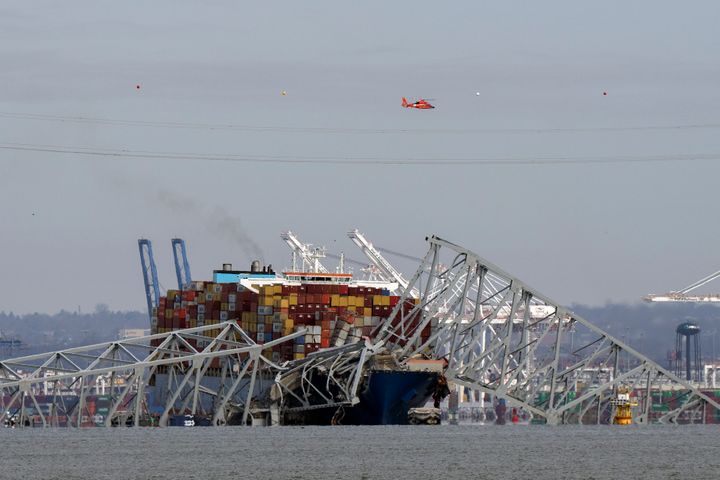
A helicopter flies over a container ship as it rests against wreckage of the Francis Scott Key Bridge on Tuesday.

via Associated Press

Asked about the possibility of a chemical spill, Wallace said they’ve noticed “odors of diesel fuel” but haven’t been able to confirm there’s a spill. All of the officials at the news conference stressed the fast-moving and changing nature of the situation.

U.S. Transportation Secretary Pete Buttigieg said he’s spoken with Moore and Mayor Scott to offer support following the collapse.

The ship was registered with Singapore and operating with 22 crew members on board. The container vessel’s manager, Synergy Marine Group, told Reuters that they have all been accounted for.

The vessel experienced a “momentary loss of propulsion” and dropped its anchors as part of emergency procedures before impact, the Maritime and Port Authority of Singapore said in a statement.

“As a result, it was unable to maintain the desired heading and collided with the Francis Scott Key bridge,” it said.

The container ship was built in 2015 and the following year it was involved in a minor collision with a wall in Antwerp, Belgium, which resulted in significant damage to its hull, according to maritime websites Shipwreck Log and Vessel Finder.

The incident took place in good weather and was blamed on a mistake by the master and pilot on board, according to Vessel Finder.

The 1.6-mile bridge, which opened in 1977, is named for the author of “The Star Spangled Banner.” Key was near the current location of the bridge as he watched the American flag flying from nearby Fort McHenry during a British bombardment in the War of 1812, inspiring the poem that became the song.

The Maryland Transportation Authority said some 11.3 million cars pass over the bridge each year.

Mayor Scott said it was unbelievable to see the Key Bridge tumble, adding, “It was like something out of an action movie.”

Share Button

Sleeping supermassive black holes awakened briefly by shredded stars

A new investigation into an obscure class of galaxies known as Compact Symmetric Objects, or CSOs, has revealed that these objects are not entirely what they seem. CSOs are active galaxies that host supermassive black holes at their cores. Out of these monstrous black holes spring two jets traveling in opposite directions at nearly the speed of light. But in comparison to other galaxies that boast fierce jets, these jets do not extend out to great distances — they are much more compact. For many decades, astronomers suspected that CSOs were simply young and that their jets would eventually travel out to greater distances.

Now, reporting in three different papers in The Astrophysical Journal, a Caltech-led team of researchers has concluded that CSOs are not young but rather lead relatively short lives.

“These CSOs are not young,” explains Anthony (Tony) Readhead, the Robinson Professor of Astronomy, Emeritus, who led the investigation. “You wouldn’t call a 12-year-old dog young even though it has lived a shorter life than an adult human. These objects are a distinct species all of their own that live and die out in thousands of years rather than the millions of years that are common in galaxies with bigger jets.”

In the new studies, the team reviewed literature and past observations of more than 3,000 CSO candidates, verifying 64 as real and identifying an additional 15 CSOs. All these objects had been previously observed by the National Radio Astronomy Observatory’s Very Long Baseline Array (VLBA), funded by the National Science Foundation (NSF), and some had been observed by other high-resolution radio telescopes. “The VLBA observations are the most detailed in astronomy, providing images with details equivalent to measuring the width of a human hair at a distance of 100 miles,” Readhead says.

The team’s analysis concludes that CSOs expel jets for 5,000 years or less and then die out. “The CSO jets are very energetic jets but they seem to shut off,” says Vikram Ravi, assistant professor of astronomy at Caltech and a co-author of one of the studies. “The jets stop flowing from the source.”

As for what is fueling the short-lived jets, the scientists believe the cause is a tidal disruption event (TDE), which occurs when a single star wanders too close to a supermassive black hole and is devoured.

“We think that a single star gets ripped apart, and then all that energy is channeled into jets along the axis the black hole is spinning around,” Readhead says. “The giant black hole starts out invisible to us, and then when it consumes a star, boom! The black hole has fuel, and we can see it.”

Readhead first suspected that CSOs might be fueled by TDEs back in the 1990s, but he says the idea went largely unnoticed by the scientific community. “The hypothesis was all but forgotten because years went by before observational evidence began to mount for TDEs,” he says. At the time of his original hypothesis, only three CSOs had been found.

Fast forward to 2020. Readhead, who had paused his studies of CSOs to delve into different problems in radio astronomy, decided it was time to revisit the topic. He gathered some of his colleagues together on Zoom, and they decided to comb through literature and weed out objects that had been misclassified as CSOs. Over the next two years, the team investigated more than 3,000 CSO candidates, narrowing the group down to only dozens that had the criteria to be real CSOs.

Ultimately, a picture began to emerge of CSOs as an entirely distinct family with jets that die out much sooner than their gigantic brethren, such as those of the extremely powerful Cygnus A, a galaxy that shoots out extremely powerful jets that glow brightly at radio wavelengths. These jets stretch to distances of about 230,000 light-years in each direction and last tens of millions of years. In contrast, the CSO jets extend to about 1,500 light-years at most and die out by about 5,000 years.

According to the astronomers, the CSO jets likely form when a supermassive black hole snacks on not just any star, but a substantial one.

“The TDEs we’ve previously seen only lasted for a few years,” Ravi says. “We think that the remarkable TDEs powering CSOs last far longer because the disrupted stars are very large in size, very massive, or both.”

By analyzing the varied collection of CSO radio images, the researchers say they can trace how the objects age over time, almost like looking at a photo album of a CSO’s life to observe how its jets evolve. The younger CSOs have shorter jets that are closer to the black holes, while the older objects have jets that extend further out from their black hole. Though most of the jets die out, the scientists estimate that one in 100 will go onto to become long-lived like those of Cygnus A. In those rare cases, the galaxies are likely merging with other galaxies, a turbulent process that provides a large quantity of fuel.

If the discoveries of Readhead and his team are confirmed with additional observations, the CSOs will provide a whole new avenue for studying how massive stars at the centers of galaxies interact with supermassive black holes.

“These objects are indeed a distinct population with their own distinct origin, and it is up to us now to learn more about them and how they came to be,” Readhead says. “Being able to study these objects on timescales of years to decades rather than millions of years has opened the door to a whole new laboratory for studying supermassive black holes and the many unexpected and unpredictable surprises they hold.”

Share Button