Poor spatial navigation could predict Alzheimer’s disease years before the onset of symptoms

People at risk of Alzheimer’s disease have impaired spatial navigation prior to problems with other cognitive functions, including memory, finds a new study led by UCL researchers.

The research, published in Alzheimer’s & Dementia: The Journal of the Alzheimer’s Association, used virtual reality to test the spatial navigation of 100 asymptomatic midlife adults, aged 43-66, from the PREVENT-Dementia prospective cohort study.

Participants had a hereditary or physiological risk of Alzheimer’s disease, due to either a gene (the APOE-ε4 allele) that puts them at risk of the condition, a family history of Alzheimer’s disease, or lifestyle risk factors such as low levels of physical activity. Crucially, these participants were around 25 years younger than their estimated age of dementia onset.

Led by Professor Dennis Chan, the study used a test designed by Dr Andrea Castegnaro and Professor Neil Burgess (all UCL Institute of Cognitive Neuroscience), in which participants were asked to navigate within a virtual environment while wearing VR headsets.

The researchers found that people at greater risk of developing Alzheimer’s disease, regardless of risk factor, were selectively impaired on the VR navigation task, without a corresponding impairment on other cognitive tests. The authors say their findings suggest that impairments in spatial navigation may begin to develop years, or even decades, before the onset of any other symptoms.

First author, Dr Coco Newton (UCL Institute of Cognitive Neuroscience), who carried out the work while at University of Cambridge said: “Our results indicated that this type of navigation behaviour change might represent the very earliest diagnostic signal in the Alzheimer’s disease continuum — when people move from being unimpaired to showing manifestation of the disease.”

The researchers also found that there was a strong gender difference in how participants performed, with the impairment being observed in men and not women.

Dr Newton added: “We are now taking these findings forward to develop a diagnostic clinical decision support tool for the NHS in the coming years, which is a completely new way of approaching diagnostics and will hopefully help people to get a more timely and accurate diagnosis.

“This is particularly important with the emergence of anti-amyloid treatments for Alzheimer’s, which are considered to be most effective in the earliest stages of the disease.

“It also highlights the need for further study of the differing vulnerability of men and women to Alzheimer’s disease and the importance of taking gender into account for both diagnosis and future treatment.”

Professor Chan said: “We are excited by these findings for two main reasons. First, they improve detection of the clinical onset of Alzheimer’s disease, critical for prompt application of treatments.

“Second, the VR navigation test is based on our knowledge of the spatial properties of cells in the brain’s temporal lobe, and the application of cellular neuroscience to clinical populations helps bridge the gap in understanding how disease at the neuronal level can result in the clinical manifestation of disease. This knowledge gap currently represents one of the biggest barriers to progress in Alzheimer’s research.”

The research was carried out in collaboration with the University of Cambridge, jointly funded by the Alzheimer’s Society and an MSD research grant.

Dr Richard Oakley, Associate Director of Research and Innovation at Alzheimer’s Society, said: “One in three people born today will go on to develop dementia, and early and accurate diagnosis of the diseases that cause the condition are vital for people to access the right support, plan for the future, and receive appropriate treatment.

“Very early symptoms of dementia can be subtle and difficult to detect, but problems with navigation are thought to be some of the first changes in Alzheimer’s disease.

“This study was part funded by Alzheimer’s Society and used virtual reality technology showing that a healthy person’s navigation abilities are linked to their dementia risk, based on genetic and environmental factors.

“This innovative technology is a long way from becoming a diagnostic test, but it does provide more evidence about the role of navigational abilities as an early sign of Alzheimer’s disease. More work is needed to develop this technology, but it will be exciting to see how this research may offer a way to spot disease-specific changes early and help people living with dementia in future.”


Share Button

Slimming down a colossal fossil whale

A 30 million year-old fossil whale may not be the heaviest animal of all time after all, according to a new analysis by paleontologists at UC Davis and the Smithsonian Institution. The new analysis puts Perucetus colossus back in the same weight range as modern whales and smaller than the largest blue whales ever recorded. The work is published Feb. 29 in PeerJ.

A fossil skeleton of Perucetus was discovered in Peru and described in a paper in Nature last year. The animal lived about 39 million years ago and belonged to an extinct group of early whales called the basilosaurids.

Perucetus’ bones are unusually dense. Mammal bones usually have a solid exterior and are spongy or hollow in the center. Some animals have more of the center filled in with solid bone, making them dense and heavy. In aquatic animals, heavy bones can offset buoyancy from body fat and blubber, allowing the animal to maintain neutral buoyancy in water or — in the case of the hippopotamus — to walk on river beds.

The fossil whale bones have both extensive in-filling and extra growth of bone on the outside as well, a condition called pachyostosis also seen in some modern aquatic mammals, such as manatees.

Based on a series of assumptions, the original authors (Giovanni Bianucci at the University of Pisa, Italy and colleagues) estimated a body mass for Perucetus of 180 metric tons (ranging from 85 to 340 metric tons). This would make Perucetus as heavy as, or heavier than the biggest blue whales known, even though it is considerably shorter at 17 meters long compared to a blue whale at about 30 meters.

How to weigh a whale?

Professor Ryosuke Motani, a paleobiologist at the UC Davis Department of Earth and Planetary Sciences, said that these estimates would make Perucetus impossibly dense.

“It would have been a job for the whale to stay at the surface, or even to leave the sea bottom — it would have required continuous swimming against the gravity to do anything in the water,” Motani said.

Motani and Nick Pyenson at the Smithsonian Institute National Museum of Natural History reexamined the assumptions used to make those estimates.

The first problem is that Bianucci et al used the fossil bones to estimate the weight of the skeleton, then extrapolated to the weight of the entire animal, assuming that the skeletal and non-skeletal mass would scale at the same rate with increasing body size. But measurements of other animals show this is not the case, Motani and Pyenson argue.

The original estimates also overestimated how much overall body mass increases as a result of pachyostosis. But evidence from manatees shows that their bodies are relatively light relative to their skeletal mass.

Motani and Pyenson estimate that the 17-meter long Perucetus weighed in at 60 to 70 tons, considerably less than the known weights of blue whales. A Perucetus that grew to 20 meters could weigh over 110 tons, still well short of the largest blue whales at 270 tons.

“The new weight allows the whale to come to the surface and stay there while breathing and recovering from a dive, like most whales do,” Motani said.

Paleontologists have not yet uncovered a skull or teeth of Perucetus, so it is hard to tell what it ate. Sustaining a huge body takes a lot of food. Bianucci et al suggested that Perucetus might have browsed on coastal fish and shellfish, or scavenged carcases, as some sharks do. The new slimmed-down size estimate puts Perucetus in a similar range to sperm whales (80 tons, 20 meters long), which hunt large prey such as giant squid.

Share Button

Astronomers discover heavy elements after bright gamma-ray burst from neutron star merger

An international team of astronomers — including Clemson University astrophysicist Dieter Hartmann — obtained observational evidence for the creation of rare heavy elements in the aftermath of a cataclysmic explosion triggered by the merger of two neutron stars.

The massive explosion unleashed a gamma-ray burst, GRB230307A, the second brightest in 50 years of observations and about 1,000 times brighter than a typical gamma-ray burst. GRB230307A was first detected by NASA’s Fermi Gamma-Ray Space Telescope on March 7, 2023.

Using multiple space- and ground-based telescopes, including NASA’s James Webb Space Telescope, the largest and most powerful telescope ever launched into space, scientists were able to pinpoint the source of the gamma-ray burst in the sky and track how its brightness changed.

With the information gathered, the researchers determined the burst was the result of two neutron stars that merged in a galaxy 1 billion light-years from Earth to form a kilonova. The researchers observed evidence of tellurium, one of the rarest elements on Earth.

The breakthrough discovery puts astronomers one step closer to solving the mystery of the origin of elements that are heavier than iron.

“I’m a high energy astrophysicist. I like explosions. I like the gamma rays that come from them. But I’m also an astronomer who really cares about fundamental questions like how did heavy elements form,” Hartmann said.

Gamma-ray bursts (GRBs) are bursts of gamma-ray light — the most energetic form of light — that last anywhere from seconds to minutes. The first GRBs were detected in the 1960s by satellites built to monitor nuclear testing.

GRBs have different causes.

Long duration GRBs are caused by supernovas, the point when a massive star reaches the end of its life and explodes into a burst of light. Short duration GRBs are caused by the merger of two neutron stars, known as a kilonova, or the merger of a neutron star and a black hole.

Although GRB230307A lasted for 200 seconds, scientists saw the afterglow color change from blue to red, a signature of kilonova.

“The burst itself actually indicated a long duration event, and it should have been a normal supernova-type situation. But it had unusual features. It didn’t quite fit the patterns of long bursts,” Hartmann said. “It turns out that this radioactive cloud, that kilonova afterglow, which had all these nuclear synthetic fingerprints in it, is the signature of a binary merger. The excitement comes from using the Webb to identify a chemical fingerprint that we had expected for short bursts and seeing it inside a long burst.”

Hartmann said the Big Bang produced hydrogen and helium. All other elements were made by stars and processes in the interstellar medium.

“Some of them are massive enough to explode and they return that material to their gaseous environments which later make new stars. So, there’s a cycle in the universe that makes us more enriched in carbon, nitrogen, oxygen, all the things we need,” he said. “We call stars the cauldrons of the universe.”

Thermonuclear reactions, or fusion, make stars shine. That leads successively to the production of more heavy elements, Hartmann said. But when it gets to iron, there isn’t much energy left to squeeze out, he said.

So, where do all the heavy elements such as gold and uranium come from?

“The heavy elements have special origins. There are two processes that dominate. One is called rapid; the other is called slow. We believe the r-process happens in those neutron star mergers,” Hartmann said.

Theoretical modeling suggested kilonovas should produce tellurium, but the detection of a spectral line by the James Webb Space Telescope provided experimental evidence. A spectral line is a dark or bright line within a continuous spectrum. It is produced by transitions within atoms or ions.

“We think it’s a pretty secure identification, but it’s not beyond a reasonable doubt like they would say in court,” Hartmann said.

In addition to Hartmann, researchers from several universities in the United States as well as scientists from the Netherlands, the United Kingdom, Italy, Japan, Denmark, Spain, Sweden, Australia, Ireland, France, New Zealand, Canada, Israel, Iceland, Czech Republic and Germany were involved.

Share Button

We need assisted dying vote after report – Rantzen

A cross-party group of MPs found evidence of care benefits in countries that allow assisted dying.

Share Button

What are assisted dying, assisted suicide and euthanasia?

Many countries have legalised assisted dying, assisted suicide or euthanasia, which are different.

Share Button

Why are measles cases rising and what is the MMR vaccine?

Young people are being encouraged to have the MMR jab, as cases of measles rise across England.

Share Button

Is George Galloway About To Make A Dramatic Return To Parliament?

According to the bookies, today’s Rochdale by-election is already a done deal.

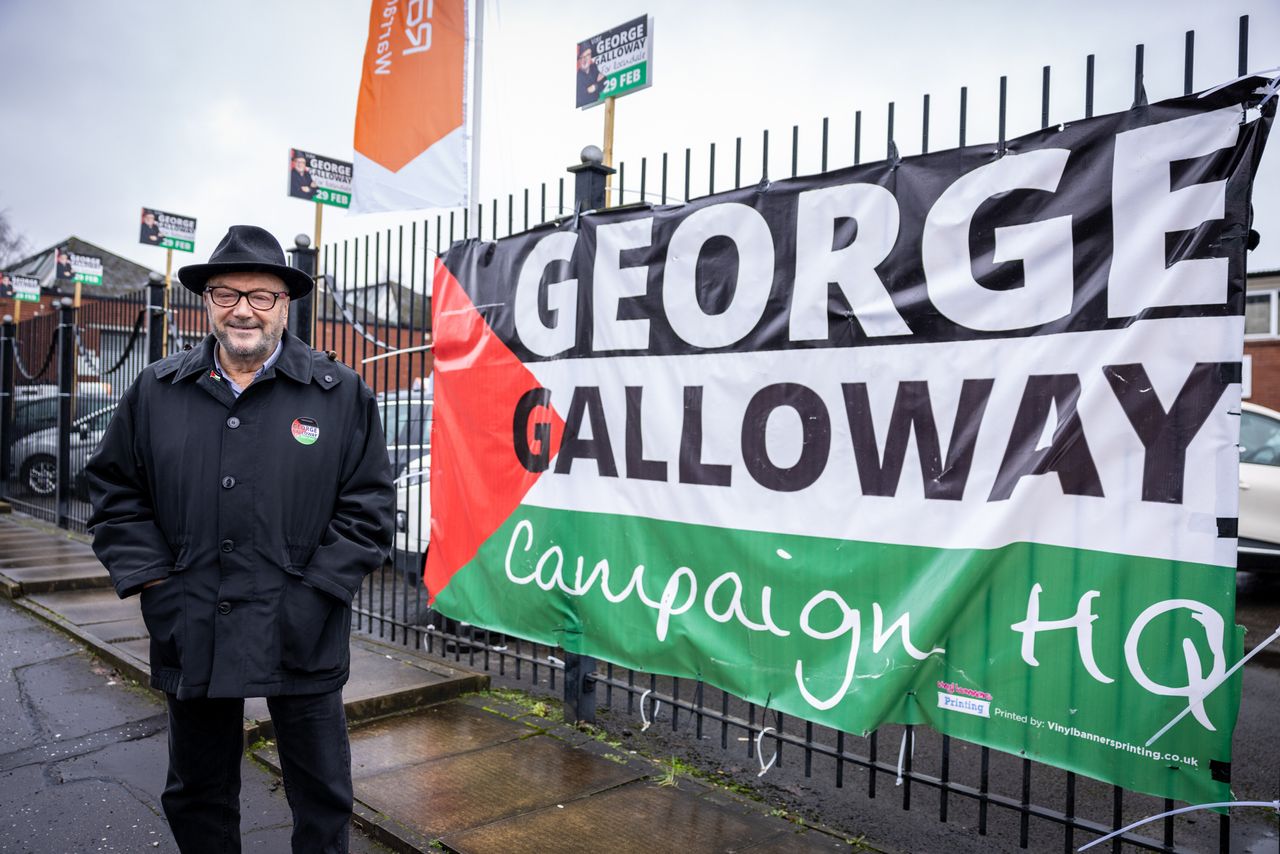
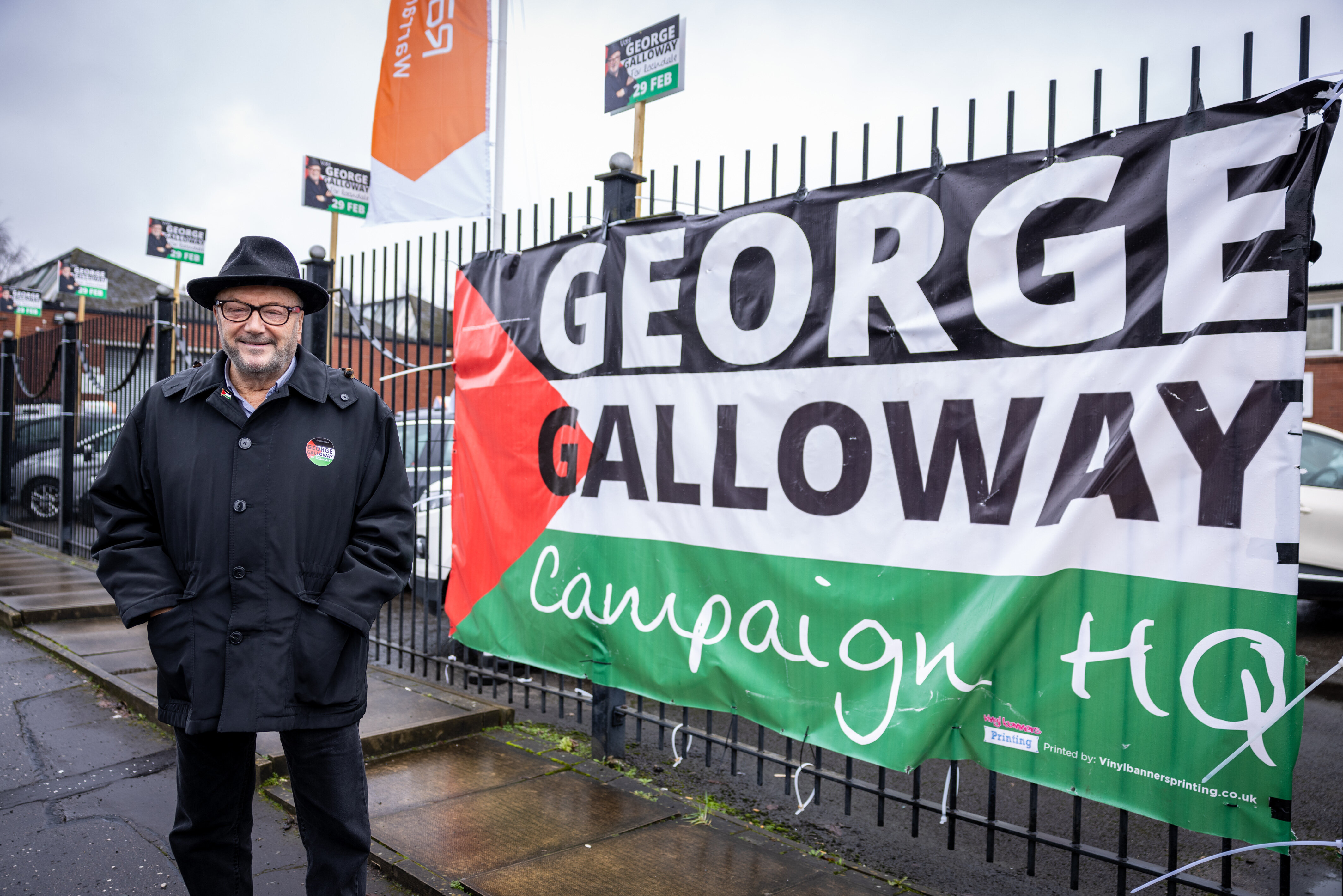
George Galloway, the former Labour MP who now represents the Workers Party of Britain, is the odds-on favourite to win.

If he does, it will represent another remarkable comeback for one of British politics’s most controversial figures.

Voters in the Greater Manchester seat began going to the polls from 7am this morning to elect a successor to Tony Lloyd, the veteran Labour MP who died of leukaemia in January.

Lloyd, who had been the constituency’s MP since 2017, was re-elected in 2019 with a majority of 9,668.

All things being equal, the by-election would have been a safe Labour hold. But, in an unprecedented move, the party withdrew support for its own candidate, Azhar Ali, after recordings emerged of him making anti-Israel comments at a community meeting.

Because it was too late to replace him on the ballot paper, Ali is still officially Labour’s candidate even though, if he wins, he will sit as an independent MP and will not stand for the party at the general election.

Labour’s difficulty has become Galloway’s opportunity. The Dundee-born left-winger aims to capitalise on his former party’s turmoil over the war in Gaza to become Rochdale’s new MP.

A voter arrives at a polling station in the Rochdale by-election.

Christopher Furlong via Getty Images

Galloway was first elected to parliament as the Labour MP for Glasgow Hillhead in 1987, a seat he held until 2005.

By that time, however, he was no longer a Labour member, having been expelled from the party two years previously over his outspoken opposition to the Iraq war.

At the 2005 general election, he was elected the Respect MP for Bethnal Green and Bow, defeating Labour’s Oona King in the process.

After losing his seat in 2010, Galloway returned to parliament again in 2012 when he won the Bradford West by-election.

Once again, he was defeated at the subsequent general election in 2015 and, after unsuccessful attempts to become London mayor and a member of the Scottish Parliament, he is once again on the verge of becoming an MP.

Another curiosity of the Rochdale by-election is that is is being contested by no fewer than three former Labour politicians – Azhar Ali (who is a councillor in Wigan), Galloway and Simon Danczuk, who represented the seat for Labour between 2010 and 2017 and is standing for Reform UK.

Former Labour MP Simon Danczuk is standing for Reform UK.

Christopher Furlong via Getty Images

The unique circumstances of the contest also make it hard to predict, although there is little doubt that Galloway is now the man to beat.

One local voter told HuffPost UK: “The Labour vote isn’t just going to go to Galloway.

“The idea that George will also get all of the Muslim vote is just not true. And Muslim voters only make up around 20% of the electorate, so it’s hard to call. It will all depend on turnout.”

George Galloway has made the war in Gaza the central theme of his campaign.

James Speakman – PA Images via Getty Images

Galloway has been clear about what his priorities will be should be sent back to the Commons, telling the Manchester Evening News: “On my return – if I’m elected – I’ll begin with, ‘as I was saying, Mr Speaker’, and I’ll ask the prime minister to meet me urgently to hear from the frontline, what millions of British people think about what’s happening in Gaza.

“But my second question will be on the A&E and the maternity services which are now non-existent in Rochdale.”

Share Button

Measles campaign shows children pleading for jabs

Health officials want to remind busy parents in England of the serious risks if vaccinations are missed.

Share Button

Margaret Hodge Tears Into ‘Patronising’ Reform UK’s Richard Tice

Labour’s Margaret Hodge has clashed with Reform UK’s Richard Tice during a heated exchange in the aftermath of the Lee Anderson Islamophobia row.

On Sky News, the veteran MP and the leader of the former Brexit Party had awkward exchanges over Reform UK’s apparent increasing influence.

The party has received more media coverage in recent weeks following its third place finishes in the Wellingborough and Kingswood by-elections – potentially splitting the Tory vote in future elections – and speculation over the possible defection of Anderson, who was suspended from the Tory parliamentary party after he refused to apologise for saying “Islamists” had “got control of (London mayor Sadiq) Khan and they’ve got control of London”.

The TV exchange got off to an uncomfortable start, with Hodge asking Tice not to “interrupt” her: “Let me put the argument and then I’ll give you plenty of time to respond.”

The former minister then took to task the argument that Reform UK is having an increasing influence on Westminster, pointing out that getting around 10% of the vote in by-elections pales compared to the Social Democratic Party (SDP) in the 1980s: “I think the SDP were picking up much more. They were up at 23%. They never got a seat.”

She went on: “Your great, glorious president, whatever you would call him, he’s had more elections than I’ve had hot dinners and he’s managed to lose every single one.”

They also clashed over Reform UK’s so-called “contract with you”, in effect a draft manifesto. Tice told Hodge “you clearly haven’t read the contract properly” and “you clearly don’t understand it”, which led to Hodge describing her opponent as “patronising” – and unleashing another attack.

They also went back-and-forth over policing of pro-Palestine protests, with Hodge accusing Tice of being “bloody patronising”.

She added: “Honestly, you really are. I feel a misogynist attack on me in the way (you say) ‘you’re so ill-informed. You don’t know what you’re talking about’. I find that really offensive.”

Share Button

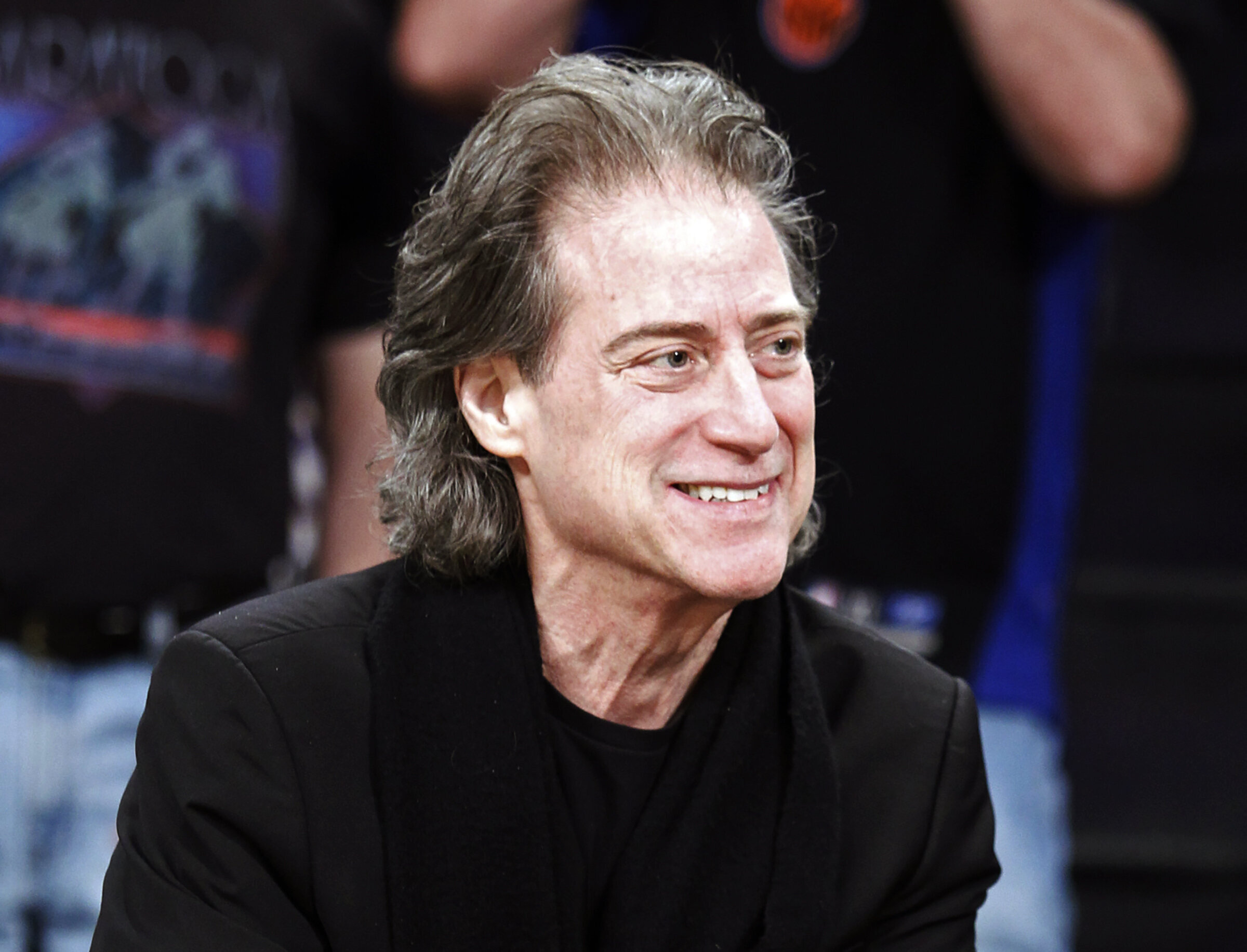
Richard Lewis, Beloved Comedian And Curb Your Enthusiasm Regular, Dead At 76

Richard Lewis, the critically acclaimed stand-up comic known for his droll delivery and brutal candour, has died. He was 76.

The actor revealed in 2023 that he’d been diagnosed with Parkinson’s disease, recommitting himself at the time to working on Curb Your Enthusiasm alongside his longtime friend Larry David, the show’s star and creator.

The comedy series, now in its 12th and final season, will likely feature posthumous appearances by Lewis, who had refrained from appearing in Season 11 as he dealt with several surgeries.

His publicist, Jeff Abraham, told The Associated Press that Lewis died at his home in Los Angeles on Tuesday night after suffering a heart attack.

Lewis starred in the TV show Anything but Love (1989 to 1992) with Jamie Lee Curtis and also played in the films Robin Hood: Men in Tights (1993) and Leaving Las Vegas (1995). He also regularly appeared on The Late Show With David Letterman and The Howard Stern Show.

Lewis, who dubbed himself the Prince of Pain, wrote a 2000 memoir titled The Other Great Depression.

“I’ve devoted my life to comedy and my sobriety the last almost 27 years. I’m overwhelmed with joy right now. I never learned how to keep joy in my head for more than a minute, but I’m breaking all records for my life today,” Lewis told Variety in 2021.

He is survived by his wife, Joyce Lapinsky.

Share Button