Chemists in England can supply antibiotics and other treatments without patients seeing a doctor.


Chemists in England can supply antibiotics and other treatments without patients seeing a doctor.
The second round of public hearings examined how ministers made decisions during the pandemic.
A survey suggests one in five drinkers gave up alcohol this January.
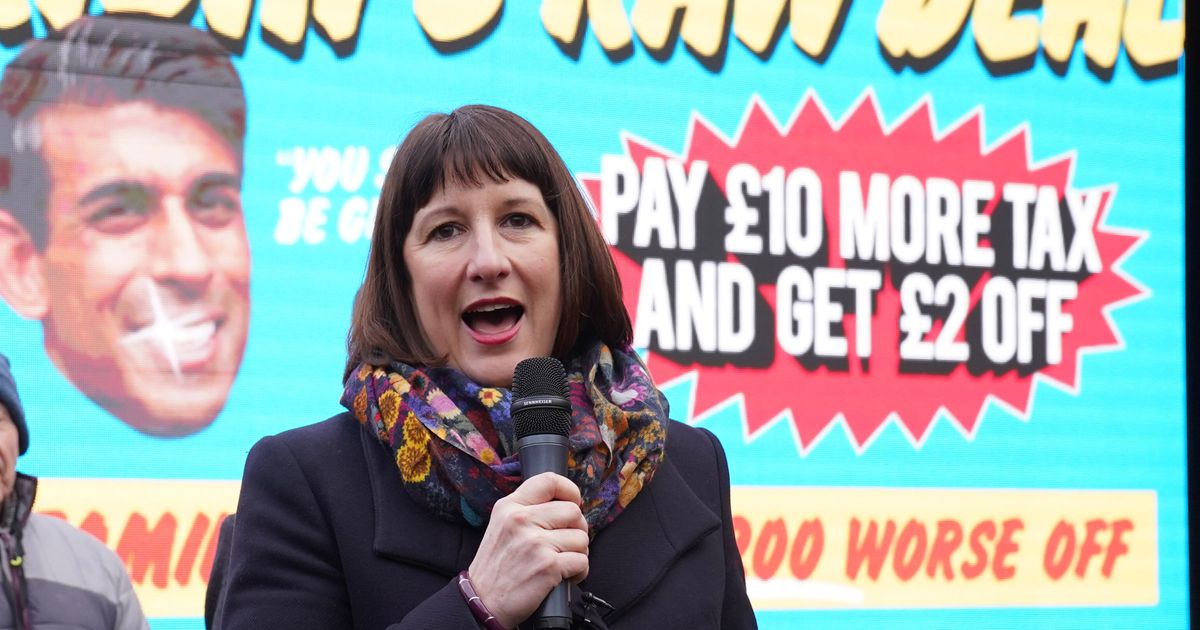
Labour has said it will not bring back the cap on bankers’ bonuses – just three months after criticising Rishi Sunak for scrapping it.
Shadow chancellor Rachel Reeves told the BBC that she wanted to be “a champion of a successful and thriving financial services industry in the UK”.
Advertisement
But her U-turn led to criticism and mockery from Labour’s political opponents.
The bonus cap was initially introduced in 2014 as a way of curbing the excesses of the banking sector in the wake of the 2008 financial crash.
But in October, the Financial Conduct Authority confirmed that it was ending.
Reeves, the shadow chancellor, led the criticism of the move at the time, posting on X (formerly Twitter): “Today – in the midst of their cost of living crisis – the Conservatives are scrapping the cap on bankers’ bonuses. It tells you everything you need to know about this Government.”
Darren Jones, the shadow Treasury secretary, also pointed out that getting rid of the bonus cap was one of Liz Truss’s policies during her seven weeks as PM.
Advertisement
He said: “When Truss says jump, Sunak says how high.
“At a time when families are struggling with the cost of living and mortgages are rising, this decision tells you everything you need to know about the priorities of this out of touch Conservative government.”
But in a dramatic change of heart, Reeves told the BBC that if Labour wins the election, they will not bring back the cap.
She said: “The cap on bankers’ bonuses was bought in in the aftermath of the global financial crisis and that was the right thing to do to rebuild the public finances.
“But that has gone now and we don’t have any intention of bringing that back. And as chancellor of the exchequer, I would want to be a champion of a successful and thriving financial services industry in the UK.”
Christina McAnea, general secretary of Unison, said: “Reckless banker behaviour and sky-high city bonuses helped cause the global financial crisis. Public services and working people are still paying the price for that crash today.
Advertisement
“A Labour government should reinstate the bonus cap scrapped last autumn.”
Stephen Flynn, the SNP’s leader at Westminster, pointed out Reeves’ apparent hypocrisy on X.
David Linden, the SNP social justice spokesman, said: “The UK economy is broken, and Brexit is hammering living standards, but Sir Keir Starmer’s Labour Party is offering no change from broken Brexit Britain.
“By admitting he would slash funding for public services, while helping the super rich, Starmer has shown he has the wrong priorities and is on the side of the wealthy Westminster elite, not ordinary working families.”


Poison ivy ranks among the most medically problematic plants. Up to 50 million people worldwide suffer annually from rashes caused by contact with the plant, a climbing, woody vine native to the United States, Canada, Mexico, Bermuda, the Western Bahamas and several areas in Asia.
It’s found on farms, in woods, landscapes, fields, hiking trails and other open spaces. So, if you go to those places, you’re susceptible to irritation caused by poison ivy, which can lead to reactions that require medical attention. Worse, most people don’t know poison ivy when they see it.
To find poison ivy before it finds you, University of Florida scientists published a new study in which they use artificial intelligence to confirm that an app can identify poison ivy.
Nathan Boyd, a professor of horticultural sciences at the UF/IFAS Gulf Coast Research and Education Center near Tampa, led the research. Renato Herrig, a post-doctoral researcher in Boyd’s lab, designed the app.
“We were the first to do this, and it was designed as a tool for hikers or others working outdoors,” Boyd said. “The app uses a camera to identify in real-time if poison ivy is present and provides you with a measure of certainty for the detection. It also functions even if you don’t have connectivity to the internet.”
The next step is to make the app commercially available, and there’s no timetable for that yet, Boyd said.
For the study, researchers collected thousands of images of poison ivy from five locations: Alderman’s Ford Conservation Park and Hillsborough River State Park, both in Florida; Eufala National Wildlife Refuge in Alabama; York River State Park in Virgina and Fall Creek Falls State Park in Tennessee.
They labeled images, and in each image, scientists put boxes around the leaves and stems of the plant. The boxed images were critical because poison ivy has a unique leaf arrangement and shape. Scientists use those characteristics to identify the plant.
They then ran the images through AI programs and taught a computer to recognize which plants are poison ivy. They also included images of plants that are not poison ivy or plants that look like poison ivy to be certain the computer learns to distinguish them.
“We believe that by integrating an object-detection algorithm, public health and plant science, our research can encourage and support further investigations to understand poison ivy distribution and minimize health concerns,” Boyd said. In their future work UF/IFAS researchers hope to expand the use of the app to identify more noxious plants.

A first of its kind study of the 2019-2020 ‘Black Summer’ bushfires in Australia has revealed that the tourism industry nationwide took an immediate hit of $2.8 billion in total output to its broader supply chains and almost 7300 jobs disappeared nationwide.
The fires four years ago triggered widespread tourism shutdowns in many parts of the country in the lead up to the peak Christmas and New Year season, resulting in $1.7 billion direct losses to the tourism industry, which triggered the larger drop in supply chain output.
“These results are an illustration of what can be expected in the future not only in Australia, but in other nations that are vulnerable to climate-change driven disasters,” said Vivienne Reiner, a PhD student with the Centre for Integrated Sustainability Analysis in the Faculty of Science and lead author of the study, published in Economics of Disasters and Climate Change.
“It’s important to note that our study, which measured tourism’s losses through Australian supply chains, did not quantify other economic costs, such as the supply-chain impacts of losses from agriculture or forestry, which were also substantially impacted by the fires,” she said.
While the fires had the biggest impact on Australia’s east coast, the impact from tourism losses was national and felt across the economy, the researchers found.
“Tourism is a vital Australian industry. Before the fires that started in 2019, statistics showed that in rural areas 8 percent, or almost one in 12 people, were employed in jobs connected to the tourism industry,” Ms Reiner said. “As well, tourism is a top export, with travel services responsible for more export income than natural gas in 2018-19.”
Associate Professor Arunima Malik, a co-author who heads the Centre for Integrated Sustainability Analysis and is also affiliated with the Business School, said: “With bushfires increasing compared to other natural disasters and expected to intensify due to climate change, it is important for countries such as Australia to quantify their economic impact as part of routine practice, including supply-chain spillovers.”
Co-author Professor Manfred Lenzen, also with ISA in the School of Physics, said: “Although the losses we calculated only represented a small fraction of the nation’s economic output, Australia’s reputation as a pristine destination could become permanently damaged under global warming, with fewer people travelling within and to Australia in our peak holiday season.”
The research showed varied impact nationwide across the supply chain, including in job losses:
The researchers warn that the Australian economy could face further losses as the effects from climate change increase.
Ms Reiner said: “As part of the Asia Pacific — the world’s most disaster-prone region — Australian tourism has a lot to gain from climate-change mitigation. In terms of responses, studies such as ours also help indicate hotspots in supply chains where rebuilding may be required in communities and industries.
“By including the entire supply chain in our research, using input-output analysis, we calculated total output losses of $2.8 billion, which is a 61 percent increase on direct damages identified.”

When researchers want to study how COVID makes us sick, or what diseases such as Alzheimer’s do to the body, one approach is to look at what’s happening inside individual cells.
Researchers sometimes grow the cells in a 3D scaffold called a “hydrogel.” This network of proteins or molecules mimics the environment the cells would live in inside the body.
New research led by the University of Washington demonstrates a new class of hydrogels that can form not just outside cells, but also inside of them. The team created these hydrogels from protein building blocks designed using a computer to form a specific structure. These hydrogels exhibited similar mechanical properties both inside and outside of cells, providing researchers with a new tool to group proteins together inside of cells.
The team published these results Jan. 30 in the Proceedings of the National Academy of Sciences.
“In the past 10 years, there’s been a shift in the world of cell biology,” said co-senior author Cole DeForest, a UW associate professor of chemical engineering and of bioengineering. “Classically, folks have attributed much of the cell’s interior organization to membrane-bound organelles, such as mitochondria or the nucleus. But now scientists are realizing that the cell actually has other ways to locally concentrate certain molecules or proteins without using membranes, for example, by protein-protein interactions. This concentrating allows the cell to turn on or off specific functions that can be helpful or ultimately lead to disease.”
DeForest continued: “What I think is pretty exciting here is that we have good mechanical control of our hydrogels — even when they are made inside human cells. This means we can tune them to essentially function as a synthetic version of whatever sequestering phenomenon we want to study, such as how protein aggregation can lead to Alzheimer’s.”
One key element of this research was that the protein building blocks were designed from scratch — they don’t exist anywhere in nature — using computers.
“You can imagine a protein as a string of subunits called amino acids. That string folds up to form a three-dimensional structure. There are 20 different amino acids, and a typical protein is made up of 100 to 200 of them. That makes the system very complex, because how do you know how it’s going to fold?” said co-lead author Rubul Mout, who completed this research as a UW postdoctoral researcher at the Institute for Protein Design and is now a research fellow at Harvard Medical School and Boston Children’s Hospital. “That’s where the computer comes into play — it does calculations to estimate the most likely three-dimensional shape. And similarly, you can tell it what shape you want and it tells you what sequence you need to build the protein.”
To make a variety of hydrogels with different properties, the team used computational design to control how floppy or rigid the protein building blocks were and how the building blocks organized and connected to create the hydrogel. The researchers also used two different methods to link the building blocks together: One linked them irreversibly and the other allowed the proteins to disconnect and reconnect.
“Irreversibly crosslinked systems are going to be intrinsically more stable, making them better for long-term cell culture and functional tissue engineering,” said DeForest, who is also a faculty member with the UW Molecular Engineering and Sciences Institute and the UW Institute for Stem Cell and Regenerative Medicine. “But the reversibly crosslinked systems are more fluid, which may be better for driving specific protein-protein interactions within living cells.”
To determine if the hydrogels in cells had similar characteristics compared to their extracellular counterparts, the researchers examined whether building blocks within the hydrogels could move around. A stiffer hydrogel would be more likely to trap the proteins in one position compared to a more fluid gel. The mechanical properties of each type of hydrogel remained even when inside a cell.
The team plans to further explore this system, including being able to better control how hydrogels form and localize within cells.
The most crucial part of this project, the researchers said, was the collaboration between protein designers and chemical and biological engineers.
“Our cross-disciplinary collaboration with Cole’s group has been very exciting, and has opened up routes to new classes of biomaterials with a wide range of applications,” said co-senior author David Baker, the director of the Institute for Protein Design.
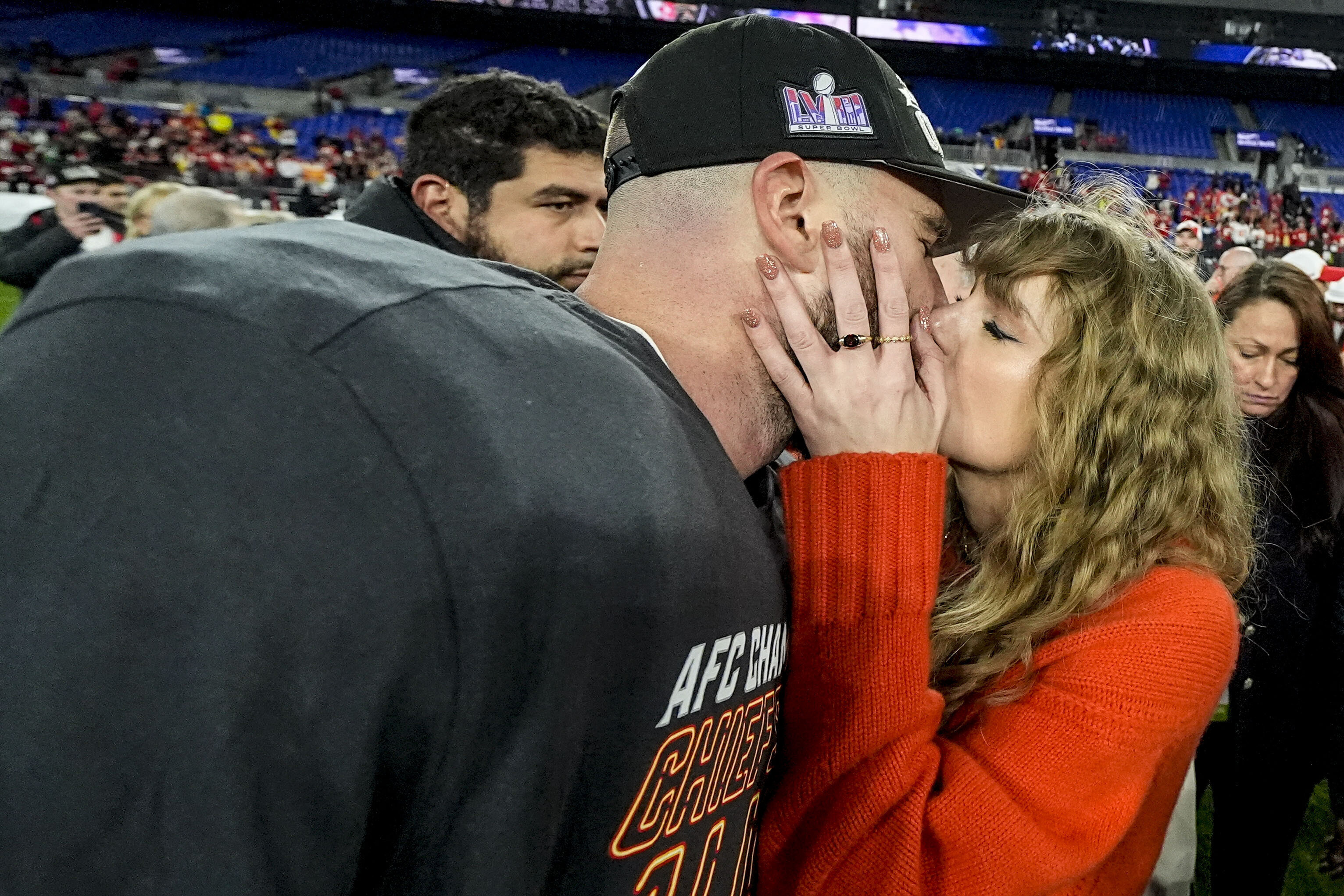
It’s a conspiracy involving the deepest of deep states: The world’s most popular entertainer, America’s most popular sporting event and the president of the United States. Its goal, according to theories circulating in the outskirts of MAGA world, is to covertly compel fans to throw the 2024 election to the Democrats.
Right-wing speculation reached a fever pitch this week around pop mega-star Taylor Swift and boyfriend Travis Kelce after Kelce’s team, the Kansas City Chiefs, qualified for Super Bowl LVIII on Sunday, a victory the two celebrated with much-photographed postgame smooch. A day later, The New York Times ran a piece noting President Joe Biden’s re-election campaign is hoping for Swift’s endorsement.
Advertisement
Those two seemingly unrelated events — and the possibility that Swift would use her massive star power and huge online reach to help Biden beat Donald Trump — are driving right-wing media into a meltdown. And that one of the country’s biggest celebrities will use her fanbase to help Biden is already being treated as inevitable by some of the right’s biggest influencers.
“That will be a tsunami that will be very difficult to thwart,” Turning Point USA Founder Charlie Kirk reportedly said to a group of young conservatives at a conference on Monday night, of the possibility of Swift and her massive army of supporters wading into the election. “We better be prepared. It seems as though things are aligning for that.”
But there’s more to this than the possibility of a Swift nod swinging a close election. For years, right-wing conspiracists have pushed the notion that Swift, who began her career in the conservative world of country music and was once referred to as “Aryan goddess” by white supremacists, is somehow a Democratic “agent” because she endorsed Democrats in the 2018 midterms and Biden in the 2020 presidential election. (Swift has admitted she regrets not getting involved in 2016.)
The Biden campaign did not immediately respond to HuffPost’s request for comment on alleged collusion with Swift and the NFL.
Advertisement
Kelce, for his part, appeared in a Pfizer commercial promoting the Covid vaccine. Covid shots have long been the subject of right-wing conspiracies, with adherents falsely believing the government is covering up adverse reactions or that the vaccines harbor microchips.
Now, high-profile conservative figures are promoting the unfounded idea that Swift, the NFL and the Democratic Party are together involved in a “psyop” campaign to deliver the election to Biden. Fox News host Jesse Watters recently suggested that Swift was a “front for a covert political agenda” and bizarrely called her a “Pentagon asset” — which, of course, the Pentagon denied.
“As for this conspiracy theory, we are going to shake it off,” a Pentagon spokesperson told the Daily Beast.
By that logic, Swift’s appearances at Chiefs games isn’t to cheer on her boyfriend or even to promote her tour — it’s really to get the country to vote blue in November.
“I wonder who’s going to win the Super Bowl next month. And I wonder if there’s a major presidential endorsement coming from an artificially culturally propped-up couple this fall. Just some wild speculation over here, let’s see how it ages over the next 8 months,” former GOP presidential candidate Vivek Ramaswamy, who has embraced far more dangerous conspiracy theories than this one, tweeted Monday.
Advertisement
“You don’t have to take my word for it. The New York Times already said it’s working on what the Biden administration calls the ′Taylor strategy,’” Jack Posobiec, a conspiracy theorist known for promoting “Pizzagate”, said at Turning Point Action’s Restoring National Confidence Summit on Tuesday, the same event where Kirk mentioned Swift. (The Times article referenced no such strategy.)
“It’s not about her, it’s about the machine that’s around her,” Posobiec said, suggesting Swift is somehow in cahoots with Democrats.
The theory has some truth behind it: Biden has struggled with young voters, who are a major part of Swift’s fanbase and a reason Biden aides are hopeful an endorsement will arrive before the election. Swift’s endorsement could help encourage some of her 279 million Instagram followers to register to vote, or even to raise cash for Biden.
But just ask former Tennessee Governor Phil Bredesen, who earned Swift’s endorsement in a 2018 Senate race, if the pop megastar can guarantee a victory. (Bredesen lost to GOP Senator Marsha Blackburn by 11 points.)
Though even as the conservative podcasting and media spheres hype the dangers of a Swift endorsement to Trump, some of the most right-wing members of Congress aren’t convinced there’s anything political to the Swift-Kelce coupling.
Advertisement
“I’m a sports fan and if I’m watching a game, I’m watching the game,” Rep. Marjorie Taylor Greene (R-Ga.) told HuffPost. Greene herself has been involved in online conspiracism, and said she’s seen some of the speculation about Swift, but didn’t care to comment.
“Taylor Swift, she’s an entertainer,” Greene said. “Apparently, she’s dating a football player.”
Other House Republicans said they hadn’t heard of what’s going on. Rep. Eric Burlison (R-Mo.) said he only wanted the Chiefs to win the Super Bowl. “She’s not adding to anything to help them be more successful,” Burlison said.
Rep. Tim Burchett (R-Tenn.) joked that maybe Swift is a “double deep plant” who will actually help Republicans.
“I remember when she was country — she was in Nashville, and I like country music,” he said. “I’m not a pop person.”
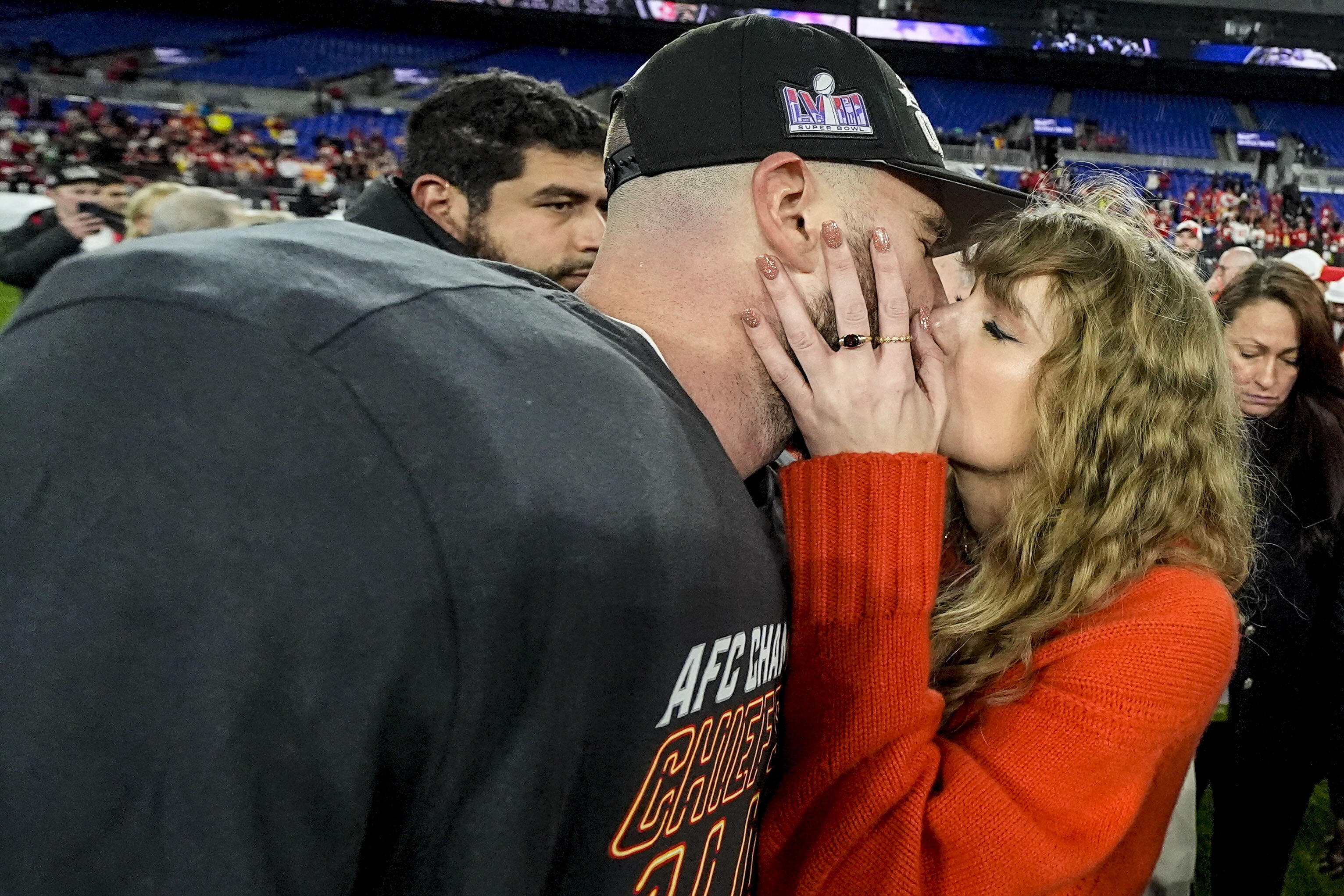
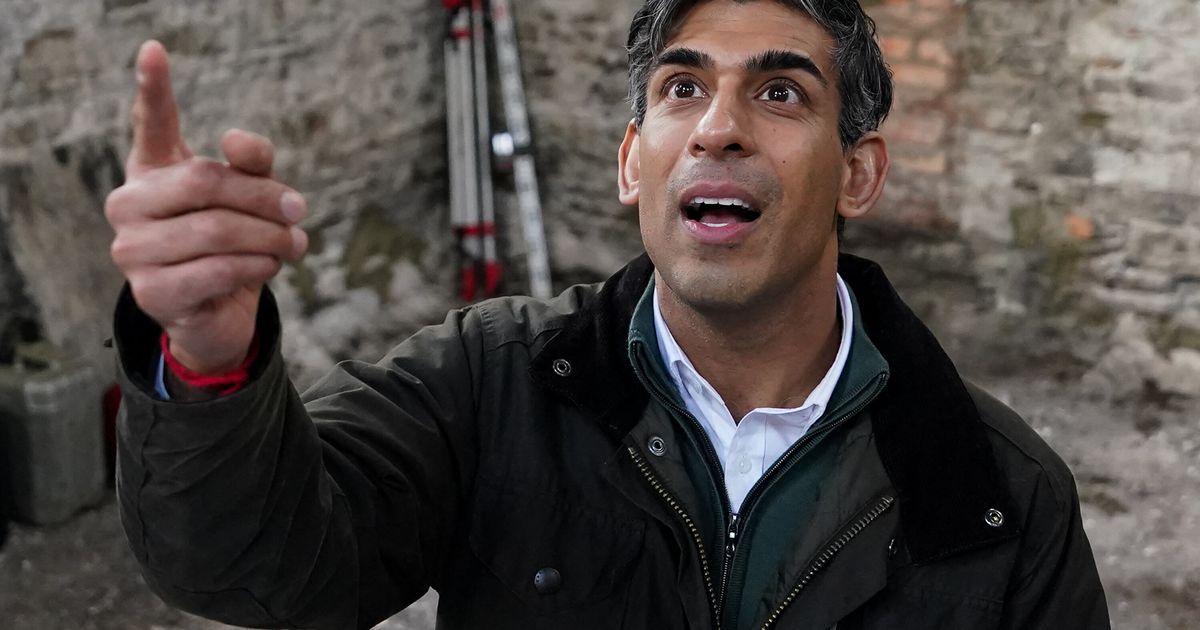
The Conservative traditional grip on older voters appears to be slipping as research found only people aged over 70 back the Tories.
Pollster YouGov revealed that the age group most likely to vote Labour in the next election is 25 to 29-year-olds – at 59 per cent. And Keir Starmer’s party had an advantage over the Tories in five other age categories, with a lead among 18 to 24-year-olds up to the 60-69-year-old age bracket.
Advertisement
The only age category most likely to opt for the Conservatives are the over-70s, at 43 per cent.
Ahead of the last general election in 2019, the Conservative party was ahead of Labour in the four age categories from 40 years old and over.
YouGov’s Matthew Smith said: “Age will continue to be the key dividing line at the general election.
“The Tories are now the most popular party only among the over-70s, 43% of whom back the party. This is down from 67% in 2019, however, with Labour being the main beneficiaries, having increased their vote share among the oldest Britons from 14% to 23%.
“Britons in their 60s are split, with 33% backing Labour and 31% the Conservatives. The majority of Britons under-50 now say they will vote Labour.”
Advertisement
The poll also looked at voting intention by gender, education and class. “The coalition that won the Conservatives the 2019 general election has crumbled,” it summarised.
Polls have repeatedly give Labour a double-digit lead over Rishi Sunak’s party. Last week, the prime minister’s own pollster quit No.10 having concluded the country is on course for a “decade of Labour rule”.

Bob Odenkirk might’ve spoken too soon in denouncing monarchs.
On an upcoming episode of the PBS series Finding Your Roots, the Better Call Saul star is stunned upon learning that he has royal ancestry, according to a Monday preview in Rolling Stone.
Host Henry Louis Gates Jr reveals on the show that Odenkirk’s sixth great-grandfather was Germany’s Duke of Plön, who was related to the royal families of Europe. But the actor is quick to assert that he’s “not a monarchist”.
Advertisement
“I’m an American,” Odenkirk says in a teaser clip. “I don’t believe in, uh, that. You know, I feel like it’s a little twisted.”
He adds: “I understand why society built itself around monarchs and leaders. … But I think that we’ve gotten to a better place with democracy, and we should keep going down that road.”
It’s at that moment that an excited Gates primes Odenkirk for a follow-up revelation, saying: “You and King Charles III are 11th cousins.”
The actor is initially at a complete loss for words before guffawing — and cheekily reassessing his stance.
Advertisement
“Well, maybe I’ll change my mind on that,” quips Odenkirk. “Oh, that is crazy!”
Gates’ team of genealogical researchers went back generations to trace Odenkirk’s lineage to a fifth great-grandfather named Friedrich Carl Steinholz, who was born out of wedlock in 1755 and fathered by the Duke of Plön.
Royal families commonly intermarried to maintain political alliances, which helps explain how Odenkirk is distantly connected to the British crown.
When Gates asks how Odenkirk feels about “all of this”, the actor appears grateful.
“Like I’m part of history that I didn’t think I was any part of,” he answers.


