Physician associates have been used in responsible positions at Birmingham Children’s Hospital.


Physician associates have been used in responsible positions at Birmingham Children’s Hospital.
A minister responds to a coroner over the death of Melissa Kerr, who died during surgery in Turkey.
Bioarchaeologists studied three plague burial sites to research how racism influenced risk of death.

Long considered myth, freakishly large rogue waves are very real and can split apart ships and even damage oil rigs. Using 700 years’ worth of wave data from more than a billion waves, scientists at the University of Copenhagen and University of Victoria have used artificial intelligence to find a formula for how to predict the occurrence of these maritime monsters. The new knowledge can make shipping safer.
Stories about monster waves, called rogue waves, have been the lore of sailors for centuries. But when a 26-metre-high rogue wave slammed into the Norwegian oil platform Draupner in 1995, digital instruments were there to capture and measure the North Sea monster. It was the first time that a rogue had been measured and provided scientific evidence that abnormal ocean waves really do exist.
Since then, these extreme waves have been the subject of much study. And now, researchers from the University of Copenhagen’s Niels Bohr Institute have used AI methods to discover a mathematical model that provides a recipe for how — and not least when — rogue waves can occur.
With the help of enormous amounts of big data about ocean movements, researchers can predict the likelihood of being struck by a monster wave at sea at any given time.
“Basically, it is just very bad luck when one of these giant waves hits. They are caused by a combination of many factors that, until now, have not been combined into a single risk estimate. In the study, we mapped the causal variables that create rogue waves and used artificial intelligence to gather them in a model which can calculate the probability of rogue wave formation,” says Dion Häfner.
Häfner is a former PhD student at the Niels Bohr Institute and first author of the scientific study, which has just been published in the journal Proceedings of the National Academy of Sciences (PNAS).
Rogue waves happen every day
In their model, the researchers combined available data on ocean movements and the sea state, as well as water depths and bathymetric information. Most importantly, wave data was collected from buoys in 158 different locations around US coasts and overseas territories that collect data 24 hours a day. When combined, this data — from more than a billion waves — contains 700 years’ worth of wave height and sea state information.
The researchers analyzed the many types of data to find the causes of rogue waves, defined as being waves that are at least twice as high as the surrounding waves — including extreme rogue waves that can be over 20 meters high. With machine learning, they transformed it all into an algorithm that was then applied to their dataset.
“Our analysis demonstrates that abnormal waves occur all the time. In fact, we registered 100,000 waves in our dataset that can be defined as rogue waves. This is equivalent around 1 monster wave occurring every day at any random location in the ocean. However, they aren’t all monster waves of extreme size,” explains Johannes Gemmrich, the study’s second author.
Artificial intelligence as a scientist
In the study, the researchers were helped by artificial intelligence. They used several AI methods, including symbolic regression which gives an equation as output, rather than just returning a single prediction as traditional AI methods do.
By examining more than 1 billion waves, the researchers’ algorithm has analyzed its own way into finding the causes of rogue waves and condensed it into equation that describes the recipe for a rogue wave. The AI learns the causality of the problem and communicates that causality to humans in the form of an equation that researchers can analyze and incorporate into their future research.
“Over decades, Tycho Brahe collected astronomical observations from which Kepler, with lots of trial and error, was able to extract Kepler’s Laws. Dion used machines to do with waves what Kepler did with planets. For me, it is still shocking that something like this is possible,” says Markus Jochum.
Phenomenon known since the 1700s
The new study also breaks with the common perception of what causes rogue waves. Until now, it was believed that the most common cause of a rogue wave was when one wave briefly combined with another and stole its energy, causing one big wave to move on.
However, the researchers establish that the most dominant factor in the materialization of these freak waves is what is known as “linear superposition.” The phenomenon, known about since the 1700s, occurs when two wave systems cross over each other and reinforce one another for a brief period of time.
“If two wave systems meet at sea in a way that increases the chance to generate high crests followed by deep troughs, the risk of extremely large waves arises. This is knowledge that has been around for 300 years and which we are now supporting with data,” says Dion Häfner.
Safer shipping
The researchers’ algorithm is good news for the shipping industry, which at any given time has roughly 50,000 cargo ships sailing around the planet. Indeed, with the help of the algorithm, it will be possible to predict when this “perfect” combination of factors is present to elevate the risk of a monster wave that could pose a danger for anyone at sea.
“As shipping companies plan their routes well in advance, they can use our algorithm to get a risk assessment of whether there is a chance of encountering dangerous rogue waves along the way. Based on this, they can choose alternative routes,” says Dion Häfner.
Both the algorithm and research are publicly available, as are the weather and wave data deployed by the researchers. Therefore, Dion Häfner says that interested parties, such as public authorities and weather services, can easily begin calculating the probability of rogue waves. And unlike many other models created using artificial intelligence, all of the intermediate calculations in the researchers’ algorithm are transparent.
“AI and machine learning are typically black boxes that don’t increase human understanding. But in this study, Dion used AI methods to transform an enormous database of wave observations into a new equation for the probability of rogue waves, which can be easily understood by people and related to the laws of physics,” concludes Professor Markus Jochum, Dion’s thesis supervisor and co-author.
The UK’s chief scientific adviser during Covid recorded his thoughts most evenings in handwritten notes.

Similar to human teenagers, teenage galaxies are awkward, experience growth spurts and enjoy heavy metal — nickel, that is.
A Northwestern University-led team of astrophysicists has just analyzed the first results from the CECILIA (Chemical Evolution Constrained using Ionized Lines in Interstellar Aurorae) Survey, a program that uses NASA’s James Webb Space Telescope (JWST) to study the chemistry of distant galaxies.
According to the early results, so-called “teenage galaxies” — which formed two-to-three billion years after the Big Bang — are unusually hot and contain unexpected elements, like nickel, which are notoriously difficult to observe.
The research will be published on Monday (Nov. 20) in The Astrophysical Journal Letters. It marks the first in a series of forthcoming studies from the CECILIA Survey.
“We’re trying to understand how galaxies grew and changed over the 14 billion years of cosmic history,” said Northwestern’s Allison Strom, who led the study. “Using the JWST, our program targets teenage galaxies when they were going through a messy time of growth spurts and change. Teenagers often have experiences that determine their trajectories into adulthood. For galaxies, it’s the same.”
One of the principal investigators of the CECILIA Survey, Strom is an assistant professor of physics and astronomy at Northwestern’s Weinberg College of Arts and Sciences and a member of Northwestern’s Center for Interdisciplinary Exploration and Research in Astrophysics (CIERA). Strom co-leads the CECILIA Survey with Gwen Rudie, a staff scientist at Carnegie Observatories.
‘Chemical DNA’ gives insight into galaxy formation
Named after Cecilia Payne-Gaposchkin, one of the first women to earn a Ph.D. in astronomy, the CECILIA Survey observes spectra (or the amount of light across different wavelengths) from distant galaxies. Strom likens a galaxy’s spectra to its “chemical DNA.” By examining this DNA during a galaxy’s “teenage” years, researchers can better understand how it grew and how it will evolve into a more mature galaxy.
For example, astrophysicists still don’t understand why some galaxies appear “red and dead” while others, like our Milky Way, are still forming stars. A galaxy’s spectrum can reveal its key elements, such as oxygen and sulfur, which provide a window into what a galaxy was previously doing and what it might do in the future.
“These teenage years are really important because that’s when the most growth happens,” Strom said. “By studying this, we can begin exploring the physics that caused the Milky Way to look like the Milky Way — and why it might look different from its neighboring galaxies.”
In the new study, Strom and her collaborators used the JWST to observe 33 distant teenaged galaxies for a continuous 30 hours this past summer. Then, they combined spectra from 23 of those galaxies to construct a composite picture.
“This washes out the details of individual galaxies but gives us a better sense of an average galaxy. It also allows us to see fainter features,” Strom said. “It’s significantly deeper and more detailed than any spectrum we could collect with ground-based telescopes of galaxies from this time period in the universe’s history.”
Spectra surprises
The ultra-deep spectrum revealed eight distinct elements: Hydrogen, helium, nitrogen, oxygen, silicon, sulfur, argon and nickel. All elements that are heavier than hydrogen and helium form inside stars. So, the presence of certain elements provides information about star formation throughout a galaxy’s evolution.
While Strom expected to see lighter elements, she was particularly surprised by the presence of nickel. Heavier than iron, nickel is rare and incredibly difficult to observe.
“Never in my wildest dreams did I imagine we would see nickel,” Strom said. “Even in nearby galaxies, people don’t observe this. There has to be enough of an element present in a galaxy and the right conditions to observe it. No one ever talks about observing nickel. Elements have to be glowing in gas in order for us to see them. So, in order for us to see nickel, there may be something unique about the stars within the galaxies.”
Another surprise: The teenage galaxies were extremely hot. By examining the spectra, physicists can calculate a galaxy’s temperature. While the hottest pockets with galaxies can reach over 9,700 degrees Celsius (17,492 degrees Fahrenheit), the teenage galaxies clock in at higher than 13,350 degrees Celsius (24,062 degrees Fahrenheit).
“This is just additional evidence of how different galaxies likely were when they were younger,” Strom said. “Ultimately, the fact that we see a higher characteristic temperature is just another manifestation of their different chemical DNA because the temperature and chemistry of gas in galaxies are intrinsically linked.”
The study, “CECILIA: Faint emission line spectrum of z~2-3 star-forming galaxies,” was supported by NASA, the Pittsburgh Foundation and the Research Corporation for Scientific Advancement. The data were obtained from the Mikulski Archive for Space Telescopes at the Space Telescope Science Institute and from the W.M. Keck Observatory.

This study examined the association between work performance and lifestyle habits among Japanese employees. The results revealed that insufficient sleep was the predominant factor affecting work performance in men and women, followed by lack of regular exercise and eating late-evening meals. Furthermore, the study indicated that men were more likely to exhibit lifestyle habits that impacted work performance than women.
In Japan, the decline in productivity has become a major social issue as the working-age population is decreasing owing to a lower birthrate and an increase in aging population. Therefore, companies are focusing on “health and productivity management” initiatives to maintain employee health and enhance their work performance. However, lifestyle habits that impact poor work performance of Japanese employees and the manner in which they differ between men and women have not been identified to date.
A multiple regression analysis was conducted using data from 12,526 corporate employees (aged 21-69) to examine the relationship between 11 lifestyle habits (related to smoking, exercise, diet, alcohol consumption, and sleep) and work performance, segmented by gender. The findings indicated that insufficient sleep was most strongly related to poor work performance for both genders.
Additionally, it was noted that lifestyle habits, such as slow walking speed, current smoking, and skipping breakfast, are associated with lower work performance in men, whereas in women, habits such as fast eating speed are influential.
The study suggests that health education and workplace interventions focusing on improved sleep, exercise habits, and dinner timing are vital. Moreover, it highlights the importance of gender-specific support measures.
The funding was provided by Tokio Marine dR Co, Ltd.
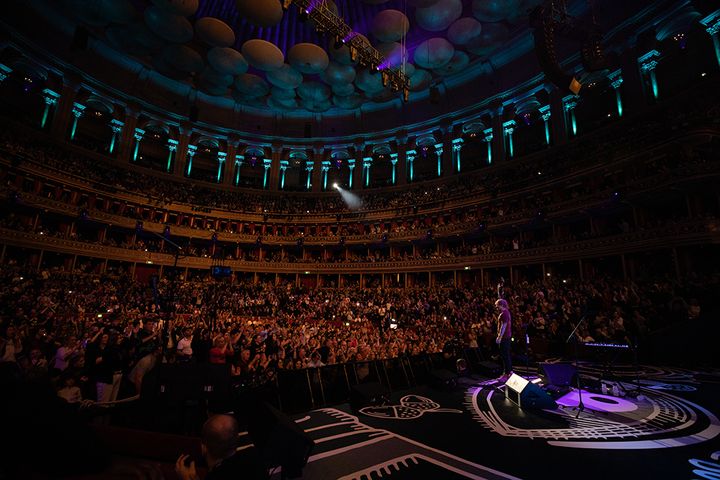
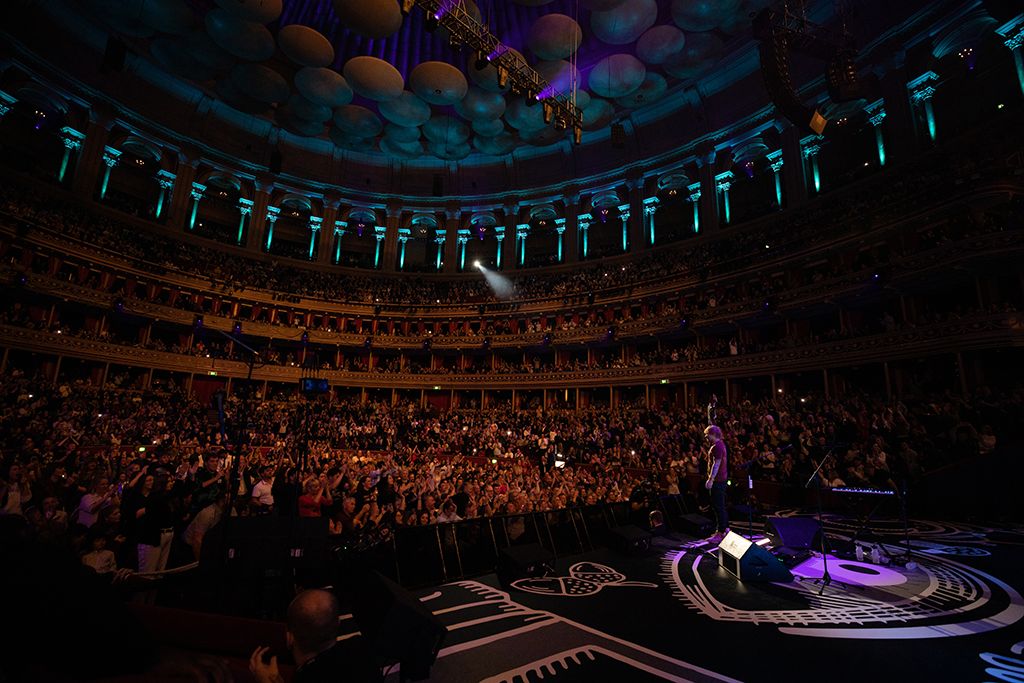
It was fitting there was a giant broken heart with a plaster hanging just behind Ed Sheeran as he played his Last Days of Autumn gigs at the Royal Albert Hall in London this weekend.
Sheeran performed just two evenings dedicated to playing his latest album – which was released on his own record label – from start to finish. These were the only two nights he’ll ever do this, he explained to the crowd. It was his way of keeping the album inspired by Elgar’s Enigma Variations and co-created with Aaron Dessner ‘special’.
Advertisement
And ‘special’ it was.
If you’ve been keeping up with Sheeran’s output this year – aside from hot sauces, guitars and serving up hot dogs – you’ll know he released two albums in four months, as well as a personal and revealing docuseries called The Sum Of It All.
During the promotion cycle for his album Subtract, Sheeran played several gigs where he performed the entire album in full – and in those shows, we see a grief and stress-ridden Sheeran break down in tears several times on stage, as he tries to explain the meaning of these intensely personal songs.
At one such moment captured in his docuseries, his wife Cherry Seaborn looks on worriedly, saying “I’ve never seen him cry on stage,” adding that he “hasn’t had the time to process and be at peace with his thoughts”.
It is rare to see such a real-time look at grief, and watching Sheeran try to hold back the tide while in public and on stage feels brutally familiar for anyone who has experienced the clusterfuck that is the grieving process. Fan or not, those moments are heartbreaking, and they’re as uncomfortable to watch as they are important.
Advertisement
So, for many of us huddled in the Royal Albert Hall this weekend, our most recent memories of seeing Sheeran standing in theatre and playing an entire album back-to-back are ones of sadness and vulnerability.
Which is why the giant broken heart with a plaster – illustrated by his friend Scarlett Curtis – felt like the perfect symbol for Sheeran’s weekend performances of Autumn Variations.

Warner Music
Instead of the grief-stricken image – Sheeran appeared joyful, processed. And – to roll with the autumnal theme here – he looked, literally, as if he had turned over a new leaf.
Bouncing on stage to open the show with the first track of Autumn Variations, Magical, Sheeran then stopped between each song to give a bit of backstory – including using the phrase ‘getting shit-canned’ to describe how Brits deal with both the dwindling light and warmth of late autumn.
Advertisement
It was interesting to note how, when speaking to the audience, he can now reference the period of his life that was met with grief and anxiety as just ‘Subtract’ or ‘what was going on when I wrote that album’ without having to spell it out.
Spelling it out, when somebody you love has just died or you’re going through a period of extreme stress, can be exhausting. Like having a wound reopened without warning – an unexpected retraumatisation.
There are plenty of times it can feel as though it would feel infinitely easier if everyone just knew – and Subtract is now that reference for Sheeran. You can still feel the weight of it – it’s part of Autumn Variations’ story – but it no longer feels like he is literally the vessel referenced in Boat, no longer is he being battered by unrelenting waves of grief and uncertainty.
Both musically and in his performances, Sheeran seems freed by the creative outlet that working with Aaron Dessner and having his own record label having afforded him. Subtract and Autumn Variations feel like Sheeran’s equivalent to Folklore and Evermore, with Dessner’s evocative use of strings and ‘soundscapes’ being the common thread between them.
A little bit country at moments, and a bit 90s at others, Sheeran and Autumn Variations felt truly at home in the iconic Royal Albert Hall.
Advertisement
Sheeran threw the crowd a little treat at the end of his Variations set, giving us a ‘million miles an hour’ whistle-stop tour of his big hits for being good girls and boys and sitting through this new album of his that he knows we’re ‘not as familiar with’.
Were we thrilled to stretch our legs and have a bit of a wiggle to Shape Of You after an hour of sitting? Of course. And I will never say no to watching Sheeran set up a song on his loop pedal or skip around stage belting out Shivers.
But this second act of the night seemed to reveal that he was perhaps a bit self-conscious about having us all in a room and not giving us what is essentially The Mathematical Eras Tour (Ed’s Version) – as if we were all locked in this hall against our will and force-fed a bizarre concept album. Far from a Ken staring uncomfortably into our eyes and singing at us for three hours – we were given a wholesome delivery of a wholesome album.
Warner Music
To me, seeing Sheeran live is a privilege – although I realise the many boyfriends who were no doubt dragged along may feel differently. To go from blasting out stadium shows ‘in the round’ with pyrotechnics, a rotating stage and a mega setlist – to then meaningfully fill and captivate an audience at the Royal Albert Hall with an album like Autumn Variations, and then end the night singing acapella, without any amplification – is skilful and impressive. To do it all with a mending heart makes it even more special.
Advertisement
That’s the thing the cool kids still don’t seem to want want to admit – Ed Sheeran is a special artist. And The Last Days of Autumn performances felt like a true celebration of a new era of Sheeran’s career and artistry, where he can create music, for both job and hobby, and have if feel lighter and freer – and perhaps even a little bit magical.


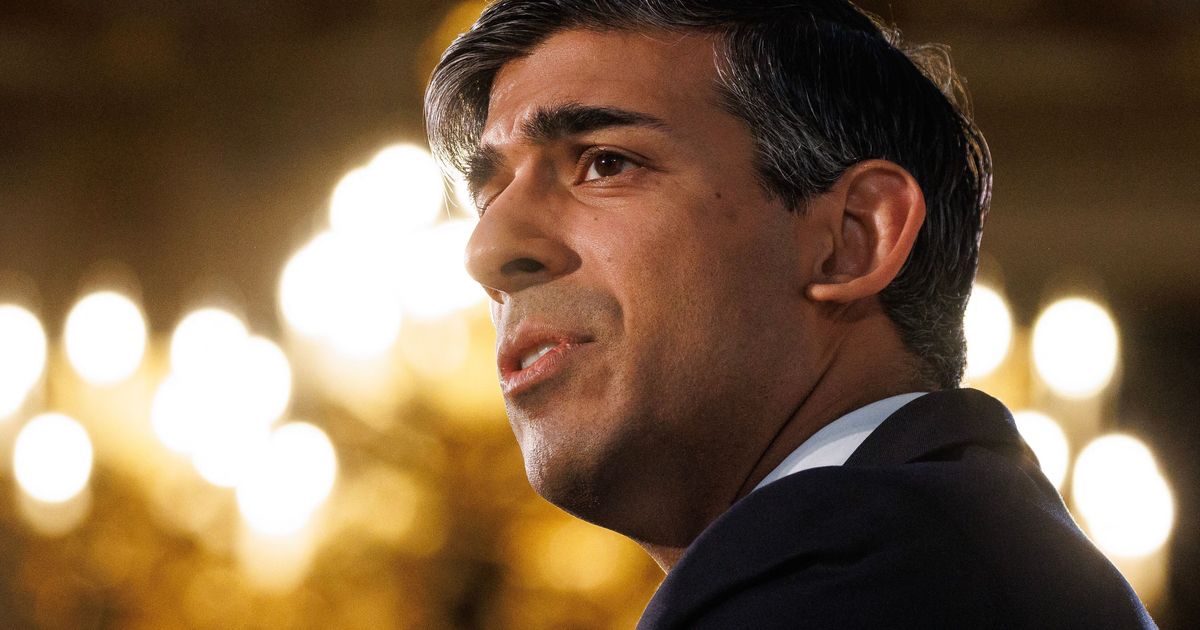
Rishi Sunak has been accused at the Covid inquiry of saying the government should “just let people die” during the pandemic.
The allegation against the prime minister is made in the diary of ex-chief scientific adviser Patrick Vallance.
Advertisement
Vallance made private notes every evening during the pandemic and these have been handed to the official inquiry.
In one entry dated October 25, 2020, Vallance recalls a meeting as arguments raged inside government over whether to impose second lockdown in England.
According to Vallance, Dominic Cummings told Boris Johnson in the meeting: “Rishi says just let people die and that’s okay.”
Vallance does not claim to have himself heard Sunak – who was then chancellor – make that comment.
Downing Street said it would not comment on the accusation. “The prime minister is due to give evidence before the inquiry at the time of their choosing. That’s when he’ll set out his position,” No. 10 said.
Advertisement
In his evidence on Monday, Vallance also said Sunak’s Eat Out To Help Out scheme “obviously” increased transmission of the virus.
The programme, which began in August 2020, cut the cost of food in order to encourage people to visit restaurants and other hospitality venues.
Asked if it had increased the number of deaths from Covid, Vallance said: “It is highly likely to have done so.”
He said: “I think it would have been very obvious to anyone that this inevitably would cause an increase in transmission risk, and I think that would have been known by ministers.”
Vallance said he had not been informed about the scheme before it was announced to the public.
The inquiry was shown a section of Sunak’s written evidence to the inquiry in which he denied government scientists warned against the programme.
Advertisement
“I do not. recall any concerns about the scheme being expressed during ministerial discussions, including those attended bye the CMO [chief medical officer Chris Whitty] and the CSA [chief scientific adviser Vallance]
Vallance also told the inquiry that Johnson was often “bamboozled” by Covid science and that Matt Hancock often said things that were not true.

A toolkit will fly above the UK on Tuesday night, after it was drifted into the ether during a mission last week.
Nasa astronauts Jasmin Moghbeli and Loral O’Harra were fixing a solar panel on the International Space Station (ISS) when their tool bag just… slipped into space.
Advertisement
And because it was seen as low risk, the astronauts just left it behind.
Now, the bright, white bag is travelling 250 miles above Earth, around five minutes ahead of the ISS.
It’s surprisingly visible to people on the ground too, meaning you don’t have to be a NASA astronaut to see it – you just need binoculars or a telescope, and a spot of good weather.
Anyone in the south of the UK should be able to spot it between 6.24pm and 6.34pm on Tuesday evening, and it’s expected to return on November 24 between 5.30pm and 5.41pm.
It was first spotted by the Virtual Telescope Project last week, and it’s now being tracked by the US Space Force to make sure it doesn’t threaten the ISS or satellites.
Advertisement
Some estimates reported last week in the Smithsonian Magazine suspect it will re-enter the atmosphere between March and July 2024.
This is not the first time astronauts have lost something into space, though.
Nasa astronaut Ed White lost a spare glove in 1965 during a spacewalk, and in 2006, fellow Nasa astronaut Piers Seller lost a spatula as he repaired a heat shield.
And Nasa’s Heidemarie Stefanyshyn-Piper also lost her toolbag when attempting to repair parts of the ISS back in November 2008, as she became the first woman to lead a space walk, ever, at the time.
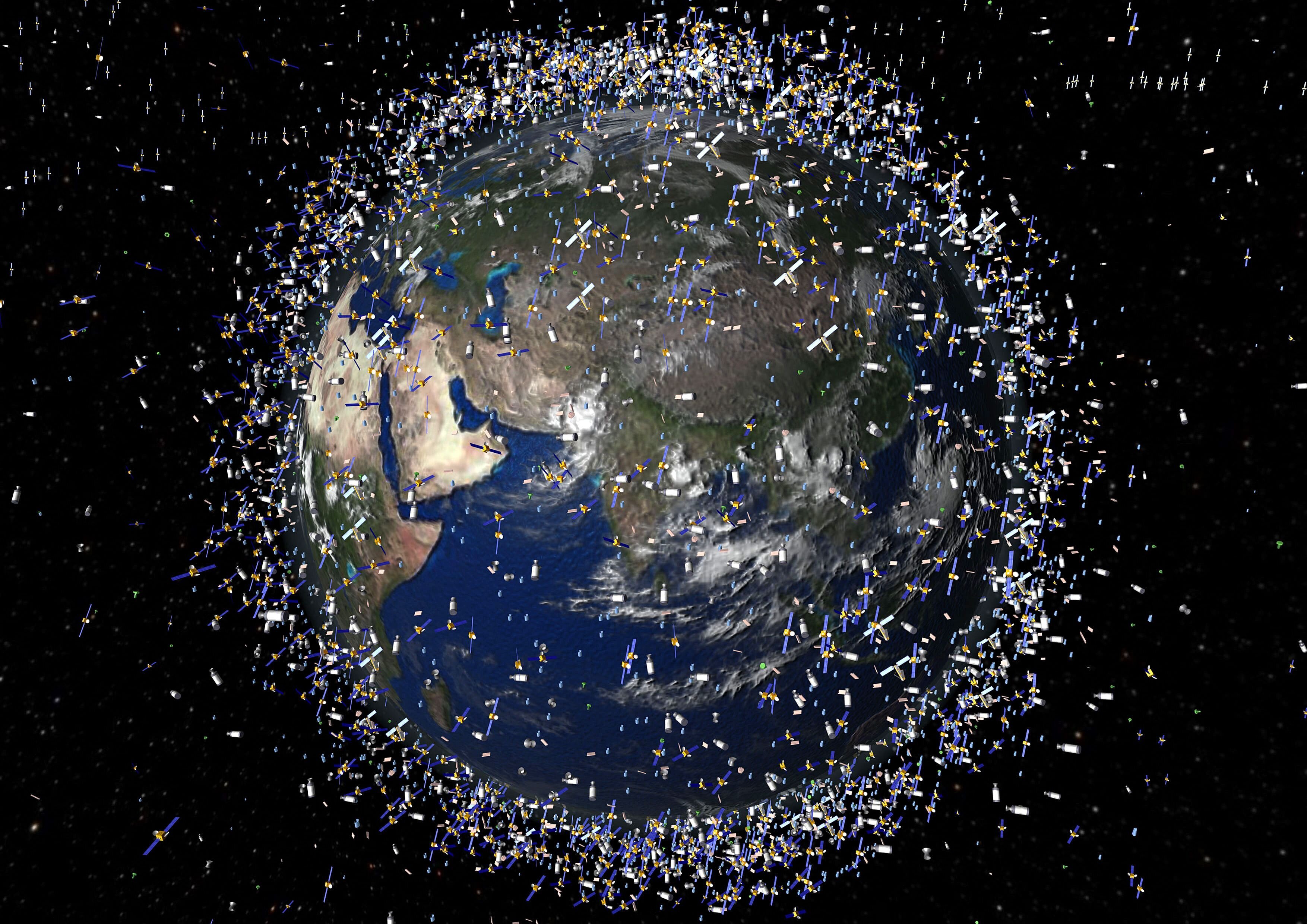
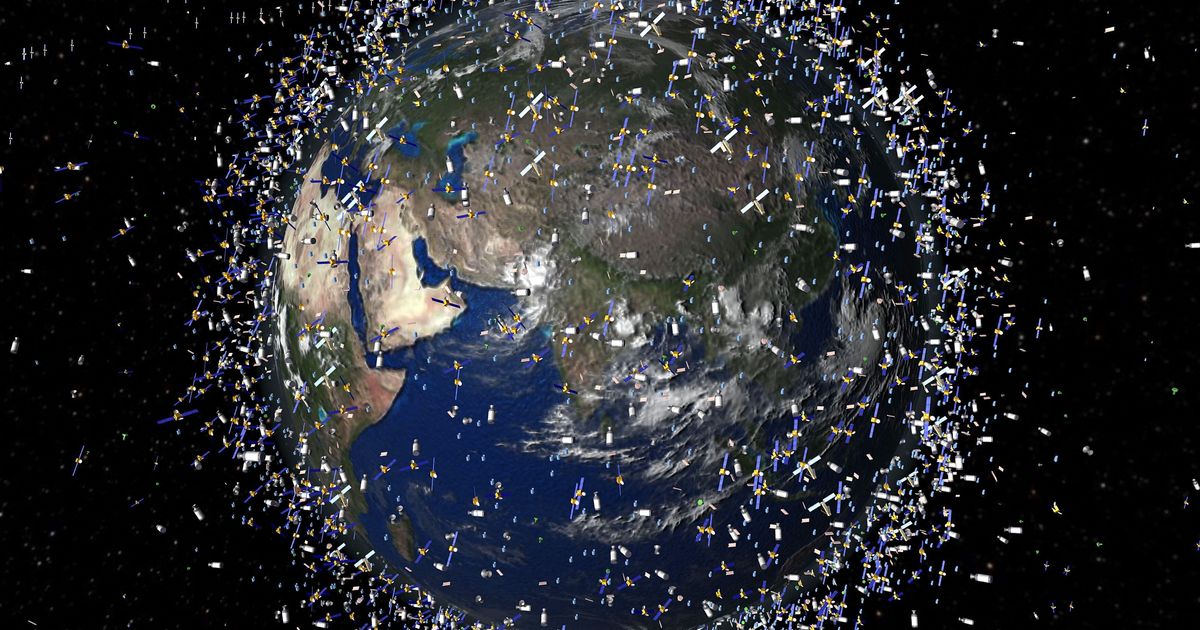
Worries about space debris are growing.
More than 170 million pieces have been dropped into the universe since that first glove was dropped back by White almost 60 years ago.
Advertisement