Sean Penn Unleashes Expletive-Filled Tirade On Will Smith Over Oscars Slap

Sean Penn slammed Will Smith and wondered why the King Richard star still received applause at the 2022 Oscars after his violent outburst.

The Milk actor got “fucking furious,” according to Variety, during an interview with the outlet in which he discussed the Oscars’ refusal to allow Ukrainian President Volodymyr Zelenskyy to speak at the awards show that year.

“The Oscars producer thought, ‘Oh, he’s not light-hearted enough.’ Well, guess what you got instead? Will Smith!” said Penn, who shot a documentary about the war in Ukraine.

“I don’t know Will Smith. I met him once,” Penn said, adding that he “seemed very nice” and was excellent in King Richard, the biopic that landed Smith an Oscar for Best Actor.

“So why the fuck did you just spit on yourself and everybody else with this stupid fucking thing? Why did I go to fucking jail for what you just did? And you’re still sitting there? Why are you guys standing and applauding his worst moment as a person?” he said.

Penn was convicted in 1987 for assaulting an extra on the set of the movie Colors. He spent 33 days in jail.

Smith won an Oscar in 2022 after he slapped comedian Chris Rock onstage for making a joke about his wife, Jada Pinkett Smith.

He has since apologised and resigned from the Academy of Motion Picture Arts and Sciences, which banned him from attending the Oscars for 10 years. Rock did not press charges.

Penn, who has two Oscars of his own, told Variety he believed the incident would not have taken place if Zelenskyy had spoken at the event.

“Will Smith would never have left that chair to be part of stupid violence. It never would have happened,” he said.

Penn has a long history of violence himself. He was ordered to undergo anger management counselling in 2010 after he was accused of kicking a photographer and breaking his camera, in one of several altercations with paparazzi over the years.

He also faced a domestic assault charge during his marriage to pop legend Madonna, which ended in divorce in 1989. Both Madonna and Penn have since denied that Penn attacked her.

Share Button

Scientists discover how brain cells die in Alzheimer’s

The findings, which had been a mystery for decades, give new ideas for treating the disease.

Share Button

Family provide free holidays in memory of son

Archie’s Caravan in Filey provides free holidays to families also facing childhood cancer.

Share Button

New evidence indicates patients recall death experiences after cardiac arrest

Up to an hour after their hearts had stopped, some patients revived by cardiopulmonary resuscitation (CPR) had clear memories afterward of experiencing death and had brain patterns while unconscious linked to thought and memory, report investigators in the journal Resuscitation, published by Elsevier.

In a study led by researchers at NYU Grossman School of Medicine, in cooperation with 25 mostly US and British hospitals, some survivors of cardiac arrest described lucid death experiences that occurred while they were seemingly unconscious. Despite immediate treatment, fewer than 10% of the 567 patients studied, who received CPR in the hospital, recovered sufficiently to be discharged. Four in 10 of patients who survived, however, recalled some degree of consciousness during CPR not captured by standard measures.

The study also found that in a subset of these patients, who received brain monitoring, nearly 40% had brain activity that returned to normal, or nearly normal, from a “flatline” state, at points even an hour into CPR. As captured by EEG, a technology that records brain activity with electrodes, the patients saw spikes in the gamma, delta, theta, alpha, and beta waves associated with higher mental function.

Survivors have long reported having heightened awareness and powerful, lucid experiences, say the study authors. These have included a perception of separation from the body, observing events without pain or distress, and a meaningful evaluation of their actions and relationships. This new work found these experiences of death to be different from hallucinations, delusions, illusions, dreams, or CPR-induced consciousness.

The study authors hypothesize that the “flatlined,” dying brain removes natural inhibitory (braking) systems. These processes, known collectively as disinhibition, may open access to “new dimensions of reality,” they say, including lucid recall of all stored memories from early childhood to death, evaluated from the perspective of morality. While no one knows the evolutionary purpose of this phenomenon, it “opens the door to a systematic exploration of what happens when a person dies.”

Senior study author Sam Parnia, MD, PhD, associate professor in the Department of Medicine at NYU Langone Health and director of critical care and resuscitation research at NYU Langone, says, “Although doctors have long thought that the brain suffers permanent damage about 10 minutes after the heart stops supplying it with oxygen, our work found that the brain can show signs of electrical recovery long into ongoing CPR. This is the first large study to show that these recollections and brain wave changes may be signs of universal, shared elements of so-called near-death experiences.”

Dr. Parnia adds, “These experiences provide a glimpse into a real, yet little understood dimension of human consciousness that becomes uncovered with death. The findings may also guide the design of new ways to restart the heart or prevent brain injuries and hold implications for transplantation.”

Called the AWAreness during REsuscitation (AWARE)-II study — it followed 567 men and women who suffered cardiac arrest during hospital stays between May 2017 and March 2020 in the United States and United Kingdom. Only hospitalized patients were enrolled to standardize the CPR and resuscitation methods used, as well as recording methods for brain activity. A subset of 85 patients received brain monitoring during CPR. Additional testimony from 126 community survivors of cardiac arrest with self-reported memories was also examined to provide greater understanding of the themes related to the recalled experience of death.

The study authors conclude that research to date has neither proved nor disproved the reality or meaning of patients’ experiences and claims of awareness in relation to death. They say the recalled experience surrounding death merits further empirical investigation and plan to conduct studies that more precisely define biomarkers of clinical consciousness and that monitor the long-term psychological effects of resuscitation after cardiac arrest.

Share Button

Snaps supersonic outflow of young star

Herbig-Haro (HH) objects are luminous regions surrounding newborn stars, formed when stellar winds or jets of gas spewing from these newborn stars form shock waves colliding with nearby gas and dust at high speeds. This image of HH 211 from NASA’s James Webb Space Telescope reveals an outflow from a Class 0 protostar, an infantile analog of our Sun when it was no more than a few tens of thousands of years old and with a mass only 8% of the present-day Sun (it will eventually grow into a star like the Sun).

Infrared imaging is powerful in studying newborn stars and their outflows, because such stars are invariably still embedded within the gas from the molecular cloud in which they formed. The infrared emission of the star’s outflows penetrates the obscuring gas and dust, making a Herbig-Haro object like HH 211 ideal for observation with Webb’s sensitive infrared instruments. Molecules excited by the turbulent conditions, including molecular hydrogen, carbon monoxide, and silicon monoxide, emit infrared light that Webb can collect to map out the structure of the outflows.

The image showcases a series of bow shocks to the southeast (lower-left) and northwest (upper-right) as well as the narrow bipolar jet that powers them. Webb reveals this scene in unprecedented detail — roughly 5 to 10 times higher spatial resolution than any previous images of HH 211. The inner jet is seen to “wiggle” with mirror symmetry on either side of the central protostar. This is in agreement with observations on smaller scales and suggests that the protostar may in fact be an unresolved binary star.

Earlier observations of HH 211 with ground-based telescopes revealed giant bow shocks moving away from us (northwest) and moving towards us (southeast) and cavity-like structures in shocked hydrogen and carbon monoxide respectively, as well as a knotty and wiggling bipolar jet in silicon monoxide. Researchers have used Webb’s new observations to determine that the object’s outflow is relatively slow in comparison to more evolved protostars with similar types of outflows.

The team measured the velocities of the innermost outflow structures to be roughly 48-60 miles per second (80 to 100 kilometers per second). However, the difference in velocity between these sections of the outflow and the leading material they’re colliding with — the shockwave — is much smaller. The researchers concluded that outflows from the youngest stars, like that in the center of HH 211, are mostly made up of molecules, because the comparatively low shock wave velocities are not energetic enough to break the molecules apart into simpler atoms and ions.

Share Button

Carbon atoms coming together in space

Lab-based studies reveal how carbon atoms diffuse on the surface of interstellar ice grains to form complex organic compounds, crucial to reveal the chemical complexity in the universe.

Uncovering the organic (carbon-based) chemistry in interstellar space is central to understanding the chemistry of the universe in addition to the origin of life on Earth and the possibilities for life elsewhere.

The list of organic molecules detected in space and understanding how they could be interacting is steadily expanding due to ever-improving direct observations. But laboratory experiments unraveling the complex processes can also offer significant clues. Researchers at Hokkaido University, with colleagues at The University of Tokyo, Japan, report new lab-based insights into the central role of carbon atoms on interstellar ice grains in the journal Nature Astronomy.

Some of the most complex organic molecules in space are thought to be produced on the surface of interstellar ice gains at very low temperatures. Ice grains that are suitable for this purpose are known to be abundant throughout the universe.

All organic molecules are based on a skeleton of bonded carbon atoms. Most carbon atoms originally formed through nuclear fusion reactions in stars, eventually getting dispersed into interstellar space when the stars died in supernovae explosions. But to form complex organic molecules, the carbon atoms need a mechanism to come together on the surface of the ice grains to encounter partner atoms and form chemical bonds with them. The new research suggests a feasible mechanism.

“In our studies, recreating feasible interstellar conditions in the laboratory, we were able to detect weakly-bound carbon atoms diffusing on the surface of ice grains to react and produce C2 molecules,” says chemist Masashi Tsuge of Hokkaido University’s Institute of Low Temperature Science. C2 is also known as diatomic carbon, a molecule in which two carbon atoms bond together; its formation is concrete evidence for the presence of diffusing carbon atoms on interstellar ice grains.

The research revealed that the diffusion could occur at temperatures above 30 Kelvin (minus 243 °C/minus 405.4 °F), while, in space, the diffusion of carbon atoms could be activated at just 22 Kelvin (minus 251 °C/minus 419.8 °F).

Tsuge says that the findings bring a previously overlooked chemical process into the frame for explaining how more complex organic molecules could be built by the steady addition of carbon atoms. He suggests these processes could occur in the protoplanetary disks around stars, from which planets are formed. The conditions required can also form in so-called translucent clouds, which would eventually evolve into a star forming region. This may also explain the origin of the chemicals that might have seeded life on Earth.

Besides the question of the origin of life, the work adds a fundamental new process to the variety of chemical reactions that could have built, and could still be building, carbon-based chemistry throughout the universe.

The authors also summarize the more general current understanding of the formation of complex organic chemicals in space, and consider how reactions driven by diffusing carbon atoms might modify the current picture.

Share Button

Target to cut hospital waiting list in doubt – PM

Rishi Sunak blames doctors’ strikes as a record 7.7 million people wait for hospital care in England.

Share Button

NHS to introduce Martha’s rule for hospital patients

The NHS must ensure patients know they have the right to a second opinion, the health secretary says.

Share Button

England’s only antidepressant withdrawal helpline to close

The NHS pulled funding for the service, saying it was never intended to be a national helpline.

Share Button

Mexican Congress Holds Hearing On UFOs Featuring Purported ‘Alien’ Bodies

Mexican lawmakers heard testimony that “we are not alone” in the universe and saw the alleged remains of non-human beings in an extraordinary hearing marking the Latin American country’s first congressional event on UFOs.

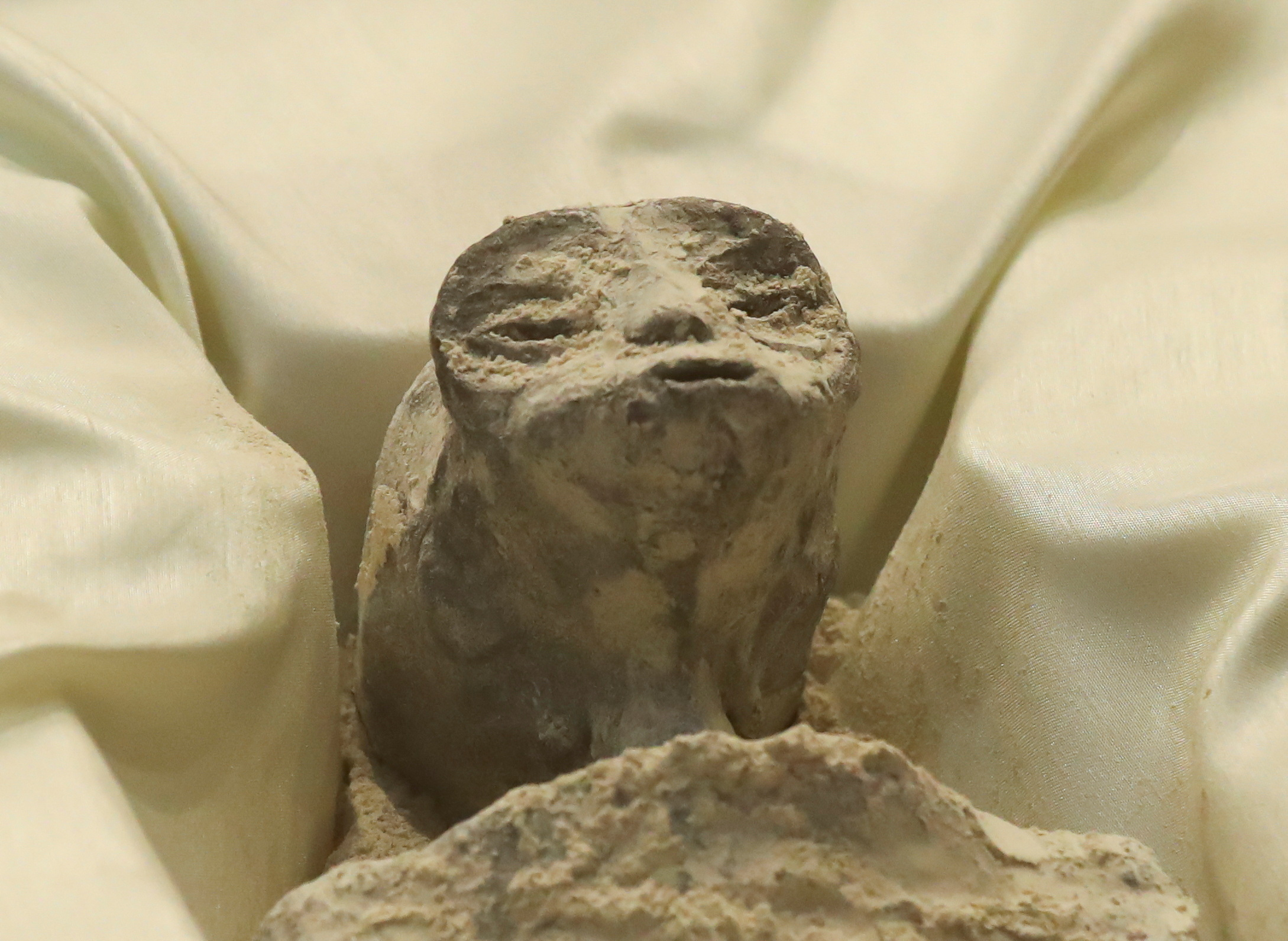
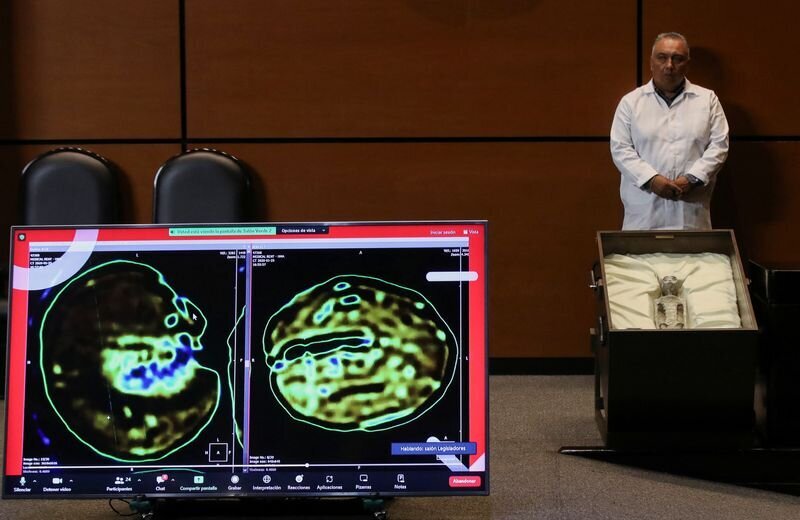
In the hearing on Tuesday on FANI, the Spanish acronym for what are usually now termed Unidentified Anomalous Phenomena (UAP), politicians were shown two artifacts that Mexican journalist and long-time UFO enthusiast Jaime Maussan claimed were the corpses of extraterrestrials.

The specimens were not related to any life on Earth, Maussan said.

The two tiny “bodies,” displayed in cases, have three fingers on each hand and elongated heads.

Maussan said they were recovered in Peru near the ancient Nazca Lines in 2017.

He said that they were about 1,000 years old, analysed through a carbon dating process by Mexico’s National Autonomous University (UNAM).

Similar such finds in the past have turned out to be the remains of mummified children.

Maussan said it was the first time such evidence had been presented.

“I think there is a clear demonstration that we are dealing with non-human specimens that are not related to any other species in our world and that all possibilities are open for any scientific institution… to investigate it,” Maussan said.

“We are not alone,” he added.

Remains of allegedly 'non-human' beings presented in Mexico
Remains of allegedly ‘non-human’ beings presented in Mexico

HENRY ROMERO

Jose de Jesus Zalce Benitez, Director of the Scientific Institute for Health of the Mexican navy, said X-rays, 3-D reconstruction and DNA analysis had been carried out on the remains.

“I can affirm that these bodies have no relation to human beings,” he said.

UNAM on Thursday republished a statement first issued in 2017, saying the work by its National Laboratory of Mass Spectrometry with Accelerators (LEMA) was only intended to determine the age of the samples.

“In no case do we make conclusions about the origin of said samples,” the statement said.

Lawmakers also heard from former US Navy pilot Ryan Graves, who has participated in US Congressional hearings about his personal experience with UAP and the stigma around reporting such sightings.

Congressman Sergio Gutierrez, from President Andres Manuel Lopez Obrador’s ruling Morena party, said he hoped the hearing would be the first of other similar events in Mexico.

“We are left with reflections, with concerns and with the path to continue talking about this,” Gutierrez said.

In recent years, the US government has done an about-face on public information on UAP after decades of stonewalling and deflecting.

The Pentagon has been actively investigating reported sightings in recent years by military aviators, while an independent NASA panel studying UFOs is the first of its kind by the space agency.

NASA is set to discuss findings from the study on Thursday.

Maussan faced swift backlash and criticism from sceptics on Wednesday who questioned the authenticity of his presentation.

“This could really hurt efforts to take the issue seriously,” said a user of X social media platform, formerly known as Twitter. “Why didn’t they wait until a scientific paper was ready to publish it?”

(Reporting by Cassandra Garrison and Reuters TV, Editing by Rosalba O’Brien)

Share Button