Rishi Rich: Is Sunak’s Wealth Too Much For Struggling Voters?

Sometime in politics, perception is everything.

Appearing on the BBC’s Sunday with Laura Kuenssberg last weekend, Rishi Sunak said the government must “hold our nerve” in the quest to bring down inflation, even if it means higher interest rates for a while.

However, his comments were interpreted as a message to the country at large, that we all just have to suck up higher mortgage and rent costs, on top of rising food and energy bills, until things get better at some point in the future.

Coming from any prime minister that would be a tough political message to sell; coming from one as personally wealthy – and mortgage-free – as Sunak, it is even tougher.

And while politicians’ personal financial circumstances are usually off-limits, the PM’s opponents spot a major weakness and are beginning to take advantage.

At prime minister’s questions on Wednesday, SNP Westminster leader Stephen Flynn asked Sunak: “May I ask him, the near billionaire, when was the last time that he struggled to pay a bill?”

The fact that he completely avoided answering the question merely confirmed how uncomfortable this topic is for the PM.

Labour leader Keir Starmer also made a point of mentioning this week that his own mortgage has gone up – a less-than-subtle invitation for voters to compare his situation with that of the prime minister.

Gabriel Milland, partner for research at Portland Communications, has carried out focus groups across the country, gauging the views of ordinary voters on the main issues of the day. His findings are a mixed bag for Sunk.

“Generally speaking, it’s not as if voters have a problem with Sunak being wealthy per se,” he told HuffPost UK.

“You have to remember that the kind of salaries that all MPs, let alone frontbenchers, earn places them far above average or median earnings. To most people, all politicians are very well off.

“Where it does become a problem is if politicians appear to be trying to be something that they are not. Boris Johnson never made any bones about the fact that he is, relatively speaking, very posh. Even working class voters accepted him for that.

“What absolutely did cut through in the groups last year was the incident with the contactless payment card and and when he filled up a car with petrol and it turned out not to be his.”

Milland added: “There’s a danger of over-stating all this though. What the public absolutely do want is the sense that the government on their side and doing stuff to help them.

“They’re not that bothered if Sunak himself is facing the same sort of worries over his gas bill that they are.”

However, a senior Labour source said that their own focus groups suggest voters can make the distinction between a PM who is wealthy but seemingly in touch with their concerns – like David Cameron – and one whose unimaginable fortune means he has no idea about ordinary people’s lives.

“We’ve always tried to avoid doing stuff on him being rich, but gradually we’ve started to pick up that people see him as being out of touch,” he told HuffPost UK.

“In focus groups we gets lots of ‘he’s a billionaire’ and ‘he’s part of the jet set elite’.”

This is confirmed by research carried out in April by the More in Common think tank, in which one voter described the prime minister as “far too rich for my liking”.

Another added: “Someone who’s grown up within the wealth that surrounds him and always has done can’t possibly understand what it’s like for somebody like me.”

The Labour source said that rather than directly attack Sunak’s wealth, they want to convince the public that he’s out of touch with their concerns.

“It’s not how much money that’s in his bank account that matters, it’s things like the US green card, his wife’s non-dom status and him flying round the country in a helicopter,” they said.

“It builds up a picture of someone who’s out of touch and doesn’t have any idea of how you live your life.”

Sunak has been criticised for his preference for private jets rather than train travel

No10 Downing Street

Sunak’s huge personal fortune is at least some comfort for him after another dreadful few days in Number 10.

It was supposed to be ‘NHS week’, when the government set out how it would tackle the many problems facing the health service and culminating in the long-awaited workforce plan setting out a strategy to recruit more doctors and nurses.

But the PM was blown off course by the latest twists in the partygate saga, the Rwanda policy being ruled illegal by the Court of Appeal and, finally, the dramatic resignation from the government of Zac Goldsmith.

Rumours are rife that the PM might try to reset his government with a pre-summer recess reshuffle in what many will see as a last-ditch attempt to save a premiership that is barely eight months old.

As one gloomy Tory aide observed: “There can’t be any more wheels to fall off of this particular shit wagon.”


Share Button

Chasing Chasing Amy Revisits The ’90s Classic Through A Modern LGBTQ+ Lens

With a simple description of the documentary Chasing Chasing Amy — which looks at one of director Kevin Smith’s most enduring and critically acclaimed films — it’s hard to imagine where the movie can go. But over the course of its 95-minute run time, the film changes in scope as the story begins to take shape and, unbeknownst to the director at the time, becomes a story about his maturation as a filmmaker, a trans person and a member of the Chasing Amy fandom.

The film sets out with a simple question: Why, as a 12-year-old, did director Sav Rodgers become obsessed with the movie Chasing Amy, and what does the film’s seemingly progressive (at the time) gender and sexuality politics, which includes frank depictions of out and happy LGBTQ+ characters, hold up to a modern lens? Chasing Chasing Amy comes at a curious time. Still, the nostalgia for the late ‘90s and early 2000s culture is at a fever pitch, but the film meanders, in the best sense of the word, as it begins to encompass new questions and documents the filmmakers’ life, too.

As the events of making the film unfold, Rodgers befriends Chasing Amy director, Smith, and comes out as a trans man. Rodgers also proposes to his then-girlfriend and now-wife, Riley, and gets a deeper understanding of the deep emotions behind the making of Smith’s film. By the time the viewer is on the other end of the narrative, we’ve got a deeper understanding of three relationships — the pair in the film, Smith and Chasing Amy star Joey Lauren Adams, as well as Rodgers and his wife — while also hearing the saga of making the film from Adams herself, who was dealing with both an emotional breakup and the misogynistic Hollywood machine.

In an interview with HuffPost, Rodgers spoke about how a simple 2019 Ted Talk led to the film’s creation, how he wanted to handle coming out in the midst of creating this film and why he’s ready to pass the torch as the No. 1 fan of Chasing Amy.

As a filmmaker, what made you want to turn what was the subject of a shorter TED talk into something that would be like a feature-length documentary?

<div class="js-react-hydrator" data-component-name="YouTube" data-component-id="9325" data-component-props="{"itemType":"video","index":7,"contentListType":"embed","code":"

","type":"video","meta":{"author":"Chasing Chasing Amy ","author_url":"https://www.youtube.com/channel/UCmYXLQfOYEamVlP7xEbONzg","cache_age":86400,"description":"When a young filmmaker sets out to understand the ’90s LGBTQ+ rom-com that saved his life, he is forced to confront complicated truths of his own, that will change who he is forever.","options":{"_cc_load_policy":{"label":"Closed captions","value":false},"_end":{"label":"End on","placeholder":"ex.: 11, 1m10s","value":""},"_start":{"label":"Start from","placeholder":"ex.: 11, 1m10s","value":""},"click_to_play":{"label":"Hold load & play until clicked","value":false}},"provider_name":"YouTube","thumbnail_height":720,"thumbnail_url":"https://i.ytimg.com/vi/9arH-8nS1Bg/maxresdefault.jpg","thumbnail_width":1280,"title":"Chasing Chasing Amy | Official Trailer","type":"video","url":"https://www.youtube.com/watch?v=9arH-8nS1Bg","version":"1.0"},"flags":[],"enhancements":{},"fullBleed":false,"options":{"theme":"news","device":"desktop","editionInfo":{"id":"uk","name":"U.K.","link":"https://www.huffingtonpost.co.uk","locale":"en_GB"},"slideshowAd":{"scriptTags":[],"otherHtml":""},"slideshowEndCard":{"scriptTags":[],"otherHtml":""},"isMapi":false,"isAmp":false,"isVideoEntry":false,"isEntry":true,"isMt":false,"entryId":"649ed7fbe4b0dcb22c44e3de","entryPermalink":"https://www.huffingtonpost.co.uk/entry/chasing-chasing-amy-documentary_uk_649ed7fbe4b0dcb22c44e3de","entryTagsList":"ukfilm,documentaries,kevin-smith,chasing-amy,@queer_voices,@voices,@widget-imported","sectionSlug":"entertainment","deptSlug":null,"sectionRedirectUrl":null,"subcategories":"","isWide":false,"headerOverride":null,"noVideoAds":false,"disableFloat":false,"isNative":false,"commercialVideo":{"provider":"custom","site_and_category":"uk.entertainment","package":null},"isHighline":false,"vidibleConfigValues":{"cid":"60afc140cf94592c45d7390c","disabledWithMapiEntries":false,"overrides":{"all":"60b8e525cdd90620331baaf4"},"whitelisted":["56c5f12ee4b03a39c93c9439","56c6056ee4b01f2b7e1b5f35","59bfee7f9e451049f87f550b","5acccbaac269d609ef44c529","570278d2e4b070ff77b98217","57027b4be4b070ff77b98d5c","56fe95c4e4b0041c4242016b","570279cfe4b06d08e3629954","5ba9e8821c2e65639162ccf1","5bcd9904821576674bc55ced","5d076ca127f25f504327c72e","5b35266b158f855373e28256","5ebac2e8abddfb04f877dff2","60b8e525cdd90620331baaf4","60b64354b171b7444beaff4d","60d0d8e09340d7032ad0fb1a","60d0d90f9340d7032ad0fbeb","60d0d9949340d7032ad0fed3","60d0d9f99340d7032ad10113","60d0daa69340d7032ad104cf","60d0de02b627221e9d819408"],"playlists":{"default":"57bc306888d2ff1a7f6b5579","news":"56c6dbcee4b04edee8beb49c","politics":"56c6dbcee4b04edee8beb49c","entertainment":"56c6e7f2e4b0983aa64c60fc","tech":"56c6f70ae4b043c5bdcaebf9","parents":"56cc65c2e4b0239099455b42","lifestyle":"56cc66a9e4b01f81ef94e98c"},"playerUpdates":{"56c6056ee4b01f2b7e1b5f35":"60b8e525cdd90620331baaf4","56c5f12ee4b03a39c93c9439":"60d0d8e09340d7032ad0fb1a","59bfee7f9e451049f87f550b":"60d0d90f9340d7032ad0fbeb","5acccbaac269d609ef44c529":"60d0d9949340d7032ad0fed3","5bcd9904821576674bc55ced":"60d0d9f99340d7032ad10113","5d076ca127f25f504327c72e":"60d0daa69340d7032ad104cf","5ebac2e8abddfb04f877dff2":"60d0de02b627221e9d819408"}},"connatixConfigValues":{"defaultPlayer":"8b034f64-513c-4987-b16f-42d6008f7feb","clickToPlayPlayer":"5a777b9b-81fe-41a6-8302-59e9953ee8a2","videoPagePlayer":"19654b65-409c-4b38-90db-80cbdea02cf4"},"customAmpComponents":[],"ampAssetsUrl":"https://amp.assets.huffpost.com","videoTraits":null,"positionInUnitCounts":{"buzz_head":{"count":0},"buzz_body":{"count":0},"buzz_bottom":{"count":0}},"positionInSubUnitCounts":{"article_body":{"count":1},"blog_summary":{"count":0},"before_you_go_slideshow":{"count":0}},"connatixCountsHelper":{"count":0},"buzzfeedTracking":{"context_page_id":"649ed7fbe4b0dcb22c44e3de","context_page_type":"buzz","destination":"huffpost","mode":"desktop","page_edition":"en-uk"},"tags":[{"name":"ukfilm","slug":"ukfilm","links":{"relativeLink":"news/ukfilm","permalink":"https://www.huffingtonpost.co.uk/news/ukfilm","mobileWebLink":"https://www.huffingtonpost.co.uk/news/ukfilm"},"section":{"title":"Entertainment","slug":"entertainment"},"topic":{"title":"Film","slug":"ukfilm","overridesSectionLabel":false},"url":"https://www.huffingtonpost.co.uk/news/ukfilm/"},{"name":"Documentaries","slug":"documentaries","links":{"relativeLink":"news/documentaries","permalink":"https://www.huffingtonpost.co.uk/news/documentaries","mobileWebLink":"https://www.huffingtonpost.co.uk/news/documentaries"},"url":"https://www.huffingtonpost.co.uk/news/documentaries/"},{"name":"kevin smith","slug":"kevin-smith","links":{"relativeLink":"news/kevin-smith","permalink":"https://www.huffingtonpost.co.uk/news/kevin-smith","mobileWebLink":"https://www.huffingtonpost.co.uk/news/kevin-smith"},"url":"https://www.huffingtonpost.co.uk/news/kevin-smith/"},{"name":"chasing amy","slug":"chasing-amy","links":{"relativeLink":"news/chasing-amy","permalink":"https://www.huffingtonpost.co.uk/news/chasing-amy","mobileWebLink":"https://www.huffingtonpost.co.uk/news/chasing-amy"},"url":"https://www.huffingtonpost.co.uk/news/chasing-amy/"}],"isLiveblogLive":null,"cetUnit":"buzz_body","bodyAds":["

\r\n\r\n HPGam.cmd.push(function(){\r\n\t\treturn HPGam.render(\"inline-1\", \"entry_paragraph_1\", false);\r\n });\r\n\r\n","

\r\n\r\n HPGam.cmd.push(function(){\r\n\t\treturn HPGam.render(\"inline\", \"entry_paragraph_2\", false);\r\n });\r\n\r\n","

\r\n\r\n HPGam.cmd.push(function(){\r\n\t\treturn HPGam.render(\"inline-2\", \"entry_paragraph_3\", false);\r\n });\r\n\r\n","

\r\n\r\n HPGam.cmd.push(function(){\r\n\t\treturn HPGam.render(\"inline-infinite\", \"repeating_dynamic_display\", false);\r\n });\r\n\r\n"],"adCount":0},"isCollectionEmbed":false}”>

I had the idea for the documentary long before TED ever came into the picture. The funny story with TED is that I had just seen an opportunity for the TED residency through a Facebook ad. And Adobe was sponsoring a spot in the TED residency for, you know, somebody between the ages of 18 and 24 to participate. And it was free. I recorded a one-minute video attached to my director’s reel from the last movie short that I had directed. And I just kind of sent it off and said, “OK, well, I’ll probably never hear back from that.” About a month later, I heard back that I was a finalist, and I was like, “Oh, this is an interesting turn of events!”

I went in there expecting nothing. We were just having like a lovely 30-minute chat, a little conversation about film and, what TED did, and everything. And they were like, “Well, we think you’re great, but we’ve not heard an idea for a TED talk. So if you had to give a TED talk tomorrow, what would it be about? And I told them about this documentary I wanted to make about Chasing Amy and the LGBTQ community. And then, I told my personal story of how deeply it affected me. And they said, “That is the most specific, narrow idea for a TED talk we’ve ever heard. We’ll call you in two weeks.” Three days later, I heard that I got it.

I moved to New York on Sept. 1, 2018. And that program gave me the opportunity to really start work on the documentary. And a week after I gave the TED talk, I shot our first two days of Chasing Chasing Amy. We shot the first day of interviews at TED HQ. And then, the next day, we went on location to Red Bank, New Jersey, to go to all the locations.

What I really love about your documentary is that it shows you how documentaries can turn when new discoveries or plot points come up and when certain people get involved. And I was wondering, what was your plan if you didn’t have [Chasing Amy director] Kevin Smith involved? And how did his presence kind of change the film’s trajectory?

I don’t think I ever planned for Kevin not to be in it. I was always super optimistic that he would agree to participate because he had appeared in so many other documentaries and was often a talking head for documentaries about geek culture and comic books or movies. And I was like, “Well if he’ll be in those, I feel reasonably confident he would be in a movie that’s inspired by his movie.”

But his involvement just was a game changer because his interviews are so central to what happens in our documentary. I was just so blown away that he did say, “Yes,” even though I was really hoping for it. And I was optimistic the whole time he would.

But yeah, the documentary absolutely changes over time. And I think the most interesting documentaries I’ve ever seen allow the story to change in real-time as it’s happening. And they don’t just stick to the initial thesis that they set out to make. My initial pitch for this movie was just a pretty straightforward examination of the LGBTQ community intersecting with Chasing Amy and what makes a good representation or bad representation. It was almost anthropological. The way that the story evolves is literally what happened. I wasn’t initially planning on being in it at all. And then I conceded to being in it a little bit.

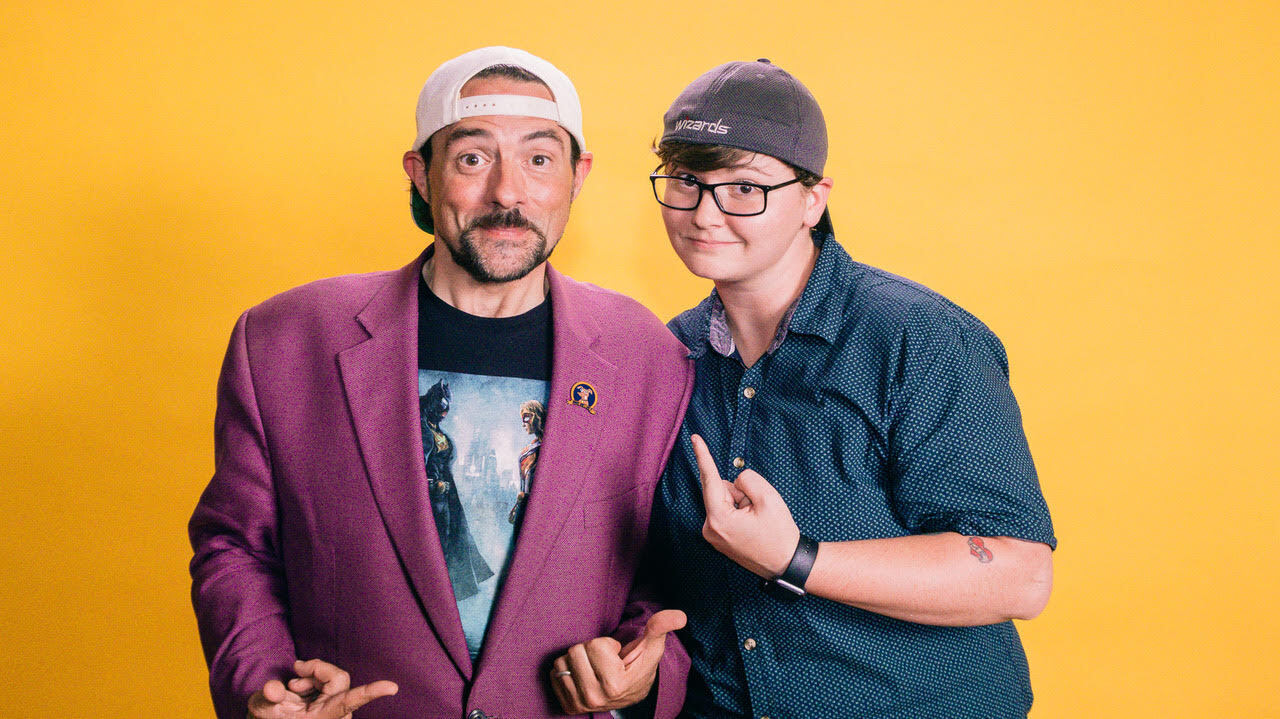
From Left: Kevin Smith, director of Chasing Amy, and Sav Rodgers, director of the documentary Chasing Chasing Amy.

Bill Winters

And then, you know, with brilliant collaborators like Alex Schmider, Carrie Radigan, Lela Meadow-Conner, Matthew Mills, our editor Sharika, our DP Brad, these conversations that I would have with them, they were like, “Dude, you need to be in it. We’re all here for you. We’re all responding to your specific story.” And when you get that 20 to 50 times, I think you just have to listen.

In terms of you being in it, there’s the moment in the film where you stop an interview and tell Kevin about your gender identity. And then it’s like the first time that the audience also knows that information. When did you know that that was going to be the moment in the film where your own gender identity becomes a part of the story, and how did you want to insert that into the narrative?

It was a conversation that was constantly in flux. How do we include this? And full credit to [the producer] Alex for challenging me as a director to think bigger because, over the last hundred years of cinema, transition has been portrayed in a very specific way, which is sensational. There’s this kind of unwritten expectation that when somebody transitions, well, then we see how that physically manifests. We go into somebody’s private medical history, obligatory shots of hormone injections or surgeries or things that are otherwise really private.

We mostly see that in narrative films, but we also see it in unscripted stuff all the time. He challenged me. It wasn’t, “Why do you want to do that?” It was “Why do you think you have to do that?” And with that question, it kind of gave me permission to explore; if I just had my way about it, what could I do? How can I imagine this differently?

And so that moment is portrayed exactly how it happened in my life, in terms of the boundaries that I set with people in my life, which is, “Hey, I’ve come out as trans. This is a private thing. These are my pronouns.” And that’s it. And the rest of the movie kind of just shows how I come of age in different ways. Obviously, getting to be myself is a huge part of that. But also, there are so many other ways that I come of age in this movie that I think are perhaps more interesting than the fact that I come out as trans. I’m obviously happier now. But the growing pains for me were emotional and about the filmmaking process and about relationships and analysing my own relationship to fandom even.

I’m really glad that that moment with Kevin was private. And it’s not on screen. And it doesn’t become this dragged-out thing. And it’s exactly the way that I wanted it.

There’s another moment that I really thought was beautiful between you and Kevin where he says to you, “You gave me my movie back,” and I wanted to ask you about that as a filmmaker and a person and a friend of Kevin’s now. How did you receive that when you heard it?

I cried. You know, in the same way that Kevin says to me, “I wasn’t trying to reach you, but you got reached regardless,” as it relates to Chasing Amy. I say at the beginning of the movie in the comic book shop that, you know, I wanted to pay tribute to this movie, but over the course of the movie, it quickly becomes not that, you know. My agenda was never to make people like Chasing Amy. I thought this exploration of it was tribute enough.

But the idea that a primary participant in a movie that you make, somebody who made you want to make movies inadvertently, somebody whose work you really respond to says something like that to you. It’s incredibly kind. It’s incredibly generous. And all I could really do was cry at that moment. It was very affirming in a lot of ways that even through these hard conversations, even through exploring the ugly parts of making that movie, he felt that way.

You dedicate a large section of the film to the real-life relationship between the film’s stars, Joey Lauren Adams and Kevin Smith. And you kind of juxtapose it to the relationship in the film, between Ben Affleck and Joey Lauren Adams, and then your own relationship. And you have that amazing conversation with your wife where you talk about her still identifying as a lesbian and still using that term. And I think you even refer to her as very “Alyssa Jones” at one point. When you were trying to incorporate these three relationships together in this one film, how did you want them to kind of speak to each other?

I mean, if I had written this as a screenplay, it would have been too on the nose, right? All of this is just literally what happened, and when we went back to do the edit, we were overwhelmed by the richness of the material that we had in these interviews. And we could have made a lot of different versions of Chasing Chasing Amy, but ultimately, the version that we decided on was that every scene has to be about my evolving relationship to Chasing Amy, and if it doesn’t fit within that paradigm, it doesn’t fit into this movie. We just had to really narrow the focus so that every scene felt germane to the story we were telling, and I don’t think that story could be told without sharing Kevin and Joey’s respective truths. If every scene is about “Chasing Amy,” we will have to analyse where “Chasing Amy” comes from. So much of that is based on their relationship.

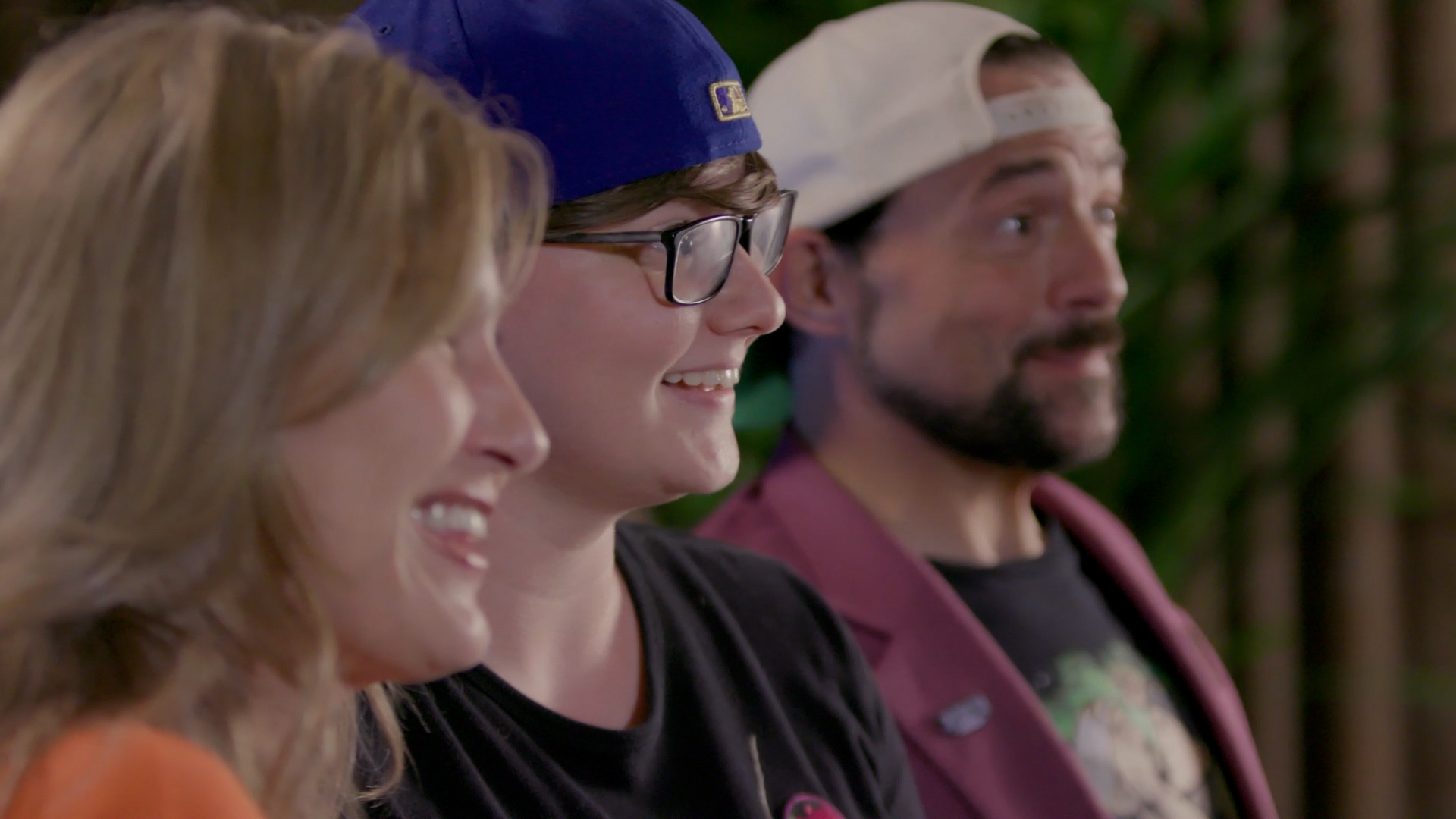
From Left: Joey Lauren Adams, Sav Rodgers and Kevin Smith in the documentary Chasing Chasing Amy.

Bill Winters, Bradley Garrison

We had to honour Joey’s truth here, which she hadn’t shared before. As a team, we were just like, “Well, we have to include the truth that Joey shares with us and the truth that Kevin shares with us,” and it all just ended up working as a result of that narrow focus that we had in the edit.

Speaking of the Joey interview, I think that’s another example of how this film is not only a film about Chasing Amy, but it’s also a film about making this film. You’re very upfront with the audience about how Joey’s interview changes the course of what the documentary is going to do. When you left that interview, did you have a sense, as a filmmaker, that she had steered the documentary in a different direction?

Oh, she just completely changed the film, yes, absolutely. Sitting there in that interview, I made sure I was being present to hear what Joey was saying because it was really important. Her story is extremely important, and her truth is important. And for her to be listened to was all I really cared about in that moment, and that required, you know, pretty immediately getting rid of any ego I had going into that interview and just listening.

After we left that day, after the interview ended, she was like, “I couldn’t give another bullshit Chasing Amy interview,” and it ended very positively, and then she invited us to stay after, and we listened to Dolly Parton. But as I was driving back to where I’m staying, I was like, “Wow, OK, that is not what I expected at all, and this is a game changer.” The movie I thought I was making, I realised, almost certainly after that interview, that the movie would be different and it would be better for it. As a filmmaking team, we had a big responsibility on our hands to make sure that Joey’s truth was honoured to the best of our ability.

You know, the Joey part and the film, and in general, reminds me of this cultural moment we’re having right now where we like to revisit things from the late 1990s and early 2000s. But one thing I do love about this film is that, as opposed to those documentaries about Pamela Anderson and Britney Spears, this one is starting from a place of, “I loved this thing from the ’90s, but let’s see how the reaction has changed. Or how people at the time felt about it, for instance, the director Gwen Turner. Were you afraid at all to open up something that you loved so much to this type of scrutiny?

I’m a guy that doesn’t particularly enjoy conflict. I try to mind my own business for the most part, and going into these interviews, I didn’t think I realised the depths to which people had their own experiences making “Chasing Amy,” and so it was a real learning experience for me. I always felt that “Chasing Amy” already had a level of scrutiny. Again, I wasn’t trying to change anybody’s minds about the film. I was just trying to explore this thing because that conflict was already inherently there, and you know; it was a curious endeavour. And then it quickly evolves.

People will always have their own opinions on Chasing Amy or Chasing Chasing Amy because cinema is such a subjective experience. Life informs how you feel about a movie. Your experience informs how you feel about a movie. Chasing Amy isn’t for everybody, and that’s OK. There is no movie that is for everybody. I was just excited to explore what I thought was the rich history there. And I’m happy with the results.

I was really moved when at the end, you talked about how Chasing Amy was there for you at a time when you needed it. And it’s not that to you anymore. I think the film captures the way that pieces of culture can help transform who we are, but that doesn’t mean that they have to be the same for us throughout the rest of our lives.

Somebody was asking about this yesterday, and I stand by what I said then, which is that my life is so full now in a way that it wasn’t when I was 12, right?

I have Riley. I have two very cute pugs that I’m obsessed with. I have friends. I have collaborators. I have filmmaking. I have community. I have all of these things that I desperately wanted as a kid. And for years, that space, everything I was yearning for, was filled up by Chasing Amy. And so, how could it have the same meaning to me now? It was that life raft until I could get the things that I really needed. It was that support so I could make it to this part of my life. In some ways, it’s kind of like having an imaginary friend. It was everything when I needed it to be. Somebody else can take up the mantle of trying to be Chasing Amy No. 1 fan.

Share Button