The UK has an inflation problem. Officials had hoped the rising cost of goods and services would have been brought to heel by now, as soaring energy costs fuelled by the war in Ukraine have cooled.
The Office for National Statistics said inflation, as measured by the consumer price index, held steady at 8.7 per cent in the year to May. Expectations were that the rate would fall a to 8.4 per cent.
Advertisement
And there was more. Britain’s measure of underlying inflation that excludes volatile items, such as energy and food, took investors by surprise by accelerating for a second month in a row in May, hitting 7.1 per cent, up from 6.8 per cent in April. Higher core inflation is seen as a sign that price growth is more likely to remain persistently high.
<img class="img-sized__img landscape" loading="lazy" alt="UK inflation remains unchanged at 8.7% in May.” width=”720″ height=”693″ src=”https://www.wellnessmaster.com/wp-content/uploads/2023/06/so-why-exactly-is-inflation-higher-in-britain-than-in-the-us-and-europe-2.jpg”>
UK inflation remains unchanged at 8.7% in May.
Anadolu Agency via Getty Images
It looks certain that the independent Bank of England will raise the cost of borrowing again on Thursday for the 13th month in a row – the only question is whether it’s by 0.25 percentage points, or a symbolic half percentage point to 5%.
Don’t other countries have inflation under control?
Britain’s inflation rate has stayed far above price growth in the US and elsewhere in Europe. Although 8.7% is down from a peak of 11.1% last October, it leaves the UK with the highest inflation rate among the G7 advanced economies. By comparison, inflation stood at 4% in the US and 6.1% across the 20 EU countries that use the euro currency.
Advertisement
Last week, the Federal Reserve – America’s equivalent of the Bank of England – ended a 15-month streak of hiking interest rates, a pause that currently seems highly unlikely in the UK.
The surging cost of food
Britain has had western Europe’s highest rate of inflation for food, with prices up more than 18 per cent over the past year, down only slightly from a recent peak of more than 19 per cent, the highest since 1977.
Freak weather has affected crops around the world, pushing up prices for many countries. But Britain is the world’s third largest net importer of food and drink, according to the Food and Agriculture Organisation of the United Nations – behind only China and Japan – leaving it particularly exposed.
Industry data published on Tuesday showed British grocery inflation eased slightly for the third month in a row in June.
Bank of England governor Andrew Bailey said last month that British food producers may have locked in higher costs than the central bank had anticipated, explaining some of its underestimate of inflation.
Advertisement
Heavy reliance on natural gas
Britain is highly reliant on imported gas to generate electricity, exposing it to the full force of the surge in gas prices last year after Russia’s invasion of Ukraine.
The way Britain regulates energy prices for domestic and business users – it announces changes to maximum tariffs on a quarterly basis – means that international price rises are slower to push up inflation than in many other countries but falls are also slower to feed through into bills for users.
Brexit
Exiting the European Union and its single market at the start of 2021 has started to have an impact. Although an agreement between the UK and the bloc allows largely tariff-free trade in goods, there are barriers to exports and imports in the form of paperwork which have caused delays and higher costs.
Meanwhile, the end of free movement of workers from EU countries has contributed to an acute shortage of staff for many employers, pushing up wages and ultimately prices for consumers.
Bank of England decision-making
Some economists think the Bank, which is tasked with keeping inflation at around 2%, was too slow in starting to raise interest rates and is now playing catch-up.
Advertisement
Its own monetary policy committee rate-setter member, Chaterine Mann, said in February that the Bank should have started raising interest rates earlier (“a greater degree of front-loading” was needed) and is now paying the price.
One of the five people in a missing submersible craft that was exploring the Titanic wreckage is a record-setting daredevil who has flown to space and traversed the planet’s deepest underwater trenches, and who has acknowledged that being rescued is not always a possibility.
“If something goes wrong, you are not coming back,” British explorer and businessman Hamish Harding told the Indian newsmagazine The Week in 2021 after completing a record-setting dive in the Mariana Trench, the world’s deepest part of the ocean.
Advertisement
That four-hour dive explored the bottom of Challenger Deep, which has a depth of 35,860 feet. For comparison, the Titanic is nearly 13,000 feet below sea level.
Hamish Harding, a British businessman and explorer, is among the five people missing while traveling in a submersible vessel to the Titanic wreckage in the Atlantic Ocean.
JANNICKE MIKKELSEN via Reuters
Harding said he was too busy to be scared during his dive, though he acknowledged its great risks, including that no other submersible “is capable of going down there to rescue you”.
“It will take three years to build another one,” he said of the specialised vessel that’s designed to withstand water pressure that’s roughly a thousand times the standard atmospheric pressure at sea level. He likened this force to 8,000 double-decker buses.
Advertisement
Harding earned two Guinness World Records for that dive — for the longest time spent traversing the deepest part of the ocean on a single dive and for the farthest distance traveled along the deepest part of the ocean. He earned a third record in 2019 for completing the fastest circumnavigation of the Earth by airplane.
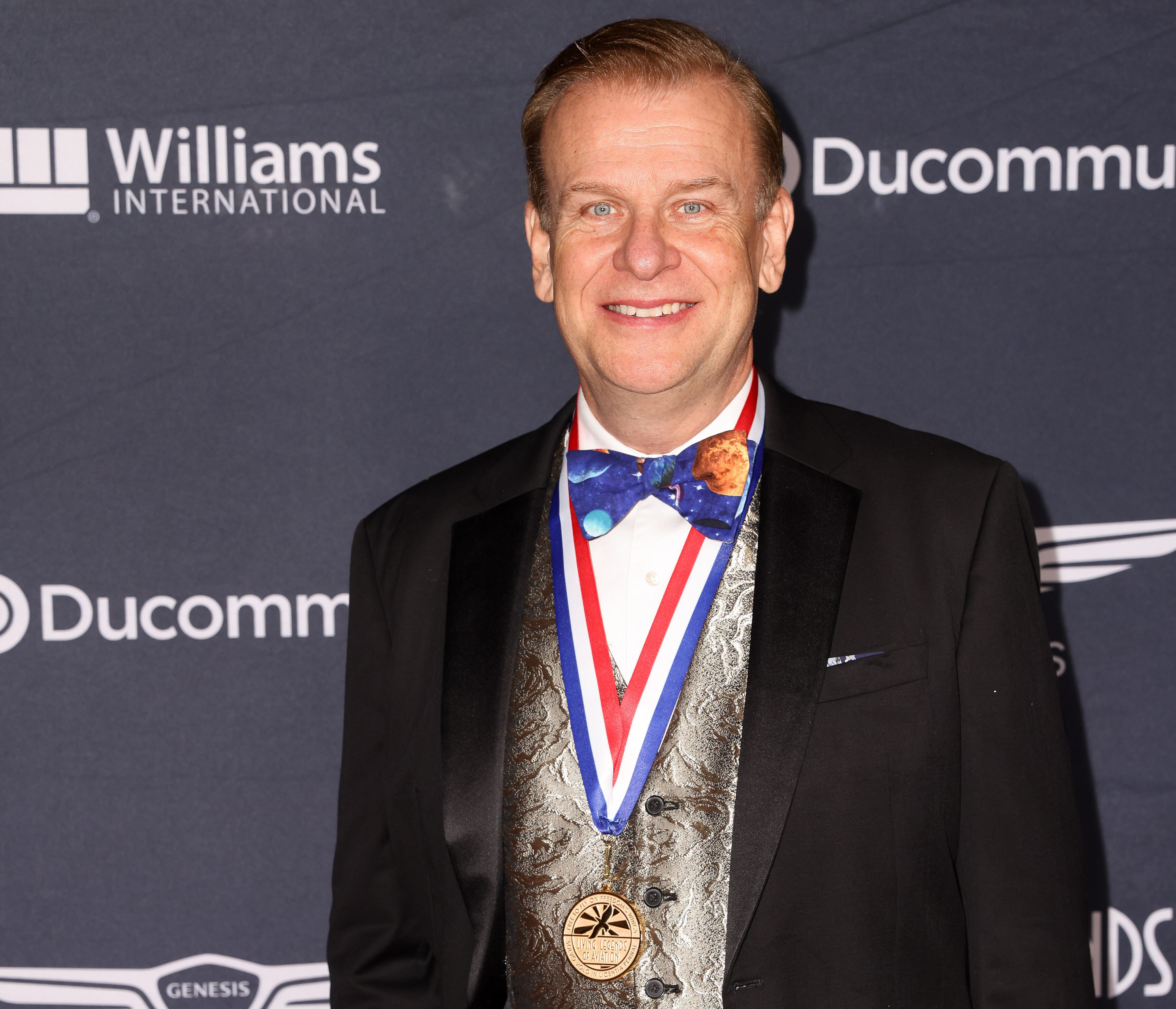
Harding attends the Living Legends of Aviation Awards in California in January. Harding has three Guinness World Records for his explorations of both the sky and the ocean.
Victoria Sirakova via Getty Images
One year after his historic dive, Harding flew to space in Jeff Bezos’ Blue Origin rocket, New Shepard.
The search continued on Tuesday for the five-person submersible that went missing on Sunday morning while taking tourists to view the sunken wreckage of the Titanic off the coast of southeast Canada.
Along with Harding on the vessel are Pakistani businessman Shahzada Dawood and his son Suleman. Two others believed to be on board are French Navy veteran PH Nargeolet, who would be operating the vessel, and Stockton Rush, CEO of OceanGate Expeditions.
Advertisement
The US Coast Guard said on Tuesday afternoon that the missing vessel was estimated to contain less than two days’ supply of oxygen.
Action Aviation, an aircraft brokerage company that Harding founded, recognised his many accolades in a statement Tuesday that praised him as “an extraordinarily accomplished individual who has successfully undertaken challenging expeditions”, including multiple trips to the South Pole.
“The team at Action Aviation are extremely proud of Hamish and we look forward to welcoming him home,” his company said.
Several media outlets have described Harding as a billionaire, though he is not listed on Forbes’ list of billionaires.
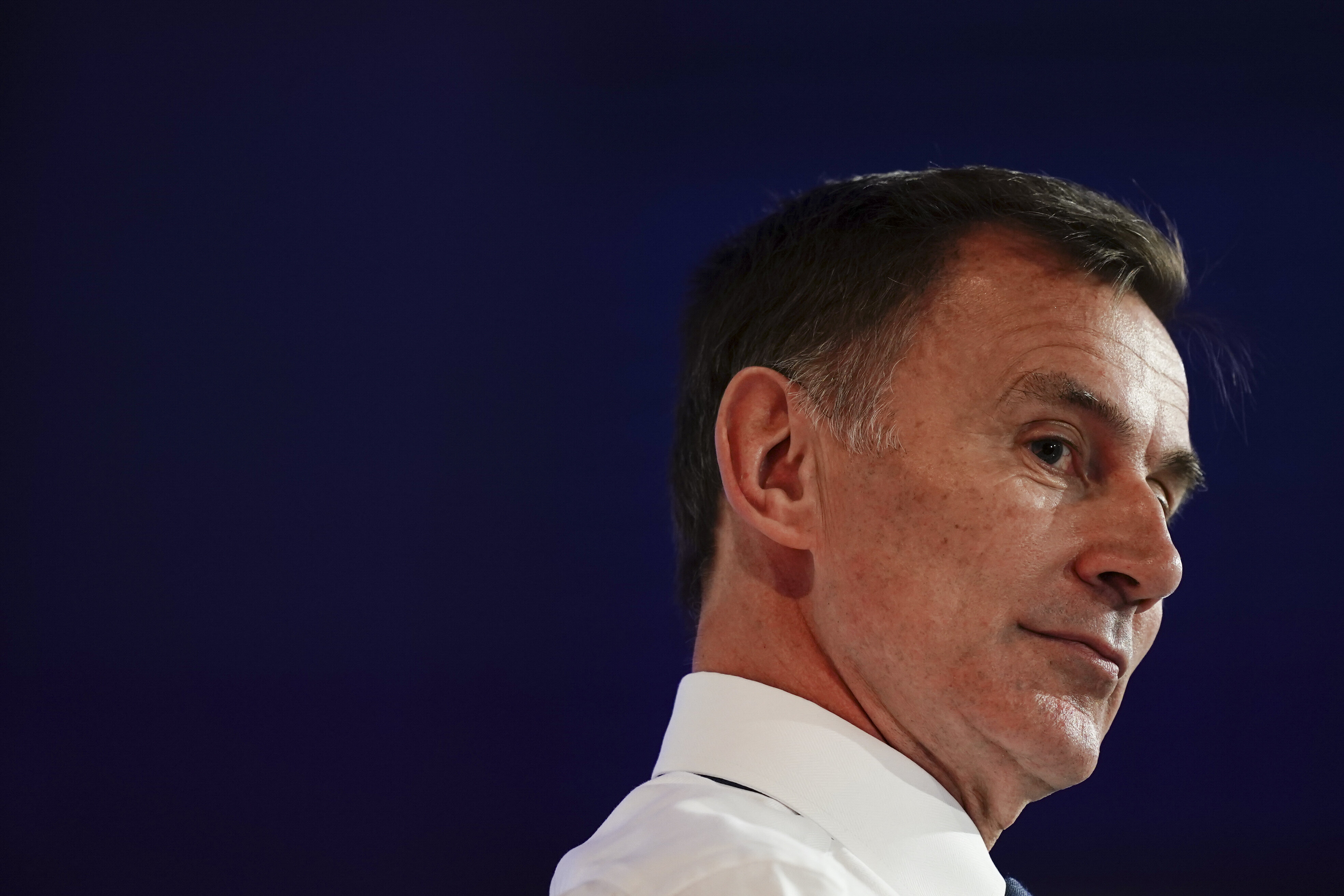
Chancellor Jeremy Hunt will hold a meeting with Britain’s major banks on Friday to discuss how they can help homeowners hit by rising mortgage costs, after saying the government would not offer borrowers significant financial help.
The Bank of England has raised interest rates 12 times since December 2021, but the impact for many mortgage holders is only starting to be felt now as low fixed rates agreed during the Covid-19 pandemic start to expire.
Advertisement
Some politicians have called on the government to consider financial aid for those worst hit, but Hunt rejected this in a parliamentary question-and-answer session.
“We won’t do anything that would mean we prolonged inflation,” Hunt said when asked about possible aid. “Schemes which involve injecting large amounts of cash into the economy right now will be inflationary.”
Conservative MP Jake Berry asked Jeremy Hunt whether it was time to consider mortgage interest relief at source. Jeremy Hunt also told MPs that he will meet mortgage lenders about what relief they can offer to their customers.https://t.co/MN45tfGyF1pic.twitter.com/T0hlw2V3Sy
The Bank of England is expected to raise interest rates again on Thursday by a quarter point to a 15-year high of 4.75% in a bid to fight unexpectedly sticky inflation, which was running at 8.7% in April. Official inflation data for May will also be published on Wednesday.
Advertisement
Hunt said he would talk with major lenders later this week to discuss the challenges faced by some borrowers.
Three sources – two from the banking industry and one in the government – said that meeting would take place on Friday and focus on how best to support customers facing big increases in their repayments this year, and those who have refinanced at higher rates and are already struggling to cope.
“I’ll be meeting the principal mortgage lenders to ask what help they can give to people struggling to pay more expensive mortgages and what flexibilities might be possible for families in arrears,” Hunt said.
The 2008 financial crisis did not lead to a big wave of home repossessions in Britain, but lending rules were tightened afterwards to ensure homebuyers taking out mortgages would still be able to cope with a significant rise in interest rates.
However, mortgage rates have risen rapidly in recent weeks as markets bet the BoE may have to raise its own interest rate as high as 6% next year to tackle persistent inflation.
Advertisement
Trade body UK Finance estimates 800,000 Britons will need to refinance loans in the second half of this year, and a further 1.6 million in 2024.
The Resolution Foundation think-tank estimated that the average homeowner who refinances a mortgage in 2024 will have to pay an extra £2,900 pounds a year.
Most British residential mortgages have interest rates fixed for two or five years, after which borrowers pay a floating rate or switch to a new fixed rate.
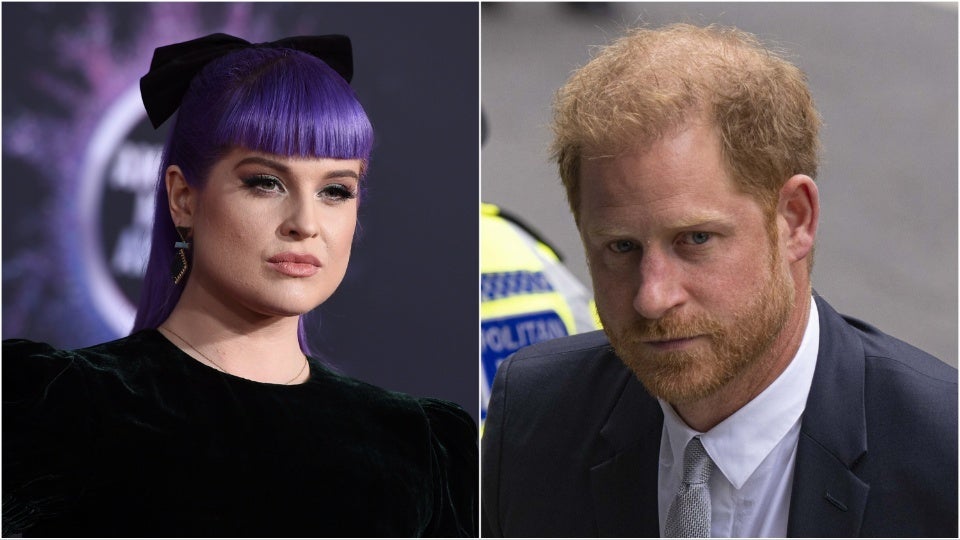
“I don’t care what my fucking son did, if I was getting crowned — he would sit in the very front row,” Welch said.
Osbourne didn’t agree, saying: “I think Harry’s a fucking twat.”
But she didn’t stop there.
“I think he’s a fucking twat,” she repeated, before piling on. “He’s a whining, whingeing, complaining, woe is me. ‘I’m the only one that’s ever had mental problems. Like my life was so hard.’”
Osbourne noted that “everybody’s fucking life is hard”, before going even further with her attack.
“You were the prince of a goddamned country who dressed up as a fucking Nazi and now you’re trying to come back as the Pope. Suck it,” Osbourne added.
You can hear her complete comments below, starting around the 38-minute mark.
Advertisement
Attacking the Duke and Duchess of Sussex is sort of an Osbourne family tradition.
Back in 2018, Osbourne’s mother, Sharon Osbourne, was caught on tape claiming that Harry’s wife, Meghan Markle, wasn’t really Black.
And Kelly Osbourne isn’t the only celebrity who recently had harsh words for Prince Harry.
Last week, sports writer and Spotify executive Bill Simmons called Harry and Meghan “fucking grifters” on his podcast after it was announced that the production company founded by the couple would be parting ways with the streaming platform less than a year after the debut of their podcast “Archetypes.
“‘The fucking grifters.’ That’s the podcast we shoulda launched with them,” Simmons said. “I gotta get drunk one night and tell the story of the Zoom I had with Harry to try and help him with a podcast idea. It’s one of my best stories.”
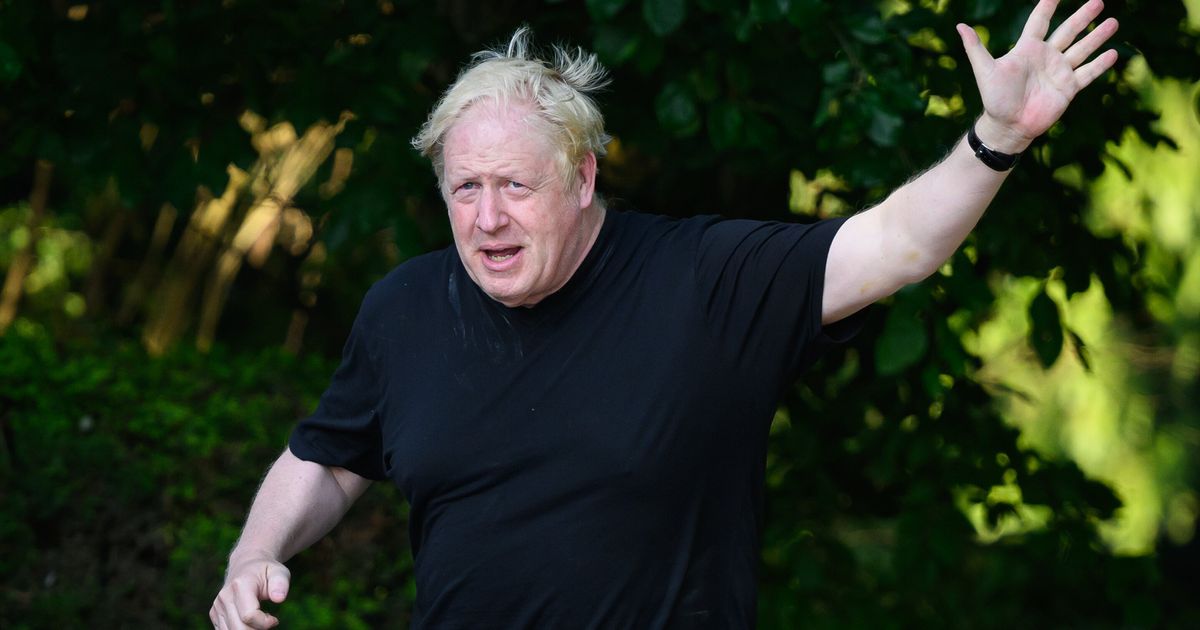
Boris Johnson has been stripped of his parliamentary pass for repeatedly lying to the House of Commons over partygate.
MPs voted 354 to 7 to support last week’s privileges committee’s report which found him guilty of misleading parliament by insisting lockdown rules were followed in Downing Street during the pandemic.
Advertisement
Johnson resigned as MP for Uxbridge and South Ruislip 10 days ago after seeing an advance copy of the committee’s report.
Had he remained an MP, the committee said it would have recommended he be suspended from the Commons for 90 days.
Johnson described the inquiry as a “kangaroo court” and claimed he was the victim of a political stitch-up.
But following a five-hour debate, an overwhelming majority of MPs voted to back the committee’s findings, including the recommendation that Johnson should have the parliamentary pass given to former MPs removed.
Advertisement
The debate also exposed the deep splits within the Tories over their former leader, with around 200 of the party’s MPs – including prime minister Rishi Sunak – abstaining by failing to take part in the vote.
Some 118 Tory MPs voted to back the committee’s findings, including cabinet ministers Alex Chalk, Penny Mordaunt Gillian Keegan, and former PM Theresa May.
The Tories who voted against the committee’s report were Joy Morrisey, Karl McCartney, Adam Holloway, Heather Wheeler, Nick Fletcher and Bill Cash.
In a bizarre interview this morning, Sunak repeatedly refused to say what he thought of the report, insisting he “wouldn’t want to influence” any MPs on how to vote.
Meanwhile, the prime minister’s official spokesman said he was too busy with other engagements, including hosting the prime minister of Sweden, to attend parliament.
Advertisement
Lib Dem deputy leader Daisy Cooper said: “Tonight Rishi Sunak committed a cowardly cop-out. His failure to vote says all you need to know about this prime minister’s lack of leadership.
“Sunak promised integrity yet when push came to shove, he was too weak to even turn up.”
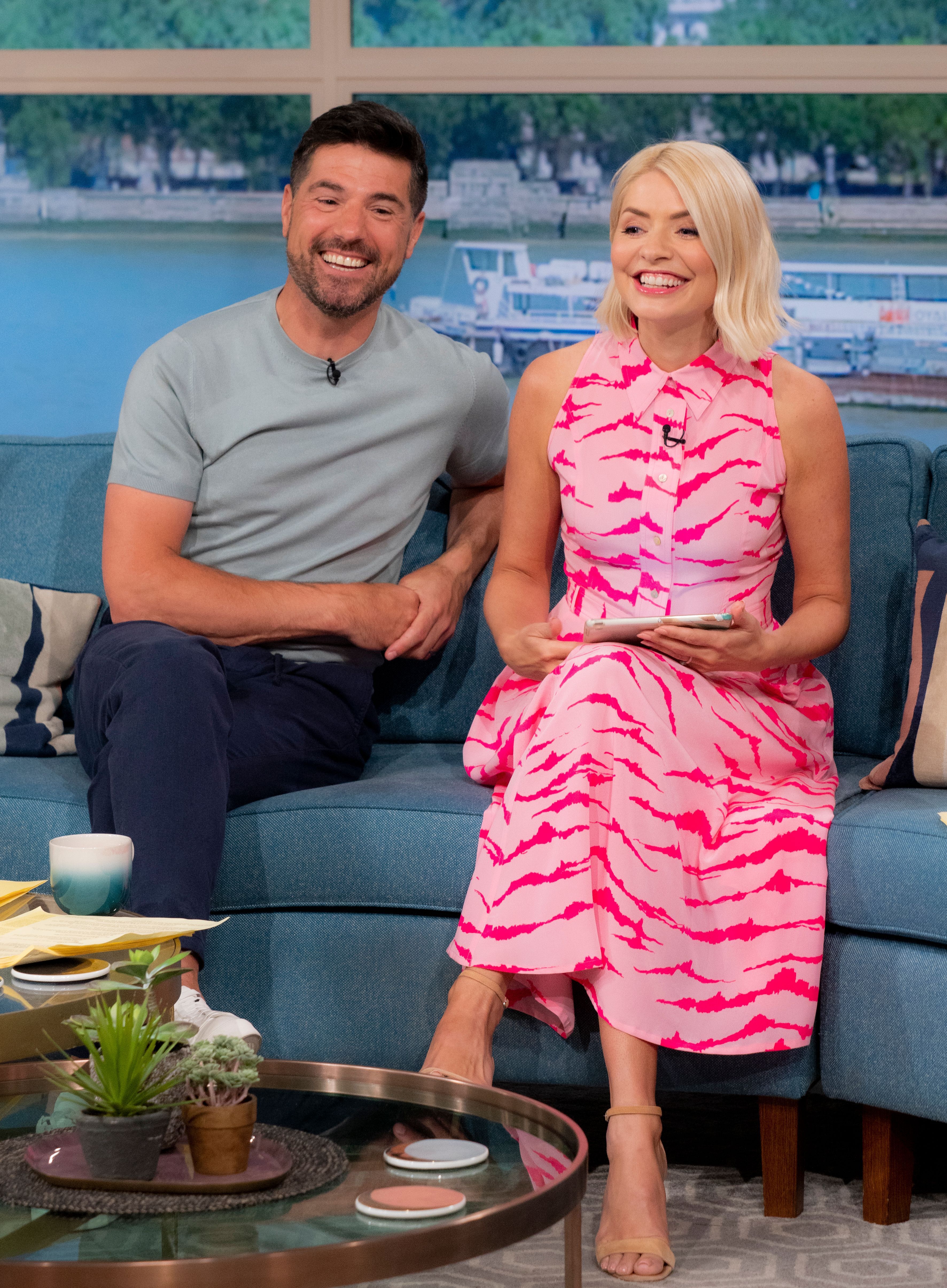
The Irish presenter has emerged as one of the frontrunners to land the job, as ITV chiefs search for a permanent co-host for Holly Willoughby following Phillip’s exit from the daytime show.
Advertisement
In an interview with The Times, Craig revealed his love of presenting the show, admitting he feels “grateful” for chance to front it.
“I love doing the This Morning show,” he said. “It’s great fun and I feel so grateful at this stage in my career to get an opportunity to do a show this size.”
“Given that I’m on my second or third lap of this industry, to get an opportunity like this is fantastic.”
He continued: “It’s a very important television programme as it’s the backdrop for a lot of people’s morning,”
Advertisement
“From anecdotal evidence, I know that it provides company and it’s almost a friend to a lot of people. There’s a familiarity, an everydayness and a brightness that makes it enjoyable.”
Craig also praised the way the show’s wide mix of topics “encapsulate life”, suggesting it mirrors the way people can be “in the supermarket and one minute you’re talking about your kids and the next, you’re in work, discussing financial projections”.
Craig has proved popular with This Morning viewers
Craig has previously served as a guest host on This Morning on Fridays and during school holidays, presenting alongside the likes of Josie Gibson, Rochelle Humes and Alison Hammond.
Holly is currently presenting with a rotation of different members of the This Morning family until a permanent replacement for Phillip is found.
Of all the summer maladies, I reckon hayfever is among the worst.
The constantly-watering eyes, the itchy nose, the explosive sneezes – I’d happily trade a couple of days’ worth of sun for some sniffle-free time, ta very much.
If you’re anything like me, you will have tried every conventional hayfever-busting trick in the book. But for some reason, the pollen this summer seems to have some serious hands.
Advertisement
Thankfully, Dr. Karan Raj recently took to TikTok to explain three of the best lesser-known antidotes to hayfever – including everything from pro-level meds to sneaky hair-washing hacks.
Here’s what he had to say:
Make absolutely definite you’re doing the basics
OK, OK, I know I started this off by saying that you’ve probably tried all the better-known solutions.
But just in case, Dr. Raj listed all his favourite go-to hayfever hacks to check off before you try anything drastic.
These are:
Wearing Vaseline, or another petroleum jelly, around your nostrils
Wearing sunglasses when you’re out
Washing your hair before bed to clear out any stray pollen
Not drying laundry outside, where your clothes can catch pollen
Changing your clothes frequently
Once you’ve got those covered, he recommends trying what he calls “extras”.
1) Nab yourself some fexofenadine
When it comes to hayfever symptom-relieving tablets, it turns out that not all options are created equal.
Fexofenadine, Dr. Raj says, is the “strongest over-the-counter medication you can buy” for hayfever.
Sure, it might cost a little more than your usual faves – but its “much stronger” active ingredient, fexofenadine hydrochloride, could well be worth a shot.
Just make sure you actually *are* getting the active ingredient on there, Dr. Raj says.
2) Irrigate your nose
Yes, taking meds is easy and can be effective – but as Dr. Raj says, “It’s in your nose holes that pollen can get trapped and cause reactions.”
Flushing your nostrils with water or a nasal spray can loosen the trapped pollen, potentially relieving you of those cursed symptoms.
But the doctor stresses the importance of using the nozzles products like nasal sprays correctly.
“Don’t point up towards your brain,” he says. He recommends we point “sideways, towards (our) ears” instead.
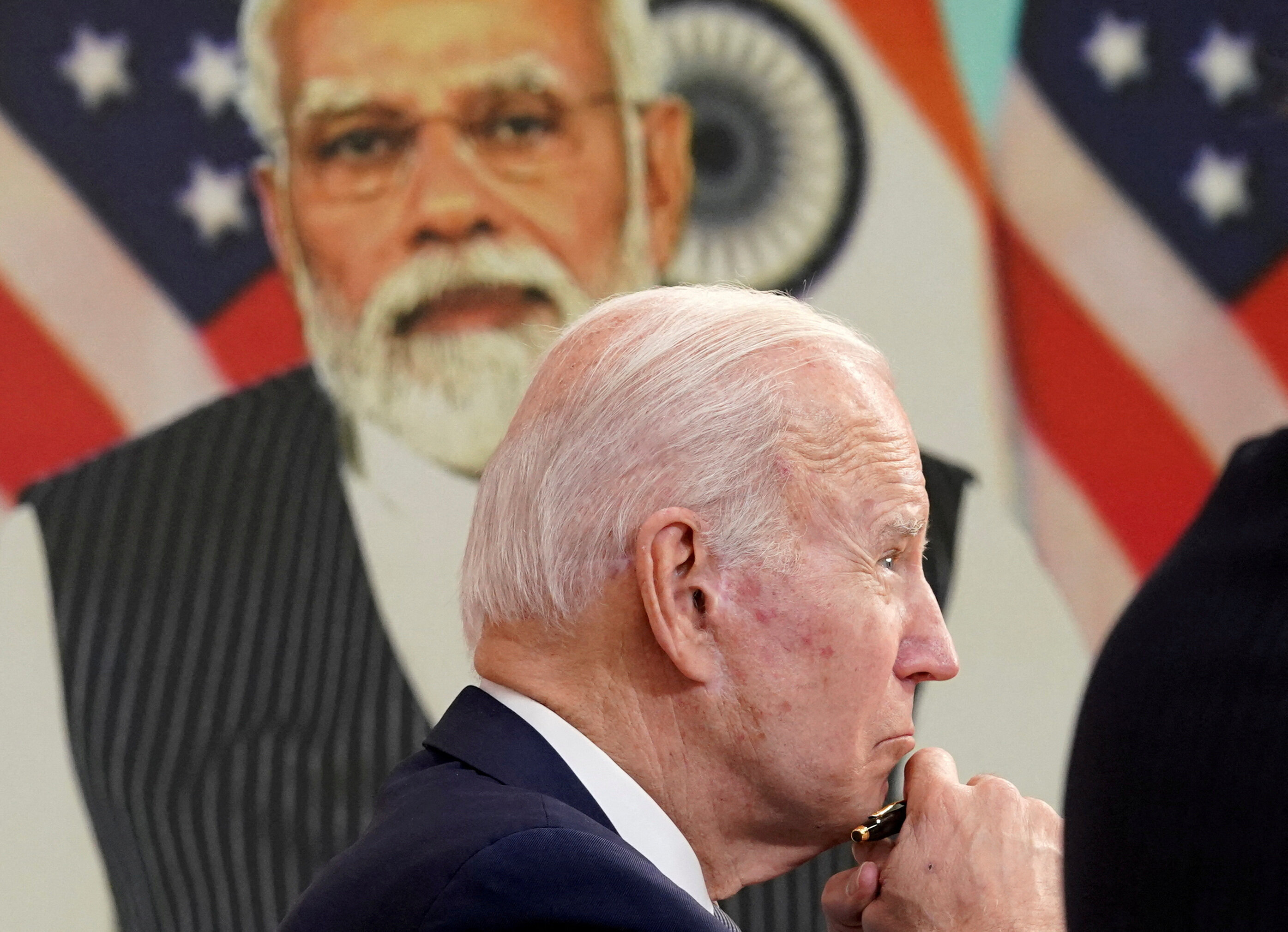
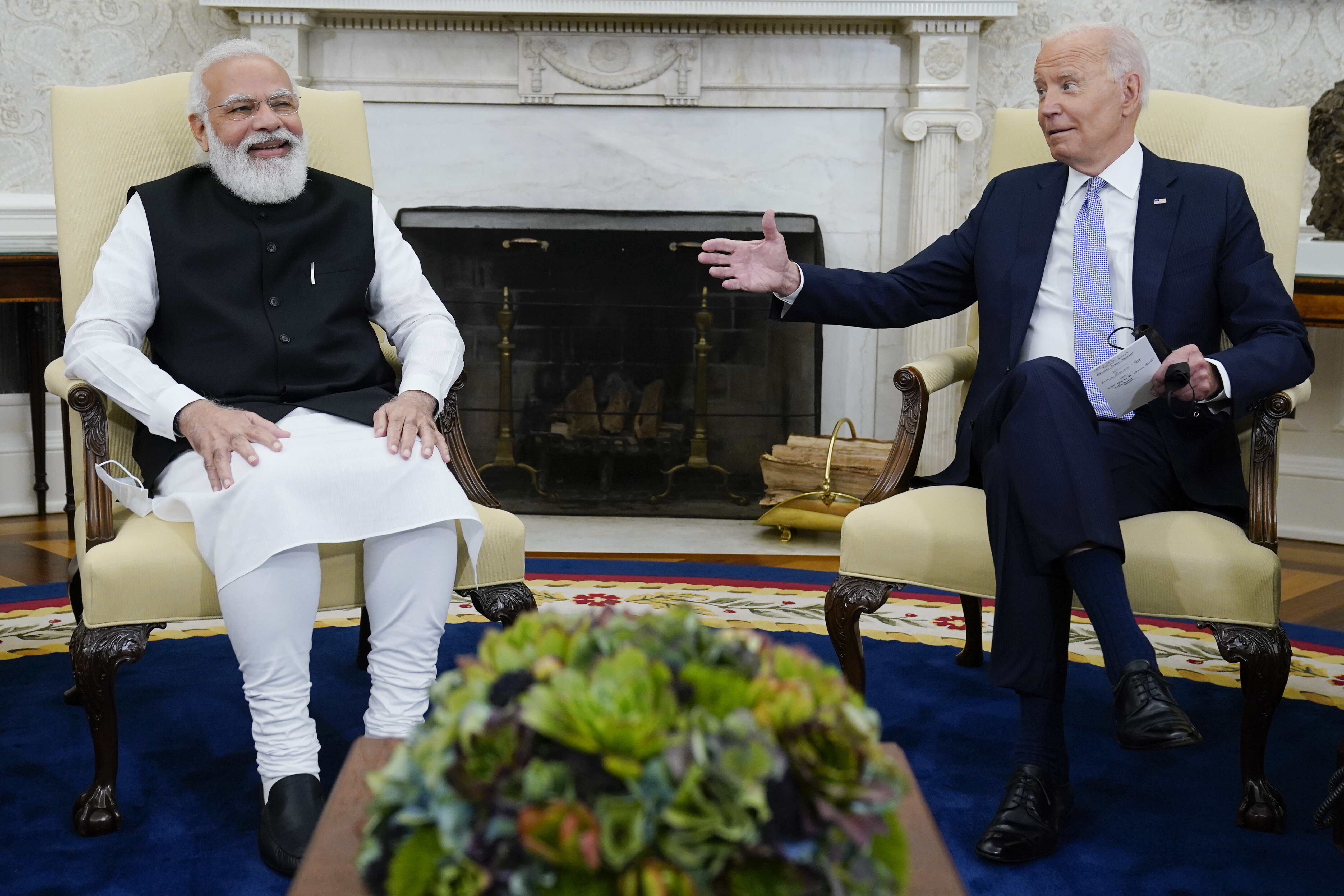
Human rights groups are blasting the White House for rolling out the red carpet for Indian Prime Minister Narendra Modi, who is set to meet with President Joe Biden and address Congress during his visit to Washington, D.C., next week.
The Indian government called the trip “historic,” and the White House noted that “the visit will strengthen our two countries’ shared commitment to a free, open, prosperous, and secure Indo-Pacific.”
Advertisement
But critics want Biden to press Modi about human rights violations in India related to the steep rise of Hindu nationalism — a political and extremist ideology that seeks to transform a secular and diverse India into an ethnoreligious Hindu state that targets minorities. Religious minorities in India are at risk of continued state-sanctioned violence and harassment if the U.S. continues to overlook Modi’s role in it, they say.
“For almost a decade now, human rights activists and others have regularly brought to the White House — Democrats or Republicans — that Modi’s regime is authoritarian, it’s right-wing, it’s anti-Muslim and it’s anti-minority,” said Suchitra Vijayan, the author of “Midnight’s Borders: A People’s History of Modern India.”
“The fact that they continue to whitewash him by giving them a platform is very worrying,” she added.
Modi was banned from the U.S. in 2005, before he became prime minister, for supporting Hindu extremist groups who rioted and targeted Muslims. But this will be Modi’s third White House visit at least, and the second time he addresses a joint session of Congress. He first did so in 2016 under former President Barack Obama.
Advertisement
This will be the third official state dinner Biden has hosted. The White House previously hosted the president and first lady of South Korea for a state dinner in April and the president and first lady of France last December.
When pressed about human rights concerns in India, White House press secretary Karine Jean-Pierre defended the visit, adding that the president believes “this is an important relationship that we need to continue and build on as it relates to human rights.”
The White House did not respond to HuffPost’s request for comment.
“Despite who is in the White House, the U.S. has a long history of propping up authoritarian regimes for its own personal ends.”
– Suchitra Vijayan, author of “Midnight’s Borders: A People’s History of Modern India”
India continues to be a powerful ally to the U.S. as the world’s most populous country and largest democracy. But inviting Modi to the White House sends a dangerous message to religious minorities across the globe, critics argued.
“What happens in a country of a billion people will have global ramifications,” said Vijayan.
Human Rights Watch and Amnesty International have scheduled a private screening next week of a BBC documentary on Modi and his role in the 2002 Gujarat riots where at least 1,000 people were killed, most of them Muslim. During the pogrom, Hindu mobs torched Muslim homes and businesses, killed Muslim women and children, and demolished mosques and graves. The Indian government has since blocked the documentary on social media, including Twitter.
Advertisement
“The screening of the film provides an opportunity to demonstrate what, in practice, freedom of expression and what dissent looks like and also educate the public and remind people of the horrific acts of violence and killings against Muslims in Gujarat,” said Amanda Klasing, the national director of advocacy at Amnesty International USA.
Biden is hoping to secure a package for India to buy dozens of U.S.-made armed drones worth billions of dollars in an effort to strengthen U.S.-India ties amid China’s growing influence.
“Despite who is in the White House, the U.S. has a long history of propping up authoritarian regimes for its own personal ends,” said Vijayan.
Critics of Modi’s Bharatiya Janata Party-led government in India, including journalists and activists, have faced targeted harassment and prosecutions. The rights of religious minorities, especially Muslims, continue to deteriorate. BJP supporters and Hindu nationalist groups commit violent attacks against Muslims and government critics with impunity. At least 50 anti-Muslim hate rallies took place in the span of four months last year starting in November 2022.
In fact, a 2022 religious freedom report by the U.S. State Department recorded a rise in violence against religious minorities in India, including incidents of the government bulldozing Muslim-owned homes and shops and reports of Christians being attacked, arrested and detained by police. Christian groups said police sometimes aided crowds in disrupting their worship services, according to the report.
Advertisement
“Biden should be listening in to his own State Department and articulating all this publicly and clearly on the record about human rights abuses,” said Klasing. “The failure to do that doesn’t reflect well on what the strength of the relationship is. This is a crucial test.”
As of 2020, about 15% of Indians are Muslim, while Christians make up between 2% and 3% of the country’s population. Last month, ethnic violence broke out in Manipur, a remote state in India’s northeast, where churches were burned down and dozens of people were killed, most of them Christians.
John Prabhudoss, the chairman of the Federation of Indian American Christian Organizations, told HuffPost that he has been communicating with dozens of Indian pastors and that most of them are terrified for their families back in India.
“Their family could be jailed or even the worst, killed. The fear is real,” said Prabhudoss.
Prabhudoss, who visited India alongside lawmakers in 2002 after the Gujarat riots and saw the impact of the violence firsthand, called Modi’s visit “unforgivable.”
“For the president to bring him to the White House … is shameful,” said Prabhudoss. “Mr. Biden, shame on you.”
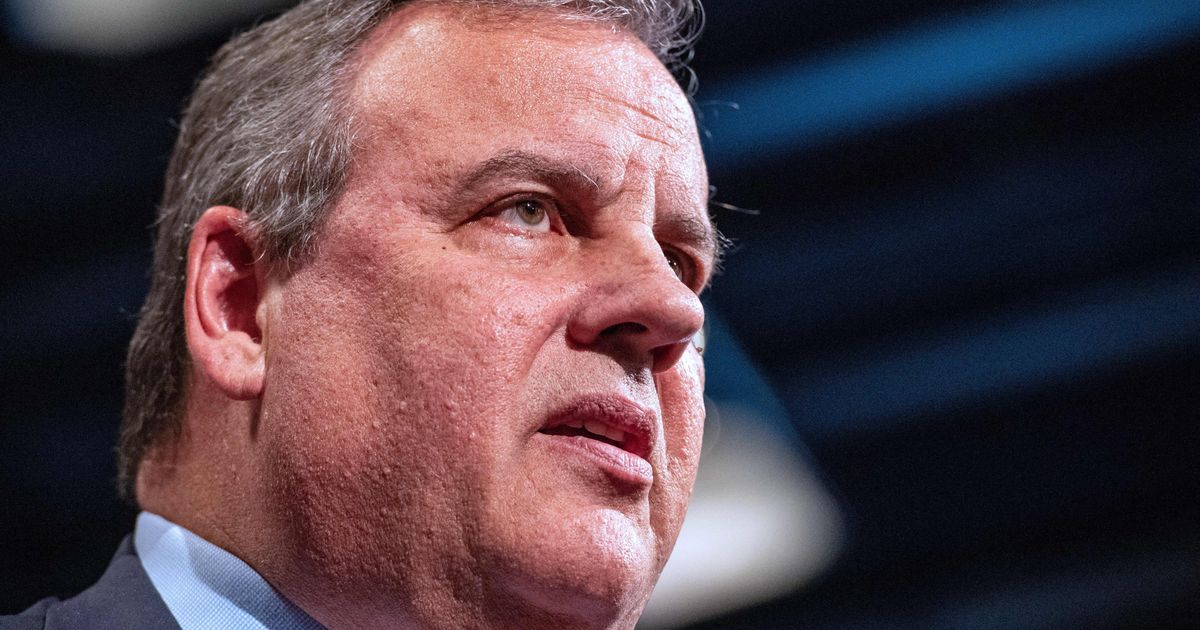
Former New Jersey Gov. Chris Christie said on Sunday that fellow 2024 GOP presidential candidate Donald Trump is a “petulant child” when it comes to those, particularly his former allies, who disagree with him.
The indicted former president recently went on his Truth Social platform to rip his former staff and allies who have criticized him for knowingly keeping classified documents at Mar-a-Lago after leaving the White House, and trying to prevent the National Archives from obtaining those documents. Trump has pleaded not guilty to all charges ― some of which fall under the Espionage Act ― handed by a federal grand jury.
Advertisement
Among those he went after were former White House chief of staff John Kelly and former Attorney General Bill Barr, both of whom have recently criticizedTrump for mishandling top secret government documents. In one post, the ex-president said that Kelly is weak and has a “very small brain.” In another post, Trump called Barr a “gutless pig,” “lazy” and “totally ineffective.”
Speaking on CNN’s “State of the Union,” Christie pointed out that the very people Trump is berating are the same officials he gave high praise to when he hired them during his presidency.
“Now look, either Donald Trump ― if you believe what he said when [the officials] left ― that means he didn’t pick the very best people and doesn’t know how to pick personnel. If you believe, about them, what he said at the beginning, the great stuff, then this guy is the worst manager in the history of the American presidency,” the presidential candidate said.
“Either way, Republicans should listen to what he says. He’s a petulant child when someone disagrees with him. And whether it’s Bill Barr or John Kelly or [former Defense Secretary] General [James] Mattis, whether it is [former White House official] Mick Mulvaney or whether it’s … [Chairman of the Joint Chiefs of Staff] General [Mark] Milley ― if you disagree with Donald Trump, the petulant child comes out and he calls you names like the ones you just mentioned and the ones I mentioned.”
Advertisement
Christie was one of over a dozen Republicans running for the presidential nomination in 2016, and after dropping out became the first major endorser of Trump. The New Jersey Republican supported Trump through all of his controversies while in the White House, even after the former president infected him with COVID-19 at a 2020 debate prep session. As a result, Christie spent a week in intensive care at the hospital.
The Republican National Committee announced this year that all GOP candidates must sign a pledge to support the eventual nominee in order to participate in the primary debates, regardless of whether the nominee is a convicted felon. When asked if he would support Trump should he be the nominee, Christie called the idea of a pledge “useless.”
“I’m going to take the pledge just as seriously as Donald Trump took it in 2016. As you will remember, [former RNC chair] Reince Priebus had to go up to Trump Tower to get him to sign [the pledge], to ask him to do so. He did,” the New Jersey Republican said.
Advertisement
“And then we went to a subsequent debate, and we were all asked if we would reaffirm our support of whoever the nominee was going to be by raising our hand. There were 10 of us on the stage ― nine of us raised our hands. The one who didn’t was Donald Trump. And so I will take the pledge in 2024 just as seriously as Donald Trump took the pledge in 2016.”
I learned about my father’s passing many months after his death, when a surrogate court sent me an obligatory legal notice: An estate had been created in his name. In his will, my father passed me over, stating not once but twice that under no circumstances was I to receive any of his money, even if all other possible beneficiaries were deceased. In my father’s view, it seemed, I was unforgivable.
Before I learned to swim, my father treaded in the deep end of our town pool, lifting his leathery tan arms, opening his hands to catch me. When I jumped, he took his arms down and I slipped underwater, floundering for a few seconds before my father pulled me up to the surface, holding my body against his. He laughed hysterically as I coughed and tried to catch my breath, the water lapping at our shoulders.
Advertisement
He said we should try again. This time, he promised he’d catch me. I got out of the pool and went to the edge. I bent my knees and hesitated. My legs shook.
“I’ll catch you,” my father said, his head and hands beckoning.
I wanted him to be the kind of father who would catch me, so I held my breath, closed my eyes and jumped, hoping that this time ― this time ― he’d keep his word. He rarely did.
As a girl, I often drowned in my father’s sadism ― his torrents of psychological and sexual abuse. In my 30s, when I began to speak and write about my childhood experiences, people I knew and people I didn’t know asked the same question: “Have you forgiven him?” Some urged me to forgive him, citing forgiveness as an edict, offering lines from the bible. My father was a flawed human being who deserved forgiveness. Good people forgive. Was I a good person?
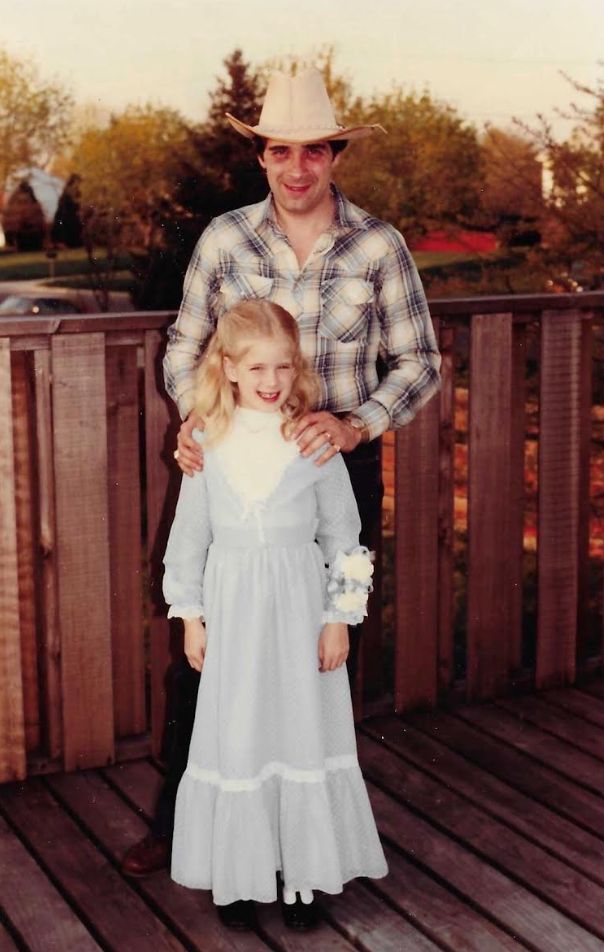
My father wasn’t all bad. He could be caring. When I was growing up, he sat beside my bed when I was sick, gave me a pep talk when I felt anxious before my violin audition, and came to the Girl Scouts Pop Hop, doing the do-si-do with me even though, according to my mother, he hated to dance. For years, I pretended that good father was the whole of him, until I couldn’t pretend any longer.
Advertisement
Courtesy of Tracy Strauss
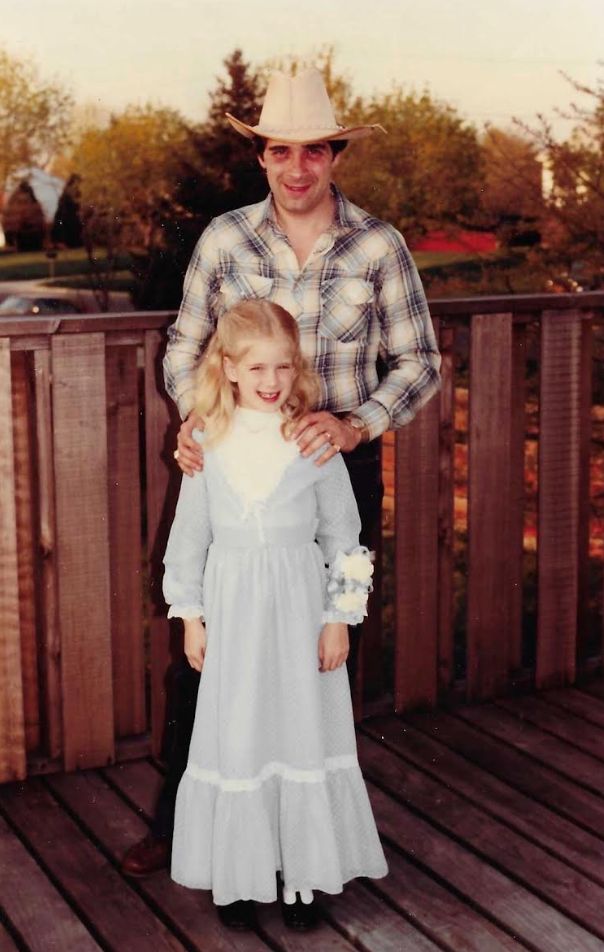
The author, at age 8, and her father, pictured on the family deck, on their way to their second annual “Pop Hop.”
In “The Courage to Heal,” a book I read in my 30s while in the early stages of recovering from complex PTSD, authors Ellen Bass and Laura Davis write, “Developing compassion and forgiveness for your abuser… is not a required part of the healing process.”
I felt relieved to know that experts believed forgiveness wasn’t necessary. For most of my life, I saw forgiveness as something a victim offered an offender after the offender held himself accountable for his actions and gave a heartfelt apology. In the grander scheme of forgiveness was my sense of presidential pardons, an exemption from punishment for a committed crime.
My father never offered an apology for his behaviour, nor was he ever officially reported for or convicted of any crime. Though when I was an adult, I held him accountable in our conversations, and then also after our estrangement, in part of a memoir I published in my mid-40s, two years prior to his death. While he once, over the phone, admitted he’d done the things I’d claimed, he quickly retracted his statement. He said my perception of his behaviour was incorrect, and my unforgivable accusations were akin to sticking a knife in his chest: He was the victim.
In a research study on forgiveness, Harvard University epidemiology professor Tyler Vanderwheele states that forgiveness may boost mental health and wellbeing. Vanderwheele defines forgiveness as “replac[ing] ill will toward the offender with good will” and names empathising with the offender as an essential step toward forgiving.
Advertisement
I sometimes wonder if my father ever felt empathy or good will. I felt empathy and good will towards my “good” father, but not the abuser father, the greater whole of him. But ultimately, empathy and good will had nothing to do with my coming to forgive my father.
A dog did.
Courtesy of Tracy Strauss
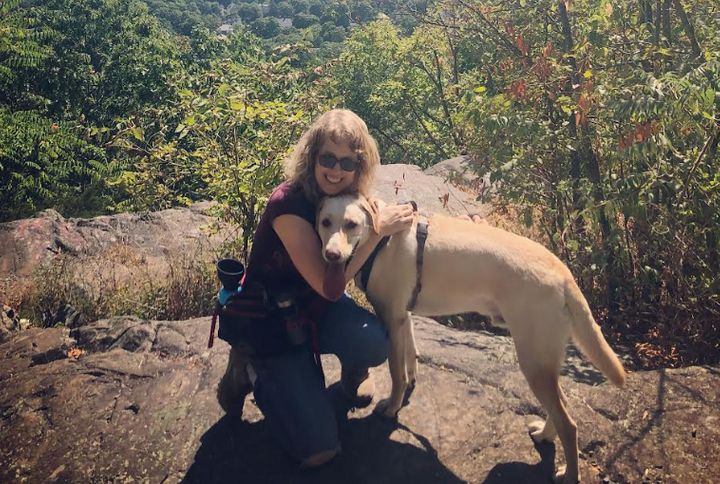
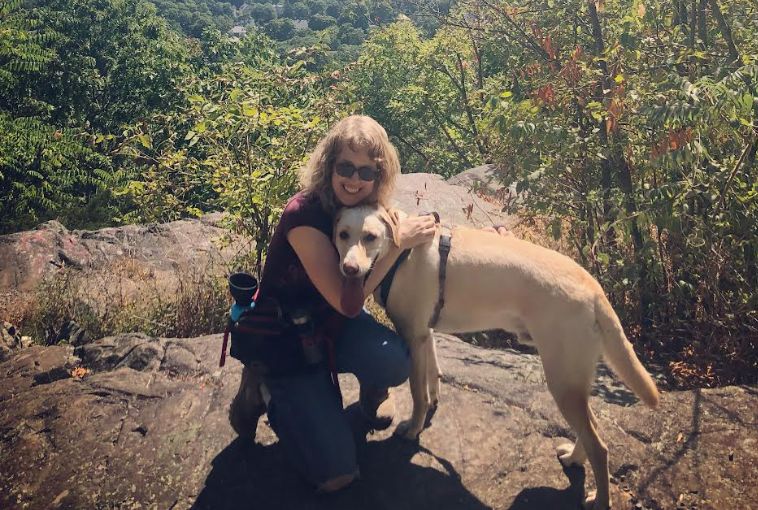
The author and Beau on a hike north of Boston in August 2022.
When I was a child, I begged for a dog, but my father said we couldn’t have one because he was allergic. (Years later, after he divorced my mother and remarried, he got a dog and insisted he never had a dog allergy.) My father told me that, as consolation, he’d be my dog. He got down on all fours and barked and panted. I was enamoured and enthralled until he pushed me over and lowered his body onto me. I had no power to prevent what happened next.
Decades later, in my mid-40s, living solo during the pandemic, I adopted Beau, a yellow lab mix from Mississippi, who arrived with severe separation anxiety. When I left my apartment to go to work, Beau went to doggie day care, a place where he felt happy, safe and loved ― until he was attacked by another dog. Beau’s injuries were so serious that he needed emergency surgery to repair the damage. For days after, he wouldn’t stop crying, panting, pacing and hiding in my bathtub.
The vet prescribed a sedative (Xanax) that the clinic didn’t have in stock. Because most pharmacies forbid dogs, my only option was to go to the CVS drive-thru with Beau in tow. I pulled up, put the prescription in the tube, pressed the button, heard it airlift, and waited.
Advertisement
The intercom voice was high-pitched, taut. “What’s your dad’s name? I can’t read the handwriting.”
Beau whimpered in the backseat.
“It’s not my dad,” I said, leaning my mouth toward the plastic device, hearing my voice rise. The vet had noted “dog” on the prescription. “It’s my dog.”
In that moment, the seed of forgiveness took, though I wouldn’t know it until months later when I came to see that Beau’s trauma, and the aftermath, had triggered my history with my father, and with it, all of my unresolved feelings: shock, anger, betrayal, the loss of safety in a place where safety was promised, the terrifying lack of control over what happened to my body, the question of whether I’d live or die — above all, the grief that the good father I’d wanted and needed was forever gone and the bond between us destroyed.
Courtesy of Tracy Strauss
Beau at the vet clinic, after emergency surgery for serious injuries caused by a dog at his day care in November 2022.
Even before Beau’s assault, my connection to my father reverberated in my dog’s simple presence ― his panting, his barking, his clumsy way of playing. Worse, in proximity to a scooter rider or rollerblader or other random triggers, Beau suddenly turned from a quiet, sweet companion into a lunging, growling beast ― something my nervous system registered as akin to my father’s quick tonal shift, from caring man to violent abuser.
Only when I learned to disconnect my dog from my father could I fully accept the truth of my past and be present, with compassion, understanding and unconditional love for Beau. In the days after his attack, Beau’s suffering gave me the opportunity to heal the part of myself who still suffered from my childhood violations. Only then did I begin to grieve what I’d lost. I never expected forgiveness to follow.
Advertisement
Forgiving my father wasn’t something I wanted to do. Forgiveness didn’t even feel like a choice, it was just something I came to feel.
I realised forgiving my father wasn’t about whether he deserved to be forgiven or punished. Forgiveness wasn’t for him; it was for me. Forgiveness was my exhale.
Forgiving my father came as a release of my resentment and his corrosive grip on my life. Forgiveness was my letting go of the pain of my father’s actions and my attachment to the good father I wanted and needed, a construct long dead. Forgiveness was part of my process of mourning the loss of someone I loved and had once believed in, in order to survive.
I came to understand that forgiveness isn’t a pass, but a passage. When I forgave my father, he wasn’t exonerated. He didn’t receive any benefit, not because he was no longer alive, but because forgiveness, as I’ve come to know it, isn’t an outward act at all, but an inward gift of emancipation: I’m no longer my father’s victim. I’m simply me. Free.
Courtesy of Tracy Strauss
The author and Beau taking a break while on a walk in May.
Advertisement
Tracy Strauss the author of the narrative nonfiction book “I Just Haven’t Met You Yet: Finding Empowerment in Dating, Love, and Life.” Former essays editor of The Rumpus, her writing has appeared in Glamour, Oprah Magazine, New York Magazine, Poets & Writers Magazine, and Ms., among other publications. She currently teaches writing at Harvard University and is writing a memoir about her rescue dog, Beau. When she isn’t moonlighting as a Zumba instructor, you can find her on Instagram at @pawfessorbeauandco, on Twitter at @TracyS_Writer and on Facebook at facebook.com/TracyStraussAuthor.
Help and support:
Rape Crisis services for women and girls who have been raped or have experienced sexual violence – 0808 802 9999
Survivors UK offers support for men and boys – 0203 598 3898