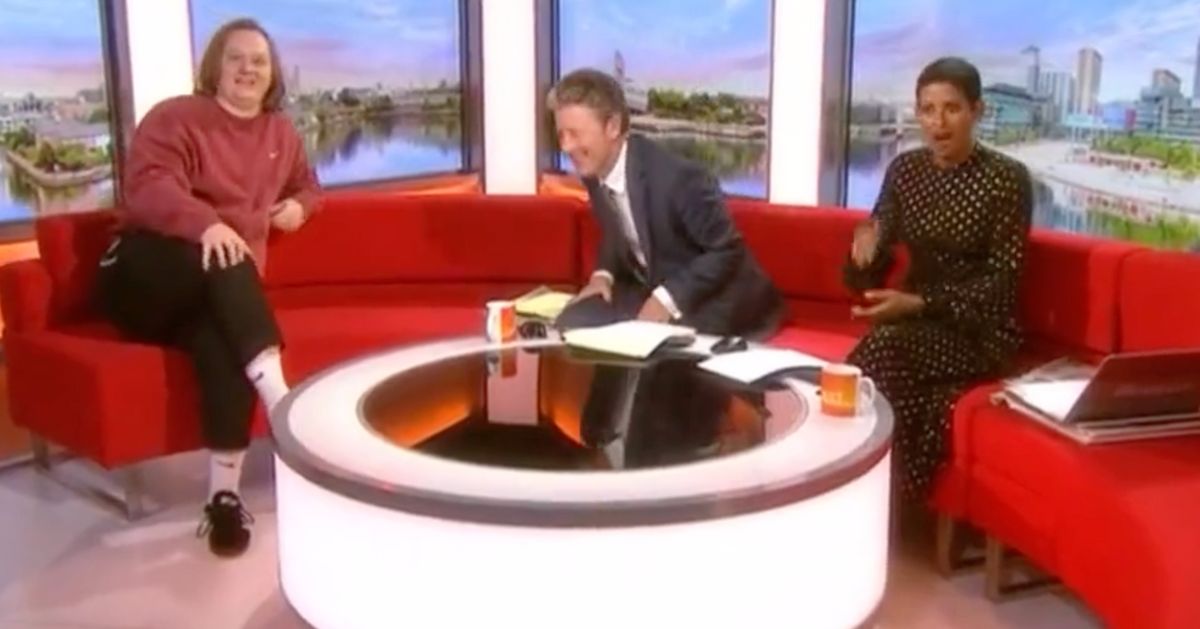
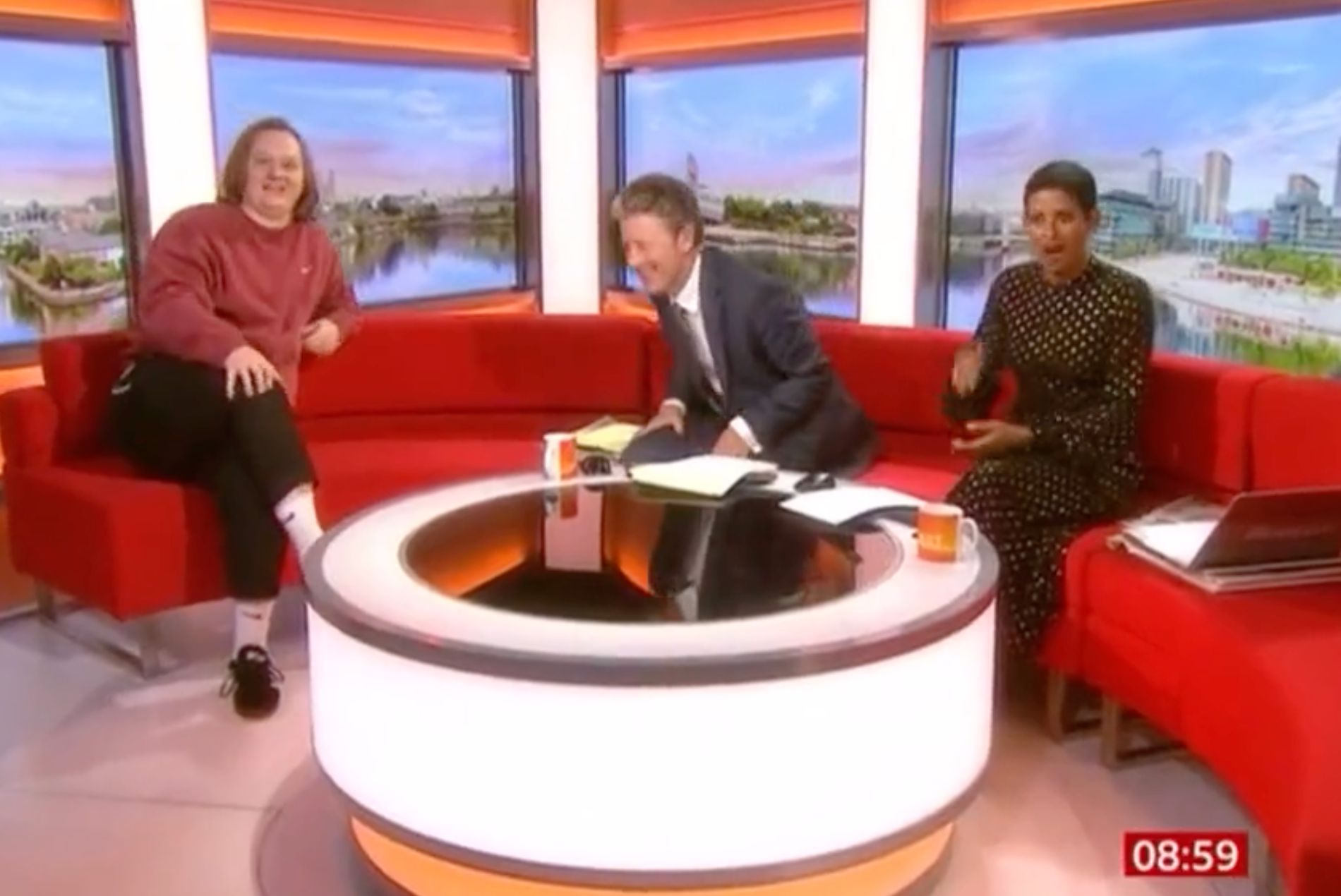
There’s always some laughs guaranteed when Lewis Capaldi pops up on TV and his appearance on BBC Breakfast on Saturday proved to be no different, after what he called “a classic breakdown of communication”.
The Someone You Loved singer left hosts Naga Munchetty and Charlie Stayt speechless after mishearing a comment Naga made at the end of his interview on the show.
The X-rated moment came after Lewis had complimented Charlie on his “great hair”.
“Well you’ve got great hair too,” Charlie replied, before Lewis leaned in for a high-five.
Watching their blossoming bromance, Naga joked: “Would you like a room?”
“I thought you said rim!” Lewis said.
As Naga was left open-mouthed, laughter could be heard from behind the cameras.
“Jeez!” Charlie remarked.
Keen to quickly move things along, a smirking Naga joked she was going to “have a little word with Lewis” as she segued to a news bulletin.
Lewis had been on the show to promote his latest single Forget Me, which hit number one in the Official Chart last week.
BBC Breakfast airs daily from 6am on BBC One and BBC News.
The presenter and actor has extended his contract with CBS to present the show for one more year before finishing in the summer of 2023.
Appearing on BBC Radio 4’s This Cultural Life, James was asked whether he worried his persona as a chat show host stops people seeing him as the kind of performer he would like to be.
He said: “Honestly, I don’t know. I guess we’re about to find out.
“Look, I’m aware that this isn’t a road often travelled. I’m aware that there’s not a plethora of people who have walked away from these late night talk shows, ever. I get why they wouldn’t walk away. It’s amazing.
“And for me really the reason to leave is the same as the reason to do it, which is, I wonder if this is possible.
Advertisement
“And if this is it then, do you know what, it’s been quite a ride anyway. I get that it will be difficult.”
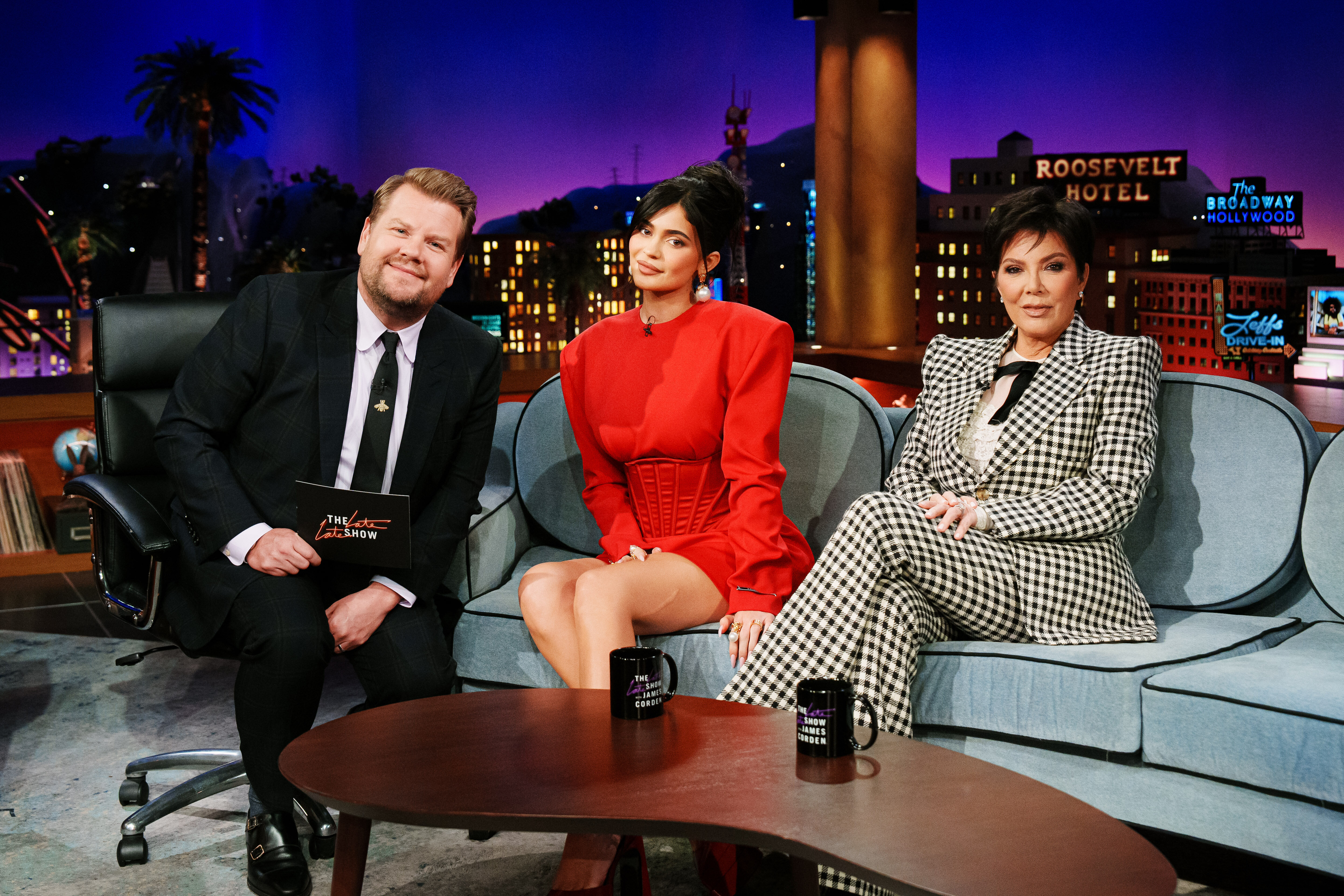
James with guests Kylie and Kris Jenner
CBS Photo Archive via Getty Images
Asked whether he felt it was a risk leaving the show, James replied: “No. I think it’s a greater risk to stay.
“There’s an amazing clip, in which David Bowie talks about never playing to the gallery.
“On the day of the announcement that I was going to walk away, it was still made very clear to me that there was a job here for the next five years and I’m not gonna lie, financially it’s good.”
James said he had watched the clip of Bowie repeatedly as a way of reassuring himself.
Asked whether he felt scared or anxious about the move, he added: “Of course, who wouldn’t.
“Like you say, you’re hoping that maybe there’s one more thing I’ve got to do. Maybe there’s one more adventure. You’ve got to jump, and it might take a minute.
Advertisement
“I’m pretty all right with the idea that I might have to get comfortable in some silence for a minute.
“By the time I finish, I’ll have done 1,235 shows. That is a lot of television.”
as a British host of a US late night show, James has enjoyed immense success with the programme which features scores of celebrity guests and special segments.
His popular Carpool Karaoke series, in which he drives to work with different musicians, singing their back catalogue over the radio and discussing their careers, has included Adele, Justin Bieber, Billie Eilish, Lady Gaga and Ariana Grande.
He previously promised viewers that his final 12 months would be full of fan favourites and “other surprises” which would be “a blast”.
James took over as presenter of The Late Late Show in 2015 from Scottish-born comedian Craig Ferguson, who spent 10 years as host.
Advertisement
This Cultural Life airs at 7.15pm on Saturday on BBC Radio 4 and on BBC Sounds.
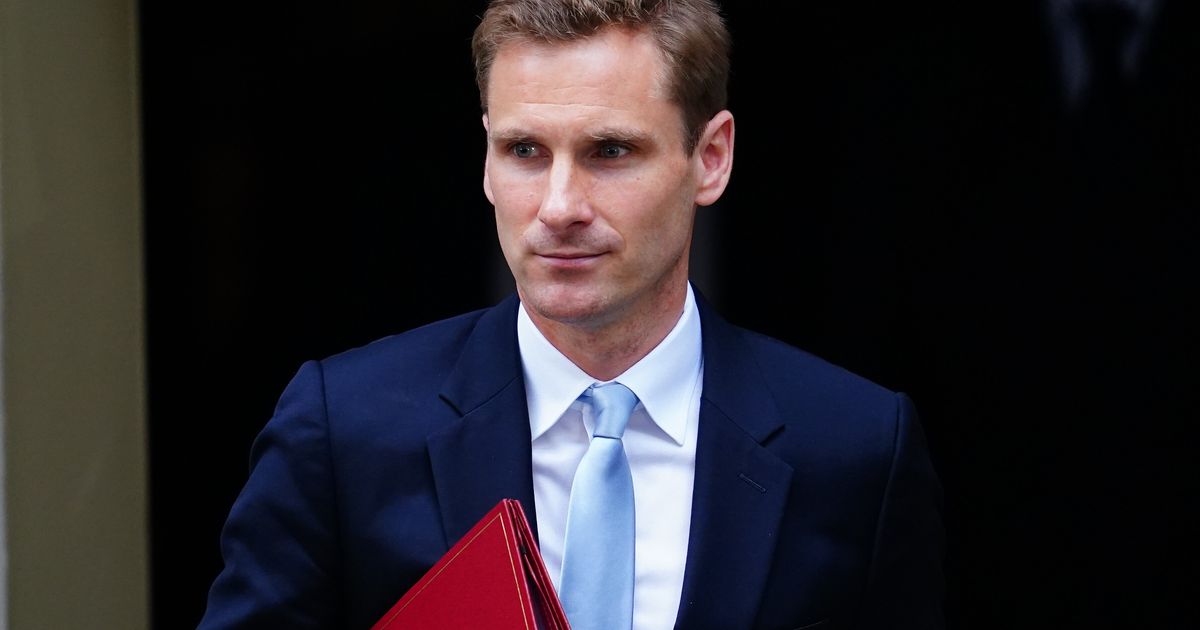
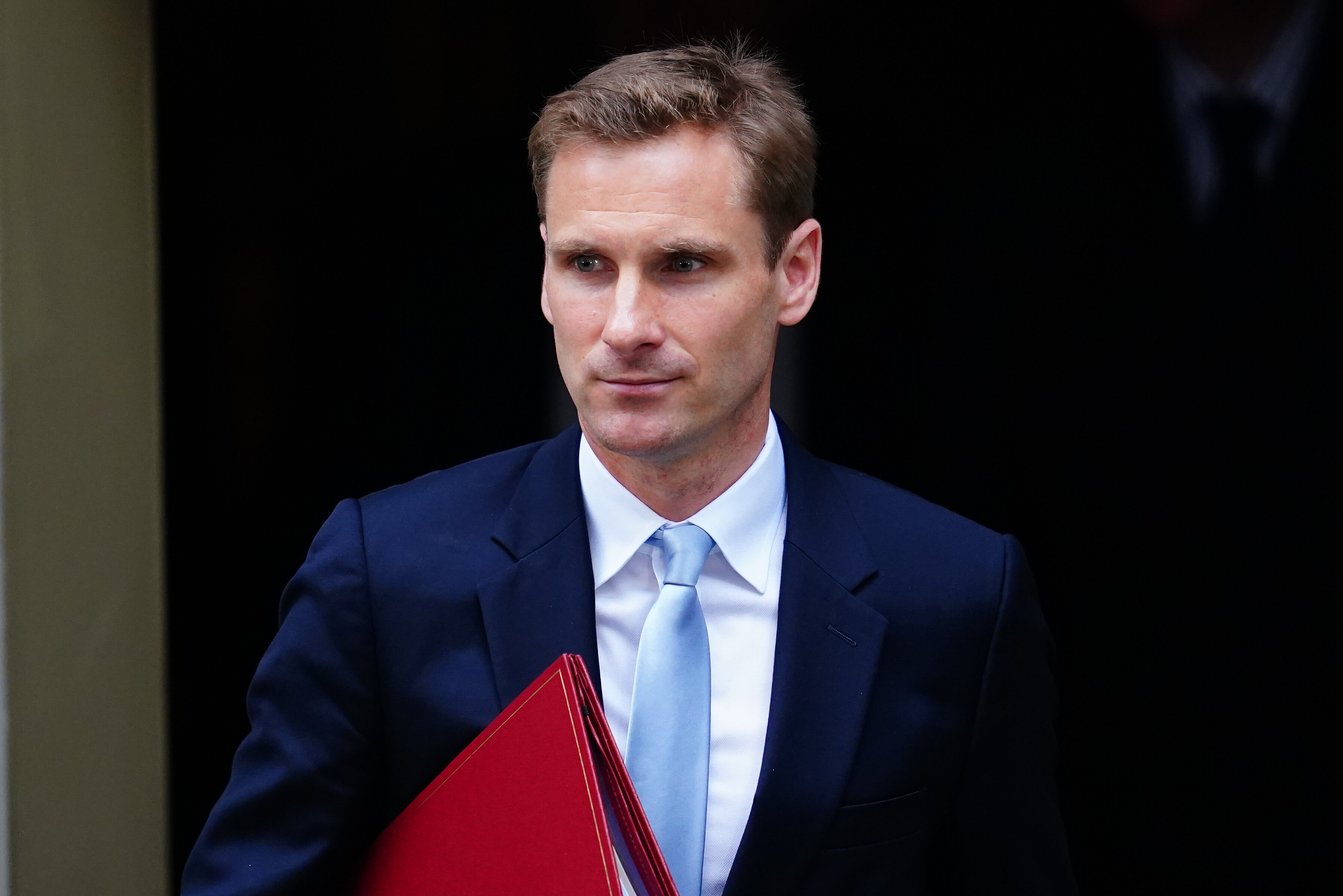
The chief secretary to the Treasury has faced online ridicule after celebrating the rise in the pound – just before it repeatedly dropped to a 37-year low.
He tweeted: “Great to see sterling strengthening on the back of the new UK Growth Plan.”
But once the markets digested what amounted to tax cuts costing up to £45 billion annually, the currency went in reverse.
At its lowest point on Friday afternoon £1 could buy just 1.0896 US dollars – the worst exchange rate for Britons since 1985.
It was a drop of over 3%, and means the pound has lost more than 7% of its value against the dollar in just a month.
Advertisement
Twitter was in unforgiving mood.
Advertisement
Advertisement
Appearing on the BBC later, Philp said the markets will see that the government has a “credible and responsible” economic plan
He told BBC Radio 4’s PM programme: “I think when the chancellor sets out his medium-term fiscal plan, which includes getting debt to GDP falling, then I think markets and others will see that we have a credible and responsible plan.”.
He also insisted the government has a “plan” to drive up GDP by 1% on current forecasts every year.
“I have every confidence that the objective we set out, the extra 1%, will be delivered. We’re not hoping, we’ve got a plan to do it.”
Philp rejected the idea that the government has abandoned the cautious approach to the public finances taken by previous Tory administrations.
Using more than £70 billion of increased borrowing, Kwarteng on Friday set out a package which included abolishing the top rate of income tax for the highest earners.
Advertisement
He cut stamp duty for homebuyers, and brought forward a cut to the basic rate of income tax, to 19p in the pound, a year early, to April, as part of tax cuts costing up to £45 billion annually.
Kwarteng told the Commons tax cuts are “central to solving the riddle of growth” as he confirmed plans to axe the cap on bankers’ bonuses while adding restrictions to the welfare system.
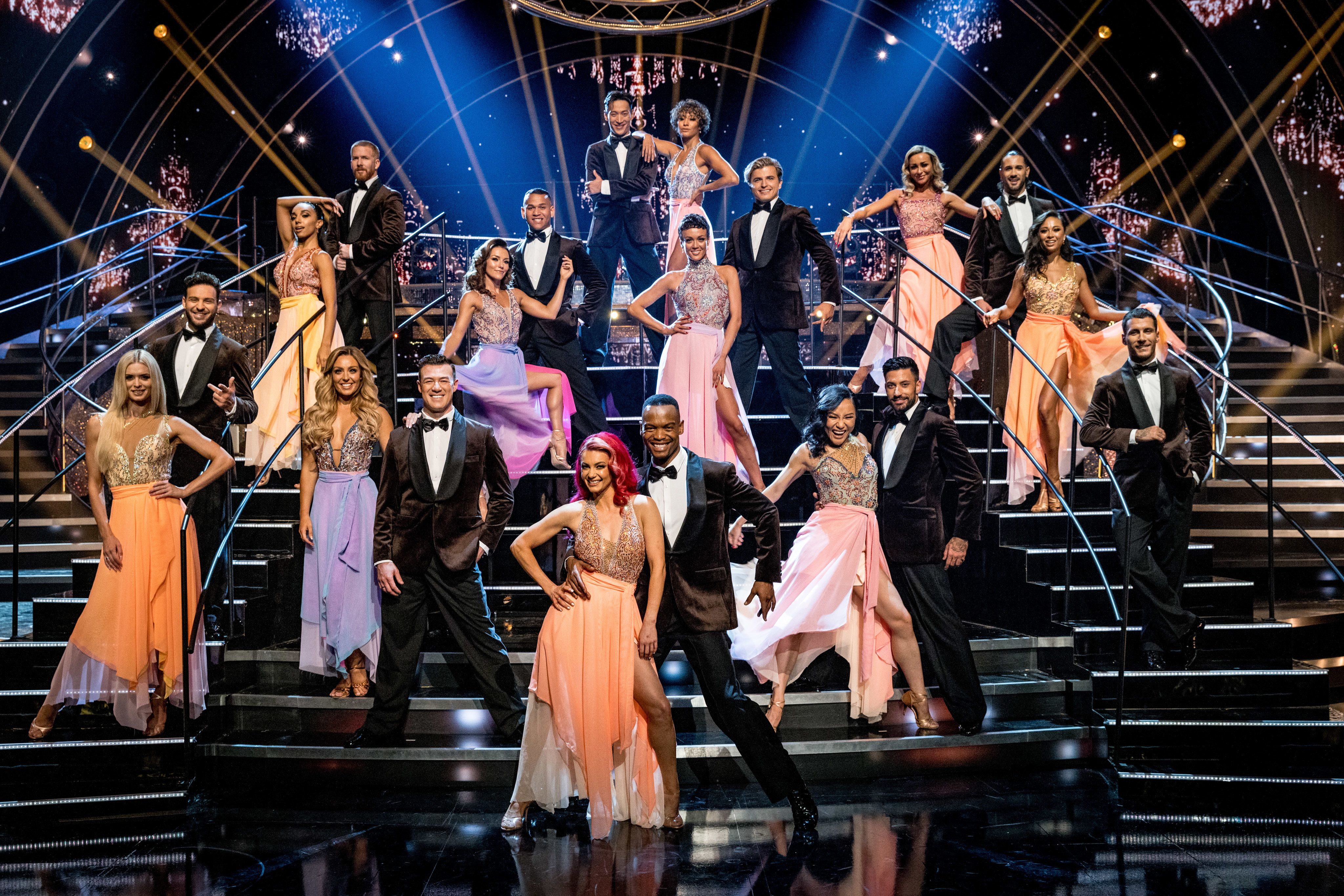
The professional dancers who each of this year’s Strictly Come Dancing celebrities will be dancing with have been revealed.
On Friday night, the BBC aired the long-awaited Strictly 2022 launch show, during which viewers discovered the partnerships for the new series.
Advertisement
As part of the episode, it was announced that reigning champion Giovanni Pernice will be dancing with Radio 2 presenter Richie Anderson, while runner-up Johannes Radebe will dance with comedian Ellie Taylor.
It has also been revealed that, for the first time ever, there will be two same-sex pairings in the same season of Strictly, with stand-up comic Jayde Adams dancing with Karen Hauer.
The professional dancers of Strictly Come Dancing
BBC/Guy Levy
Meanwhile, newcomers Vito Coppola and Carlos Gu will be dancing with pop singer Fleur East and CBBC star Molly Rainford, respectively, while Jowita Pryzstal has landed her first celebrity partner in wildlife presenter Hamza Yassin.
Advertisement
Check out the full list of pairings below:
Ellie Simmonds and Nikita Kuzmin
Ellie Taylor and Johannes Radebe
Fleur East and Vito Coppola
Hamza Yassin and Jowita Przystal
Helen Skelton and Gorka Marquez
James Bye and Amy Dowden
Jayde Adams and Karen Hauer
Kaye Adams and Kai Widdrington
Kym Marsh and Graziano Di Prima
Matt Goss and Nadiya Bychkova
Molly Rainford and Carlos Gu
Richie Anderson and Giovanni Pernice
Tony Adams and Katya Jones
Tyler West and Dianne Buswell
Will Mellor and Nancy Xu
This year’s Strictly launch show was pre-recorded before the death of Queen Elizabeth II, and was originally supposed to air the weekend prior to her funeral.
Protesters in Moscow have chanted “send Putin to the trenches” amid widespread disapproval of Russia’s biggest conscription drive since World War Two.
Within hours of president Vladimir Putin ordering a partial mobilisation of reservists on Wednesday, rare protests were reported across the country that led to almost 1,200 arrests.
Advertisement
Shortly after Putin’s address, Russian media reported a spike in demand for plane tickets abroad as some draft-age men headed for the border.
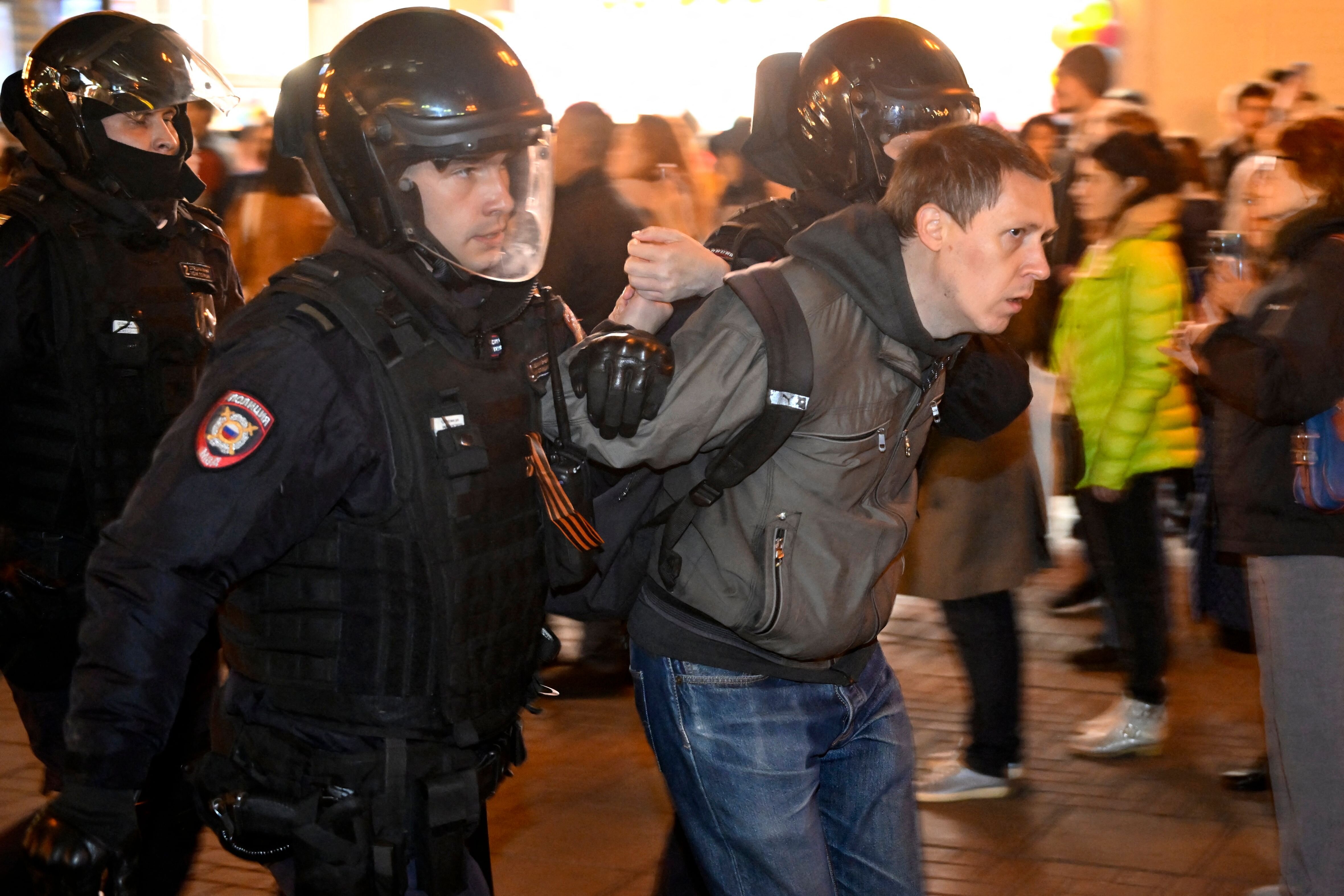
In the capital Moscow, hundreds of people gathered on the central Stary Arbat street amid heavy police presence. Protesters could be seen chanting “No war”, “Send Putin to the trenches” and “Let our children live” in videos published to social media.
Advertisement
Putin’s risky order follows humiliating setbacks for his troops nearly seven months after they invaded Ukraine.
The first such call-up in decades heightened tensions with Ukraine’s Western backers, who derided it as an act of weakness and desperation.
Liz Truss accused Putin of “sabre rattling” as the UK prime minister addressed the United Nations General Assembly, aded that the Russian president is desperately trying to justify a “catastrophic failure” in Ukraine.
The total number of reservists to be called up could be as high as 300,000, officials said.
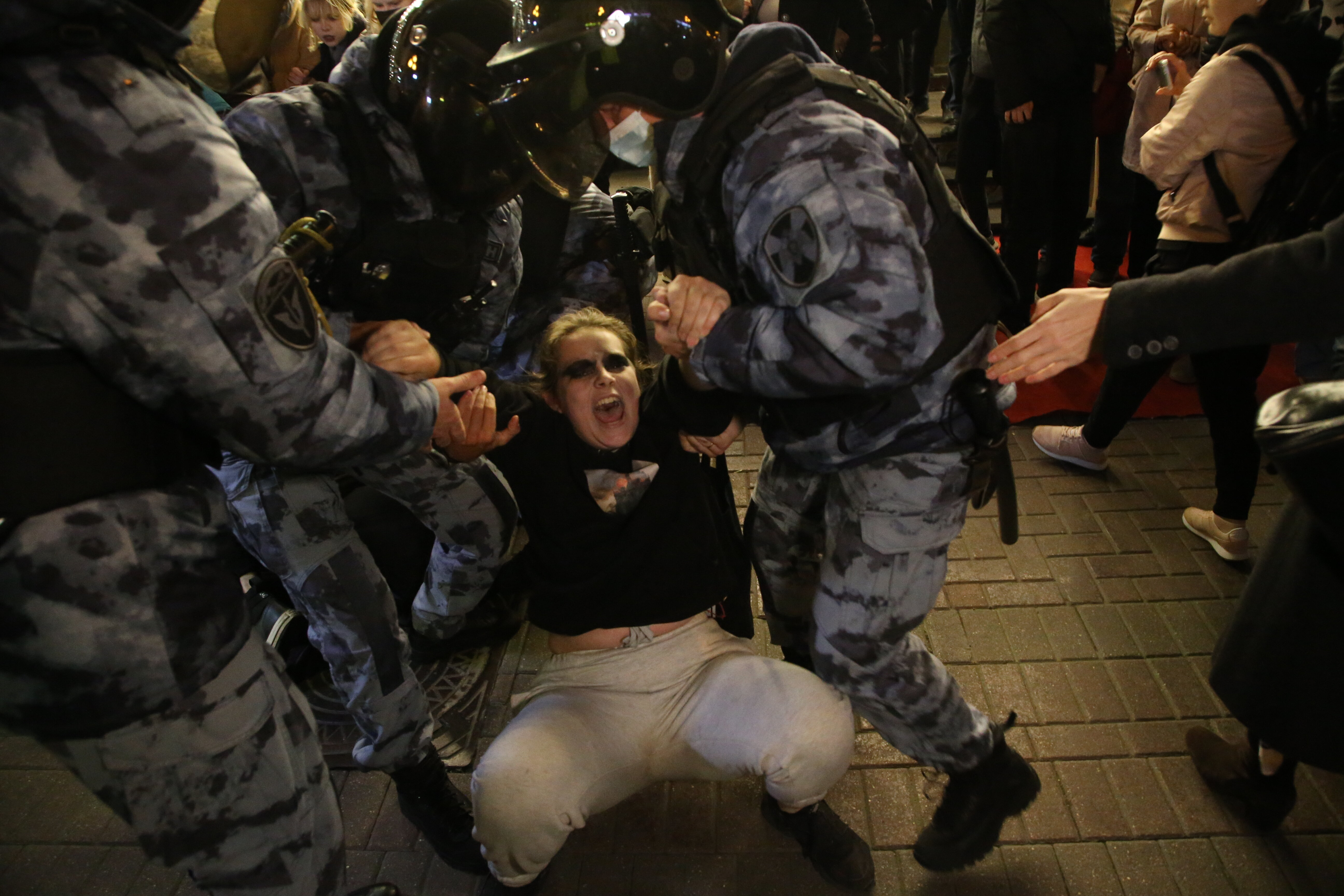
Despite Russia’s harsh laws against criticising the military and the war, protesters outraged by the mobilisation overcame their fear of arrest to stage protests in cities across the country.
Nearly 1,200 Russians were arrested in anti-war demonstrations in cities including Moscow and St Petersburg, according to the independent Russian human rights group OVD-Info.
Advertisement
As protest calls circulated online, the Moscow prosecutor’s office warned that organising or participating in such actions could lead to up to 15 years in prison.
How many people mouthing off on Twitter would be brave enough to shout “NO WAR!” as they’re being carted off by four Russian policemen? Not many would be my guess. https://t.co/8bSpHWQRbz
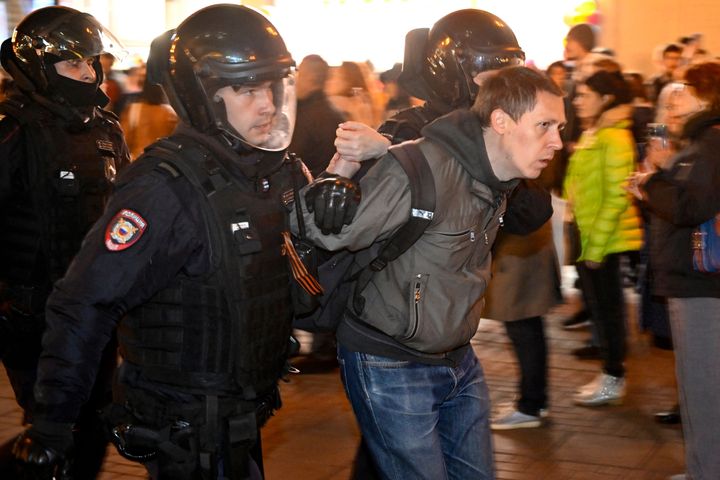
Police officers detain a man in Moscow on September 21, 2022, following calls to protest against partial mobilisation announced by President Vladimir Putin. – President Vladimir Putin called up Russian military reservists on September 21, saying his promise to use all military means in Ukraine was “no bluff,” and hinting that Moscow was prepared to use nuclear weapons. His mobilisation call comes as Moscow-held regions of Ukraine prepare to hold annexation referendums this week, dramatically upping the stakes in the seven-month conflict by allowing Moscow to accuse Ukraine of attacking Russian territory. (Photo by Alexander NEMENOV / AFP) (Photo by ALEXANDER NEMENOV/AFP via Getty Images)
ALEXANDER NEMENOV via Getty Images
Protests against mobilisation are taking place in several Russian cities today, mostly small-scale actions leading to a smattering of arrests. The woman’s sign reads “No to Mobilisation” pic.twitter.com/EbytXN2OQF
<img class="img-sized__img landscape" loading="lazy" alt="Russian police officers detain a protester during a protest rally at Arbat street in Moscow, Russia.” width=”720″ height=”480″ src=”https://www.wellnessmaster.com/wp-content/uploads/2022/09/send-putin-to-the-trenches-russias-military-call-up-sparks-protests-4.jpg”>
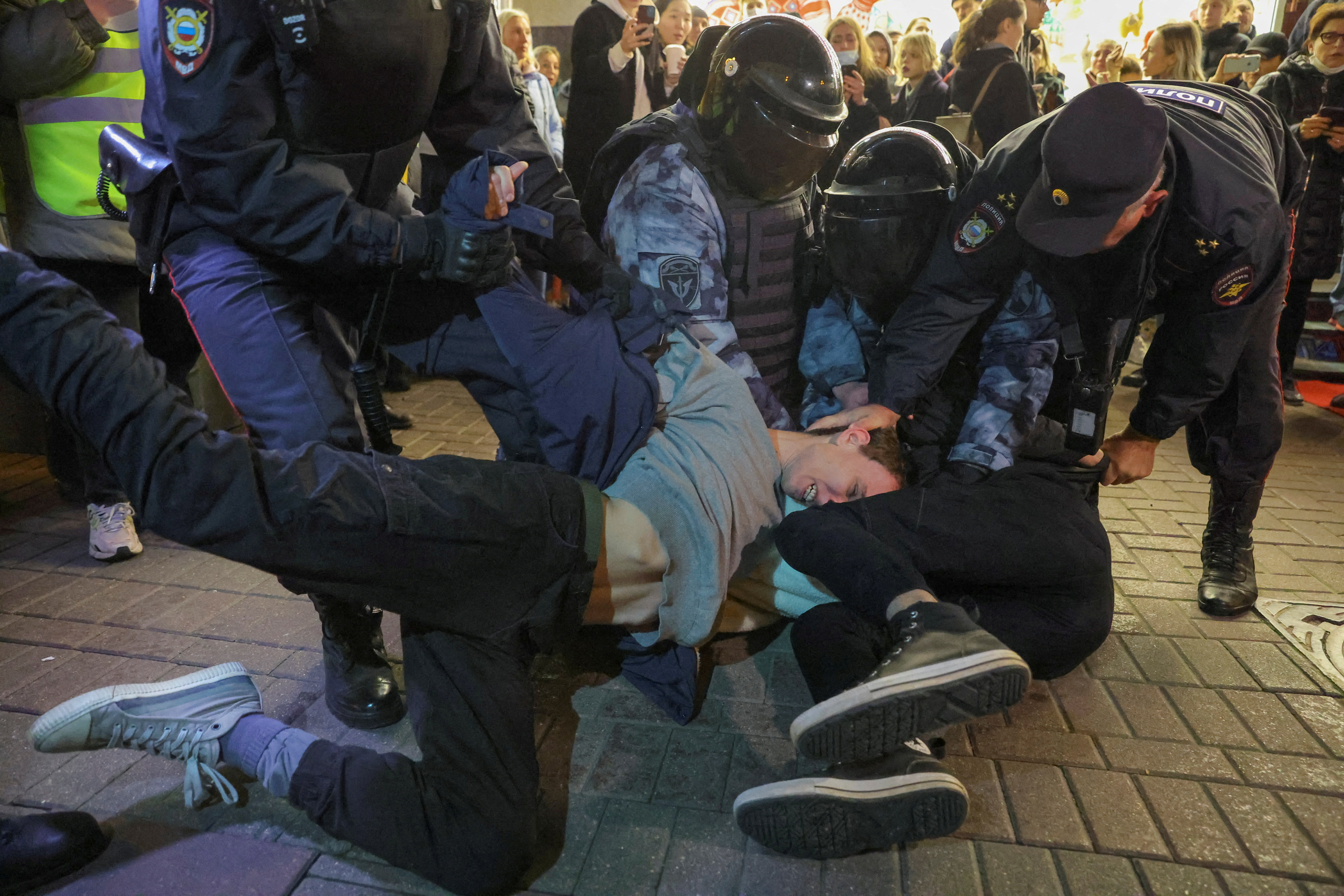
Russian police officers detain a protester during a protest rally at Arbat street in Moscow, Russia.
Contributor via Getty Images
Advertisement
The Associated Press news agency witnessed at least a dozen arrests in the first 15 minutes of a nighttime protest in the capital.
“I’m not afraid of anything. The most valuable thing that they can take from us is the life of our children. I won’t give them life of my child,” said one Muscovite, who declined to give her name.
Asked whether protesting would help, she said: “It won’t help, but it’s my civic duty to express my stance. No to war!”
In Yekaterinburg, Russia’s fourth-largest city, police hauled onto buses some of the 40 protesters who were detained at an anti-war rally. One woman in a wheelchair shouted, referring to the Russian president: “Goddamn bald-headed ‘nut job’. He’s going to drop a bomb on us, and we’re all still protecting him. I’ve said enough.”
A cabinet minister and close Liz Truss ally has argued that the Conservatives have not had a “clear run” in power over the last decade.
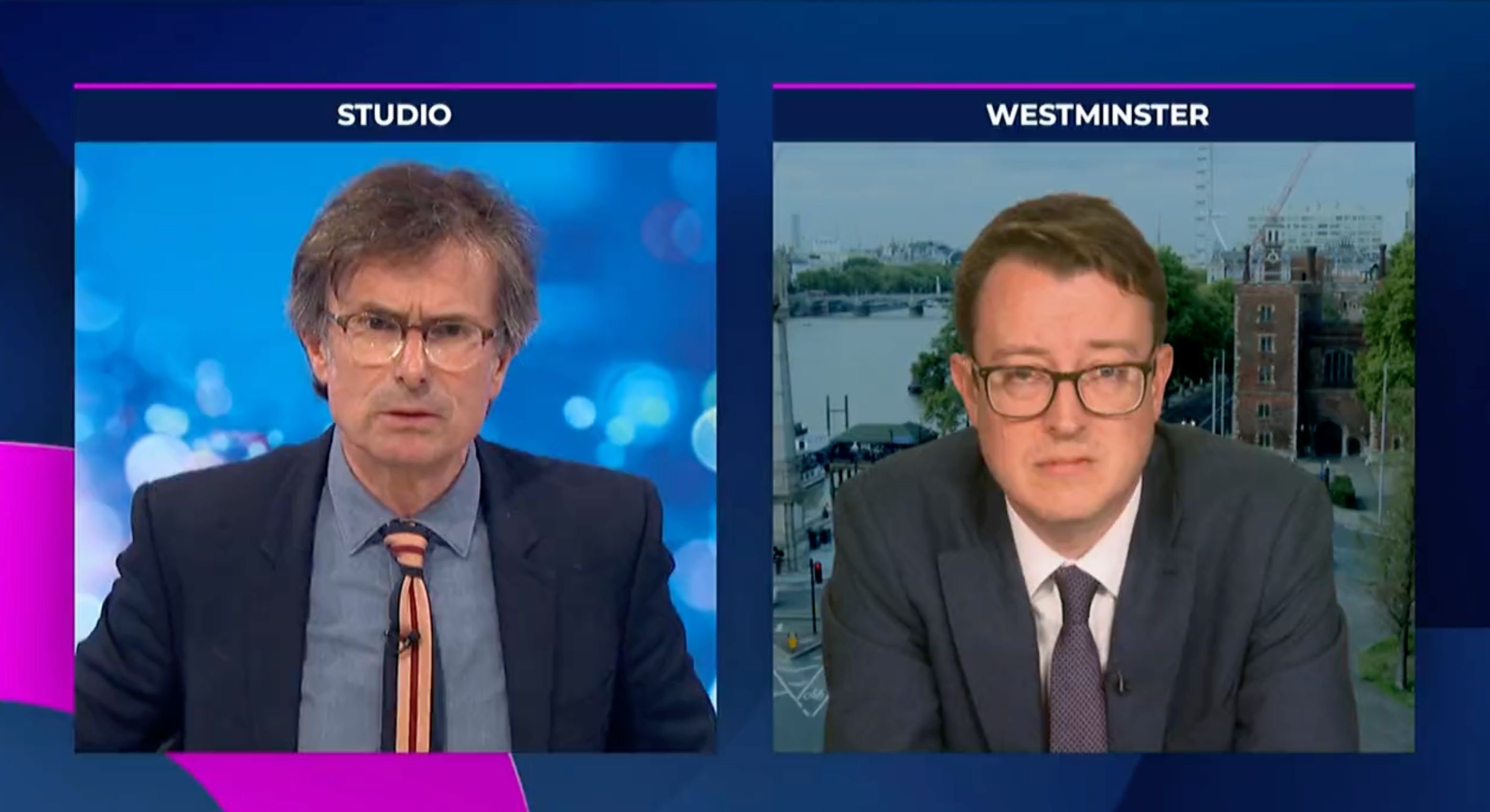
Appearing on ITV’s Peston programme, levelling up secretary Simon Clarke, a former top Treasury minister, said that no Conservative government “has had a clear run at events over the entire course of the last decade, it has been one crisis after another”.
Advertisement
Critics pointed to the fall-out from the Brexit referendum – which saw off two Tory prime ministers – as at least one self-inflicted crisis, and how tackling big events is the nature of governance.
Other disruption since the Tories came to power in 2010 includes the Cameron-Osborne austerity programme, the Covid-19 pandemic and Russia’s invasion of Ukraine.
His comment appeared to be a justification for moving to an “unashamedly pro-growth policy” under the Truss premiership.
Advertisement
Clarke added: “What Liz is saying is that we need to accept that we may not get back to normal, that if you like, that the world is in an extraordinary state of affairs at the moment and that being so, that we just need to press on and govern, frankly, as we want to be remembered – as a government that makes things better for people.
“And clearly as secretary of state for levelling up, my focus is on life chances, and on spreading opportunity. I’m delighted that we’re moving to an unashamedly pro-growth policy.”
Clarke also admitted the government’s economic policy is not “risk-free” as he said that the Tories wanted to go back to the growth rates seen before the financial crash in 2008, when Labour was in power.
At the the mini-budget on Friday, chancellor Kwasi Kwarteng is expected to put into practice many of the tax-cutting promises made by Truss during the Tory leadership campaign.
As well as reversing the hike in national insurance contributions and scrapping a planned increase in corporation tax, which Truss has promised, it has been reported he will cut stamp duty in a further attempt to drive growth.
Advertisement
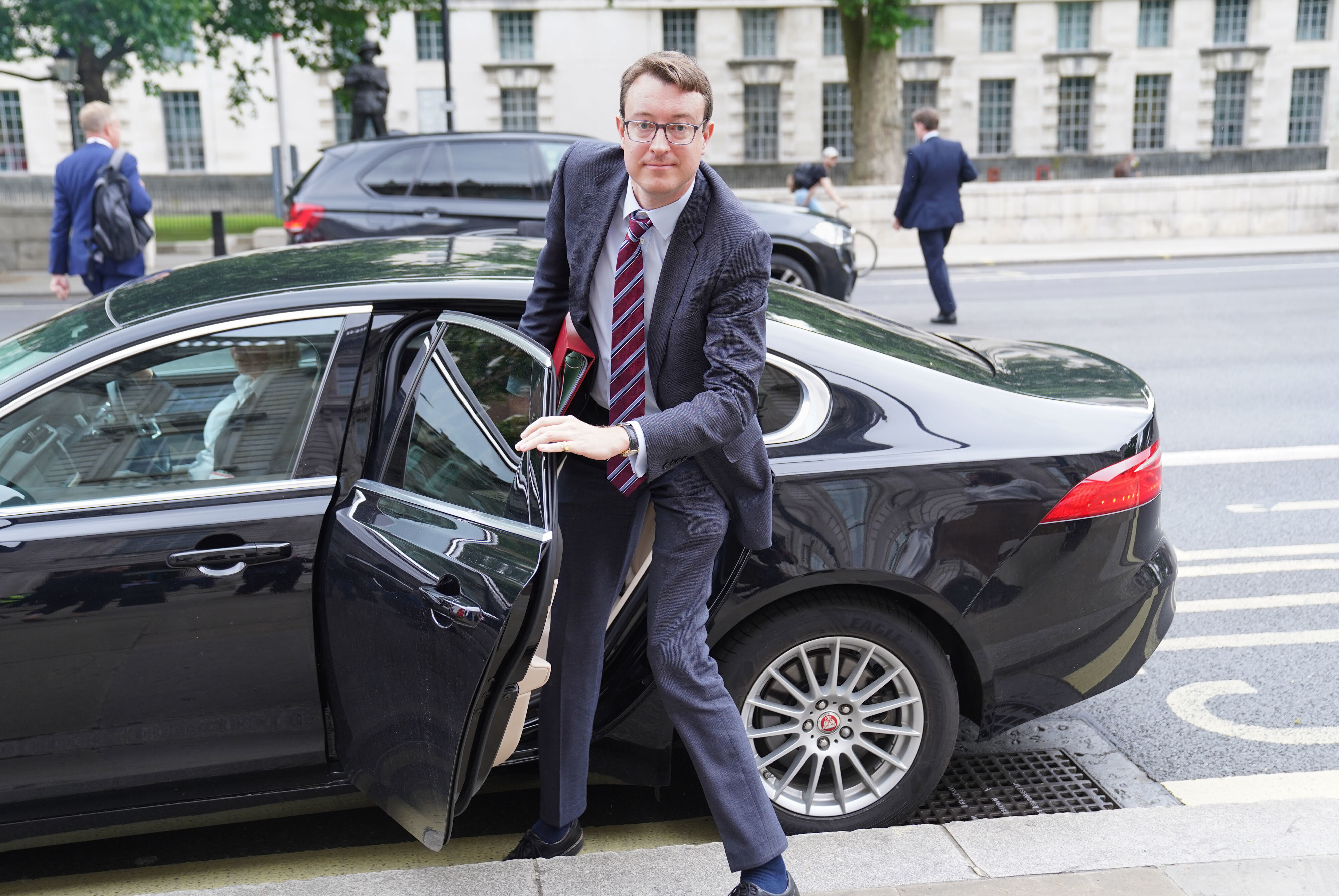
Levelling up secretary Simon Clarke: “No Conservative government has had a clear run at events over the entire course of the last decade, it has been one crisis after another.”
It’s fascinating how the default setting of UK politics (including from Simon Clarke, a Leaver!) is to talk about 2016 as a point of crisis. https://t.co/3ve7yQAm80
Complete opposite was true before Covid (in 2020). They wanted Brexit debate and, meanwhile, we had access to some of the cheapest credit in history…and we built virtually nothing.
The 2010s will be remembered for appallingly poor governance – likely without precedent. https://t.co/0aEBBrwRNi
On plans to lift the cap on bankers’ bonuses while millions feel the squeeze of the cost-of-living crisis, Clarke also said this would help level up “because there would be more revenue for the exchequer”.
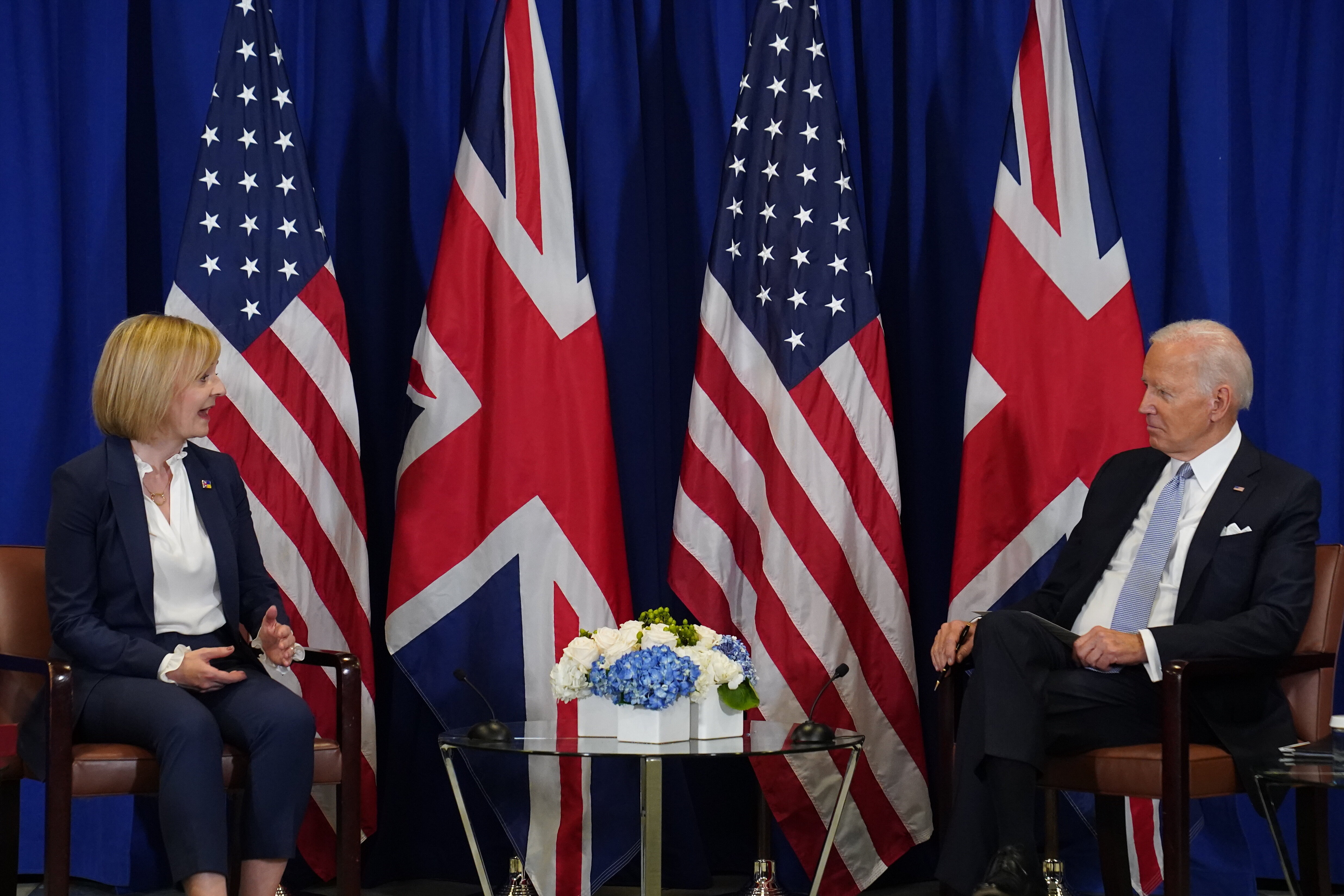
US president Joe Biden has told Liz Truss the UK is “our closest ally in the world”, despite sharp disagreements between the leaders of the two countries.
Ahead of a one-to-one meeting at the United Nations General Assembly in New York, Biden and the new UK prime ministers spoke to reporters before sitting down to talks centring on the Russian invasion of Ukraine and the energy crisis it has provoked.
Advertisement
Though Biden’s words were reassuring, the president told Truss he is “looking forward to hearing what’s on your mind” about the row over the Northern Ireland Protocol, which prevents a hard border on the island of Ireland, underlining tensions over post-Brexit arrangements.
The prime minister sought to reassure the US president by telling him how she would be explaining how the Good Friday Agreement that brought peace to the island would be upheld.
Biden and Truss were meeting after the president sent a tweet just as the PM was discussing her economic policy, which said he was “sick and tired of trickle-down economics”.
“It has never worked,” he said.
The comments underlined the differences between the two leaders’ stances after Truss made clear her economic agenda had the trickle-down theory – tax cuts for the wealthy and corporations will benefit everyone – at its heart.
Advertisement
The prime minister’s official spokesman said it was “ludicrous” to suggest Biden was criticising UK policy, arguing each country is facing different economic challenges.
The prime minister is pushing ahead with the controversial Northern Ireland Protocol Bill which the EU and other critics say will breach international law by suspending elements of the agreement.
There have also been suggestions she could unilaterally trigger Article 16 of the protocol, to override parts of the agreement brokered as part of the Brexit divorce deal.
In opening marks at the top of their meeting, the US president told Truss: “We are both committed to protecting the Good Friday Agreement of Northern Ireland.
“And I’m looking forward to hearing what’s on your mind.”
He congratulated her on becoming prime minister, adding: “I look forward to working closely with you. You’re our closest ally in the world and there’s a lot we can continue to do together.”
Advertisement
Truss told the president the UK and the US are “steadfast allies” as she thanked him for his support following the death of the Queen.
“Of course I’m looking forward to discussing the Belfast Good Friday Agreement and how we make sure that’s upheld into the future,” she added.
Biden said their “full agenda” for the meeting includes Ukraine’s defence against Vladimir Putin’s invasion, China and preventing Iran from obtaining nuclear weapons.
“We also want to talk about energy, which understandably is of significant consequence to all of Europe and the United Kingdom in particular,” he added.
US national security adviser Jake Sullivan made it clear Biden would discuss the protocol “in some detail” with Truss.
Advertisement
Sullivan told reporters the president “will encourage the UK and the European Union to work out an effective outcome that ensures there is no threat to the fundamental principles of the Good Friday Agreement”.
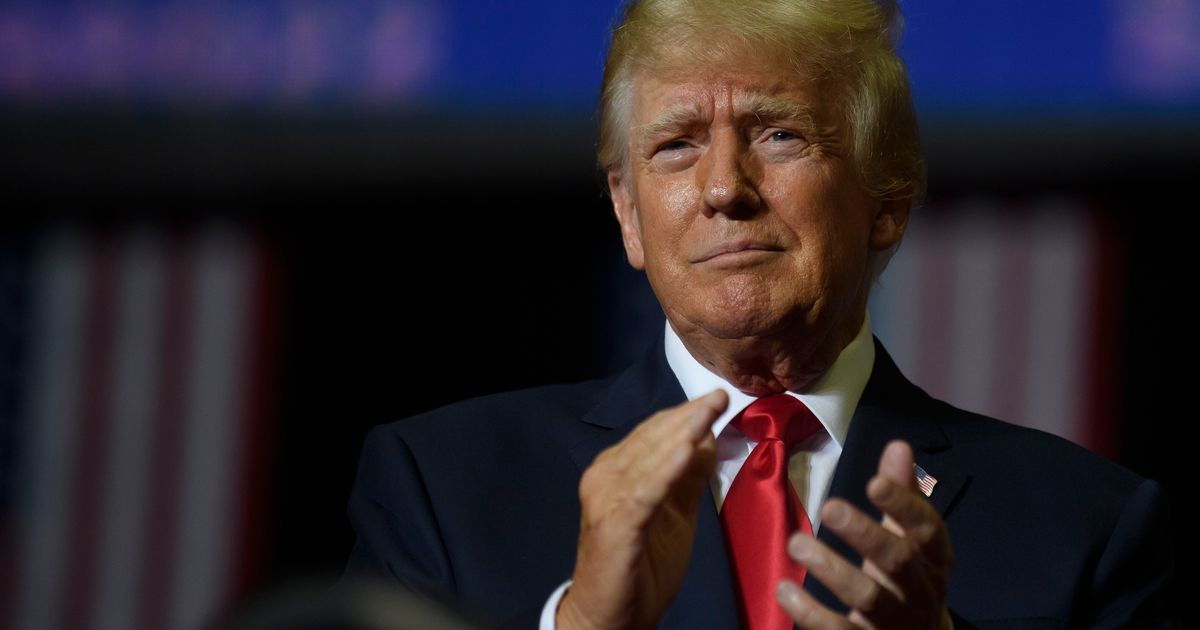
New York attorney general Letitia James announced Wednesday that she has filed a civil lawsuit against former president Donald Trump and his three eldest children over his long-running alleged tax-dodging scheme.
James hopes to convince a court to take steps to bar Trump, Donald Trump Jr, Ivanka Trump and Eric Trump from conducting business in the state of New York, along with making them pay a financial penalty and limiting access to loans.
Advertisement
“Donald Trump falsely inflated his net worth by billions of dollars to unjustly enrich himself and to cheat the system, thereby cheating all of us,” James said at a press conference outlining Trump’s alleged misconduct.
Prosecutors in New York have been looking into Trump’s real estate business practices for several years following reports that he routinely undervalued and overvalued assets to avoid paying his fair share of taxes. James said that “a comprehensive three-year investigation” involved millions of documents and interviews with 65 witnesses.
Her office is also making criminal referrals to federal prosecutors and the IRS, believing the Trumps to have violated federal law.
By shifting the valuation of his assets, Trump was allegedly able to convince banks to lend money to the Trump Organization on more favourable terms, to secure more favorable insurance arrangements and to pay lower taxes.
Advertisement
“White collar financial crime is not a victimless crime. When the well-connected break the law to take in more money than they are entitled to, it reduces resources to working people, to regular people, to small businesses and to all taxpayers,” she said.
James gave several examples: One asset in New York had been listed as being worth over 60 times what an appraiser had valued it. Mar-a-Lago, Trump’s South Florida golf resort, was estimated to be worth $75 million, but James said it had been “valued as high as $739 million” on documents her office reviewed.
“All told, we uncovered more than 200 examples of false and misleading asset valuations that were used on his statements,” James said, calling the pattern an “astounding” one.
She added: “It was a scheme that by its very nature became more profitable over time.”
The hefty lawsuit is around 280 pages long and contains details on 23 assets that were misvalued at various times.
Trump and his eldest children had all been deposed as part of James’ investigation, although Trump invoked his Fifth Amendment right to avoid self-incrimination more than 400 times.
It was a solemn day for the nation. But on social media, people were taking a more sideways look at the Queen’s state funeral.
Here’s just some of the quirkier, unintended highlights of the day seen through Twitter’s prism.
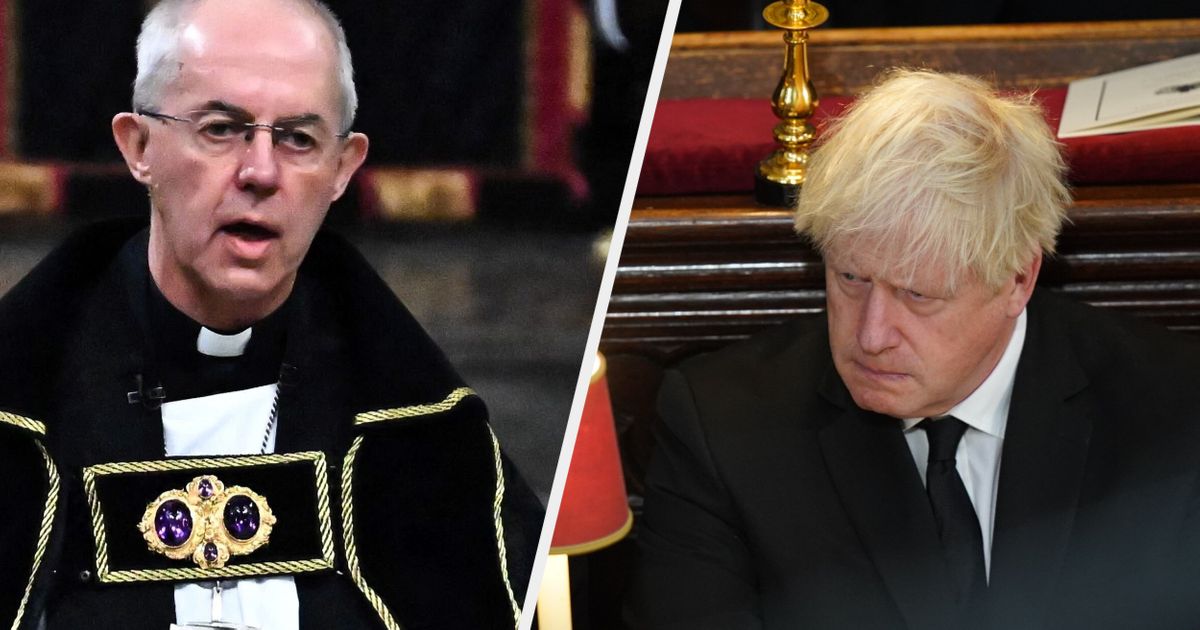
Archbishop of Canterbury v Boris Johnson?
During his sermon at the funeral, the Archbishop of Canterbury told the congregation the outpouring of emotion for the Queen “arises from her abundant life and loving service, now gone from us”.
Advertisement
Justin Welby told mourners: “People of loving service are rare in any walk of life. Leaders of loving service are still rarer.
“But in all cases those who serve will be loved and remembered when those who cling to power and privileges are forgotten.”
Many thought he was pointedly referring to the recently departed prime minister.
Advertisement
“Those who cling to privilege.” Was Archbishop Welby trolling Boris Johnson there? If so, respect.
An “impossibly tall” mourner walking in the Queen’s procession caught many people’s attention.
Towering above soldiers and sailors, Matthew Magee, who stands at 7 feet 2 inches tall, was appointed by the Queen as her assistant private secretary in 2018.
Oh, it’s not just me who’s been transfixed by the impossibly tall fella in front of the hearse. #tallguy
Several people on social media noted the appearance of a spider on the Queen’s coffin as the ceremony took place.
The creature was seen crawling across a piece of card placed on the coffin alongside the crown and a floral display.
Imagine you’re a spider in the garden and you fall asleep in a pink rose. When you wake up, you stretch all your little legs and realise that you’re suddenly naked in Westminster Abbey, on top of the Queen’s coffin in front of world leaders and billions of people🕷️#queensfuneralpic.twitter.com/ARNc9s4y8O
Reports noted one represented his award of a Member of the Order of the British Empire (MBE) in 2007 for his contribution to rugby, and another was the Queen Elizabeth II Diamond Jubilee Medal.
The silver medal, which bears the Queen’s face, was gifted to Tindall as a member of the royal family, and the last is the Queen Elizabeth II Platinum Jubilee Medal.
Advertisement
Where’s Prince Louis?
The future King, Prince George, and his sister, Princess Charlotte, remained impeccably behaved through a long and solemn day as they bid farewell to their beloved “Gan Gan”.
But the prince and princess’ four-year-old brother, Prince Louis, was not present, and many on Twitter began to speculate.
Advertisement
I like how Louis is considered too much of a loose cannon to have at the funeral. Not even 5 and already the Princess Margaret of his generation pic.twitter.com/jJEbtbchkE
So, as the country comes out of this period of national mourning, here’s a list of essential news stories you might have missed altogether over the last 11 days.
1. Community tensions soar in Leicester
Leicester is famous for its multicultural population, but a spate of clashes in recent weeks has shaken the city to its core.
Violence first broke out after the India vs Pakistan cricket match a month ago, on Sunday, August 28, and more scuffles followed in the next few weeks.
Advertisement
But, locals claim that the tensions began rising long before the match, with members of both the local Hindu and Muslim communities allegedly squaring up against one another, although the exact cause is still unclear.
The tensions seemed to come to a head on the night of September 17, when around 200 people – mainly masked or hooded men – gathered for an unauthorised protests in the east of the city.
All local officers available were called to the scene, and a stand-off followed, with police having to separate rival groups as they threw bottles at one another.
Police officers were even diverted from the Queen’s funeral in London to provide back up to the force in Leicestershire. They made 47 arrests in total and 16 officers were injured in the violence on Saturday night alone.
Claudia Webb, independent MP for Leicester East, said tensions had been simmering for “months”, and has previously claimed that some social media accounts were “preying on this unease” by “spreading misinformation”.
Advertisement
In a Twitter post, she wrote: “There are reports of incitement to hate being targeted at those of Muslim and Hindu faith, which is being shared on social media to cause fear.
“Places like Facebook and via WhatsApp designed to ‘entrap’ members of the local community to attend a protest, sparked by hate.”
She claimed such posts were “designed to provoke additional clashes and to cause disharmony and distrust”.
This weekend we have seen unacceptable hate-driven violence.
Ours is a community of deep faith. Our unique cultural diversity is our strength.
Right-wing fascism and toxic extremism have no place in a civil society. Our communities in Leicester stand united against it.
Mayor of Leicester Sir Peter Soulsby has said these recent events have left him “baffled”, while Labour MP for Leicester South, Jonathan Ashworth, said the troubles were a “dark episode” where he and residents “rightly pride ourselves on celebrating our diversity”.
Advertisement
Extremists, territorial rivalries and the influence of people from outside the city have all been blamed for supposedly inciting violence.
Webb also warned on Tuesday that the violence could spread beyond Leicester without central government intervention.
The Hindu and Muslim communities in Leicester released a joint statement two days after the violence at the weekend, saying: “We are from one family. We settled here in this city together, we fought the racists together, we build it up together. The recent violence is not who we are as a city.”
The Indian government has also released a statement, strongly condemning the violence.
“We have strongly taken up this matter with the UK authorities and have sought immediate action against those involved in these attacks.”
Advertisement
2. Mahsa Amini’s death
Protests have broken out across Iran’s capital Tehran, following the death of Mahsa Amini, a 22-year-old woman, last Friday.
She had been in a coma for three days after “morality” police held her for supposedly breaking hijab rules. She was detained outside a Tehran metro station, as part of the police’s clampdown on clothing.
Witnesses said officers beat her inside a police van which later took her to a detention centre, although police brigadier-general Hossein Rahimi dismissed such claims as “cowardly accusations”.
Police also claimed that Amini had suffered from “sudden heart failure” while at the detention centre where she was to be “educated” with other women.
Mahsa Amini, 22 yr old Iranian woman has passed away after being severely beaten by Iran’s “morality” police for improper veiling. Meanwhile, Iran w/its notorious brand of gender apartheid was elected in 2021 by the UN to its Commission on Women’s Rights.#MahsaAmini#مهساامینیpic.twitter.com/nVqZC7xngW
The authorities later released footage showing a woman they claim is Amini talking to a female official, who had tried to reach for her clothing. Amini then holds her head with her hands and falls to the floor.
The police, who described her death as “unfortunate”, said that Amini had “previous physical problems”, but her father denied such a claim, and claimed the CCTV footage is edited.
In protest to Amini’s death and the strict regime of Iran, women have since been seen removing their headscarves and cutting their hair while shouting “death to the dictator”, in what is believed to be a reference to the country’s supreme leader, Ayatollah Ali Khamenei.
Demonstrations in Tehran and western Iran over the weekend reportedly led to the death of two people during a clash with riot police.
Protests in Saqez, a western part of Iran, led security forces to allegedly open fire on a crowd as they tried to move towards the local governor’s office.
Advertisement
Further demonstrators took place in Kurdistan’s capita, Sanandaj. Amini was an ethnic Kurd from Saqez.
Waving headscarves in #Iran’s protests is a brave act of defiance by women who are fed up of 44 yrs of suppression & abuse. Today, they are leading the protests. I’ve heard many mothers joined their daughters today to shout their anger and to say: enough is enough… #Mahsa_Aminipic.twitter.com/EddK4gnU0F
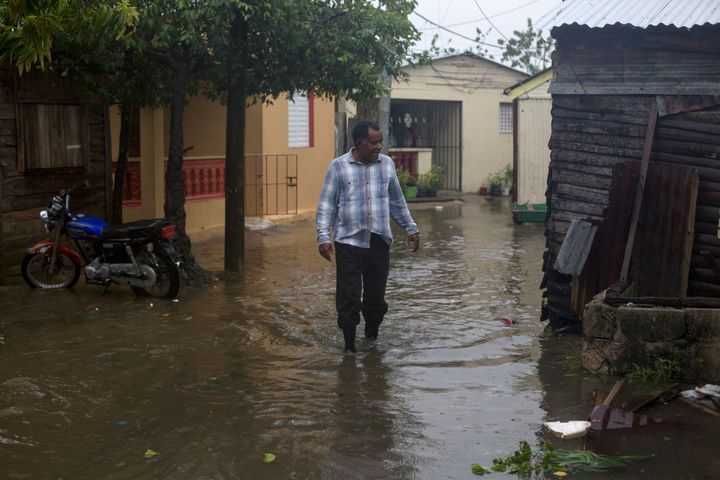
A devastating storm, Hurricane Fiona, has swept across parts of the Caribbean in recent weeks – and it doesn’t look like it’s going to slow down any time soon.
Residents on the Turks and Caicos Islands were urged to seek shelter on Tuesday, after Fiona had already wrecked havoc in Puerto Rico and the Dominican Republic. The hurricane is expected to reach the southern Bahamas too, and the eastern Bahamas by Wednesday.
In Puerto Rico, the storm killed at least three people and caused significant flooding with more than 75cm of rain falling.
Advertisement
It also caused a total blackout which isn’t expected to be fixed any time soon, especially as the territory is still struggling with its power grid after the brutal category 5 storm, Hurricane Maria, which knocked out 80% of power lines in 2017.
The weather in the US territory was still chaotic on Monday, with frequent lightning and rain. Torrential rain and wind then hit the Dominican Republic too, and it now seems to be building up in power.
The category 2 storm is expected to become a category 3 with winds beyond 111mph, which will make it the first “major hurricane” of the 2022 season, according to the National Hurricane Centre. By the time it reaches the eastern Bahamas, it could be category 4.
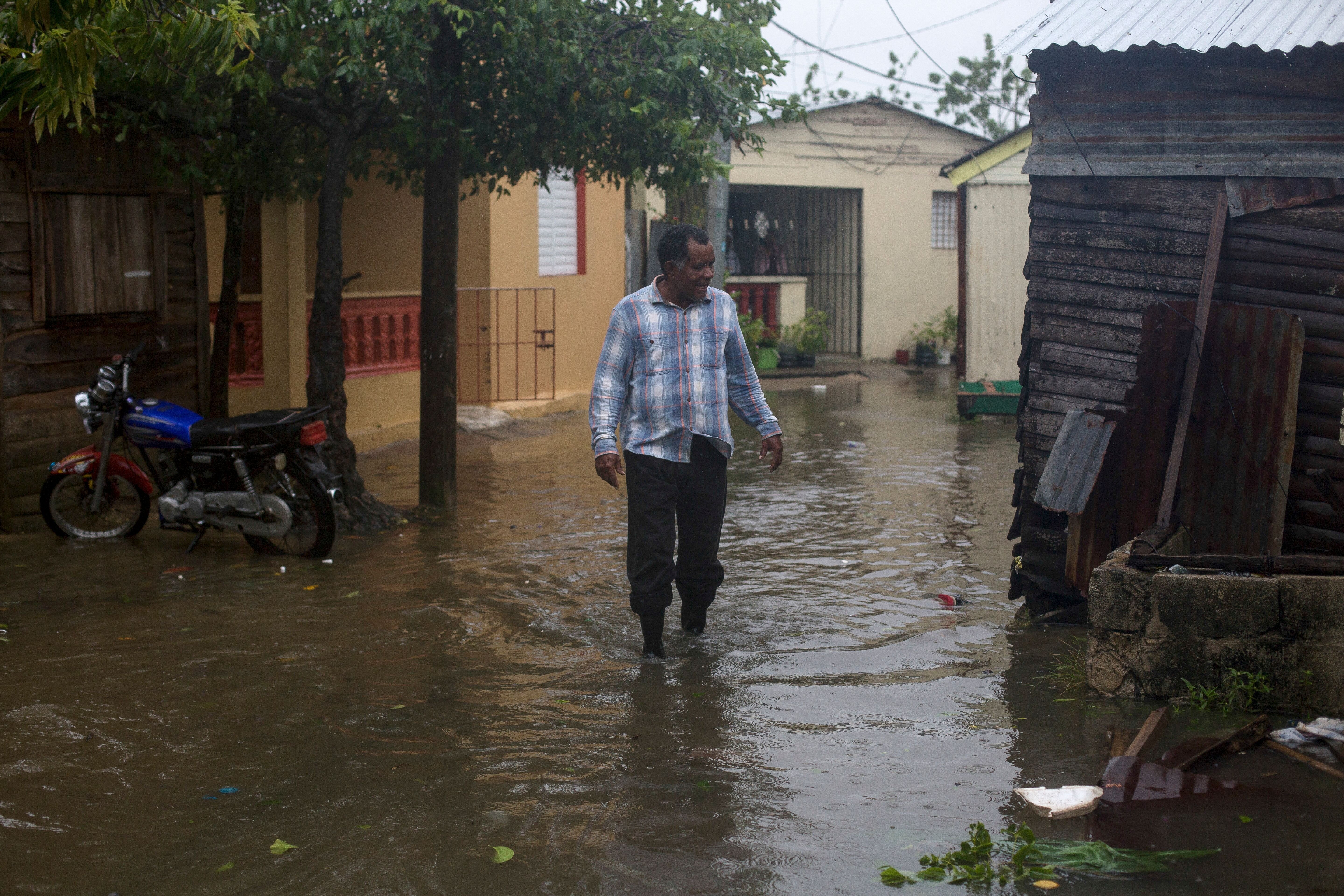
A man wades through a flooded street in Nagua, Dominican Republic, on September 19
ERIKA SANTELICES via Getty Images
4. Typhoon Nanmadol
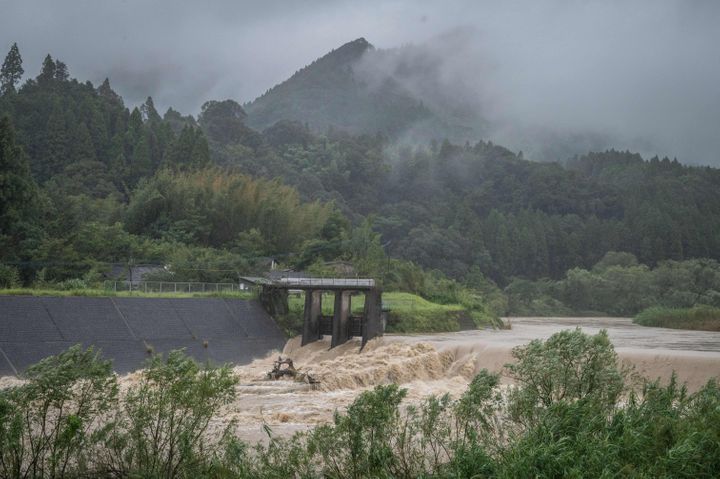
At least two people were killed as record winds and rain hit the west of Japan on Monday.
Prime minister Fumio Kishida even delayed his flight to New York for the UN General Assembly so that he could look at the damage of the 14th typhoon Japan has faced this season.
Advertisement
There was major landfall near Kagoshima city on Sunday, before it hit the islands of Kyusha and Honshu, while rivers overflowed and roofs were ripped off by the strong wind.
“We need to remain highly vigilant for heavy rains, gales, high waves and storm surges,” a Japanese Meteorological Agency official said, according to Reuters news agency. At least 115 people have been reported injured and around 340,000 households lost power.
Water flowing along the Sendai River in the wake of Typhoon Nanmadol in Ebino, September 19
YUICHI YAMAZAKI via Getty Images
5. Putin moves submarines away from Crimea – but nuclear fears continue
Russian president Vladimir Putin has allegedly moved the country’s submarines away from the annexed peninsula Crimea.
As Crimea was seized by Russia in 2014 (and seen by some as the start of Russia’s war against Ukraine), it was thought to be secured under Moscow’s rule.
Advertisement
But, as the UK’s defence ministry tweeted on Tuesday, Russia’s Black Sea Fleet “has almost certainly relocated” its submarines from Crimea to southern Russia.
The officials explained: “This is highly likely due to the recent change in the local security threat level in the face of increased Ukrainian long-range strike capability. In the last two months, the fleet headquarters and its main naval aviation airfield have been attacked.
“Guaranteeing the Black Sea Fleet’s Crimea basing was likely one of Russian president Vladimir Putin’s motivations for annexing the peninsula in 2014. Base security has now been directly undermined by Russia’s continued aggression against Ukraine.”
“The occupiers are clearly in a panic,” Ukrainian president Volodymyr Zelenskyy claimed on Monday.
Russia has also sparked fears of a nuclear war once again, after a missile exploded less than 900 feet from reactors of the South Ukraine Nuclear Power Plant, the second largest nuclear plant in the country.
Advertisement
This is separate to the worries around the Zaporizhzhia power plant, which sits on the frontline of the fight between Ukraine and Russia.
The South Ukraine plant is far from the frontline, but the attack demonstrates the extent of Russia’s reach (if it did indeed come from Moscow).
Still, there was no damage to safety equipment, and the exact source of the explosion could not be independently confirmed.
Last night russian terrorists attempted to strike the South Ukraine Nuclear Power Plant in the Mykolaiv region. A missile fell 300 meters from the plant. kremlin’s nuclear terrorism continues. russia is the threat to the whole world. pic.twitter.com/aWhz8yNXWp
On the anniversary of two other significant earthquakes, dating back to 1985 and 2017, Mexico was hit by yet another earthquake which killed at least two people.
Advertisement
The National Autonomous University of Mexico said there is no scientific explanation for why all three quakes would happen on the same day.
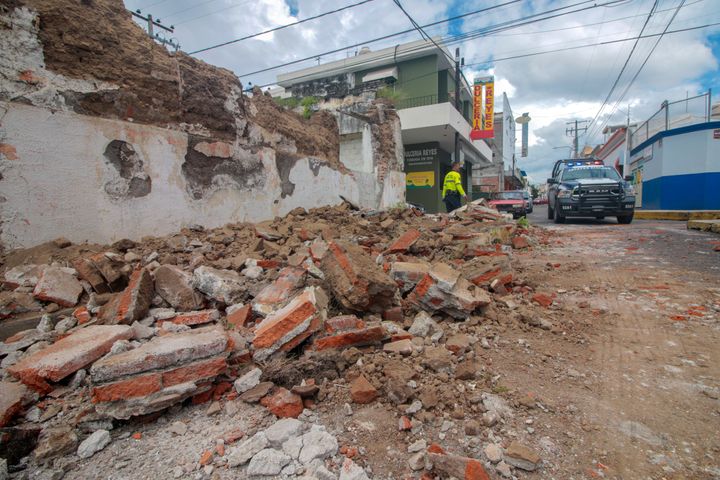
A 7.6 magnitude hit western Mexico on Monday, knocking out power and leaving people in Mexico City desperately seeking safety.
Hospitals were damaged, and other buildings collapsed onto the people within.
The US Pacific Tsunami Warning Centre also issued a warning for coastal areas, saying waves reaching up to three metres above the tide level were possible.
The September 19, 1985 earthquake killed thousands, and more than 350 died in September 19, 2017.
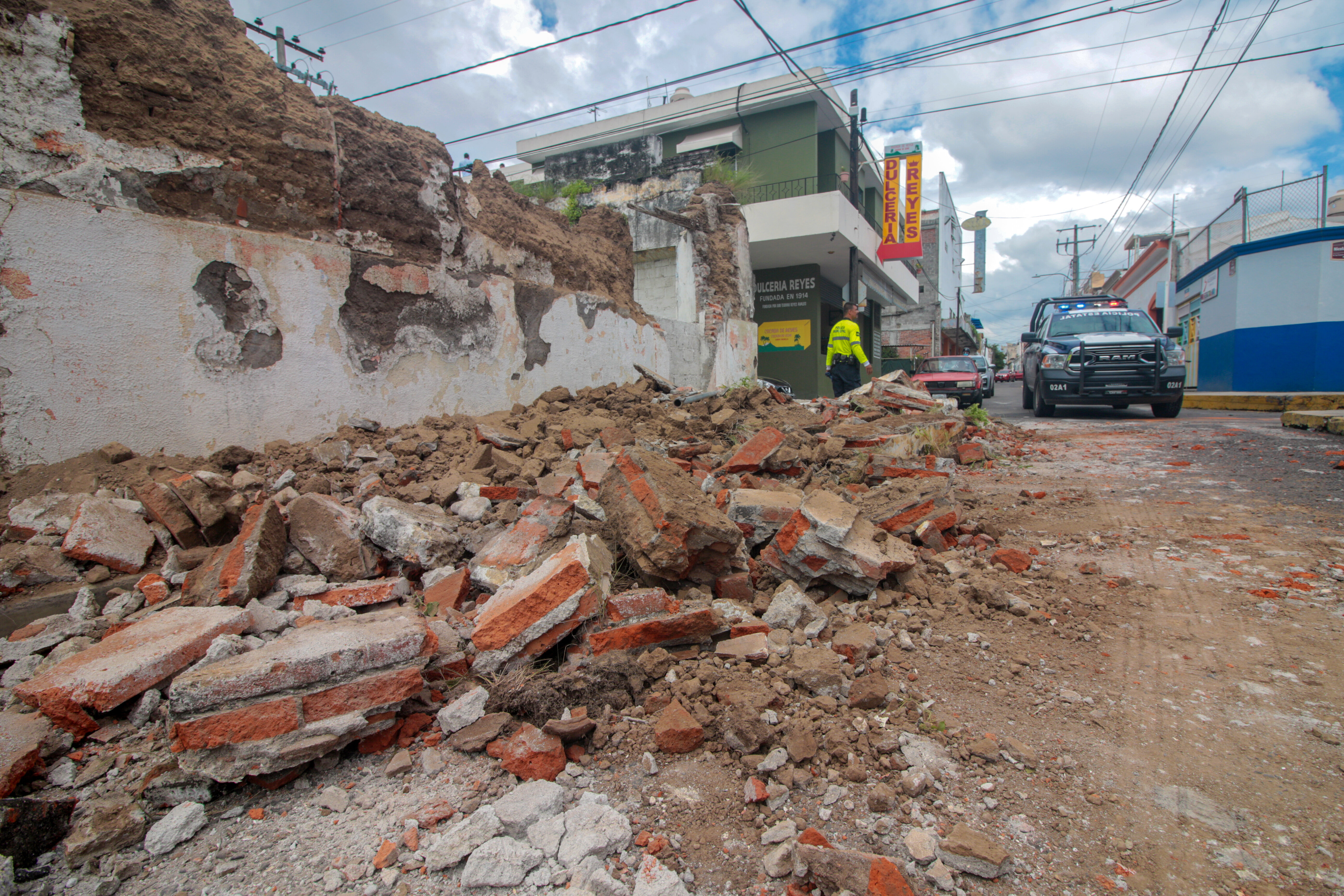
A view of damaged buildings aftermath of 7.6 magnitude earthquake in Colima, Mexico, on September 19.