Facebook Cuts ‘Indefinite’ Donald Trump Suspension To A 2-Year Sentence

Donald Trump could return to Facebook on January 7, 2023.

Former deputy prime minister, Nick Clegg, now Facebook’s vice president of global affairs, announced Friday that the company has cut short its “indefinite” ban on Trump, which was imposed after he used the platform to spread baseless claims of election fraud and incite the January 6 insurrection at the US Capitol. 

In its place, Facebook has implemented a conditional two-year ban.

Should Facebook determine the former US president fit to return to the platform at the end of that ban, he’d be back just in time for the 2024 presidential election primaries. However, if “there is still a serious risk to public safety” at that time, Trump’s ban would be extended again, then reevaluated.

How Facebook intends to evaluate Trump’s risk to public safety isn’t exactly clear. Clegg said only that the decision would be based on “external factors, including instances of violence, restrictions on peaceful assembly and other markers of civil unrest.”

If Trump’s account were to be restored and he failed to meet the very basic demand of not posing a threat to public safety, Facebook said he would be met with “rapidly escalating sanctions,” including a potential permanent ban.
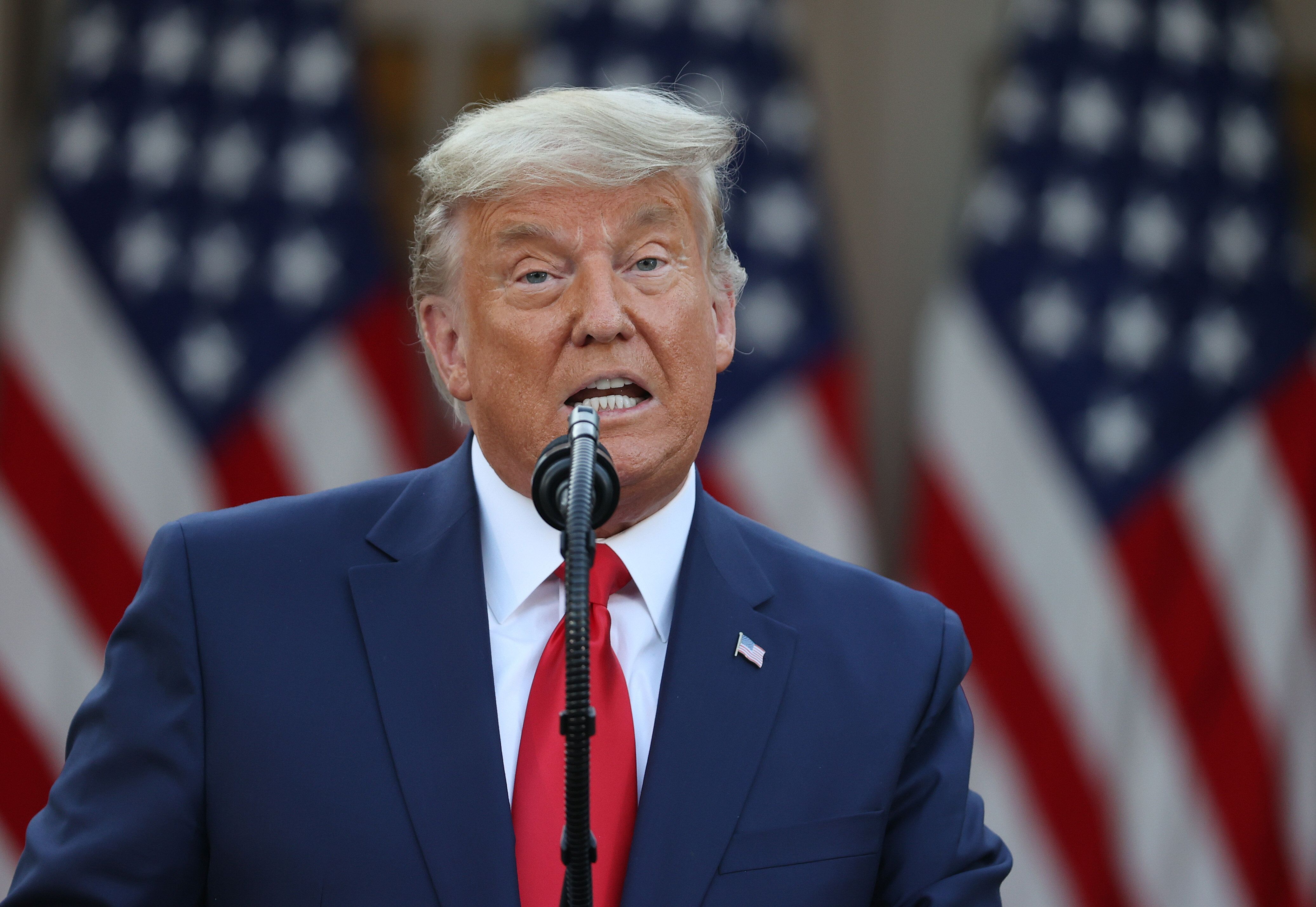
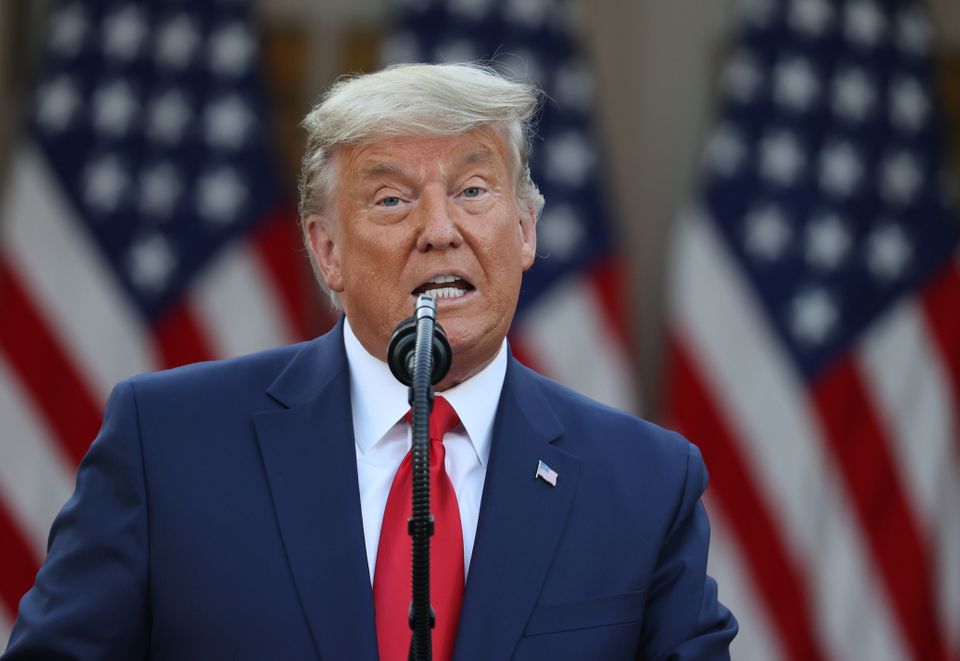
Tasos Katopodis via Getty Images

Former US President Donald Trump speaking shortly after the 2020 election.

Trump greeted the development in characteristic fashion: with outright lies and a sprinkle of half-truths.

“Facebook’s ruling is an insult to the record-setting 75M people, plus many others, who voted for us in the 2020 Rigged Presidential Election,” he said in a statement. “They shouldn’t be allowed to get away with this censoring and silencing, and ultimately, we will win. Our Country can’t take this abuse anymore!”

Trump received 74,222,958 votes in the 2020 election, while President Joe Biden won with 81,283,098 votes. The election was not rigged. It’s unclear what “many others” the former president is referring to.

Although Trump often claims he has been censored and silenced, the fact that his statement on the matter is nevertheless being widely read greatly weakens his argument. 

Civil rights advocates condemned the diminished sentence. Madihha Ahussain, a senior policy adviser for nonprofit anti-discrimination organisation Muslim Advocates, said too much was at stake for Trump’s ban to be loosened. 

“Facebook’s decision to reinstate Donald Trump’s accounts just in time for the 2024 presidential election puts the public and our democracy in danger,” Ahussain said in an emailed statement. “Trump used Facebook to incite a deadly riot in the US Capitol and spread outrageous conspiracies about the election that are still being used to undermine voting rights across the nation. A two-year time-out for that is a joke.”

Facebook’s decision on Trump follows its reversal on Thursday of its much-maligned, yet long-held, policy of exempting politicians from the content moderation rules that apply to everyone else. The policy gave politicians free rein to spread lies and post hate speech because Facebook deemed the content newsworthy.

Share Button

Boris Johnson Urged To Meet Covid Bereaved Families About Public Inquiry

Stefan Rousseau – PA Images via Getty Images

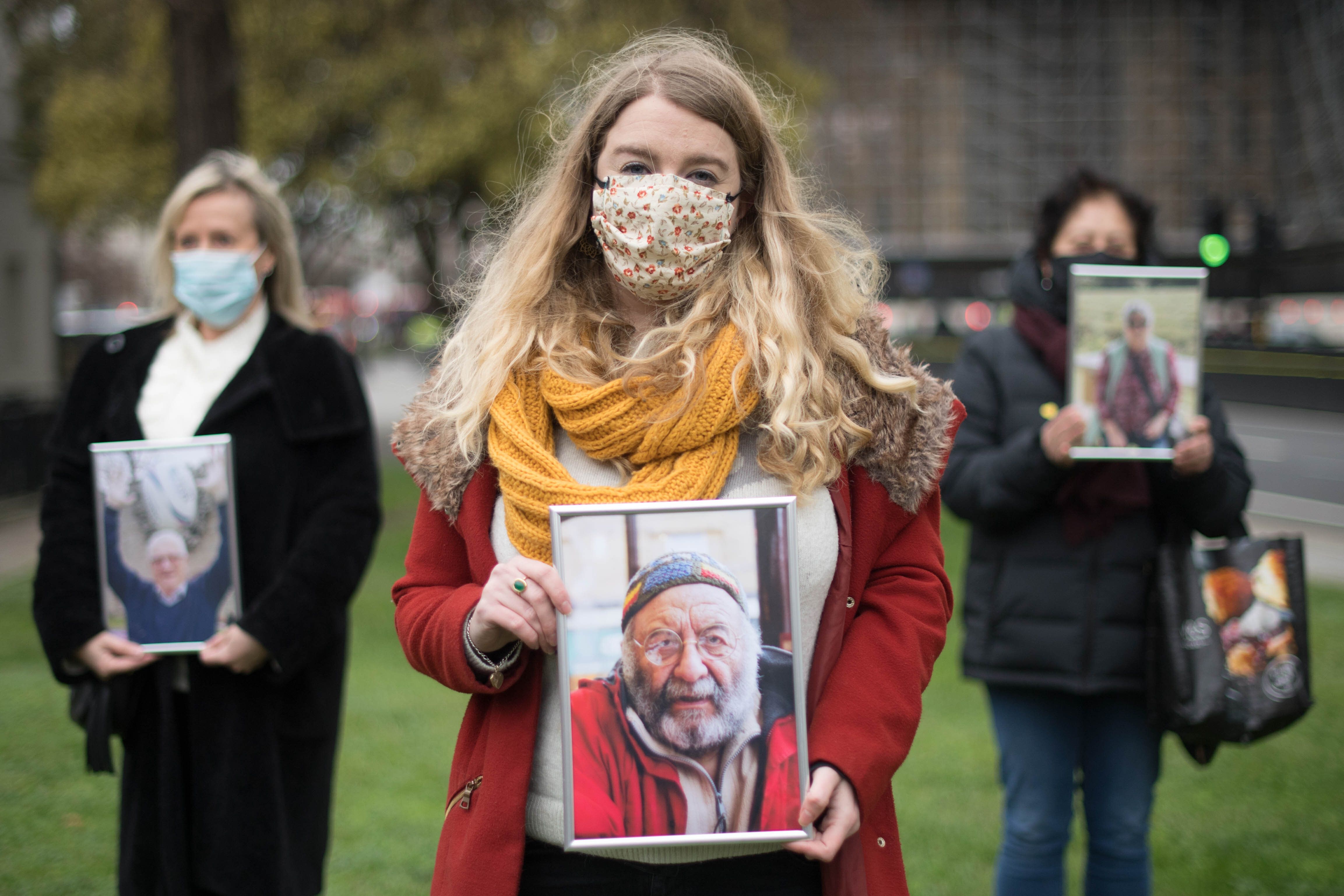
Jo Goodman, who lost her father Stuart, 72, to COVID 19 stands with other families bereaved by the virus outside Parliament. (Photo by Stefan Rousseau/PA Images via Getty Images)

Boris Johnson faces growing calls to meet the families of Covid victims before the public inquiry into how his government handled the pandemic. 

The prime minister has said an independent statutory inquiry that puts “state’s actions under the microscope” will begin in spring 2022.  

But Covid-19 Families For Justice, which represents some 4,000 grieving families, has made an urgent call for ministers to consult with them about the aims, remit and chair of the inquiry. 

The group’s key demand is the hearing allows for a rapid review phase. 

Families fear lives may be lost in future if ministers fail to address gaps in the UK’s preparedness, such as on PPE, and government does not quickly learn from disastrous mistakes on lockdowns and sending infected back people to care homes. 

However, ministers, including health secretary Matt Hancock, have refused to commit to meeting with families on the inquiry’s terms of reference. 

Jo Goodman, co-founder of the families group lost her father Stuart, 72, to the virus during the first wave. 

DANIEL LEAL-OLIVAS via Getty Images

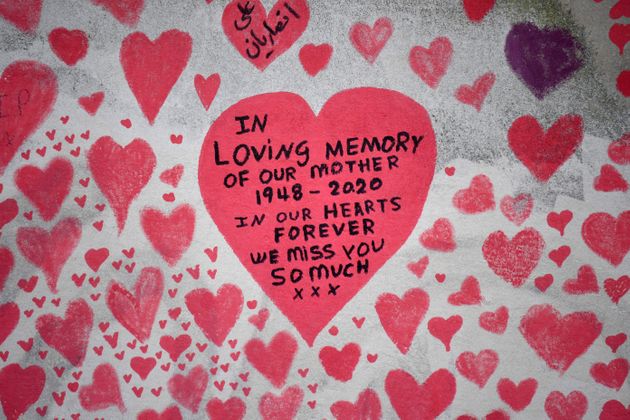
Messages are pictured on hearts painted on the National Covid Memorial Wall, at the embankment on the south side of the River Thames in London

She told HuffPost UK Johnson delayed a meeting because families threatened legal action over the inquiry’s delay.

“We stand ready and willing to meet government ministers but they’ve yet to set a date,” she said. 

“Boris Johnson has previously promised to do so, but then went back on it because of the judicial review we had planned to seek.

“We have now dropped the judicial review, so there is no reason for the government not to meet with us. We are ready when you are prime minister.” 

MPs have also been pressuring the government,  confidence in the inquiry, which is likely to be traumatic for those hardest hit.  

Jack Dromey, MP for Birmingham Erdington and shadow Cabinet Office minister, has written to chancellor of the duchy of Lancaster, Michael Gove, after questions in the House of Commons were ignored. 

The letter, passed to HuffPost UK, underlines that “the country has experienced tragedy and human suffering on a scale not seen since the Second World War”.

Dromey stresses ministers were causing “deep hurt” to families who “simply want to know that the government is listening to them”. 

Leon Neal via Getty Images

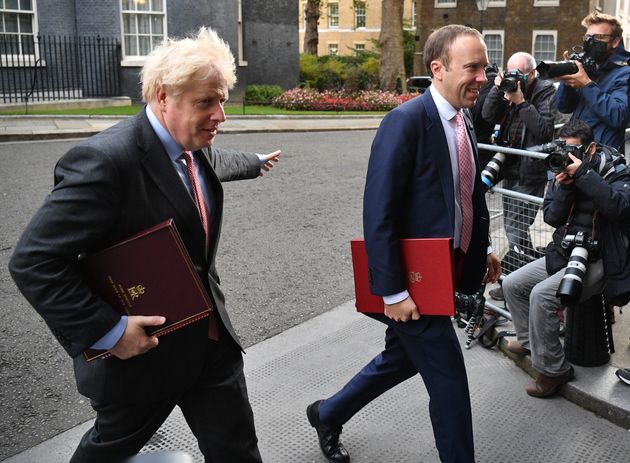
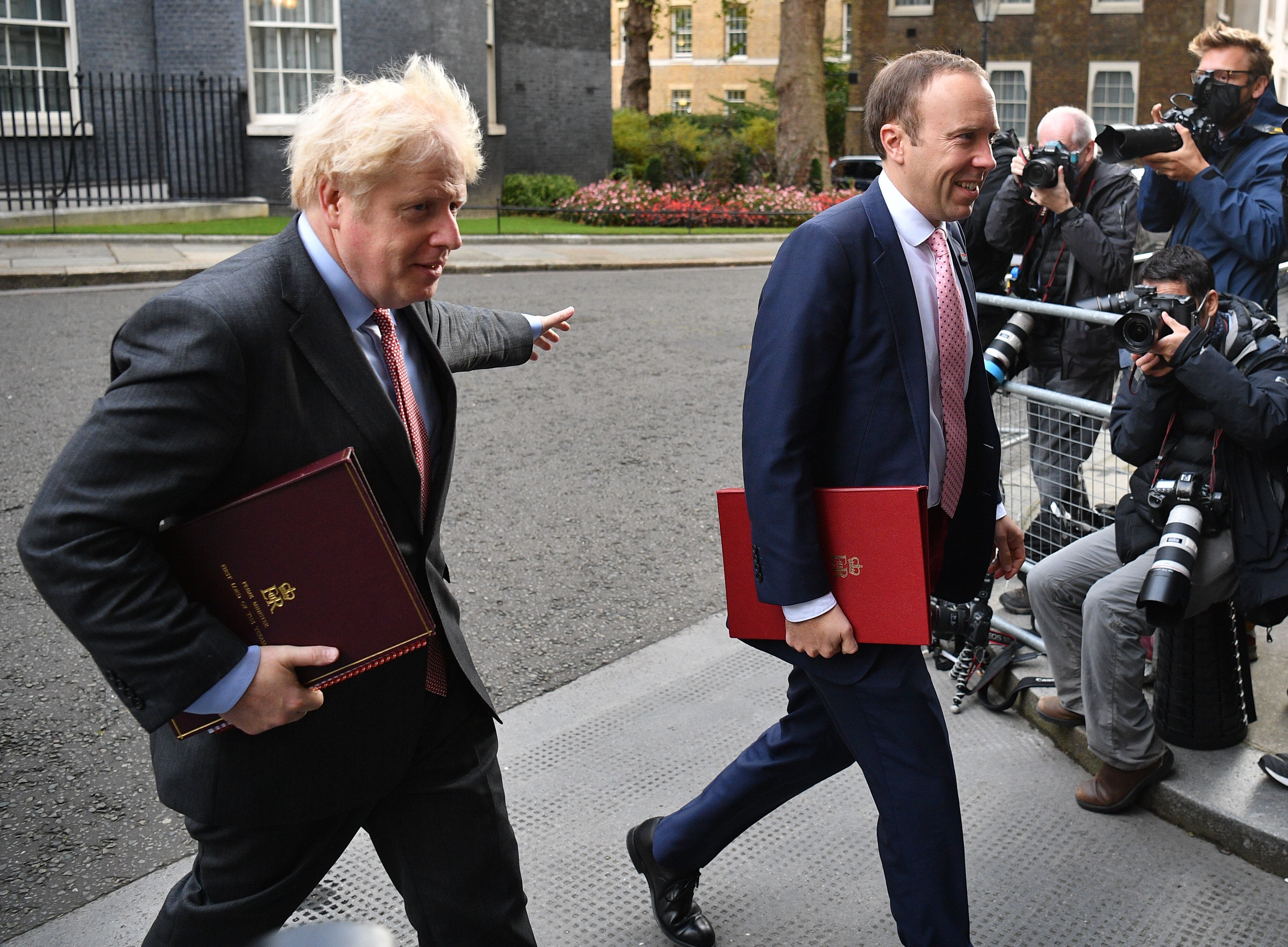
Prime Minister, Boris Johnson and Secretary of State for Health and Social Care, Matt Hancock walk from Downing Street

The letter says that Johnson and Hancock have seven times refused to meet families and adds: “MPs across the House will have met with constituents who have suffered great loss due to coronavirus. Meetings with bereaved families and listening to their stories are some of the most difficult and emotional meetings I have been involved in since being elected a member of parliament.

“Such meetings cannot fail but to bring home the sincere desire by the bereaved families that there be a meaningful public inquiry into the government’s handling of the coronavirus pandemic with outcomes the bereaved families can trust to be fair and reasonable.” 

It adds: “That is why it is so important to the bereaved families that the government consults with them to ensure this is the case, by agreeing an appropriate chair and the right terms of reference.” 

The government has said the inquiry’s remit and chair will be chosen “in due course” and that spring 2022 was the appropriate time to begin the hearing. 

Asked about the inquiry in parliament, Gove has suggested families will have a role.

He told MPs: “A statutory inquiry is obviously the right way to ensure that all the right questions are asked and that full answers are arrived at.

“To ensure that the inquiry works, the experience, voices and views of those who have suffered so much must be a critical part in ensuring that it is set up appropriately.”

A government spokesperson, when asked if the PM would meet with the group, added: “Every death from this virus is a tragedy and our sympathies are with everyone who has lost loved ones.

“Throughout the pandemic senior ministers, including the prime minister, have met and will continue to meet with bereaved families.

“As the prime minister said, we have committed to holding a full public inquiry as soon as is reasonably possible.”

Share Button

Getting Covid Reduces The Risk Of Reinfection For 10 Months

The risk of being infected with coronavirus is substantially reduced for up to 10 months after a first infection, a study suggests.

Researchers found that care home residents with a previous infection were 85% less likely to be infected between October 2020 and February 2021 than residents who had never been infected.

Meanwhile, staff with past infection were 60% less likely than staff who had not had the infection before, the study suggested.

According to the researchers, this showed strong protection in both groups, but they cautioned that the percentages may not be directly comparable, as staff might have accessed testing outside the care home, leading to positive tests not being included in the study.

Additionally, residents who tested positive for antibodies were likely to represent a particularly robust group, having survived the first wave of the pandemic.

Lead author Dr Maria Krutikov, of UCL Institute of Health Informatics, said: “It’s really good news that natural infection protects against reinfection in this time period. The risk of being infected twice appears to be very low.

“The fact that prior Covid-19 infection gives a high level of protection to care home residents is also reassuring, given past concerns that these individuals might have less robust immune responses associated with increasing age.

“These findings are particularly important as this vulnerable group has not been the focus of much research.”

“The fact that prior Covid-19 infection gives a high level of protection to care home residents is reassuring.”

– Lead author Dr Maria Krutikov, of UCL Institute of Health Informatics

Researchers looked at rates of coronavirus infections between October and February among more than 2,000 care home residents and staff. They compared those who had evidence of a previous infection up to 10 months earlier with those who had not been previously infected.

For the study, 682 residents (with a median age of 86) and 1,429 staff in 100 care homes in England took antibody blood tests in June and July last year after the first wave of the pandemic. About a third tested positive for antibodies, suggesting they had previously been infected.

Researchers then analysed the results of participants’ PCR tests, starting around 90 days after the blood samples were taken to ensure the tests did not pick up the initial infection. PCR tests were taken once a week for staff, and once a month for residents, with further testing in the event of an outbreak.

Positive tests were only included if they were more than 90 days apart to make sure the same infection was not included more than once. Based on the antibody test results, out of the 634 people who had been previously infected, reinfections occurred in only four residents and 10 members of staff.

Among the 1,477 participants who had never been infected, positive PCR tests occurred in 93 residents and 111 staff. The study excluded the impact of vaccination by removing participants from the analysis 12 days following their first vaccination dose.

Share Button

Will Boris Johnson Now Pause His Roadmap To Boost The Jabs’ Magic?

You’re reading The Waugh Zone, our daily politics briefing. Sign up now to get it by email in the evening.

What was meant to be Boris Johnson’s ‘quiet week’ just keeps on getting noisier. Today started with a kicking over catch-up funding for schools, swiftly followed by warnings that the simmering unease over international aid cuts is ready to boil over into rebellion. To top it all, it looks like millions of Britons won’t be getting a summer holiday abroad after all.

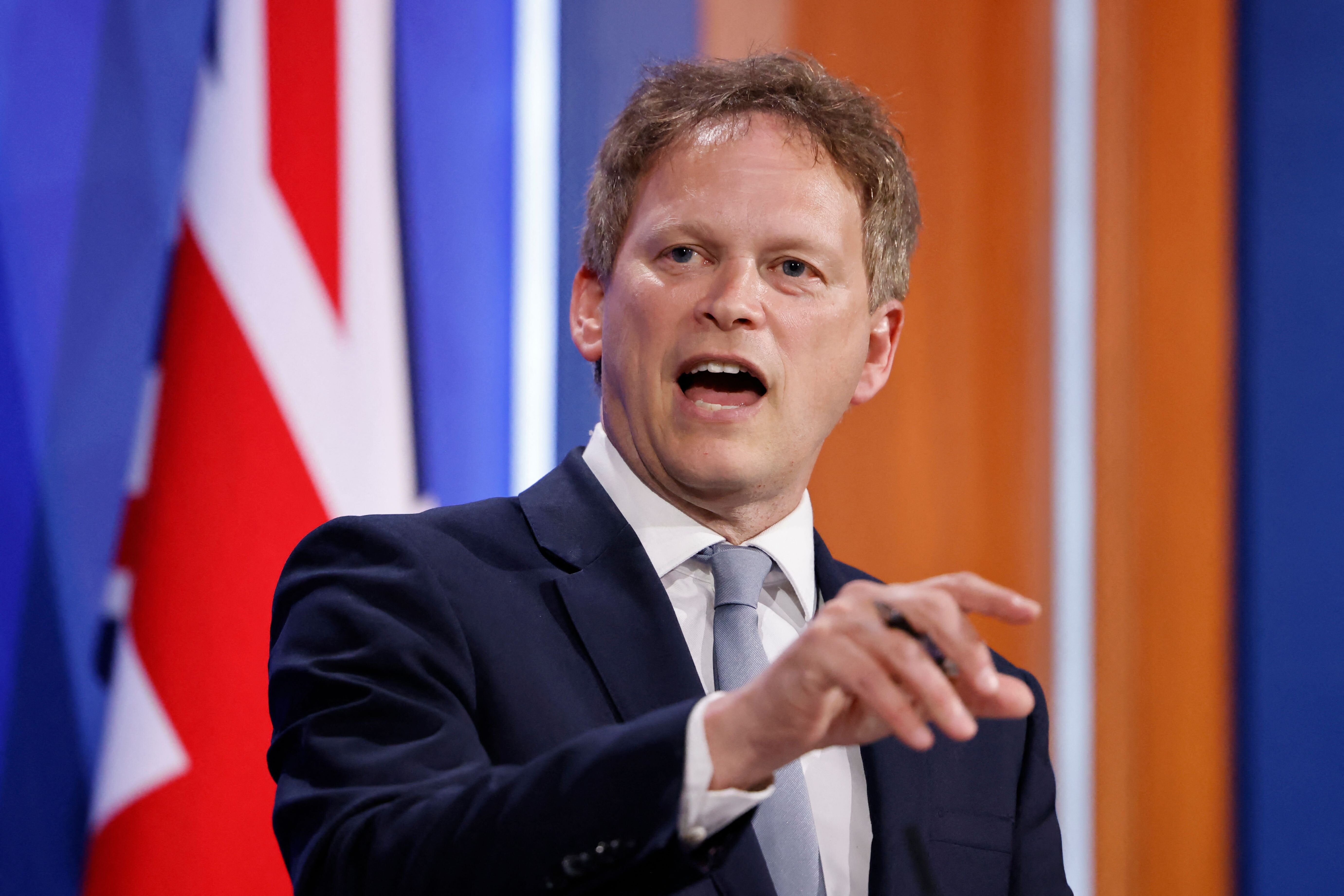
That’s the very downbeat conclusion many in the tourism industry have drawn from transport secretary Grant Shapps’ big announcement. Shifting Portugal from the “green list” to the “amber list” of travel destinations, albeit with a week’s notice, signals that holidays overseas are getting harder, not easier as some had assumed.

Politicians love using the phrase “direction of travel”, but that terminology will feel singularly inapt for those who had pinned their hopes on ending a long and gruelling year with at least a break in the Mediterranean sunshine. It’s still possible that in three weeks’ time the numbers may have fallen again in various European countries and islands, but no one is banking on it.

It’s worth pointing out that many Brits can’t afford or don’t want a foreign holiday. But a sizeable number of them very much do, and several Tory MPs will point out this is not some middle class obsession. “My working class constituents work bloody hard and save every penny for that week in the sun,” one tells me. “They’ll wonder why the hell they can’t still do that if they’re double jabbed.”

One problem lies in the traffic light system devised by the government, or more particularly, the amber bit of it. Because travel to amber list countries is legal, though not advised, there is no automatic right to a refund that would occur on the red list.

David Davis is another Tory who thinks there are political risks with Shapps’ announcement. “This is an irrational overreaction,” he tells me. “If you’re going to do this, at least make it a green-red system so people can get their money back.”

As it happens, that’s Labour’s position too. Shadow home secretary Nick Thomas-Symonds says the amber system is just a recipe for confusion, with reports of 50,000 travelling into the UK daily, each possibly bringing back a nasty souvenir in the shape of an infectious new variant of the virus.

I suspect that some Brits will actually hedge their bets by splitting up what would have been a fortnight abroad. They could take a risk on the first week holidaying in an amber country like Portugal, Spain or Greece, then using their second week’s holiday to quarantine at home before getting a test release after five days that lets them take a short trip in the UK too.

But only a minority will want to risk that. The real difficulty with the current traffic light system is that it’s hard to tell amber-flashing-red from amber-flashing-green. It is designed to offer a careful route from the most unsafe to the most safe environments and embodies a proportionality of risk that drives Boris Johnson’s thinking. That’s why he probably won’t ditch it.

Yet this virus doesn’t respect proportionality, and often the only language it understands is overwhelming force (we’ve learned lockdowns have to be hard and fast). The amber list is the overseas version of the domestic regional tiers system designed last year to contain Covid in defined areas. That system failed miserably this winter in the face of the Kent variant, which staged a deadly route march out of the south east across the whole country.

And again in and around Bolton and other “hotspots” where the even more transmissible Indian variant was found, the virus has shown a marked disrespect for borough boundaries, let alone national borders. The latest figures showing the big jump in cases in Blackburn, plus the wider spread of the virus across Lancashire, proves that once a new variant gets a foothold it moves fast.

As the PM ponders what this all means for his June 21 unlockdown date, history tells us he will want to have his cake and eat it. We shouldn’t forget that the public too quite like a bit of cakeism (European style public services, US-level taxes, anyone?), a factor that’s often forgotten when some are baffled why Johson is so popular.

The return of ordering at the bar (instead of table service) is seen by some of the PM’s allies as sacrosanct, both because it is vital to the economics of the pub industry and more importantly vital to some sense of normality and boosted morale after months of lockdown. There’s a view in government that this simple change would buy the PM enough political capital to keep in place other restrictions, like working from home and mask wearing on public transport.

The difficulty again is that while that may seem sensibly proportionate to the risk, a disproportionate response to the Indian or “delta” variant may be what’s really needed. The latest data from Public Health England, confirming the delta variant’s higher transmissibility, its “significantly higher risk of hospitalisation” and its higher vaccine escape, could force firmer action from No.10.

A short, two-week delay (which I’ve talked about before) for all the June 21 measures is gaining traction in Whitehall as perhaps the better solution, not least because it gives time for ramping up more jabs.

As the PM had his second dose today, he must have thought just how much safer the nation would be if as many over-50s as possible had the same protection before further unlockdown. That delay would be disproportionate to some, but may be just smart public health policy as much as smart politics.

Share Button

Delta Variant Is Now Most Dominant Covid Strain In The UK

Cases of Covid-19 caused by the Delta variant, which first originated in India, have risen by 5,472 since last week to 12,431.

Public Health England (PHE) suggests the variant has now overtaken the Alpha variant, which first originated in Kent, as the most dominant variant in the UK.

Last week, health secretary Matt Hancock said that up to three-quarters of new coronavirus cases in the UK were the Delta variant, when 6,959 cases were confirmed.


People walk through Covent Garden in central London on June 3, 2021.

People walk through Covent Garden in central London on June 3, 2021.

What is the Delta variant?

There are a few variants that originated in India circulating, but one is causing more worry than others.

The strain – B1617.2 (or the Delta variant) – is one of three related variants that have been detected in the UK. The others are B1617.1 and B1617.3.

There were originally four variants of concern (VOCs) in England – the so-called Kent, South Africa, Brazil and Bristol variants.

All three variants from India were originally designated as variants under investigation, however Public Health England (PHE) confirmed B1617.2 had become the fifth variant of concern as of May 7 due to rising cases.

Since then, cases have soared on a weekly basis, with scientists suggesting this new variant is more transmissible than the Alpha variant.

Early evidence also suggests there may be an increased risk of hospitalisation, although more data is needed to confirm this.

PHE said 278 people with the Delta variant attended A&E this week, resulting in 94 people being admitted to hospital overnight. Last week, 201 people attended A&E, with 43 admissions. The majority of these had not been vaccinated.

Which areas are worst affected?

Bolton remains one of the most affected areas, where cases have risen by 795 to 2,149. Blackburn with Darwen has also seen 368 new cases, bringing it to 724 in total.

There are encouraging signs that the transmission rate in Bolton has begun to fall, PHE said, and that the actions taken by residents and local authority teams have been successful in reducing spread.

Other areas in England with more than 100 confirmed cases of the variant, as of last week, included: Leicester, Sefton, Nottingham, Wigan, Central Bedfordshire, Manchester and Hillingdon.

The health body also published a breakdown of outbreaks and clusters of variants in schools and other settings.

The latest data suggests there have been 97 confirmed Covid-19 outbreaks in primary and secondary schools that have had at least one variant case linked to them over the most recent four-week period.

This represents around one in 250 schools.

What does it mean for lockdown easing?

As it stands, the lifting of restrictions on June 21 hangs in the balance.

PHE experts urged the public to “remain cautious” as the country approaches the next stage of the roadmap.

Variant cases are on the increase in several areas and it is absolutely crucial that everyone plays their part in preventing their spread, PHE said.

Dr Jenny Harries, chief executive of the UK Health Security Agency, said: “With this variant now dominant across the UK, it remains vital that we continue to exercise caution particularly while we learn more about transmission and health impacts.

“The way to tackle variants is to use the same measures to reduce the risk of transmission of Covid-19 we have used before. Work from home where you can, and practise hands, face, space, fresh air at all times.”

She urged those who are eligible to get vaccinated as soon as possible.

Share Button

Why The Catch-Up Czar’s Resignation Is Boris Johnson’s Problem

You’re reading The Waugh Zone, our daily politics briefing. Sign up now to get it by email in the evening.

This was meant to be a quiet week. Commons in recess, a ‘holding pattern’ on Covid, Whitehall treading water while it waits for the latest data on the pandemic. Aside from an update on foreign travel from Grant Shapps on Thursday, the big ‘event’ marked on the No.10 grid was today’s catch-up cash for schools. 

An emergency £1.4bn, on top of an extra £1.7bn already announced for pupils, could have been spun as a statement of intent, an interim measure pending a bigger funding settlement in the chancellor’s spending review later this year. But thanks to some great work by the Times, which exclusively revealed earlier this week just how much cash had been requested, the PR plan was smashed to bits.

Sir Kevan Collins, the catch-up czar, had wanted £15bn but instead got less than a tenth of that, at least in the short term. And his resignation words tonight blasted both barrels not just at the hapless Gavin Williamson (whose departure from Education in a reshuffle seems all but guaranteed), but also at Boris Johnson himself.

By referring explicitly to the failure to provide help to pupils in deprived areas in the north, Collins appeared to expose the PM’s “levelling up” agenda as a hollow trick played on all those who voted Tory in May. “In parts of the country where schools were closed for longer, such as the north, the impact of low skills on productivity is likely to be particularly severe,” he said.

It’s worth remembering that Collins was never going to be a government pushover. He is widely respected for his work in education, and as recently as March he told the education select committee that the £1.7bn first pledged was “not sufficient”. He wanted a comprehensive recovery plan, not a sticking plaster, so it’s perhaps no surprise he’s ripped it off to lay bare the wounds underneath.

This isn’t just about the education gap. For Johnson, this underlines once more the yawning gap between his rhetoric and actual delivery. Back in June 2020, he promised “a massive summer catch-up operation”, but nothing of the kind materialised. Yes, the fresh lockdowns knocked things even more off course, yet parents, pupils and teachers won’t easily forget the promises made.

This March, I remember vividly Johnson telling a No.10 news conference how much catch-up mattered. “The legacy issue I think for me is education,” he said. “It’s the loss of learning for so many children and young people that’s the thing we’ve got to focus on now as a society. And I think it is an opportunity to make amends.” If the PM can’t deliver on his own professed personal priority coming out of the pandemic, what chance do all the other policy areas have?

Critics will point out too that unlike other areas of government (social care, anyone?), there is at least a plan worked up by Collins to “make amends”. His bigger package was about extra teaching time, not just tutoring. Still, there are some in government who tonight are pointing out the idea of an extra half hour on the school day did not go down well with teachers.

The longer day was “not thought through” and not “evidence based”, both of which are red flags to the Treasury. Moreover, doling out £15bn – half the annual primary and pre-primary school budget – between spending reviews was seen as imprudence fiscal management. Allies of the chancellor insist this isn’t about being stingy. “If we just start signing off massive cheques outside of a formal process, there lies mismanagement of taxpayers’ money!” one says.

Yet ultimately the PM is, as he joked in recent months, the First Lord of the Treasury. If he’d really wanted a big, bold plan for education catch-up with big, bold spending to match, he could have got it. The political problem is that an independent expert in schooling has now delivered a damning verdict on Johnson’s central “levelling up” policy, or rather the lack of one

Collins has also made early years education his priority, stressing its social as well as academic benefit, and its underfunding in recent years. The Tories’ closure of SureStarts is perhaps one of their biggest policy errors in the past decade of austerity. Amazingly, Labour has failed to ram home that very point, and has shown a woeful lack of focus on childcare and early years (evidenced by Jeremy Corbyn’s priority of student tuition fees, but under Starmer there’s been no real grabbing of the agenda either).

A cynic might say that the expected grade inflation in this year’s GCSE and A-level exam results will smooth over the problem. But if metrics emerge that younger children of all backgrounds are falling behind expected benchmarks, the lack of a proper “catch-up” or “recovery” plan will be received bitterly by parents who struggled with the home-schooling imposed on them this past year.

It’s possible Johnson will again wriggle out of this latest tight spot. But remember that two of the biggest U-turns forced on him over the past year both involved education: the A-levels fiasco and free school meals. And both were issues of competence.

Collins’ resignation may have gifted Starmer his most powerful weapon yet, offering at the next election a simple way to sum up broken Tory promises and incompetence. Whether Labour can capitalise is another matter.

Share Button

Schools Catch-Up Tsar Quits Saying Gavin Williamson ‘Failing’ Children

Kevan Collins

Kevan Collins

Education catch-up tsar Kevan Collins has dramatically quit his post and warned Gavin Williamson his £1.4bn catch-up fund is “failing” children who lost learning during lockdown. 

Collins, appointed to advise government just four months ago, said the deal announced by the education secretary on Wednesday “does not come close to meeting the scale of the challenge”.

The former headteacher had called for some £15bn of funding and 100 extra hours of teaching per pupil. 

But Williamson – whose new fund represents just a tenth of Collins’ demand – is said to have lost a battle for more cash in talks with Rishi Sunak’s Treasury. 

Collins said in a statement the sum on offer “betrays an undervaluation of the importance of education”, adding: “After the hardest of years, a comprehensive recovery plan – adequately funded and sustained over multiple years – would rebuild a stronger and fairer system.

“A half-hearted approach risks failing hundreds of thousands of pupils. The support announced by government so far does not come close to meeting the scale of the challenge and is why I have no option but to resign from my post.”

He added that the package of support “falls far short of what is needed” as he warned that it is “too narrow, too small and will be delivered too slowly.”

“The average primary school will directly receive just £6,000 per year, equivalent to £22 per child. Not enough is being done to help vulnerable pupils, children in the early years or 16- to 19-year-olds,” Collins said.

Ministers say the total fund for lost learning is £3bn and the new money will support 100 million hours of extra tutoring for youngsters who lost out during the pandemic.

The settlement has been roundly rejected branded “paltry” and  “disappointing” by unions and school leaders. 

Williamson sidestepped questions on Wednesday about a clash with the Treasury, but did admit that “there will be more that is required”.

Prime minister Boris Johnson promised that there would be “more coming through” to support children in England who had missed lessons during the pandemic following criticism from education leaders.

WPA Pool via Getty Images

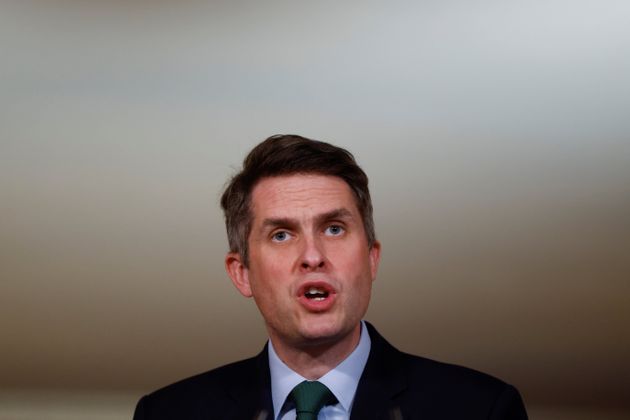
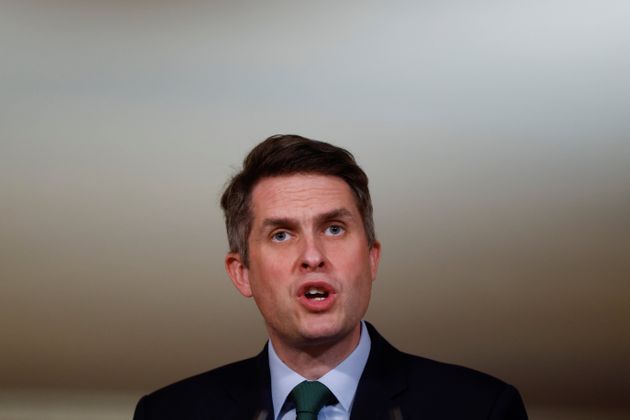
Education Secretary Gavin Williamson 

A No 10 spokesperson said: “The prime minister is hugely grateful to Sir Kevan for his work in helping pupils catch up and recover from the effects of the pandemic.

“The government will continue to focus on education recovery and making sure no child is left behind with their learning, with over £3bn committed for catch up so far.”

The education recovery tsar had recommended that schools and colleges should be funded for a flexible extension to school time – the equivalent to 30 minutes extra every day.  

But the DfE’s announcement did not include plans to lengthen the school day.

Collins said: “One conservative estimate puts the long-term economic cost of lost learning in England due to the pandemic at £100bn, with the average pupil having missed 115 days in school.

“In parts of the country where schools were closed for longer, such as the north, the impact of low skills on productivity is likely to be particularly severe.

“The pandemic has affected all pupils but hit disadvantaged children hardest. A decade’s progress to narrow the attainment gap between disadvantaged children and their peers is estimated to have been reversed.

“As part of the plan I proposed to government, I recommended a landmark investment in our teachers, whose dedication throughout the pandemic has been inspiring. It is also right to extend access to tutoring, in particular to support disadvantaged children.

“Tutoring can provide valuable support that complements classroom teaching. But it is not a panacea and must be high-quality to make a difference.

“This is one reason why I recommended schools and colleges be funded to extend school time for a fixed, three-year period and providing significant funding for a flexible extension to school time, equivalent to 30 minutes extra every day.

“From the perspective of teachers, extra time would have been optional and paid, with schools also able to use the time to offer enrichment activities that children have missed out on.”

The DfE’s programme includes £1bn to support up to six million, 15-hour tutoring courses for disadvantaged pupils, as well as an expansion of the 16-19 tuition fund which will target subjects such as maths and English.

A further £400 million will go towards providing high-quality training for early years practitioners and school teachers to ensure children progress.

But the announcement, made during half-term, does not include plans to lengthen the school day or shorten the summer break.

Collins, the former chief executive of the Education Endowment Fund (EEF), has more than 30 years of experience working in the education sector. 

He was appointed in February to advise government on how to help children recover months of lost learning during lockdown. 

Share Button

Trump’s Blog Has Shutdown After Just 1 Month

A “communications platform” former President Donald Trump launched in early May as a means to reach his followers is shutting down after usage tanked.

Trump senior aide Jason Miller justified the site’s forced retirement to CNBC on Wednesday, saying it was “auxiliary to the broader efforts we have and are working on.”

Miller declined to elaborate on those efforts, but did confirm the website “will not be returning.”

The webpage, “From the Desk of Donald J. Trump,” was hawked as a replacement for Trump’s posts on Twitter, Facebook, YouTube and other social media platforms after they banned him following his baseless claims of election fraud, which incited the Jan. 6 insurrection at the U.S. Capitol.

But its actual utility came into question soon after its May 5 launch. Social media interactions plummeted from 159,000 its first day to just 15,000 three days later, a Washington Post analysis found.

Internet denizens were also quick to note that it was less of a platform and more of a blog, albeit one that encouraged visitors to share Trump’s long-winded posts on their own social media accounts.

The shutdown may be a boon to MyPillow CEO and stalwart Trump ally Mike Lindell, who launched his own social media website in April. Lindell said at the time that his platform is all about free speech – unless you want to swear or use God’s name in vain, which will get you banned.

“Another thing you can’t do in there is totally defame someone,” said Lindell, who is being sued for libel by Dominion Voting Systems to the tune of $1.3 billion.

“From the Desk of Donald J. Trump” was preceded in death by Trump Airlines, Trump beverages, Trump: The Game, numerous Trump casinos, Trump magazine, Trump Mortgage, Trump Steaks, a Trump travel website, Trump telecom, Trump University, and Trump Vodka.

Share Button

Boris Johnson’s £1.4bn Schools Catch-Up Fund Branded ‘Paltry’ And ‘Disappointing’

izusek via Getty Images

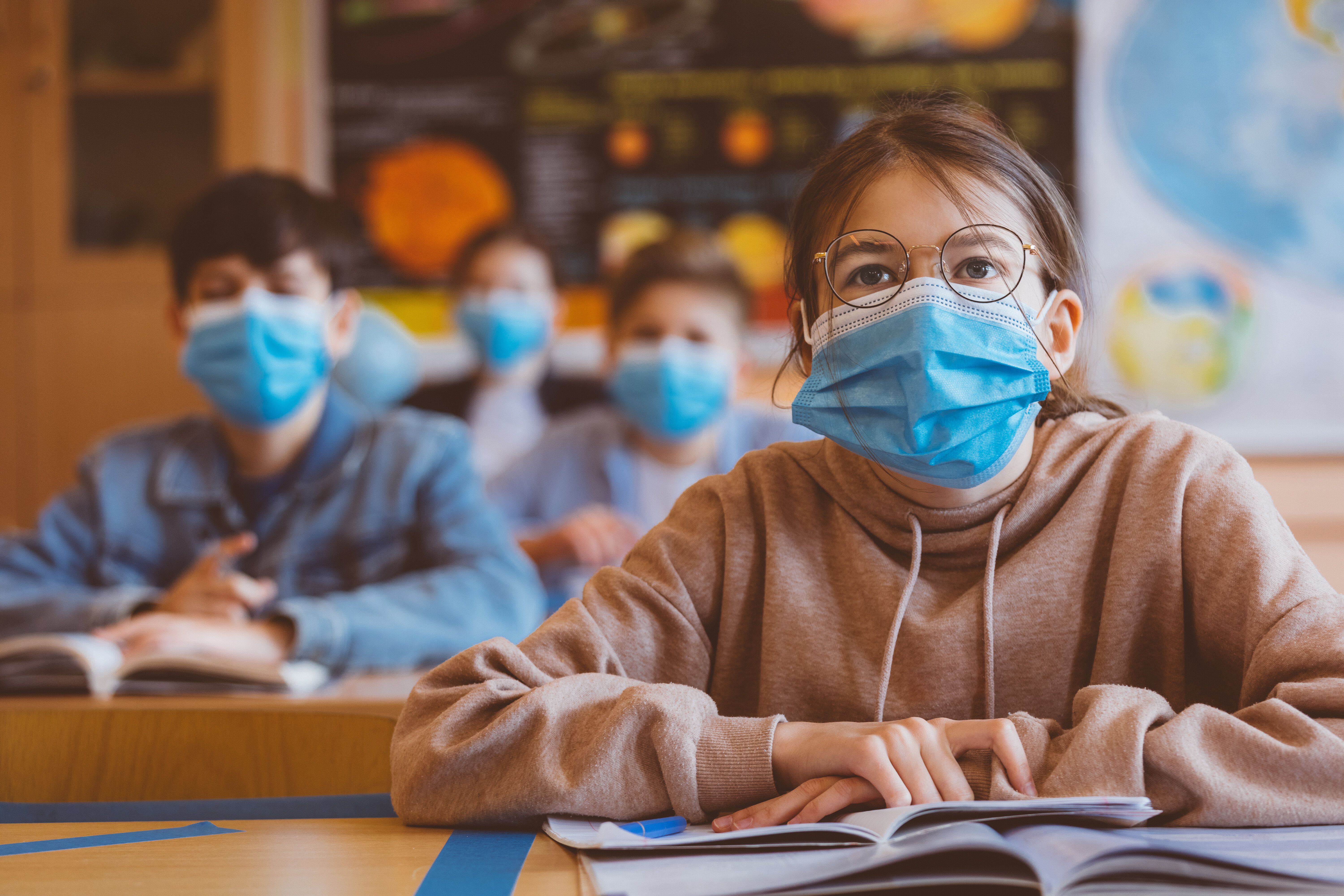
High school students at school, wearing N95 Face masks. Teenage girl wearing eyeglasses sitting at the school desk and listening to the teacher.

A £1.4bn catch-up tuition plan to help children recover lost learning after Covid has been branded “hugely disappointing”. 

The Department for Education (DfE) announced the cash for schools and colleges in England and have underlined it comes on top of £1.7bn already pledged for lost education. 

The cash will see pupils offered up to 100 million hours of extra teaching, with Year 13 students given the option to repeat their final year if particularly hard-hit by lockdown. 

But unions have said package “lets down the nation’s children”, and falls short of the £15bn school leaders hoped for, with some accusing Rishi Sunak’s Treasury of blocking further spending.  

The DfE scheme includes £1bn to support up to six million, 15-hour tutoring courses for disadvantaged pupils, as well as an expansion of the 16-19 tuition fund which will target subjects such as maths and English.

A further £400 million will go towards providing high-quality training to early years practitioners and school teachers boost progress.

But the announcement – made during the half-term – does not include plans to lengthen the school day, or shorten the summer break.

The government’s education recovery commissioner, Kevan Collins, is still considering long-term proposals to address the impact of Covid on children.

Geoff Barton, general secretary of the Association of School and College Leaders (ASCL), suggested that there had been a battle behind the scenes over funding for education recovery between the Treasury and the DfE as the “settlement is less than a tenth of the £15bn that was being mooted”.

He said: “This is a hugely disappointing announcement which lets down the nation’s children and schools at a time when the government needed to step up and demonstrate its commitment to education.

“The amount of money that the government plans to put into education recovery is insufficient and shows a failure to recognise the scale of learning loss experienced by many pupils during the pandemic – particularly those from disadvantaged backgrounds.” 

Paul Whiteman, general secretary of school leaders’ union the NAHT, said: “It’s a damp squib – some focus in a couple of the right areas is simply not enough.

“The funding announced to back these plans is paltry compared to the amounts other countries have invested, or even compared to government spending on business recovery measures during the pandemic.

“Education recovery cannot be done on the cheap.”

WPA Pool via Getty Images

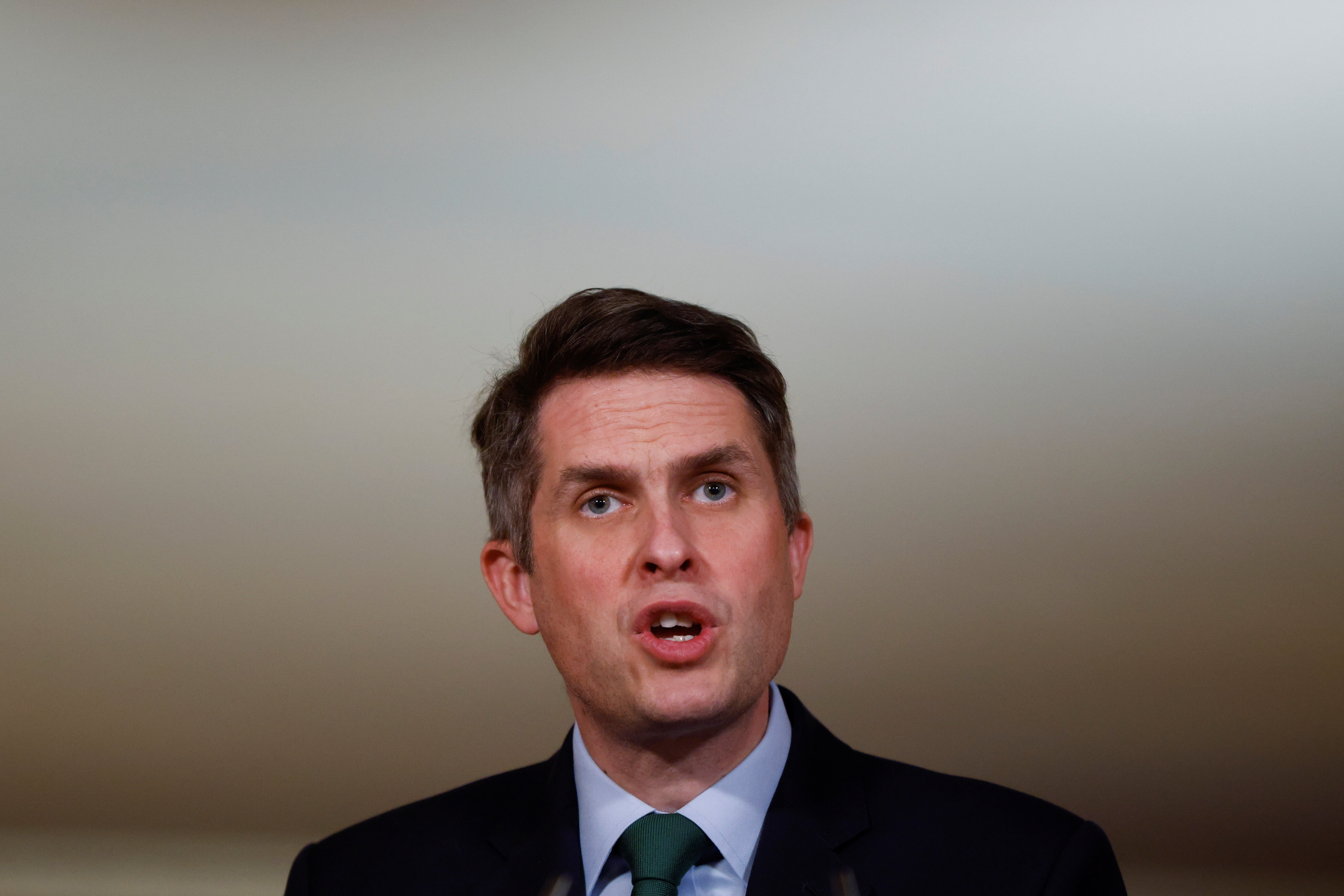
Education Secretary Gavin Williamson

But Whiteman added that the union was relieved to see that extending the school day had been “shelved for now” as he warned the policy could reduce family time and leave less time for extracurricular activities.

Mary Bousted, joint general secretary of the National Education Union (NEU), said: “The government’s plans for education recovery for the nation’s pupils are inadequate and incomplete. Rarely has so much been promised and so little delivered.”

“The Treasury has shown, in this paltry offer, that it does not understand, nor does it appreciate, the essential foundation laid by education for the nation’s economic recovery.

“Its failure, on this scale, to fund what is needed for education recovery, is a scar which will take generations of children and young people to heal.”

Prime minister Boris Johnson has defended the fund, however, adding a review of longer school days would form part of the next stage of the review. 

He said: “Young people have sacrificed so much over the last year and as we build back from the pandemic, we must make sure that no child is left behind.

“This next step in our long-term catch-up plan should give parents confidence that we will do everything we can to support children who have fallen behind and that every child will have the skills and knowledge they need to fulfil their potential.”

It was announced as Labour published its two-year £14.7 billion education recovery plan, which called for extracurricular activities to be expanded and mental health support in schools to be improved.

Share Button

Boris Johnson’s In A Holding Pattern On Covid, But Is Keir Starmer Too?

You’re reading The Waugh Zone, our daily politics briefing. Sign up now to get it by email in the evening.

Just six days ago, Matt Hancock’s name was mud, his reputation ground into the dirt by Dominic Cummings’ onslaught. Today, the health secretary returned to his bouncy ways as he seized on the news that the UK reported not a single death from Covid for the first time since last July. “The vaccines are clearly working,” he said.

Yet while it may look to some as if Hancock has gone from zero to hero in less than a week, he himself added a note of caution about “cases continuing to rise”. Although in Bolton there is early evidence of levelling off of cases of the ‘Indian’ variant, nearby Blackburn, Rossendale, Ribble Valley and Hyndburn are all seeing spikes.

Although case numbers are low overall, it’s no wonder many in government are concerned. Week on week, cases have gone up more than 31% and, crucially, hospitalisations by more than 23%. That’s two of the lights on the government’s dashboard flashing red, just as the zero deaths figure is flashing a healthy green (down 10% on the week). Given the lags we are all by now familiar with, those deaths may not stay zero in coming weeks.

Despite the concern, Boris Johnson is not worried enough to give anyone an update on whether his planned June 21 unlocking will go ahead as planned. In our Lobby briefing today, we learned he didn’t even brief his spokesman beforehand. All the spokesman would do was point us towards the PM’s cake-and-eat-it words on the pandemic last Thursday (the “current” data didn’t suggest any need for delay “but we may need to wait”).

The problem with relying on the PM’s words from five days ago is that, well, a week is a very long time in Covid politics. Johnson got married on Saturday and spent Sunday and Monday on a “mini-moon” – a phrase that sounds like a brief display of his buttocks, but is a very short honeymoon, apparently (though perhaps it means both). It all feels a bit like the early pandemic, when his marital concerns (a divorce then, a wedding now) mean Covid is on the backburner.

And in many ways, it feels as if the government machine is not very interested in saying much about Covid for the rest of this week. Grant Shapps has his travel update on Thursday but few expect much change. Michael Gove’s reviews of covid certification and social distancing look either dead on arrival or delayed to June 14. Jonathan Van-Tam said two weeks ago we would have a “ranging shot” of the transmissibility of the Indian variant by last week. It looks like that estimate may not materialise this week either.

With the Commons in recess, there seems to be a generalised holding pattern going on, in political and policy terms. The public seemed to have more of a sense of urgency about Covid than the PM this weekend, with thousands of young people queuing for their jab outside Twickenham stadium when they could have just packed the pubs.

But the virus doesn’t take a parliamentary recess or a bank holiday break. The rise in case numbers is concerning the most even-handed of scientists. The Bank of England hoped for a V-shaped economic recovery this year, but some current graph projections look worryingly V-shaped on Covid cases. Scotland and England are on the same trajectory, though Wales (which has 10% more people given first doses) is not.

The uncertainty is perhaps why Nicola Sturgeon essentially paused her own roadmap today. While the public have not been told any updates on the Indian/delta variant’s transmissibility, maybe Sturgeon has? I understand Keir Starmer is currently holding off calling for any delay to the June 21 unlocking date, until after he gets a private briefing from Sage.

Starmer’s main problem is that no matter what he says, or how correctly he calls it, the public may not be listening. “Keir’s first 16 months have been the politics of the pandemic, and his next eight months may be the politics of the pandemic. It’s very, very difficult,” one insider says. More than anything Labour says or does, Starmer’s team are acutely aware that the Batley and Spen by-election next month could reflect vaccine jab numbers, whether voters can order a drink at the bar and where they can go on holiday.

In the meantime, what Starmer can hope to do is show the public what kind of man he is, as well as what kind of politician. His latest Piers Morgan’s Life Stories interview on ITV tonight shows him choking back tears as he talks about his disabled mum, his strained relationship with his dad, and the death of his wife’s mother. The New Statesman had some fascinating polling last week that 37% of voters say they just don’t know enough about him to make a judgement yet. His team see that as a huge opportunity, not a weakness, and believe interviews like this could shift that dial.

Picking a popular ITV programme was a smart move for Starmer because he needs to reassure a key demographic that he’s a walking, talking human being. Moreover, Labour’s lingering problems with working class voters were highlighted not just in Hartlepool but in London on May 6. While Sadiq Khan made gains with some upper middle class voters, this fascinating breakdown by Lewis Baston points to swings towards the Tories in key council estate areas in deprived parts of the city.

Like many working class kids who went on to do things their parents never dreamed of, he’s clearly uncomfortable with any idea he would exploit his private life for public consumption. Yet in many ways, Starmer embodies the aspiration story (dad a factory worker, son highest prosecutor in the land) that Labour needs to reconnect with voters it has lost.

While the Covid narrative dominates all our lives, Starmer has to keep reminding us he’ll be ready for the moment the conversation moves on to something else. With politics more volatile than ever, it’s even possible he too could move from zero to hero if he can use this May’s election defeats to show a sense of urgency for change.

Share Button