What Teenagers Say Is Worrying Them The Most (And It’s Not Social Media)

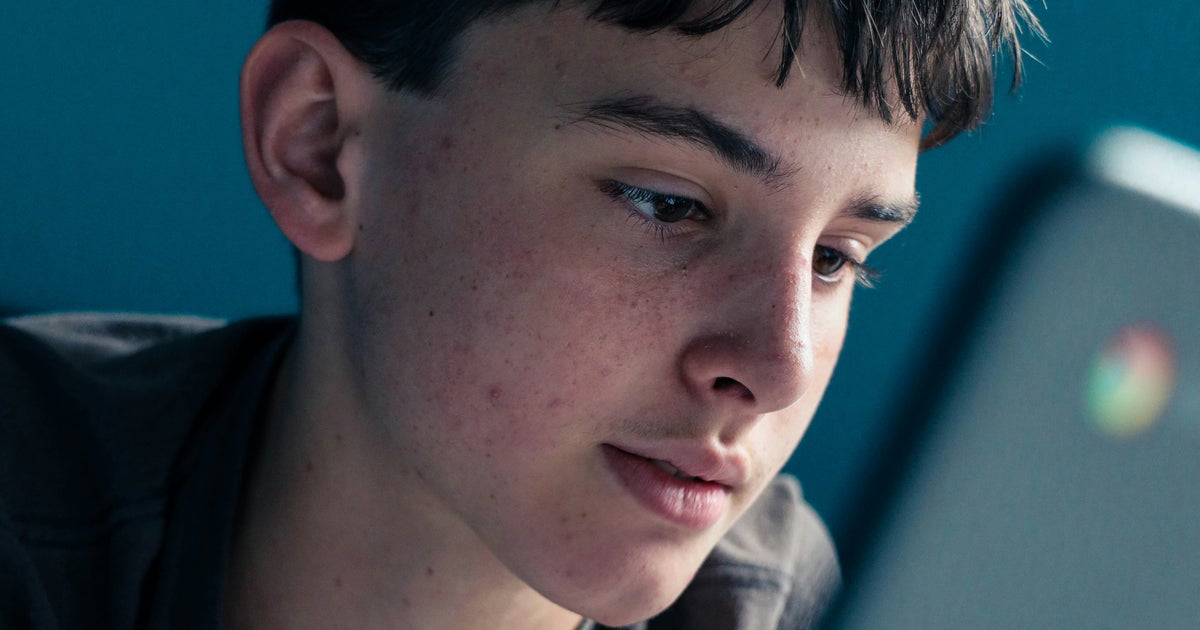
I often think about how tough it must be to be a teenager right now. Between the pressures of school life and the inability to get away from it all thanks to the 24/7 nature of social media, it sounds pretty exhausting.

But what is it actually like? And what’s keeping the nation’s teenagers up at night? A 2025 survey by BBC Radio 5 Live and BBC Bitesize shed some light.

The online poll of 2,000 kids aged 13-18 explored the issues shaping teenagers’ lives – from mental health and safety to the rise of AI.

What is the biggest worry for teens?

Getting kids to open up about what’s worrying them can be like drawing blood from a stone for plenty of parents. But the survey offered some insights into what teens worry about most.

Over two-thirds (69%) of all participants reported feeling anxious at least some of the time, with pressure around exams and grades being the biggest worry.

Its survey of 1,000 15- to 18-year-olds taking GCSE or A-Levels found 63% said it was hard to cope in the lead-up to, and during, these exams. Of these, 13% had suicidal thoughts and 13% self-harmed. More than half (56%) had trouble sleeping.

Among those struggling, 61% experienced anxiety and 40% worsening mental health, while 30% skipped meals and one in four (26%) had panic attacks.

The research also found exams were more than twice as likely to have a significant negative impact on mental health than social media.

May – which is when school exam season starts for most – is the peak season for children to call Childline about exam stress. Between 1 April 2025 and 31 March 2026; the free, confidential service for kids delivered 1,679 counselling sessions where exam or revision stress was mentioned.

The majority of concerns about exam stress were from children aged 12-18 years old, however younger students are also impacted, with 11% of contacts coming from children aged 11 and under.

One young person, aged 16, said: “If I’m not revising for exams, I feel this panic in my chest, but the panic also stops me focusing on the revision when I try and do it.”

Another 16-year-old girl said they have plans for their future, but have completely lost motivation to revise. “I have no idea why, my friends are trying to help get me back on track but I’m so overwhelmed,” they said.

What else did the BBC’s teen survey find?

It found 65% of teens feel overwhelmed at least some of the time and almost three-quarters (74%) of girls feel anxious at least some of the time.

Another eye-opening finding was just how much time teens are spending on their phones: more than a third (38%) spend five hours or more a day, while one in 20 spend eight hours or more.

When they are online, more than half reported having seen sexist and racist content. Two in five (44%) said they have seen extremely violent content.

In real life, 44% worry about knife crime in their local area and almost one third (30%) of teenage girls have experienced sexual harassment in school.

Artificial intelligence is becoming increasingly popular among the younger generation, with almost half (47%) using it to help with homework or coursework.

This is rising year-on-year – the figure was 36% in 2024 and 29% in 2023.

Despite the challenges teens face today, nearly eight in 10 (79%) are feeling positive about their future.

Share Button

Teens Are Falling Out Of Love With Reading. Teachers Share What They Think’s Behind It

We all know kids and teens are reading less – and an increasing number are enjoying it less, too.

The stats speak for themselves. When The National Literacy Trust polled almost 115,000 kids in early 2025, it found just one in three (32.7%) kids aged eight to 18 years old said they enjoyed reading in their free time.

This marked a 36% decrease in reading enjoyment levels since 2005.

Among teens, particularly boys, reading enjoyment drops even more. One in five (18.8% of) boys aged 14 to 16 report enjoying reading, compared to 37.7% of girls.

It’s not just a UK issue, either. In a US-based survey of Gen Z students by Walton Family Foundation and Gallup, 35% admitted they disliked reading, with 43% saying they rarely or never did it for fun.

What’s impacting their love of reading?

In a TikTok video, a teacher known as Ms C, admitted one of her students had revealed they’d never finished a book before.

Discussing why older kids are reading less, she said there are “many reasons” like “increased pressure inside and outside of school, a desire to spend more time socialising, and, of course, the phones”.

But an even more “obvious” reason, she said, is that “adults have lowered the bar for how much you should read as a teenager” to the point where “the bar cannot be found”.

She explained: “There are many educators who have the mindset that you shouldn’t teach whole books because kids just won’t read them.”

“In the past I’ve taught at schools where teaching novels is actually discouraged,” she claimed.

I asked teachers and school librarians in the UK for their two cents on why kids are falling way out of love with reading by the time they reach their teens.

Sol Elliott, librarian at Overton Grange School, suggested more time spent online, especially on social media, plays a key part: “The technology that brings a lot of young people towards reading also keeps far more people away from it.

“The dopamine hit of social media use is hard to compete with, especially when we are working with people whose brains are developing quickly.”

Sarah Parsons, director of education at the Ted Wragg Multi Academy Trust, said: “Sadly, we see in our schools that teens find it hard to maintain the reading habits that they may have developed during primary school.

“Increasing demands on their time both within and beyond the classroom, combined with the growing influence of technology, have all contributed to a decline in regular reading among our teenagers.”

Research suggests there was a 52% increase in children’s screen time between 2020 and 2022. Kids aged eight to 14 years old who use the internet spend an average of 2 hours 59 minutes a day online across smartphones, tablets and computers, typically on YouTube, Snapchat, Google (search), Facebook and WhatsApp.

Nat Parnell, CEO of the Westcountry Schools Trust, also suggested social media plays a major role in teens reading less: “The risk is that the short bursts of gratification teenagers get from social media and texting are far more immediately satisfying than reading, which requires much greater effort before enjoyment is reached. It is not really a fair competition.”

The benefits of reading for pleasure

Besides being a nice way to switch off and unwind, there are several benefits to kids reading for pleasure. It helps introduce children to a range of experiences and viewpoints, which can help build empathy. It can also boost confidence and spark creativity.

Reading enjoyment has also been reported as more important for children’s educational success than their family’s socio-economic status, and it’s linked to higher scores in reading assessments.

Schools are trying to address the reading crisis – but it’s not easy. Parnell said their schools ensure all students have structured reading opportunities. “We also banned mobile phones in school some time ago,” she noted.

Parsons said their are a few strategies they’re deploying to try and boost reading: providing dedicated time each week for independent reading, for example, as well as exposing kids to texts that stimulate meaningful discussion and debate.

For Elliott, it’s been a case of tailoring the school library collection to the pupils’ tastes “in the hope that they will pick up a healthy reading habit as they grow up”.

“A lot of these choices are informed by internet trends and TikTok friendly genres (Fantasy, Romance, Manga etc.),” said the librarian.

“I genuinely fear for the health of our society if a meaningful cohort of young people are not reading regularly and interacting with serious literature,” Elliott added.

“I am optimistic, though, that when a school is sensitive to its young readers and pays attention to their interests that we can help them turn into regular readers.

“All reading is good reading, and I can only hope that stocking my library with magazines, comics and manga, will lead a good amount of them to a Zadie Smith novel, or a play by Arthur Miller.”

Ways to get kids reading at home

If you’re hoping to spark a love of reading in your teen, here’s what might help:

  • Buy books related to a favourite film, TV series, or which matches their interests or hobbies.
  • Let them choose what they read.
  • Be a reading role model – make sure they see you reading for enjoyment, too.
  • Set screen-free time before bed and encourage activities such as reading, colouring or journalling to wind down.
  • Help them find their own spaces to talk about books, suggests Scottish Book Trust – try Goodreads or #BookTok on TikTok.
  • Encourage different reading formats – e-books, comics and e-magazines still count!
  • Take them to library,school and book shop-hosted events focused on reading.
  • Check out our picks of the books to gently steer teens towards reading once more.

Good luck!

Share Button

‘Body Doubling’ Could Be The Secret To Helping Kids With ADHD Focus Better

Body doubling – where a person with ADHD works nearby or alongside another person to keep them focused on the task at hand – isn’t a new technique, but ADHD experts are increasingly recommending it as a strategy to help support task completion.

While plenty of adults already use it to plough through their daily workload, parents are also trying it to support their kids with homework or revision – especially the more boring stuff that’s hard to make a start on.

I first came across the concept when psychotherapist Jessica VanderWier, of Nurtured First Parenting, shared some of the parenting strategies she would try in her own home if she had a child with ADHD.

In addition to being structured with how much (and what type of) screen time kids encounter, and offering lots of opportunities for movement, she noted that she would also try “body doubling” when kids feel stuck and unable to start a task.

“Body doubling is when you are present and doing something in the same space that your child needs to get a task done. Example: they’re doing homework and you’re beside them folding laundry,” she explained on Instagram.

“Your presence acts as an anchor and helps decrease procrastination and increase motivation to get something done.”

Why body doubling works

Dr Chris Abbott, chief medical officer at Care ADHD, tells HuffPost UK that while there’s been limited research into body doubling, many clinicians and families report that it can meaningfully help children with ADHD with focus and task completion.

“It’s best understood as a low-risk, practical strategy rather than a standalone treatment, and tends to work particularly well for tasks that are hard to start or sustain,” he adds.

The strategy builds on psychological principles such as accountability and social facilitation.

“Children often find it easier to stay on task when someone else is present. It also helps ‘externalise’ focus, reducing the burden on executive functions like task initiation and self-regulation, which are commonly affected by ADHD,” says Dr Abbott.

Dr Kripalani, lead psychiatrist at The ADHD Centre, says body doubling is
“an incredibly effective tool”.

“Since the ADHD brain often struggles to ‘self-start’ or maintain focus on tasks that aren’t naturally stimulating, having another person present serves as a gentle physical anchor,” he explains.

Teaching kids this tool from a young age can be “transformative” because it prevents a child from internalising a “failure identity”, adds Dr Kripalani.

“Instead of feeling isolated in their struggle, the child experiences a daunting task as a shared journey, which lowers the emotional barrier to entry and helps them find their focus.”

It can also help buffer against rejection sensitivity dysphoria (RSD), which can cause extremely intense negative feelings and severe emotional pain, and is often associated with ADHD.

“Many children experience a form of paralysis born from the fear of being criticised or doing something wrong,” says the psychiatrist.

“A supportive, non-judgmental body double provides a safety net that lowers cortisol levels and keeps the prefrontal cortex ‘online’ for learning.”

Other expert-backed tips for revision and focus

  • Break revision into short, timed blocks of 10-25 minutes with regular breaks.

  • Offer ‘micro rewards’ – rather than waiting for a big reward at the end of the week, give a child a small dopamine hit, like five minutes of a favourite activity for every 20 minutes of work, to keep the momentum going.
  • Use body doubling, in person or via video, for harder or less engaging subjects.

  • Be specific about goals – you could say ‘complete five questions’ rather than ‘revise maths’.

  • Alternate subjects or task types to maintain interest and avoid fatigue.

  • Build in movement breaks (physical activity) to help reset attention.

  • Noise-cancelling headphones and fidget tools can help channel restlessness.
  • Reduce distractions e.g. have a clear workspace and limit devices unless they’re needed for studying.

  • Use active techniques such as practice questions, flashcards and teaching someone else rather than passive reading. Gamifying the more tedious aspects of study with ‘beat the clock’ challenges or colourful mind maps can help the info “stick”.

  • Create a consistent routine, but keep it flexible enough to avoid overwhelm.

  • Prioritise sleep, nutrition, and downtime – these have a direct impact on attention and memory.

  • Praise their efforts – by saying, “I love how you stayed at your desk even when that question was tricky,” rather than just “you’re smart,” we build resilience against rejection sensitivity by valuing effort over perfection.
Share Button

Yes, Kids Are More Likely To Get Sick In The Next Fortnight

As I write this I can feel another illness taking hold: the headache, the stuffy nose, the scratchy throat. It can only mean one thing: the kids are back at school!

While plenty of people will be relieved to get back to normality after two weeks of juggling work and childcare, a survey of 1,000 parents by Olbas found over half (55%) dread their kids going back to school due to the increased chance of getting ill.

There’s no getting around it, they will (probably) get sick in the coming fortnight.

Dr Roger Henderson, an NHS GP and spokesperson for Olbas, says: “When children return to school after Easter holidays or extended breaks, it’s normal to see a sudden rise in sniffles, coughs, and stomach upsets.

“This isn’t because schools are unhealthy places, but rather because children are suddenly exposed to lots of germs they haven’t encountered in a while – almost like a refresher course for their immune systems!”

Younger children, especially those in primary school, may be hit hardest because their bodies are still learning how to handle common viruses.

“Parents should expect a wave of minor illnesses and be prepared with tissues, comfort foods, and perhaps a flexible routine to allow for extra rest,” says the doctor.

“The good news is that these minor illnesses help children build up stronger immune systems over time. While it can feel overwhelming at first, most of the common viral illnesses pass quickly, and children normally bounce back with their usual energy.”

Here, Dr Henderson shares some tips and tricks to overhaul your morning routine to at least give everyone a fighting chance amid the post-holiday bug surge.

1. Create a 10-15 minute buffer zone

The GP is a firm believer in creating a 10-15 minute ‘buffer zone’ on those mornings when the kids are waking up sniffly.

“The key here is preparation – putting out clothes, packing bags, and prepping lunches the night before gives you a head start, leaving more time for slower wake-ups when children aren’t feeling 100%,” he says.

“Building in a ‘buffer zone’ of 10-15 extra minutes can ease stress and reduce the chance of forgotten items or unexpected delays affecting you.”

2. Start the day with a warm shower or saline spray

If your kids are particularly congested first thing, a warm shower or saline nasal spray can help clear clogged sinuses and “make them feel fresher” for the day ahead.

3. Keep breakfast simple

When kids are feeling below par, something simple and nourishing to set them up for the day can work wonders. Dr Henderson suggests porridge, scrambled eggs, or smoothies are “easy options that don’t require much fuss”.

4. Take a calmer approach to rushed mornings

Easier said than done when you’ve got to be at work for 9am, but if kids aren’t feeling great, they’re going to require a bit more patience in the mornings. The GP says a “calm reassuring tone sets the pace here”.

When to keep your child off school

While kids can go to school with coughs and colds, there are instances where you shouldn’t send your child to school. Here’s what NHS Choices advises:

  • If they have a fever, keep them off until the fever goes away.
  • If they have a high temperature, keep them off school until it goes away.
  • If they have diarrhoea or vomiting they should stay away from school until they have not been sick or had diarrhoea for at least 48 hours.
  • If they have chickenpox, keep them off school until all the spots have crusted over – usually about five days after the spots first appeared.
  • If they have symptoms of Covid-19 including a high temperature, and they don’t feel well enough to go to school or do normal activities, keep them off.
  • If your child has an ear infection and a high temperature or severe earache, keep them off school until they’re feeling better or the high temperature goes away.
  • If your child has impetigo, they’ll need treatment from a GP – usually antibiotics. Keep them off school until all the sores have crusted over and healed, or for 48 hours after they start antibiotic treatment.
  • If your child has scarlet fever, they’ll need treatment with antibiotics from a GP. Otherwise they’ll be infectious for two to three weeks. Children can go back to school 24 hours after starting antibiotics, providing they feel well enough.
Share Button

From Avoidance To Big Emotions: 5 Signs A Child’s Struggling With ADHD At School

A child psychiatrist has opened up about a pattern she sees routinely where a neurodivergent child will struggle at school, and the adults around them mistake their symptoms for poor behaviour or a bad attitude.

Dr Anya Ciobanca, consultant child and adolescent psychiatrist at The ADHD Centre, says children who appear disengaged, inconsistent or emotionally volatile at school may be experiencing something far more complex than just a bad attitude.

“Behaviour is never the whole story,” she says. “When we approach a child with curiosity rather than judgement, everything changes.”

Conditions such as attention deficit hyperactivity disorder (ADHD) can go undiagnosed for years because there are often misunderstandings over symptoms. For example, people might think kids who have it are just hyperactive, but there are also more subtle signs that can show up, like day-dreaming or emotional dysregulation.

Girls in particular are likely to remain undiagnosed until later life. Reviews suggest ADHD is identified more often in boys in childhood at a ratio of 3:1 (males to females), while the ratio appears to even out in adulthood at 1:1.

Experts previously told HuffPost UK this happens largely because there’s a gender divide in how ADHD symptoms are expressed (girls tend to demonstrate more inattentive symptoms), and social expectations on girls can lead to them keeping quiet, carrying on, and developing sophisticated masking strategies (sometimes at detriment to their mental health).

“There is a version of ADHD that looks, from the outside, like daydreaming or simply not caring,” says Dr Ciobanca. “But internally, that child may be working extraordinarily hard just to keep up. The effort of masking is immense, and it has a cost.”

In classrooms, children are often doing the best they can with a nervous system that’s working against them, but there are certain signs they might be fighting a hidden battle and need more support.

5 signs a child may be struggling with ADHD at school

  1. Avoidance of school or specific lessons – this might look like persistent reluctance or distress around certain subjects or transitions.
  2. Difficulty starting or completing work – this is often mistaken for laziness, says Dr Ciobanca, but rooted in overwhelm or difficulties with executive function.
  3. Emotional outbursts or withdrawal – this can look like frustration, tears or shutting down, particularly after school (also known as after-school restraint collapse).
  4. Chronic tiredness or physical complaints of headaches, which can be linked to anxiety or sensory overload.
  5. Low self-esteem, negative self-talk, and appearing to cope at school (masking) while falling apart at home.

One child Dr Chiobanca worked with had been labelled by her school as inconsistent and difficult to motivate. But in reality, she was overwhelmed and had developed a profound sense of shame around her difficulties.

Girls with undiagnosed ADHD are “more likely to blame themselves, turning their anger and pain inward”, according to the Child Mind Institute, which noted they’re also more likely to experience depression, anxiety and eating disorders than those without ADHD.

“Once we understood the underlying picture – the interaction between her ADHD, her anxiety and her environment – we could make meaningful changes,” says the psychiatrist. “She no longer had to spend every day just fighting to survive it. That freed up an enormous amount of energy for actually learning.”

With one in 20 children thought to have ADHD, Dr Ciobanca wants to see earlier intervention, more flexible teaching, and emotional wellbeing placed at the centre of education rather than its margins.

“Too much support comes too late. We cannot expect children to learn well when they do not feel safe,” she adds.

Advice for parents

If you think your child might be neurodivergent (research suggests around 15-20% of people are), it’s worth exploring this subtly with your child. Dr Chiobanca advises parents to ask their children: “What’s the hardest part of your day?” as this can reveal more than questions about effort or behaviour.

It’s also worth speaking to your child’s school – specifically their class teacher or SENCO (a special educational needs coordinator) – if you notice a pattern of distress or avoidance. Months of avoidance or emotional dysregulation are a signal worth acting on, she notes.

The psychiatrist also urges parents to separate the behaviour from the child, as “struggling children often already feel like failures; they need to know you’re on their side”.

While NHS waiting times for diagnosis can stretch for months, it might also be worth considering a professional assessment. “ADHD and anxiety remain significantly underdiagnosed, particularly in girls,” says Dr Ciobanca.

Yet when children feel safe and understood, “they are far more able to learn and grow,” she adds. “That is the kind of education system worth working towards.”

Share Button

Schools To Stock Adrenalin Pens And Train Teachers After 5-Year-Old’s Death

The parents of a five-year-old boy who died after accidentally being exposed to an allergen at school have welcomed the government’s new allergy plans for schools.

On 1 December 2021, Benedict Blythe went to school, as normal, yet a few hours later, his dad Peter received a call to say he’d been sick. When he arrived to pick up his son, it became clear he was seriously unwell.

Peter began CPR until an ambulance arrived. Sadly, despite medical help, Benedict was pronounced dead in hospital just after lunchtime.

An inquest into his death determined the five-year-old died from an accidental exposure to cow’s milk protein, which triggered fatal anaphylaxis.

His parents, Helen and Peter, have been fiercely campaigning for safety changes in schools ever since.

The couple have worked with clinicians, coroners, charities and parliamentarians to highlight gaps in allergy safety in schools and push for national protections so no other family suffers a similar fate.

And now it seems ‘Benedict’s Law’ is set to make real change.

The government has shared that under new statutory guidance, schools will have to stock life-saving adrenaline auto-injector pens, teachers will undergo compulsory allergy awareness training, and every school will need to have a dedicated allergy policy.

The guidance is currently open for consultation and will come into force in September 2026.

Helen and Peter said: “We are grateful that the government has listened to us, and that as a result a new generation of children with allergies will, from September, enter a school system far safer for them.

“Our son Benedict died aged just five years old, from an allergic reaction in school that was not only preventable but treatable.”

They added that if Benedict’s Law had been in place when their son joined his school, “he may still be alive”.

Helen and Peter Blythe, pictured with their children.

Food allergy affects around 7-8% of children worldwide, equivalent to roughly two pupils in every classroom. What’s more, roughly 30% of allergic reactions in schools occur in children previously undiagnosed with an allergy.

Yet research commissioned by the Benedict Blythe Foundation, which the family set up in their son’s name, revealed that one in three schools did not have an allergy policy and almost half did not hold spare life-saving medication.

“As a family, leading the campaign for allergy safety in schools has been about remembering our son,” Helen and Peter continued.

“He was a kind, clever boy who cared about helping others – so knowing that for the first time schools will be expected to protect children with allergies like him from harm feels like a fitting legacy for Benedict.”

The Benedict Blythe Foundation caveated that while guidance sets expectations, it does not create an enforceable legal duty or guarantee consistent implementation across every school.

Olivia Bailey, minister for Early Education, said: “No parent should have to send their child to school worried that a life-threatening allergic reaction won’t be handled swiftly.

“We have listened to the families and organisations who have campaigned tirelessly on this issue, and we are acting.

“These new requirements will give parents the confidence that every school has the training, the plans and the equipment in place to keep their child safe.”

Tanya Ednan-Laperouse OBE, whose daughter Natasha died aged 15 from an allergic reaction, said she is “deeply grateful” that the government is taking action to keep children with food allergies safe at school.

Share Button

Parents And Experts Tackle The Tricky Topic Of Banning Under-16s From Using Social Media

After Australia made moves to ban under-16s from using social media, both the UK and France are considering a similar move.

The UK government has now launched a consultation on children’s use of technology, including social media, and said it’s seeking views from parents, young people and civil society – with a response expected this summer.

Over the weekend, more than 60 Labour MPs wrote to prime minister Keir Starmer urging him to back a ban, while members of the House of Lords are set to vote on a cross-party amendment to the Children’s Wellbeing and Schools Bill this week to raise the age of social media access to 16.

Esther Ghey, the mum of Brianna Ghey who was murdered by two teenagers, has lent her support to the amendment, saying it is a “vital step in better protecting children online”.

What do parents and experts think of a social media ban for young people?

In December 2025, a YouGov poll of 5,000 people found 39% of respondents “strongly supported” and 35% “somewhat supported” a ban on under-16s having social media accounts. In contrast, just 15% “somewhat opposed” and 4% “strongly opposed” it.

A separate survey by The Good Growth Foundation found 66% of respondents backed a social media ban for young people, while a petition calling for a ban on social media access for under-16s has been circulating in parent Whatsapp groups – at the time of writing, it had 65,000 signatures.

Dr Tracy King, is a chartered clinical psychologist who has a 13-year-old autistic daughter. She told HuffPost UK that from a parental and professional perspective, she supports stronger regulation and safeguards, but she is cautious of an outright ban.

“Social media can expose teenagers to real risks, including comparison culture, grooming, algorithm-driven distress, and constant nervous system activation,” she said.

“I see this particularly affecting neurodivergent young people, who may be more vulnerable to social overwhelm, rejection sensitivity, and online manipulation.

“At the same time, for many autistic teenagers, social media can provide connection, identity exploration, and a sense of belonging that is harder to access offline.”

The psychologist suggested a blanket ban risks “removing one of the few spaces where some young people feel socially competent or understood, without addressing the underlying issues of platform design, moderation, and digital literacy”.

What she wants most is not just restriction, but protection paired with education and realistic, age-appropriate boundaries. “That education has to extend to parents, as I see many who have no idea of online risks happening behind the bedroom door,” she added.

Lucy Whitehouse, who has a three-year-old and is CEO of sex education charity Fumble, noted that pressure should be put on social media platforms to “clean up their act”, rather than banning young people.

“Social media has a lot of negative content, but it is also the place that young people go to in lieu of any inclusive and accessible sex education at school to find answers to the questions that they have and to connect and to learn,” she added.

One month after the ban in Australia took effect there was mixed reaction from teens, according to CNBC – while some expressed relief at being free of the distraction, others admitted to finding ways to circumvent the ban.

Lee Chambers, founder of Male Allies who has three children aged 13, 11 and two, believes this would happen in the UK too: “If you ban social media, young people will find another way in.”

He also noted that it’s hard to know where a line is drawn in terms of what constitutes ‘social media’.

“Roblox is a social platform where a lot of negative content is being shared. Will the government ban this, too? What about Whatspp? When does the banning stop?” he asked.

“What we need to do is to put real regulation and rules around these platforms that the social media giants must adhere to.”

He added that young people need help navigating the online world – “it’s not something that we can just switch off, it’s everywhere, and with AI things are only going to get worse”.

The government is said to also be looking at options including implementing phone curfews to avoid excessive use and restricting potentially addictive design features such as ‘streaks’ and ‘infinite scrolling’.

Technology Secretary Liz Kendall said: “Through the Online Safety Act, this government has already taken clear, concrete steps to deliver a safer online world for our children and young people.

“These laws were never meant to be the end point, and we know parents still have serious concerns. That is why I am prepared to take further action.”

Since the Online Safety Act came into play, children encountering age checks online has risen from 30% to 47% – and 58% of parents believe the measures are already improving children’s safety online.

Nova Eden, who has three children aged 14, 11 and six, and is one of the leading voices in the Smartphone Free Childhood campaign, added: “The harm being caused to young children is a public health emergency.

“There is an urgent need for UK leaders to step up and implement meaningful, accelerated change for the next generation. It is time to prioritise children’s mental health and wellbeing over the profits of Big Tech.”

Share Button

‘I Hated School, I Struggled With All Of It – Until I Had This Diagnosis’

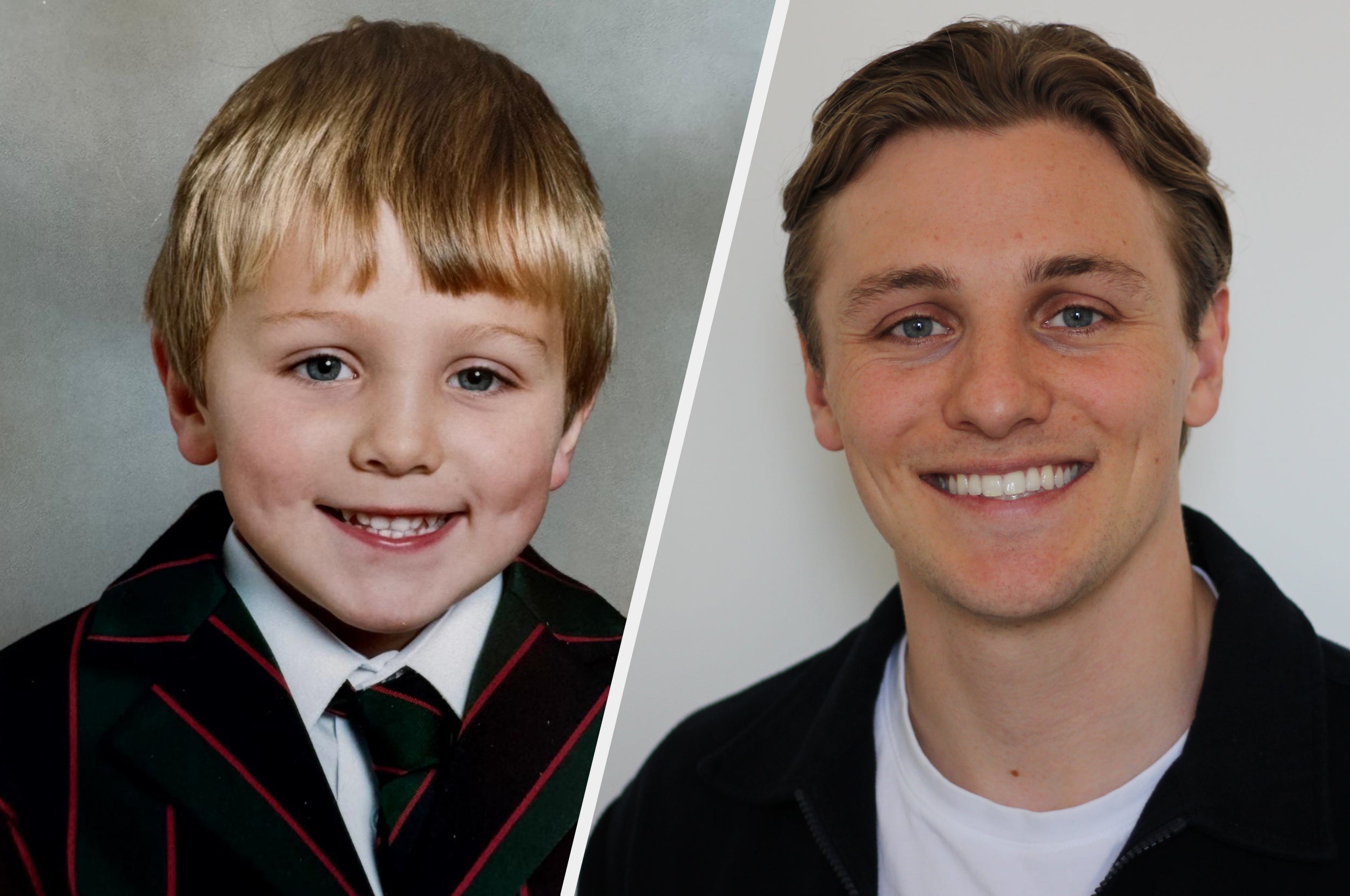
A young entrepreneur who “hated” school because of an undiagnosed learning disability has opened up about his experience in a bid to raise awareness among parents and teachers.

“I hated school. I thought I was just thick,” said Jamie Wace, from Devon. “I had siblings who were academic, but for me; reading, spelling, and working memory – I struggled with all of it.”

When Jamie was 13, a teacher noticed something “wasn’t quite right” with his school learning. Shortly after, his parents took him for a private assessment and he was diagnosed with dyslexia, a neurological difference which primarily affects reading and writing skills.

After the diagnosis, Jamie was able to adjust his way of learning at school. “My working memory is terrible, and I used to think that was just because I was stupid,” he recalled.

“Now I know that it’s a proper issue, and as a result, I was an avid notetaker at school after I knew this and I think that changed massively for me. I also just like was a bit less harsh on myself when I didn’t get something the first time.

“I was given extra time in exams, which was really helpful, but the main thing was discovering the things I could do well myself, as it is different for everyone.”

Prior to his diagnosis, Jamie said he had been in the bottom sets in classes at school, with predicted grades of Ds and Cs.

But after his diagnosis, his grades soared, with Jamie joining the top sets in all his classes within a year, and going on to achieve As and A*s in his exams.

“I was super lucky that my parents were able to take me for a private assessment,” Jamie recalled.

“I have no idea how long I could have been waiting to be tested via the local authority, and because I was 13, the waits could have meant some big impacts for my GCSEs.”

He’s now using his experience to help other children

Jamie, who is 30, is on a mission to screen one million children across the UK for dyslexia.

He co-founded Talamo, alongside Leo Thornton and Sophie Dick, in 2022. The online screening tool offers schools a way to screen classes quickly and affordably, costing roughly £12 per child.

The tool asks children aged 7-16 years old a number of questions and then offers a report providing a scale of how likely they are to have dyslexia, their strengths, as well as areas where they might need more support – and how teachers and parents can offer that support.

It is 95% accurate, according to the Talamo website – last September, just 10 schools were using it. Fast forward to today and 300 are. Parents can also pay for a online screening test for £69 which culminates in an action plan of next steps for their child at home and school.

It’s worth noting this isn’t a formal dyslexia assessment, nor can it provide a diagnosis. Private dyslexia assessments can typically cost £350 and over depending on the provider. The British Dyslexia Association says the cost of an assessment with a specialist teacher is £690 and an assessment with a psychologist is £882, for example.

But the online screening tool could help parents decide whether they should seek (and pay for) a full diagnosis – especially as waiting times can vary, depending on where you’re based and whether you opt for face-to-face or a remote assessment. Even the NHS’s website acknowledges diagnosis to be a “time consuming and frustrating process”.

“I don’t want other children to feel this way,” said Jamie, discussing how growing up he struggled with “mental fatigue and self-doubt” because of his undiagnosed learning difficulty.

“Understanding how my brain worked gave me the confidence to study in a way that suited me, and that changed everything. I knew I wasn’t stupid, I just learn things differently,” he added. “It set me on a path to earning two degrees and even learning Mandarin.”

Research has found as many as 80% of dyslexics leave school undiagnosed. As Kate Griggs, founder of Made By Dyslexia, previously wrote in an op-ed on HuffPost UK: “It means many children and their parents are left to muddle through, not knowing why their children are struggling and without their amazing potential being recognised.”

Symptoms of dyslexia can be subtle

In young children, it can manifest as slow speech development, muddling words up, showing no interest in letters or words, and difficulty learning to sing or recite the alphabet, according to the British Dyslexia Association.

In primary school, it can look like slow spoken or written language, difficulty concentrating and forgetting words. They might spell a word several different ways in a piece of writing, or use unusual sequencing of letters or words. And at secondary school level, pupils with dyslexia might have difficulty with punctuation and grammar, confuse upper and lower case letters, and have difficulty note-taking in class.

“There isn’t one simple checklist to notice the signs, and it can be subtle or less obvious in younger children, but that doesn’t mean it isn’t there,” said Jamie.

“Dyslexia doesn’t mean you’re less intelligent, it just means your brain works differently. But too many kids are told they’re lazy or slow, when really they just need the right support.”

Share Button

‘Don’t Assume Quiet Is OK’: How Overwhelmed Schools Miss Autism In Girls

“I believe autism shows up to everyone differently, no matter the gender,” TikTok star and body positivity advocate Miah Carter tells HuffPost UK.

Still, she says, “I 100% believe schools are still really unequipped when it comes to understanding autism. I think a lot of girls, like myself, mask their struggles really well. It can get completely missed.”

The National Autistic Society says this is common.

“Autistic women and girls may be better at masking their difficulties in order to fit in with their peers and have a more even profile of social skills in general,” they shared in their advice for teachers; autistic girls are diagnosed at a later age, on average, than autistic boys.

“For me, things like being overstimulated or shutting down were just seen as me being ‘dramatic’ or ‘too sensitive,’” Miah, diagnosed at six, continues.

“I wasn’t being listened to, I was being labelled. Teachers often dismiss signs as just being shy, rude, or moody, and that can be really damaging.”

So, we thought we’d speak to experts about how schools might misunderstand signs of autism in general, and among autistic girls more specifically.

“Most don’t receive extensive training in neurodiversity”

Dr Erin Lamb, CEO and president of the Gateway School for students with autism, developmental disabilities, and communication disorders, says: “Teachers are often on the front lines of early developmental observation, but most don’t receive extensive training in neurodiversity or how autism can present differently from the traditional (and often male-centred) clinical profile.”

This can make autism hard to spot, she says, “especially in cases where the child is highly verbal, academically capable, or able to ‘mask’ their challenges – traits often seen in girls.

“So while many teachers care deeply and observe thoughtfully, systemic gaps in training and awareness can lead to missed or delayed identification of autism.”

Meanwhile, Dr Ray Romanczyk from the Institute for Childhood Development at Binghamton University says: “You can’t make everyone an expert.

“And autism, especially in girls, is one of those things where the range of presentation can be from the very subtle to the very clear, and so to expect perfect identification by other than experts is really a hard goal to achieve,” he continues.

So, while he thinks “we can do a lot more where education comes in,” the expert stresses that “so much pressure has been put on educators to identify everything.

“It’s very difficult, and the younger the child, the more subtle, the more difficult.”

It’s not about blame

Autistic therapist and founder of The Sensitive Empowerment Community, Julie Bjelland, says: “It’s not about blame – it’s about awareness. We can do better when we understand more.”

“Most teachers aren’t trained to see autism outside the classic presentation,” she adds. “And schools are overwhelmed.”

Still, she recommends, “Don’t assume that quiet means OK. Or that good grades mean thriving. Many autistic students work so hard just to survive the school day. And when they get home, they fall apart from the effort of holding it all in.”

Miah tells HuffPost UK that improvements need to happen beyond the stage of spotting signs of autism.

“We need more training in schools, more patience, and way more understanding of neurodiversity,” she shares.

As Dr Romanczyk says, it’s not always possible for teachers to diagnose and accurately spot every instance of autism; nonetheless, experts all seem to agree that increased patience and improved training can make the experiences of autistic people easier.

Share Button

34 Tweets From Parents That Reveal The Truth About School Projects

If you’re the parent of a school-aged child, there will inevitably come a moment when they ask for help with a school project — bonus points if this happens the night before said project is due.

Do you zoom off to the crafts store in search of supplies? Give them a lecture about responsibility? Roll up your sleeves and grab a Pritt stick? Sigh dramatically and pour yourself a glass of wine?

The funny parents of Twitter (formerly X) have been there, done that and are here to tell you about it. Read the hilarity below:

Share Button