Gay Byrne, Presenter Of The Late Late Show, Has Died At The Age Of 85

HuffPost is part of Verizon Media. Verizon Media and our partners need your consent to access your device and use your data (including location) to understand your interests, and provide and measure personalised ads. Verizon Media will also provide you with personalised ads on partner products. Learn more.

Select ‘OK’ to continue and allow Verizon Media and our partners to use your data, or select ‘Manage options’ to view your choices.

Share Button

Strictly History Is Made With Same-Sex Routine | Jive Talking

Download Video

Share Button

Schoolgirl Drowned After She Was Thrown Head First Into Water On Drayton Manor Theme Park Ride

HuffPost is part of Verizon Media. Verizon Media and our partners need your consent to access your device and use your data (including location) to understand your interests, and provide and measure personalised ads. Verizon Media will also provide you with personalised ads on partner products. Learn more.

Select ‘OK’ to continue and allow Verizon Media and our partners to use your data, or select ‘Manage options’ to view your choices.

Share Button

CBD: Online interest is peaking

According to a new analysis, there are now more internet searches for cannabidiol (CBD) information than any other alternative therapies.
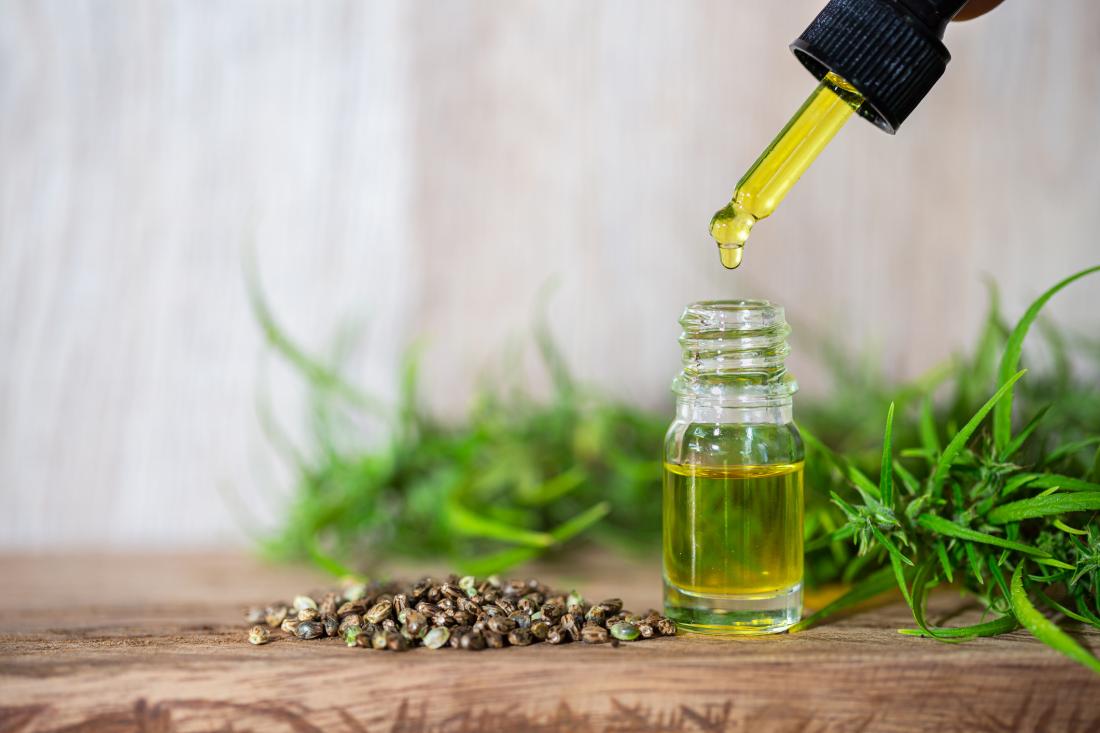
cbd oil
People’s interest in CBD products is skyrocketing, according to a new study.

Acne, pain, menstrual problems, and opioid addiction — the range of conditions that cannabidiol (CBD) can apparently treat seems endless. But does the compound really work? The answer remains unclear.

Nonetheless, CBD is having a moment, says a research letter that JAMA Network Open has published.

The analysis of online searches by the population of the United States reveals that millions are equally or more interested in CBD than they are in any other health products and topics.

Dr. Davey Smith, chief of infectious diseases and global public health at the University of California (UC), San Diego, says: “At this time there are no known benefits for taking CBD over the counter. CBD is this generation’s snake oil, where millions are engaging with the product without evidence of any benefit.”

CBD takes the stage

CBD is not new, with people having first extracted it from the cannabis plant in 1940. However, it has recently become available in an array of products, from gummies to ice cream, in the form of massage oil, and as droplets.

It is fair to say that public interest in CBD is high. Study co-author John W. Ayers notes that “3 years ago, there was essentially no one searching about CBD online, but now there are an estimated 6.4 million unique searches each month.”

CBD’s value as a health supplement remains indeterminate, with few major health authorities weighing in on its benefits or potential side effects.

The authors of the study believe that this is because they may not understand the extent to which people are interested in the substance. The team hopes to remedy this with hard data that prompt experts to prioritize more research.

Online curiosity about CBD

Health scientists from UC San Diego analyzed the frequency of U.S. Google searches for either “CBD” or “cannabidiol” from January 2004 through to April 2019.

Next, using this data, they extrapolated search traffic out through December 2019.

“Rather than relying on self-reports where some might not be willing to discuss CBD openly, we directly observed millions of instances of people seeking out information or even shopping for CBD online.”

Lead study author Dr. Eric Leas

During the last 3 years, the increase in CBD searches has been particularly pronounced. It increased by 125% during 2017 and then 160% during 2018. Experts expect it to be up by 180% again in 2019.

The researchers noted increased interest in CBD throughout the U.S. In some places, interest was especially strong. For instance, searches grew by 605% in Alabama.

The booming number of inquiries that the team recorded in other states — Vermont, Wisconsin, Tennessee, Colorado, New Hampshire, and Oregon — demonstrates that CBD is a nationwide topic of interest.

The interest in CBD may be partly due to the increased destigmatization of marijuana.

Indeed, states with legalized recreational marijuana use had the greatest number of CBD searches. States allowing medicinal uses of cannabis followed, and then states in which marijuana is illegal.

In comparison with other searches

To ascertain the significance of their findings, the researchers also tracked searches for other health-related topics, products, and alternative therapies.

“When talking to colleagues about our study,” says co-author and research fellow Alicia Nobles, “we often play a game we call ‘CBD or,’ and almost every time, experts are shocked to learn that CBD is more popular or nearly as popular.”

Nobels cites an example: “For every two internet searches for dieting in the U.S., we found there is one for CBD!”

While the number of searches for CBD was roughly equal to those for yoga and e-cigarettes, CBD queries swamped the search numbers for other popular health topics, exceeding the number of searches for:

  • veganism by 112%
  • marijuana by 113%
  • exercise by 159%
  • vaccination by 163%
  • meditation by 338%
  • apple cider vinegar by 517%
  • acupuncture by 749%.

What to do as interest in CBD accelerates

This longitudinal cross-sectional study did not address actual purchases of CBD-based products. However, the rapid increase of interest in CBD that the study has documented suggests that the substance’s popularity is outpacing scientific research into the benefits and hazards of its use.

The study’s authors assert that “investigation into CBD should become a public health priority to catch up with the public’s interest.”

They conclude their paper by proposing a four-phase plan of action going forward:

  1. “Studies should focus on the epidemiology of CBD use, characterizing who uses CBD products and for what purposes.”
  2. Researchers should evaluate the effects and potential drug interactions of CBD.
  3. There is a need to develop product safety standards because the mislabeling of CBD products is common, and adulterated products have led to mass poisonings.
  4. “Marketing practices around CBD should be standardized, as marketing that misleads the public could erode trust in evidence-based medicine.”

Share Button

Could a combination of psychedelics and meditation treat depression?

Mixing a specific type of meditation with a well-known hallucinogen may make for a new form of therapy that could aid those with depression, according to a new study.
woman meditating
New research suggests that combining meditation and psilocybin may improve symptoms of depression.

People often still regard psychedelic psychotherapy as a controversial treatment. However, recent evidence suggests that hallucinogens may have benefits for depression and anxiety disorders when individuals use them with certain other therapies.

The reasoning behind this is still unclear, but one theory states that psychedelics can help quicken the realization and thought processes a person needs for their therapy to work.

Psilocybin, a psychedelic that people find in magic mushrooms, has been the subject of several studies. Its effects can range from assisting with social interactions to limiting a person’s focus on themselves.

One such study, appearing in the Journal of Psychopharmacology in 2016, found that psilocybin, together with psychotherapy, produced antidepressant effects in patients with life-threatening cancer.

Researchers at Imperial College London found similar benefits in people with depression who had not responded to other treatments. Neuroimaging revealed the drug could turn off a part of the brain that is always on when a person is awake. Neuroscientists call this brain element the default mode network.

Earlier this year, the U.K. university opened the world’s first center for psychedelics research. A trial currently underway at the center is comparing the effects of psilocybin with those of a well-known antidepressant.

In the meantime, according to new findings that now appear in the journal Scientific Reports, combining psilocybin with a form of meditation may produce even more positive benefits.

The power of mindfulness meditation

Mindfulness meditation is already known to have a similar psychedelic effect to psilocybin, including reducing self-focus and boosting feelings of self-transcendence.

In the latest study, a team from the University Hospital of Psychiatry Zurich in Switzerland has combined the two to look at the joint impact for the first time.

Some 39 Buddhist meditation practitioners took part in a 5-day mindfulness retreat. Guided by a Zen teacher, they stuck to strict schedules that lasted from 6 a.m. until 9 p.m.

The practice — known as sesshin — involves sitting meditation sessions, indoor and outdoor walking meditation, and mindful physical activities. Participants were silent throughout.

On the fourth day of the retreat, the researchers gave some participants psilocybin while administering a placebo to the remainder.

Blocking negative impacts

Using questionnaires and mindfulness scales, among other neurocognitive measurements, the team found that, after 4 months, psilocybin takers had more positive changes.

These changes related to aspects such as empathy, self-acceptance, and psychosocial functioning.

Notably, even before the 4-month follow-up, “psilocybin markedly increased the incidence and intensity of self-transcendence virtually without inducing any anxiety compared to participants who received the placebo,” says Lukasz Smigielski, first author of the study.

In fact, researchers believe the skills gained during the meditation retreat helped guard against any negative impact from taking the psilocybin.

Predictors of a positive outcome included the depth of meditation and participants’ optimism and openness.

Another treatment for depression?

The intensity of the retreat and expertise of the participants may have limited the application of the findings, however. It may take the average person longer to experience the full benefits of mindfulness meditation, and many individuals will not have access to a structured, retreat-type experience.

But, says study director Prof. Franz Vollenweider, the findings could pave the way for “new therapeutic avenues.”

One example, he notes, could be “for the treatment of depression, which is often accompanied by increased self-focus and social deficits.”

With millions of adults in the United States currently living with depression, according to the Anxiety and Depression Association of America, this novel method could provide many more research opportunities.

As with all such research avenues, however, it is likely to take time before psychedelic psychotherapy or psychedelic enhanced meditation wholly enter the mental health conversation.

Share Button

Scottish MP Ross Thomson Steps Down As Conservative Candidate Amid ‘Malicious’ Groping Allegations

HuffPost is part of Verizon Media. Verizon Media and our partners need your consent to access your device and use your data (including location) to understand your interests, and provide and measure personalised ads. Verizon Media will also provide you with personalised ads on partner products. Learn more.

Select ‘OK’ to continue and allow Verizon Media and our partners to use your data, or select ‘Manage options’ to view your choices.

Share Button

Sunday Shows Round-Up: Boris Johnson’s Bregret And Remain Alliance Talks

HuffPost is part of Verizon Media. Verizon Media and our partners need your consent to access your device and use your data (including location) to understand your interests, and provide and measure personalised ads. Verizon Media will also provide you with personalised ads on partner products. Learn more.

Select ‘OK’ to continue and allow Verizon Media and our partners to use your data, or select ‘Manage options’ to view your choices.

Share Button

Jeremy Corbyn Responds To Trump’s ‘Extraordinary’ Comments About Him To Nigel Farage

HuffPost is part of Verizon Media. Verizon Media and our partners need your consent to access your device and use your data (including location) to understand your interests, and provide and measure personalised ads. Verizon Media will also provide you with personalised ads on partner products. Learn more.

Select ‘OK’ to continue and allow Verizon Media and our partners to use your data, or select ‘Manage options’ to view your choices.

Share Button

Jeremy Corbyn Says He Is ‘Deeply Suspicious’ Of Boris Johnson’s NHS Plans

HuffPost is part of Verizon Media. Verizon Media and our partners need your consent to access your device and use your data (including location) to understand your interests, and provide and measure personalised ads. Verizon Media will also provide you with personalised ads on partner products. Learn more.

Select ‘OK’ to continue and allow Verizon Media and our partners to use your data, or select ‘Manage options’ to view your choices.

Share Button

UK Weather Forecast: It’s Windy Out And It’s Causing A Bit Of Chaos

HuffPost is part of Verizon Media. Verizon Media and our partners need your consent to access your device and use your data (including location) to understand your interests, and provide and measure personalised ads. Verizon Media will also provide you with personalised ads on partner products. Learn more.

Select ‘OK’ to continue and allow Verizon Media and our partners to use your data, or select ‘Manage options’ to view your choices.

Share Button