
After two of the most damaging hurricanes in history affected the Gulf of Mexico just a few days apart, the impact of climate-induced catastrophes is finally getting some attention. However, in truth, a few hurricanes, even ones that cause hundreds of billions of dollars’ worth of damage, are far from the worst things climate change could cause.
Let’s face it, climate change could be ‘beyond catastrophic’. In the worst-case scenario, climate change could end human civilization once and for all, taking most of Earth’s species with us.
At present, countries around the world have committed to holding global warming at less than 1.5 degrees Celsius above pre-industrial levels – “not yet a geophysical impossibility” according to a study published last week in Nature. This means around twice as much warming as we have already experienced. However, even if all countries honour these commitments, that may not be enough to stave off climate catastrophe.
For one thing, while we can aim to limit climate change to such levels, it’s rather like playing ‘pin the tail on the donkey.’ Global climate systems are incredibly complex, and understanding the long-term impact of emissions is near impossible. For instance, the last time the earth’s atmosphere contained as much Carbon Dioxide as it does now, global surface temperatures were 6 degrees warmer, and sea levels were 30 meters higher. It is estimated that under current plans to reduce emissions we still have a 10% chance of causing 6 degrees of warming or more, levels commonly associated with a real threat of civilizational collapse.
However, even if we do limit global surface temperature rise to 1.5-degrees, this still may not avoid catastrophe. For instance, hurricanes, like Harvey and Irene, are governed by oceanic temperature, not surface temperature, and these can be poorly correlated. Other equally important features of the climate include the availability of fresh water and the acidity of our oceans. Even if we manage to keep global temperatures to within 1.5 degrees Celsius of pre-industrial levels; if this is the only thing we achieved, then we could still face many other catastrophic global climate changes.
When I tell people about these kinds of problems, the response I usually get is ‘well then, we’re doomed!’ However, this is a mistake. For one thing, all this complexity and uncertainty could also mean that we are safer than we feared. The climate may respond less to greenhouse gas emissions than our models predict and global temperature rises may be less dangerous than we thought. For another, even if things do turn out for the worst, it is not like we are powerless to do anything about it!
I work at the Centre for the Study of Existential Risk, a University of Cambridge research group working to prevent human extinction. We believe that humanity is a lot more resilient, creative and productive than many people give us credit, and that, so long as we do not go extinct, we have a promising future ahead of us. The challenge we face right now is making sure we survive to see it!
For us, avoiding global catastrophes is not just a good subject for science fiction, it is the key global challenge of our age.
The effects of climate change are not linear. For one or two degrees of warming, they amount to ‘only’ a few percentage points drop in global GDP, a few hundred thousand extra deaths each year and a few hundred million climate refugees. For six degrees of climate change, it becomes reasonable to talk about the total collapse of the global economy, billions of deaths and the prevention of trillions of future lives.
Seen this way, averting climate catastrophe should be our number one goal in mitigating and adapting to climate change. That certainly involves adopting the toughest policies towards reducing global greenhouse gas emissions, because even a 10% chance of a climate catastrophe is way too high. And it means studying the potential for these catastrophes much more so that we understand how likely they are and how to prevent them.
However, it also means not getting too attached to other climate goals, such as keeping global temperatures to within 1.5 degrees of pre-industrial levels. If, and when, we break through such targets, it will be a black day indeed in human history. However, uncertainty about the long-term impact of our emissions means that these goals may already have been broken, and to lose hope and give up on trying to prevent the greater danger of human extinction would be even worse.
This article draws on themes from an ESRC funded workshop on Risk, Uncertainty and Catastrophe Scenarios, part of a series on climate ethics and climate economics.




 American healthcare reform debates are focused on strategies to provide “access” to medical services for all. Lack of insurance (or under-insurance) seems to be the
  Medical school prepares physicians to prescribe medications for prevention and treatment of disease, but little to no time is spent teaching something just as important: de-prescribing. In our current system of auto-refills, e-prescriptions, and mindless “check box” EMR medication reconciliation, patients may continue taking medications
  I receive a significant amount of email in response to
  The New Yorker recently featured
  At the risk of vilification by my peers, I’m going to say something extremely unpopular. We physicians have it pretty good financially. Our salaries are generous, and we have a much higher standard of living than most others in America. When I read
  Over 1 million
 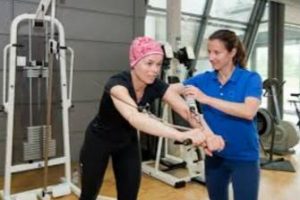 Rehabilitation medicine is one of the best-kept secrets in healthcare. Although the specialty is as old as America’s Civil War, few people are familiar with its history and purpose. Born out of compassion for wounded soldiers in desperate need of societal re-entry and meaningful employment, “physical reconstruction” programs were developed to provide everything from adaptive equipment to family training, labor alternatives and psychological support for veterans.
 We’ve all heard the saying, “age is just a number.” Nowhere is that more important than in the hospital setting. Over the years I’ve become more and more aware of ageism in healthcare – a bias against full treatment options for older patients. Assumptions about lower capabilities, cognitive status and sedentary lifestyle are all too common. There is a kind of “senior profiling” that occurs among hospital staff, and this regularly leads to inappropriate medical care.