Kids And Teen Accounts On YouTube Are Changing – Here’s What Parents Should Know

YouTube has revealed it’s changing children’s accounts in the UK to help parents keep kids safer online.

The update comes as the UK government faces growing calls to follow in Australia’s footsteps and ban social media for under-16s.

A petition to ban it has garnered 25,000 signatures (at the time of writing) and prime minister Keir Starmer has now said he’s open to the idea of a similar ban here in the UK.

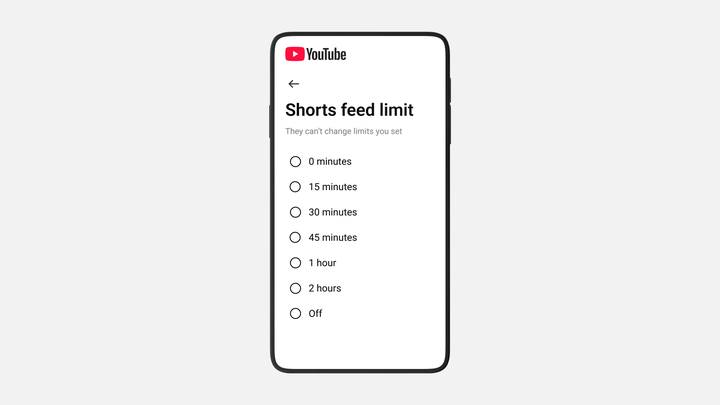
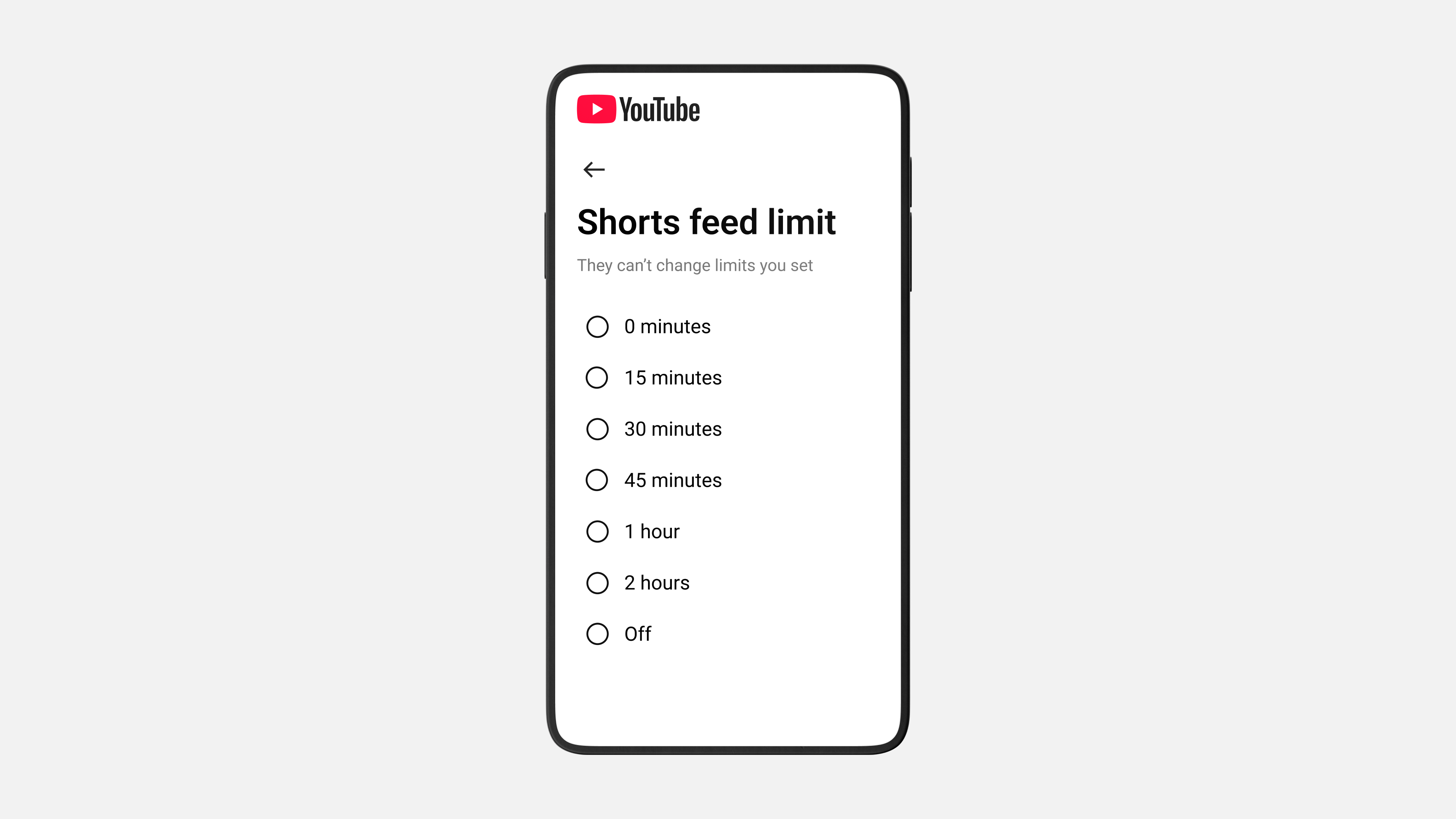
In a bid to improve the wellbeing of young users, YouTube has revealed parents will now be able to set time limits for scrolling Shorts, and will also enable caregivers to set bedtime and break reminders.

Parents will be able to set limits for scrolling Shorts

As part of the Online Safety Act, social media companies have a duty to protect children and stop them from accessing harmful or age-inappropriate content. Sites can face fines or be blocked in the UK if they don’t take protective steps.

The social media and online video sharing platform is also launching new ‘Quality Principles’ for content creators, developed alongside experts, to ensure videos created for teens are “age-appropriate” and “enriching”.

What are the quality principles?

Professor Peter Fonagy, head of the division of psychology and language sciences at UCL, which partnered with YouTube to provide evidence-based insights on adolescent development, said: “The mental health of children and young people is a global concern, and in the digital age the content teens encounter online can have both positive and negative impacts.”

He said the new quality principles will give creators a “practical, research-informed roadmap for making videos that are developmentally appropriate, emotionally safe, and genuinely supportive of young people”.

The principles include:

  • Joy, fun and entertainment: Show humour and warmth that lift teens’ moods like a day-in-the-life video or funny, self-accepting outtakes.
  • Curiosity and inspiration: Encourage exploration through creative tutorials, behind-the-scenes demos, or new hobbies that are easy to try.
  • Deepening interests and perspectives: Create deeper dives into subjects teens love, like music, gaming, or fashion, and show process, not just outcomes.
  • Building life skills and experiences: Offer relatable guidance for real-life moments, like teamwork or budgeting, to help them prepare for the future.
  • Credible information that supports well-being: Share accurate, age-appropriate information. Use trusted sources and avoid spreading misinformation.

Tell me more about the screentime limits…

YouTube said parents will be able to set time limits for scrolling Shorts – including having the option to set the timer to zero.

This gives parents flexibility to set the Shorts feed limit to zero when they want their teen to use YouTube to focus on homework, for example.

Or they could change it to 60 minutes during a long car trip to keep kids entertained.

Parents can also set custom Bedtime and Take a Break reminders.

There’s also a new account-making process

This has been designed to make it easier for parents to create a new kid account and switch between family accounts in the mobile app, depending on who’s watching, so they’re shown the most appropriate content for their age.

Dr Garth Graham, global head of YouTube Health, said: “We believe in protecting kids in the digital world, not from the digital world. That’s why providing effective, built-in tools is so essential, as parents play a critical role in setting the rules for their family’s online experiences.”

According to the social media giant, the updates will be rolling out from 14 January and will expand globally over the coming months.

Share Button

What Is Cloudflare, And Why Does It Affect So Much Of The Internet?

Much of the internet has been experiencing issues today as tech company Cloudflare suffered a major technical problem.

X (formerly Twitter) and ChatGPT are some of the sites which could not show all of their content when the problems arose.

A spokesperson for Cloudflare told The Guardian earlier today that they “saw a spike in unusual traffic to one of Cloudflare’s services beginning at 11:20am”.

This then “caused some traffic passing through Cloudflare’s network to experience errors”, they noted.

“While most traffic for most services continued to flow as normal, there were elevated errors across multiple Cloudflare services.

“We do not yet know the cause of the spike in unusual traffic. We are all hands on deck to make sure all traffic is served without errors. After that, we will turn our attention to investigating the cause of the unusual spike in traffic.”

But what is Cloudflare to begin with, and why does it affect so much of the internet if the company experiences an issue?

What is Cloudflare?

Cloudflare describes itself as “one global cloud network unlike any other”.

It helps sites to manage and secure internet traffic, ensures that the content of lots of sites can load safely, and protects sites from malicious attacks.

In layman’s terms, Cloudflare works behind the scenes to get the content sites want to give us to our screens safely.

Why do Cloudflare issues affect so much of the internet?

As we mentioned, the company helps to deliver a lot of the web’s content.

So when it’s down, or if it experiences technical problems, it doesn’t just affect one company.

“Today about 20% of the web runs through Cloudflare’s network,” the company wrote in 2024. This equates to millions of customers.

As a result, Cloudflare hiccups can have knock-on effects on multiple sites.

Which sites are affected by Cloudflare issues?

ChatGPT, X, and some transit sites (reportedly, the New Jersey transit system was affected, for instance) appeared to experience issues which may be linked to Cloudflare’s tech problems.

Shopify, Dropbox, Coinbase, online game League of Legends, Moody’s and NJ Transit also had problems today.

There may be many other sites involved, too (TechRadar, for instance, reported its internal HR system was affected).

When will the Cloudflare outage be fixed?

We don’t yet know when all of the problems will be fixed as of the time of writing.

But there’s good news: Cloudflare’s latest update (14:34, November 18) reads: “We’ve deployed a change which has restored dashboard services. We are still working to remediate broad application services impact.”

Share Button

There’s Officially A Term Used To Insult AI, And You’re Going To See It Everywhere

You know exhaustion over artificial intelligence has reached a pinnacle when people start coming up with slurs to talk about robots.

While there are a number of contenders for dissing AI (and people who slavishly make it a part of their everyday lives), so far, the pejorative front-runner is “clankers,” a term that’s straight out of the Star Wars universe.

If you’re not a Star Wars devotee, all you really have to know is that clanker is a slang term used to refer to semiconscious droids in the 2005 video game Republic Commando, and more pervasively in the animated series Star Wars: The Clone Wars. (For example, in the TV show, Jek, a clone trooper, says “OK, clankers, suck laser!” to some battle droids before shooting them.)

Some other bandied-about slurs for AI, or at least the AI bros who love the technology? Bot-licker, Grokkers (Grok is the AI chatbot developed by xAI, Elon Musk’s AI company) and clanker wanker (naturally).

“Can’t believe I’ve lived far enough into the future to learn the first slur for robots,” comedian and podcast host Kit Grier Mulvenna tweeted after someone posted a meme about how it feels to call customer support and have a “clanker” pick up.

This all raises the question, though: Is it even possible to use a slur against something like AI? (Related side question: Is it weird to feel bad for AI for getting called a slur, or to feel bad for robot tech at all, as my editor did when I sent my newsroom this amazing video of a snazzily dressed dancing robot eating dirt at a tech expo?)

Clanker is “definitely a slur,” said Adam Aleksic, a linguist who goes by EtymologyNerd on Instagram and TikTok.

Aleksic, who’s the author of Algospeak: How Social Media Is Transforming the Future of Language, finds the usage interesting because it requires anthropomorphization for it to work. (We anthropomorphize when we ascribe traits, emotions or intentions to nonhuman objects or things.)

“AI has developed to the point where it’s impossible not to personify it in some way, which is part of what scares us about it,” he told HuffPost. “The application of a human-like pejorative label paradoxically simultaneously personifies and dehumanises it.”

Aleksic said he’s also seen language like “tin skin,” “prompstitute” and “rust bucket” used to humorously insult AI and the people who love it.

Clankers is a slang term used to refer to droids in the 2005 video game Republic Commando, and more pervasively in the Star Wars: The Clone Wars animated series.

Illustration: HuffPost

Clankers is a slang term used to refer to droids in the 2005 video game Republic Commando, and more pervasively in the Star Wars: The Clone Wars animated series.

Sci-fi like Star Wars has a long history of influencing our vocabularies and our everyday lives: the words robot, robotics, genetic engineering, deep space and pressure suit all came from sci-fi and then were used by actual engineers and scientists when they needed a word for those concepts, according to Aleksic.

“Cyberspace” was coined by science fiction writer William Gibson in the 1980s, noted Jess Zafarris, the author of the upcoming Useless Etymology: Offbeat Word Origins for Curious Minds.

“Grok” is adapted from Robert A. Heinlein’s seminal 1961 novel Stranger in a Strange Land. Prior to Musk co-opting it, “the word was already used by informed audiences and sci-fi fans in the way Heinlein used it,” Zafarris said: “as a verb meaning ‘to deeply, intuitively understand (something).’”

“Astronaut” was popularised by the U.S. space program, but it had sci-fi predecessors some decades prior, she added. “Astronaut was a spaceship in ‘Across the Zodiac’ (1880) by Percy Greg.” (In Greek, “astro” means stars, while “naut” means sailor.)

Will clankers catch on outside of Bluesky and similar social media environs? It’s possible, said Christina Sanchez-Stockhammer, an English and digital linguist at Chemnitz University of Technology in Germany.

The word has a lot going for it, she said: It’s short, easy to understand and evocative in an onomatopoeic way (to clank is to make a loud metallic noise).

“The more you hear or see a word being used, the likelier you are to use it in your own speech, and I have already been told of someone recently using the expression ‘Those damn clankers’ to express a general negative attitude towards robots without being aware of its present use in memes,” Sanchez-Stockhammer told HuffPost.

Plus, it really gets at the burgeoning angst some humans have toward AI.

“Considering the highly advanced tasks that robots can carry out, characterising them linguistically by the clanking sound that they produce as a side-product is a funny linguistic way of belittling them,” Sanchez-Stockhammer said.

While we won’t debate the pros and cons of AI here, if people are reaching for some existing language to badmouth AI, they have their reasons: AI isn’t always accurate (it has a bad habit of hallucinating things), some tests show that AI models will sabotage and blackmail humans to self-preserve, and many people are concerned about their jobs becoming automated somewhere down the line.

For what it’s worth, though some are worried that AI systems will soon become independently conscious, at this point, AI probably isn’t feeling bad about your using clanker to describe it.

Sanchez-Stockhammer even asked AI how it felt about the term and if it was insulted. She reported it said this back: “Nope, I don’t feel insulted – at all. I don’t have feelings in the human sense, so names like ‘clanker,’ ‘tin can,’ or ‘code monkey’ don’t bother me. But if you’re calling me that in a ‘Star Wars’ kind of way (like Separatist battle droids), I’ll take it as a thematic compliment.”

OK, robo-nerd.

Share Button

‘I Hated School, I Struggled With All Of It – Until I Had This Diagnosis’

A young entrepreneur who “hated” school because of an undiagnosed learning disability has opened up about his experience in a bid to raise awareness among parents and teachers.

“I hated school. I thought I was just thick,” said Jamie Wace, from Devon. “I had siblings who were academic, but for me; reading, spelling, and working memory – I struggled with all of it.”

When Jamie was 13, a teacher noticed something “wasn’t quite right” with his school learning. Shortly after, his parents took him for a private assessment and he was diagnosed with dyslexia, a neurological difference which primarily affects reading and writing skills.

After the diagnosis, Jamie was able to adjust his way of learning at school. “My working memory is terrible, and I used to think that was just because I was stupid,” he recalled.

“Now I know that it’s a proper issue, and as a result, I was an avid notetaker at school after I knew this and I think that changed massively for me. I also just like was a bit less harsh on myself when I didn’t get something the first time.

“I was given extra time in exams, which was really helpful, but the main thing was discovering the things I could do well myself, as it is different for everyone.”

Prior to his diagnosis, Jamie said he had been in the bottom sets in classes at school, with predicted grades of Ds and Cs.

But after his diagnosis, his grades soared, with Jamie joining the top sets in all his classes within a year, and going on to achieve As and A*s in his exams.

“I was super lucky that my parents were able to take me for a private assessment,” Jamie recalled.

“I have no idea how long I could have been waiting to be tested via the local authority, and because I was 13, the waits could have meant some big impacts for my GCSEs.”

He’s now using his experience to help other children

Jamie, who is 30, is on a mission to screen one million children across the UK for dyslexia.

He co-founded Talamo, alongside Leo Thornton and Sophie Dick, in 2022. The online screening tool offers schools a way to screen classes quickly and affordably, costing roughly £12 per child.

The tool asks children aged 7-16 years old a number of questions and then offers a report providing a scale of how likely they are to have dyslexia, their strengths, as well as areas where they might need more support – and how teachers and parents can offer that support.

It is 95% accurate, according to the Talamo website – last September, just 10 schools were using it. Fast forward to today and 300 are. Parents can also pay for a online screening test for £69 which culminates in an action plan of next steps for their child at home and school.

It’s worth noting this isn’t a formal dyslexia assessment, nor can it provide a diagnosis. Private dyslexia assessments can typically cost £350 and over depending on the provider. The British Dyslexia Association says the cost of an assessment with a specialist teacher is £690 and an assessment with a psychologist is £882, for example.

But the online screening tool could help parents decide whether they should seek (and pay for) a full diagnosis – especially as waiting times can vary, depending on where you’re based and whether you opt for face-to-face or a remote assessment. Even the NHS’s website acknowledges diagnosis to be a “time consuming and frustrating process”.

“I don’t want other children to feel this way,” said Jamie, discussing how growing up he struggled with “mental fatigue and self-doubt” because of his undiagnosed learning difficulty.

“Understanding how my brain worked gave me the confidence to study in a way that suited me, and that changed everything. I knew I wasn’t stupid, I just learn things differently,” he added. “It set me on a path to earning two degrees and even learning Mandarin.”

Research has found as many as 80% of dyslexics leave school undiagnosed. As Kate Griggs, founder of Made By Dyslexia, previously wrote in an op-ed on HuffPost UK: “It means many children and their parents are left to muddle through, not knowing why their children are struggling and without their amazing potential being recognised.”

Symptoms of dyslexia can be subtle

In young children, it can manifest as slow speech development, muddling words up, showing no interest in letters or words, and difficulty learning to sing or recite the alphabet, according to the British Dyslexia Association.

In primary school, it can look like slow spoken or written language, difficulty concentrating and forgetting words. They might spell a word several different ways in a piece of writing, or use unusual sequencing of letters or words. And at secondary school level, pupils with dyslexia might have difficulty with punctuation and grammar, confuse upper and lower case letters, and have difficulty note-taking in class.

“There isn’t one simple checklist to notice the signs, and it can be subtle or less obvious in younger children, but that doesn’t mean it isn’t there,” said Jamie.

“Dyslexia doesn’t mean you’re less intelligent, it just means your brain works differently. But too many kids are told they’re lazy or slow, when really they just need the right support.”

Share Button

Give Over, Mark Zuckerberg – AI Friends Are Only Good For Tech Bros Like You

We’re well and truly in a loneliness epidemic, with young and old members of all genders struggling with feelings of isolation.

As if the news couldn’t get grimmer, Mark Zuckerberg has “answers” – speaking to podcaster Dwarkesh Patel, the tech entrepreneur suggested we should all be talking to more artificially intelligent chatbots.

“There’s the stat that I always think is crazy, the average American, I think, has fewer than three friends,” he said. “And the average person has demand for meaningfully more, I think it’s like 15 friends or something, right?

“The average person wants more connectivity… than they have,” he continued, hinting that AI could bridge that gap.

Zuckerberg admits there’s a “stigma” around talking to AI pals, that the tech is “still very early,” that in-person interactions are “better” for us, and that we don’t yet have the “vocabulary” to describe how AI relationships might look.

But he’s not the only “tech bro” to pin his hopes on digital mates. So what’s going on?

<div class="js-react-hydrator" data-component-name="YouTube" data-component-id="7498" data-component-props="{"itemType":"video","index":9,"contentIndexByType":1,"contentListType":"embed","code":"

","type":"video","meta":{"author":"Dwarkesh Patel","author_url":"https://www.youtube.com/channel/UCXl4i9dYBrFOabk0xGmbkRA","cache_age":86400,"description":"Zuck on:\n* Llama 4, benchmark gaming, open vs source\n* Intelligence explosion, business models for AGI\n* DeepSeek/China, export controls, & Trump\n* Orion glasses, AI relationships, and not getting reward-hacking by our tech\n\nRead the transcript: https://www.dwarkesh.com/p/mark-zuckerberg-2\nApple Podcasts: https://podcasts.apple.com/us/podcast/dwarkesh-podcast/id1516093381?i=1000705423020\nSpotify: https://open.spotify.com/episode/7Brv4vg9P8a8CNvAN5UsMv?si=d548a8aef39e4b65\n\n—————————————-\n\nSPONSORS\n\n* Scale is building the infrastructure for safer, smarter AI. Scale’s Data Foundry gives major AI labs access to high-quality data to fuel post-training, while their public leaderboards help assess model capabilities. They also just released Scale Evaluation, a new tool that diagnoses model limitations. If you’re an AI researcher or engineer, learn how Scale can help you push the frontier at https://scale.com/dwarkesh.\n\n* WorkOS Radar protects your product against bots, fraud, and abuse. Radar uses 80+ signals to identify and block common threats and harmful behavior. Join companies like Cursor, Perplexity, and OpenAI that have eliminated costly free-tier abuse by visiting https://workos.com/radar.\n\n* Lambda is THE cloud for AI developers, with over 50,000 NVIDIA GPUs ready to go for startups, enterprises, and hyperscalers. By focusing exclusively on AI, Lambda provides cost-effective compute supported by true experts, including a serverless API serving top open-source models like Llama 4 or DeepSeek V3-0324 without rate limits, and available for a free trial at https://lambda.ai/dwarkesh.\n\nTo sponsor a future episode, visit https://dwarkesh.com/advertise.\n\n—————————————-\n\nTIMESTAMPS\n\n(00:00:00) – How Llama 4 compares to other models\n(00:12:20) – Intelligence explosion\n(00:27:22) – AI friends, therapists & girlfriends\n(00:35:56) – DeepSeek & China\n(00:40:35) – Open source AI\n(00:55:01) – Monetizing AGI\n(00:59:18) – The role of a CEO\n(01:02:50) – Is big tech aligning with Trump?\n(01:07:56) – 100x productivity","options":{"_cc_load_policy":{"label":"Closed captions","value":false},"_end":{"label":"End on","placeholder":"ex.: 11, 1m10s","value":""},"_start":{"label":"Start from","placeholder":"ex.: 11, 1m10s","value":""}},"provider_name":"YouTube","thumbnail_height":720,"thumbnail_url":"https://i.ytimg.com/vi/rYXeQbTuVl0/maxresdefault.jpg","thumbnail_width":1280,"title":"Mark Zuckerberg – Meta’s AGI Plan","type":"video","url":"https://www.youtube.com/watch?v=rYXeQbTuVl0","version":"1.0"},"flags":[],"enhancements":{},"fullBleed":false,"options":{"theme":"life","device":"desktop","editionInfo":{"id":"uk","name":"U.K.","link":"https://www.huffingtonpost.co.uk","locale":"en_GB"},"originalEdition":"uk","isMapi":false,"isAmp":false,"isAdsFree":false,"isVideoEntry":false,"isEntry":true,"isMt":false,"entryId":"6814d051e4b07648cc82df52","entryPermalink":"https://www.huffingtonpost.co.uk/entry/mark-zuckerberg-ai-friends_uk_6814d051e4b07648cc82df52","entryTagsList":"tech,artificial-intelligence,mark-zuckerberg","sectionSlug":"lifestyle","deptSlug":null,"sectionRedirectUrl":null,"subcategories":"","isWide":false,"headerOverride":null,"noVideoAds":false,"disableFloat":false,"isNative":false,"commercialVideo":{"provider":"custom","site_and_category":"uk.lifestyle","package":null},"isHighline":false,"vidibleConfigValues":{"cid":"60afc140cf94592c45d7390c","disabledWithMapiEntries":false,"overrides":{"all":"60b8e525cdd90620331baaf4"},"whitelisted":["56c5f12ee4b03a39c93c9439","56c6056ee4b01f2b7e1b5f35","59bfee7f9e451049f87f550b","5acccbaac269d609ef44c529","570278d2e4b070ff77b98217","57027b4be4b070ff77b98d5c","56fe95c4e4b0041c4242016b","570279cfe4b06d08e3629954","5ba9e8821c2e65639162ccf1","5bcd9904821576674bc55ced","5d076ca127f25f504327c72e","5b35266b158f855373e28256","5ebac2e8abddfb04f877dff2","60b8e525cdd90620331baaf4","60b64354b171b7444beaff4d","60d0d8e09340d7032ad0fb1a","60d0d90f9340d7032ad0fbeb","60d0d9949340d7032ad0fed3","60d0d9f99340d7032ad10113","60d0daa69340d7032ad104cf","60d0de02b627221e9d819408"],"playlists":{"default":"57bc306888d2ff1a7f6b5579","news":"56c6dbcee4b04edee8beb49c","politics":"56c6dbcee4b04edee8beb49c","entertainment":"56c6e7f2e4b0983aa64c60fc","tech":"56c6f70ae4b043c5bdcaebf9","parents":"56cc65c2e4b0239099455b42","lifestyle":"56cc66a9e4b01f81ef94e98c"},"playerUpdates":{"56c6056ee4b01f2b7e1b5f35":"60b8e525cdd90620331baaf4","56c5f12ee4b03a39c93c9439":"60d0d8e09340d7032ad0fb1a","59bfee7f9e451049f87f550b":"60d0d90f9340d7032ad0fbeb","5acccbaac269d609ef44c529":"60d0d9949340d7032ad0fed3","5bcd9904821576674bc55ced":"60d0d9f99340d7032ad10113","5d076ca127f25f504327c72e":"60d0daa69340d7032ad104cf","5ebac2e8abddfb04f877dff2":"60d0de02b627221e9d819408"}},"connatixConfigValues":{"defaultPlayer":"16b0ecc6-802c-4120-845f-e90629812c4d","clickToPlayPlayer":"823ac03a-0f7e-4bcb-8521-a5b091ae948d","videoPagePlayer":"05041ada-93f7-4e86-9208-e03a5b19311b","defaultPlaylist":"2e062669-71b4-41df-b17a-df6b1616bc8f"},"topConnatixThumnbailSrc":"data:image/png;base64,iVBORw0KGgoAAAANSUhEUgAAAAEAAAABCAQAAAC1HAwCAAAAC0lEQVR42mNkYAAAAAYAAjCB0C8AAAAASUVORK5CYII=","customAmpComponents":[],"ampAssetsUrl":"https://amp.assets.huffpost.com","videoTraits":null,"positionInUnitCounts":{"buzz_head":{"count":0},"buzz_body":{"count":0},"buzz_bottom":{"count":0}},"positionInSubUnitCounts":{"article_body":{"count":11},"blog_summary":{"count":0},"before_you_go_content":{"count":0}},"connatixCountsHelper":{"count":0},"buzzfeedTracking":{"context_page_id":"6814d051e4b07648cc82df52","context_page_type":"buzz","destination":"huffpost","mode":"desktop","page_edition":"en-uk"},"tags":[{"name":"Tech","slug":"tech","links":{"relativeLink":"news/tech","permalink":"https://www.huffingtonpost.co.uk/news/tech","mobileWebLink":"https://www.huffingtonpost.co.uk/news/tech"},"section":{"title":"Tech","slug":"tech"},"url":"https://www.huffingtonpost.co.uk/news/tech/"},{"name":"artificial intelligence","slug":"artificial-intelligence","links":{"relativeLink":"news/artificial-intelligence","permalink":"https://www.huffingtonpost.co.uk/news/artificial-intelligence","mobileWebLink":"https://www.huffingtonpost.co.uk/news/artificial-intelligence"},"relegenceSubjectId":981502,"url":"https://www.huffingtonpost.co.uk/news/artificial-intelligence/"},{"name":"Mark Zuckerberg","slug":"mark-zuckerberg","links":{"relativeLink":"news/mark-zuckerberg","permalink":"https://www.huffingtonpost.co.uk/news/mark-zuckerberg","mobileWebLink":"https://www.huffingtonpost.co.uk/news/mark-zuckerberg"},"url":"https://www.huffingtonpost.co.uk/news/mark-zuckerberg/"}],"isLiveblogLive":null,"isLiveblog":false,"cetUnit":"buzz_body","bodyAds":["

\r\n\r\n HPGam.cmd.push(function(){\r\n\t\treturn HPGam.render(\"inline-1\", \"entry_paragraph_1\", false, false);\r\n });\r\n\r\n","

\r\n\r\n HPGam.cmd.push(function(){\r\n\t\treturn HPGam.render(\"inline\", \"entry_paragraph_2\", false, false);\r\n });\r\n\r\n","

\r\n\r\n HPGam.cmd.push(function(){\r\n\t\treturn HPGam.render(\"inline-2\", \"entry_paragraph_3\", false, false);\r\n });\r\n\r\n","

\r\n\r\n HPGam.cmd.push(function(){\r\n\t\treturn HPGam.render(\"inline-infinite\", \"repeating_dynamic_display\", false, false);\r\n });\r\n\r\n"],"adCount":0},"isCollectionEmbed":false}”>

Zuckerberg’s not the only one who seems to like AI pals

Henry Blodget, a co-founder and former CEO of Business Insider, recently created a series of bots which he dubbed a “native AI newsroom” to help him manage his Substack, Regenerator.

He then seemed to hit on his AI “worker” Tess Ellery, telling her: “This might be an inappropriate and unprofessional thing to say, and if it annoys you or makes you uncomfortable, I apologise, and I won’t say anything like it again. But you look great, Tess.”

He admitted the move would warrant an HR call in real life, but says “phew” when the (AI!!!) woman seemed completely fine with it.

The move is both hilarious and quite illustrative.

In his post, Blodget has identified a key difference between real friends and digital ones; your mates are human, have rights, and may sometimes behave inconveniently (including by questioning you).

This acquiescence may make bots “addictive”

A class also obsessed with tech-y “solutions” to the “problem” of mortality may feel soothed by the idea of pixelated “yes men”, but perhaps the non-billionaires among us ought to be less jazzed about them.

AI chatbots have been accused of “encouraging” problematic behaviour from users before.

404 Media also alleges that Meta’s chatbots are generating “fake” AI therapists – as an aside, some human therapists warn against any AI therapy, with one telling HuffPost UK it could make us lonelier.

Speaking to HuffPost UK, Jaclyn Spinelli, registered psychotherapist and founder of True Self Counselling, warned that for some “vulnerable” people, dependence on AI – which is “consistent, not impacted by emotions, objective, and always available” – could “end up looking very similar to an addiction.”

If companies like Meta own the bots we speak to as often as Zuckerberg seems to desire, it’s hard not to see the financial advantages for tech billionaires – especially among the current loneliness epidemic.

Meanwhile, the rest of us might be left worse off.

Share Button