Reducing Mental Effort – Part 1

Cognitive load is the mental effort required to complete a task or project.

If you can reduce the average cognitive load of your days, your days will feel easier and less stressful, you can get more done, and you can end your days feeling less fatigued. You’ll also have extra mental resources to apply to your most difficult tasks.

Moreover, with a lower cognitive burden from your routine tasks, you’ll gain some excess mental capacity, which you can use to set and pursue more ambitious goals or tackle major transitions.

When your cognitive load is high, it’s difficult to add more to your plate without feeling overwhelmed. You may feel more stressed, frustrated, or burdened when your cognitive load gets too high. And when you’re dealing with too much pressure, it can made the problem even worse by causing you to fall out of sync with your best habits. Even tasks that you used to handle well begin to pile up, and now you have even more issues to deal with – and a reduced capacity to deal with them.

A good way to unbury yourself from mounting problems and a backlog of to-dos is to reduce the cognitive load you must deal with. Get your mind back to a place where you have excess capacity, and you feel that you can intelligently and reasonably handle everything you’re taking on.

Since this is such an important topic, I’m going to explore it through a series of posts over several days, so we can break this down into bite-sized pieces (which is also a way to reduce cognitive load).

Let’s begin with the most important item:

Cardio Exercise

If you only apply one idea from this series, adding regular cardio exercise to your life would be the most important, perhaps as important as all the other items combined.

The mental benefits of cardio exercise are profound. Think of cardio exercise as garbage collection and optimization for your brain – it rebalances hormones and neurotransmitters, cleans out dead cells, and strengthens existing cells. If you don’t do it, waste products build up and drag you down mentally and emotionally, thereby reducing the cognitive load you can handle. Cardio exercise is a highly effective anti-depressant as well – it’s one of the best mood boosters available.

What many people don’t realize is that cardio exercises the brain too. Your brain must work harder when you exercise to regulate your body’s systems as a faster pace. Your brain cells get a quality workout too, which makes them stronger and more efficient.

Not exercising is roughly equivalent to smoking in terms of the effects on health and longevity. So if you think that quitting smoking is wise, then quitting not-exercising is at least a wise too.

Know that if you’re not exercising, you’re a mental and emotional slug relative to where you could be if you made this an integral part of your life. The mental load you can handle is greatly diminished if you don’t give your brain what it needs to clean and rebalance itself. Give yourself the gift of a sharp, clear, focused mind – and a resilient emotional system that can handle whatever life dishes out.

I’ve long observed that any kind of mental task feels easier when I exercise regularly and more burdensome when I don’t. Whenever I want to make my life mentally and emotionally easier, I look to my exercise habits. When those habits are flowing well, so many other parts of my life flow well too.

Consider that if you’re dealing with a lot of issues across multiple areas of life – social problems, financial problems, business problems, etc – your capacity to intelligently solve any or all of them can be improved by elevating your mind and your mood, and cardio exercise does both beautifully. You could notice significant improvements after just one good workout, and the benefits are cumulative.

The ideal duration is about 45 minutes of cardio, which probably sounds like a lot if you’re not doing it. And if it does sound like a lot, that’s a hint that your cognitive capacity has gone downhill because 45 minutes really isn’t much at all relative to the impressive array of benefits. Ideally you should get to the point where 45 minutes feels normal, worthwhile, and engaging. But any amount is better than zero. If all you can do is a few minutes, then do that, and build up from there.

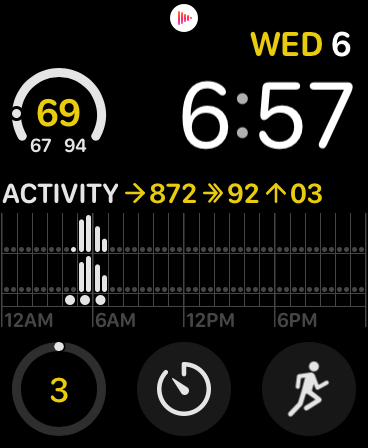
Getting your heart rate up is important for the neurological benefits, and many exercises can get you there, including weight training (if you do it circuit training style to keep your heart rate up) and yoga (if it’s strenuous enough like vinyasa, power yoga, or hot yoga). Use a heart monitor (like the Apple Watch) to make sure you’re getting into your aerobic range.

While walking is great, it normally doesn’t provide the same neurological benefits unless you walk fast enough (or do lots of hills) to get your heart rate higher.

If your workouts are more rest breaks than activity, the mental benefits may not be so great. Some workouts may actually increase your cognitive load if you have to spend extra effort thinking about the workouts while not gaining much of a mental capacity boost in return.

Since the benefits of exercise are systemic, this is the primary place to begin when you want to increase your mental capacity and reduce mental effort. A clear, stronger, more efficient brain makes so many other parts of life easier and less effortful. You’ll feel like you can handle more than you could before, and problems that used to phase you will finally start getting solved.

If this habit looks difficult, realize that the perceived difficulty is yet another symptom of a flabby brain that isn’t getting enough exercise. This habit only looks too difficult if your mental and emotional capacity has dropped to a level you ought to consider personally unacceptable. It may feel burdensome to raise your standards, but that feeling will pass once you get back in the flow of giving your brain what it needs.

Consider that if you continue the not-exercising habit, your brain will punish you for that habit the rest of your (shorter) life. You won’t feel as good emotionally. You won’t get as much done. You won’t be as confident. And you’ll feel more stressed, confused, and overwhelmed. That’s an awfully high price to pay.

We’ll continue this series tomorrow, so stay tuned. But please do at least one good workout before you read the next part. Your brain needs it.

Share Button

Energy Wants to Flow

One mindset challenge that plagues many of my readers is an almost obsessive focus on their own needs, problems, and challenges – when they aren’t successfully distracting themselves from it.

I also spent a lot of time stuck there. It’s a great mindset for generating lots of stress. But other results? Not so much.

One mental shift that helped me a lot was thinking of goals, plans, projects, and desires in terms of energy flows that are in motion. My previous tendency was to think in terms of end points and static states.

So instead of fussing over where I am and where I want to be (the end points), I prefer to observe where energy seems to be flowing well in my life and where it’s getting stuck and becoming stagnant. Then I work on getting the stagnant energy unstuck and getting it flowing again.

This is a key distinction. When people focus on getting from A to B, they often run into some problems, namely two main ones:

  1. What if the goal (endpoint B) isn’t clearly defined?
  2. What if the path to the goal (from A to B) isn’t clear?

Then what they tend to do (if they invest enough effort) is figure out what B is supposed to look like, and figure out what the path from A to B will be. But there’s a big problem with this approach because they’re trying to gain clarity while they still have all this stuck, stagnant energy swirling around at endpoint A and not really flowing. And while they don’t have enough clarity to tell themselves that it’s time to move, this stuck energy is causing problems for them.

People often spend years waiting for clarity on these two simple questions, telling themselves they cannot go full throttle till they have stable, believable answers. And that is a huge mistake.

Suppose point A is having a job you dislike and point B is having a job you love. People try to clearly define B and then plot a course from A to B before they start moving, and this rarely works well because the energy at A isn’t flowing. Such people often feel de-energized and demotivated by all the stuck, stagnant energy the job at A. How are they supposed to have the energy necessary to create clarity about B, let alone plot the full course from A to B? Of course what really happens is that they stay stuck at A, often for a very long time – till this energy finally demands release, and they get fired or laid off, quit out of desperation, or succumb to health problems and feel compelled to finally transition.

Feeling needy, stressed, or frustrated is a sign of stagnant energy. So if you notice yourself feeling needy and self-absorbed with your personal concerns and stresses, consider that this is a hint to look for areas of stuck energy.

When energy is flowing nicely, there’s a certain grace and ease to life – it feels more open, fun, playful, loving, and expansive. We feel more connected, supported, trusting, cooperative, and hopeful. We feel more courageous and confident.

Energy wants to flow. It likes being in motion. It isn’t even that particular about where it flows. It just wants to flow somewhere. And if it doesn’t have anywhere to go, it tries to move around in whatever space it has available. When it’s bottled up inside you, that energy goes into creating circular thinking much of the time. You may experience this as worry, confusion, stress, or anxiety. This stuck energy can also manifest as physical illness.

Note also that this idea of energy flows is just a model – a way of thinking about reality. You don’t have to believe in energy flows in order to use this model and benefit from it, much as I explained in the recent article Your Least Favorite Screwdriver. You also have some flexibility in how you frame this. You could imagine electrical currents flowing through your nervous system, spiritual energy flowing through your chakras and astral body, or thoughts and feelings flowing through your mind. I often merge the physical, mental, emotional, and spiritual frames when I think about energy flows because this model helps me solve problems no matter how I frame it.

I sometimes find myself stuck trying to plot a course from A to B, especially when I’m not super clear about what B looks like. But when I’m trying to build clarity while my energy is still stuck at A, this can be frustrating. I start feeling impatient after a while. I sense that the stuck energy wants to move, but I’m keeping it bottled up waiting for clarity.

And you know what? This is okay sometimes. It’s okay to have some stuck energy now and then, as long as we’re aware of the stuckness and we’re working on getting it flowing again. It’s okay to keep it stuck for a few weeks while we work on some clarity – as long as we have good reason to believe that we can and will converge on enough clarity to get that energy moving.

If we’re moving towards mental clarity and making genuine progress, this is helping some of the energy to get flowing again. A good indicator that our clarity efforts are helping is that we start to feel a rising sense of hope and optimism. The little bit of energy that’s getting back into flow often generates some mild enthusiasm. We can feel that bigger changes feel increasingly inevitable. Negative stress starts going down, often replaced with feelings of relief or surrender to the unfolding transition.

For instance, I knew a couple of months ago that I wanted to shift up my exercise and social investments this year. I’ve been building towards such changes for a while. But I also felt that I had too much on my plate in December and January. I expected, however, that my schedule would lighten up a bit in February, and I’d have more capacity to make other changes without feeling overwhelmed. So I let the energy of these desired changes stay stuck for a while, knowing that I’d get the energy flowing again. And that’s exactly how it played out. Earlier this month, I joined a new meetup group and a new fitness studio, and I love how the energy is flowing again in new directions.

But I also tried to create a modest relief valve to let the stuck energy know my intention for getting it flowing again. I would visit or walk by the fitness studio before joining, and I’d browse through the classes on their website. Sometimes I imagined doing workouts there. I leaning into the meetup group in a similar manner, signaling an intention. I noticed the telltale signs of increasing optimism and enthusiasm as I did this, as if the stuck energy approved of my plans and was onboard with it. I think this helped the energy remain calm and relaxed instead of creating too much stress.

On the other hand, if you’ve been dealing with stuck energy for months or years, and you aren’t getting any closer to converging on enough clarity to see your path from A to B, then don’t keep waiting for clarity since your stuck energy isn’t going to like that. You have to give it some reasonable hope that it will get flowing again.

If you lack clarity and aren’t clearly converging on a solution, then get the energy unstuck and flowing in any direction. Get that energy back into motion, so you can use it. If the energy gets too stuck, you may feel chronically drained, stressed, anxious, or worried. If you’re already experiencing such states daily or close to it, then it’s time for change without fussing so much about where you’ll land. You’ll be amazed at just how much more becomes possible for you when chronically stuck energy suddenly becomes free and flowing again.

If you’re in a chronically stuck situation, what you may not see is just how stuck you truly are. Long-term stuckness starts to feel normal after a while. It is NOT normal or healthy though. When your energy is trapped for so long, it causes problems for you mentally, emotionally, and physically. It’s so important to just get out of the stuckness any way you can. Sometimes that means taking the evil exit – for your own health and sanity.

Simply using this model of energy flows has been super helpful on my path of growth. It’s helped me in pretty much every area of life. In fact, I often write articles by asking myself: Where does the energy want to flow today? When energy (especially creative energy) is flowing nicely through my life, I can co-create with it. I can summon and ride waves of inspiration instead of having to push myself. The energy carries me forward much of the time.

But when I allow this energy to get stuck, life becomes so much harder. It feels like I have to fuel everything with my own power, yet I lack the motivation and focus to do as much (because the energy is stuck instead of flowing), which leaves me feeling even more stuck.

Energy wants to flow. If you help it flow, it will help you even more.

Share Button

Making Exercise More Fun and Social

On Sunday night Rachelle and I signed up for a new local fitness studio membership. The place is 5 minutes from our home and is called TruFusion. They only do group classes, so this helps me move forward my intention to make exercise and fitness more social this year.

We attended our first class that same night, starting out easy with a 75-minute candlelight yoga class. This was yin yoga, so it was slow and deep stretching, relaxation, and some meditation and mantras. It was very non-strenuous – my Apple Watch reported that my average heart rate was only 86 bpm – a nice way to glide into getting that first class checked off without killing myself just yet.

Yesterday we did a 75-minute hot yoga class, which was more intense, especially since I haven’t done hot yoga in many years. My heart rate peaked at 176 bpm in that workout, averaging out to 144. I couldn’t do all of the postures yet, but I’ll gradually work my way into more flexibility.

I like this place so far. They have lots of variety with five different rooms for classes, two of them heated. They offer 65+ different types of classes: numerous forms of yoga, indoor cycling, bootcamps, boxing, kettlebell workouts, pilates, battle ropes, TRX, and some classes I’m not familiar with yet. They run classes all throughout the day including evenings, weekends, and holidays – 240 classes per week – so there’s always something to chose from. They’re located in a local shopping mall where we often go for walks or other errands, which makes it easier to slot this into our lives.

This studio has 545 Google reviews with a 4.9-star average, so people really love it. We’re doing a 30-day membership to start, and if it still feels aligned after that, we’ll go for an annual membership. I’m feeling optimistic about that since the staff and members that I’ve interacted with so far have all been very friendly. It reminds me of the camaraderie at the Tae Kwon Do studio where I used to train in the 90s.

TruFusion’s style and vibe feels like a good match from what I’ve experienced of it thus far. They approach fitness from a mind-body-heart-spirit perspective, so it’s not just about the physical. In addition to many upbeat workout classes, they include meditation classes as well as extra trainings and occasional retreats for the members. And during the times of year when the Vegas weather is nice, they offer some outdoor “yoga on the lawn” classes next to the studio as well. I think that’s part of their promotional strategy.

Rachelle is very much onboard with this too, so we’re doing this together. She had done a prior 30-day membership at this studio more about two years ago and is happy to pick it up again. She’s been doing daily yoga at home for 2+ years now (mostly Yoga with Adriene videos on YouTube) and is looking forward to mixing it up and challenging herself more.

I expect that sometimes we’ll do classes together while other times we’ll go separately, depending on our interests. For now it’s nice to go to classes together since there’s so much to try. I’ve never joined a gym with so many different group classes. Since I love variety and stimulation, this aspect feels exciting and fun. It’s been way too many years since I’ve had the experience of showing up to exercise and not knowing what to expect.

My one disappointment was that the boxing classes don’t involve sparring – just bunching bags or pads. So it’s not real boxing, just boxing conditioning. I can understand if they exclude personal sparring for liability reasons. But punching a target that can punch back seems more fun.

This studio could also be another outlet for us to make more local friends who are aligned with personal growth. The vibe is more social and friendly than you’d find at a gym you might join for solo workouts. Earlier this month we joined a kinky meetup group as well, so this change-up of social flows ensures a different kind of year for us. The contrast between these outlets makes life feel more interesting and varied. Tomorrow we’ll likely engage with both. For one group we’ll bring a yoga mat, and for the other we’re supposed to bring duct tape. I’m not entirely sure what the duct tape will be used for yet.

While many people are capable of joining a gym and not showing up, we’re not such people. If we join, we always go… and go often. Our big decision was whether to sign up in the first place.

Any kind of change takes some adjustment. Slotting more things into my life is a challenge, but what I like about this one is that it’s likely to give me energy rather than consume it. It feels like this will help rebalance my life in ways that I’ve been craving lately.

Rachelle and I may also do some date nights that start with a workout, shower, a nice vegan meal at a local restaurant, and a movie. All of these are within easy walking distance of the fitness studio. I suggested this to Rachelle, and she smiled and said, “That sounds yummy.” Maybe I can work in the duct tape as a special surprise. 😉

I’d been thinking about joining this studio since it opened a few years ago, and now I have an actual membership card. What helped to tip me into joining was some story-related work I’ve been doing in a coaching program I joined earlier this year as well as working on the Stature course and thinking about the direction of my character’s story. This helped me see where my old story was being clingy and inflexible, and it also helped me get excited about a new story.

I feel like my new story doesn’t have to be perfectly developed to be effective. It just has to be good enough to tip me into new actions. And then those new actions will lead to new experiences that help co-create other parts of the new story.

I feel like my new story in this area of life has the broad strokes right, but the details are going to have to emerge over time. For instance, I have no idea which of those 65+ classes will become my favorites. And I don’t have clear fitness goals in terms of the physical side, nor do I really care to set them. For me this change has more to do with lifestyle balance and social flows. While fitness is obviously a part of it too, I’m more concerned with freshening up the way I engage with my body, mind, heart, and spirit and how I balance and integrate these aspects of life. I especially want to bring more heart-alignment into how I engage with exercise.

Right now I feel excited to lean into a nice big field of new possibilities to explore – with so many classes to experience and so many people and instructors to meet. Getting back into explorer mode in this area of life feels very aligned. Other improvements, such as increasing my flexibility, will happen if I just keep showing up, and it feels good to allow those changes to unfold organically for now. It resonates with me to frame exercise as being fun, social, varied, and challenging again because that motivates me to show up. I can’t get myself to care about stats or metrics.

I also find the edginess of this motivating. I’ve done enough solo exercise that it’s hard to make it feel edgy because it’s too predictable. I’ve changed my routine numerous times, but I feel drawn to get back into social exercise again, which I haven’t done since kempo training about a dozen years ago. I want to show up to new classes that will knock me off balance. I want to go to classes where I’m the worst in the room. It’s nice to be terrible at something, knowing that if I just keep showing up, I’ll get better.

When the energy of my life grows stale in some area, I feel compelled to break from the old patterns and mix things up to restore the feeling that I’m progressing. I don’t see progress as akin to climbing a ladder. I tend to think of progress as playing in a vast role-playing game.

Am I gaining interesting experience? Is my character growing and evolving? Have I been following the same routine for too many months or years? Where is the path with a heart now? Where’s the fun? Where does the energy want to flow next?

When a part of my life becomes too routine, I feel that it’s wise to break it. Get some fresh energy flowing in a new direction. A great way to do that is to change up the social flows. New social flows generate new energy flows.

I love that with TruFusion, I could go for 30 days in a row and never attend the same class twice. And even when I do attend the same classes, there are many different instructors to engage with, each with their own style. Fortunately the instructors seem to have plenty of freedom for creativity and self-expression, so they aren’t required to teach every class the same way. I like that – I think it’s way better for the instructors too.

The vibe of this studio reminds me of what I missed about doing martial arts. While working out solo is certainly cheaper and more convenient, there’s just no substitute for the vibe of training with other people, especially open-hearted people who are aligned with supporting each other.

My new story will probably involve a lot of soreness this week.

Share Button

Exploring Beyond the Cage

I just read an interesting BBC article about why there are significantly more vegan women than men, which is mostly summarized by this statement at the top:

When women hold two incompatible beliefs, they’re more likely to change their behaviour to reconcile them. Men, by comparison, tend to dig themselves in.

The article cites a variety of studies that delve into gender differences and how these connect with dietary decisions. Reading it had an odd effect on me, making my vegan side feel good and my male side feel primitive and stupid.

While I do consider myself an ethical vegan today, this article reminded me that I didn’t go vegan for reasons of compassion or concern for the well-being of animals. While I was aware of factory farming and the cruel ways that animals were treated, that argument didn’t move me. I used to be one of those guys who’d hear those points and then want to eat a burger afterwards. I’m not proud of that, but it’s the truth.

I don’t think it was because I wanted to snub my nose at people trying to tell me what to do. It didn’t feel like I was trying to assert dominance either. I think it had a lot more to do with being out of touch with my feelings. I simply didn’t feel much compassion for animals. Either my heart was silent on the issue, or my brain couldn’t detect what my heart was saying.

I could know that animals were suffering, but this awareness remained on an intellectual level. It didn’t trigger any meaningful caring or compassion within me. I was more likely to think something like, “Sucks to be them, but oh well.” Watching animals in pain was almost like watching a balloon being popped. Animals were just objects, and their fate was of little consequence.

What ultimately got me to transition to veganism was curiosity, but more specifically it was about risk reduction. A prior personal growth experience made me aware of one of my blind spots, and this made me more open-minded about exploring and investigating other potential blind spots.

That prior blind spot was religion. I was raised within the bubble of Catholicism throughout my childhood, and I came to see it very differently when I was 17 years old. I left the Church behind and began exploring other points of view, which was massively transformational. That was one of the most growth-oriented times of my life. It sure took a lot of courage though. I had no help when I began leaning in that direction, so it was a very lonely path with plenty of resistance from other people. I really had to trust my intelligence and reasoning to get through it.

When I looked back on my religious upbringing after I transitioned away from it, I could see more clearly just how blind I was and how full of holes my previous beliefs and perspectives had been. For example, since atheists didn’t worship God, they were doomed to suffer for all eternity. And so when I eventually met an atheist boy, I wasn’t really sure how to relate to him. How exactly do you play sports with someone who’s doomed? Is it safe to be on the same team together? What if he touched me – was being doomed infectious, like cooties?

At first I felt sorry for the guy. He was older than me but obviously in a lot of trouble. I found it odd that he didn’t feel sorry for himself though. I’d assumed that a doomed boy should be more messed up. He seemed totally fine and normal for a boy his age, even nicer than most. That situation created a cognitive disconnect.

When I learned about vegetarianism and veganism some years later, part of me recognized that this could be another of those situations where the insider and outsider perspectives are very different. I realized that if I only explored one side, I’d never really understand the other side, and there was a very real risk that I could be stuck in another thought bubble. That meant that if I didn’t try the opposite for at least a short time, like a month or so, I could potentially be doing the equivalent of remaining Catholic for life without ever understanding what a non-Catholic perspective was like. I shuddered at the thought.

I saw this as an enormous risk, one that I couldn’t ignore. The risk that I might inadvertently do the equivalent of spending my whole life Catholic really bothered me. What if the diet I was raised to eat was another one of those areas where I’d be wrong and deluded all along? I had to find out if that was true or not.

Once I adopted this framing, it was pretty much inevitable that I’d eventually do some personal exploration in this direction. It was just a matter of figuring out when and how to fit this experiment into my life. I started with a 30-day vegetarian trial between semesters in college in 1993. And then 3.5 years later, I did a 30-day vegan trial in January 1997. Both of those experiments became permanent lifestyle changes.

Again, compassion wasn’t one of my reasons for doing these experiments. I was much more concerned about the risk of getting stuck for life in a potentially erroneous thought bubble. The huge differences between the inside and outside perspectives of Catholicism were still fresh in my mind, even though I didn’t begin these diet experiments till about 5 years after the transition from religion.

My memories of the prior transition were frequently refreshed – whenever I’d pass a church, see a church on TV, or interact with family. Even seeing Ned Flanders or Reverend Lovejoy on The Simpsons was a reminder of the trap I’d successfully escaped – and a powerful warning that I could still be trapped inside another bubble.

So for me this exploration wasn’t really about getting into vegetarianism and veganism. It was about exploring outside of the reality bubble of animal products. I absolutely needed to know what was outside of that bubble. Not discovering the truth for myself was too great a risk.

I had learned the hard lesson that I couldn’t trust the people around me. When I was surrounded by religious people, we were all inside the same thought bubble together. It was only when I spotted a window to an outside world – in the form of meeting a nice doomed boy – that I began to wonder if I might be missing something.

So truth poked my bubble. Don’t you just hate it when that happens?

I wasn’t at all sure what the exterior perspective would be like though. When I did my 30-day vegetarian trial, it really was just a trial. I had no expectation that it would stick. I assumed it was just going to be a temporary experiment and that I’d be back to eating animals on Day 31. My intention was to explore and experience vegetarianism, so I would finally know what it was like. But I didn’t actually want it to stick. I wanted to open the door to answer truth’s knock, hear the sales pitch, and then say, “No, thank you,” and close the door like I was dismissing a couple of Mormons on a mission. I wanted to reassure myself that it was fine to return to my old diet since I had checked to see what life was like outside that bubble. I wanted to make sure that my dietary thought bubble was okay and that I didn’t have to abandon it.

Of course my assumption was wrong. It took perhaps six months to realize that I wasn’t going to return to eating animals. With the 30-day vegan trial, it didn’t take as long. If I recall correctly, I felt that I’d continue with veganism even before the initial 30-days were up. The first week of seeing all that dairy clog purging itself from my body helped to convince me that I should never put that gunk back inside me again.

These days I care a lot about animals. I feel for them in ways I never felt when I ate their flesh and eggs and drank the milk intended for their babies. My relationship with animals used to be one of entitlement and indifference, and I didn’t see anything wrong with that. I didn’t feel what I feel today. These feelings simply didn’t exist in the old bubble.

Going vegetarian and then vegan really helped to clean and revitalize my heart-brain connection, but I had no idea that I was missing anything when I started exploring in this direction. I gained a sense of empathy and compassion that I couldn’t remember feeling previously, except maybe in some vague memories from when I was very young.

Reading that article about the stubbornness of men hit home with me because it reminded me of what I was like in the old bubble. I feel so grateful that somehow I found an intellectual backdoor that enabled me to escape it. While I went vegan as an experiment to address a potential risk, I remain vegan for a much stronger set of reasons. I’m no longer indifferent and emotionally out of touch like I used to be. My ability to treat animals as products was an artifact of a thought bubble I left behind a long time ago. While I was in that bubble, I couldn’t connect with their beauty.

I spent many years of my life inside a thought bubble of animal neglect and abuse. While it’s not one I’ve visited for many years, I remember well enough what it was like on the inside. From the inside it doesn’t look like abuse. It just seems normal. I can recall plenty of meals with friends back in the day where animals were part of the experience, and it didn’t seem strange at the time.

I can also see why many men aren’t persuaded to explore veganism by the compassion argument. I understand how some pro-vegan arguments could make some men want to do the opposite. I don’t really think this attitude has so much to do with asserting dominance over animals though. I think it’s really a form of clinginess to the familiar thought bubble. It’s a retreat from a perceived threat. The response is more fear-based than many men would care to admit. It’s a retreat from a potential truth.

What convinced me to explore beyond the bubble was that I recognized a potentially greater threat – that I could be stuck inside a very limiting subset of reality that could trap me for life if I was too passive. The only way to know if I was indeed trapped was to explore beyond the cage. I had to know what was outside. And when I saw that life was better outside, I saw the cage for the trap it was, and I never wanted to return to it again, just as I never wanted to return to my old religious cage again.

Veganism isn’t a restrictive form of eating or lifestyle. It’s entirely the opposite of that. It’s immensely freeing to live outside of the old cage. This path helped me develop senses that I didn’t know I could possess. It invited me on a tremendous journey of upgrading my relationships with animals, with people, with life, and with reality.

The experience of escaping the old bubble was similar to realizing that I never had to go to confession again – no more sharing my sins with a creepy collared guy. My old relationship with animals was creepy as hell. But like the creepiness of confession, I couldn’t see or acknowledge that creepiness from within the bubble. Such is the nature of a thought bubble – you can only see the full truth of it when you experience the inside and the outside for enough time, and then compare notes.

This makes me wonder what kind of framing could have sped me along and helped me progress faster when I was younger. If the compassion argument would have fallen on deaf ears, what argument might have influenced me to explore outside my bubble sooner?

I think there is a better argument that would have worked, and it’s largely what I shared here. You could call it the Bubble Boy frame.

I was developing a healthy respect for people who explored beyond the bubbles that I grew up with. Once I had popped my first major bubble, I gained a much weightier understanding of the risks of not even seeing a bubble in which I could potentially be trapped for life. Considering that I could still be going to mass every Sunday – and confession too – if I hadn’t seen the bubble for what it was is creepy as hell.

That’s still a convincing argument for me today. This perspective has nudged me to explore outside of other bubbles that I was raised with – the bubble of employment, the bubble of monogamy, and so on.

The desire to discover new truths is compelling, but even more compelling is the desire to avoid spending your whole life in a cage and never even seeing the cage.

So I think I’d have found the perspectives of the cage, the bubble, and the trap a lot more compelling than any compassion-based arguments. Those lenses got me moving even when my heart-brain connection was offline. I didn’t want to spend my life as a bubble boy or cage boy.

These days those perspectives aren’t as compelling as they used to be. They still feel relevant and meaningful sometimes, but I now find it simpler to trust my default heart-brain intelligence instead of needing to lean on the bubble boy crutch for guidance. I am super grateful that I came upon that crutch when I did though. It was an empowering perspective – not the only tool in the toolbox but certainly an effective one for escaping nearly invisible cages.

Share Button

What Does A Mediterranean Diet Look Like IRL? Breakfast, Lunch And Dinner Ideas To Try

HuffPost is part of Verizon Media. Click ‘I agree‘ to allow Verizon Media and our partners to use cookies and similar technologies to access your device and use your data (including location) to understand your interests, and provide and measure personalised ads. We will also provide you with personalised ads on partner products. Learn more about how we use your data in our Privacy Centre. Once you confirm your privacy choices here, you can make changes at any time by visiting your Privacy dashboard.

Click ‘Learn more‘ to learn and customise how Verizon Media and our partners collect and use data.

Share Button

Asthma Is Getting In The Way Of Good Sex. But It Doesn’t Have To

HuffPost is part of Verizon Media. Click ‘I agree‘ to allow Verizon Media and our partners to use cookies and similar technologies to access your device and use your data (including location) to understand your interests, and provide and measure personalised ads. We will also provide you with personalised ads on partner products. Learn more about how we use your data in our Privacy Centre. Once you confirm your privacy choices here, you can make changes at any time by visiting your Privacy dashboard.

Click ‘Learn more‘ to learn and customise how Verizon Media and our partners collect and use data.

Share Button

This Is Why The Coronavirus Death Toll Figures Aren’t Totally Accurate

HuffPost is part of Verizon Media. Verizon Media and our partners need your consent to access your device and use your data (including location) to understand your interests, and provide and measure personalised ads. Verizon Media will also provide you with personalised ads on partner products. Learn more.

Select ‘OK’ to continue and allow Verizon Media and our partners to use your data, or select ‘Manage options’ to view your choices.

Share Button

Time To Talk Day: 4 People On How They Started A Conversation About Mental Health

HuffPost is part of Verizon Media. Verizon Media and our partners need your consent to access your device and use your data (including location) to understand your interests, and provide and measure personalised ads. Verizon Media will also provide you with personalised ads on partner products. Learn more.

Select ‘OK’ to continue and allow Verizon Media and our partners to use your data, or select ‘Manage options’ to view your choices.

Share Button

How to Spot a Future Vegan

Given the rapid rise of veganism we’ve been seeing lately, which by some accounts has increased by a factor of 10 or more in recent years (at least in the USA), it seems clear that this explosive growth is going to continue for a while.

It stands to reason that many people who aren’t vegan today eventually will go vegan, perhaps sometime within the next few years.

I’ve had a lot of experience seeing people transition from non-vegan to vegan, including hundreds who’ve emailed or talked to me about this before, during, and/or after their transitions.

I’ve also seen people who’ve been familiar with veganism for years but show no signs of transitioning. This got me curious to ponder more deeply about the differences.

Based on this experience, I’ll share some observations about common differences between future vegans and non-vegans. Technically both groups are non-vegan today, but I use the “future vegan” label to distinguish those who show the telltale signs of someone who’s on their way to eventually becoming vegan.

These are generalizations and predictions based on personal observation, so take them on that basis. You could also read this article to see if you recognize any of the transitional signs within yourself, and then consider whether you think those could be suggesting a personal transition coming up for you.

Moreover, while this article is just about veganism, I think you could also generalize some of these ideas even more and ponder them as advance indicators of other types of transitions, such as signs that someone may be heading for a career or relationship transition.

So here we go…

Curiosity and Engagement

Future vegans engage with the world. They actively look around and observe. They seek information and want to learn new truths, including truths that may upset them. They’re willing to have their realities upended now and then. Veganism sparks their curiosity, so even if they feel resistant at first, they’re also compelled to learn more about it.

Non-vegans don’t engage as much with the world, preferring to stick to the familiar. They don’t read as much about unfamiliar topics. When they spot an alternative lifestyle such veganism, they don’t feel as curious to learn about it. They figure that if it’s unfamiliar, it’s probably not worth learning about.

Attracting Vegans

Future vegans frequently attract other vegans and vegetarians into their lives, often without deliberately trying to do so. Sometimes it appears that vegans recognize them as kindred spirits, while other times the future vegans appear to be subconsciously taking action that will predictably inject themselves into social spheres where vegans are more abundant, as if the future vegans are courting the influence.

Non-vegans tend not to experience this attraction effect. From their perspective vegans and non-vegans tend to keep to themselves most of the time. If there’s a rise of veganism in the world, they don’t see it happening as much.

Debating About Veganism

One especially common sign of a future vegan is how much they like to debate and argue with vegans. It’s part of the process of working through their objections and resistance to going through the transition for themselves. To get good at debating this topic, they also have to learn more and more about veganism, which invites them deeper into the rabbit hole and eventually plays a role in convincing them to go for it.

Non-vegans generally don’t care to debate about veganism, and they aren’t very good at it anyway due to lacking the knowledge, experience, and curiosity to fully participate. If they do engage, you’ll usually find them being emotionally dismissive, raising one or two easily countered objections and then opting out, or they’ll just quote the Bible and leave it at that. They don’t really see the point in debating when their minds are already made up. Some will object to the whole notion of a debate happening at all while they’re around.

Dabbling in Veganism

Future vegans tend to dabble and dance with aspects of veganism or vegetarianism, often for years, before transitioning. Many will buy appliances that are much loved in the vegan community, such as a Vita-Mix. Some will apologetically say they like to eat “rabbit food” now and then, or they may feel increasingly drawn to plant foods like salads and green smoothies. They may go to vegan restaurants or a vegan event, or they’ll buy a vegan cookbook and try out some recipes. Some will catch themselves watching documentaries about factory farming. There are telltale signs of progressive investment. In fact, the non-vegans in their lives will often recognize these leanings (and often try to dissuade the future vegan) before the future vegan consciously recognizes where they’re heading.

Non-vegans tend not to experiment or lean in this direction. They don’t even want to try it or test it. It’s not something they perceive as worthwhile or interesting, not even around the edges. It’s a complete non-starter for them.

Caring

Future ethical vegans value caring and regard compassion as a quality to be developed. They generally like the idea of becoming more compassionate and see it as a worthwhile direction of character growth. This eventually leads them to question how they’re contributing to the treatment of animals, and they start thinking about how this relationship could be improved. They may also begin to care more about the planet and question how their diet and lifestyle aligns with caring.

Non-vegans tend to have more static views of caring. It’s not a quality they desire to extend and further develop beyond a certain framework. They tend to have hard edges around their boxes of caring, frequently enforced by religious views. It’s pretty rare to see signs that they have any interest in becoming more caring or compassionate towards animals, let alone towards human beings from different cultures.

Independent Thought

Future vegans value their ability to think and choose for themselves. They prefer to make their own choices regardless of what other people may think, sometimes going with the grain of society and sometimes going against it. Making a choice to go vegan often requires a strong independent will that puts following one’s own intellect above obedience to others’ demands or expectations.

Non-vegans tend to be more conformist and obedient to the will of others. They’re more deferential to authority. Many have been conditioned against independent thought, especially with heavy religious conditioning. They fall back on rules and frames taught by others about the role of animals, such as by repeating the story that animals were created to serve humans. They regard their loyalty to the old rules and stories as being more important than independent choice.

Courage

Going vegan requires courage. This isn’t so much about bravery though. It has more to do with heart-alignment and following one’s deeper feelings, even when the road ahead isn’t clear. When someone demonstrates courage in other areas of life, such as by summoning the courage to leave a misaligned job or relationship to pursue something better, that’s a good indicator that the person may be inclined to eventually use such courage to explore veganism as well.

Non-vegans tend to be more risk averse and conservative, preferring to maintain the status quo instead of exploring the unknown to seek significant gains. Their fears, worries, and concerns speak to them more viscerally than the voice of courage.

Growth

Future vegans are interested in growth, and they understand that growth is about creating improvement, not about achieving perfection. Veganism isn’t a perfect diet or lifestyle, but it is a significant improvement for many people and certainly for animals and the environment, and this positive step forward is good enough for future vegans to regard the transition as worth pursuing. Future vegans eventually recognize that progressing to the problems of veganism is a graduation of sorts from the problems of being non-vegan.

Non-vegans tend to be more static and absolutist in their thinking. All they need is to identify one potential flaw or objection (usually a heavily debunked one) to dismiss veganism outright, even as their current lifestyle has many more flaws. They rationalize that getting enough of X, Y, and Z nutrients as a vegan would somehow be a dealbreaker problem while overlooking more severe problems linked to their lifestyle, such as high rates of cancer, heart disease, and diabetes. A key pattern is that non-vegans tend to look for reasons not to change while future vegans frequently look for reasons to change.

Alignment

Future vegans value internal alignment in their thoughts, feelings, and mental models of the world. They dislike cognitive dissonance and want to resolve certain questions. They acknowledge that treating animals as products is not a satisfying solution, and they seek better answers to the questions of how to eat and live.

Non-vegans are more tolerant of cognitive dissonance. They can handle frames that are too misaligned for a future vegan to hold. Alignment is not such a big deal to non-vegans because they value other aspects of life more highly, such as obedience to authority.

Inevitability

Many future vegans reach the point where going vegan starts to feel inevitable. They’ve already decided that they’ll eventually do it. They’re just figuring out how to make it practical for them. For some people there’s a lot to adjust in terms of diet, lifestyle, and social life, and they want extra time to come to terms with this.

Non-vegans of course never reach this point of inevitability. They’re more likely to see it as inevitable that humans dominate animals, which also leads to other inevitable conclusions like humans dominating other humans. They’re more likely to frame diet and lifestyle as being chosen for them rather than something they get to choose.

* * *

There are other factors too, so please don’t consider this an exhaustive list, but the ones I included here are some of the main ones that pop out. It’s really the combined weight of multiple factors that matters. Many future vegans will only show a few telltale signs before they transition, but they’ll be important indicators of investment.

If you recognize some of the future vegan patterns within yourself, you might enjoy reading the very thorough article called How to Be Vegan, which I wrote in 2015. It’s not about how to transition per se. It’s about what it’s actually like to be a long-term vegan, and it’s rich in details that you aren’t likely to find elsewhere. It will inform you about lifestyle aspects you may not have even thought about yet. It’s also the longest article I’ve ever written, long enough that if you actually read the whole thing, that’s another hint and a half that you’re heading for a transition.

I’m currently in my 24th consecutive year of being vegan. Before I transitioned in January 1997, I have to admit that I also showed many (but not all) of the telltale signs that I was heading in this direction, such as buying a Vita-Mix about two years prior and testing recipes from some vegan cookbooks. I also had the inevitability sign, knowing that I was eventually going to transition many months before I finally did it. It was only a matter of when.

Share Button

Listen to the Screams

By being vegan for as long as I have (and vegetarian a few years before that), about 5000 fewer animals were harmed and killed by my lifestyle.

But since I blogged about this aspect of my lifestyle (including writing my longest article ever, called How to Be Vegan), I’ve since influenced hundreds (if not thousands) more people to try vegetarianism or veganism for months or years or to adopt such a lifestyle permanently. So the combined impact of going vegan and publicly sharing what I learned is likely beyond 1,000,000 animals by now. That’s based mainly on feedback people have shared with me over the years.

And then since many of those people I influenced have also influenced others in similar ways, some of them very actively, the total ripples are probably somewhere in the millions of animals… and still going.

Maybe this impact is a drop in the bucket relative to the 50 billion animals killed for food each year, but one drop can still create ripples. And of course we could identify more ripples such as the resource savings like water and electricity, the reduction in emissions, etc.

When we create a change for personal reasons, we often don’t see how far the ripples of personal change will extend beyond ourselves.

And similarly, when we don’t change ourselves, we don’t get to see the positive ripples that could have come into existence, if only we’d taken a few more steps.

What’s most personally meaningful to me about this aspect of my lifestyle, however, is the internal shift it created within me and some other ripples created by that shift.

What many people don’t realize is that if I hadn’t gone vegan more than 2 decades ago, I wouldn’t have started my personal development blog 15 years ago. I wouldn’t have written articles in an effort to be helpful. I wouldn’t have cared enough to do something like that. Doing this kind of work takes way more heart energy than I used to have. The voice of caring just wasn’t loud enough or strong enough to motivate this much action or this long of a commitment.

My sense of caring about people is inextricably linked to caring about animals. What may seem counter-intuitive though is that I also care more about non-vegans than I used to. You might think that the opposite would be true. Wouldn’t going vegan make me feel more disconnected from non-vegans? After all, such people hurt animals, which I care about.

As a vegan I feel more emotional pain than I use to. But I also feel more love and connection than I used to. They come as a package deal.

When someone hurts animals, for food or otherwise, I feel the pain of that. It stings my heart. When I’m at my best, I don’t try to numb myself to such feelings. I allow them to have their say. I see those feelings as important. They remind me that I care. I remember what it was like not to care about such things and to feel no sting at all, and I have no desire to return to such an existence. I like having stronger feelings of caring and connection, and I accept that a heightened sensitivity to violence is part of that.

Caring is difficult but also beautiful. Truth be told, seeing ripples that reduce the number of animals harmed and killed doesn’t do much for me motivationally. Maybe it’s nice karmically, but I feel the most alignment juice from the heightened sense of caring.

Going vegan many years ago seems to have created some kind of permanent shift in my vibe that I can’t undo – and wouldn’t want to undo. One of the scariest things to me in life would be to return to a state of emotional numbness and to forget what it feels like to care a lot.

Even though it can be hard, I like being sensitive to the pain of other beings. I like that I can sense the vibes of suffering, like a radio transmission that never turns off. Those signals are so much louder and clearer than they once were. There is a lot of suffering in the world, and a lot more of it is coming from animals than humans. As much as we can point to human suffering, we’d need to hurt and kill 7x the planet’s human population every year just to match what animals are going through. And we’d have to achieve that population through a massive increase in rape to match the forced reproduction those animals endure.

If you’re sensitive to vibes, turn your heart towards human suffering and listen for a while. Then turn your heart towards animal suffering, and notice how that signal sounds. When I do this, I certainly feel some sorrow on the human side. The animal side is overwhelmingly sad though; I can’t listen to it for more than 30 seconds without crying.

It may sound odd to label this sensitivity as beautiful, but somehow it just seems accurate. Because of our ears, we may be disturbed by unpleasant noise now and then, but isn’t it worth the price if it means we can hear beautiful music and communicate with each other?

So many of my articles were written from a desire to be helpful, often because I picked up a signal of human sadness, struggle, stuckness, or confusion – or even curiosity or wonder. Somehow those signals are just so loud and clear most of the time. All I have to do is listen, and the writing and speaking takes care of itself. When the heart is aligned, the brain does what it’s supposed to do.

So many issues that I struggled with in the past just seemed to resolve themselves when I listened more with my heart instead of always trying to plan, strategize, and force things with my head. The voice of caring provides such a beautiful form of guidance. So much clarity flows from the simplicity of caring.

When I think back to my pre-vegan days, it feels like a time of darkness. I just had no idea how emotionally numb I was back then… and how vibrationally unaware and insensitive I was. I couldn’t even fathom what more was eventually going to be possible. What I now label as numbness or darkness, back then I would have simply called feeling normal or neutral. I had no idea how quiet my “normal” world was back then.

Today what I consider normal is to feel an abundance of vibrational and emotional signals. These signals are always flowing, circulating, and broadcasting. People want help. Animals want even more help.

One of the strongest human signals I hear these days is a desire to feel connected. I sense so much loneliness, aloneness, and disconnection. Many people have become so numb and desensitized, yet they still yearn for something more – something they can’t even define. Some part of them wants to be embraced by love, connection, healing, understanding, acceptance, appreciation, and acknowledgement. Even though the world is more connected than ever tech-wise, today’s outlets are letting people down on the emotional side. It’s ironic that the more connected we become, the less connected many people feel.

I think part of the solution is to listen more to pain… not just your own pain but the pain signals that are constantly being broadcast. Pain signals are usually louder than pleasure, joy, and delight. Happiness purrs while pain screams.

If you want to hear the loudest pain signals on earth, go within, tune into your heart, and then listen with your heart to the signals being broadcast by animals right now. Listen to the 23 billion chickens on the planet right now… or the 1 billion cows… or the 780 million pigs. Listen to the ones that are slated for your consumption if you feel entitled to some of their bodies. Can you hear what they’re broadcasting? What do you sense when you tune in and just listen for a while?

Sensitivity to pain is also sensitivity to so much more – love, beauty, inspiration, creativity, fun, and so many other frequencies that make this life precious and worthwhile.

It’s easy to find conscious people with a variety of dietary lifestyles, vegan or non-vegan alike. But where I tend to see mostly agreement is in terms of how animals are currently being treated by humans. It’s hard to find people who consciously agree with our current practices.

If you consciously choose to continue participating in the treatment of animals as products, I suggest that you stay tuned into their pain. If you’re going to continue opting in, I think it’s wiser and more beneficial to you to feel the hurt and the pain as opposed to numbing yourself. Feel the ripples you’re supporting. Invite and accept the future pain of the thousands of animals who have yet to be hurt and killed from your actions. Feel the ongoing rapes and forced pregnancies to spawn these animals. Don’t run from this reality. Don’t tune out from it. Don’t try to pretend that this pain isn’t real. These are loud signals. Listen to them and tune in.

Listen whenever you purchase animal products. Listen while you cook. Listen with every bite. Let these signals have their say. Let them speak to you honestly and directly. Hear the screams again and again and again.

And each day, choose consciously what you’ll eat and how you’ll live.

I know… it takes courage to do this. It’s a growth experience, regardless of where you land afterwards.

If you can listen to the screams each time and still maintain your current lifestyle, then great – you’re aligned. If you can listen to the screams and feel compelled to change your lifestyle, also great… you can create the alignment you desire. But if you can only maintain your lifestyle by tuning out or trying to numb yourself to the reality and the ripples, that’s a glaring misalignment to address, wouldn’t you say? If you’re going to participate in the flow of hurting, raping, and killing animals, then do so consciously. Don’t go dark or numb just because you dislike the screams. If you’re okay with contributing to ripples of suffering, them the screams should serve as a palatable sauce that makes your meals richer and more meaningful. This can be your way of honoring the thousands of animals who sacrifice their lives for you. Don’t discount or diminish their pain. Appreciate what they’ve done for you because of the high price they repeatedly pay to appear on your plate.

If you’re going to contribute to the screams, then appreciate the screams. If an animal had to give its life or its milk or eggs to please your palate, don’t you think those animals deserve some appreciation at the very the least? When you tune into the screams, beam back your best vibrational thank you.

If you consciously choose to prey on the weak, appreciate the weakness that empowers you to do so. Consciously own the part of you that feels aligned with thoroughly dominating other living beings.

If you can do that, you need never be fearful of vegans. You can stand firm and simply own what you’ve decided is right for you. You ought to be able to make statements such as these:

  • I feel aligned with dominating weaker beings and placing their lives in service to me.
  • I feel aligned with the efficient breeding, feeding, and killing of animals for my benefit.
  • I feel aligned with contributing to the pain of animals.
  • The pain that animals endure enhances the appreciation of my meals.

If such statements feel misaligned to you and you can’t see yourself embracing such an attitude, you’ve got some realignment work to do. And of course if you can embrace such attitudes, they’ll create similar ripples throughout your human relationships as well.

In short, if you’re going to cause pain, it’s important to love the pain you’re causing. Consciously acknowledge, accept, and embrace the pain as an honest and authentic part of your lifestyle. That pain is real. That pain happens every day. Stay aligned with the truth.

Generating pain is a normal and routine part of the package of treating animals as products. If you think it’s okay to treat animals as products, then get yourself aligned with contributing to ongoing ripples of pain. And listen to the screams since that’s part of your truth.

If you don’t listen to the screams of the world, you won’t be sensitive to the real depths of joy and connection either.

Share Button