Senior Minister Defends Boris Johnson’s Integrity By Talking About…Brexit?

Getty

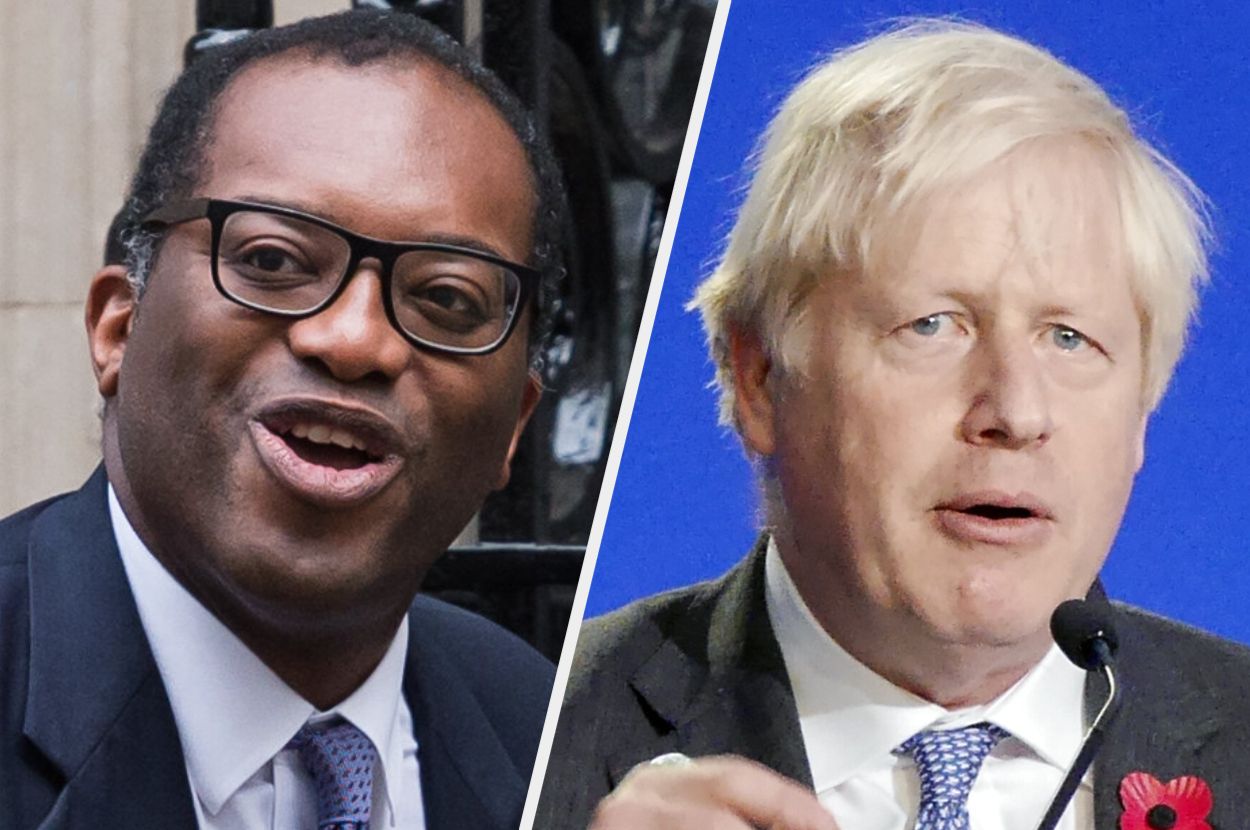
Kwasi Kwarteng defended Boris Johnson on BBC Radio 4’s Today programme

Energy secretary Kwasi Kwarteng chose to defend Boris Johnson’s integrity and standards by talking about delivering Brexit – even though the UK left the EU more than a year ago.

Speaking to BBC Radio 4′s Today programme on Thursday, Kwarteng was attempting to defend the Conservative Party’s decision to let Tory MP Owen Paterson off the hook for breaching lobbying rules – even though the MPs’ watchdog recommended suspending him for 30 days.

Kwarteng said: “People look to Britain to maintain high standards which is exactly why I’m here in Glasgow [for COP26].

“That’s why we’re showing leadership – and that does extend to high standards of governance.”

Interviewer Nick Robinson seemed less convinced and asked for individual examples which back up Kwarteng’s claim that this “government is in favour of integrity and probity in public life”.

He added: “I’m pausing here Mr Kwarteng and maybe you can help me, let me just ask an open question – can you give name a single thing that Boris Johnson has done to deliver higher integrity and probity in public life. Just one.”

“I could do lots of things – we had a manifesto commitment to deliver Brexit and we delivered Brexit,” the senior minister said.

“That was something we promised to do and the prime minister led a government to do that.”

He said Downing Street were going to repeat this trend when it came to its climate pledges.

But Robinson pointed out that this was not really to do with the prime minister as a person, noting: “We’re talking about the standards of individuals aren’t we?”

Kwarteng maintained: “Holding yourself to a manifesto commitment and delivering those commitments is a feature of integrity.”

The prime minister has been heavily criticised for breaching public trust on several occasions during his time in office.

Most recently, he was accused of breaking his own lockdown rules last Christmas when his friend Nimco Ali was found to have spent the festive season with Johnson, his wife and their child.

Robinson also pointed out all the times the prime minister has let those in his close circles get away with breaking the rules.

The interviewer pointed out: “Was allowing Dominic Cummings to stay in his post when he broke the rules helping that?”

Cummings was Johnson’s most senior aide up until his resignation in 2020. He infamously breaching lockdown rules last April when he drove to Barnard Castle to “test his eyesight”. The prime minister stood by him despite the huge public backlash.

Kwarteng just said Cummings had now left the government, so the Radio 4 presenter moved on to question Kwarteng about Robert Jenrick, the former housing secretary.

He asked: “What about the housing secretary when he gave planning permission to a Tory donor?”

The senior minister just denied that was his recollection of what happened.

Robinson then pointed out how Priti Patel has been accused of bullying Westminster staff.

He said: “The home secretary was found guilty of bullying and the ministerial adviser on the conduct of decision left their job because they were ignored?

“Was that a way of getting integrity and probity into public life?”

But the energy minister just said the home secretary is “very moral” and “holds herself to high standards of conduct”.

Kwarteng also told reporters, “I don’t feel shame at all”, about voting against the suspension of Paterson on Thursday morning.

Share Button

BBC Journalist Tells Boris Johnson He Looks ‘Weaselly’ After Dodging UK Coal Mines Question

BBC Breakfast

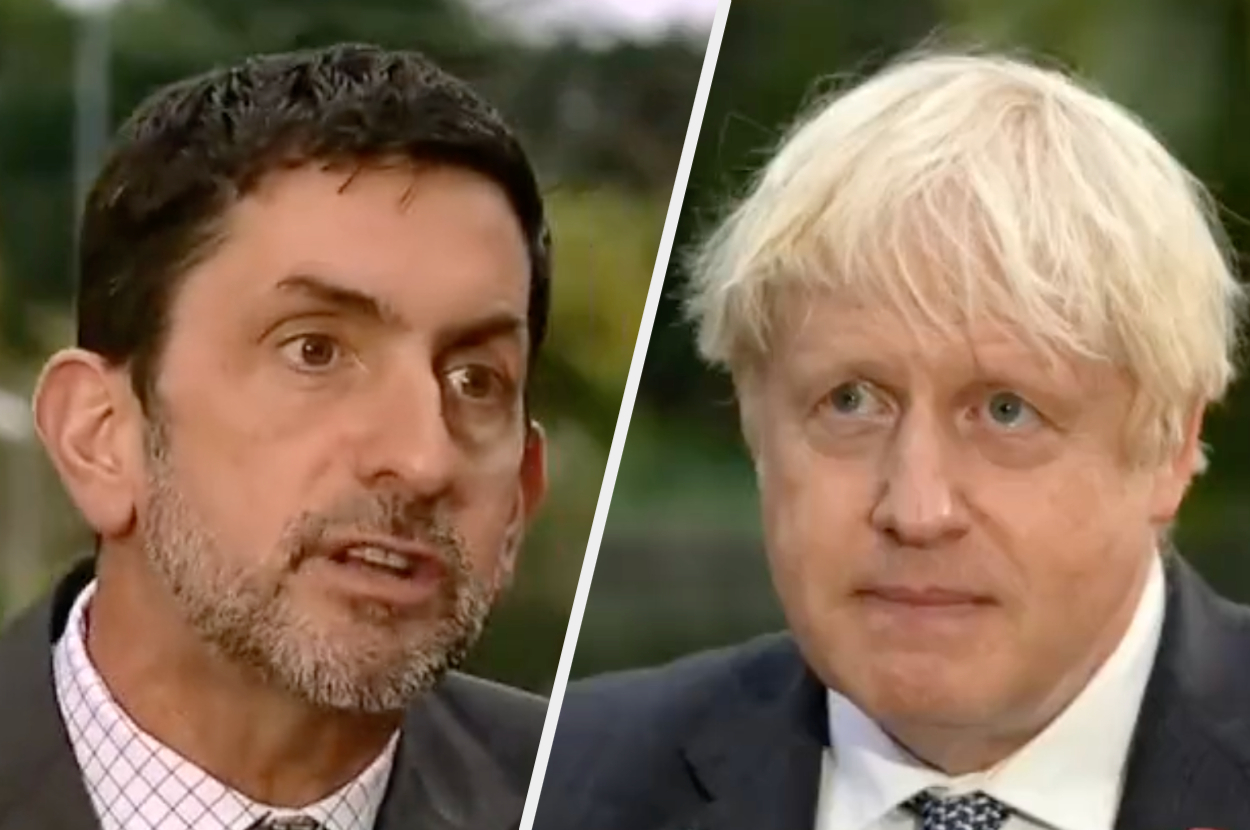
BBC’s climate editor Justin Rowlatt interviewing Boris Johnson

Boris Johnson was torn apart – and dubbed “a little bit weaselly” – for his mixed messaging around opening a new coal mine in the UK by a BBC journalist.

As he was being interviewed in Glasgow on the first morning of COP26, the UN’s climate summit, the prime minister was under the spotlight for not putting a stop to a new mine in Cumbria for coking coal.

The mine was approved to open until 2049 by Cumbria County Council in October last year but this decision was suspended by authority in February amid backlash.

The BBC’s climate editor Justin Rowlatt pointed out: “You’re going to the developing world and saying phase out coal, at the same time as not ruling out a new coal mine in Britain.

“We started the industrial revolution – we should close the mines.

“Why don’t you just say we’re just not going to open this coal mine?

“The Chinese will just says ‘we can’t take this guy seriously’.”

Rowlatt was referring to the UK’s efforts to get China to reduce its CO2 emissions, as it is one of the top CO2 emitting nations in the world.

The prime minister replied by claiming 80% of UK power came from coal when he was a child; now it’s just 1%.

“What everybody says is incontrovertible is the progress the UK has already made,” Johnson added.

Rowlatt then pointed out: “I’m sorry to bang on about coal, but it makes you look a little bit weaselly not answering the coal question.”

Johnson hit back and said, “Sorry, I’ve answered the coal question”.

Rowlatt continued pushing him to answer his query “directly” and answer “yes or no” to opening more coal mines.

The prime minister replied: “I’m not in favour of more coal. But it’s not a decision for me, it’s a decision for local planning authorities.”

Climate experts have been hoping that world leaders would promise not to produce any new coal at COP26, but it remains unclear how many will commit to such a pledge.

Rowlatt also skewered Johnson over his personal environmental decisions and his repeated claim that the UK is a world-leading nation when it comes to tackling the climate crisis.

The BBC journalist pointed out: “A couple of weeks before the holiday starts you go on holiday to Marbella – is that world leadership?”

Johnson swerved the question by directing it back to last week’s budget announcement that air passenger duty for domestic flights would be cut.

He said: “I think that on the issue of short-haul flights – we are increasing the taxation on long-haul flights which account for 96% of emissions.”

Rowlatt then pointed out: “You decreased it on short-haul flights, the ones which there are alternatives for, and increased it on long-haul flights so you did nothing.”

“It’s very difficult, I hear you, but it’s very difficult,” Johnson admitted.

World leaders have faced further criticism as there have been an estimated 400 flights arriving in Glasgow solely for the climate crisis crunch talks.

Hundreds also chose to buy last minute plane tickets to Glasgow on Sunday night after severe problems with the rail network delayed passengers.

Share Button

Wait – Is There A Covid Plan C Too?

One of Boris Johnson’s scientific advisers admitted that ‘plan C’ restrictions have been discussed in the health and social care department in the event that Covid cases continue to soar over the winter.

The news comes as the debate over introducing plan B continues.

Downing Street is currently relying on plan A, which involves championing the booster vaccine programme, suggesting people choose to wear face masks in crowded areas, regular testing, more funds for the NHS and the “largest ever flu jab” campaign.

NHS representatives have pushed for stricter measures, also known as plan B, to be introduced – and now there’s even talk of plan C.

Where did all this talk of plan C come from?

Chief scientific adviser to the department of health and social care, Professor Lucy Chappell said measures beyond plan B have been “proposed”.

Speaking to a parliamentary committee on Tuesday, she said: “It has been proposed. The name has been mentioned. It is not being extensively worked up…people have used the phrase.”

She did not say any more on the issue, adding: “At the moment the focus is on plan B.”

The Telegraph reported last week that further measures were being considered, including potentially the banning of household mixing at Christmas.

This is just what happened last year – but the prime minister has promised this year’s festive season will not go the same way, despite rising Covid infections.

The government has also promised not to introduce a lockdown as long as people take precautionary measures to reduce the Covid spread now.

But not everyone agrees that there is even a plan C

The prime minister’s spokesperson said: “As we have repeatedly made clear, there is no plan C.

“We knew the coming months would be challenging which is why we set out our plan A and plan B for autumn and winter last month.

“We are monitoring all the data closely and the government remains committed to taking further action if necessary to protect the NHS from being overwhelmed.”

Deputy chief medical officer for the government department Dr Thomas Waite told MPs: “I haven’t been consulted on anything about a plan C.”

What about plan B?

Plan B would see mandatory face masks implemented in certain crowded or indoor places, recommendations to work from home if possible and the potential introduction of vaccine certification.

According to leaked documents, this would last five months and finish around the end of March 2022.

However Downing Street has insisted that is “no planned five-month timeline” for plan B.

Why hasn’t plan B been introduced?

Professor Chappell told the science and technology there was “no single metric” which would enact plan B.

The government has been accused of deliberately leaking reports that plan B would cost the economy between £11 billion and £18 billion, as people would stop commuting.

The prime minister’s official spokesperson also said plan B would be introduced only if the “pressure on the NHS is unsustainable”, claiming that current measures allow “venues to remain open and remain trading”.

The government’s chief scientific adviser, Sir Patrick Vallance, told BBC Breakfast on Thursday: “As soon as you start thinking, ‘Am I or am I not going to do this? It looks close’, that is the time you need to push beyond your natural reluctance to do it and do it.

“This is obviously something the government will have to consider carefully but we need to be ready to move fast if that occurs.”

Share Button

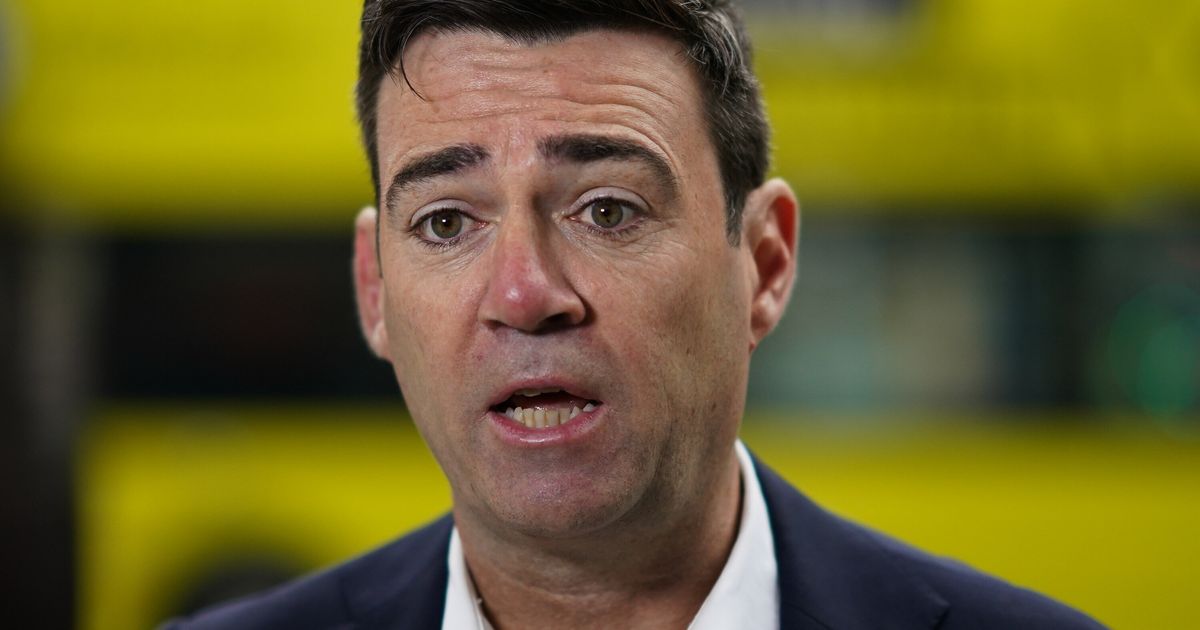
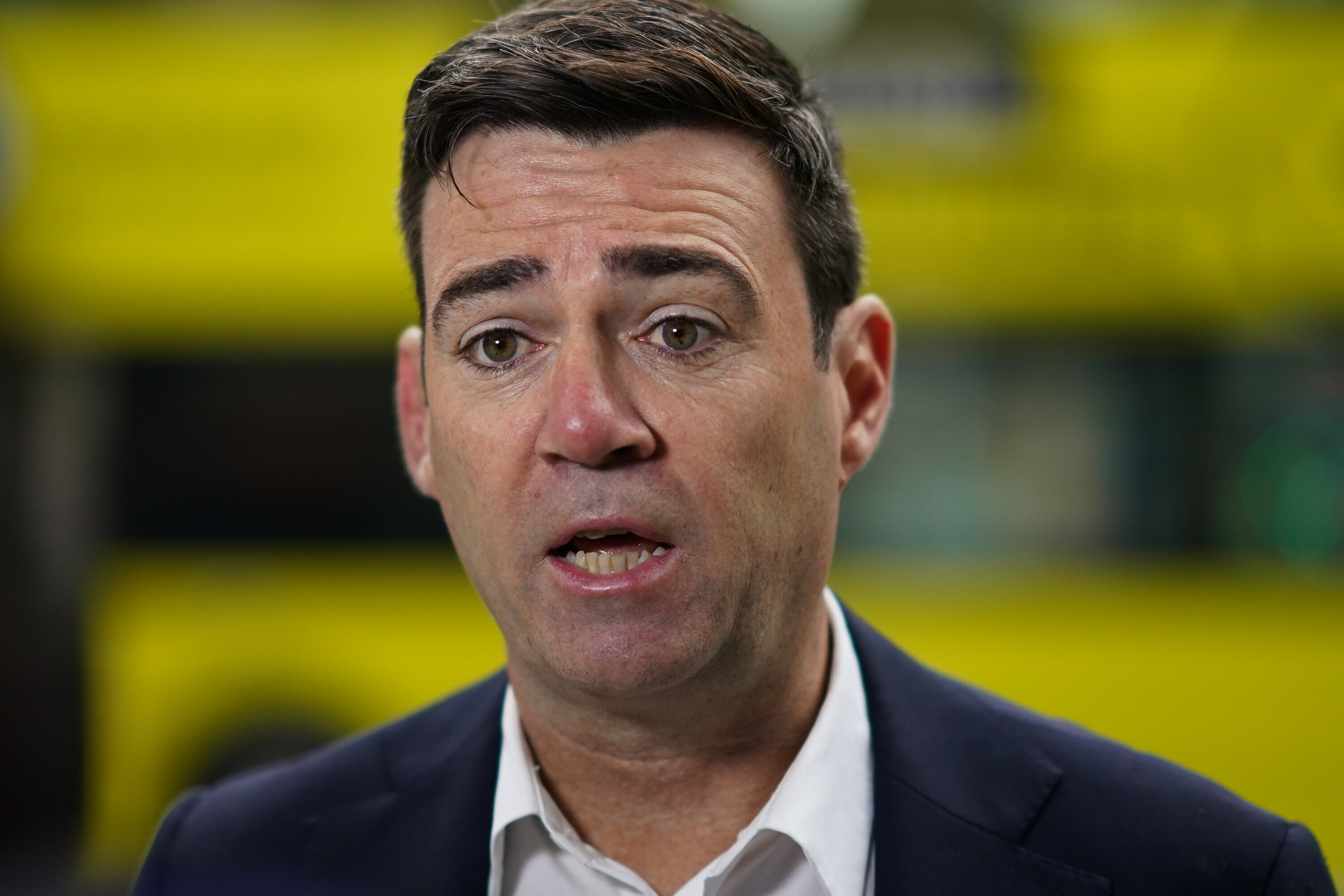
Andy Burnham Interview: Boris Johnson Is Giving The Public False Hope

Andy Burnham has denied he undermined Keir Starmer at Labour party conference, saying he instead brought “energy” and “value” to the gathering in Brighton.

The Greater Manchester mayor had been criticised by unnamed shadow cabinet members in the press for criticising Starmer from the sidelines during the annual meeting.

But in an interview with HuffPost UK, Burnham said he did “exactly the opposite” of what his critics have accused him of.

“I heard those noises from unnamed shadow cabinet, whoever they were, but I see it as us putting energy into the conference, because I did go and talk about the things that I am doing here, which I think are interesting for people,” he said.

“The London-style public transport – that is an idea that people can really get behind, I think. 

“The way I look at it is I made a very deliberate decision, I kind of thought, ‘What would I go to conference to do’ – it will be to add value to the policy debate, and that’s exactly what I did.”

Burnham has since said he is not gunning for the Labour leadership, despite reports – which he has denied – that his allies had given Starmer 12 months to turn the party’s prospects around.

The mayor made a series of interventions as Labour’s conference kicked off in Brighton, including that his party could not afford to wait until the next general election to unveil policies. 

He also criticised the Labour leader’s decision to overhaul its leadership rules and for failing to put northern mayors high on the agenda at the gathering – suggesting it meant the party was not “serious about winning back the north of England”.

As well as attending Labour’s conference, Burnham was also spotted at the Conservatives’ annual event in Manchester, where he pressed the government to respond to his levelling up deal for the city.

In his speech, Boris Johnson said the government would “do” Northern Powerhouse Rail – a project that would connect cities and boost journey times across the north of England – which was welcomed by Burnham.

But Johnson did not specify whether there would be a new line linking Leeds to Manchester or simply upgrades to existing lines which will worry the project’s proponents.

A dominant theme of the prime minister’s speech was to pitch what he called a “radical and optimistic Conservatism” against a “tired old Labour” that was “hopelessly divided”.

Burnham branded the dividing line a “simplistic characterisation” and accused Johnson of giving the public “false hope” even as the cost of living crisis spirals and there remains long petrol queues in parts of the country.

“I think the mood of the country doesn’t necessarily reflect what I think might be more wishful thinking on the prime minister’s part,” he said, adding that the £20-a-week cut to Universal Credit would have a “big impact here”.

“I don’t think the public are feeling massively optimistic about things but they probably want to be, but they haven’t been given a reason to be.”

Asked whether Starmer instilled the kind of hope in people in the way that Johnson attempts to do, Burnham replied: “Is that what people want – do people want a sense of false hope? 

“I think people want credibility, don’t they – seriousness, credibility.

“I think this is why it’s that there’s a choice there, it feels like they are different characters in terms of what they’re all about, and I think that very much comes through the two speeches.”

Despite welcoming climate change policies from shadow chancellor Rachel Reeves and from Starmer on greater mental health provision, Burnham expressed a sense of dismay that neither party showed they were “completely connecting to the mood of the country”.

“I think people are hurting after the pandemic, I think people are looking for hope and a lift, and I don’t think they got it in terms of the detail, from either party actually, in terms of ‘This is what we think takes us from where we are as a country now to where we should be’,” he said.

He is eager for both to unveil concrete announcements in October’s spending review, which he said was a “critical” moment for the country and as the UK prepares to host the United Nations COP26 climate change summit.

Burnham said now was the time for the government to “massively accelerate on both levelling up and decarbonisation” for it to feel real to the public before the next general election in 2023 or 2024.

“And certainly if we don’t have a massive gear change particularly on net zero, we’re not going to get there, and we’re not going to have anything to say on that at the COP,” he said.

“Both conferences were light on that to be honest, I mean this is a sort of window that’s kind of closing a little bit now.

“I’m not making party political points, we’re just making a sort of broader point about is the current political scene engaging enough with the current seriousness of that situation – I’ll be honest I didn’t hear enough of that at either party conference.”

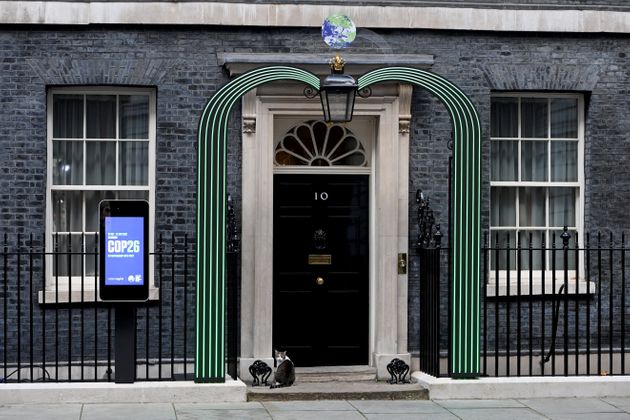
Share Button

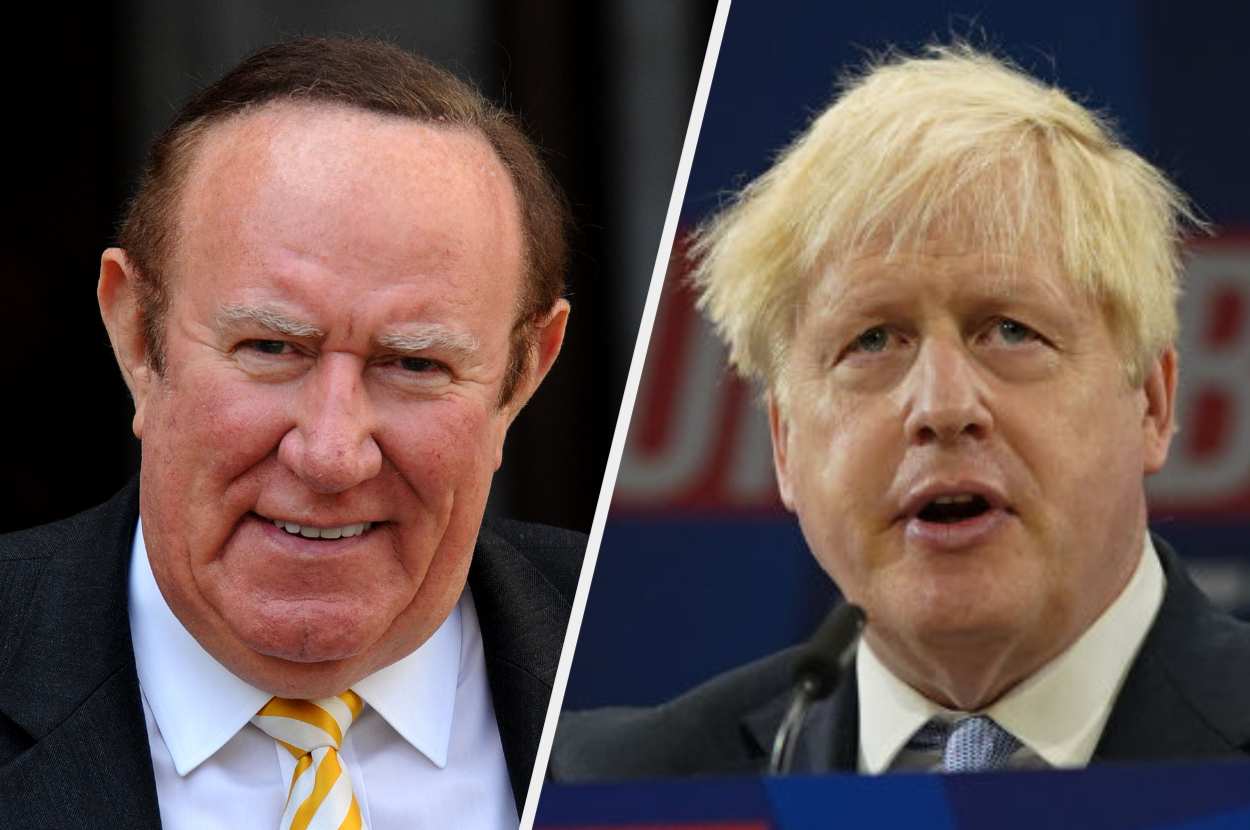
Andrew Neil Slams Boris Johnson On His Strategy For Fixing The UK’s Crises

Boris Johnson has been criticised by veteran broadcaster and Spectator chairman Andrew Neil for his “policy-lite” keynote speech at the Tory Party conference.

Speaking to LBC on Thursday, Neil said the public had an “expectation we’d get some policy now” as the pandemic has subsided and as the UK is being plunged into crisis after crisis.

He continued: “You can have more alliteration, as Mr Johnson had, than a West Coast poet from the 60s on LSD.

“That’s all fine. But we’re a country with major problems and we need to know the government’s solution to these problems and on that Mr Johnson had not a jot.”

Neil pointed out: “This winter we’re going into a serious cost of living crisis which will hit the poorest most of all, we don’t know when the shortages on the supermarket shelves or the petrol forecourts will end.

“We don’t know what the policy is on social care, we don’t know what the policy is on the NHS, other than to bung it more money, and we don’t know what ‘levelling up’ means.”

PA/Getty

Andrew Neil hit out at Boris Johnson after his speech on Wednesday

He said this was the first Conservative conference in five years when the party was not in some form of crisis – now that the divisions over Brexit have subsided and the pandemic has abated – meaning Johnson was in “world king” mode during his speech.

Neil agreed that Downing Street’s new promise to ‘level up’ the UK “is a very good idea,” especially as the UK needs more development in the Midlands and the north – but he added that this is an idea “without any flesh” at the moment.

The political pundit continued: “We have a right to know what the policies are, and to know if we have these been implemented yet.”

The former chairman of GB News speculated that Johnson’s popularity with voters comes down to his sunny optimism and that his rhetoric-heavy speech on Wednesday showed his priority is “bolstering the red wall”, rather than addressing the grim reality of the upcoming winter.

Share Button

Boris Johnson’s Weird Running Outfit Impressed Basically Nobody

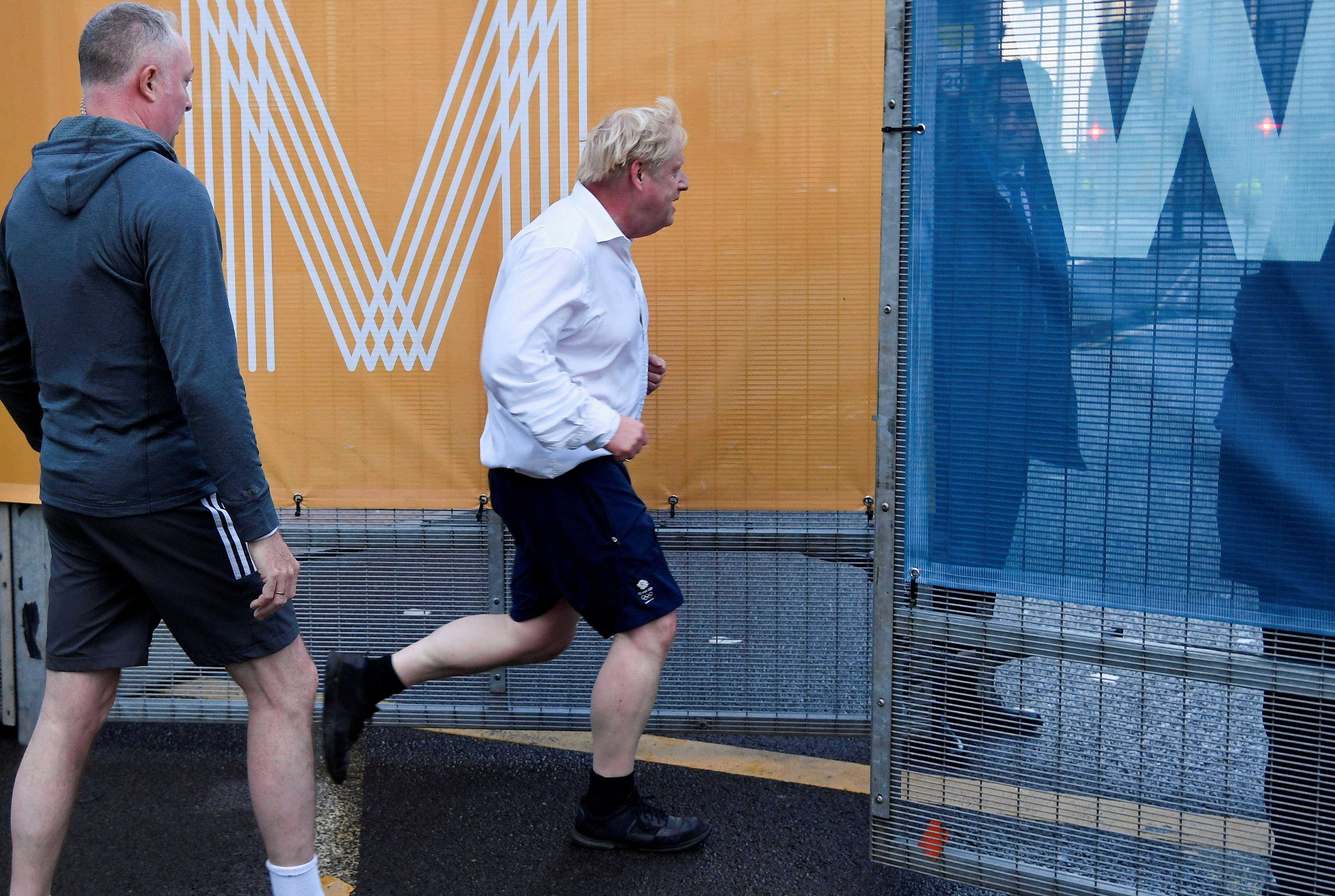
TOBY MELVILLE via REUTERS

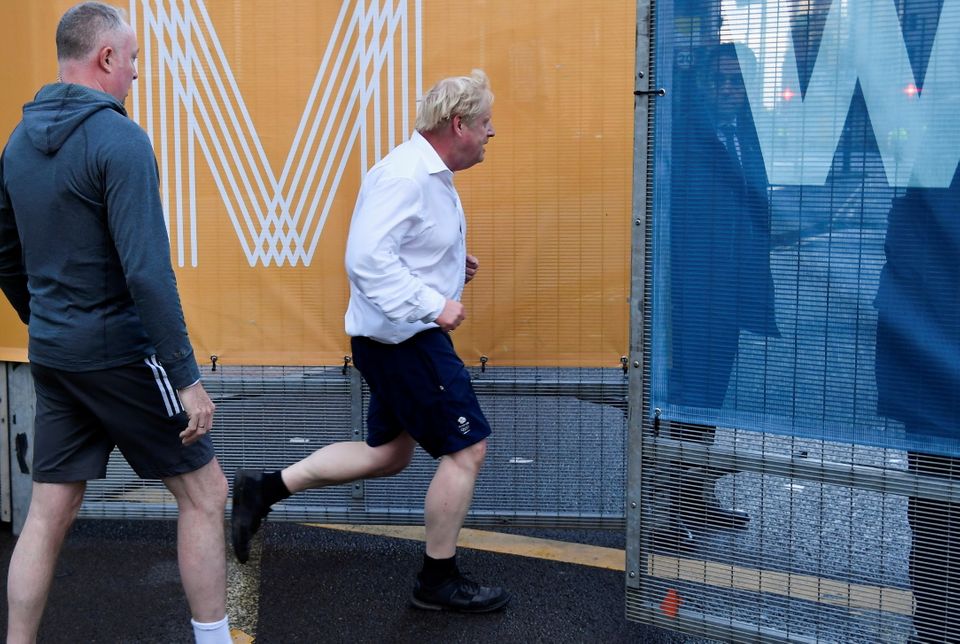
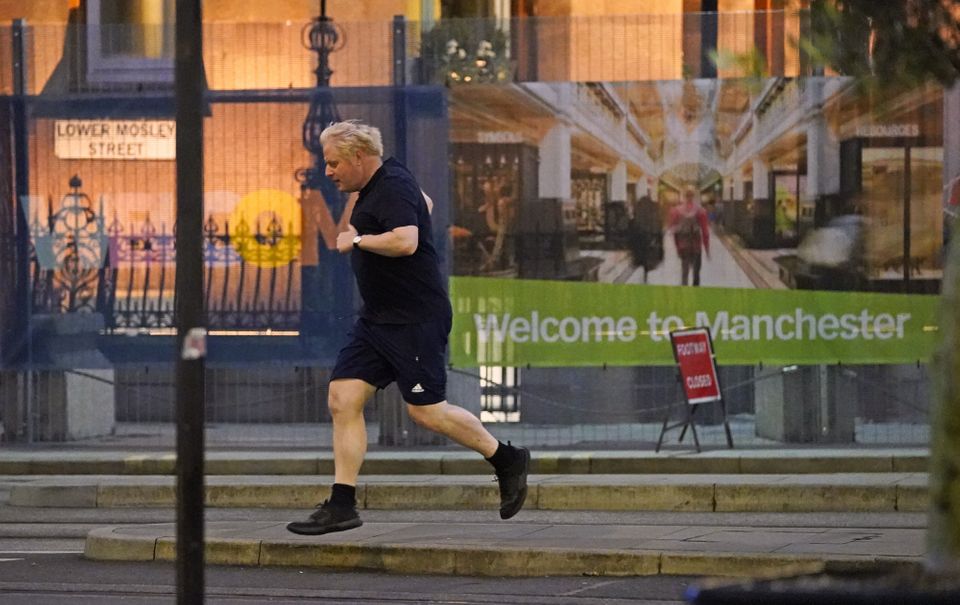
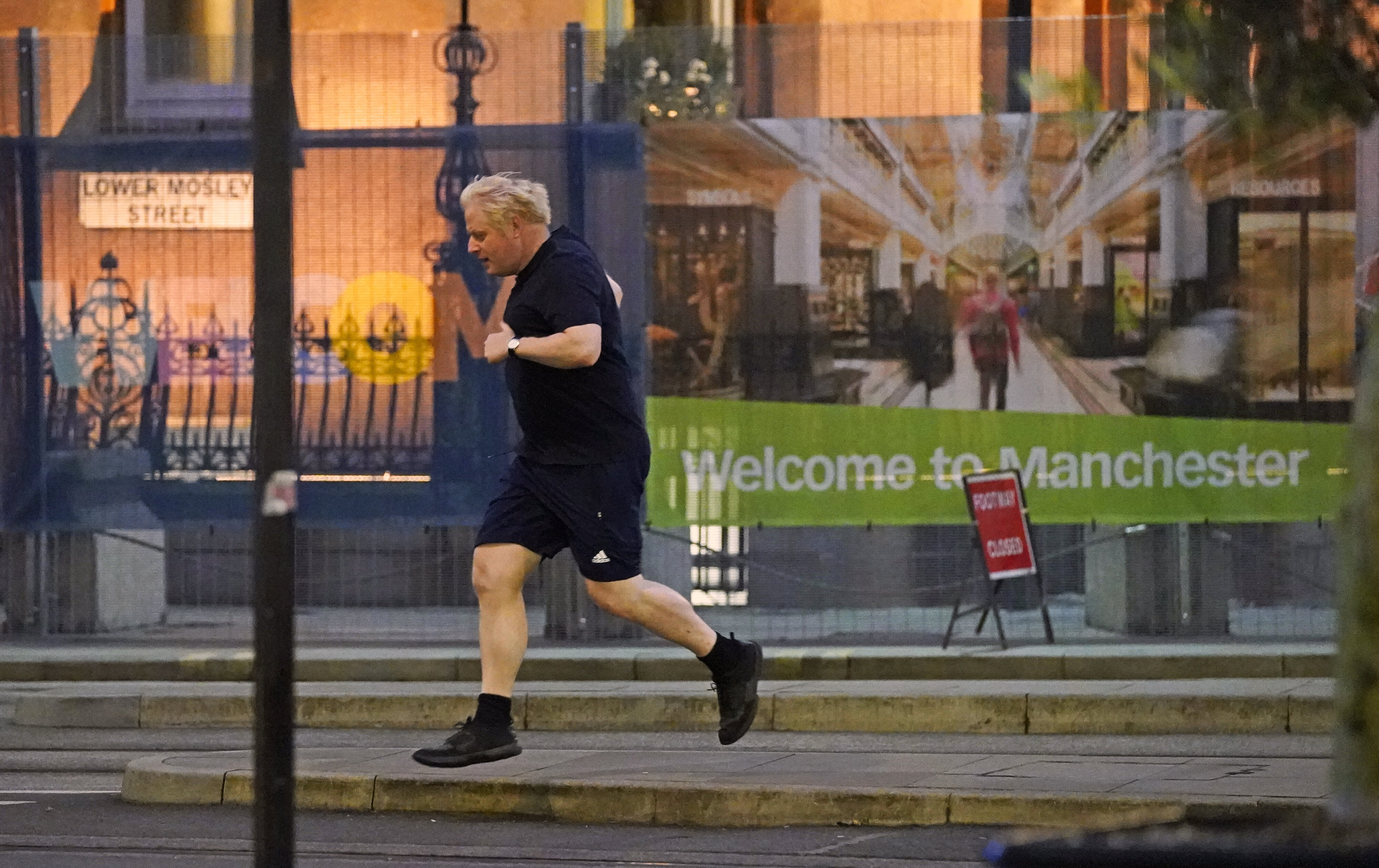
Boris Johnson jogs in the morning before the annual Conservative Party conference in Manchester

Boris Johnson caused a stir when he was pictured jogging in Manchester wearing shorts, formal shoes and a white shirt on Sunday.

The prime minister is in the city along with the rest of the Conservative Party to attend the annual Tory conference.

While Johnson has been spotted out running in the past, this was the first time he’s mixed up his exercise wear with business clothes – he reverted back to normal sports clothes on Monday, but the blunder has not been forgotten.

Chancellor Rishi Sunak addressed the outfit on Times Radio on Monday and said: “I have not spoken to him about that, I have only seen the photo… I could not pull that off the way the Prime Minister does.”

Not everyone was as complimentary as Sunak, though.

Broadcaster Ryan Bailey joked that he was worried “I don’t dress formally enough when I go running”, while football coach Gary Neville tweeted: “Surely a Tory donor can get him some running gear.”

Satirical Twitter account Newsthump also tweeted: “Fortunately, the prime minister avoided a terrible fashion faux pas by remembering his jogging cufflinks.”

Others noticed that this is a trend with Johnson, as he has previously been spotted wearing shirts during runs.

The image was also brutally edited by photoshop account Cold War Steve to accompany the prime minister’s controversy on the BBC’s Andrew Marr Show when he said: “I’ve given you the most important metric – never mind life expectancy, never mind cancer outcomes – look at wage growth.”

It was noted as a distraction technique too, as a fuel crisis and HGV driver shortage continues to grip the nation.

Others even compared to the cautionary tale of The Emperor’s New Clothes.

However, by Monday Johnson seemed to recognise that he had not won over any fans with his latest stunt and returned to normal jogging wear.

Stefan Rousseau – PA Images via Getty Images

Prime Minister Boris Johnson goes for a run ahead on Monday

Share Button

Boris Johnson Vows To Save Christmas (Again) And Everyone Made The Same Joke

Anna Moneymaker via Getty Images

Prime minister Boris Johnson is fighting to save Christmas…again

Boris Johnson promised the public that he was going to make sure supply chains “get through to Christmas and beyond” this year – a vow which felt very familiar to many of his critics.

The prime minister famously pledged to save Christmas last year by relaxing Covid rules for five days, only to scupper the country’s plans just before December 25 due to a spike in Covid infections.

Downing Street made a sudden U-turn on December 19, and Johnson told the public: “It is with a very heavy heart that I must tell you we cannot proceed with Christmas as planned.”

London and much of south-east England was put into tier four, meaning people could only mix with their own households and support bubbles, and no-one could travel.

Other parts of England were put in tiers one to three and asked to stay local. Only three households could come together for Christmas.

In Wales, only two households could unite for Christmas Day while in Scotland it was three households up to a maximum of eight people.

Johnson’s last minute U-turn did not impress many, considering Covid infections had been rising steadily for weeks.

It’s safe to say it was not the Christmas most people had in mind – and judging from the response on Twitter, few are looking for a repeat performance from the prime minister this year.

People were quick to compare the newspaper front pages of this year to those from November last year, when the public were told “Boris battles experts to save Christmas”.

Journalist and author Sathnam Sanghera tweeted: ”Boris battling to save Xmas seems to start earlier every year.”

Another Twitter critic joked: “Boris battles to save Christmas 2…..the sequel no one wanted. But a large chunk of the electorate would probably vote for.” 

Share Button

Boris Johnson Swiftly Put Down After His Climate Speech: ‘Speak For Yourself Mate’

Boris Johnson didn’t hold back when calling on the world to act against climate change – and his words definitely caused a stir on Twitter.

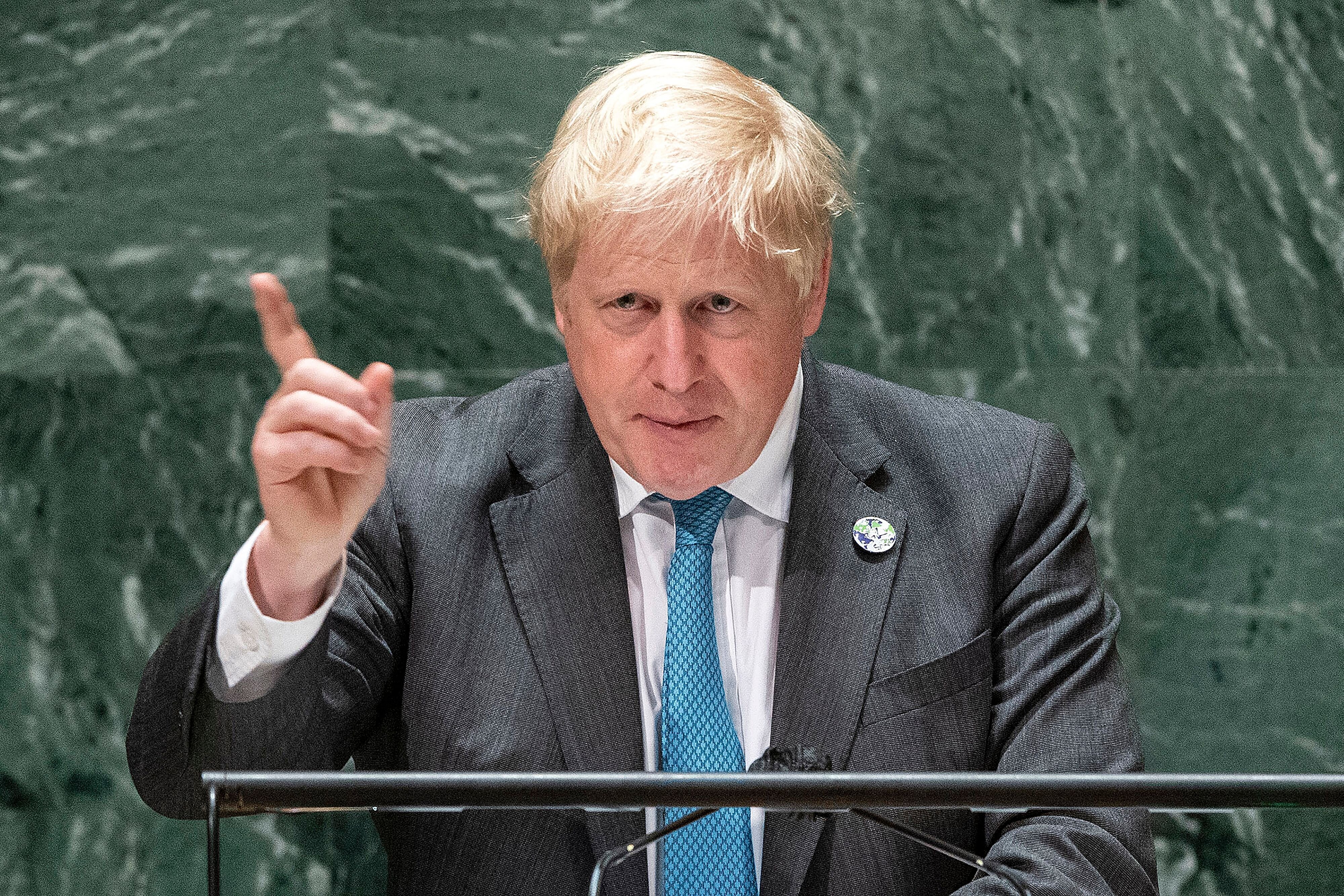
The prime minister spokes to the United Nations General Assembly in New York on Wednesday and urged the world to “grow up” and stop “trashing” the environment.

He then pulled apart the famous saying, “it’s not easy being green” from the Muppets’ character, Kermit the Frog.

However, his past scepticism towards climate change was not forgotten by his Twitter critics.

The Independent’s Tom Peck pointed out that Johnson himself did not support the idea of climate change for ten years after Al Gore’s 2016 film, An Inconvenient Truth which looks at how humanity have damaged the Earth.

Peck added: “And now, apparently, we’re meant to take this cartoon clown  seriously.” 

Satire website The Poke did not hesitate to take aim at Johnson either, noting that he told the world to “grow up” just hours after he had flown to the US and told France to “get a grip” of its anger over the new AUKUS pact.

Even Brexiteer and former MEP Patrick O’Flynn tweeted: “Perhaps someone on the team could have look at the draft [of the speech] and told the PM: ‘Some people may react to this passage by saying ‘speak for yourself mate’.”

This was then retweeted by Alastair Campbell, former prime minister Tony Blair’s spin doctor.

Johnson wrote several columns for The Telegraph over the last two decades which undermine the idea of climate change.

In 2012 he described fracking as a “miracle”, in 2013, he backed climate change denier Piers Corbyn and questioned the phrase “climate warming”, and in 2015, he rejected the idea that warm weather in December was down to a change in the climate.

This checkered past did not escape other Twitter accounts either last night as they mocked his speech.

Some accounts noted that just the other day, he appointed former climate change denier Ann-Marie Trevelyan as his new international trade secretary.

Not everyone thought the prime minister’s words should be mocked, though.

Times Radio’s Matt Chorley tweeted that it was a “bad take” to criticise Johnson’s accurate remarks based on his past climate denialism.

Former leader of the Green Party Caroline Lucas also took note of his speech – and demanded that the prime minister’s actions now reflected his words.

She tweeted: “Good to hear PM’s new enthusiasm for climate action.

“Since Govt failing its own climate targets, I look forward to imminent cancellation of Cumbrian coal mine, Cambo oil field, £27 billion road building plan, reversal of aid cut and a #GreenNewDeal.”

She added the hashtag #WalkYourTalk.

Former London MEP Lance Forman appeared exasperated just at the idea Johnson had referred to a character from the Muppets in a serious speech on the world stage – an opinion shared by plenty of others too.

Share Button

7 Reasons Greta Thunberg Is Spot On With Her Takedown Of UK Climate Promises

Greta Thunberg denounced the claim that the UK is a climate leading nation on Friday and said that is a “lie”.

The Swedish activist has a reputation for calling out world leaders when they don’t act on their climate promises – and it now seems the UK is in her sights. 

She attacked the claim that the UK has reduced its climate emissions by 44 percent since 1990, a comment prime minister Boris Johnson made at this year’s Leaders’ Climate Summit, and said that Downing Street is good at “creative carbon accounting” instead.

Thunberg added: “I am hoping that we stop referring to the UK as a climate leader. If you look at the reality, that is simply not true.”
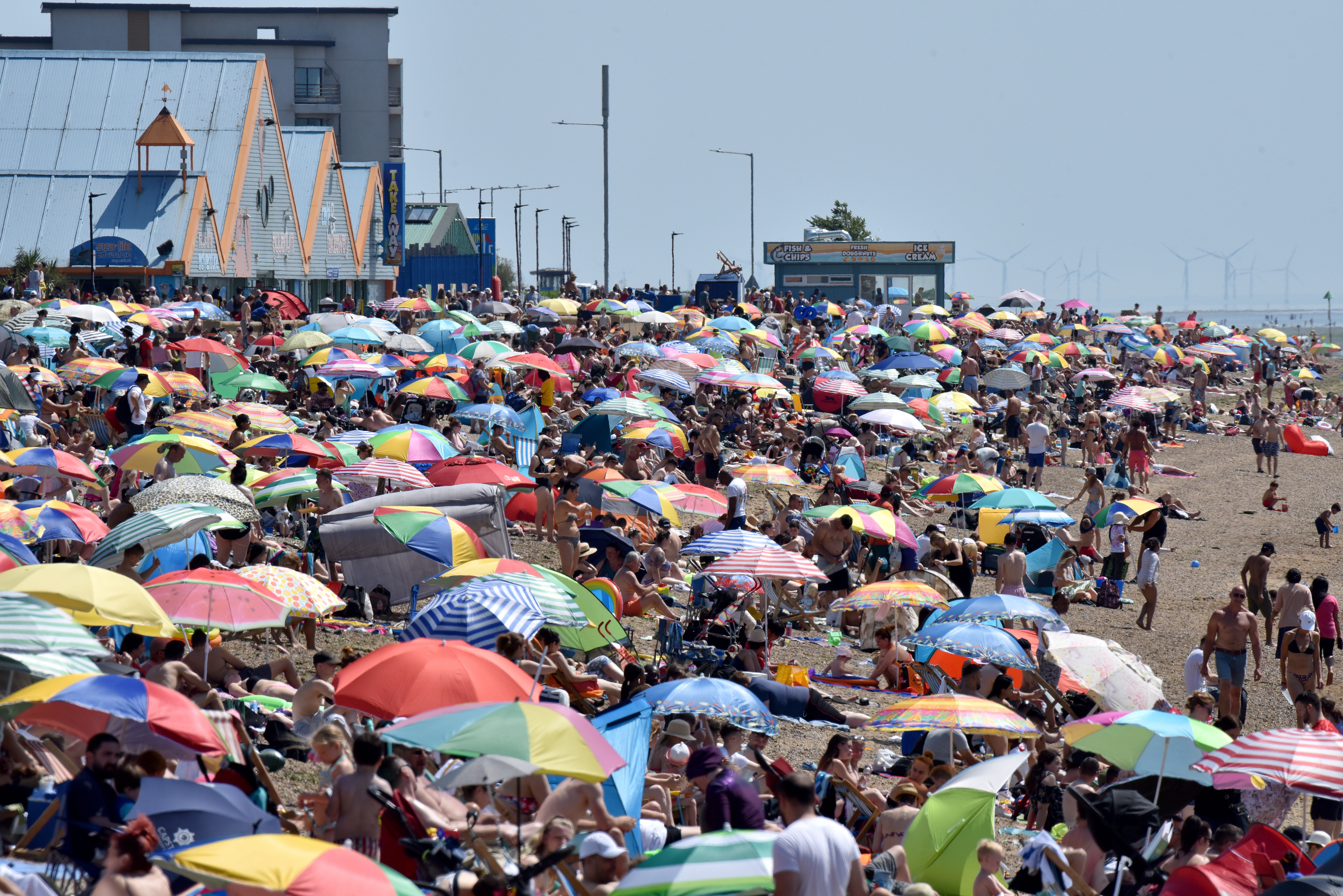
Her words are particularly significant given the Intergovernmental Panel on Climate Change has just declared the environmental crisis a “code red”.

Here’s a breakdown of the top concerns about Britain’s battle against the climate crisis.

CARL-JOHAN UTSI via Getty Images

Swedish climate activist Greta Thunberg poses for a photo 

1. UK Emission targets aren’t as ambitious as they seem

The UK has technically promised to cut emissions faster than other developed nations by vowing to make 68% cuts by 2030 when compared to UK emissions released in 1990.

The UK does have the 2035 target to cut 78% too, according to the 2008 Climate Change Act, and it did cut more greenhouse gas emissions between 1990 and 2016 than any other G7 country.

However, the UK’s emission figures are misleading. Britain contributes to approximately 2% of the global emissions, meaning its target cuts are unlikely to have a major impact.

The US contributes 15% to global emissions, and has promised to cut around 50% when compared to 2005 levels – meaning by 2030, the States will have had more of an impact than the UK.

Emissions for UK transport have not shifted much at all over the past decade either, and home heating emissions are still very high.

Rachel Kyte, former top World Bank official at the Paris climate talks, told The Guardian: “What the UK is doing is like dad dancing – it is not that they’re evil, just that they are very uncoordinated. They have not yet perfected a whole government approach to getting to net zero.”

SOPA Images via Getty Images

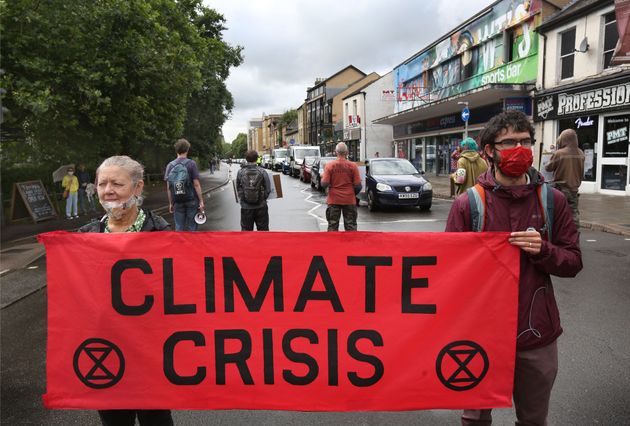
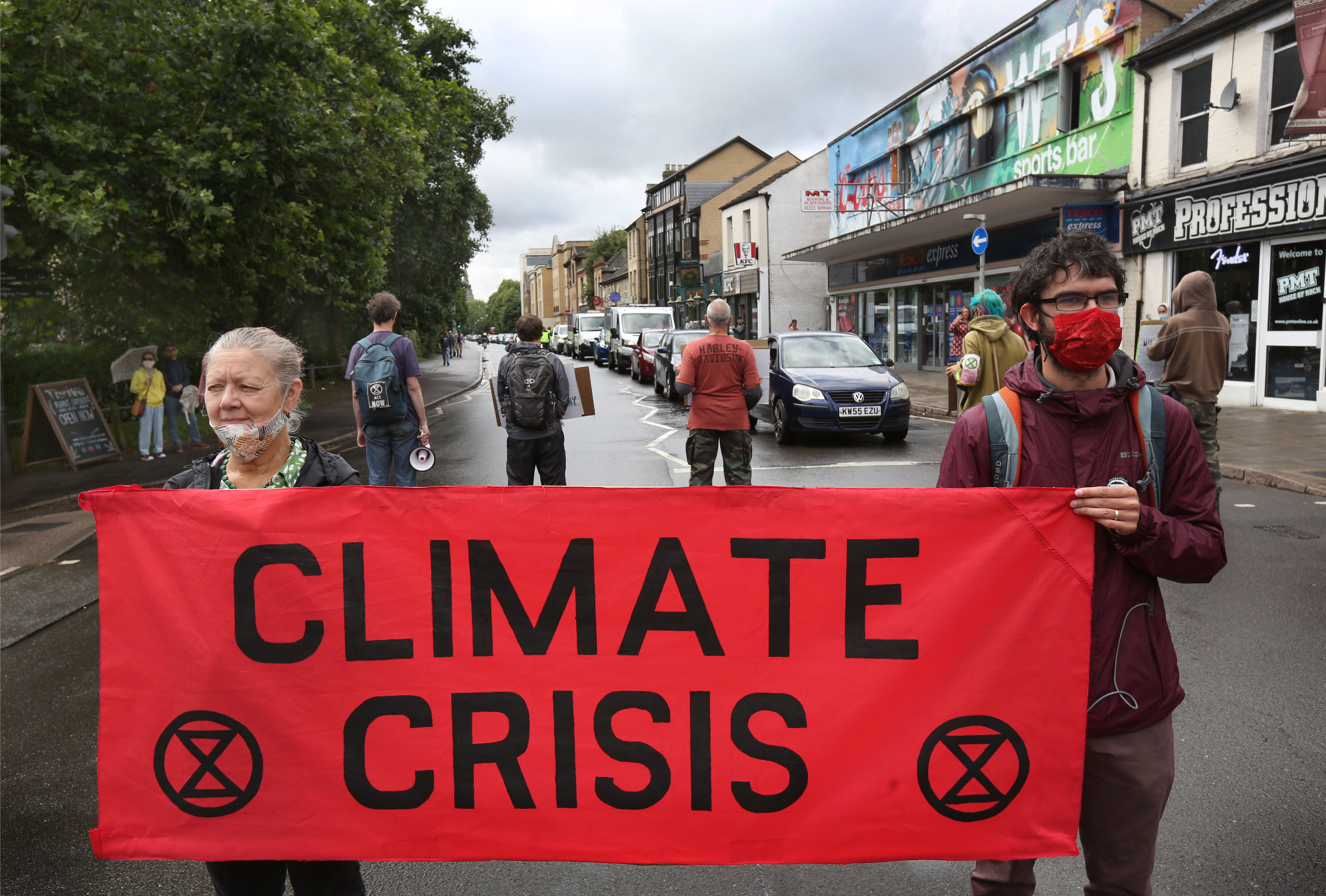
Protesters hold a banner saying climate crisis during the demonstration in Cambridge

2. Official climate advisers worry there’s no plan

The UN did actually urge more countries to follow the UK’s lead ahead of COP26, back in February.

The UK and the EU were the only two out of the world’s top 18 greenhouse gas emitters to submit plans for reducing emissions in the winter.

But, despite having a plan, there are concerns it was not thorough enough.

Chief executive of the Climate Change Committee, Chris Stark, shared his worries with Sky News in June about how the UK would reach net zero by 2050.

The government adviser said: “It is true the ambition of the country has changed in the last 12 months and this useful.

If we don’t take action now we risk falling to the back of the pack on tackling climate changeThe Energy and Climate Intelligence Unit’s Jess Ralston

“But unless it is being physically delivered, so the things that will drive us towards net zero, the changes we will see in homes, industry and transport, we can’t say we are credibly on track. The government has to change course.”

The committee advisers made 200 recommendations to Downing Street, including a Planning Bill to ensure new houses are low carbon and adapted for rising temperatures.

The committee also claimed the UK would only have to spend less than 1% of GDP a year to meet the net-zero target, and it could deliver a return boost of 2% by 2035.

The climate advisers also said the country was less prepared to tackle global warming than it was five years ago.

Stark said: “We’ve been raising our concerns consistently for some time now. [The government has] found it far too easy to dismiss those.”

Barcroft Media via Getty Images

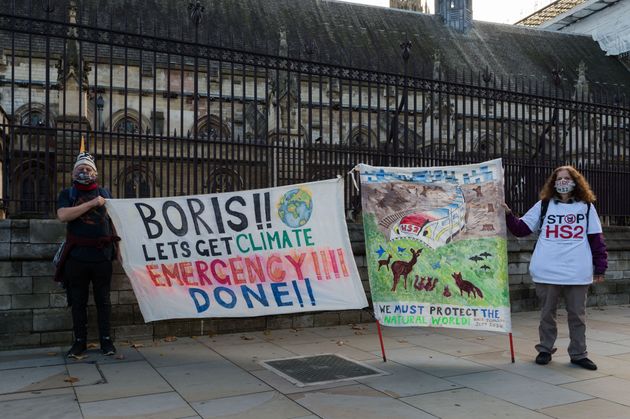
Environmental activists protest in Parliament Square against the UK’s High Speed 2 railway project as well as the Government’s failure to act on the climate and ecological crisis in October 

3. The UK is not adapting to a warmer future

The climate goals mean the world will have to adapt to an increase in temperature of between 1.5 degrees Celsius and 2 degrees Celsius in the next 80 years.

If not enough is done to reduce global warming, the average climate could rocket up to 4 degrees Celsius.

Professor Dame Julia King, chair of the Climate Change Committee, warned in June: “We cannot deliver net zero without adaptation.

“It’s absolutely illogical that we are not doing it.”

She also claimed it was a “failing” that the Treasury’s assessment did not consider the cost of adapting the nation to climate change.

Downing Street responded by acknowledging the report and saying it would examine its recommendations “closely”.

SOPA Images via Getty Images

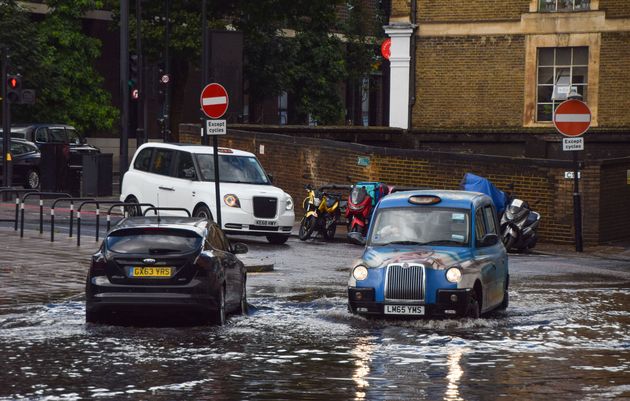
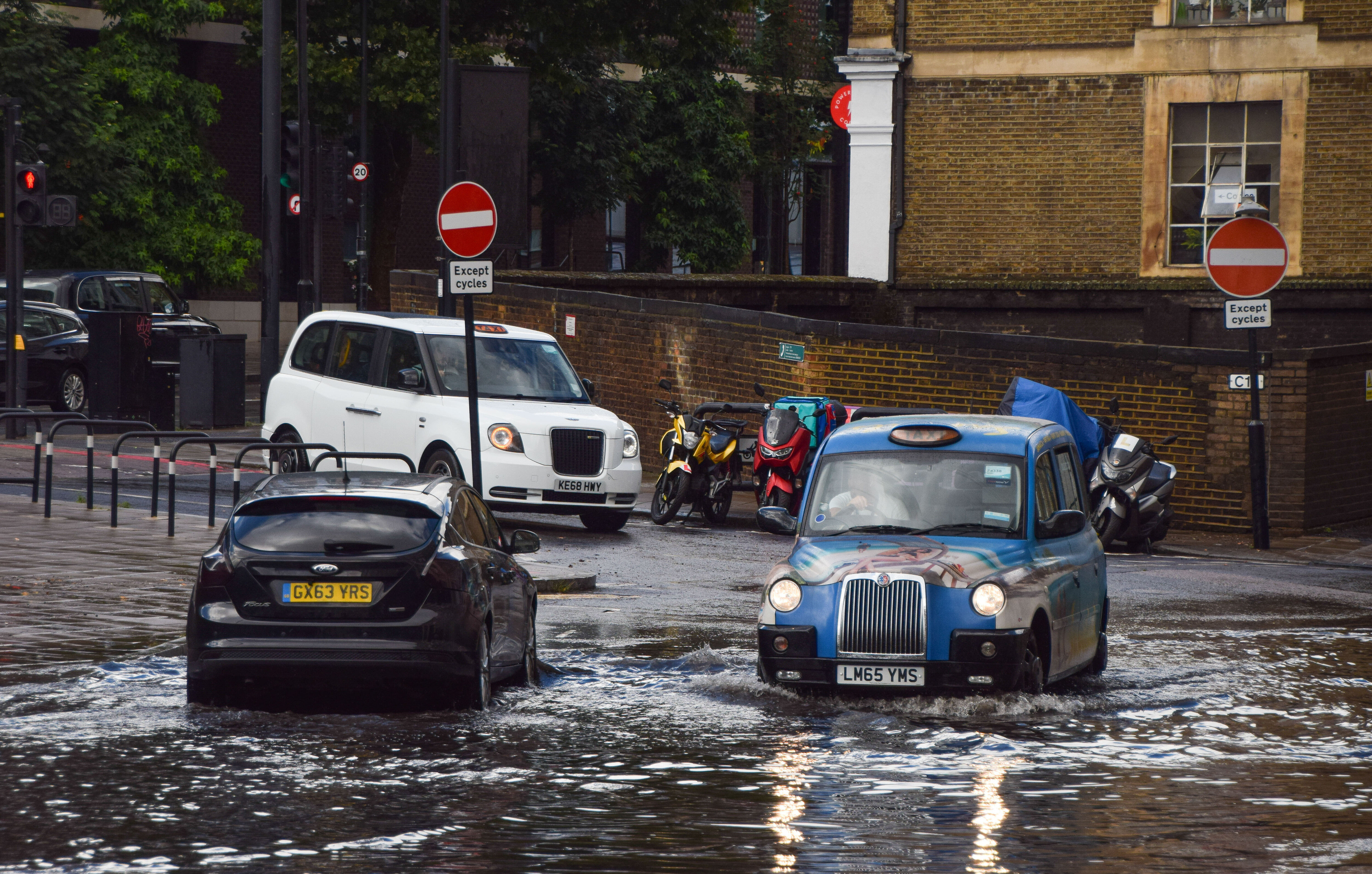
A taxi drives through a flooded Farringdon Lane in central London after a day of heavy rain in the capital in 2021

4. Time is ‘getting a bit thin’ to make a change

The Energy and Climate Intelligence Unit’s Jess Ralston said the UK needs to make an action plan ahead of the year it hosts the climate summit.

She told Sky News: “This year is the government’s chance to prove to the world that they are not just talking about this, they are delivering on it as well.

“Time is getting a bit thin.

“If we don’t take action now we risk falling to the back of the pack on tackling climate change. We also risk missing out on new life-long jobs in green industries, which are the future of the UK.”

However, the government did respond to Ralston’s complaints.

A spokesperson said: “Our forthcoming strategies on heat and buildings, hydrogen, transport and comprehensive net zero strategy this year will set out more of the very policies the Climate Change Committee is calling for as we redouble our efforts to end the UK’s contribution to climate change.”

John Keeble via Getty Images

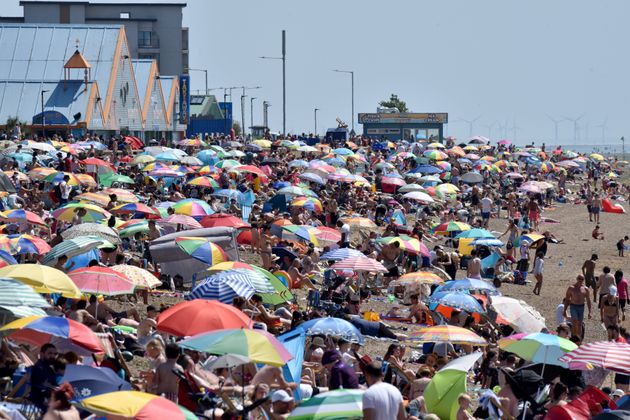
Heatwaves are becoming more frequent in the UK

5. Many changes are already ‘locked in’

According to the Climate Change Committee, the UK has already seen the average land temperature rise by around 12 degrees Celsius from pre-industrial levels.

Sea levels from around the country have risen by 16cm since 1900 as well, and extreme heat is becoming more common.

In the last five years, more than 57,000 new homes have been built which the committee believes are not resilient enough to sustain higher temperatures.

In the last three years, there have been 4,000 deaths related to heat in England alone.

Nearly 60 percent of the total risks noted by the committee were also given the highest urgency score.

Peter Summers via Getty Images

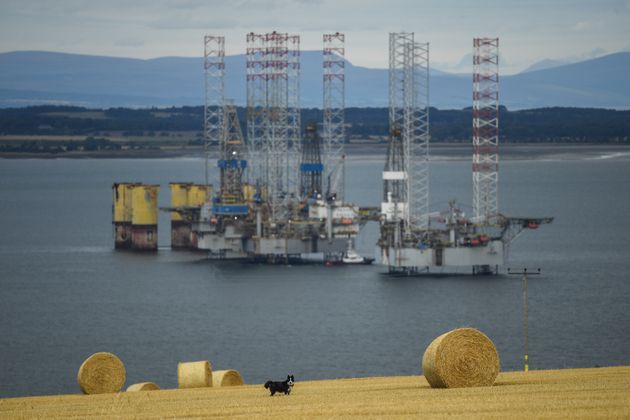
Oil rigs in Scotland

6. The UK gives a lot of subsidies to fossil fuel companies

Britain gives more subsidies to fossil fuel firms than any other country in Europe.

The government is also attempting to open a new coal mine in Cumbria, near Whitehaven, while continuing to grant new oil and gas exploration licenses.

There is an ongoing debate about the proposal to mine Cambo – an oil field in the North Sea – as well, even though it could undermine the UK’s credibility at COP26 in Glasgow come November.

This site could produce up to 880 million barrels of oil.

However, shouting down calls from activists not to open the oil field, Downing Street has said the initial exploration license was granted two decades ago.

It also claimed that if anything is extracted, the Oil and Gas Authority will only grant a license for 170 million barrels.

7. The UK relies on ‘false solutions’

The UK has been criticised for relying on “offsetting schemes” which promisees to reduce carbon emissions in the future.

However, delayed action could contribute to an additional 1.4 degrees Celcius of warming.

Friends Of The Earth claimed carbon offsetting does not work most of the time in practice, after a study for the European Commission found only 2% of offsetting projects were likely to resulted in additional emissions reductions.

The campaigners claimed carbon-offsetting was not the best way to tackle the climate crisis, and that it was best to prioritise the reduction of carbon emissions. This is a view also shared by renowned environmental organisation, Greenpeace.

Share Button

Only Time Will Tell: Did Boris Johnson Really Mark 11am Silence At 11.14?

Twitter @10DowningStreet

Boris Johnson marking the 11am silence for victims of the Plymouth shooting. 

Twitter users were unimpressed when the prime minister posted a photograph of himself marking Monday’s 11am silence when his watch clearly said it was 11.14am – but just how accurate were these criticisms?

Boris Johnson released the images as a tribute to the five victims of last week’s devastating Plymouth shooting on Monday.

One Twitter user commented: “They cared enough to turn back the clock on the mantelpiece but forgot his wrist watch.”

Another account criticised the claim that the prime minister was honouring the 11am silence, and compared the two different times on the mantlepiece clock and on Johnson’s watch. They asked in their caption: “You sure about that?” 

Others questioned why it took so long for the photograph to be uploaded to social media as it appeared online at 12.37pm.

One account noted: “Took one hour and 36 minutes to write this tweet and upload this photo? Or maybe, given the different times on the clock and watch, it was a belated, hastily assembled piece of gesture politics?”

Another account dubbed the photograph as “embarrassing”.

Journalist Chris Stokel-Walker also weighed in on the debate, and tweeted: “Absolutely incredible scenes as Boris Johnson’s watch gives away that this wasn’t actually taken at 11am, despite the clock in the background.”

However, he later tweeted in defence of the photograph after reportedly hearing more about the photograph’s origins.

He deleted his original tweet, and added: “For transparency: deleting the screenshotted tweet below before it gets picked up by conspiracists after being told the EXIF data shows the watch is wrong, the clock is right.”

The EXIF data means the Exchangeable Image File Format and refers to the accurate data about the image’s origins stored in the camera when a photograph is taken.

A Downing Street official also claimed that it was actually the watch which was running 14 minutes fast, and that the image was taken at 11am.

Johnson also acknowledged the horrendous incident last week, tweeting: “My thoughts are with the friends and family of those who lost their lives and with all those affected by the tragic incident in Plymouth last night. I thank the emergency services for their response.”

The prime minister was not the only one to honour the horrifying shooting in Plymouth, which was the worst seen in the UK for a decade.

Approximately 200 people gathered outside Plymouth city centre at 11am on Monday to mourn the lives lost.

William Dax via Getty Images

Members of the public place flowers at the entrance of Biddick Drive, where Davison began his killing spree last week

Jake Davison, a 22-year-old, shot his mother Maxine Davison, 51, dead in Biddick Drive, before shooting 3-year-old Sophie Martyn, and her father 43-year-old Lee Martyn on the street.

Davison went on to kill Stephen Washington, 59, and 66-year-old Kate Shepherd.

Davison was a licensed firearms holder, raising serious questions about the government’s current gun laws and prompting widespread calls for change.

The government has confirmed that it is preparing statutory guidance to help promote high standards of decision-making within gun licensing applications.

The Home Office wants future gun applications to cover the social media of individuals too.

Davison’s YouTube channel and Facebook account showed he referred to himself as the “terminator” and held misogynistic views.

All police forces in England and Wales have been advised to review their current processes and assess existing licences.

Share Button