Will Boris Johnson Now Pause His Roadmap To Boost The Jabs’ Magic?

You’re reading The Waugh Zone, our daily politics briefing. Sign up now to get it by email in the evening.

What was meant to be Boris Johnson’s ‘quiet week’ just keeps on getting noisier. Today started with a kicking over catch-up funding for schools, swiftly followed by warnings that the simmering unease over international aid cuts is ready to boil over into rebellion. To top it all, it looks like millions of Britons won’t be getting a summer holiday abroad after all.

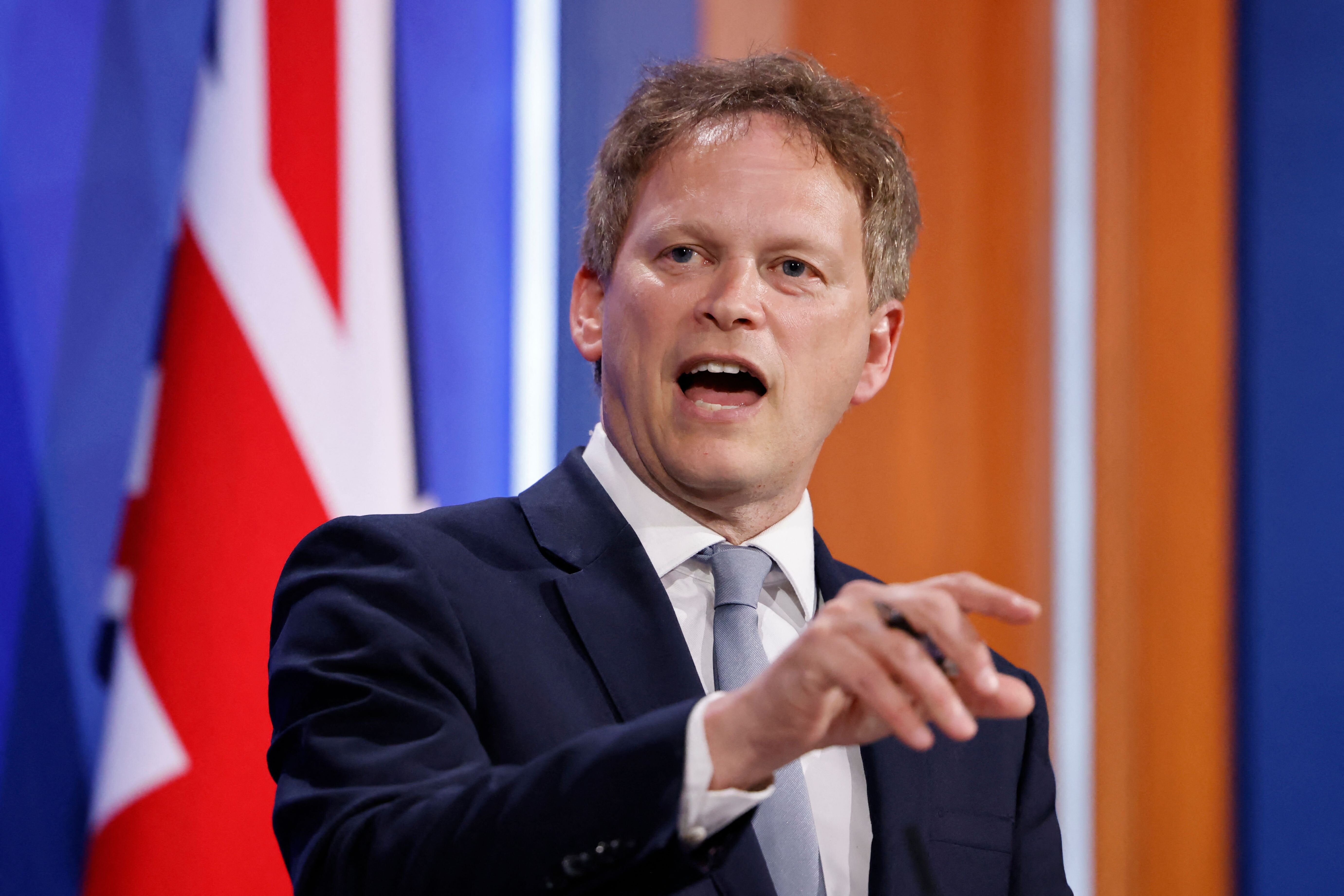
That’s the very downbeat conclusion many in the tourism industry have drawn from transport secretary Grant Shapps’ big announcement. Shifting Portugal from the “green list” to the “amber list” of travel destinations, albeit with a week’s notice, signals that holidays overseas are getting harder, not easier as some had assumed.

Politicians love using the phrase “direction of travel”, but that terminology will feel singularly inapt for those who had pinned their hopes on ending a long and gruelling year with at least a break in the Mediterranean sunshine. It’s still possible that in three weeks’ time the numbers may have fallen again in various European countries and islands, but no one is banking on it.

It’s worth pointing out that many Brits can’t afford or don’t want a foreign holiday. But a sizeable number of them very much do, and several Tory MPs will point out this is not some middle class obsession. “My working class constituents work bloody hard and save every penny for that week in the sun,” one tells me. “They’ll wonder why the hell they can’t still do that if they’re double jabbed.”

One problem lies in the traffic light system devised by the government, or more particularly, the amber bit of it. Because travel to amber list countries is legal, though not advised, there is no automatic right to a refund that would occur on the red list.

David Davis is another Tory who thinks there are political risks with Shapps’ announcement. “This is an irrational overreaction,” he tells me. “If you’re going to do this, at least make it a green-red system so people can get their money back.”

As it happens, that’s Labour’s position too. Shadow home secretary Nick Thomas-Symonds says the amber system is just a recipe for confusion, with reports of 50,000 travelling into the UK daily, each possibly bringing back a nasty souvenir in the shape of an infectious new variant of the virus.

I suspect that some Brits will actually hedge their bets by splitting up what would have been a fortnight abroad. They could take a risk on the first week holidaying in an amber country like Portugal, Spain or Greece, then using their second week’s holiday to quarantine at home before getting a test release after five days that lets them take a short trip in the UK too.

But only a minority will want to risk that. The real difficulty with the current traffic light system is that it’s hard to tell amber-flashing-red from amber-flashing-green. It is designed to offer a careful route from the most unsafe to the most safe environments and embodies a proportionality of risk that drives Boris Johnson’s thinking. That’s why he probably won’t ditch it.

Yet this virus doesn’t respect proportionality, and often the only language it understands is overwhelming force (we’ve learned lockdowns have to be hard and fast). The amber list is the overseas version of the domestic regional tiers system designed last year to contain Covid in defined areas. That system failed miserably this winter in the face of the Kent variant, which staged a deadly route march out of the south east across the whole country.

And again in and around Bolton and other “hotspots” where the even more transmissible Indian variant was found, the virus has shown a marked disrespect for borough boundaries, let alone national borders. The latest figures showing the big jump in cases in Blackburn, plus the wider spread of the virus across Lancashire, proves that once a new variant gets a foothold it moves fast.

As the PM ponders what this all means for his June 21 unlockdown date, history tells us he will want to have his cake and eat it. We shouldn’t forget that the public too quite like a bit of cakeism (European style public services, US-level taxes, anyone?), a factor that’s often forgotten when some are baffled why Johson is so popular.

The return of ordering at the bar (instead of table service) is seen by some of the PM’s allies as sacrosanct, both because it is vital to the economics of the pub industry and more importantly vital to some sense of normality and boosted morale after months of lockdown. There’s a view in government that this simple change would buy the PM enough political capital to keep in place other restrictions, like working from home and mask wearing on public transport.

The difficulty again is that while that may seem sensibly proportionate to the risk, a disproportionate response to the Indian or “delta” variant may be what’s really needed. The latest data from Public Health England, confirming the delta variant’s higher transmissibility, its “significantly higher risk of hospitalisation” and its higher vaccine escape, could force firmer action from No.10.

A short, two-week delay (which I’ve talked about before) for all the June 21 measures is gaining traction in Whitehall as perhaps the better solution, not least because it gives time for ramping up more jabs.

As the PM had his second dose today, he must have thought just how much safer the nation would be if as many over-50s as possible had the same protection before further unlockdown. That delay would be disproportionate to some, but may be just smart public health policy as much as smart politics.

Share Button

Why The Catch-Up Czar’s Resignation Is Boris Johnson’s Problem

You’re reading The Waugh Zone, our daily politics briefing. Sign up now to get it by email in the evening.

This was meant to be a quiet week. Commons in recess, a ‘holding pattern’ on Covid, Whitehall treading water while it waits for the latest data on the pandemic. Aside from an update on foreign travel from Grant Shapps on Thursday, the big ‘event’ marked on the No.10 grid was today’s catch-up cash for schools. 

An emergency £1.4bn, on top of an extra £1.7bn already announced for pupils, could have been spun as a statement of intent, an interim measure pending a bigger funding settlement in the chancellor’s spending review later this year. But thanks to some great work by the Times, which exclusively revealed earlier this week just how much cash had been requested, the PR plan was smashed to bits.

Sir Kevan Collins, the catch-up czar, had wanted £15bn but instead got less than a tenth of that, at least in the short term. And his resignation words tonight blasted both barrels not just at the hapless Gavin Williamson (whose departure from Education in a reshuffle seems all but guaranteed), but also at Boris Johnson himself.

By referring explicitly to the failure to provide help to pupils in deprived areas in the north, Collins appeared to expose the PM’s “levelling up” agenda as a hollow trick played on all those who voted Tory in May. “In parts of the country where schools were closed for longer, such as the north, the impact of low skills on productivity is likely to be particularly severe,” he said.

It’s worth remembering that Collins was never going to be a government pushover. He is widely respected for his work in education, and as recently as March he told the education select committee that the £1.7bn first pledged was “not sufficient”. He wanted a comprehensive recovery plan, not a sticking plaster, so it’s perhaps no surprise he’s ripped it off to lay bare the wounds underneath.

This isn’t just about the education gap. For Johnson, this underlines once more the yawning gap between his rhetoric and actual delivery. Back in June 2020, he promised “a massive summer catch-up operation”, but nothing of the kind materialised. Yes, the fresh lockdowns knocked things even more off course, yet parents, pupils and teachers won’t easily forget the promises made.

This March, I remember vividly Johnson telling a No.10 news conference how much catch-up mattered. “The legacy issue I think for me is education,” he said. “It’s the loss of learning for so many children and young people that’s the thing we’ve got to focus on now as a society. And I think it is an opportunity to make amends.” If the PM can’t deliver on his own professed personal priority coming out of the pandemic, what chance do all the other policy areas have?

Critics will point out too that unlike other areas of government (social care, anyone?), there is at least a plan worked up by Collins to “make amends”. His bigger package was about extra teaching time, not just tutoring. Still, there are some in government who tonight are pointing out the idea of an extra half hour on the school day did not go down well with teachers.

The longer day was “not thought through” and not “evidence based”, both of which are red flags to the Treasury. Moreover, doling out £15bn – half the annual primary and pre-primary school budget – between spending reviews was seen as imprudence fiscal management. Allies of the chancellor insist this isn’t about being stingy. “If we just start signing off massive cheques outside of a formal process, there lies mismanagement of taxpayers’ money!” one says.

Yet ultimately the PM is, as he joked in recent months, the First Lord of the Treasury. If he’d really wanted a big, bold plan for education catch-up with big, bold spending to match, he could have got it. The political problem is that an independent expert in schooling has now delivered a damning verdict on Johnson’s central “levelling up” policy, or rather the lack of one

Collins has also made early years education his priority, stressing its social as well as academic benefit, and its underfunding in recent years. The Tories’ closure of SureStarts is perhaps one of their biggest policy errors in the past decade of austerity. Amazingly, Labour has failed to ram home that very point, and has shown a woeful lack of focus on childcare and early years (evidenced by Jeremy Corbyn’s priority of student tuition fees, but under Starmer there’s been no real grabbing of the agenda either).

A cynic might say that the expected grade inflation in this year’s GCSE and A-level exam results will smooth over the problem. But if metrics emerge that younger children of all backgrounds are falling behind expected benchmarks, the lack of a proper “catch-up” or “recovery” plan will be received bitterly by parents who struggled with the home-schooling imposed on them this past year.

It’s possible Johnson will again wriggle out of this latest tight spot. But remember that two of the biggest U-turns forced on him over the past year both involved education: the A-levels fiasco and free school meals. And both were issues of competence.

Collins’ resignation may have gifted Starmer his most powerful weapon yet, offering at the next election a simple way to sum up broken Tory promises and incompetence. Whether Labour can capitalise is another matter.

Share Button

Boris Johnson’s £1.4bn Schools Catch-Up Fund Branded ‘Paltry’ And ‘Disappointing’

izusek via Getty Images

High school students at school, wearing N95 Face masks. Teenage girl wearing eyeglasses sitting at the school desk and listening to the teacher.

A £1.4bn catch-up tuition plan to help children recover lost learning after Covid has been branded “hugely disappointing”. 

The Department for Education (DfE) announced the cash for schools and colleges in England and have underlined it comes on top of £1.7bn already pledged for lost education. 

The cash will see pupils offered up to 100 million hours of extra teaching, with Year 13 students given the option to repeat their final year if particularly hard-hit by lockdown. 

But unions have said package “lets down the nation’s children”, and falls short of the £15bn school leaders hoped for, with some accusing Rishi Sunak’s Treasury of blocking further spending.  

The DfE scheme includes £1bn to support up to six million, 15-hour tutoring courses for disadvantaged pupils, as well as an expansion of the 16-19 tuition fund which will target subjects such as maths and English.

A further £400 million will go towards providing high-quality training to early years practitioners and school teachers boost progress.

But the announcement – made during the half-term – does not include plans to lengthen the school day, or shorten the summer break.

The government’s education recovery commissioner, Kevan Collins, is still considering long-term proposals to address the impact of Covid on children.

Geoff Barton, general secretary of the Association of School and College Leaders (ASCL), suggested that there had been a battle behind the scenes over funding for education recovery between the Treasury and the DfE as the “settlement is less than a tenth of the £15bn that was being mooted”.

He said: “This is a hugely disappointing announcement which lets down the nation’s children and schools at a time when the government needed to step up and demonstrate its commitment to education.

“The amount of money that the government plans to put into education recovery is insufficient and shows a failure to recognise the scale of learning loss experienced by many pupils during the pandemic – particularly those from disadvantaged backgrounds.” 

Paul Whiteman, general secretary of school leaders’ union the NAHT, said: “It’s a damp squib – some focus in a couple of the right areas is simply not enough.

“The funding announced to back these plans is paltry compared to the amounts other countries have invested, or even compared to government spending on business recovery measures during the pandemic.

“Education recovery cannot be done on the cheap.”

WPA Pool via Getty Images

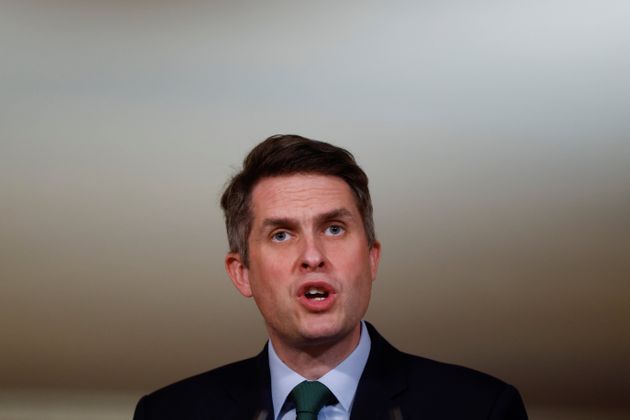
Education Secretary Gavin Williamson

But Whiteman added that the union was relieved to see that extending the school day had been “shelved for now” as he warned the policy could reduce family time and leave less time for extracurricular activities.

Mary Bousted, joint general secretary of the National Education Union (NEU), said: “The government’s plans for education recovery for the nation’s pupils are inadequate and incomplete. Rarely has so much been promised and so little delivered.”

“The Treasury has shown, in this paltry offer, that it does not understand, nor does it appreciate, the essential foundation laid by education for the nation’s economic recovery.

“Its failure, on this scale, to fund what is needed for education recovery, is a scar which will take generations of children and young people to heal.”

Prime minister Boris Johnson has defended the fund, however, adding a review of longer school days would form part of the next stage of the review. 

He said: “Young people have sacrificed so much over the last year and as we build back from the pandemic, we must make sure that no child is left behind.

“This next step in our long-term catch-up plan should give parents confidence that we will do everything we can to support children who have fallen behind and that every child will have the skills and knowledge they need to fulfil their potential.”

It was announced as Labour published its two-year £14.7 billion education recovery plan, which called for extracurricular activities to be expanded and mental health support in schools to be improved.

Share Button

Boris Johnson’s In A Holding Pattern On Covid, But Is Keir Starmer Too?

You’re reading The Waugh Zone, our daily politics briefing. Sign up now to get it by email in the evening.

Just six days ago, Matt Hancock’s name was mud, his reputation ground into the dirt by Dominic Cummings’ onslaught. Today, the health secretary returned to his bouncy ways as he seized on the news that the UK reported not a single death from Covid for the first time since last July. “The vaccines are clearly working,” he said.

Yet while it may look to some as if Hancock has gone from zero to hero in less than a week, he himself added a note of caution about “cases continuing to rise”. Although in Bolton there is early evidence of levelling off of cases of the ‘Indian’ variant, nearby Blackburn, Rossendale, Ribble Valley and Hyndburn are all seeing spikes.

Although case numbers are low overall, it’s no wonder many in government are concerned. Week on week, cases have gone up more than 31% and, crucially, hospitalisations by more than 23%. That’s two of the lights on the government’s dashboard flashing red, just as the zero deaths figure is flashing a healthy green (down 10% on the week). Given the lags we are all by now familiar with, those deaths may not stay zero in coming weeks.

Despite the concern, Boris Johnson is not worried enough to give anyone an update on whether his planned June 21 unlocking will go ahead as planned. In our Lobby briefing today, we learned he didn’t even brief his spokesman beforehand. All the spokesman would do was point us towards the PM’s cake-and-eat-it words on the pandemic last Thursday (the “current” data didn’t suggest any need for delay “but we may need to wait”).

The problem with relying on the PM’s words from five days ago is that, well, a week is a very long time in Covid politics. Johnson got married on Saturday and spent Sunday and Monday on a “mini-moon” – a phrase that sounds like a brief display of his buttocks, but is a very short honeymoon, apparently (though perhaps it means both). It all feels a bit like the early pandemic, when his marital concerns (a divorce then, a wedding now) mean Covid is on the backburner.

And in many ways, it feels as if the government machine is not very interested in saying much about Covid for the rest of this week. Grant Shapps has his travel update on Thursday but few expect much change. Michael Gove’s reviews of covid certification and social distancing look either dead on arrival or delayed to June 14. Jonathan Van-Tam said two weeks ago we would have a “ranging shot” of the transmissibility of the Indian variant by last week. It looks like that estimate may not materialise this week either.

With the Commons in recess, there seems to be a generalised holding pattern going on, in political and policy terms. The public seemed to have more of a sense of urgency about Covid than the PM this weekend, with thousands of young people queuing for their jab outside Twickenham stadium when they could have just packed the pubs.

But the virus doesn’t take a parliamentary recess or a bank holiday break. The rise in case numbers is concerning the most even-handed of scientists. The Bank of England hoped for a V-shaped economic recovery this year, but some current graph projections look worryingly V-shaped on Covid cases. Scotland and England are on the same trajectory, though Wales (which has 10% more people given first doses) is not.

The uncertainty is perhaps why Nicola Sturgeon essentially paused her own roadmap today. While the public have not been told any updates on the Indian/delta variant’s transmissibility, maybe Sturgeon has? I understand Keir Starmer is currently holding off calling for any delay to the June 21 unlocking date, until after he gets a private briefing from Sage.

Starmer’s main problem is that no matter what he says, or how correctly he calls it, the public may not be listening. “Keir’s first 16 months have been the politics of the pandemic, and his next eight months may be the politics of the pandemic. It’s very, very difficult,” one insider says. More than anything Labour says or does, Starmer’s team are acutely aware that the Batley and Spen by-election next month could reflect vaccine jab numbers, whether voters can order a drink at the bar and where they can go on holiday.

In the meantime, what Starmer can hope to do is show the public what kind of man he is, as well as what kind of politician. His latest Piers Morgan’s Life Stories interview on ITV tonight shows him choking back tears as he talks about his disabled mum, his strained relationship with his dad, and the death of his wife’s mother. The New Statesman had some fascinating polling last week that 37% of voters say they just don’t know enough about him to make a judgement yet. His team see that as a huge opportunity, not a weakness, and believe interviews like this could shift that dial.

Picking a popular ITV programme was a smart move for Starmer because he needs to reassure a key demographic that he’s a walking, talking human being. Moreover, Labour’s lingering problems with working class voters were highlighted not just in Hartlepool but in London on May 6. While Sadiq Khan made gains with some upper middle class voters, this fascinating breakdown by Lewis Baston points to swings towards the Tories in key council estate areas in deprived parts of the city.

Like many working class kids who went on to do things their parents never dreamed of, he’s clearly uncomfortable with any idea he would exploit his private life for public consumption. Yet in many ways, Starmer embodies the aspiration story (dad a factory worker, son highest prosecutor in the land) that Labour needs to reconnect with voters it has lost.

While the Covid narrative dominates all our lives, Starmer has to keep reminding us he’ll be ready for the moment the conversation moves on to something else. With politics more volatile than ever, it’s even possible he too could move from zero to hero if he can use this May’s election defeats to show a sense of urgency for change.

Share Button

Peter Andre Inadvertently Sends Boris Johnson A Very Rude Message After Wedding To Carrie Symonds

Boris Johnson was met with many messages of congratulations after marrying Carrie Symonds in a private ceremony over the weekend, but Peter Andre accidentally had fans laughing after sending his good wishes to the prime minister.

The Mysterious Girl singer inadvertently made a joke about a sex act as he posted about the Johnsons’ nuptials on Instagram. 

Sharing an image of the couple of their wedding day, Peter learned an valuable lesson about the placement of commas as he wrote: “Enjoy your wedding BJ.”

He later added: “Probs said that wrong 😑.”

“Unfortunate use of words,” one of his followers commented with some laughing emojis. 

“SCREAMING,” another wrote. 

“Oops that’s a blooper Peter what were you thinking or not thinking LOL,” a third added.

SOPA Images via Getty Images

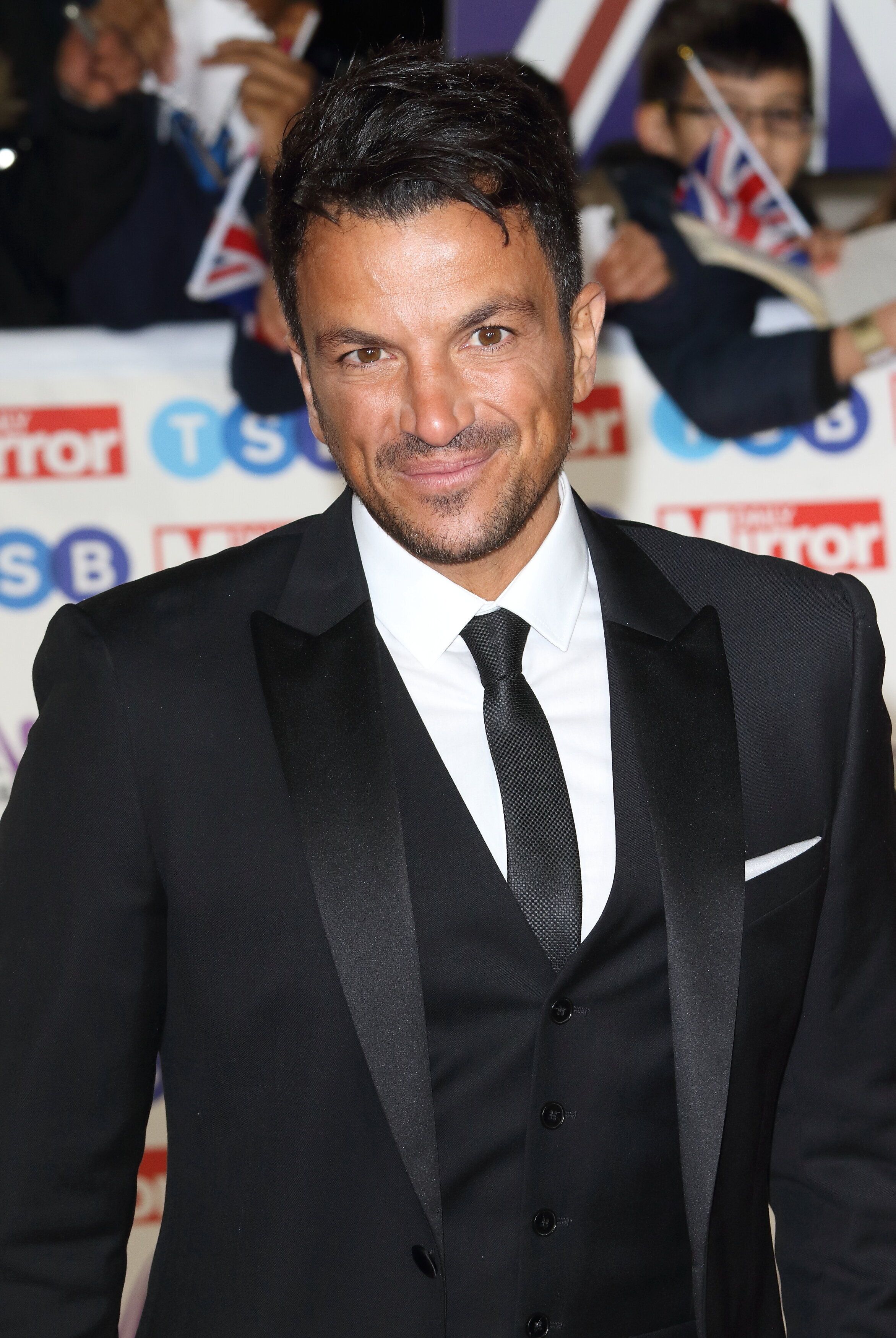
 Peter Andre 

The couple tied the knot at Westminster Cathedral on Saturday afternoon, with a small group of their friends and family present for the ceremony.

Reports of the wedding began circulating on Saturday, with a Downing Strret spokesperson confirming the following morning: “The Prime Minister and Ms Symonds were married yesterday afternoon in a small ceremony at Westminster Cathedral.

“The couple will celebrate their wedding with family and friends next summer.”

PA has reported that the celebration will take place in July 2022, with Symonds set to take on her new husband’s surname, being known as Carrie Johnson as of Saturday.

This is the first marriage for Carrie Johnson, while it is the prime minister’s third.

He was previously married to the artist and journalist Allegra Mostyn-Owen between 1987 and 1993, and the barrister and journalist Marina Wheeler.

Johnson and Wheeler’s divorce was finalised in 2020.

Share Button

Boris Johnson And Carrie Symonds Are Married, Downing Street Confirms

Downing Street has confirmed that prime minister Boris Johnson married his partner Carrie Symonds over the weekend.

The couple tied the knot at Westminster Cathedral on Saturday afternoon, with a small group of their friends and family present for the ceremony.

Reports of the wedding began circulating on Saturday, with a spokesperson confirming the following morning: “The Prime Minister and Ms Symonds were married yesterday afternoon in a small ceremony at Westminster Cathedral.

“The couple will celebrate their wedding with family and friends next summer.”

PA

Carrie Symonds and Boris Johnson on their wedding day

PA has reported that the celebration will take place in July 2022, with Symonds set to take on her new husband’s surname, being known as Carrie Johnson as of Saturday.

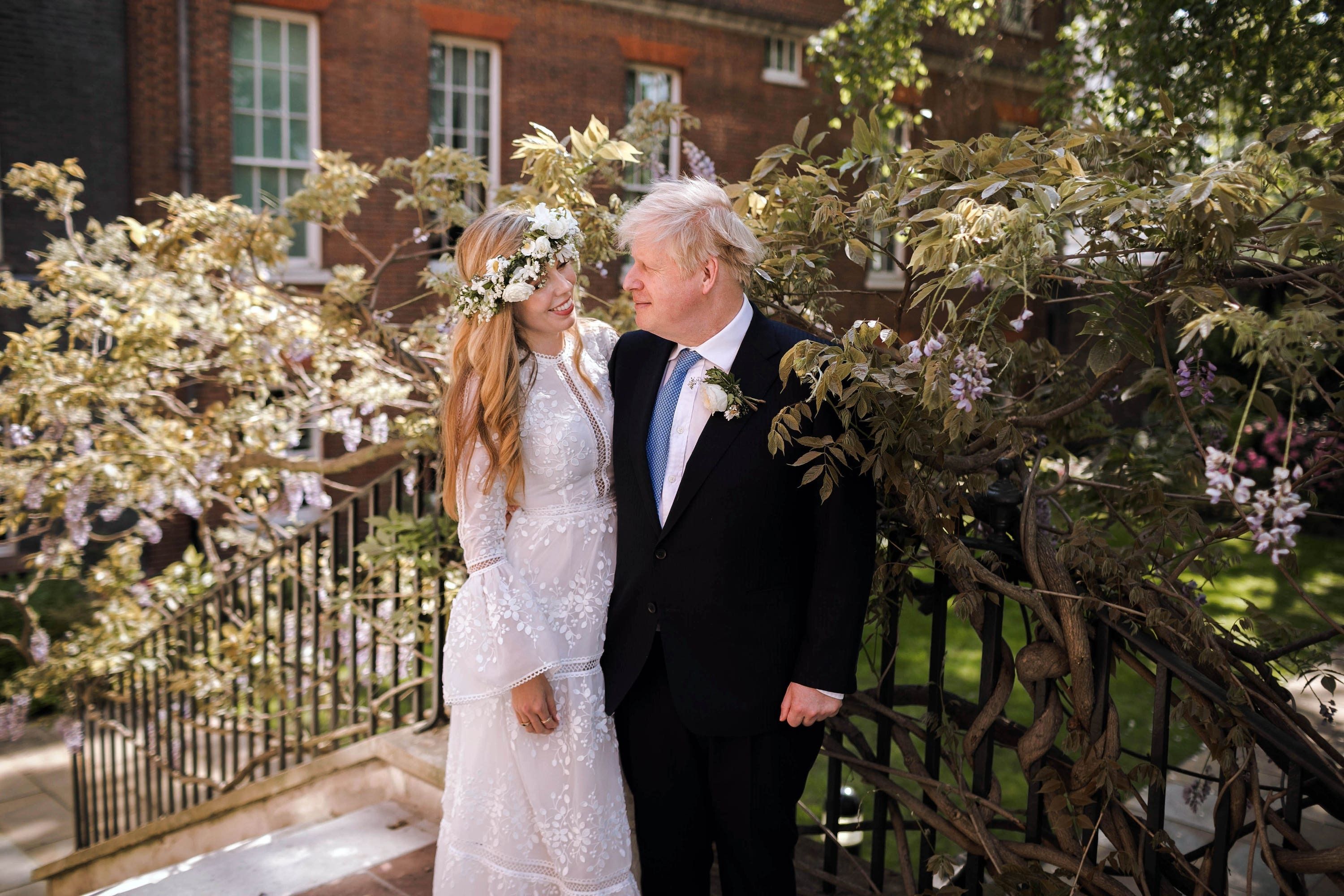
An official photo has also been released of the pair on their wedding day, with the bride sporting a white dress and floral headband, while the PM is seen sporting a black suit with a blue tie.

According to The Sun, Westminster Cathedral was cleared by staff at 1.30pm on Saturday, who told visitors it was “going into lockdown”.

PA

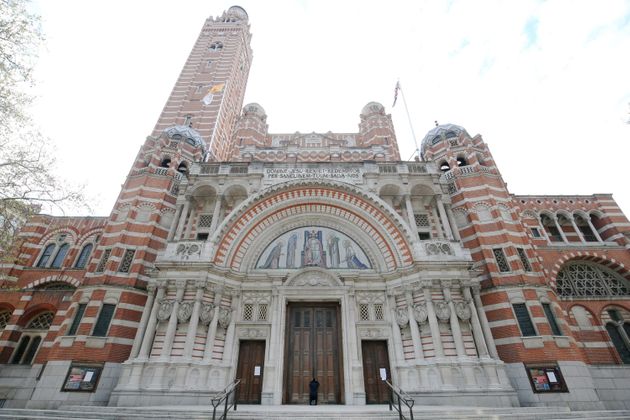
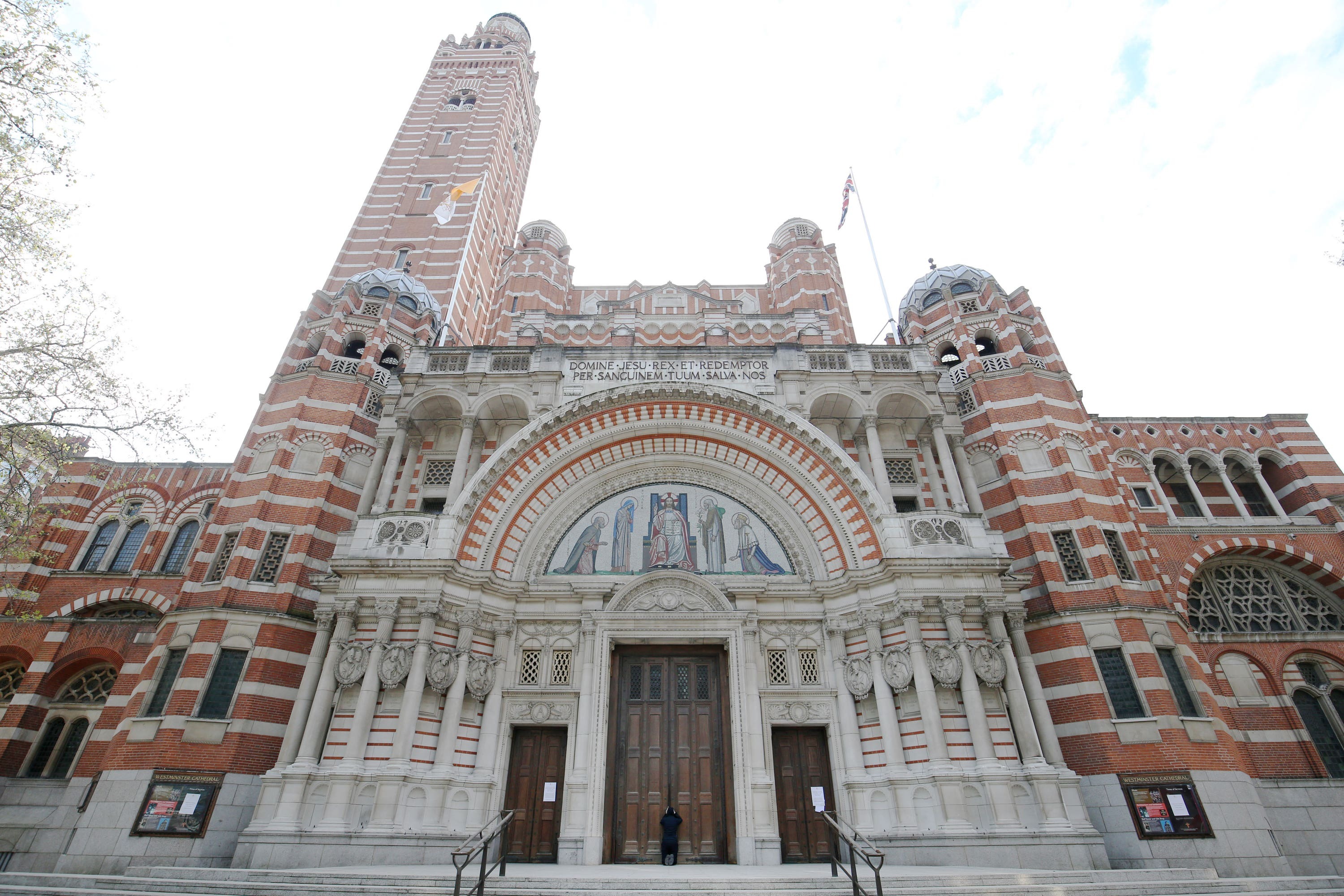
Westminster Cathedral, where the PM was married on Saturday

The wedding was officiated by Father Daniel Humphreys, who had given the couple pre-marriage instructions, and oversaw the baptism of their son Wilfred, who was born in 2020.

This is the first marriage for 33-year-old Carrie Johnson, while it is the prime minister’s third.

He was previously married to the artist and journalist Allegra Mostyn-Owen between 1987 and 1993, and the barrister and journalist Marina Wheeler.

Johnson and Wheeler’s divorce was finalised in 2020.

Share Button

Can Boris Johnson Survive His Own Chaos?

Anadolu Agency via Getty Images

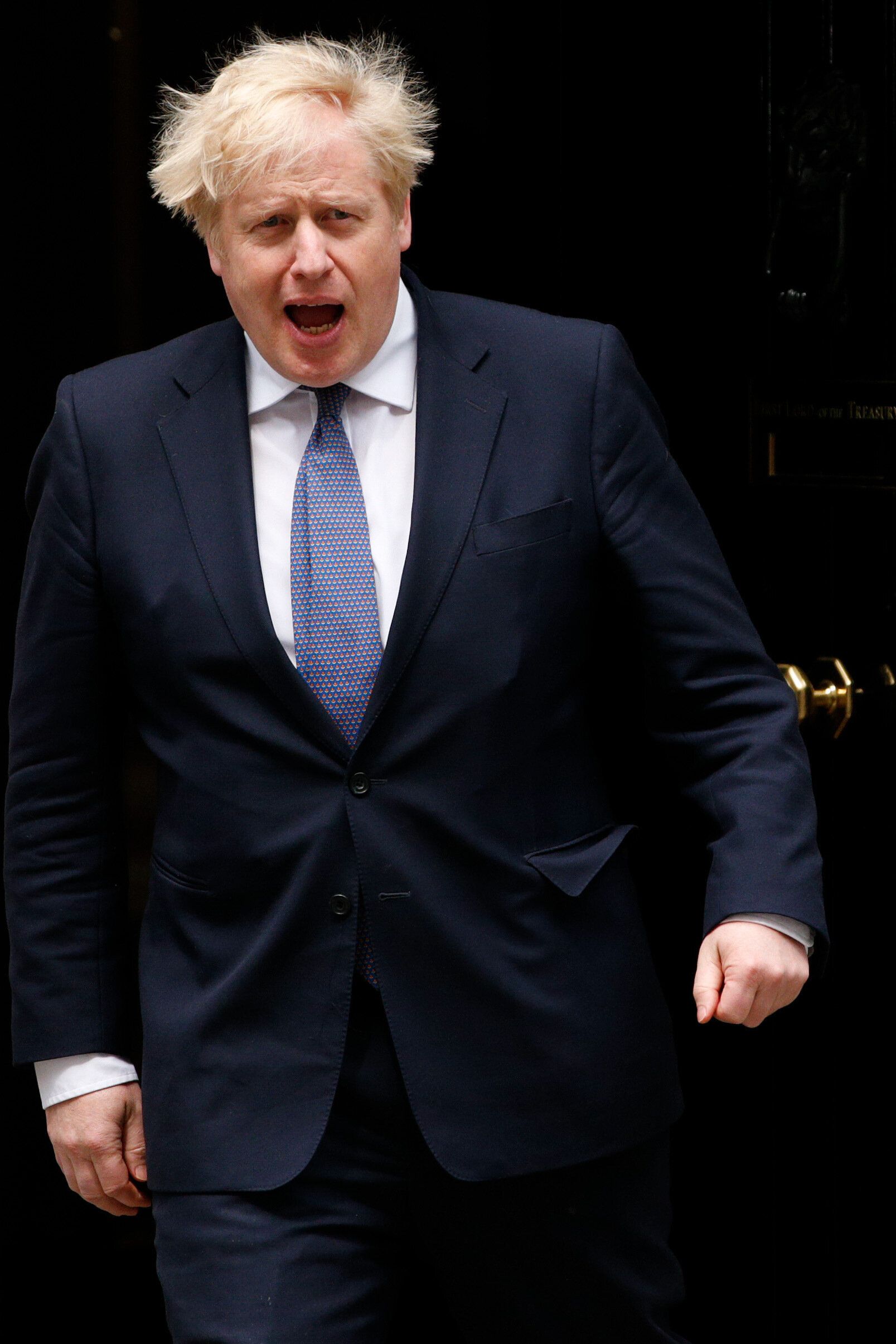
Prime Minister Boris Johnson leaves 10 Downing Street 

You’re reading The Waugh Zone, our daily politics briefing. 

Debate rages over Dominic Cummings’ bombshell evidence to MPs and whether he, a man once at the very heart of power, is a trustworthy source on what went on in Downing Street. 

But when the former Vote Leave chief described his erstwhile boss Boris Johnson as “just like a shopping trolley smashing from one side of the aisle to the other”, it certainly had a ring of truth. 

And perhaps never more than today, as it was confirmed what has long been alleged: that the Conservative Party and Tory donors did indeed initially fund an expensive revamp of the prime minister’s Downing Street flat

A report by the government’s new ethics adviser, Christopher Geidt, said Johnson acted “unwisely” by embarking on the refurb without “rigorous regard for how this would be funded”. 

Johnson was not aware Tory donor David Brownlow and his party had settled the bill – said to be £200,000 – and the work began in April, when the PM was hospitalised with coronavirus. 

The PM has since made a declaration of interests and settled the bill. As such, Geidt ruled that Johnson did not breach the ministerial code. 

“Chaos isn’t that bad – it means people have to look to me to see who is in charge,” Cummings claimed was Johnson’s mantra. 

Separately, Geidt found health secretary Matt Hancock guilty in “technical terms” of a “minor breach” of the code, in that he failed to declare he had retained shares in his sister’s firm Topwood Limited when it won an NHS contract.

Which, on a week filled with revelations about the government’s handling of Covid, rather begs the question: when, if ever, will chaos become a destructive force for Johnson’s administration? 

Keir Starmer vowed Labour would be a “constructive opposition” under his leadership. 

His cautious approach has not been rewarded by voters, however, with a recent YouGov poll putting the Conservatives nearly 20 points ahead of Labour. 

Despite Cummings’ many grenades this week, which included him confirming under oath he heard Johnson say that he’d rather see “bodies pile high” than order a third lockdown – something the PM denied in parliament – Labour has not called for anyone to resign. 

This has frustrated some on the left in the party, including MPs in the Socialist Campaign Group who could not hold back and defied Starmer with a statement of their own calling for ministers’ resignations. 

Those close to Starmer believe he looks across the despatch box at a PM complacent about the constant mayhem and how damaging it could be to his authority over time. 

But, however much Labour may wish to portray Johnson as a clown, it would be foolish of them to believe the PM is blind to threats. 

Despite the successful vaccine rollout, another ‘red wall’ victory in Hartlepool and him weathering all criticism of the government’s handling of Covid, Johnson has taken steps to maintain his position. 

As HuffPost UK reported last week, lockdown-sceptic Graham Brady could face a challenge as chair of the powerful 1922 committee of backbench Tory MPs.

The man vying to replace him, Robert Goodwill, is a noted ally of Johnson’s and believes the group should be less critical – something which would come in handy if the roadmap out of lockdown slips because of the India variant. 

And when it comes to Geidt’s role as adviser on ministerial standards, he has no power to launch investigations of his own and, Downing Street confirmed last month, the prime minister remains the “ultimate arbiter” of the ministerial code.

Meaning that, when put under pressure over his or his ministers’ conduct, Johnson reserves the right to mark his own homework. 

Perhaps the only unknown factor after this extraordinary week is what level of chaos Cummings has unleashed.  

Share Button

Will Dominic Cummings’ Real Impact Be A Delay To The PM’s Roadmap?

You’re reading The Waugh Zone, our daily politics briefing. Sign up now to get it by email in the evening.

Whenever journalists hear a politician sidestep a direct question from MPs, our antennae twitch. When that politician repeatedly body swerves the same question from reporters, we smell a rat. Yet time and again, ministers seem unaware of the old newsroom motto: you can’t bullshit a bullshitter.

Despite Matt Hancock breezing confidently through Commons questions on Thursday morning, largely due to strong support from Tory backbenchers, there was one answer that just didn’t feel right. Asked about the claim that he told Dominic Cummings and others that people would be tested before being transferred into care homes, Hancock didn’t deny it. “So many of the allegations yesterday were unsubstantiated,” was all he could muster.

At his latest Downing Street press conference, the health secretary looked much more uncomfortable as he was asked multiple times about the issue. ”My recollection of events,” he said, “is that I committed to delivering that testing for people going from hospital into care homes when we could do it.” The word “recollection” is often a red flag, but the phrase “committed” felt rather elastic too.

Now, it’s worth recalling Cummings’ exact charge here. “Hancock told us in the cabinet room that people were going to be tested before they went back to care homes. What the hell happened?” he said. It was only in April that No.10 realised that “many, many people who should have been tested were not tested, and then went to care homes and then infected people, and then it’s spread like wildfire inside the care homes”.

Firstly, it’s perfectly possible that Hancock made a promise but, crucially, without a timeframe. With the lack of testing capacity at the time, it would be frankly ludicrous to make a commitment that he could test all hospital discharges within days or weeks. However, one can imagine him saying, ‘I’m going to make it my mission to get this testing sorted so people are tested before going into homes’. That’s not the same as saying he would stop all discharges which lacked testing, which was Cummings’ implication.

Second, UK Health Security Agency boss Jenny Harries suggested claims of seeding the virus from hospitals into care homes was overstated. These made up a “very, very tiny proportion” of cases, she said. Fortuitously for Hancock, a new Public Health England report out today confirmed that just 1.6% of outbreaks were seeded from hospital, causing 286 deaths. That’s not the “many, many people” of Cummings’ hyperbole. Care homes did suffer cruelly, but it seems the seeding came from care staff not hospitals.

Still, Hancock would do well to simply disown one other highly dubious claim he made last year: “Right from the start we’ve tried to throw a protective ring around our care homes.” PHE’s official advice as late as February 28 stated: “there is no need to do anything differently in any care setting at present”. It wasn’t until April 15 that was changed to requiring all hospital discharges to be tested.

What was most curious about Cummings’ onslaught on Hancock, however, was his admission that he actively tried to stop Hancock from hitting his target of 100,000 tests a day by the end of April. The chief adviser said he was “in No.10 calling round, frantically saying, ‘Do not do what Hancock says’.” Cummings’ desire to “build things properly for the medium term” (aka doing things his way, not Hancock’s) seemed to fuel the lack of urgency he himself had criticised over care homes testing.

What was also notable on Thursday was the way Hancock at least opened himself up to hours of scrutiny, in parliament and live on TV. Contrast that to Boris Johnson’s five-minute “clip”, a “hi, bye!” media strategy he uses when on a photocall (usually in a key seat) to avoid a proper interview. Schools, hospitals, laboratories, all providing visual wallpaper for the evening news, and often nothing more.

When Johnson was asked about key Cummings allegations, he sounded shiftier than Hancock. Asked about the damning claim that tens of thousands of people died who need not have died because of his action or inaction, the PM replied: “No, I don’t think so.” He doesn’t think so? Asked if he’d said he was prepared to let “the bodies pile high”, he just said: “I’ve already made my position very clear on that point.”

With new figures confirming the Indian variant makes upto 75% of new Covid cases and is becoming the dominant strain across the country, Johnson’s judgment is once again facing a huge test. Even though a rise in cases was expected after the May 17 relaxation or rules, and in Bolton the variant cases are flattening, the “spillover” into other areas is worrying.

Given the race between the vaccine and the virus, why not just extend the unlockdown finishing line by a couple more weeks to give the jabs more of a chance? After all, June 21 was an arbitrary date plucked out of the air, why blow it all for the sake of waiting a fortnight to allow more data collection and more jabs in arms? Especially when over-18s could perhaps all get a first dose by the end of June.

Well, today for the first time there was a hint from the PM he could delay, saying “we may need to wait”. In case we missed the new mood, he added: ”Our job now to deliver the roadmap – if we possibly can”. The ‘probable’ June 21 final unlock of a few days ago is now just a ‘possible’. If Dominic Cummings has done nothing else, maybe he’s forced a pause on the PM that could benefit us all.

Share Button

Rishi Sunak Says He ‘Doesn’t Know David Cameron Well’ Despite Lobbying Texts

Rishi Sunak has said he did not know David Cameron “very well at all” when the former prime minister texted him to controversially lobby on behalf of Greensill Capital.

Cameron’s intensive lobbying of ministers and officials was laid bare earlier this month as MPs seek to understand the role the ex-PM played in securing Whitehall access for the company.

Greensill is now being investigated by the Financial Conduct Authority, which received allegations relating to the firm’s collapse that were “potentially criminal in nature”.

The firm’s demise has rendered Cameron’s reported tens of millions of share options worthless, and there has been criticism of how a former prime minister was able to exploit his personal contacts with ex-colleagues and officials in the pursuit of commercial gain.

Sunak and the Treasury were at the centre of Cameron’s lobbying efforts.

IN DEPTH David Cameron’s Most Cringeworthy Greensill Lobbying Texts Laid Bare

The PM texted Sunak last April after being rebuffed by Treasury officials as he tried to gain access for Greensill to the government’s Covid Corporate Financing Facility (CCFF).

After being told “no”, Cameron told Treasury permanent secretary Tom Scholar on April 3 that the refusal was “bonkers” and that he was now going to call “[the chancellor], [Michael] Gove, everyone”.

Just eight minutes later, Cameron texted Sunak: “Rishi, David Cameron here. Can I have a quick word at some point?”, before going on to explain Greensill’s request.

Several messages and phone calls between the pair followed.

But Sunak suggested that if Cameron was trying to exploit personal contacts, the pair had not actually spoken since summer 2016 or before.

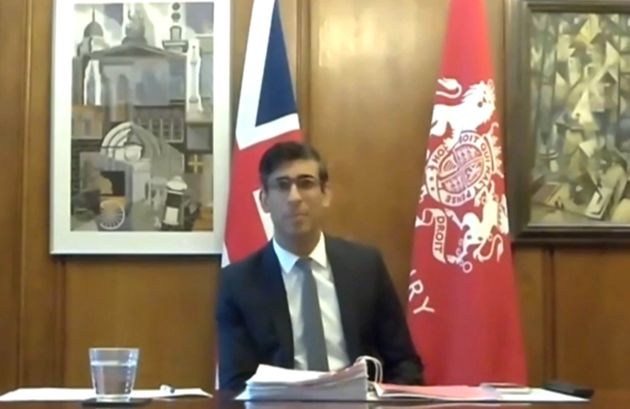
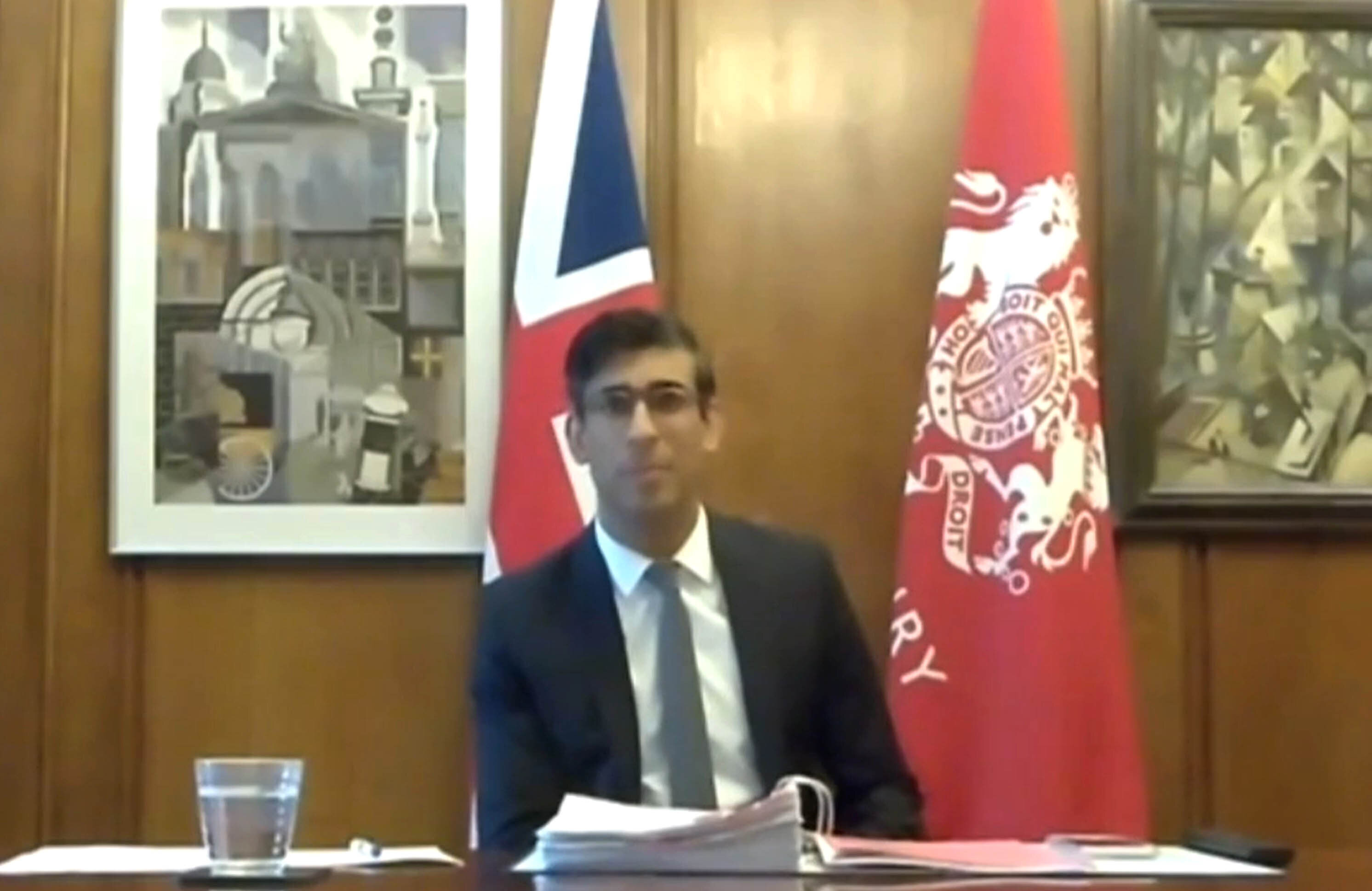
“I don’t know David Cameron very well at all and I don’t think I’ve spoken to him since I was a backbench MP and he was prime minister,” Sunak told the Commons Treasury committee.

“It was a surprise to receive the message.” 

House of Commons – PA Images via Getty Images

Sunak giving evidence to the Commons Treasury committee

Following a barrage of texts, calls, messages and emails across the government, Cameron’s lobbying efforts ultimately failed.

Sunak insisted that he would not have done anything differently in his approach to Greensill and that Cameron’s role was not important to how much time officials in the Treasury spent on the firm’s request.

“I looked at the issue on the merits of it, so the identity of the person talking about it was not relevant to the amount of attention and proper due diligence that the issue got and required,” Sunak said.

“This was one of many strands of work, and in fact probably the one we spent the least time on during this period.”

Earlier this month, Cameron stressed that he was unaware of any financial difficulty at Greensill until December 2020, when he was told that an attempt to raise funds had not gone as well as hoped.

According to founder Lex Greensill, the rug was finally pulled out from underneath the company when its biggest insurer, Tokio Marine, refused to renew its policies with Greensill.

Treasury official Charles Roxburgh said on Thursday that the firm’s collapse would directly cost around £8m to the taxpayer, including taxes that Greensill owed.

But he did not accept the cost of up to £5bn that former City minister Lord Myners estimated the taxpayer could indirectly be on the hook for.

Greensill provided so-called supply chain finance to businesses, which meant the firm would pay a company’s invoice immediately after it was sent, therefore cutting out the usual delay which can restrict companies’ cash flows.

Top lawyer Nigel Boardman has been tasked by prime minister Boris Johnson to look into the Greensill scandal.

Share Button

Five Lessons Learned From Dominic Cummings’ Covid Testimony

You’re reading The Waugh Zone, our daily politics briefing. Sign up now to get it by email in the evening.


1 No.10 was a Covid chaos zone

The whole point of Dominic Cummings’ evidence was to provide the first draft of the history of the government’s handling of the pandemic. While his personal opinions on what went wrong can be dismissed, his eye-witness testimony cannot be easily shrugged off. And on that score, he didn’t disappoint, giving vivid accounts of the chaos in Downing Street as Covid hit landfall in March 2020.

His description of the events of over two key days allowed the public a glimpse of just how Boris Johnson runs, or doesn’t run, his government. On the “insane day” of March 12, while the PM clearly had no choice but to deal with Trump’s plea to join a bombing raid on Iraq, Cummings implied that his boss allowed partner Carrie Symonds’ to waste valuable press office time with complaints about a story about their dog Dilyn.

But it was the following day that was more telling and more worrying. First, a senior department of health official confided there was no plan for a pandemic. Then deputy cabinet secretary Helen McNamara allegedly said “I think we are absolutely fucked, I think this country is heading for a disaster. I think we are going to kill thousands of people.” Those words are sure to be pored over in any public inquiry.

Just as concerning was the picture painted by Cummings of the lack of data available, with him having to scribble on a whiteboard and an iPad a rough model of how many hospitalisations were happening, based on snippets of early info from NHS chief Simon Stevens. So too was the revelation that the Cabinet secretary Mark Sedwill so misunderstood Covid that he suggested the PM go on TV to tell people to have ‘chickenpox parties’.

2 Hancock was to blame for virtually everything

In what felt like a Whitehall version of the Assassin’s Creed video game, Cummings spent a lot of his time trying to eviscerate Matt Hancock’s reputation. The allegations were hugely serious, from lying about PPE stocks and testing in care homes to his decision to announce a 100,000 daily test target while the PM was “on his deathbed”. Yet the relentless nature of the onslaught (who cares how many times Cummings called for him to be sacked?) tipped from public interest to private vendetta.

What also furthered the impression that this was about personalities was his huge praise for Rishi Sunak and Dominic Raab (who both happened to be Brexiteers, while Hancock was a Remainer). Cummings’ curious memory loss about discussions of the EatOutToHelpOut scheme, plus his failure to criticise any decisions by old boss Michael Gove, suggested chairman Greg Clark was right when he asked if this was about ‘settling scores’.

Cummings also failed to fully credit Hancock for his strong push for a second lockdown in the autumn, while at the same time playing down the chancellor’s concerns about the idea. The lens was so skewed that he even said Sunak’s real worry was that the department of health could impose a circuit breaker but had no plan for what happened next. Most curiously, for a man who blogged at length about systems and processes, his real focus was on the central role of “brilliant” individuals, be they officials or ministers.

3 Boris Johnson was off his trolley

The vituperative attacks on Hancock felt like a sideshow compared to Cummings’ cold, matter of fact descriptions of Boris Johnson as being “unfit” to be prime minister. This was the PM’s former chief adviser saying he was never really upto the job, but he was at least better than Jeremy Corbyn. Johnson changed his mind so much, on everything from Covid to free school meals, that he looked “just like a shopping trolley smashing from one side of the aisle to the other.” Sunak was at his wits end about the trolley too, we learned.

Funnily enough the trolley analogy was first used by former Cameron spinner Craig Oliver to describe how Johnson wrote two different Telegraph columns for and against Brexit. But Cummings’s more damning charge was that the PM was fundamentally unserious about Covid policy. Perhaps his most telling line was this: “There is a great misunderstanding people have, that because it [Covid] nearly killed him, therefore he must have taken it seriously.” Narrator: he didn’t.

We heard of Johnson’s talk of injecting himself with Covid on live TV, his regret that he didn’t behave like the Mayor in Jaws and keep the beaches/shops/pubs open, his glib lines about letting ‘the bodies pile high’ and that the virus was “only killing 80-year-olds” (a charge pointedly not denied in PMQs). All felt like jokes that curdled quickly into a cold contempt for the very public he was meant to serve.

Add the claim Johnson “changes his mind 10 times a day” and disappears on holiday at key moments, and that’s a withering verdict on any politician, let alone a PM in a pandemic. No Wonder Johnson looked distinctly rattled when Keir Starmer quoted Cummings central admission: “When the public needed us most, the government failed”.

4 Cummings sounded as unserious as Johnson

Having learned from his Rose Garden press conference disaster, Cummings at least tried to open with an apology for his failures, including not hitting the “panic button” for lockdown earlier. Yet it felt like a strange humblebrag, that somehow he was a genius who spotted the problem but failed to convey that genius. It reminded me of the job interviewees who say their only flaw is that they are a perfectionist.

In a similar vein, his line that it was ”completely crazy that I should have been in such a senior position…I’m not smart” was a laughable attempt at self-effacement. In the next breath he expressed frustration that he wasn’t running the country instead of the elected PM, saying he tried to “create a structure around him..to push things through against his wishes”. Yet this was a man who stuck to his ludicrous specsavers defence for his trip to Barnard Castle.

Cummings’ line that Covid needed a “kind of dictator”, a scientist with “kingly authority”, just also proved how unserious he really is. So too were his references to Spider-Man memes and the film Independence Day (which the bereaved families group felt belittled the gravity of their loss). When he kept saying he felt like he was in a movie, he came across someone as woefully out of his depth as the boss he ridiculed. Asked if he too was unfit for No.10, he just sidestepped the question like a politician. And his charge that it was “crackers” that Johnson was in power suffered from the slight problem of his enthusiastic work to keep him there.

5 Governing properly is really hard, isn’t it?

The lessons learned about Cummings’ own character were possibly just as telling as lessons learned about the pandemic. His own credibility as a witness may already be fatally undermined by his Durham drive. But his testimony had some clear contradictions too. Criticising Carrie Symonds’ “unethical” interference in No.10 appointments may have provoked a hollow laugh from Sonia Khan, whom he had frogmarched by a policeman out of Downing Street without due process.

Most of all, when the crunch came, this would-be iconoclast, the arch-disrupter also revealed a telling lack of nerve in the real world: he revealed he didn’t push for lockdown earlier because he was “frightened” he would get it wrong. That in itself was a rare admission that running a government really is very different from running a referendum campaign. The stakes are all too real.

Cummings’ most serious charge was left for the latter part of his nearly seven hours testimony: “Tens of thousands of people died, who didn’t need to die.” The irony is that Johnson seems to have finally learned the lesson of hard lockdowns and slow releases only since January – after his chief adviser left office. Cummings today got his blame game retaliation in first ahead of the public inquiry. As the PM copes with the new Indian variant, his best answer to the criticism would be to get the current unlockdown right.

Share Button