Why People of Colour Should Interview Their Interviewer When Applying For Jobs

As someone who’s had more than 20 jobs (fluctuating from temporary positions to career-defining roles), nearly all of my interviewers have been white.

Each interview I’ve stepped into, I’ve known my otherness – my ethnicity, my religion, and even my gender – was going to be a player during this time.

Though I’ve used this to my advantage to impress employers, I wish I’d spent time being wooed by them too. Because I’ve ended up working for companies which are toxic, ruthless and uncaring.

Understandably, the power dynamics in a job interview are unlike anything else; you’re supposed to show yourself off and grovel for approval. That doesn’t leave a lot of time to get to know the company and how it can benefit you.

The only part of the process – the “Do you have any questions for us?” segment – is usually a closing feature, where participants often ask questions that will say more about them, than the company (the “look, I’ve done my research about you” trick).

But there’s a real reason to use the final moments of an interview to quiz your interviewers and get to the nitty gritty. After all, you also need to find out if the company is the correct fit for you – and crucially, how they nurture diverse talent.

The pandemic especially has shown the importance of having employers that work for individual needs. And where they don’t, many staff are quitting in their droves – a Microsoft survey of more than 30,000 global workers showed 41% were considering quitting or changing professions this year. In the US alone, April saw more than four million people quit their jobs, according to the Department of Labor – the biggest spike on record.

A few months ago (before joining HuffPost), I was interviewed for a leadership position, but I had a lot of questions and arranged for a follow-up interview where I could take the time to enquire about everything.

I’m glad I did, because the recruiters showed their true colours. When it came to negotiating salaries, I was told by the CEO it was concerning for me to discuss money for a role that was otherwise a ‘compliment’ to me.

I promptly wrote the letters NO on my notebook as he spoke, deciding to reject the offer. Given that ethnic minority women are overlooked for such positions and grossly underpaid (Black, Asian and other minority ethnicities lose out on £3.2 billion a year in wages compared to white colleagues doing the same work), it didn’t feel concerning at all to bring up money.

If we didn’t have this conversation so early on, I may have ended up working for a company that would make me unhappy. It might feel like you’re being ungrateful, but there’s merit in quizzing your interviewer – it shows recruiters you’re keen to know your place in the company, as well as signalling to you any potential red flags about them.

An interview is a chance to see if the company works for you. 

An interview is a chance to see if the company works for you. 

For 27-year-old Masuma*, a Muslim woman from Manchester, who applied for a marketing position, asking questions about faith provisions led to positive changes.

“I once asked if there was a prayer space and the reply was ‘you can use the board room but there’s usually meetings in there so maybe avoid booking it during lunch breaks’ – which were prayer times so that was going to be a problem,” she tells HuffPost UK.

“While I never got the job, because it was definitely out of my reach, I got an interview anyway. The recruiters really liked me and then offered me a role that was linked to the original. I took the job because it was really exciting and since then, I’ve voiced a lot of my concerns regarding prayer space and other things like diversity and inclusivity, which they’ve listened to.”

For 33-year-old Hina Jabeen, from Solihull, West Midlands, asking questions resulted in a confrontation which secured her feelings towards the recruiter.

“I’m an expert at interviewing,” she says. “Over the past two years since being made redundant, I’ve interviewed 174 times including getting to final stages. And the majority of the time there was a 50/50 rate of rejections against me rejecting the offer.”

For Jabeen, the answers to questions she had left her disappointed, so she turned offers down. Some of the questions interviewers asked her, including invasive ones about her childcare responsibilities, also resulted in rejections on her part.

“I rejected eight offers where I had put in my CV with a western name and when they offered the role under the western name, I rejected the offer and explained that my CV/application under my actual name wasn’t even considered. Both applications were identical, just name changes,” she says. “In the interview, I asked why and they denied any bias and accepted my rejections. There was one incident where the company identified bias and ‘took action to rectify the discrepancy’.

“But 176 interviews later and I finally have the perfect role, so [I’m] happy with the combination of rejections.”

Of course, there’s a way to be tactical about questioning your interviewers – and Hira Ali, an author, career coach, and leadership trainer, advocates doing it in a strategic way.

“A relevant and appropriate number of questions may be three to five, which indicates genuine interest and natural curiosity,” explains Ali. “Asking questions also shows that you have done your research and that you have knowledge of the role and the industry―it’s also another opportunity to demonstrate your confidence and highlight your knowledge and experience. Finally, the right questions can help you decide whether this company is aligned with your goals and aspirations or not.”

To gauge compatibility, asking certain questions will also be beneficial, especially if you’re an ethnic minority trying to understand the company’s diversity.

Ali adds: “I would definitely recommend asking about the team’s diversity composition and what measures they have in place to ensure that people from minority backgrounds are given ample opportunities to thrive and reach the top. And if it’s not satisfactory, ask for the challenges they are currently facing in implementing it and how they aim to address it. Honesty and transparency is always preferable over half-hearted cover-ups lacking authenticity.

“The interview is also a key opportunity to find out how you can turn your diversity into a competitive advantage and leverage your uniqueness. It’s also useful to throw in questions about your potential career trajectory if you are selected and what are the key qualities or deliverables of the most successful people at the company.“

As a minority in the workplace, Black, Asian and other groups may feel alienated from the rest of the team, affecting their self-confidence.

“People from marginalised backgrounds often shy away from advocating for themselves, expressing their talents, and showcasing their achievements in case they are labelled as ‘braggarts’ or as ‘trying too hard,’” explains Ali.

“They are not only hesitant to put themselves forward, but also show reluctance in raising complaints, or voicing concerns for fear of being judged ill-favourably. They may feel as if asking too many questions will make them appear incompetent or ignorant or even difficult.”

Ali says that many people she has coached from minority backgrounds are afraid of putting their vulnerability out in the open. The idea of exposing how they really feel or think or opening themselves up can seem “dangerous and risky”.

“Because the latter are reluctant to speak their mind, they are often viewed as lacking self-confidence,” she adds. “However, in any interview, it’s crucial to show your worth and defy these internal barriers. It’s only people who carry themselves with confidence and who clearly vocalise their asks that typically get noticed more.

“Research reveals that recruiters show clear preference for people who are confident and display powerful posing despite being unaware of the interviewee’s background, hypothesis and conditions.”

So come with confidence, and ask everything you intend to – it might help you make up your decision when you finally land that offer.

*Name has been changed to provide anonymity.

Share Button

How To Deal With A Boss Who Sucks At Listening To You

Bad bosses come in all kinds of flavours –- from incompetent to just plain jerk -– but one of the most frustrating kinds of managers is the one who never seems to listen to you. Your ideas, requests and complaints are ignored or rejected. Everything you say seems to go in one ear and out the other.

At a certain point, not feeling heard can take a toll on your psyche. In a survey by the Society for Human Resource Management, 84% of U.S. workers say poorly trained people managers create a lot of unnecessary stress. The workers’ biggest recommendation on what their bosses could improve? Their communication skills.

Ideally, good bosses take the time to proactively ask what’s working and what’s not in your one-on-one meetings with them.

But when your boss is not listening to you, you have two options: either do nothing and hope your boss realises you are unhappy, or you can take actions to make yourself heard.

Jennifer Tardy, a career coach and diversity and inclusion consultant, said too often she sees employees who avoid dealing with their boss and are not comfortable talking in a direct way or in a timely manner to them.

“Employees wait too long to have the courageous conversation and now the situation has compounded,” Tardy said. “At this point, rather than have a rational, logical conversation with their manager, they explode ― often with emotion leaving the core message to get lost in.”

There are helpful steps you can take about feeling unheard long before it gets to that point.

Here’s what you can do to salvage a relationship with a boss who is not listening to you –- and when to decide enough is enough.

1. Diagnose whether they don’t listen to anyone, or just you.

Gorick Ng, a career adviser at Harvard University and the author of “The Unspoken Rules: Secrets to Starting Your Career Off Right,” said that when employees deal with bosses who are not understanding them, they may want to jump straight to quitting as the “path of fastest relief.” But one way to figure out if you can save the relationship is to take the time to understand where your boss is coming from.

“Whatever you’re dealing with, someone else has dealt with before.”

– Gorick Ng

To do that, first try talking to people who work with or used to work with your boss. “Whatever you’re dealing with, someone else has dealt with before,” Ng said.

He suggested asking questions about how your boss prefers to communicate, such as “What’s worked with this person before? Are they someone who needs to see it on paper? Are they someone who needs a nice long pro/con list? Are they someone who needs a mockup or draft? Are they someone who needs to hear it from a certain person?”

“What you’re really trying to figure out is if this is a problem that you can solve,” Ng said.

After you do this bit of research, you should have an idea what will get your boss’ attention, be it project deadlines or influential colleagues. If your manager listens to what a certain colleague says, for example, you could focus on asking that colleague to be the whisper in your boss’ ear about your ideas, Ng said.

2. When you bring it up to your boss, make sure that you have a solution in mind.

Once you diagnose your boss’ deal, you can have a conversation. But don’t simply complain. Get specific about what actions made you feel unheard, and bring solutions that could address the problem.

Tardy said you should ask yourself what specific actions your boss took that led to this. What specific actions would my boss need to take for us to remedy the challenge? That way, when you bring it up with your boss, you can be clear on their role in the problem and in the solution.

And then after you acknowledge how you felt unheard, have a solution on what could make your joint communication style better.

“Many times when we have courageous conversations, we leave it to the other party to figure out what action to take to reach the solution,” Tardy said. “The more specific you are on the action you want from your boss, the more clearly you can articulate it to them so they can take the action.”

You can bring up solutions with language such as, “Hey I know we’re trying to achieve this. I was thinking of this option or this option or this option. These are the pros and cons. My suggestion is that we might want to consider option B. What is your reaction?” Ng said.

Or, the solution can be brought up as simply as something like, ”‘Would it be helpful if I did ‘blank’?’” Ng added.

3. If talking and suggesting solutions fails, it’s time for change ― either your boss or your job.

If you’ve exhausted these options, and nothing has changed, then it’s time to consider switching it up ― perhaps out of the job altogether.

First, you can try leaving your particular manager if you still want the role.

“Change doesn’t mean leaving the company. Maybe it means leaving the manager, but staying in the department or company,” Tardy said. “Escalation means talking to your manager’s manager. Oftentimes, messages that go unheard from an employee become clearly understood by a leader.”

But if leaving your inattentive manager is not a possibility, then it really may be time to start looking for a new job where you and your ideas will be heard. And then, at this new job, you can hash out communication styles with your boss up front.

“If you make it very clear that you need to feel like your ideas are heard, and define what that looks like when it doesn’t happen, it will be easier for you to bring up three, six or 12 months into the role with the manager,” said career coach Kaitlyn Buckheit, who specializes in career transitions. “You won’t be bringing up the topic for the first time.”

Share Button

The Most Meaningless, Unhelpful Feedback People Get At Work

Getting good feedback is necessary for anyone to grow their career. But too many of us end up receiving unhelpful advice that doesn’t mean anything useful.

Phoebe Gavin, a career coach who specialises in supporting early and mid-career professionals, said she often sees bad feedback fall into two categories: empty praise and vague criticism.

These types of feedback are unhelpful, she said, because what people really want is “to be able identify something specific that they can do that they should either keep doing because it’s working, or something they should adjust because it’s not working.”

Unfortunately, bad feedback is common, and it can even start to infect your own language at work. Here are types of feedback you should rethink.

1. “Great job.”

Popular but vague words of encouragement like this are not actually helpful, because they aren’t tied to a specific outcome related to the role or the organisation. The person hearing it doesn’t “know why they did a great job, what exactly they did a great job at. They don’t know how their great job has an impact. It’s just not very useful,” Gavin said.

It doesn’t encourage anyone to keep up the good work, either.

“The problem with this type of feedback ― although it feels great to receive it ― is that it is not reinforcing any behaviours. In order to turn meaningless feedback into something that will encourage employees to continue to perform, the feedback must be very specific,” said Angela Karachristos, a career coach who has worked in human resources.

“Instead of saying, ‘good job,’ the manager should say give a specific example of what the person did well so that those positive behaviours can be repeated,” she said.

Often, giving too much unhelpful praise is a people-pleasing mistake that first-time managers make as a way to make up for negative experiences they personally had on a team. “A lot of managers over-correct and really lay on the praise, and not give the kind of support through constructive criticism that actually helps people grow,” Gavin said.

2. “I don’t like that.”

Bad criticism stops with what someone did wrong, while good criticism gives them a clear path of what needs to happen differently and how they can do it better next time.

“If you just tell someone, ‘Hey, you missed that deadline, that caused problems,’ sure, that might be valid, but it doesn’t give space to improve with whatever context that person is working in,” Gavin said. “It doesn’t create a conversation where the problem can be solved.”

Gavin said subjective, vague feedback such as, “I don’t like that,” “That doesn’t work for me,” or “I’ve never heard that before” stems from someone reaching into “their own subjective experience and not bringing any other external factors in.”

A better method is to be specific about what’s going wrong, or to have the humility to note that the feedback is just an opinion. It’s the difference between “‘Those colours seem very jarring to me, that’s just how they look to my eye,’ versus ‘I don’t like that, I don’t like that design,’” Gavin said.

3. “You need to work on your attitude.”

In her book Radical Candor: Be a Kick-Ass Boss Without Losing Your Humanity, management expert Kim Scott writes that a lot of bad work criticism falls into the trap of highlighting personal traits rather than having external causes of a problem acknowledged.

“It’s easier to say, ‘You’re sloppy’ than to say ‘You’ve been working nights and weekends, and it’s starting to take a toll on your ability to catch mistakes in your logic.’ But it’s also far less helpful,” Scott writes, noting that better criticism makes it clear that a work problem is not “due to some unfixable personality flaw,” and can be used as a tool for improvement.

Karachristos said that a common example of this kind of personal criticism is “You need to work on your attitude.” “Any type of feedback that is focused on the person or that person’s personality, and not the work, can be very problematic,” she said.

At worst, when job performance feedback is tied to a person’s identity, it can be used to hold their career back. Women of colour, in particular, are given subjective labels like “difficult,” “angry” or “challenging” in performance reviews – words that signal they are not a “fit” in a workplace or don’t “fit” a manager’s homogenous idea of success.

Nadia De Ala, founder of Real You Leadership, a group coaching program for women of color, said her clients deal with feedback – often unsolicited – about their natural tone of voice and how they dress, rather than about actual points of improvement on their work.

One client asked a co-worker for help with compiling marketing research for a promotion and was told, “You’re not going to get promoted if your voice goes up at the end of sentences. You don’t sound confident.”

“This type of feedback was unhelpful because it was unsolicited advice and had nothing to do with market research,” De Ala said.

It speaks to how feedback is not just words: It can make or break an employee’s experience and even push them to leave. Gallup research found that when a boss’ feedback makes employees feel demotivated, disappointed or depressed, four out of five of those employees start to job-hunt.

Sometimes, the feedback can be right, but still be wrong because of how the message is delivered.

If you’re in a position to give feedback, recognise that not everyone likes to hear it the same way.

“You have to be sensitive to where you do it. You might feel like it’s great to publicly recognise the person, but some people hate that. It makes them feel embarrassed,” Karachristos said.

Karachristos said it’s also a mistake for peers and managers to publicly criticise a group when they really intend that message for one person.

“That person will never get the message, and then my whole team is going to get annoyed that I’m down on the whole group, or not necessarily respect me as a team leader or colleague because I’m not brave enough to address the problem,” Karachristos said.

Share Button

Can Employers Dock Your Pay For Working From Home?

Employees who decide to continue working from home could see a deduction in their wages, even though the level of work they produce remains the same.

That’s according to rumours swirling, after a number of US corporations have introduced post-pandemic pay policies – and a cabinet minster suggested the same should happen in the UK.

Facebook and Twitter have already told US employees their salaries will be adjusted if they choose to work remotely and live in a lower cost area. Now, it’s been reported that Google has launched an internal pay calculator, allowing workers to see pay adjustments based on location.

Google’s internal calculator, seen by Reuters, is supposedly designed to enable employees to see the effects of a house move, but concerns have been raised that it’ll be used to alter the pay of existing, long-distance commuters.

The UK government has now dropped the pandemic demand that individuals must work from home where possible. Instead, it now recommends staff to safely return to the workplace.

So, could UK remote workers have pay docked, too?

Earlier this week, an unnamed cabinet minster suggested that civil servants who refuse to return to the office, after working from home throughout the pandemic, should have their pay penalised.

“If people aren’t going into work, they don’t deserve the terms and conditions they get if they are going into work,” the senior minister told the Daily Mail.

Dave Penman, general secretary of the FDA civil service union, described the comments as “insulting”.

“What should matter to ministers is whether public services are being delivered effectively, not where individual civil servants are sitting on a particular day,” he told PA.

What does this mean for UK employee rights?

Doreen Reeves, a senior employment lawyer at Slater and Gordon, warns employers they could face legal challenges when making drastic changes to staff salaries – which is ultimately good news for employees.

“An employer should be careful making detrimental changes to an employee’s salary which would amount to a change to terms and conditions of employment,” she tells HuffPost UK. “If the change is by mutual consent, it is not likely to cause legal or practical problems as an employee may be willing to consent to a change in salary in exchange for home-working.

“However, if the employer unilaterally imposes a change to the agreed rate of salary or other financial benefits, it will amount to a breach of contract.”

If your employer docks your wages without your agreement, you may have a claim for “unlawful deductions from wages”. If you resign over this, you could also bring a claim for constructive dismissal. “However this claim is only available for employees with two years’ service,” Reeves says.

“Salaries are not means tested but are based on skill, experience and qualifications,” she adds. “If an employee is required to take a pay cut as a condition of home-working or flexible working arrangements, an employer should consider the discrimination risks as employees working from home should not be treated less favourably than a comparable employee.”

A Google spokesperson claimed the company would not deduct money from an employee’s salary based on them deciding to work remotely full time – if this is in the city where the office is located. Workers based in the New York City office will be paid exactly the same as those working remotely from another location in New York. However, Google did not address the concerns for commuters in areas like Stamford, Connecticut, outside of New York City.

Share Button

It’s Hot Desk Summer. Are You Prepared To Share With A Co-worker?

In July, Denise Delamore finally returned to working in her Colorado office after more than a year of working remotely due to the coronavirus pandemic. But her space was different. Delamore, who works as an assistant supervisor for a bank’s loan servicing department, no longer had her own personal desk.

Currently, Delamore goes into the office one day a week, with an expectation that this will increase over time. “My day is Mondays, and I’m sharing a desk with two other loan servicing departments who are in office Tuesdays and Wednesdays, respectively,” she said. “We have to reserve a desk ahead of time, and there’s no guarantee that we’ll have the same desk every time.”

Because other people use the desks, too, Delamore was given a small bin to store her keyboard, mouse and any other items she needs while working. But it doesn’t fit everything. She said she finds herself carrying more into work each day, as she still needs to bring home her planner and notes for the days she works remotely.

The personal touch is missing, too. Delamore used to be able to store granola bars, oatmeal, crackers and nuts in her desk for snacks, but now she carries a bag of any food she wants to eat that day.

“I definitely felt a connection to my workspace when I was able to leave personal items on it. It was my area. I felt grounded,” Delamore said. “Now I find it hard to focus. It could be me just getting used to working in the office again, but not having a dedicated, personal workspace makes it difficult.”

Why ‘hot desks’ are here to stay at work

Delamore is part of a growing office population using “hot desks” that aren’t assigned to any particular person. A hot desk is generally first reserved, first served. It’s not a new concept in the world of work, but the practice is gaining popularity now it’s less likely for employees to be in an office five days a week because of Covid. Many companies are moving to schedules with employees rotating in and out of the office part-time, much like the system instituted by Delamore’s employer.

Meena Krenek, an interior design director at Perkins&Will, an architecture firm that is redesigning offices in industries including accounting, tech and media, sees personal desks becoming more and more obsolete.

“Some of our clients are saying, ‘Areas where we had workstations, we want more meeting and collaborative spaces.’ We’re going in there and adjusting the furniture to… create more spaces so that our office becomes a space for collaboration, for socialising, and the individual time, what we call ‘me time,’ can get done in those home environments,” she said.

“They’re still keeping a lot of workstations, but they’re saying they’re not assigned. You go on a corporate app and you select where you sit, near a window or near the coffee machine,” she explained.

The mileage an employee gets from not being tied down to a single desk may ultimately depend on their preferred working arrangement. Citing research by Perkins&Will, Krenek described a set of co-workers who prefer to get their social and collaboration high at the office and “jump from meeting room to meeting room, and then they’ll leave the facility, whereas there are other people that need the time in between the meetings to collect their thoughts. They definitely need a focused area or a work station,” she said.

This can explain why one colleague may genuinely miss having a personal desk as their office home, while another might sound thrilled at never working in a dedicated desk pod again.

Daniel Space, a human resources consultant with business partners in strategic staffing, said that when a company uses hot desks, it’s ideal to tie the day a person comes into the office to a work reason and not a random scheduling system, such as assigning days by last name. He said he’s seen tensions eased when people are given a heads up about who is sharing their desk and the expectations for desk etiquette.

In one job, his co-workers would get copied on emails that read, “So-and-so is happy to share their desk with you. Please be respectful of their space, their stuff, treat it as though it would be your own,” he said.

Pro tip: If you do find yourself sharing a desk, remember to clean up after yourself. People who have used shared desks told HuffPost that the best etiquette is to leave a desk the way you found it, and not to take computer chargers or chairs off of unused desks without asking first.

“My desk became kind of a dumping ground while I was out of the office,” Delamore said. “Random keyboards, office supplies, etc were just piled on it. I spent two hours my first day in the office just cleaning.”

There are Covid-19 considerations, too

Of course, this is not a normal time for sharing desks. A hot desk may be a pragmatic solution when there are fewer employees entering an office everyday, but it can also be one more deterrent for those employees who are already unenthused about going into the office during a pandemic.

Space said he consulted with a company that gave employees the option of sharing socially distant desks, as long as employees were responsible for cleaning the desk and signing in and signing out for contact tracing purposes.

“Two people used it,” he said. Especially now, with the rise of the Delta variant of Covid-19, “The idea of not only bringing employees back to work, but mandating that they share a space with another employee on alternating days, it a little bit sends a signal that they are prioritising the idea of a budget and saving on real estate costs at the risk of their employees,” Space said.

Covid has already delayed some organisations’ plans for co-working. Twitter, which was asking employees to reserve a desk before they chose to come into an office, told HuffPost that it recently made the decision to close its opened offices in New York and San Francisco, and pause future office re-openings, in light of the CDC’s updated guidelines.

Is the loss of a personal desk always a loss of connection?

One potential advantage to a shared desk is that it may help to create some healthy professional distance between employees and employer.

I always hated doing a termination with someone who had a bunch of stuff at their desk, because in many cases we would not allow them to return to the office,” Space said. “Having people pack up all of your boxes after you put in 10 years at a company, all of that feels gross. By removing all of that… it helps continuously reinforce that at the end of the day, it’s a business relationship.”

Even when you don’t have a desk to claim as your own small bit of office real estate, there can still be ways to connect with co-workers and make a space your own. Bk Kwakye, an operations manager for a D.C.-based nonprofit that has been using hot desks since before the pandemic, said their office uses cork boards on walls and communal fridges as spaces for people to share holiday cards and photos.

“For me, it feels like an opportunity to share a little bit of your family,” Kwakye said. Space knew of co-workers who left a crossword puzzle for their deskmate to complete, one word a day.

And even when you don’t have an assigned desk, you can still personalize it. Delamore said that one upside to sharing a desk is that she knows who her office deskmate is and she can leave notes behind for her.

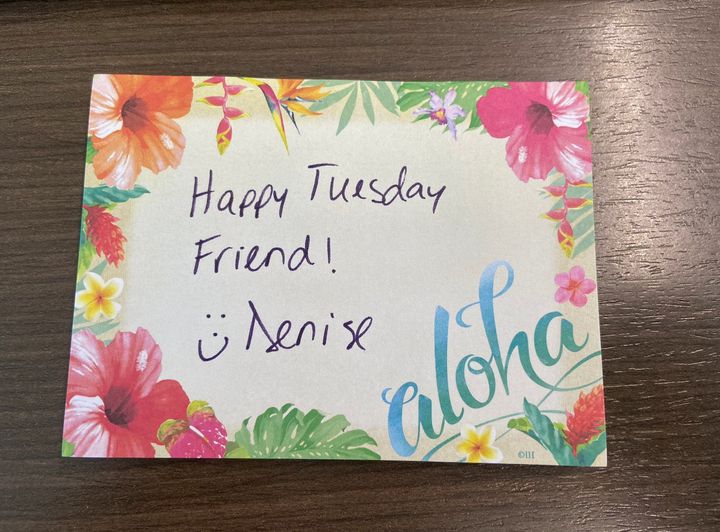
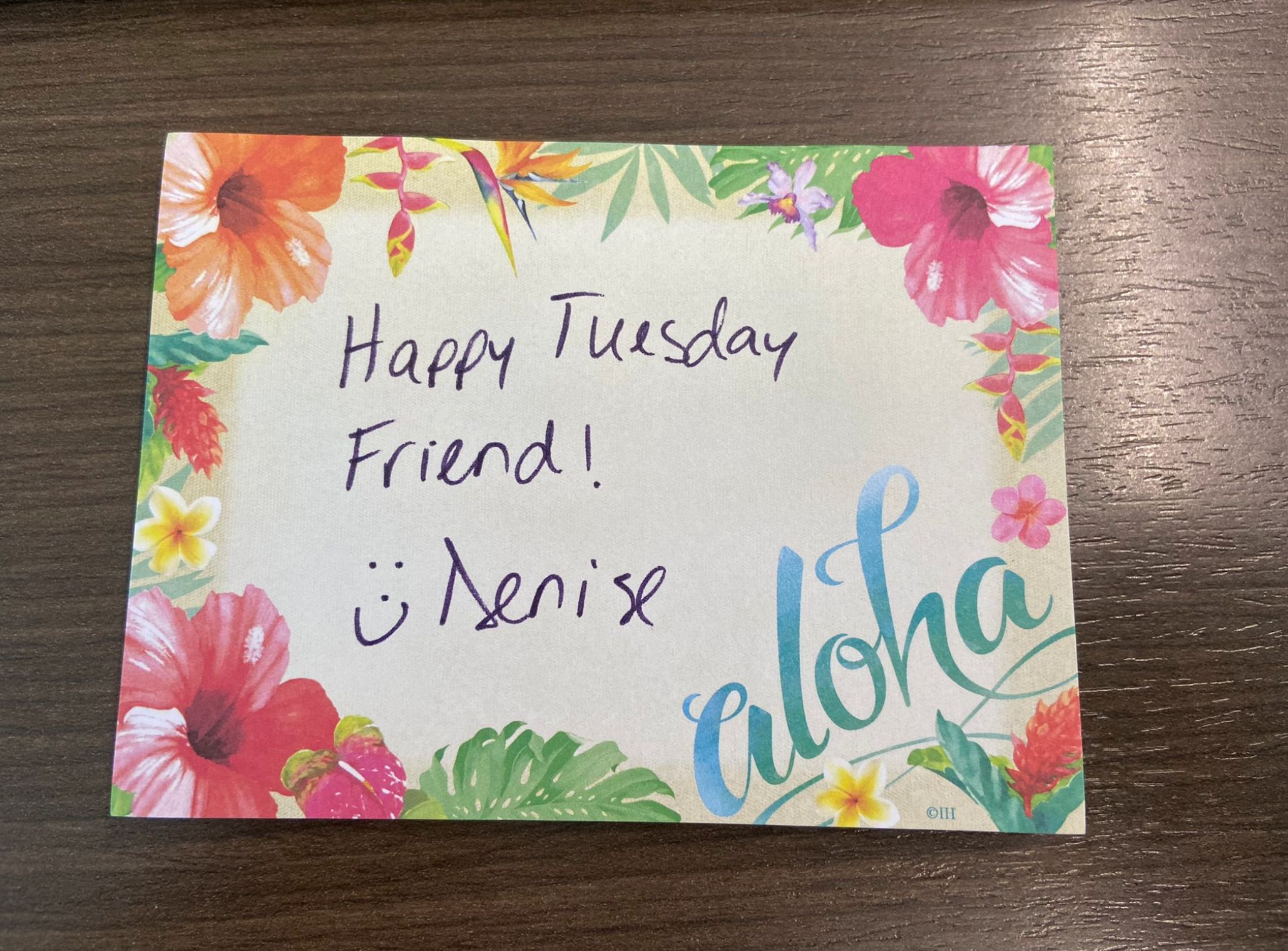
A recent one she left: “Happy Tuesday Friend! 🙂 Denise.”

Even with a shared desk, there can be creative ways to make connections with co-workers you don't see in person.

Even with a shared desk, there can be creative ways to make connections with co-workers you don’t see in person.
Share Button

These Companies Are Short-Changing Their Minimum Wage Staff

A total of £2.1m was found to be owed to more than 34,000 workers following investigations by HM Revenue and Customs dating back to 2011. Named employers have been made to pay back what they owed, and were fined an additional £3.2m.

Businesses named by the government include retail giant John Lewis, which said it was “surprised and disappointed” to be on the list released by the Business Department.

A John Lewis Partnership spokesman said: “This was a technical breach that happened four years ago, has been fixed and which we ourselves made public at the time.

“The issue arose because the Partnership smooths pay so that Partners with variable pay get the same amount each month, helping them to budget.

“Our average minimum hourly pay has never been below the national minimum wage and is currently 15% above it.”

Other organisations named and shamed included Sheffield United, Oldham Athletic, Crewe, Charlton Athletic and Portsmouth football clubs, as well as The Body Shop, Worcestershire Cricket Club and Enterprise Rent A Car.

Almost half of employers named wrongly deducted pay from workers’ wages, including for uniforms and expenses, while 30% failed to pay workers for all the time they had worked, such as when they worked overtime, and 19% paid the incorrect apprenticeship rate.

Business minister Paul Scully said: “Our minimum wage laws are there to ensure a fair day’s work gets a fair day’s pay. It is unacceptable for any company to come up short. All employers, including those on this list, need to pay workers properly.

“This government will continue to protect workers’ rights vigilantly, and employers that short-change workers won’t get off lightly.”

Low Pay Commission chairman Bryan Sanderson said: “These are very difficult times for all workers, particularly those on low pay who are often undertaking critical tasks in a variety of key sectors including care.

“The minimum wage provides a crucial level of support and compliance is essential for the benefit of both the recipients and our society as a whole.”

A total of 2,300 employers have been named since the current scheme was introduced in 2014.

Shadow employment rights and protections secretary Andy McDonald said: “The government isn’t doing nearly enough to crack down on companies who pay under the national minimum wage.

“Just six employers have been prosecuted for paying employees less than the minimum wage in the last six years despite more than 6,500 breaches having been found.

“Laws protecting workers aren’t worth the paper they are written on if they are not enforced, but weak employment rights and a lack of enforcement action leaves too many working people vulnerable to this exploitation.”

Share Button

6 Psychologically Damaging Things People Say At Work

The words of co-workers and clients can stay with you long after you leave a job and certain phrases can detonate a professional relationship, making people question whether they ever truly belonged at a company or if they can ever work with or trust a colleague again.

That’s why it’s so important to learn to identify and avoid such phrases, whether they’re obviously rude or seemingly innocuous. Here are psychologically damaging but commonly used phrases to watch out for in your work communications.

1. “No offence but …” or “No disrespect but …”

Mary Abbajay, president of the leadership development consultancy Careerstone Group, was once hired by a company to conduct team building. When she met the manager of the team she would work with, he told her, “With all due respect, I’ve forgotten more about team building than you’ll ever know.”

Abbajay ended up turning down the job as a result. “This was 15 years ago, and it stills sticks with me,” she said. “If he hadn’t said ‘with all due respect,’ I might’ve taken it differently. That’s just the icing on the cake that shows ‘I do not respect you, I think you’re wrong.’”

Along with the similar phrase “No offence …,” she said, these condescending words signal that the speaker does not respect the other person’s point of view.

2. “I don’t have time for this.”

Psychological safety is key to keeping teams together. Researchers describe it as the mental space in which employees are free to speak up, share bad news, and ask for help when they are in over their heads.

If your pattern in responding to colleagues’ requests is telling them that you are too busy or don’t have enough time, it sends a signal that the other person is not a priority and that they shouldn’t go to you when they need help.

“That person is going to be reluctant to come back to you again if there’s a problem or situation, and it may throw them off so much that they’re worried too much about taking your time and annoying you than getting what they need,” Abbajay said.

When managers say this, it can silence their team and make members less likely to own up to mistakes, she added.

3. “What X is trying to say is …”

If you’ve been in a meeting with a colleague who feels the need to reframe what you just said in their own words, then you understand the frustration of hearing this phrase. Abbajay said this is the one she dislikes the most, because it doesn’t move the conversation productively forward even if that’s the speaker’s intent.

When someone does this to you, you may jump to a conclusion like “I’m inarticulate, I’m stupid, people aren’t understanding me, people aren’t respecting it out of my mouth, so you feel like you have to say it out of your mouth,” she said. “It’s very diminishing. It lowers the other person’s status.”

Rather than rephrasing colleagues’ words, Abbajay said colleagues could simply request when they need more of an explanation in a conversation.

4. “You seem young for …” or “You’re so articulate for a …”

Lawrese Brown, the founder of C-Track Training, a workplace education company, cited the type of undermining comments that you can sometimes be the recipient of when you go against a colleague’s assumptions and expectations of how you should present yourself at work. These comments can range from microaggressions about your identity to questions about your leadership potential.

Brown said she has heard from clients who have been told they were being a “weak” leader or “seemed young.” One client was advised to change her hairstyle.

“Her manager told her people would take her more seriously if she straightened her hair,” she said. “These all fall under the umbrella of, ‘You’re being perceived as not appropriate; something about your self-presentation or the way you’re being perceived causes people to question your ability to do the job.’”

These kind of comments can get under employees’ skin and make them feel inadequate at work. “We start to feel the way we’re operating is not appropriate or effective, or we’re just conscious that it could be a knock against us,” Brown said.

5. “I didn’t mean it like that.”

Brown said it’s OK to note that words can be interpreted differently, but that you should be careful not to be dismissive when others disagree. “I didn’t mean it like that” is a common defensive comment that does not acknowledge how your words can be received, she said.

The goal is to recognise that your words carry weight, and can do harm. Remind yourself someone is on the receiving end of your comment, and first ask yourself, “Is it productive?” before you say it, she said.

6. “Nobody else has brought this up to me” or “You’re taking this personally.”

Brown said managers commonly make the mistake of using invalidating comments such as, “Nobody else has brought this up to me” when a team or employee raises a concern. According to Brown, that can send the message: “If this is only important to you, is this worth taking seriously?”

When colleagues invalidate your feelings like this, or you do it to others, it can stop much-needed conversations from happening.

″‘You’re too emotional about this, you’re taking this personally. Other people haven’t said this.’ What you’re missing by saying this is you’re undermining the other person,” Brown said. “These are phrases, that once said, very few people have the tools to have the difficult conversation to unpack that. People just don’t say anything.“

And ultimately, when co-workers stop talking to each other, communication breaks down, mistakes are more likely to happen, tensions run higher and everyone is more on edge.

Your colleagues will “tend to be more people-pleasing, because they no longer trust their own voice, or perception of an experience, or it inhibits their ability to trust their colleagues,” Brown said. “When we don’t trust, we put more rigid processes in place, and it’s because we don’t believe that our word will be acknowledged or that our needs in environments will be met.”

Share Button

What It’s Actually Like To Work In Fashion vs. What We See In Movies

Celebrating its 15th anniversary, The Devil Wears Prada remains a cultural phenomenon that has shaped the way we view the fashion industry. Meryl Streep’s renowned portrayal of Miranda Priestly, the steely editor-in-chief of Runway magazine, is one the world won’t soon forget.

Priestly’s effortless delivery of her infamous catchphrase, “that’s all,” held a gravity that clearly depicted fashion as a high-stress, high-stakes industry with no tolerance for any hint of incompetence.

The Devil Wears Prada is not the only media depiction of the fashion industry as a glamorous, impenetrable space where dreams are both dashed and realised. In 101 Dalmatians, Cruella De Vil is a designer whose love of fashion drives her to criminal extremes to obtain the coat of the season.

Ryan Murphy’s Halston miniseries on Netflix recently provided insight into the designer, who was prone to grand gestures of affection and verbal abuse of colleagues, providing another trope of the misunderstood genius who’ll dispose of anyone not aligned with his vision.

But how accurate are these film portrayals in reality? Four fashion industry professionals shared their perspectives on what it’s really like to work in fashion.

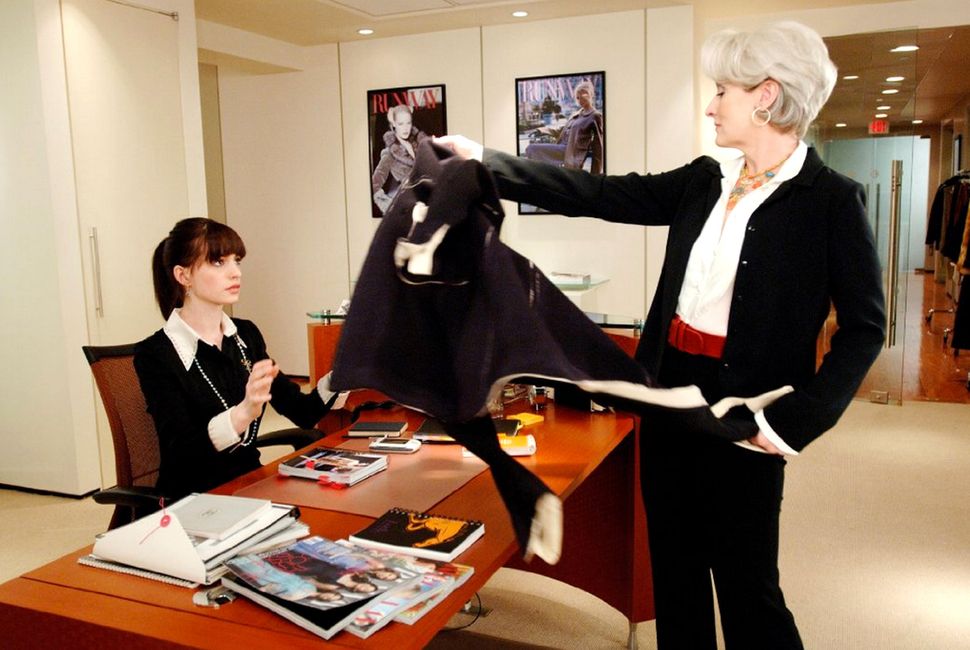
Miranda Priestly was the queen of microaggressions, like throwing her coat on her assistant's desk.

Miranda Priestly was the queen of microaggressions, like throwing her coat on her assistant’s desk.

“I don’t feel like those interpretations reflect what hard work is and how you’re rewarded,” said Heather David, who has worked as in-house public relations for Balenciaga and Alexander Wang. “When I was young, my boss seemed like Miranda Priestly, criticising my work. I realised she pushed me because she saw more in me. Her pushing helped me become a better worker and leader.”

David described the environment at Balenciaga as “structured” and “traditional,” and said there’s a disconnect between media portrayals and the reality of fashion.

“Films show interns on a trip to Paris or using the fashion closet. I don’t think that’s realistic at all,” David said.

The fashion closet scene in The Devil Wears Prada set in motion millions of dreams that an intern could simply take a Fendi poncho and turn it into a personal wardrobe transformation. But that’s not real life. “I think people come into fashion naive and they only see these stories,” David said.

Cymone Williamson, a former publicist who worked for the brands DE Marketing and All the Rage, shared a similar sentiment. “People aren’t getting makeovers,” she told HuffPost. “I never came across anyone who had no experience and was moulded into a fashion prodigy.”

Williamson said The Devil Wears Prada thickened her skin, though. “I was prepared to be treated poorly. My experience was a mild version of what you see in movies. I was surprised I wasn’t fired when someone was having a bad day or I made a mistake.”

The Halston miniseries features tantrums and tongue-lashings galore ― there is a scene in which Halston’s career is on the decline and he storms into his atelier screaming at a designer for submitting a sketch without his approval.

Williamson said temper tantrums are not unheard of in reality. She recalled an instance with an employer in a PR showroom: “I had a male boss who was upset about losing an account. My desk was the first desk [near him], and he walked in and pushed everything off my desk. Everyone felt the wrath.”

Emma Stone in Disney's live-action "Cruella."

Emma Stone in Disney’s live-action “Cruella.”

The 2021 film Cruella touches on power dynamics between management and employees – Emma Stone’s titular character finds herself in a tense environment early on in her career, where she works with a designer who rules with an iron fist.

Recent headlines show that mistreatment of staff, by both designers and organisations, is still an issue in the fashion industry. Brands such as Refinery 29 and Manrepeller, for example, have been called out over the past few years.

513 designer Jerome Lamaar, also known as The Style Monk, is familiar with industry antics. Starting with Baby Phat (run by Kimora Lee Simmons) at age 15, Lamaar said his trajectory has been similar to what he’s seen on film.

“Most of it is on point. I feel my life is very Funny Face he said. In that 1957 film, Jo Stockton, played by Audrey Hepburn, is a young librarian who’s plucked from obscurity and becomes a model at the pinnacle of fashion. While this is purely movie magic, Lamaar’s 20-year career is a one-in-a-million that’s not the norm.

He recalled an instance when “a PR person who was very well known didn’t recognise me and I was visiting a friend’s show. She kicked me out from backstage, and these are the old guards that the movies depict.” He added: “It’s because they are stressed out and it happens during Fashion Week.”

Julian J. Callis, who has worked at the Nicki Minaj Collection and Ralph Lauren, explained that while many films depict young women being groomed to become the future of fashion, they mostly focus on the character getting a glamorous life makeover, and ignore the actual hard work that goes into a career in fashion. “These films don’t show the gray area of starting from the bottom and working to the top,” he explained.

So, before you submit that application to become the next intern at your favourite fashion magazine, remember that it’s not all twirling around in fashion closets and trips to Paris.

Share Button

7 In 10 Disabled Women Experience Sexual Harassment At Work

Seven in 10 disabled women say they have been sexually harassed at work, increasing to almost eight in 10 among those aged 18 to 34.

These shocking statistics, which compare to 52% of women in general, are from a new report published by the the TUC that surveyed 2,003 disabled women about their careers. Of those, 1,162 respondents agreed to answer questions about their experiences of sexual harassment at work.

It’s been more than four years since the #MeToo movement took over our social media feeds, but this is the first major study into the sexual harassment of disabled women at work in Great Britain. As the report highlights, “the voices and experiences of disabled women have too infrequently been highlighted”.

Common experiences shared by those surveyed included unwanted sexual advances (38%), unwanted touching (36%), and unwanted sexual touching/sexual assault (18%).

One in 25 said they had experienced a serious sexual assault or rape at work.

The research also suggests that many disabled women experience multiple forms of harassment in the workplace, with more than half of respondents (54%) saying they had experienced two or more types of sexually harassing behaviour, and 45% saying they had experienced three or more. “This points to workplace cultures where sexual harassment is a frequent and normalised occurrence rather than an isolated incident,” the authors said.

The report identified great hesitancy among disabled women in reporting harassment at work. Two thirds (67%) of those who had experienced it did not report the harassment to their boss the most recent time it happened, with 39% saying this was because they did not believe they would be taken seriously.

Some said they were worried it would have a negative impact on their career or work relationships. Other reasons included not thinking they would be believed or thinking they would be blamed if they reported the incident.

And unfortunately, of those who did report the most recent instance of sexual harassment, more than half (53%) said it was not dealt with satisfactorily.

Unsurprisingly, this is having a huge impact on the wellbeing of women.

Around one in three (34%) of those who disclosed harassment in the survey said their experiences had a negative impact on their mental health and more than one in five (21%) said it negatively affected their relationships with colleagues.

The experiences caused one in eight (12%) to leave their job or employer entirely. This is particularly troubling given disabled women already face significant barriers to getting into work and getting paid the same as non-disabled workers.

TUC research in October 2020 found that disabled women earned 36% less than non-disabled men. The analysis also found a huge unemployment gap; disabled women were 32.6% more likely to be unemployed when compared to non-disabled men.

“Four years on from the explosion of #MeToo on a global scale, employers still aren’t doing enough to make sure women are safe at work. It’s time for every employer to take responsibility for protecting their staff from sexual harassment,” said TUC General Secretary Frances O’Grady.

“Ministers must change the law to make employers protect workers from sexual harassment specifically, and from all forms of harassment by customers and clients. Anyone worried about sexual harassment at work should get in touch with their union.”

Useful helplines and websites:

Share Button

Got A Piers Morgan At Work? Here’s How To Stand Up To Them

Tensions over Prince Harry and Meghan Markle’s Oprah interview have been mounting in the Good Morning Britain studio – and weather presenter Alex Beresford has finally had enough of Piers Morgan’s hot takes.

On Monday, Morgan dismissed Meghan’s comments about the suicidal feelings she experienced, with comments that have since been slammed by mental health charities.

Beresford and Morgan had a Twitter spat about the royals, but on Tuesday, it spilled over live on air, resulting in Morgan storming out of the studio.

Criticising Morgan’s “diabolical behaviour”, Beresford said: “I’m sorry but Piers spouts off on a regular basis and we all have to sit there and listen. Six-thirty to seven o’clock yesterday [on the show] was incredibly hard to watch. Incredibly hard to watch.”

Many on Twitter have praised Beresford for standing up to a “bully”, but Morgan has criticised the way the weather presenter aired his views. “I was annoyed, went for a little cool-down, and came back to finish the discussion,” he tweeted.

So, is there a right way to stand up for what you believe in at work?

Witnessing toxic views or bullying in the workplace – whether it’s directed at yourself or others – undermines people’s wellbeing and self-confidence, says Tristram Hooley, professor of Career Education at the University of Derby. It damages an organisation, too, which is why it’s important to call it out.

“The problem is, standing up [for yourself] can often be a lonely experience and leave individuals exposed,” he tells HuffPost UK. “If you feel brave enough to ‘go it alone’ and challenge someone to their face then you should be proud of yourself. But it is often better to work with your colleagues and the systems within your organisation to address these problems.”

Prof. Hooley recommends talking to colleagues to ask their experiences and perceptions of the situation, as well as checking if they’d be prepared to back you up if you make a complaint.

“Speak to line managers and the organisation’s HR department so you don’t have to face the [person] down directly,” he advises. “If there is a trade union in your workplace, it can also be useful to involve them.”

Unfortunately, workplace bullying is common. Research from the employment lawyers at Citation found almost two in five (37%) employees have been bullied or harassed at work at some point. Speaking out practices you disagree with can be the first step in changing the culture of an organisation. This might be vital if you’re taking anti-racism seriously, for example. But it won’t be easy.

“Some managers view dissenting voices as evidence of disengagement and see those members of their team as troublemakers,” says Gillian McAteer, head of employment law at Citation.

“However, often quite the opposite is true and people speak up when they see things they disagree with because they care and want to make things better. Successful businesses value these voices and the role they play in improving practices and highlighting important details which management can easily overlook.”

Every employee has the right to be treated with respect and dignity at all times, adds McAteer. Often, bullying or a toxic work culture is fuelled by someone more senior in the team than the victim, or those negatively impacted indirectly. That doesn’t mean it should go unchecked.

“Don’t shy away from difficult conversations,” says McAteer. “If an employee doesn’t agree with practices in the workplace, it’s important they speak up. And it’s the responsibility of the employer to act on any complaints, offer support and take the appropriate actions.”

Share Button