A 2,700-year-old solar eclipse just revealed something surprising about Earth

An international research team has revisited one of the oldest precisely dated records of a total solar eclipse, uncovering new details about how Earth’s rotation has changed over thousands of years. By combining historical geography with modern astronomical calculations, the scientists reconstructed an eclipse that occurred in 709 BCE and determined how it would have appeared from Qufu, the ancient capital of China’s Lu Duchy.

The researchers also examined an early account that may describe the solar corona, the Sun’s faint outer atmosphere that becomes visible to the naked eye during a total solar eclipse. Their analysis of its possible shape suggests that the Sun was returning to a more active phase following an extended period of unusually low activity.

Published in Astrophysical Journal Letters, the findings provide more precise evidence of Earth’s rotation speed in ancient times. They also offer potential independent support for previous reconstructions of solar activity based on radiocarbon measurements.

An Ancient Chinese Eclipse Record Holds a Crucial Clue

On July 17, 709 BCE, observers at the court of the Lu Duchy witnessed a total solar eclipse. The event was preserved in the “Spring and Autumn Annals,” a historical chronicle compiled approximately 200 to 300 years later. The original account stated that “the Sun was totally eclipsed.”

An additional description appears in the “Hanshu” (Book of Han), which preserves a passage written about seven centuries after the eclipse. This later account contains an unusual observation that may refer to the Sun’s corona.

“What makes this record special isn’t just its age, but also a later addendum in the ‘Hanshu’ (Book of Han) based on a quote written seven centuries after the eclipse. It describes the eclipsed Sun as ‘completely yellow above and below.’ This addendum has been traditionally associated with a record of a solar corona. If this is truly the case, it represents one of the earliest surviving written descriptions of the solar corona,” explained lead author Hisashi Hayakawa, an assistant professor at Nagoya University’s Institute for Space-Earth Environmental Research and Institute for Advanced Research.

Initially, however, the historical account appeared to conflict with modern astronomy. When the team calculated the eclipse’s path using existing estimates of Earth’s ancient rotation, their results indicated that a total eclipse should not have been visible from the previously assumed location of the Lu court in Qufu.

The researchers traced the discrepancy to a mistake in the city’s geographic coordinates. By examining archaeological excavation reports and historical geographic evidence, they determined that earlier calculations had placed ancient Qufu approximately eight kilometers from its actual location.

Correcting this relatively small error made it possible to reconstruct the eclipse more accurately and extract valuable information about Earth’s rotation and the Sun’s appearance.

“This correction allowed us to accurately measure the Earth’s rotation during the total eclipse, calculate the orientation of the Sun’s rotation axis, and simulate the corona’s appearance,” explained Hayakawa, who holds doctorates in solar physics and oriental history.

Why Ancient China Preserved Such Detailed Astronomical Records

The survival of this remarkable observation reflects the importance of astronomy in ancient Chinese society. Successive dynasties employed specialists to monitor celestial events because unusual phenomena in the sky were often interpreted as omens.

This practice, known as omenology, was closely connected to political beliefs. Eclipses, auroras, and other extraordinary astronomical events were sometimes considered warnings that an emperor had acted improperly.

As a result, court astronomers carefully documented changes in the sky. The records maintained across successive dynasties eventually became some of the world’s most valuable historical sources for studying ancient eclipses.

Even so, the researchers emphasize an important distinction between the original eclipse observation and the later description of the corona.

The 709 BCE event is regarded as the earliest explicit written record of a total solar eclipse that can be securely dated. It may also be associated with one of the oldest surviving descriptions of the solar corona, but that interpretation remains uncertain because the relevant passage appears in a source written centuries after the event.

Although the corona account requires caution, the established timing of the eclipse provides a reliable basis for investigating Earth’s historical rotation. The possible corona description also offers a valuable comparison with other studies of ancient solar activity.

How a 2,700-Year-Old Eclipse Reveals Earth’s Faster Rotation

Earth does not rotate at a perfectly constant rate. Over long periods, its spin has gradually slowed, partly because of friction associated with ocean tides generated by the Moon’s gravitational pull.

Consequently, Earth rotated slightly faster 2,700 years ago than it does today.

Using the revised position of ancient Qufu, the researchers obtained improved constraints on Earth’s rotation during the period spanning the eighth through sixth centuries BCE.

Their calculations placed delta T (ΔT), a measurement used to describe variations in Earth’s rotation relative to a uniform time scale, between 20,264 and 21,204 seconds for the eclipse of 709 BCE.

“This new dataset fixes coordinate errors in previous Earth rotation studies. Additionally, it improves the accuracy of dating and reconstructing historical astronomical events,” said coauthor Mitsuru Sôma of the National Astronomical Observatory of Japan.

These measurements help scientists better understand changes in the length of Earth’s day over thousands of years. They can also improve calculations of when and where other ancient astronomical events would have been visible.

Evidence That the Sun Was Awakening From a Long Quiet Period

Beyond revealing Earth’s rotational history, the eclipse may provide evidence of an important transition in the Sun’s activity.

Scientists have previously reconstructed ancient solar cycles by studying radiocarbon preserved in tree rings. The possible corona description from 709 BCE offers another way to examine those findings.

“This unique historical addendum for the possible solar coronal structure is critical for providing a spot reference on solar activity reconstructions from tree rings and ice cores, as well as providing independent validation of solar activity models,” explained coauthor Mathew Owens, a professor of space physics at the University of Reading.

Trees absorb carbon from the atmosphere during photosynthesis, including small amounts of radioactive carbon known as radiocarbon. Some of this material becomes locked into annual growth rings, creating a natural record that researchers can examine thousands of years later.

Radiocarbon levels are influenced by cosmic rays reaching Earth’s atmosphere. When the Sun becomes more active, its magnetic influence generally reduces the number of cosmic rays that reach Earth, affecting radiocarbon production.

By measuring changes in radiocarbon concentrations across successive tree rings, scientists can reconstruct how solar activity varied long before modern instruments existed.

The Sun normally follows an activity cycle lasting approximately 11 years, during which the number of sunspots and the strength of solar magnetic activity rise and fall.

Occasionally, however, the Sun enters much longer periods of reduced activity called “grand minima.” During these intervals, sunspots become exceptionally rare, and the usual cycle is much less pronounced.

One such interval, known as the “Neo Assyrian Grand Minimum” or “Homer Grand Minimum,” lasted from approximately 808 to 717 BCE.

The eclipse of 709 BCE took place shortly after this prolonged quiet period ended.

According to the researchers, the possible description of the solar corona is consistent with a Sun that had resumed its regular activity cycles. Its apparent structure suggests substantial magnetic activity and indicates that the Sun may have been near the peak of its approximately 11-year cycle at the time.

This interpretation agrees with earlier solar activity reconstructions derived from radiocarbon measurements in tree rings, although the uncertainty surrounding the historical corona description means it cannot be considered definitive proof.

Ancient Astronomers Are Still Helping Scientists Understand the Universe

The findings demonstrate how observations preserved for thousands of years can continue to contribute to modern scientific discoveries.

By bringing together historical documents, archaeological evidence, geographic research, and sophisticated astronomical models, scientists can recover information that would otherwise be impossible to measure directly.

In this case, a correction of just eight kilometers helped transform an ancient eclipse record into a more precise source of information about Earth’s rotation and a potential window into the Sun’s distant past.

“Some of our ancestors were very skilled observers,” noted coauthor Dr. Meng Jin of the Lockheed Martin Solar and Astrophysics Laboratory. “When we combine their careful records with modern computational methods and historical evidence, we can potentially find new information about our planet and our star from thousands of years ago.”

Share Button

On frontline at hospital denying online claims it is ‘dangerous’ and ‘dreadful’

Grange University Hospital has faced criticism over long delays, overcrowding and staff shortages.

Share Button

‘We’re very busy’ – Inside Wales’ newest hospital

BBC Wales correspondent Owain Clarke visited the Grange Hospital following concerns about its safety.

Share Button

Can you tell ferritin levels from your face?

Some creators are claiming they can spot “ferritin face”. Doctors aren’t so sure.

Share Button

Consultant doctors in England to strike next month

Senior doctors to stage 48-hour walkout, beginning on 25 November, in dispute over pay and pensions.

Share Button

A simple liquid can stop cavities without drilling, major study confirms

A cavity doesn’t always have to mean drilling, injections, or an uncomfortable visit to the dentist. A major clinical trial has confirmed that a simple, inexpensive liquid can stop tooth decay in young children, potentially preventing painful infections and the need for dental surgery.

The treatment, called silver diamine fluoride (SDF), takes only seconds to apply to each affected tooth. Rather than removing damaged tooth material and placing a filling, a dentist uses a tiny sponge tipped applicator to paint the liquid directly onto the cavity. The process requires no drilling, injections, or sedation.

The findings could have enormous implications for childhood dental care. Every year, thousands of young children in the United States visit emergency departments because of untreated cavities. Emergency physicians generally cannot provide the dental procedures needed to address the underlying problem, leaving some children with ongoing pain and infections. Others ultimately need dental surgery under general anesthesia, which makes them completely unconscious during the procedure.

Now, researchers led by the University of Michigan have produced compelling evidence that a much simpler approach can stop many cavities from getting worse.

Major Clinical Trial Confirms Silver Diamine Fluoride Works

Published in JAMA Pediatrics, the Phase III clinical trial included 830 children younger than 6. Participants were recruited through dental clinics, pediatric medical practices, and Head Start and Early Head Start programs in Michigan, New York, and Iowa.

Head Start and Early Head Start are federally supported programs that provide early childhood education and related services to eligible families.

The results showed that a solution containing 38% silver diamine fluoride successfully stopped decay in more than half of the affected baby teeth when treatment was provided at six month intervals.

Dentists refer to this as arresting tooth decay, meaning the damaged area stops deteriorating. Unlike a traditional filling, the treatment does not replace lost tooth structure. Instead, it helps prevent existing decay from progressing.

SDF works through the combined effects of silver and fluoride. Silver helps combat bacteria associated with tooth decay, while fluoride helps strengthen the mineral structure of teeth and resist further damage.

“This is a very effective and safe treatment — even in children as young as 1,” said Margherita Fontana, professor of dentistry at the University of Michigan School of Dentistry and the study’s lead investigator.

A Simple Treatment Could Help Millions Avoid Dental Pain

Tooth decay is the most common chronic disease among children, affecting more than 40% of American children. Although cavities may initially cause few noticeable symptoms, untreated decay can eventually lead to severe toothaches, infections, problems eating and sleeping, missed school days, and repeated medical appointments.

For young children, conventional dental treatment can also be particularly challenging. Some are too young to remain still throughout a procedure, while others experience significant fear or anxiety.

SDF offers an alternative for many of these patients because it can be applied quickly without the equipment and procedures required for a traditional filling.

Fontana said the benefits could extend well beyond young children. Older adults, people with developmental or physical disabilities, individuals with severe dental anxiety, and patients who have difficulty obtaining conventional dental care could also benefit.

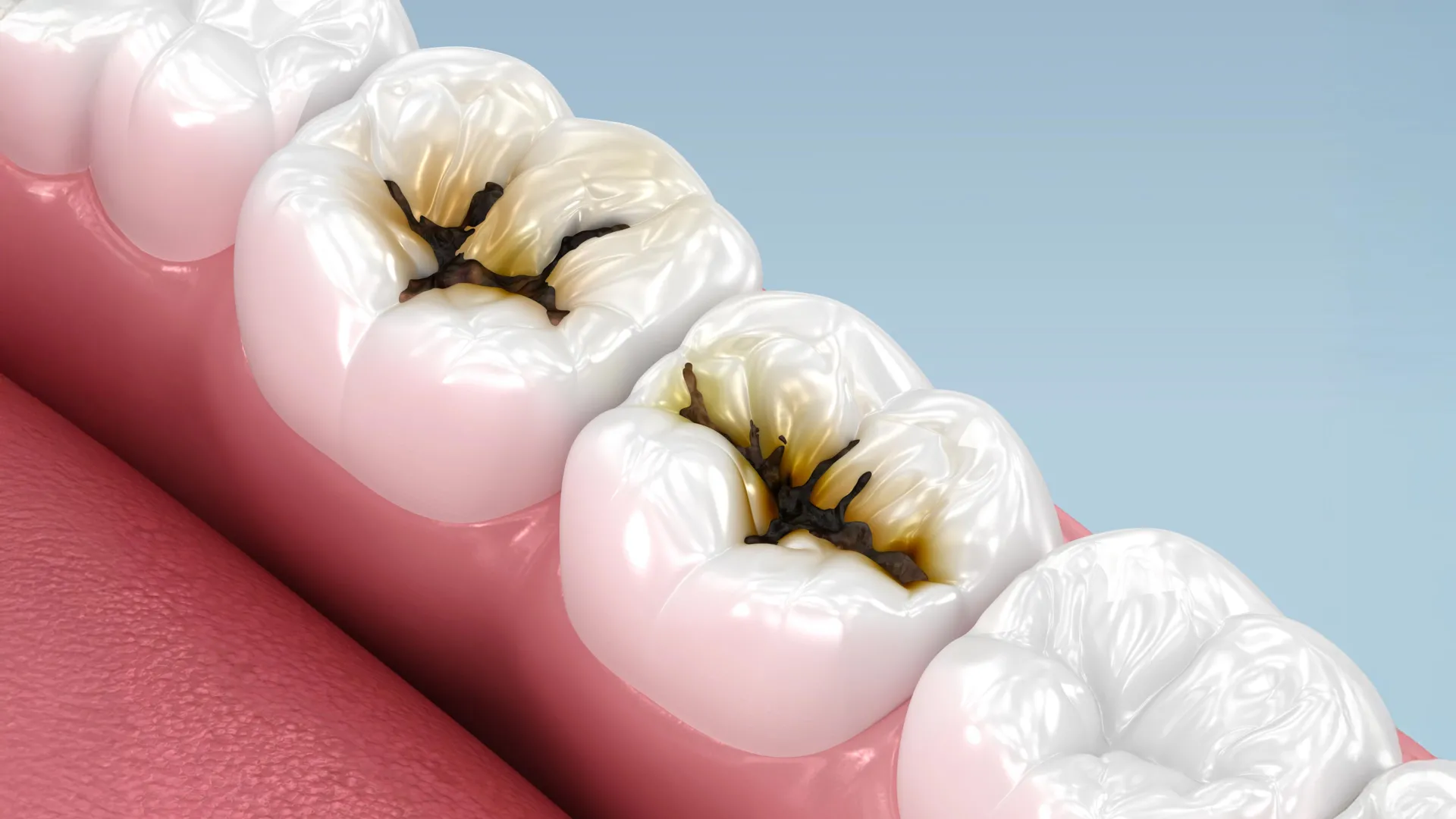
There is, however, one important tradeoff. SDF permanently turns the decayed portion of a treated tooth dark, which can be especially noticeable on front teeth. The discoloration is primarily cosmetic, but it may influence whether patients and families choose the treatment.

For many people, avoiding pain, drilling, or more invasive procedures may outweigh that drawback.

Why This Decades-Old Treatment Could Soon Reach More Patients

Silver diamine fluoride is not a newly invented substance. Dentists have successfully used it to manage cavities in numerous countries for decades.

In the United States, the FDA approved SDF as a medical device for treating tooth sensitivity in 2014. Dentists have also used it off-label to stop cavities, meaning they apply an authorized product for a purpose beyond its original approved indication.

What has been missing is large-scale clinical evidence from U.S. populations establishing its safety and effectiveness for treating tooth decay, a key step toward obtaining FDA approval for that specific use.

The University of Michigan trial was designed to help fill that gap.

“If we want more children and families to benefit from this treatment, we need rigorous evidence showing both that it works and that it’s safe. From a public health perspective, if we want broader implementation across the United States, including in medical settings, we need carefully collected data in U.S. populations, and we now have that,” Fontana said.

The investigation began in 2018 and continued despite the major disruptions caused by the COVID-19 pandemic.

The researchers believe stronger clinical evidence could make SDF more widely available, including in pediatric medical settings where children often receive care long before their first dental appointment.

“In medicine, clinicians want high-quality evidence before changing practice,” Fontana said. “It is important to have data they can refer to because young children often see pediatricians years before they ever visit a dentist, broader acceptance could allow many more cavities to be treated while a referral to a dental home is successful, and before they become painful, infected or require surgery.”

A dental home refers to an ongoing relationship with a dental care provider who can deliver preventive care, treatment, and follow-up services.

Expanding access to SDF could allow more children to receive early intervention before relatively manageable cavities develop into serious dental problems.

FDA Approval Could Expand Access to Cavity Treatment

The trial brought together researchers from the University of Michigan, New York University, the University of Iowa, and Indiana University. The National Institute of Dental and Craniofacial Research, part of the National Institutes of Health, provided more than $12 million in funding.

The product tested was Advantage Arrest 38% SDF, supplied by Elevate Oral Care.

The findings provide clinical trial evidence that the manufacturer can use in an application seeking FDA approval of SDF as a drug for arresting dental caries, the medical term for tooth decay.

Amr Moursi, a professor of pediatric dentistry at New York University College of Dentistry and a co-principal investigator, emphasized the potential importance of that regulatory change.

“Our results support FDA approval of SDF for managing arrest of tooth decay in young children. Removing SDF from off-label status would be an important innovation which could lead to increased utilization by providers, enhanced payments by insurers and more consistent product quality,” said Moursi, a co-principal investigator on the study.

For some children, receiving another application of SDF every few months could be sufficient to keep a cavity under control until the affected baby tooth naturally falls out.

Adults could also benefit, either by using SDF to manage decay over a longer period or as a temporary solution until a filling or another restorative procedure becomes affordable or practical.

The treatment is not suitable for every cavity, and stopping decay does not necessarily eliminate the need for future dental work. Nevertheless, the findings suggest that a procedure requiring only seconds to perform could help many patients avoid more complicated treatment.

“For almost anyone, this can arrest the decay and stop the infection and the pain it causes,” Fontana said. “This could benefit many people.”

Share Button

Is ‘ferritin face’ a real thing – and can you really spot low iron from looks?

Videos in which people claim to spot the signs of low iron have attracted millions of views online.

Share Button

Labour Storm Ahead In New Poll As Reform’s Decline Worsens In Third Place

Labour has taken an eight-point lead in a new poll while Reform UK’s decline continues.

Andy Burnham’s party has crept up to 32%, an increase of five percentage points on last month, according to data from Ipsos in the UK.

This is the largest Labour lead these pollsters have recorded in this parliament.

Ipsos also put the Conservative in second place for the first time since June 2025, as Kemi Badenoch’s party rests at 24%, after a modest increase of three percentage points.

Meanwhile, Nigel Farage’s Reform is now down three points on 20%, as the distance between the two main right-wing parties grow.

The Liberal Democrat Party is in fourth place on 9%, having gained one point, and the Green Party trails behind on 8%, after dropping five points.

Labour and the Tories are creeping ahead as support for Reform and the Greens ebbs away, according to the pollsters.

Another survey looking at the public’s satisfaction with the government shows a net score of -43, the highest recorded since Boris Johnson was prime minister in 2022.

Almost a third (30%) think the government deserves to be re-elected, up two points from September, and 35% are satisfied with the job Burnham is doing as prime minister.

Keiran Pedley, Director of Politics at Ipsos in the UK said: “Whilst the headline figures do show a striking change, they confirm a pattern we have been seeing in the underlying data for some time.

“The Labour Party under Andy Burnham is resurgent, consolidating voters on the left behind them.

“On the right, the tectonic plates have been shifting recently and now this is reflected in the Conservatives – not Reform UK – being in a clear second place.

“However, we should be mindful against overreacting to one poll.

“The government faces a challenging budget this coming week and the lesson of the last year is the British politics is volatile. The picture today is very different to six months ago and it could be different again in six months time too.”

Listen to Commons People, the podcast that makes politics easy. Every week, Kevin Schofield and Kate Nicholson unpack the week’s biggest stories to keep you informed. Join us for straightforward analysis of what’s going on at Westminster.

Share Button

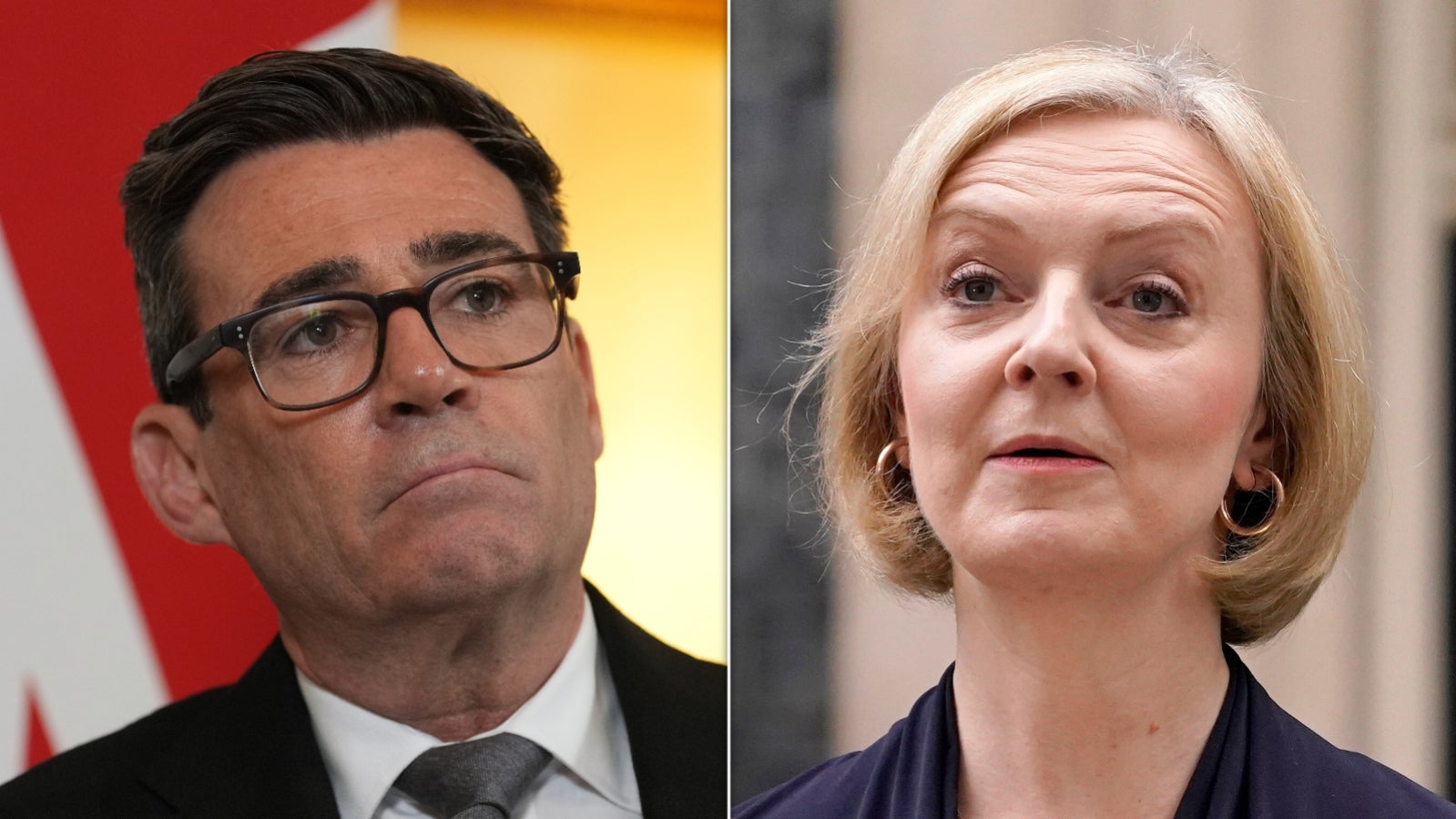
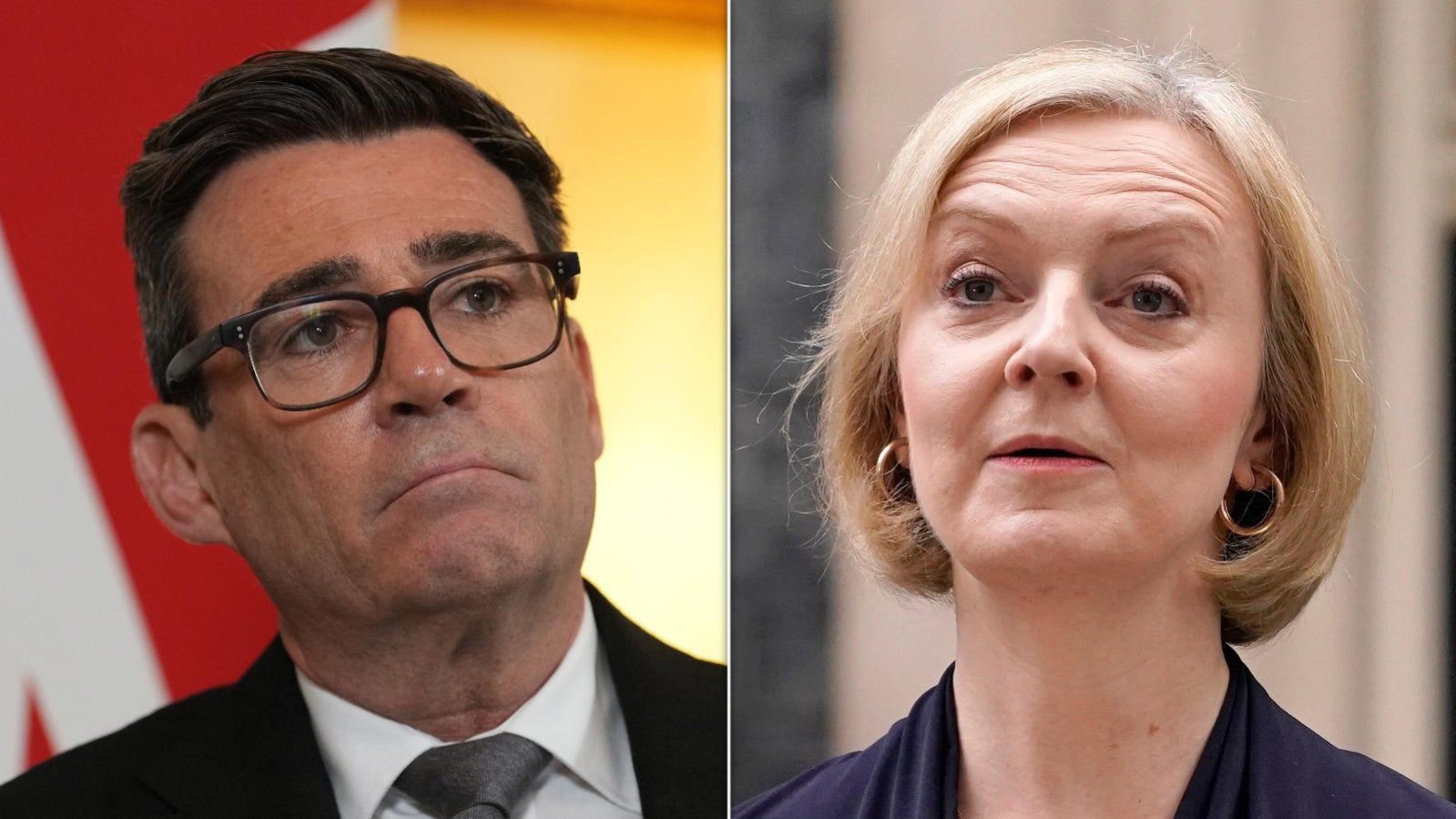
Blow To Burnham As Ally Warns PM Risks Liz Truss-Style Crisis If He Avoids Tough Choices

Andy Burnham risks a Liz Truss-style crisis unless he takes risks with his upcoming Budget, according to a prominent ally.

Andy Haldane, former chief economist at the Bank of England, told The Times he thought Britain was “close to being taxed out and maxed out in terms of borrowing”.

He said he fears the government will deliver a “mañana Budget” on Wednesday which put off difficult decisions and will not “speak to the urgency of now”.

Haldane claimed ministers do not understand how “precarious” the current situation is for the country right now.

Haldane, who acted as an informal adviser when Burnham was the mayor of Greater Manchester, said the government must cut the size of the state and taxes to generate growth.

He also said the prime minister cannot “vibe-code” his way to growth.

Chancellor John Healey is set to unveil the first Budget of Burnham’s government on Wednesday.

He is expected to help poorer households with their energy bills and offer support for businesses while also freezing fuel duty.

Haldane said Burnham had the potential to be a “great prime minister” with two terms in power, but the economy was his “blind spot”.

He told The Times: “It’s not those who sit behind him. It’s probably not even those who sit opposite him in Westminster. Keir [Starmer] lost the dressing room.

“Andy’s biggest risk is that he loses the dealing room. And then that’s an even more painful way to go, as Liz Truss would tell you.”

Former Tory prime minister Liz Truss was in office for a historically short period of just 49 days after she plunged the country into chaos with £45 billon of unfunded tax cuts.

Her mini-Budget sent the pound into decline as inflation soared and mortgage rates spiked.

The Bank of England had to step in to steady the markets and furious Tory MPs kicked her out of office after just seven weeks in Downing Street.

Asked for her response to Haldane’s warning on Sky News, housing secretary Angela Rayner said: “Well look, we’re in the room and we’ve been really clear.

“You can see by the results of the IMF, we’re one of the fastest growing economies in the G7 alongside Germany –”

Sky’s guest host Anne McElvoyy cut in: “The German economy is in a great deal of trouble.”

But the cabinet minister replied: “We’re seeing one of the fastest growing economies in the G7.

“Not only were we singled out for having the best deficit deductions and we’re seeing investment coming through, whether that’s through house building or our green energy, that we are investing in British jobs for the future.

“That’s giving confidence to the market, and our fiscal discipline, which is showing our economy’s resilience, not withstanding the global challenges many other economies are facing at the moment.”

Listen to Commons People, the podcast that makes politics easy. Every week, Kevin Schofield and Kate Nicholson unpack the week’s biggest stories to keep you informed. Join us for straightforward analysis of what’s going on at Westminster.

Share Button

Zelenskyy Mocks Trump Envoy’s Claim Putin Is A ‘Humanitarian’

Volodymyr Zelenskyy has mocked Donald Trump’s special envoy after Steve Witkoff described Vladimir Putin as a “humanitarian”.

The US representative stunned international allies when he praised the wartime dictator during a face-to-face meeting in St Petersburg last week.

American delegates were meant to be putting forward their latest plan to secure peace in Ukraine for the Kremlin’s consideration.

It came after a particularly alarming few weeks where the US started to fully align itself completely with Russia, apparently forgetting how the Ukraine war began when Putin invaded back in 2022.

Trump agreed to a sanctions-busting diesel deal with Putin, called for Zelenskyy to be ousted as Ukraine’s president, ignored Russia’s repeated breaches of the US’s “energy ceasefire” and was accused of restricting Kyiv’s access to US intelligence.

Witkoff then added salt to the wound when he told Putin: “You talk so much about my president, President Trump, being a humanitarian.

“You are a humanitarian also, sir, and I salute that, I commend you, and I thank you again.”

Asked to respond to the US claim that Ukraine is not “grateful” for the help it has received so far from America, Zelenskyy told ABC News: “They have a right to say what they think about what they want.”

“You don’t get insulted when people say that?” Journalist James Longman asked.

“No, of course – yes,” the Ukrainian president said. “I’m a normal person.

“Maybe not such a big humanitarian as Putin, of course, we are different.

“But in any way, I try my best, really.”

Zelenskyy also said Trump is “cautious” over the phone, but when asked if Trump was “polite”, Zelenskyy hesitated and joked: “Up to you!”

“Like between friends, like in the family, you have to be honest, not to play games. I don’t play games with Trump,” the Ukrainian leader said.

“This is my difference between me and Putin. I don’t play with him any games. I’m direct, honest.”

Zelenskyy said he does not feel betrayed by the US – despite saying otherwise recently – but did express sadness over the lack of US assistance.

“I feel what I feel. It’s not supportive,” he said.

Listen to Commons People, the podcast that makes politics easy. Every week, Kevin Schofield and Kate Nicholson unpack the week’s biggest stories to keep you informed. Join us for straightforward analysis of what’s going on at Westminster.

Share Button