Study challenges a common belief about vitamin D and sunlight

Many people in England who are considered at higher risk for vitamin D deficiency may not be getting enough of the nutrient at any time of year, according to new research. The findings challenge the widely held belief that spending time in the summer sun is enough to restore healthy vitamin D levels.

Researchers from Newcastle University’s Human Nutrition and Exercise Research Centre analyzed vitamin D levels in nearly 300 people living across northern Britain. Their results suggest that a significant number of people could have low vitamin D year-round without realizing it, potentially affecting bone health, overall well-being, and long-term health outcomes.

The study, published in the European Journal of Clinical Nutrition, focused on adults aged 65 and older as well as people from minoritized ethnic backgrounds of all ages. Funding was provided by Better You Ltd, a UK-based health and wellness company that manufactures and sells nutritional supplements.

Vitamin D Deficiency Remains High Throughout the Year

The researchers found that vitamin D insufficiency was common in both groups studied. More than half of the older adults had insufficient vitamin D levels, while the proportion was even higher among participants from minoritized ethnic backgrounds.

Perhaps most notably, vitamin D levels did not improve during the summer months. This finding runs counter to the common assumption that increased exposure to sunlight during summer is enough to bring vitamin D levels back into a healthy range.

Vitamin D is essential for maintaining healthy bones and supporting overall health. Insufficient levels have been associated with a greater risk of conditions including osteoporosis, rickets, and weakened immune function.

Bernard Corfe, Professor of Human Nutrition and Health at Newcastle University and co-leader of the study, said: “What’s striking about these findings is that vitamin D levels didn’t improve, even in the summer months when we would usually expect them to recover.

“For people living in places like the North of England, this shows that sunlight alone may not be enough, particularly for older adults and those from minoritized ethnic backgrounds.

“The message is simple but important. If you are in a higher-risk group, you can’t assume that spending more time outdoors in summer will solve the problem.

“We need to be thinking about more consistent, year-round ways to support healthy vitamin D levels.”

Researchers Call for Targeted Public Health Measures

Participants were recruited locally through both community outreach and online methods. Each person completed a simple finger-prick blood test, and the samples were analyzed by a specialist laboratory.

The findings also point to a need for more targeted public health strategies. Researchers suggest that clearer guidance, brief vitamin D assessments during GP appointments, and vitamin D supplementation when appropriate could help address the issue.

The study adds important evidence to an area that has received relatively limited attention and offers a better understanding of year-round vitamin D risk among vulnerable populations.

Researchers say the next stage of the project will explore ways to improve vitamin D levels through personalized and culturally appropriate strategies. These may include tailored dietary recommendations and healthcare approaches designed to better meet the needs of different communities.

The study’s funder, Better You Ltd, had no role in designing the research, conducting the study, or interpreting the results. All aspects of the research were carried out independently by Newcastle University.


Share Button

Want to feel happier at work? Take a five-minute walk

Sitting for prolonged periods is associated with health complications – but you can counteract the risks of a sedentary life.

Share Button

Is vaginal microbiome testing worth it?

Testing the vagina microbiome is increasing in popularity with companies offering at-home tests

Share Button

Trump Criticises Keir Starmer Yet Again After Resigning as Prime Minister

Donald Trump has described Keir Starmer as a “lovely man” who “really hurt himself” following the prime minister’s decision to resign.

The US president – who bizarrely posted on social media that Starmer was going to quit a day before he actually did – took the opportunity to attack Labour policies when asked about the PM by reporters.

He said: “I think he’s a lovely man, but you’re really messing up energy, you’ve got windmills all over the place and in the meantime you have the North Sea oil and they won’t let anybody drill! It’s one of the great fields in the world.”

He continued: “The UK buys much of its energy – you know where? Norway. You know where they get their oil? The North Sea.

“The UK has a much better portion of the sea. They don’t want to do it for environmental purposes.”

The UK does allow drilling in the North Sea for oil but only for the existing licences. It has permanently banned any new explorations.

The fossil fuels extracted is then be sold on to the highest bidder on the international stage.

The oil can not be used domestically for UK energy because domestic refineries are not able to refine it, meaning expanding North Sea drilling would not directly ease the country’s energy problem.

Even so, Trump has regularly criticised Labour’s refusal to “drill, baby, drill”.

The president continued: “I told him [Starmer] – he’s sort of a friend of mine – I mean, he was not good to us with Nato, he said we can’t use the island to land, that was a first, for a couple of weeks.

“He said, but I gave it to you – that was a bad move, that hurt him badly. But I’m going to wish well. But he’s got two problems, energy and immigration. And crime.

“He’s really hurt himself very badly.”

Starmer did fall out with Trump after he refused to let the US use UK military bases to launch offensive strikes on Iran.

He did grant permission for limited, defensive strikes on the Middle East, but the president was deeply offended and lambasted the PM in public for weeks.

No other Nato ally offered to help Trump with his war against Iran, either.

But Trump regularly chose Starmer as his main punching bag, saying he is no “Winston Churchill” and comparing him to Neville Chamberlain, the PM who associated with Nazi appeasement.

Starmer declared he was stepping down as Labour leader on Monday, and laid out a timetable for his departure as prime minister.

Andy Burnham, the new Makerfield MP and most popular politician in the Labour, is the only person to put themselves forward into the contest so far.

If no other MP can build up enough support from fellow MPs, he will run uncontested and likely be in No.10 by July 18 at the latest.

Listen to Commons People, the podcast that makes politics easy. Every week, Kevin Schofield and Kate Nicholson unpack the week’s biggest stories to keep you informed. Join us for straightforward analysis of what’s going on at Westminster.

Share Button

Science Explains Why You Shouldn’t Sleep Naked During A Heatwave

The Met Office has issued a red warning across the UK as temperatures as high as 38°C have been predicted in parts of the country.

Hot weather is expected to “rise quickly” and stay high throughout the week.

That can ruin your sleep. One paper found that heatwaves are especially ruinous, causing us to lose crucial minutes of shut-eye.

But if you’ve been sleeping in the nip for a cooler night, Natalie Pennicotte-Collier, a resident sleep expert at MattressNextDay, says you might want to reconsider.

Why shouldn’t you sleep naked in a heatwave?

It has to do with how sweat, which needs to evaporate to cool us off, behaves.

You might think that water wicks away faster when we’re naked. But the sleep expert said that’s not always true,

The move “feels logical, but without breathable natural fibre bedding to wick sweat away, moisture simply sits on the skin and creates a clammy humid ‘microclimate’ that is more likely to wake you up in the middle of the night.” Pennicotte-Collier explained.

The same logic applies to your bedsheets – we “should replace [our duvet] with a lightweight breathable layer instead of sleeping completely uncovered,” she said.

Research has her (pyjamaed) back. One paper from the University of Birmingham found that linen bedding was linked to fewer wake-ups among younger participants in hot weather.

How can I get to sleep in a heatwave?

Sleeping on a lower level in your home might help, the Red Cross said, as heat rises.

And paradoxical as it might sound, taking a warm shower might help, too.

Speaking to HuffPost UK previously, Dr Seeta Shah from PANDA London said: “Many take a cold shower before bed in hot weather, but a shockingly cold shower can actually raise core body temperature as your body works to counteract the sudden cold.

“A lukewarm to slightly cool shower is better. It gently reduces body temperature and triggers the parasympathetic nervous system, helping your body wind down and enter a sleep-conducive state.”

Share Button

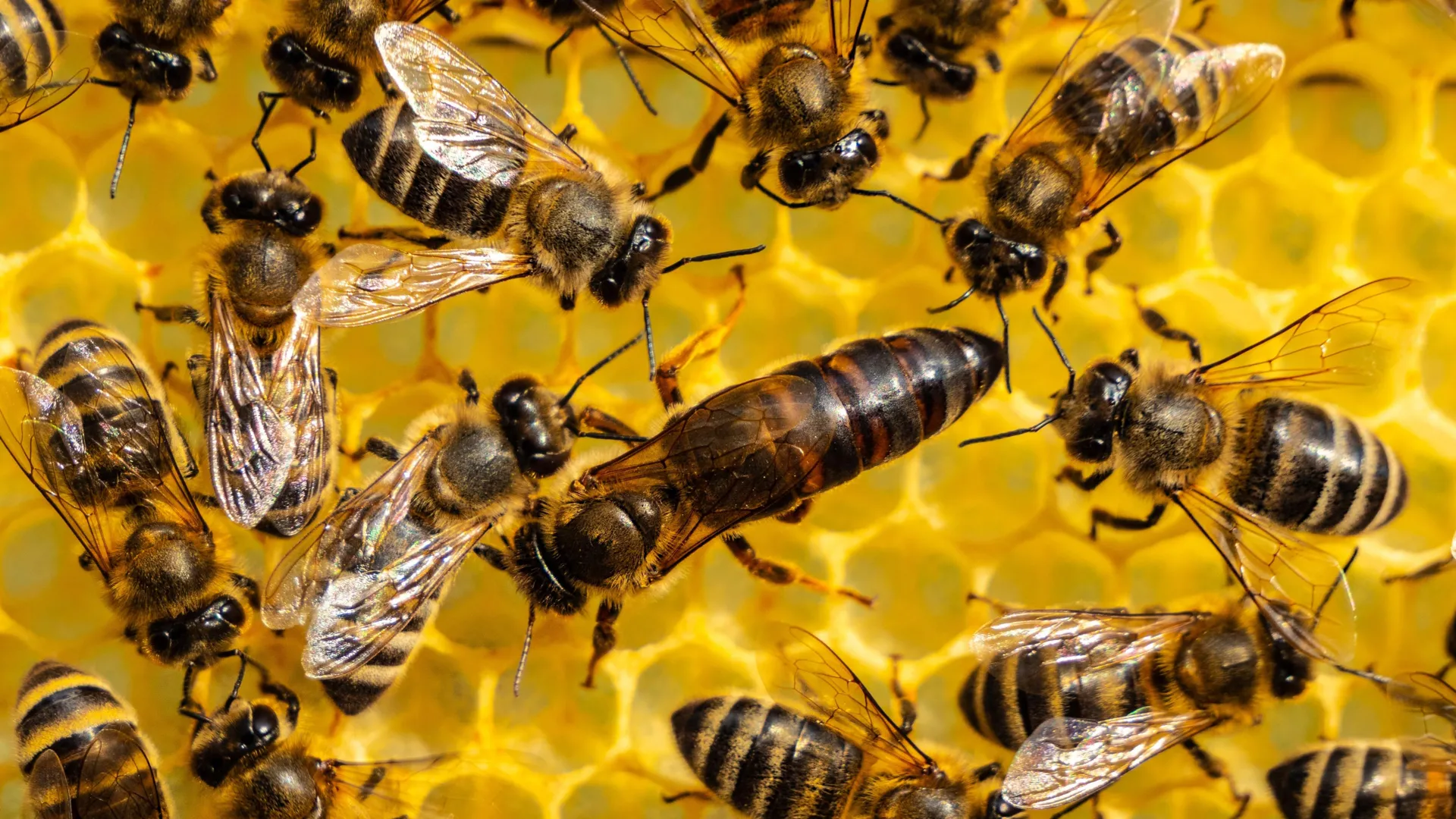
Scientists just discovered how queen bees are really made

For many years, scientists believed the recipe for creating a queen honeybee was straightforward: give a developing larva plenty of royal jelly, and it becomes the colony’s ruler.

A new study suggests the reality is far more complex.

Researchers have discovered that future queens are raised inside specially designed nursery chambers built by young worker bees. These chambers provide unique wax, warmer conditions, and dedicated care that help guide a larva’s development into a healthy queen.

The findings, published in the journal Nature, show that the structures known as queen cells, sometimes called “royal cribs,” are much more than protective containers. They are carefully constructed environments that play a critical role in queen development. The research team also identified a previously unknown group of young worker bees called “queen cell builders” that appear specially suited for creating and maintaining these chambers.

“The old idea was relatively simple: take an egg, move it into a queen cell, feed it royal jelly, and you get a queen,” said Boris Baer, entomologist and director of the Center for Integrative Bee Research (CIBER) at the University of California, Riverside, whose laboratory contributed to the work. “What we found is that there’s an entire machinery behind this process. It’s much more sophisticated than we imagined.”

Queen Bees Need More Than Royal Jelly

Honeybee queens and worker bees start life in nearly the same way, emerging from almost identical eggs. Despite those similar beginnings, queens grow larger, develop more quickly, and can live much longer than workers. They also serve as the colony’s only egg-laying female, producing the next generation of bees.

For decades, researchers viewed royal jelly, a nutrient-rich substance fed to young larvae by worker bees, as the primary driver of this dramatic transformation.

The new study indicates that nutrition alone cannot explain what happens.

Using a combination of thermal imaging, behavioral monitoring, materials science techniques, and chemical analysis, the scientists examined the environments where queens are raised. They found major differences between queen cells and the familiar hexagonal chambers used to rear worker bees.

The Special Role of Queen Cells

Queen cells have a distinctive peanut-like shape and are built from wax that differs physically and chemically from ordinary hive wax. The material is less dense, more flexible, and better at retaining heat and moisture, creating favorable conditions for developing queens.

Researchers also found differences in the wax’s fatty acids and chemical signals, suggesting that queen cells provide a unique developmental setting.

To determine whether these chambers truly influence development, the team raised queen larvae in cells made either from queen wax or standard worker wax. Even when both groups received the same food, larvae raised in worker wax were more likely to die and ultimately developed into smaller queens.

The results suggest that the surrounding environment is just as important as diet in shaping a future queen.

Meet the Queen Cell Builders

The study also uncovered the worker bees responsible for creating and maintaining these royal nurseries.

Known as queen cell builders, these bees are generally younger than many other workers in the hive. While caring for developing queens, they maintain higher body temperatures and undergo physiological changes that appear linked to their specialized role.

The added warmth may help explain why queens develop so quickly. A queen bee reaches maturity in about 16 days, while worker bees require roughly 21 days. That faster development can be crucial when a colony urgently needs a new queen.

Rather than simply reusing existing wax, queen cell builders actively collect, modify, and enrich materials used in royal chambers. Their bodies also activate different biological pathways associated with wax production, effectively altering how they function while performing this task.

To see how these materials were gathered, researchers added trace amounts of graphite to ordinary honeycomb. Over time, darkened wax appeared inside queen cells, showing that workers were selectively collecting and transforming materials from elsewhere in the hive for use in queen development.

A Royal Court Inside the Hive

According to Baer, the process resembles something far more organized than a typical insect nursery.

The evidence points to a highly coordinated effort by the colony to produce its next ruler.

“You can think of it as something like Buckingham Palace,” he said. “There is a dedicated group of bees focused entirely on raising the queen, and if they don’t get it right, the colony cannot reproduce.”

The researchers observed the same pattern in both Asian and European honeybee species, suggesting this strategy evolved long ago and may be widespread among honeybees.

The project brought together experts in behavior, physiology, chemistry, materials science, and genomics. It was led by former UCR postdoctoral researchers Yu Fang and Yahya Al Naggar.

“In its collaborative nature, this project reflects the broader CIBER philosophy of bringing different disciplines together to tackle complex biological questions,” Baer said.

What the Discovery Means Beyond Bees

The findings could have implications that extend beyond honeybees. They suggest that development may be shaped not only by genetics and nutrition, but also by the physical and social environments organisms experience.

For years, queen bees appeared to offer one of biology’s simplest examples of development: special food creates a special insect. This research paints a much richer picture. A queen does not emerge from royal jelly alone. Instead, an entire colony works together to create the conditions needed for her success.

“This work highlights how much sophistication exists inside insect societies,” Baer said. “Honeybee colonies are not simply collections of individuals. They function as integrated biological systems capable of engineering their own environments.”

Share Button

Starmer Opens Door For Burnham To Start Receiving Government Briefings ‘As Soon As Possible’

Keir Starmer has opened the door for his likely successor Andy Burnham to start receiving government briefings as soon as possible.

The spokesperson for No.10 told reporters: “The prime minister wants a smooth transition, and has been clear that he wants to make this as easy as possible.

“That’s why the prime minister has agreed that access talks can take place with prospective candidates for the Labour leadership as soon as possible and before formal nominations have closed [on July 16].”

The prime minister’s spokesperson said that means they could start before nominations open on July 9.

So far only Burnham, who was sworn in as the Makerfield MP on Monday, has publicly confirmed that he will be running to replace Starmer.

Former health secretary Wes Streeting was expected to join any contest, but he has since announced he will be backing Burnham.

All eyes are on chief secretary to the PM Darren Jones and former Armed Forces minister Al Carns to see if they have the backing of the 81 MPs needed to join the race.

If Burnham runs uncontested, he could be in No.10 by July 17 or 18 at the earliest.

If there is a competition, Starmer explained on Monday that a battle for the crown will run across the summer and his replacement would be installed by September 1.

It’s unclear how the Cabinet Office will define a “prospective” candidate.

These confidential “access talks” will be led and coordinated by cabinet secretary Antonia Romeo.

Ministers will not be present and will not receive a report of discussions in line with the Civil Service Code.

Romeo will have overall responsibility for coordinating the process “once a request has been made and authorised by the prime minister”, according to the spokesperson.

The talks will focus on “formation of government and key policy priorities” so the civil service can “prepare for any outcome”.

“The civil service’s focus remains on serving the government of the day in line with the Civil Service Code,” the spokesperson said.

It’s understood there has not yet been a request to see these government briefings.

The prime minister also held his first cabinet meeting this morning since he announced his resignation.

According to the readout released by Downing Street, Starmer told his colleagues “he wanted whoever became the next prime minister to succeed.”

“He added he wanted an orderly transition, as he had set out yesterday, and would seek to resolve difficult issues in the coming weeks to support his successor.

“The prime minister said he would seek to make the transition as easy as possible, giving his full support to whoever followed in his footsteps.”

His official spokesperson also revealed the government will not make any major announcements or spending commitments until the new PM is in no.10.

As the UK’s top civil servant, Romeo has written to heads of departments advising them on how to continue as the “business of government will proceed as normal”.

However, the spokesperson said the long-awaited Defence Investment Plan will still be published before the Nato summit on July 7 – and is expected to include new spending plans.

This may prove to be an obstacle with Burnham as he allegedly wants to make a decision on spending himself, according to The Times.

Listen to Commons People, the podcast that makes politics easy. Every week, Kevin Schofield and Kate Nicholson unpack the week’s biggest stories to keep you informed. Join us for straightforward analysis of what’s going on at Westminster.

Share Button

Scientists open a million-year-old time capsule hidden beneath New Zealand

A remarkable fossil discovery inside a cave near Waitomo on New Zealand’s North Island is giving scientists an unprecedented look at a long vanished ecosystem. Researchers from Australia and New Zealand have uncovered the remains of ancient birds and frogs that lived around 1 million years ago, including a previously unknown relative of the iconic kākāpō.

The find marks the first time scientists have recovered a large collection of terrestrial vertebrate fossils from this period in New Zealand’s history. Preserved within the cave were fossils belonging to 12 bird species and four frog species, offering a rare snapshot of a world that existed hundreds of thousands of years before humans reached the islands.

The research, published in Alcheringa: An Australasian Journal of Palaeontology, suggests that New Zealand’s wildlife was already undergoing dramatic changes long before human settlement. Powerful volcanic eruptions and rapid climate shifts repeatedly reshaped habitats, driving extinctions and opening opportunities for new species to evolve.

Ancient Birds Lost to Time

Lead author Associate Professor Trevor Worthy of Flinders University says the fossils reveal a bird community unlike anything seen in New Zealand today.

“This is a newly recognized avifauna for New Zealand, one that was replaced by the one humans encountered a million years later,” says Associate Professor Worthy, from the College of Science and Engineering at Flinders University.

“This remarkable find suggests our ancient forests were once home to a diverse group of birds that did not survive the next million years.”

In biology, the term “avifauna” refers to the collection of bird species living in a particular place and time. The fossils indicate that the birds inhabiting New Zealand a million years ago were substantially different from those present when people eventually arrived.

The study involved paleontologists from Flinders University and Canterbury Museum, as well as volcanologists Joel Baker of the University of Auckland and Simon Barker of Victoria University of Wellington.

According to the researchers, approximately 33-50% of species disappeared during the million years before humans reached Aotearoa New Zealand.

Volcanoes and Climate Change Reshaped Ecosystems

Scientists believe these losses were largely caused by natural environmental upheaval.

“These extinctions were driven by relatively rapid climate shifts and cataclysmic volcanic eruptions,” says co-author Dr. Paul Scofield, Senior Curator of Natural History at Canterbury Museum.

The discovery helps fill one of the largest gaps in New Zealand’s fossil record.

“From our excavations at St Bathans in Central Otago over many years, we have a snapshot of life in Aotearoa between 20 and 16 million years ago. These new findings cast light on the 15 million year period from then to 1 million years ago, which is largely absent from New Zealand’s fossil record,” says Dr. Scofield.

“This wasn’t a missing chapter in New Zealand’s ancient history, it was a missing volume.”

Fossils are often compared to pages in Earth’s history book. In this case, researchers say they have uncovered an entire section of that story that was previously unknown.

A Possible Flying Ancestor of the Kākāpō

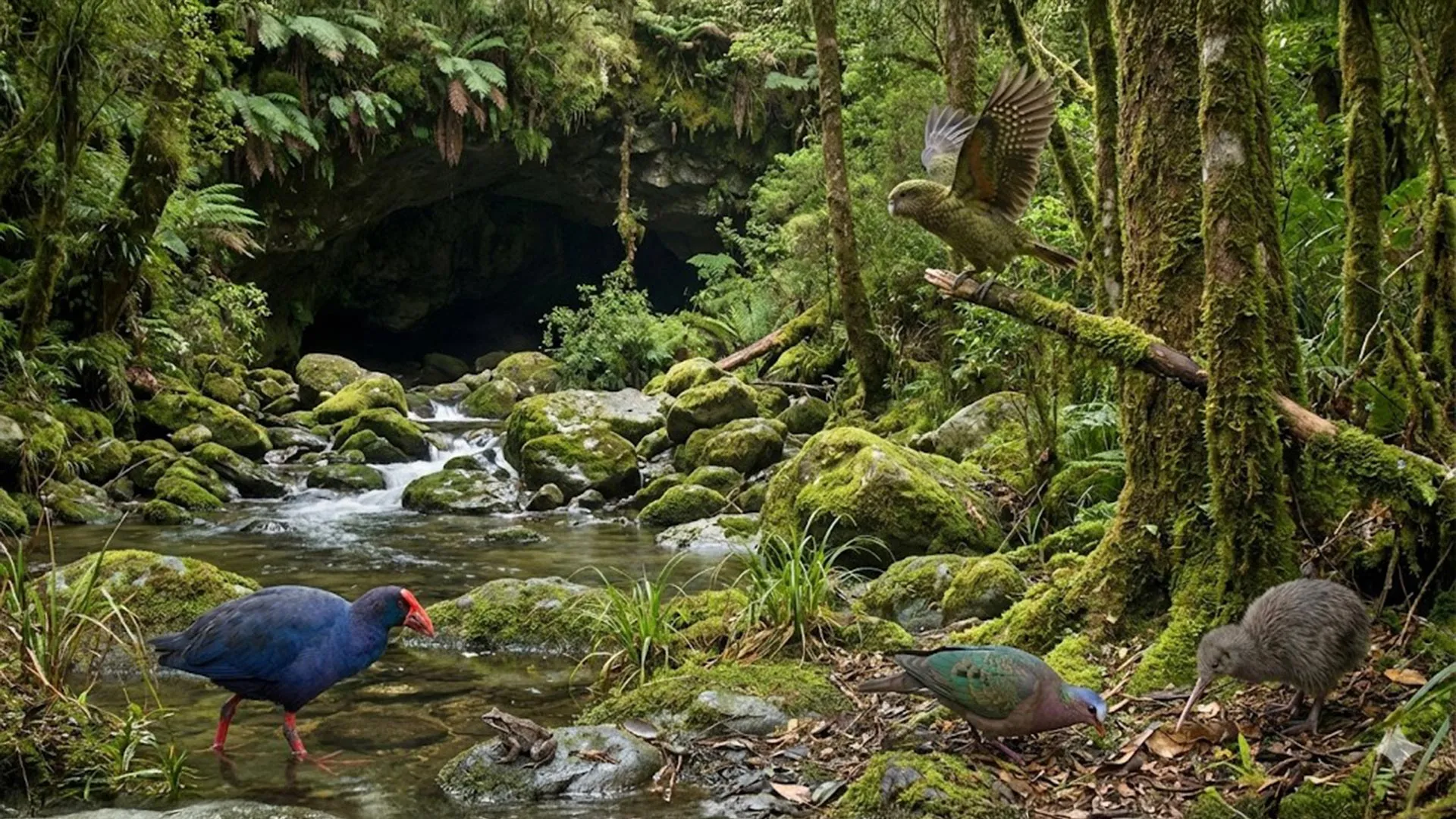
One of the most exciting discoveries is a newly identified parrot species called Strigops insulaborealis. It is an ancient relative of the kākāpō, one of New Zealand’s most famous birds.

Today, the kākāpō is the world’s only flightless parrot. It is also one of the heaviest parrots and is known for its unusual nighttime lifestyle. However, the newly discovered ancestor may have been very different.

Analysis of the fossilized bones suggests it had weaker legs than modern kākāpō. Because today’s birds rely heavily on their strong legs and climbing ability, researchers think the ancient species may have spent less time climbing and possibly retained the ability to fly.

Additional research will be needed to determine whether it truly could take to the air.

The cave also contained fossils from an extinct ancestor of the takahē, another distinctive New Zealand bird. Researchers also identified an extinct pigeon species closely related to Australia’s bronzewing pigeons.

“The shifting forest and shrubland habitats forced a reset of the bird populations,” adds Dr. Scofield.

“We believe this was a major driver for the evolutionary diversification of birds and other fauna in the North Island.”

Volcanic Ash Helps Date the Fossils

One reason the discovery is so important is that scientists can determine its age with unusual precision.

The fossils were trapped between two layers of volcanic ash preserved inside the cave. One ash layer came from an eruption about 1.55 million years ago. The second was produced by a massive eruption approximately 1 million years ago.

This natural geological sandwich provides clear age limits for the fossils.

Researchers say the younger eruption likely covered much of the North Island in meters of ash. While rain and erosion eventually removed much of that material, some remained protected inside caves.

The older ash layer also reveals something else remarkable. It shows that the fossil site is the oldest known cave on New Zealand’s North Island.

Rewriting New Zealand’s Natural History

Associate Professor Worthy says the fossils provide a crucial benchmark for understanding how New Zealand’s wildlife evolved.

The fossils “provide a critical, missing baseline for New Zealand’s natural history.”

For many years, scientists focused primarily on the ecological changes that occurred after humans arrived in New Zealand roughly 750 years ago. The new evidence shows that powerful natural forces had already been transforming the islands’ wildlife for hundreds of thousands of years.

“For decades, the extinction of New Zealand’s birds was viewed primarily through the lens of human arrival 750 years ago. This study proves that natural forces like super-volcanoes and dramatic climate shifts were already sculpting the unique identity of our wildlife over a million years ago.”

Share Button

NASA’s Cold Atom Lab is creating one of the weirdest forms of matter in space

NASA’s upgraded Cold Atom Lab is back in operation aboard the International Space Station, giving researchers a powerful new way to investigate the fundamental nature of matter and advance the development of future quantum technologies. Taking advantage of the station’s microgravity environment, the facility enables experiments that cannot be performed on Earth.

Quantum science focuses on the behavior of matter and energy at extremely small scales, including atoms, electrons, and particles of light. Although atoms are often pictured as tiny balls colliding with one another, the quantum world is far stranger. Atoms can behave like waves, appear in multiple locations at the same time, and even pass through one another under certain conditions.

NASA’s Cold Atom Lab Studies Matter Near Absolute Zero

About the size of a mini refrigerator and controlled remotely from Earth, the Cold Atom Lab cools atoms to temperatures below minus 459 degrees Fahrenheit (minus 237 degrees Celsius). At temperatures just above absolute zero, atoms can combine into an unusual quantum state known as a Bose-Einstein condensate, or BEC.

A BEC is made up of matter waves and is considered a fifth state of matter in addition to solids, liquids, gases, and plasma. Even though it is much larger than individual subatomic particles, it still follows the laws of quantum mechanics. The microgravity conditions of low Earth orbit allow these matter waves to become even larger than they can on Earth.

“At the coldest temperatures, matter behaves drastically different from anything we have experienced,” said Jason Williams, project scientist for Cold Atom Lab at NASA’s Jet Propulsion Laboratory in Southern California, which built the facility. “The wavelike nature of matter dominates, and ultracold matter can behave in ways that are not only unexpected, but that also enable extremely precise measurements of time, gravity, and motion. The lab has lots of tools — especially with this latest upgrade — to let us probe the nature of the universe.”

The facility currently supports five international research teams studying fundamental physics. It also serves as a testing ground for quantum instruments that could one day support Earth science investigations and future exploration missions.

How the Upgraded Cold Atom Lab Works

At the center of the facility is a sophisticated collection of instruments known as the science module. A newly upgraded version of this module arrived at the space station on April 11 aboard a Commercial Resupply Services mission, expanding the range of experiments scientists can perform.

During an experiment, strips of rubidium or potassium metal are heated to temperatures as high as 750 °F (400 °C), creating a gas inside a vacuum chamber. Researchers then use carefully tuned lasers to remove energy from the atoms. As the atoms lose energy, they slow down and cool dramatically.

After the laser cooling stage, magnetic fields trap the atoms and keep them contained. Additional cooling techniques reduce their energy even further, bringing the atomic cloud close to a complete standstill and allowing scientists to maximize the amount of time it can be studied in microgravity.

Why Quantum Experiments Benefit From Space

Scientists can study ultracold gases in laboratories on Earth, but space offers important advantages. In microgravity, quantum gases can be observed for longer periods and cooled to even lower temperatures.

The low gravity environment also allows larger quantum waves to form and interact with gravity for longer periods of time. To make these experiments possible aboard the station, engineers compressed what would normally be a room-sized atomic physics laboratory filled with lasers and optical equipment into a compact system that fits inside a station experiment rack.

“As the first project to create Bose-Einstein condensates in orbit, we’re demonstrating that we can make quantum technology work reliably in space,” said Ethan Elliott, deputy project scientist for Cold Atom Lab at JPL. “In the previous century, there was a quantum revolution that led to lasers, cellphones, and MRIs for medical imaging. We’re performing quantum 2.0 — direct manipulation of large quantum states — and we hope for similar gains in quantum tech by advancing this science in orbit.”

New Upgrade Expands Quantum Research Capabilities

The latest enhancement is the fourth major upgrade since the Cold Atom Lab was installed on the International Space Station in 2018.

Among the most significant improvements is a redesigned magnetic trap that can alter the shape of quantum gas clouds. This gives researchers new opportunities to investigate the properties and behavior of ultracold atoms. Engineers also introduced redesigned metal atom sources that generate the gas clouds used in experiments.

“It’s the closest thing we have to controlling the boundary of the quantum world,” said Kamal Oudrhiri, project manager of Cold Atom Lab at JPL, referring to those low temperatures. “This new upgrade pushes that boundary even further.”

Oudrhiri added that the new hardware “demonstrates NASA’s ability to maintain U.S. leadership in space-based quantum technologies while maturing future quantum instruments, such as matter-wave interferometers for fundamental physics missions, positioning, navigation, timing, and gravity sensing of Earth, the Moon, and beyond.”

Advancing Quantum Technology in Space

The Cold Atom Lab is managed by Caltech in Pasadena, while NASA’s Jet Propulsion Laboratory designed, built, and operates the facility. The project is sponsored by the Biological and Physical Sciences division within NASA’s Science Mission Directorate in Washington.

The division supports scientific discovery by using the unique conditions of space to conduct experiments that cannot be carried out on Earth. By studying biological and physical processes in extreme environments, researchers gain knowledge that can help humans travel farther and remain in space longer, while also producing benefits for life on Earth.

Share Button

Is watching England in the World Cup bad for your health?

Watching football is an emotional rollercoaster – but is it good or bad for your health?

Share Button