Prince William And Kate Middleton’s New Anniversary Photo Might Look Very Familiar

Kate Middleton and Prince William rang in their 12th wedding anniversary on Saturday, as Kensington Palace released a new photo of the couple to mark the special occasion.

“12 years ❤️,” reads the Instagram caption for the picture, which was taken by one of the couple’s favored photographers, Matt Porteous.

In the relaxed shot, the Prince and Princess of Wales are posed on bicycles with their arms around each other, smiling at the camera. Both are dressed in casual outfits, with William in a blue collared shirt, jeans and sunglasses.

Kate wears a patterned white shirt, jeans and white sneakers, while carrying a crossbody purse.

The photo might look familiar to any avid royal watcher, as it was among those taken at the family’s Sandringham Estate in Norfolk, England, last year.

William and Kate used one of those snaps for their 2022 Christmas card, which featured their three children: Prince George, Princess Charlotte and Prince Louis. Other photos from the shoot were used to mark Mother’s Day in the UK.

The Princess of Wales recently made a cameo in another royal family picture to mark Louis’ 5th birthday last weekend. A smiling Kate was shown carrying Louis as he perched in a wheelbarrow with a big grin on his face.

The new picture of Louis was taken by photographer Millie Pilkington, in a break from tradition. Normally, Kate takes shots of her family for big milestones, as she is an avid photographer herself.

The royals are gearing up for a historic weekend next month, as the UK prepares for the coronation of King Charles III and Queen Camilla.

Prince George, a future heir to the throne, is set to play a major role in the ceremony, as he will be one of his grandfather’s pages of honour on May 6.

Share Button

Everything You’re Scared To Ask About A Colonoscopy Answered By Someone Who’s Had One

A colonoscopy brings with it a sense of uncertainty – not helped by gut health and bowel movements still being stigmatised by society.

I have struggled with my bowels since my teens. Diarrhoea and urgency made my life miserable, but I became more concerned when I also started passing blood.

My GP had previously given me a diagnosis of irritable bowel syndrome (IBS), although everything I read about it suggested bleeding was not usually a symptom. A fatigue like no other began to consume me, too, along with aches in my elbows and wrists. After further tests and a hospital admission (and many years), I was referred for a colonoscopy.

Although I knew the word, I didn’t know what the procedure entailed.

The leaflet given to me by the hospital was clear but clinical and told me the basics – that a colonoscope – a camera on a long, thin tube – is used to view the rectum and bowel. The colonoscope is inserted into the anus and shows your lower digestive tract on a screen. Images alone may be enough to make a diagnosis, but biopsies are sometimes also taken.

The idea of someone pushing a tube up my bum didn’t fill me with joy but I knew it was a vital step on the road to finding out what was wrong with me.

A week or so before my appointment a package arrived from the gastroenterology unit. As well as another copy of the leaflet I’d been given previously, there was a questionnaire to complete and return, along with sachets of a powder called Moviprep. A printout itinerary was also included, telling me how to prepare for the colonoscopy.

To see the bowel clearly, it needs to be completely empty which involves a period of fasting. This is also where the Moviprep came in. Instructions told me that the night before the colonoscopy I was to mix a sachet with two litres of water and then slowly drink the concoction.

The hazy mixture made me gag – it tasted of lemon and dust – but I knew this was the best way to get clear images. Finishing the jug felt like a win, but this was only the halfway point. A second jug had to be drank and this was infinitely harder as the Moviprep was taking effect and I was rushing to the bathroom regularly.

My stomach was bloating from drinking such large volumes. It wasn’t a fun experience, but I finished the second two litres, then spent the rest of the evening reading a book on the toilet before heading to bed.

Surprisingly, I slept until the rude awakening from my alarm clock signalled it was time for more Moviprep. Drinking another four litres on an empty stomach was a challenge but the trips to the bathroom that followed proved my bowels were clear – all I was passing was a slightly yellow-tinged liquid.

When I arrived at the hospital a nurse ran through the questionnaire I’d completed, asked if I’d completed the Moviprep and took my blood pressure and pulse rate. Satisfied that I met the criteria, he gave me the paperwork to sign to agree that I was happy for the procedure to go ahead. Once complete, I was given a hospital gown and paper pants to wear and told to wait for my slot.

By this point I was impatient, edgy, and hungry. Thankfully, it wasn’t long until a healthcare assistant showed me to the colonoscopy suite, instructing me to lie on my left-hand side and telling me how to use the gas and air (it is also possible to be sedated for a colonoscopy if you have someone to take you home).

The doctor who was carrying out the procedure showed me the colonoscope then a gel lubricant was applied, and, after a few puffs of Entonox, we were ready to go. The insertion was uncomfortable but not painful and I focused on the screen – after all, how often do you get to see your insides?

Being honest, I was light-headed throughout. My stomach was swelling, a result of the air used to help the doctor get clear images. The healthcare assistant was talking to me as I watched the images of the colonoscope moving through my bowel.

There were two points where it hurt, which the doctor explained was where my bowel twisted. I was given the option of stopping the procedure, but I persevered, not wanting to have to go through the entire process again. Thankfully, they were able to get the whole way around my bowel by moving me onto my stomach, although this did make me break wind! I immediately felt more comfortable, and they were able to take biopsies from various parts of my bowel.

After about 45 minutes it was all over and I was wheeled to the recovery area to rest, get changed and have an all-important cup of tea and a sandwich. I was then given a discharge form telling me when to expect the results and any warning signs to look out for before being sent home.

Two weeks later the results were in – I was officially diagnosed with Crohn’s Disease. Since then, I have had more colonoscopies and, although not pleasant, I know it is an important part of my healthcare routine.

If you are called for a colonoscopy, try not to be nervous. It is a common procedure, with around 900,000 conducted each year in the UK.

Share Button

The Public Laughs At The Government Again – This Time Over Voter ID

A second government minister has faced public ridicule in as many days after a radio audience laughed at the suggestion the Conservatives do not want to see new voter ID laws deter people from voting.

Robert Jenrick’s comments on BBC Radio 4 came around 24 hours after Rachel Maclean suggested on the broadcaster’s Question Time that British people being poorer had “nothing to do” with Brexit.

The government has introduced new compulsory ID rules for those voting in person during England’s local elections next week. The move has sparked criticism that more marginalised communities will face fresh challenges to vote.

The government has said the move will prevent voter fraud and protect democracy. But opposition parties and campaigners claim the plan is based on a false premise that actually amounts to “voter suppression” – locking out millions of voters without ID out of the democratic process.

On Any Questions on Friday, Jenrick argued the move was about “protecting the integrity of our democracy”, and said asking to see ID was not a “very unusual thing to do”.

He added: “The truth is it was an anachronism that we didn’t have to show ID going to vote. We all show ID when we go and collect a parcel at the petrol station, we show verification for all manner of things in life.”

He continued that “it is obviously very important that we get this right because we don’t want to see anybody disenfranchised”, which prompted laughter from the audience.

Jenrick argued the pilot schemes showed 99% of “those people who sought to vote did so successfully”, adding: “I don’t think it will be a major issue. I think it is an important step in defending our democracy and I think we should take that seriously.”

At two trials of voter ID in the 2018 and 2019 local elections, more than 1,000 would-be voters were turned away from polling stations and did not return.

The UK has very low levels of proven electoral fraud – during last year’s local and mayoral elections, there was not a single proven case of in-person voter fraud.

Critics have also argued there is a deliberate attempt to disenfranchise young people. Bus and travel passes for older and disabled people are being accepted as photo IDs – but the young people’s travel cards is not being permitted.

When this was put to Jenrick, he dismissed a “confected” issue as he argued: “The evidence is that of the set of ID we’ve created, you are more likely to have that ID if you’re a young person than if you’re an older person.”

Share Button

King Charles And Camilla Release New Photos With Four Hidden Regal Symbols

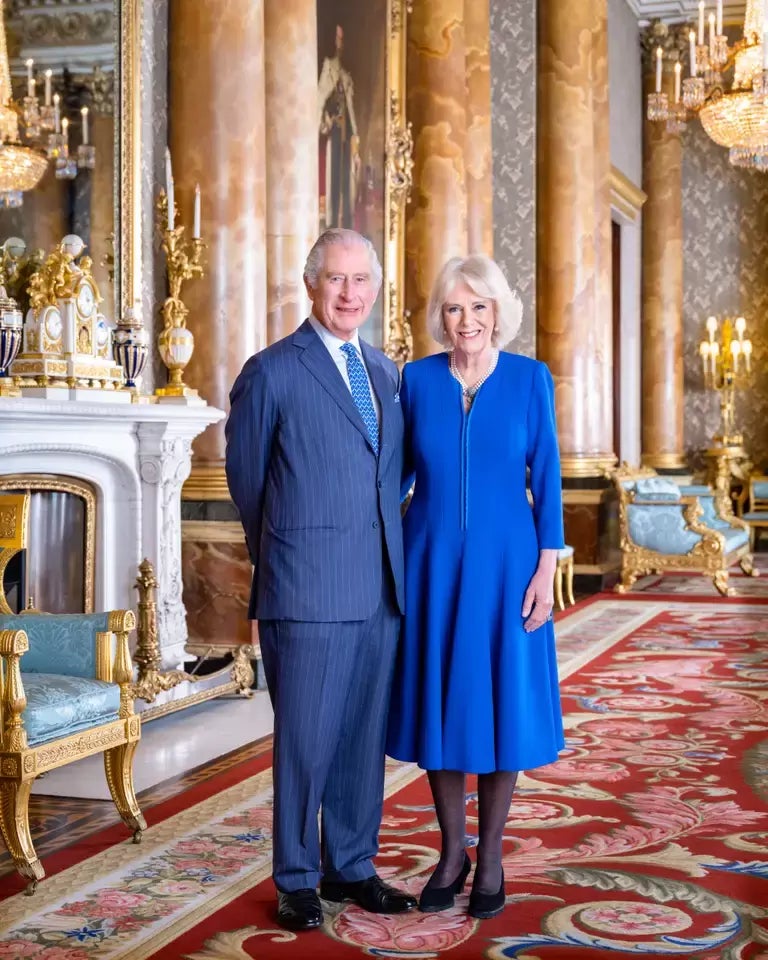
King Charles and his wife Camilla, the Queen Consort, have just released some new photos ahead of the coronation next week – and they’ve got a few historical nods hidden within them.

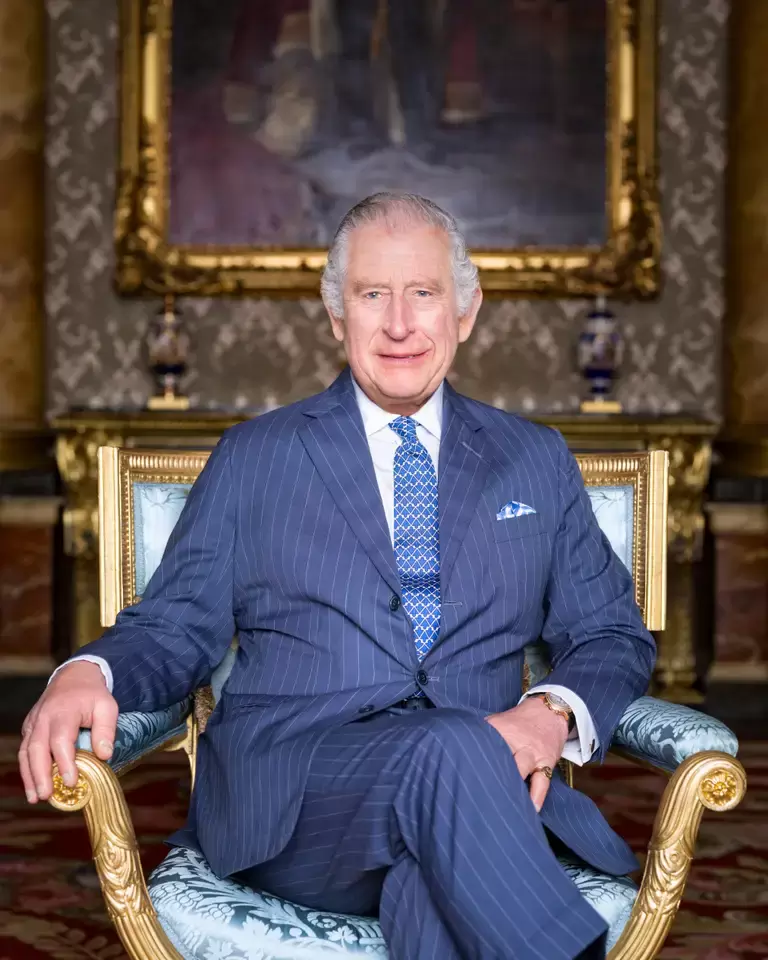
The three new images, all taken in March at Buckingham Palace and snapped by photographer Hugo Burnand, show the couple in a particularly stately-looking room called the Blue Drawing Room.

So, what’s the big deal?

Well, it seems there are a few hidden symbols in the images which suggest Charles is drawing on the past that comes with his new hereditary role.

In his image, the monarch is sat in a rare chair (one of a suite of 12) which dates back to 1828. It was supplied to King George IV for the furnishing of Windsor Castle who reigned between 1820 and 1830 – making it fancy and particularly old.

The monarch is also sitting in front of a State Portrait of King George V, which was painted after his own coronation. As Charles’s great-grandfather who reigns between 1910 and 1936, the parallels won’t have been lost on the monarch as he took to the throne more than a century later.

George V is also wearing Naval uniform with his Robe of State, or parliamentary Robe. Perhaps that’s a nod to how Charles is expected to don his own Admiral of the Fleet uniform for his coronation, bucking the trend for male monarchs to wear stockings breeches.

Charles, meanwhile, looks pretty relaxed in the image, smiling casually and looking straight at the camera.

A new photo of King Charles released ahead of his coronation next Saturday

Hugo Burnand/Royal Household 2023/PA Wire

A new photo of King Charles released ahead of his coronation next Saturday

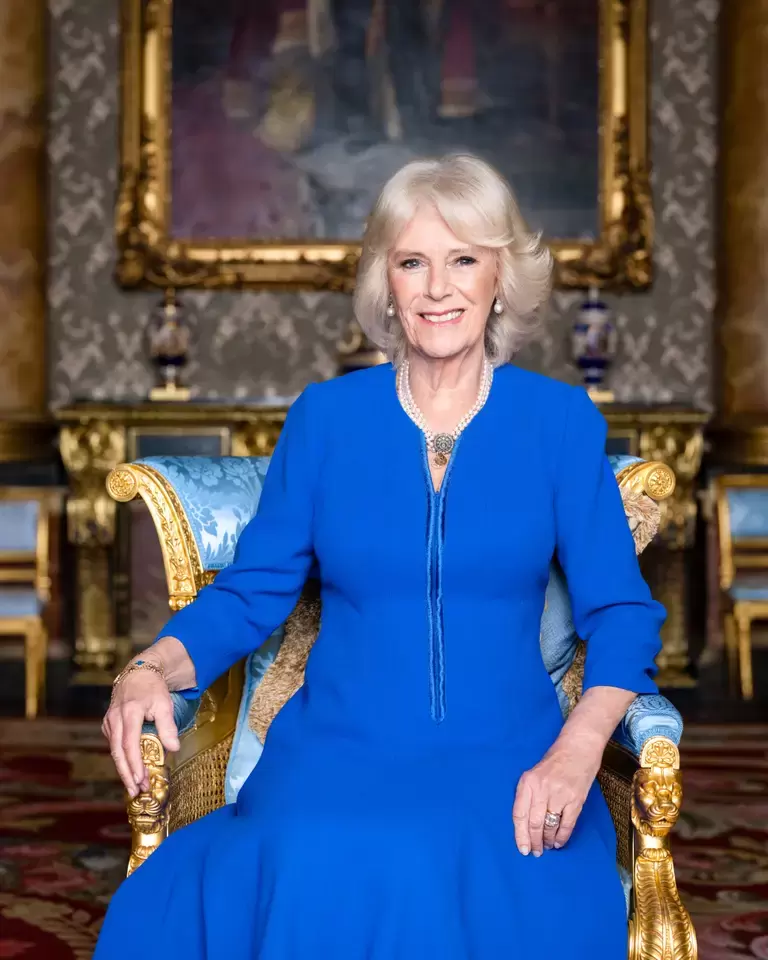
There were two more royal hints in Camilla’s photo as well. She adopted a very similar pose to her husband in her image, but swapped out the chair.

This upholstery has a rich history too, dating back to 1812. According to the Palace, it was probably commissioned by King George IV when he was Prince of Wales – the very same title Charles held for more than 70 years. One of a set of just two, this furniture has only been in the Blue Drawing Room since at least the early 20th Century.

Also sitting in front of George V’s portrait, the Queen Consort was wearing a blue – royal blue, might we add – crepe coat dress, and pearl drop earrings set with a sapphire and ruby which used to belong to the late Queen, but a pearl necklace from her own collection.

This is perhaps a gentle nod to her mother-in-law, who died in September.

Camilla, Queen Consort, photographed ahead of the coronation

Hugo Burnand/Royal Household 2023/PA Wire

Camilla, Queen Consort, photographed ahead of the coronation
Share Button

Laurence Fox Has His Backside Handed To Him By Doctor: ‘I Sometimes Wonder Why You Exist’

GB News pundit Laurence Fox has been accused of “spewing out biased views” by a respected doctor who came onto his show to discuss Covid vaccines.

Dr Bharat Pankhania, a senior clinical lecturer at the University of Exeter’s medical school, took the sometime actor to task over his Covid disinformation.

Fox introduced Dr Pankhania and asked him for his thoughts on a new report seen by GB News that the channel says criticises the Medicines and Healthcare products Regulatory Agency’s (MHRA) roll out of the vaccines.

He was given short shrift. “I sometimes wonder why you exist, to be honest with you,” Dr Pankhania began.

“A lot of these things that you spew out, just send things that are worrisome to people, are not verified, not factual.

“You just have your own agenda, that’s what I think. You are just spewing out your biased views. That’s how I feel about you.”

The clip went viral.

Dr Pankhania said he hadn’t read the report and hadn’t been told he was coming on GB News to discuss it. He accused Fox, a self-styled “anti-woke” campaigner, of an “ambush”.

The medic defended the MHRA, saying: “With respect to the many, many millions of doses of the vaccines that have been administered, we’ve had a few unfortunate side effects … but overall on the balance of good versus harm, the good outweighs the harm. By a large, large margin,”

It’s the second very shareable moment from GB News in the last week.

On Tuesday, a clip of Conservative MP Jacob Rees-Mogg, who has his own GB News show, locking horns with anti-Brexit commentator Marina Purkiss also went viral.

She accused the Tories of using culture wars as a “distraction technique” to prevent people from focusing on the “real grievances in their lives which are caused by your government”.

Share Button

Stranded Sudanese NHS doctor given seat on evacuation flight

He is “delighted” to be leaving after earlier not being allowed to board an evacuation flight.

Share Button

GMB union accepts NHS pay offer but Unite rejects

The offer covers two years, including a one-off payment for 2022-23 and a 5% pay rise.

Share Button

Great Ormond Street Hospital has serious concerns over strike staffing

The world-renowned children’s hospital has “serious” concerns over this weekend’s nurses’ strike.

Share Button

Herpes deaths: Caesareans unlikely source of herpes, inquest told

Kim Sampson and Samantha Mulcahy died after giving birth in two East Kent NHS Trust hospitals.

Share Button

‘I was told my heart might fail within a year’

BBC journalist Chris Slegg explains the impact of learning he might need a heart transplant aged 43.

Share Button