It will drop from 10 days to seven, providing people have two negative lateral flow tests.


It will drop from 10 days to seven, providing people have two negative lateral flow tests.
Nicole Kidman called out a journalist’s “sexist” question about her ex-husband Tom Cruise during a recent interview.
The Australian actor was being interviewed by The Observer about her latest release, biopic Being The Ricardos, in which she plays late Hollywood actor Lucille Ball.
Advertisement
Nicole was speaking about her character’s relationship with Desi Arnaz – played by Javier Bardem – after the real-life married couple appeared on TV sitcom I Love Lucy in the US in the 1950s.
However, Nicole was not impressed when the journalist then asked about her previous marriage to the Mission Impossible star.
Advertisement
Of Lucille and Desi, Nicole had said: “It’s about a creative and romantic relationship that doesn’t work out. But from it come some extraordinary things. And I love that. I love that it’s not a happy ending.
“This film says you can make an extraordinary relationship thrive and leave remnants of it that exist forever,” she continued. “Yeah, that’s really gorgeous. You can’t make people behave how you want them to, and sometimes you’re going to fall in love with someone who isn’t going to be the person you spend the rest of your life with. And I think that’s all very relatable. You may have kids with them. You may not, but they were very much in love.”
Advertisement
The journalist then asked “with exquisite care” if Nicole was also referring to her marriage to Tom with her answer.
She then replied: “Oh, my God, no, no. Absolutely not. No. I mean, that’s, honestly, so long ago that that isn’t in this equation. So, no.”
The journalist claimed Nicole became “angry” and continued: “And I would ask not to be pigeonholed that way, either. It feels to me almost sexist, because I’m not sure anyone would say that to a man. And at some point, you go, ‘Give me my life. In its own right.’”
HuffPost UK had contacted a representative for Nicole Kidman and is awaiting a response.
Advertisement

Ron Galella, Ltd. via Getty Images
Nicole and Tom married in 1990 and went on to adopt two children together, Isabella, now 29, and Connor, 26.
Tom later filed for divorce in 2001 citing “irreconcilable differences”.
Nicole previously described their divorce as a “major shock” in a 2006 interview with Ladies’ Home Journal.
“He was huge; still is. To me, he was just Tom, but to everybody else, he is huge. But he was lovely to me. And I loved him. I still love him,” she said at the time.
Being The Ricardos is available to stream now on Amazon Prime Video.


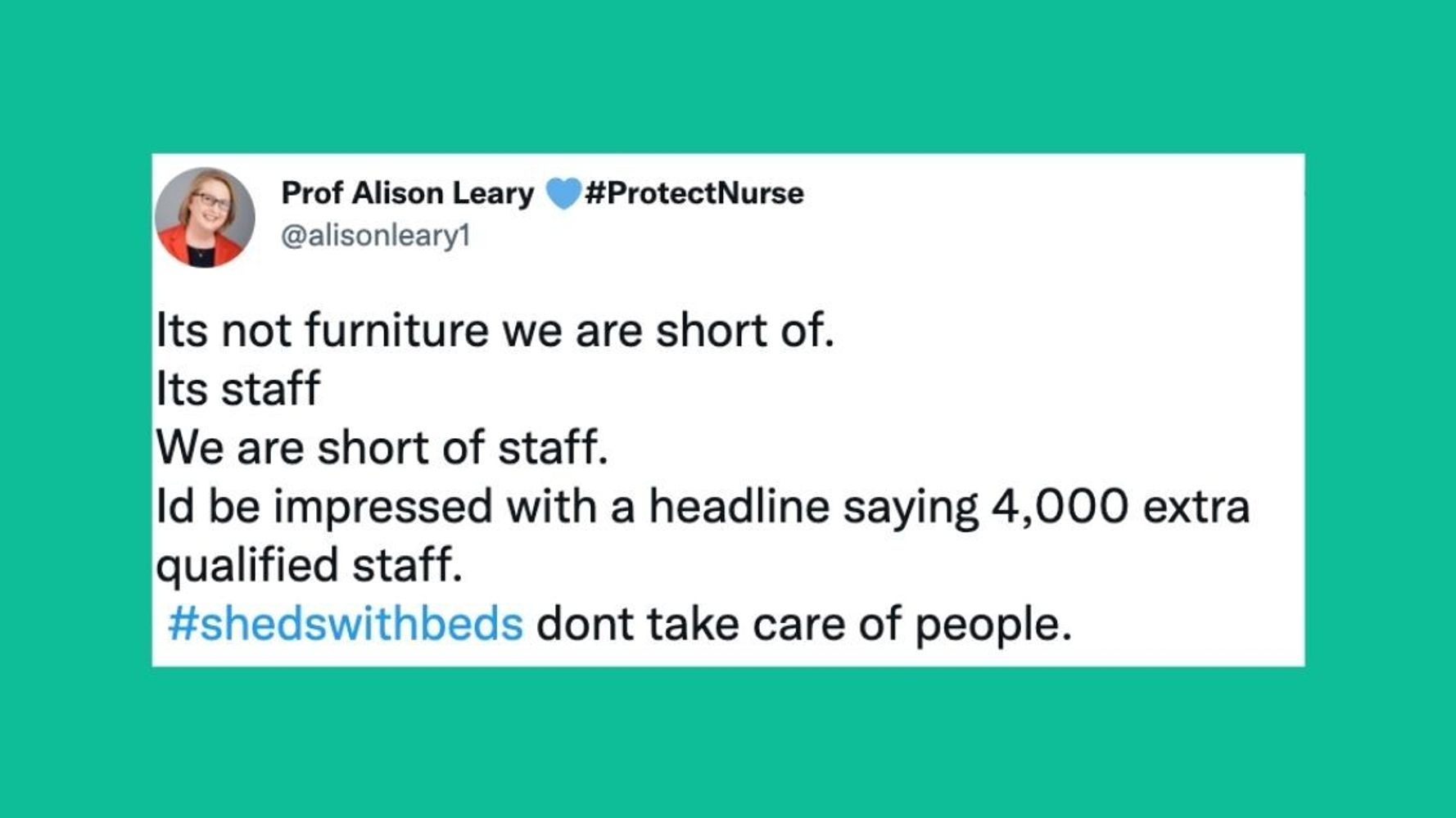
NHS England will be setting up Nightingale surge hubs to cope with high numbers of Covid hospitalisations – but people have spotted a particular problem with this new strategy.
These “surge hubs” will be set up in eight hospitals across England in preparation for the expected rise in Omicron admissions in the coming months.
Advertisement
Each temporary unit will house around 100 patients and construction is set to begin this week.
Additional sites for 4,000 more beds may also be on the cards as hospitalisations in England have risen above 10,000 for the first time since March this year.
Advertisement
NHS medical director Professor Stephen Powis said the new hubs are part of the health service’s response to Omicron and that the UK is now on a “war footing”, while health secretary Sajid Javid said the hubs might not need to be used but it’s good to prepare.
The hubs will be placed at the Royal Preston hospital in Lancashire, in St James’ University Hospital in Leeds, in Stevenage’s Lister Hospital, Tooting’s St George’s Hospital, North Bristol Hospital, Solihull Hospital, William Harvey Hospital in Ashford, and University Hospitals Leicester.
Advertisement
But there are two clear flaws with this new strategy.
Firstly, many have noticed that introducing Nightingale surge hubs to cope with increasing infections and hospital admissions seems at odds at the government’s refusal to introduce new restrictions before Christmas and New Year’s Eve.
Restrictions are likely to be introduced in January when the government has access to more data about how severe Omicron symptoms can be, but the festive season is expected to have accelerated the variant’s transmission across the country.
The other major pressing is the shortage of employees to look after Covid patients.
Advertisement
NHS staff absences in London increased by 150% week-on-week in the seven days leading up to December 19, according to the health service’s data.
Critics have asked why the government is focusing on providing hospital beds rather than prioritising the NHS staff shortages.
Pat Cullen, the Royal College of Nursing general secretary, also asked how these units would work with so many members of staff self-isolating.
She told Sky News this week: “You can set up all the hubs that you wish to set up but if you don’t have the nursing staff to actually care for the patients that are going to be placed in those hubs, that places more challenges on the nursing workforce.”
The NHS was already being squeezed after the health secretary made Covid vaccinations mandatory for all staff.
A shortage of rapid lateral flow tests is causing further concern as it means people will be unable to test themselves before socialising.
However, the government has promised to make eight million Covid tests available before Friday, December 31, which could help stop some transmission on New Year’s Eve.


It comes as the UK saw record daily case numbers of 183,000 on Wednesday.
Emma Moss is determined to beat the odds, having been diagnosed with a fatal disease three years ago.
The warning comes as record cases are once again reported across the US and Europe.
The spike in reported cases comes as frustration grows over a lack of available lateral flow tests.

COVID-19 vaccination of expectant mothers elicits levels of antibodies to the SARS-CoV-2 outer “spike” protein at the time of delivery that don’t vary dramatically with the timing of vaccination during pregnancy and thus don’t justify delaying vaccination, according to a study from researchers at Weill Cornell Medicine and NewYork-Presbyterian.
The researchers, whose study was published Dec. 28 in Obstetrics & Gynecology, analyzed how anti-spike antibody levels in the mother’s blood and baby’s umbilical cord blood at delivery varied with the timing of prior vaccination in nearly 1,400 women and their babies.
They found that the levels of these antibodies at delivery tended to be higher when the initial vaccination course occurred in the third trimester. However, they also found that antibody levels at delivery are still comparably high, and probably still protective, when vaccination occurs in early pregnancy or even a few weeks before pregnancy — and a booster shot late in pregnancy can make those antibody levels much higher.
“Women often ask what is the best vaccination timing for the baby — our data suggest that it’s now,” said Dr. Malavika Prabhu, assistant professor of obstetrics and gynecology at Weill Cornell Medicine and an obstetrician and gynecologist at NewYork-Presbyterian/Weill Cornell Medical Center.
The U.S. Centers for Disease Control and Prevention recommends COVID-19 vaccination for pregnant women. Prior studies suggest that COVID-19 tends to be more severe for women when they are pregnant, and increases the risks of preterm birth, stillbirth and other adverse outcomes for their babies. COVID-19 vaccination protects pregnant women from severe COVID-19, and elicits antibodies that cross the placenta to circulate in their babies’ blood after delivery. Studies of the commonly used vaccines so far have found no increased rate of adverse side effects for mothers or their babies.
Dr. Prabhu and her colleagues set up the new study to address the question of the best timing for COVID-19 vaccination during pregnancy. The analysis covered 1,359 pregnant women who reported vaccination against COVID-19, during or up to six weeks before pregnancy, and gave birth at NewYork-Presbyterian/Alexandra Cohen Hospital for Women and Newborns after 34 or more weeks of gestation.
They found that anti-spike antibodies were generally detectable at delivery, in maternal and cord blood, among all the fully vaccinated women, regardless of the timing of their first vaccine dose. Among women with no history of SARS-CoV-2 infection who received the two-dose Pfizer or Moderna mRNA vaccine, the levels of antibodies at delivery were lowest after pre-pregnancy or first trimester vaccination and highest after third trimester vaccination; however, the difference wasn’t large. There was no significant difference in anti-spike antibody levels by timing of vaccination among the relatively small number of women who received the Johnson and Johnson (J&J) single-dose vaccine.
Among vaccinated women who had a prior history of COVID-19 infection, anti-spike antibody levels at delivery in maternal and cord blood were moderately higher on average, and showed even less of a decline with earlier vaccination timing.
Twenty of the women reported having a booster dose in the third trimester, and they on average had still higher levels of anti-spike antibodies in maternal blood and in cord blood.
In women that did not receive a complete course of vaccination by time of birth, the levels of anti-spike antibodies in maternal blood and in cord blood were significantly lower than all other cohorts including the earliest vaccinated cohort.
The findings suggest that pregnant women should not delay COVID-19 vaccination until late pregnancy.
“The message here is that you can get vaccinated at any point during pregnancy and it is likely going to be beneficial to you and your baby at the time of birth — and of course by getting vaccinated early you will be protecting yourself and your baby throughout the pregnancy,” said first author Dr. Yawei Jenny Yang, assistant professor of pathology and laboratory medicine at Weill Cornell Medicine and a pathologist at NewYork-Presbyterian/Weill Cornell Medical Center.
“These study results are consistent with what we see with other maternal vaccines such as flu and Tdap, which, when given during pregnancy, protect the mother and baby,” said senior author Dr. Laura Riley, chair of the Department of Obstetrics and Gynecology at Weill Cornell Medicine and obstetrician and gynecologist-in-chief at NewYork-Presbyterian/Weill Cornell Medical Center.
The researchers now plan further studies to examine vaccine and booster effects under different maternal conditions, and in the context of the spread of the new Omicron variant of SARS-CoV-2.

Obesity is a significant risk factor for developing gestational diabetes mellitus, and an increasing number of pregnant women are overweight or obese. Dietary habits have an impact on both obesity and the onset of gestational diabetes mellitus.
The mother-child study conducted at the University of Turku and Turku University Hospital in Finland examined the connection between dietary intake and onset of gestational diabetes in 351 overweight or obese women.
The women’s nutrient intake was calculated from food diaries, on the basis of which two dietary patterns, a healthier and an unhealthier dietary pattern, were recognised. In addition, the overall quality of the diet in reference to that recommended was described with a diet quality index and the inflammatory potential with a dietary inflammatory index.
“Our research results show that following a healthy diet in early pregnancy reduces the risk of gestational diabetes, says first author,” Doctoral Candidate Lotta Pajunen from the Institute of Biomedicine at the University of Turku.
Diet that increases body’s inflammation heightens the risk of gestational diabetes
The study also found that a higher dietary inflammatory index, meaning a diet that increases the low-grade inflammatory markers in the body was connected to an increased risk of developing gestational diabetes mellitus. Furthermore, a higher consumption of fat and especially saturated fats was connected to gestational diabetes. This is of interest as the intake of saturated fats is known to increase the body’s inflammation.
Several methods were used in the study to examine the dietary intake in early pregnancy. These analyses revealed that a diet comprehensively promoting health is associated with a smaller risk of developing gestational diabetes.
“Eating vegetables, fruit, berries, and wholegrain products as well as unsaturated fats is particularly important. These nutrients and foods reduce inflammation in the body and therefore also the risk of gestational diabetes. Mothers who are overweight or obese already before the pregnancy would most likely benefit from dietary guidance in early pregnancy,” says Associate Professor in Nutrition Kirsi Laitinen from the University of Turku, the PI of the Early Nutrition and Health research group that conducted the study.
Story Source:
Materials provided by University of Turku. Note: Content may be edited for style and length.

A Cleveland Clinic study shows that among patients with obesity, prior weight loss achieved with bariatric surgery was associated with a 60% lower risk of developing severe complications from COVID-19 infection. The research was published in the journal JAMA Surgery.
Numerous studies have established obesity as a major risk factor for developing serious illness from an infection of SARS-CoV-2, the virus that causes COVID-19. Obesity weakens the immune system, creates a chronic inflammatory state, and increases risk for cardiovascular disease, blood clots, and lung conditions. All of these conditions can complicate COVID-19.
The aim of this study was to examine whether a successful weight-loss intervention in patients with obesity prior to contracting COVID-19 could reduce the risk of developing a severe form of this disease.
“The research findings show that patients with obesity who achieved substantial and sustained weight loss with bariatric surgery prior to a COVID-19 infection reduced their risk of developing severe illness by 60 percent,” said Ali Aminian, M.D., lead author of the study and director of Cleveland Clinic’s Bariatric & Metabolic Institute. “Our study provides strong evidence that obesity is a modifiable risk factor for COVID-19 that can be improved through a successful weight-loss intervention.”
A total of 20,212 adult patients with obesity were included in this observational study. A group of 5,053 patients with a body mass index (BMI) of 35 or greater who had weight-loss surgery between 2004 and 2017 were carefully matched 1:3 to non-surgical patients, resulting in 15,159 control patients. Compared with those in the non-surgical group, patients who had bariatric surgery lost 19% more body weight prior to March 1, 2020 (the beginning of the COVID-19 outbreak in Cleveland).
After the COVID-19 outbreak, researchers looked at four COVID-19-related outcomes: rate of contracting SARS-CoV-2 infection, hospitalization, need for supplemental oxygen and severe disease (defined as a combination of ICU admission, need for mechanical ventilation or death).
Although the rate of contracting SARS-CoV-2 was similar between the groups (9.1% in the surgical group and 8.7% in the non-surgical group), participants in the weight-loss surgery group experienced much better outcomes after contracting COVID-19 compared with those in the non-surgical group. Researchers found that patients with prior weight loss surgery had a 49% lower risk of hospitalization, 63% lower risk of need for supplemental oxygen, and 60% lower risk of developing severe COVID-19.
Although the exact underlying mechanisms are not known, these data suggest that patients who underwent weight-loss surgery were healthier at the time of contracting a SARS-CoV-2 infection, which resulted in better clinical outcomes.
“Striking findings from the current study support the reversibility of the health consequences of obesity in the patients with COVID-19,” said the study’s senior author, Steven Nissen, M.D., Chief Academic Officer of the Heart, Vascular and Thoracic Institute at Cleveland Clinic. “This study suggests that an emphasis on weight loss as a public health strategy can improve outcomes during the COVID-19 pandemic and future outbreaks or related infectious diseases. That is a very important finding considering that 40% of Americans have obesity. “
This study was funded by a research grant from Medtronic. Medtronic had no role in the design, conduct and publication of the study.
Story Source:
Materials provided by Cleveland Clinic. Note: Content may be edited for style and length.
