We Need To Talk About The Global Issue Of Pet Homelessness

Our relationship with our pets is a special kind of love. Pets are family, pets are dear friends and pets offer love and support, as well as companionship. Adding a dog or cat to your life can yield physical, emotional and social benefits, as numerous studies will attest. Pets can also help ease stress, anxiety and loneliness.

Despite the connection between pets and humans, not every dog and cat will find their “forever home.” In fact, the number of pets around the world living on the streets is devastating and staggering. Across the continents, there are millions of cats and dogs with inadequate food and care.

According to Mars Petcare’s new State of Pet Homelessness Index, there are 224 million homeless cats and dogs in the nine countries in Europe, North America, Asia and Africa that the Index currently measures.

Homeless pets aren’t only those found on the streets, but pets who have been returned to shelters and rescues, who don’t have sustained human care and companionship. This includes 19 million homeless cats and dogs living in shelters in countries like India, Mexico, Germany, the USA and the UK.

xavierarnau via Getty Images

Ending pet homelessness is Mars Petcare’s bold ambition. The company has been serving the health and nutrition needs of the world’s pets for over 85 years and its portfolio includes household brands like Banfield™ , Pedigree®, Whiskas® and Royal Canin®.

“As we continue to navigate an extraordinary global health crisis, for many of us, pets have undeniably been much-needed companions throughout it all. At Mars Petcare, we know that pets make our lives better and the record number of people turning to pet ownership during this time might agree,” says Helen Mills, vice president of Global Corporate Affairs and Sustainability at Mars Petcare.

Up until this point, there’s been no consistent way to measure and track the progress of various initiatives to decrease the numbers of cats and dogs on the streets or in shelters. Mars Petcare has launched the State of Pet Homelessness Index in collaboration with animal welfare experts in order to measure the scale of cat and dog homelessness by country. For the first time, there is a clearer picture of the vast scope of the problem and how it manifests around the world.

It collects data from over 200 global and local sources to measure the pet homelessness problem by country, which in turn can help animal welfare groups and companies like ours to identify practical steps to address this issue across the globe and to help see what’s working — and what isn’t.

“Around the world, millions of cats and dogs remain in shelters or living on the street. We believe they deserve more and tackling this issue is central to our purpose: A Better World For Pets. So we set out to understand the scale of the problem as a crucial first step. That’s why we partnered with leading animal welfare experts and organisations to develop the State of Pet Homelessness Index,” explains Mills.

“Now, with initial data for nine countries, we have a clearer picture of homeless pet populations and insight into the most impactful underlying issues by country, as well as a means to track the effectiveness of interventions over time. By working to define the size of the issue and understand the root causes of homeless pets at a more granular level, we hope this will drive a profound impact on the problem. Because the world we want tomorrow is one where no pets are homeless.”

So what’s next? The data collected in the Index can now be used by animal welfare organisations, policymakers and researchers to help better understand pet homelessness in their countries and to work toward ensuring all pets get the care they deserve, for their entire lifetime.

You can learn more about the State of Pet Homelessness Index by visiting endpethomelessness.com.

State of Pet Homelessness Index data provided by Mars Petcare.

Share Button

Wiltshire’s Porton Down balloted for strike over pay

The Prospect union says a strike would be the first at the laboratory.

Share Button

Belfast pancreatic cancer survivor’s message of hope

A Belfast man marking 10 years since his diagnosis urges people to be aware of symptoms.

Share Button

Black Theatre Gives Us Voice. It Deserves A Black Audience

You’re reading My Black History, a series of personal reflections from Black women in the UK on the meeting point of history and life lessons.

I was six when I saw my first play – a pantomime version of Cinderella. Feeling the stage come alive through performance and music was a thrill, even at that young age. I signed up to every drama and music club at school and went on every theatre trip. And I even started considering a career in musical theatre.

This love of theatre is genetic, I think – my late father was a huge fan of the arts. He was president of the drama club at university and travelled all the way to London from Kenya to watch Miss Saigon. My sister inherited the theatre bug, playing Annie at the age of 10 and taking performing arts at school all the way up to sixth-form. It was only natural for me to follow in both their footsteps.

But as I got older, my dreams of performing in the West End began to feel unrealistic for a Black girl from Dagenham. Most of the shows I saw featured an all white cast. Black performers only seemed to get the lead roles in shows like The Lion King and Dream Girls. As my West End dreams started to fade, my love for theatre grew – and became a hobby, one that has become even more joyful with the rise in Black shows and Black stories in the UK theatre world.

One play that really stands out for me is Tree, which I saw, pre-pandemic, at the Young Vic in 2019. Before the show started, it felt like a full-on club. A DJ was playing Dancehall and Afrobeats, while the cast and audience danced on stage. The story, which is based on an album by Idris Elba, started off in London but swiftly moved to South Africa, following a boy called Kaelo after a family tragedy. Seats for the show were limited so we stood for most of it, but I barely noticed, I was so engrossed. Moments like this highlight for me that Black theatre can challenge how traditional theatre should look and feel.

Around the same time, I managed to get tickets for the most talked about musical in town. I had no idea what Hamilton was, I just knew I needed to be there and as soon as I heard the first song I was hooked. Though Hamilton isn’t a Black story per se, seeing Black actors in lead roles at the Victoria Palace theatre was a powerful reminder of why I fell in love with the arts. Hamilton highlights how theatre can tell a story in such a poignant way. It shows the realms of possibilities that can be explored on stage.

SOPA Images via Getty Images

When, almost two years later, I was finally able to see a play again, it was like coming home. Is God Is at the Royal Court, which I saw last month, focuses on two young African American women on a quest to find their father. Writer Aleshea Harris tackles difficult themes such as domestic abuse and neglect, but finds humour in the struggle. Most of all, though, it was refreshing to be back in a theatre and see people who looked like me on stage and in the audience.

Which is why I find so much joy in Rendition. This online hub for all things Black theatre across the UK was founded by Shore Delano, a 26-year-old digital project manager from Hertfordshire. It has been running for two years now, sharing guides and reviews of Black shows playing right across the country.

Like mine, Shore’s passion was lit at a young age when her mother used to take her and her sister to theatre in London. The family had a yearly tradition of going to the Hackney Empire panto over the Christmas period. This festive extravaganza is legend among parts of the Black community, but going to the theatre regularly is less common.

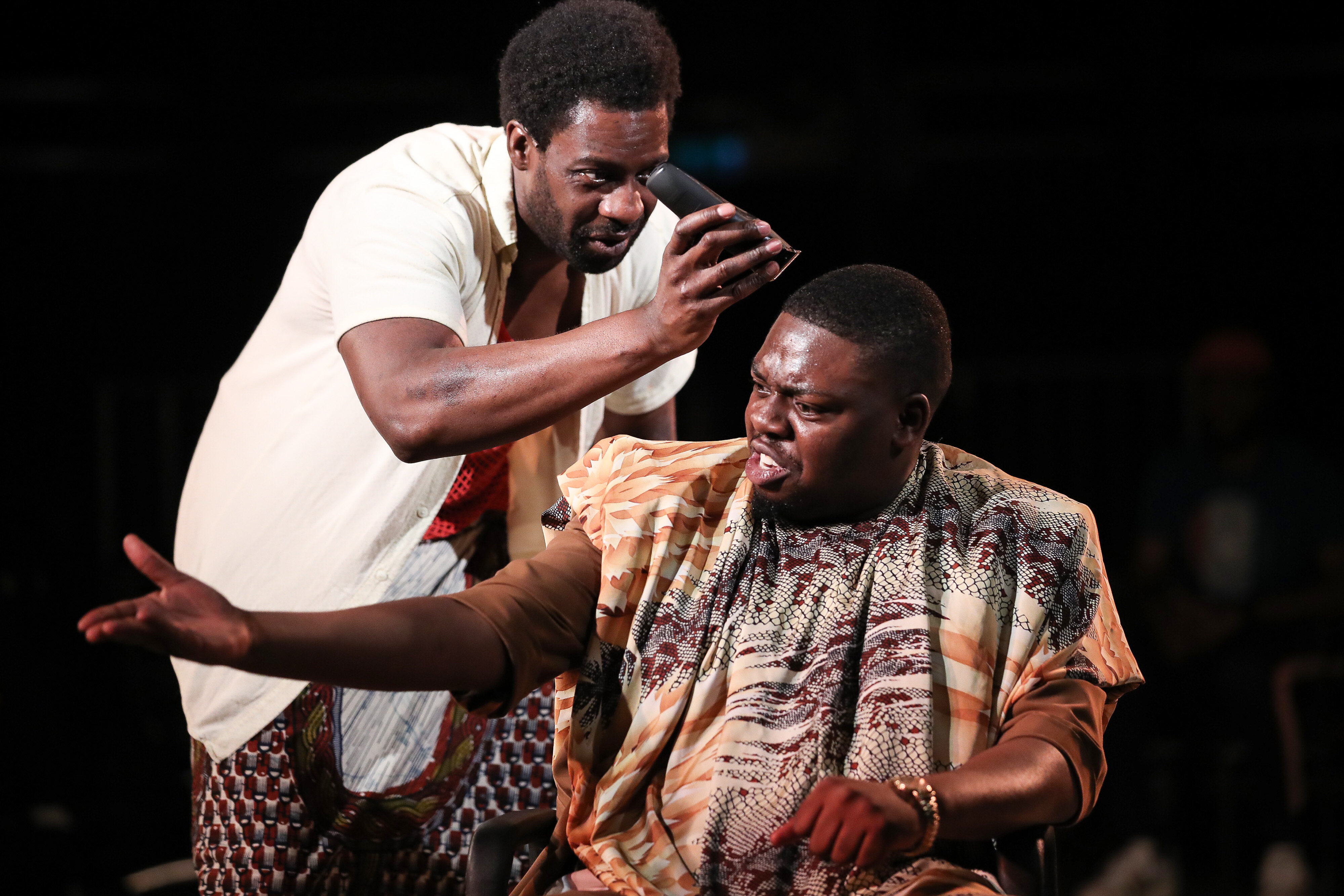
Shore says theatre fandom “really blossomed’ after university in Warwick, when she returned to London and saw Barber Shop Chronicles by Inua Elms at the National Theatre. There began an “unhealthy obsession” of trying to get to every play she could find out about that was written by, made by, and/or starred Black talent. And it wasn’t long before she spotted something amiss.

“Passion aside, the more I started watching theatre shows with majority Black casts, or distinctly African/Caribbean storylines, the more I noticed that, as a Black audience member, I was in the extreme minority,” says Shore. “While anyone can enjoy good theatre, when plays are moulded upon Black (African/Caribbean/Black British) history and experiences, I believe these stories should be able to be heard and experienced by the people they are based on.”

Take shows like Three Sisters or Strange Fruit Shore says – “for many African and Caribbeans these goes beyond a standard theatre performance. The stories told represent and mirror memories, family histories, lived experiences, and culture. I wanted to create a platform that connected audiences to the stories that often form part of who they are,” she says.

The Barber Shop Chronicles by Inua Elms.

Mike Marsland via Getty Images

The Barber Shop Chronicles by Inua Elms.

Unless you’re part of the theatre world, it can be genuinely overwhelming finding out about shows – especially plays in smaller venues with less visible marketing. This is something Shore noticed when posting reviews on her personal page.

“People would always ask me where I was, what shows I was watching, and how I found out about the shows,” she says. “And I realised that lots of Black people, and specifically young Black people aged 18-35, want to go to the theatre, but for whatever reason are not aware of what to see and when. I realised I could try and plug that gap, and two years later here we are.”

Shore reels off a list of her favourite shows in recent months: Hamilton, of course, And Breathe by Yomi Ṣode at the Almeida, The Fisherman by Gbolahan Obisesan (adapted from Chigozie Obioma’s Booker-award winning book). She also loved Nick Payne’s Constellations, which originally starred white actors, but was revived post-lockdown with a rotating cast of couples including Black British actors Sheila Atim and Ivanno Jeremiah. “They were both amazing!”

Rendition has pointed me to some shows I know I wouldn’t have heard about otherwise, either. For Black Boys Who Have Considered Suicide When The Hue Gets Too Heavy at the New Diorama might be one of my favourites yet. As the name suggests, it didn’t shy away from the struggles young Black men face in this country – exploring themes of knife crime, sexual assault and suicide, while still somehow managing to make the audience laugh. The script and use of music was just so unapologetically Black, and I left feeling inspired that a young Black boy can now go to the theatre and see himself on stage.

During Black History Month, we were able to see a plethora of shows made by Black talent – but there’s so much more work still to do. This should be the norm, year-round. As Shore says, Black theatre helps us appreciate our shared experiences and history. “I especially love to see our stories represented with range and thought, stories that go beyond some of the same trauma-led narratives that we see so often in mainstream media,” she says. “Give me Black untold histories, give me Black British love, give me Black fantasy. All of it!”

Share Button

Researchers find repeated link between volcanic eruptions and dynastic collapse in China’s Imperial Era

Volcanic eruptions may have triggered abrupt climate changes contributing to the repeated collapse of Chinese dynasties over the past 2,000 years, according to new research published today [Thursday, 11 November 2021].

The study also illustrates how volcanic eruptions can profoundly impact vulnerable or unstable regions and highlights the need to prepare for future eruptions.

The research, which combines historical evidence with polar ice-core records of volcanic eruptions, was led jointly by historians and environmental scientists from Trinity College Dublin and Zhejiang University, China. It will be published today in Communications Earth & Environment, a new high-profile journal from Nature Portfolio.

Scientists have identified explosive volcanic eruptions as one of the most important drivers of dramatic changes in climate, often triggering sudden cooling and drying that can cause livestock death and crop damage. However, our understanding of the role played by such abrupt climate shocks in state or societal collapse has been limited by the precision and accuracy of dating of available historical and climate evidence.

Dr Francis Ludlow, Associate Professor of Medieval Environmental History at Trinity, who jointly led the study, commented:

“China has a remarkably long and richly documented history of multiple ruling dynasties, including major world powers like the Tang Dynasty, which collapsed in 907 CE, or the Ming Dynasty, which collapsed in 1644. With so many precisely dated collapses, we can look not just at individual cases of collapse that may or may not have followed a change in climate, but rather look simultaneously at many collapses to see whether there is a repeated pattern where a change in climate was followed by collapse. This can tell us whether climatic change played a very minor role in dynastic collapse, or whether it posed a systematic threat to these powerful and sophisticated societies.”

The study compared the dates of volcanic eruptions gleaned from ice-core measurements of sulphate deposited on the polar icesheets with the dates known from historical records of Chinese dynastic collapse across the first two millennia of the Common Era. This exercise found that 62 of the 68 dynastic collapses were closely preceded by at least one volcanic eruption.

John Matthews, postdoctoral fellow at the Trinity Centre for Environmental Humanities and co-author on the paper, explained:

“Researchers have identified a lot of historical eruptions through sulphate deposits in the polar ice, so we expect that some collapses will have been preceded by eruptions purely by chance. To convince ourselves we were seeing something significant, we ran the numbers and found there would be just a 0.05% chance of seeing so many collapses preceded by so many eruptions if that had actually happened randomly. This study shows a repeated link between volcanic eruptions and dynastic collapse.”

Some dynasties, the authors note, withstood numerous large eruptions before eventually succumbing, suggesting that the role of volcanism in collapse is far from straightforward and that dynasties were often resilient to sudden, volcanically triggered, climate shocks.

To gain further insight, the researchers assessed the role of explosive volcanism in tandem with other sources of stress or instability that a dynasty might experience by examining levels of warfare prevailing in the decades before collapse. Warfare was found to be elevated before most collapses, but the study also revealed a strong link between the magnitude of a volcanic climatic shock and the level of pre-existing stress.

“We found that even a small volcanic eruption might help trigger a collapse when pre-existing instability was high. Larger eruptions, however, could trigger a collapse even when pre-existing instability was minimal. So as ever, historical context is key to understanding how climate can impact a society. It is also clear that we should be preparing for the impacts of the next big eruption — so far in the twentieth and twenty-first centuries, the eruptions we’ve experienced have been minnows compared to some that these dynasties had to deal with.”

Chaochao Gao, Associate Professor, Zhejiang University, China, who co-led the research concluded: “This study tells us how important it is to build a resilient society to cope with the natural hazards that we face, be they volcanically-induced or otherwise.”

Share Button

Covid: Medication holiday may boost vaccine protection

A trial will look at how to protect patients against Covid who also need immunosuppressant drugs.

Share Button

Researchers recreate deep-Earth conditions to see how iron copes with extreme stress

Far below you lies a sphere of solid iron and nickel about as wide as the broadest part of Texas: the Earth’s inner core. The metal at the inner core is under pressure about 360 million times higher than we experience in our everyday lives and temperatures approximately as hot as the Sun’s surface.

Earth’s planetary core is thankfully intact. But in space, similar cores can collide with other objects, causing the crystalline materials of the core to deform rapidly. Some asteroids in our solar system are massive iron objects that scientists suspect are the remnants of planetary cores after catastrophic impacts.

Measuring what happens during the collision of celestial bodies or at the Earth’s core is obviously not very practical. As such, much of our understanding of planetary cores is based on experimental studies of metals at less extreme temperatures and pressures. But researchers at the Department of Energy’s SLAC National Accelerator Laboratory have now observed for the first time how iron’s atomic structure deforms to accommodate the stress from the pressures and temperatures that occur just outside of the inner core.

The results appear in Physical Review Letters, where they have been highlighted as an Editor’s Suggestion.

Coping with stress

Most of the iron you encounter in your everyday life has its atoms arranged in nanoscopic cubes, with an iron atom at each corner and one in the center. If you squeeze these cubes by applying extremely high pressures, they rearrange into hexagonal prisms, which allow the atoms to pack in more tightly.

The group at SLAC wanted to see what would happen if you kept applying pressure to that hexagonal arrangement to mimic what happens to iron at the Earth’s core or during atmospheric reentry from space. “We didn’t quite make inner core conditions,” says co-author Arianna Gleason, a scientist in the High-Energy Density Science (HEDS) Division at SLAC. “But we achieved the conditions of the outer core of the planet, which is really remarkable.”

No one had ever directly observed iron’s response to stress under such high temperatures and pressures before, so the researchers didn’t know how it would respond. “As we continue to push it, the iron doesn’t know what to do with this extra stress,” says Gleason. “And it needs to relieve that stress, so it tries to find the most efficient mechanism to do that.”

The coping mechanism iron uses to deal with that extra stress is called “twinning.” The arrangement of atoms shunts to the side, rotating all the hexagonal prisms by nearly 90 degrees. Twinning is a common pressure response in metals and minerals — quartz, calcite, titanium and zirconium all undergo twinning.

“Twinning allows iron to be incredibly strong — stronger than we first thought — before it starts to flow plastically on much longer time scales,” Gleason said.

A tale of two lasers

Reaching these extreme conditions required two types of lasers. The first was an optical laser, which generated a shock wave that subjected the iron sample to extremely high temperatures and pressures. The second was SLAC’s Linac Coherent Light Source (LCLS) X-ray free-electron laser, which allowed the researchers to observe the iron on an atomic level. “At the time, LCLS was the only facility in the world where you could do that,” says lead author Sébastien Merkel of the University of Lille in France. “It’s been a door opener for other similar facilities in the world.”

The team fired both lasers at a tiny sample of iron about the width of a human hair, hitting the iron with a shock wave of heat and pressure. “The control room is just above the experimental room,” Merkel says. “When you trigger the discharge, you hear a loud pop.”

As the shock wave hit the iron, researchers used the X-ray laser to observe how the shock changed the arrangement of the iron atoms. “We were able to make a measurement in a billionth of a second,” Gleason says. “Freezing the atoms where they are in that nanosecond is really exciting.”

The researchers collected these images and assembled them into a flipbook that showed iron deforming. Before the experiment was complete, they didn’t know if iron would respond too fast for them to measure or too slow for them to ever see. “The fact that the twinning happens on the time scale that we can measure it as an important result in itself,” Merkel says.

The future is bright

This experiment serves as a bookend for understanding the behavior of iron. Scientists had gathered experimental data on the structure of iron at lower temperatures and pressures and used it to model how iron would behave at extremely high temperatures and pressures, but no one had ever experimentally tested those models.

“Now we can give a thumbs up, thumbs down on some of the physics models for really fundamental deformation mechanisms,” Gleason says. “That helps to build up some of the predictive capability we’re lacking for modeling how materials respond at extreme conditions.”

The study provides exciting insights into the structural properties of iron at extremely high temperatures and pressures. But the results are also a promising indicator that these methods could help scientists understand how other materials behave at extreme conditions, too.

“The future is bright now that we’ve developed a way to make these measurements,” Gleason says. “The recent X-ray undulator upgrade as part of the LCLS-II project allows higher X-ray energies — enabling studies on thicker alloys and materials that have lower symmetry and more complex X-ray fingerprints.”

The upgrade will also enable researchers to observe larger samples, which will give them a more comprehensive view of iron’s atomic behavior and improve their statistics. Plus, “we’re going to get more powerful optical lasers with the approval to proceed with a new flagship petawatt laser facility, known as MEC-U,” says Gleason. “That’ll make future work even more exciting because we’ll be able to get to the Earth’s inner core conditions without any problem.”

Researchers at Los Alamos National Laboratory (LANL) contributed to this study. Funding was provided by the University of Lille, an LANL Reines Laboratory Directed Research and Development grant, and the DOE Office of Science, including Gleason’s DOE Early Career Award in Fusion Energy Sciences. LCLS is a DOE Office of Science user facility.

Share Button

AI helps design the perfect chickpea

A massive international research effort has led to development of a genetic model for the ‘ultimate’ chickpea, with the potential to lift crop yields by up to 12 per cent.

The research consortium genetically mapped thousands of chickpea varieties, and the UQ team then used this information to identify the most valuable gene combinations using artificial intelligence (AI).

Professor Ben Hayes led the UQ component of the project with Professor Kai Voss-Fels and Associate Professor Lee Hickey, to develop a ‘haplotype’ genomic prediction crop breeding strategy, for enhanced performance for seed weight.

“Most crop species only have a few varieties sequenced, so it was a massive undertaking by the international team to analyse more than 3000 cultivated and wild varieties,” Professor Hayes said.

The landmark international study was led by Dr Rajeev Varshney from the International Crops Research Institute for the Semi-Arid Tropics in Hyderabad, India. The study confirmed chickpea’s origin in the Fertile Crescent and provides a complete picture of genetic variation within chickpea.

“We identified 1,582 novel genes and established the pan-genome of chickpea, which will serve as a foundation for breeding superior chickpea varieties with enhanced yield, higher resistance to drought, heat and diseases,” Dr Varshney said.

Professor Hayes said the UQ team used the data to model a chickpea with perfect genetics for seed weight, a trait linked to yield.

“This additional data led to the increase in yield predicted by our model, which is still being fine-tuned,” he said.

“We are using our AI ‘FastStack’ technology platform to design a chickpea with the ultimate genetics for maximum seed weight, and we think this will ultimately be a valuable tool for chickpea breeders.”

FastStack combines AI with genomic prediction technology to identify the combinations of genes most likely to improve crop performance.

Chickpea is the largest pulse crop in Australia after lupin, both in terms of planting area and production.

It ranks second in area and third in production among the pulses worldwide.

UQ plant breeder and crop geneticist, Associate Professor Lee Hickey, said the global demand for protein-rich pulses was increasing.

“Improving the productivity of chickpea for Australia offers opportunities for our farmers to supply local food industries and export markets,” he said.

“Using this AI-generated chickpea model for increased seed weight in the field will be challenging, given the number of generations it will take in cross-breeding for optimal chickpea genetics, and the impact of different environments and management practices on crop growth.

“But we do have tools like speed breeding that can speed this process up and allows us to test and put into practice these theoretical scenarios.”

Dr Hickey said new genomic breeding approaches, including the haplotype model, are expected to redefine chickpea breeding strategies for developing high-yielding and nutritious chickpea varieties.

Chickpea is an important rotation crop in farming systems, as it is self-fertilising for nitrogen, reducing the need fornitrogen fertiliser.

Share Button

Alder Hey NHS Trust must pay boy £27m over brain injuries

Alder Hey NHS Trust admitted a “breach of duty” in the boy’s care, the judge said.

Share Button

Black women four times more likely to die in childbirth

Charities say inequalities in maternal care need to be addressed urgently.

Share Button