Sophie Raworth talks about the need for exercise as we get older.


Sophie Raworth talks about the need for exercise as we get older.

Alzheimer’s disease is often described in numbers, with millions of people affected, cases rising quickly, and costs reaching into the trillions. For families, however, the experience is deeply personal. “It’s a slow bereavement,” says Cold Spring Harbor Laboratory Professor Nicholas Tonks, whose mother lived with Alzheimer’s. “You lose the person piece by piece.”
A major focus in Alzheimer’s research has been the buildup of plaque in the brain. This plaque consists of amyloid-β (Aβ), a peptide that forms naturally but can accumulate and cluster together over time. These deposits are widely believed to play a key role in driving the disease.
Targeting PTP1B To Improve Memory
Tonks, along with graduate student Yuxin Cen and postdoctoral fellow Steven Ribeiro Alves, has identified a new potential strategy. Their research shows that blocking a protein known as PTP1B can improve learning and memory in a mouse model of Alzheimer’s disease.
Tonks first discovered PTP1B in 1988 and has spent decades studying its role in health and disease. In this latest work, his team found that PTP1B interacts with another protein called spleen tyrosine kinase (SYK). SYK helps control microglia (the brain’s immune cells), which are responsible for clearing debris such as excess Aβ.
“Over the course of the disease, these cells become exhausted and less effective,” says Cen. “Our results suggest that PTP1B inhibition can improve microglial function, clearing up Aβ plaques.”
Links to Metabolism and Disease Risk
Alzheimer’s disease is also strongly associated with obesity and type 2 diabetes, both of which are recognized risk factors. These conditions are thought to contribute to the growing global burden of Alzheimer’s. Because PTP1B is already considered a therapeutic target for metabolic disorders, this connection strengthens the case for exploring it in Alzheimer’s treatment as well.
Toward More Effective Alzheimer’s Treatments
Current therapies for Alzheimer’s disease largely focus on reducing Aβ buildup, but their benefits are often limited for many patients. “Using PTP1B inhibitors that target multiple aspects of the pathology, including Aβ clearance, might provide an additional impact,” says Ribeiro Alves.
The Tonks lab is now collaborating with DepYmed, Inc. to develop PTP1B inhibitors for several medical applications. For Alzheimer’s disease, Tonks envisions combining these inhibitors with existing approved drugs. “The goal is to slow Alzheimer’s progression and improve quality of life of the patients,” he says. With PTP1B emerging as a promising target, this approach could help move closer to that goal.
Ministers say the new law in England gives power to local people who want to help others.
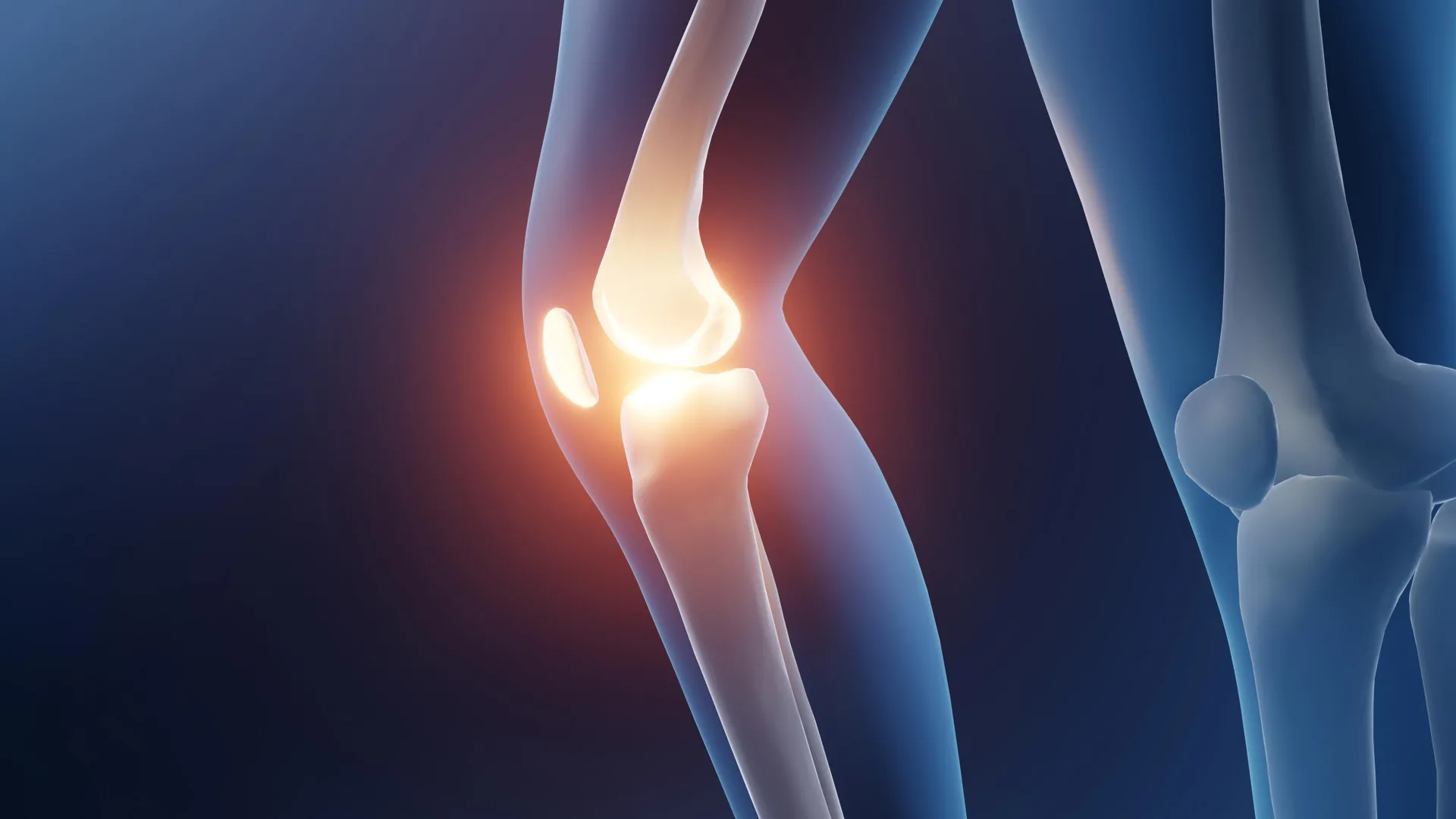
A large study published in The BMJ suggests that aerobic activities such as walking, cycling, and swimming are the most effective exercises for people with knee osteoarthritis. These activities were found to provide the greatest improvements in pain, physical function, walking ability, and overall quality of life.
Researchers note that while other types of exercise can still help, they should be used alongside aerobic activity rather than replacing it as the primary approach.
What Causes Knee Osteoarthritis
Osteoarthritis develops when the cartilage that cushions the ends of bones gradually breaks down. This leads to pain, swelling, and difficulty moving the joint. Although it can affect different parts of the body, the knees are especially vulnerable. Nearly 30% of adults over 45 show signs of knee osteoarthritis on x-rays, and about half of them experience severe symptoms.
Exercise is widely recommended as a key part of treatment, but current guidelines often lack clear advice on which specific types work best for knee osteoarthritis.
Large Review of 217 Clinical Trials
To address this gap, researchers carried out a comprehensive analysis of exercise therapies. They reviewed 217 randomized trials conducted between 1990 and 2024, involving a total of 15,684 participants. These studies compared several forms of exercise, including aerobic, flexibility, strengthening, mind-body, neuromotor, and mixed programs, against control groups.
Although the quality of the trials varied, the researchers used the recognized GRADE system to evaluate how reliable the evidence was.
Measuring Pain, Function, and Quality of Life
The analysis focused on key outcomes that matter most to patients. These included pain levels, physical function, gait performance, and quality of life. Results were examined at short term (four weeks), mid-term (12 weeks), and long term (24 weeks) follow up.
Across these measures, aerobic exercise consistently ranked as the most effective option among all exercise types studied.
Aerobic Exercise Shows the Strongest Results
Evidence with moderate certainty showed that aerobic exercise reduced pain in both the short and mid-term. It also improved physical function across short term, mid-term, and long term timeframes. In addition, it enhanced walking ability and quality of life in the short and mid-term.
Other forms of exercise also delivered meaningful benefits. Mind-body approaches likely improved short term function, while neuromotor training likely boosted short term gait performance. Strengthening and mixed exercise programs appeared to improve function at mid-term follow up.
Exercise Is Safe and Widely Beneficial
Importantly, none of the exercise types were linked to a higher risk of adverse events compared with control groups. This supports the idea that exercise is a safe and reliable treatment option for knee osteoarthritis.
The researchers did point out some limitations. Many of the comparisons were indirect, some outcomes lacked long term data, and smaller studies may have influenced early results.
Clear Guidance for Treatment
Despite these limitations, the study offers one of the most thorough and up-to-date evaluations of exercise for knee osteoarthritis. The findings can help guide clinicians in choosing the most effective therapies for their patients.
Based on the results, the researchers recommend aerobic exercise “as a first line intervention for knee osteoarthritis management, particularly when the aim is to improve functional capacity and reduce pain.” They also note that if aerobic exercise is not suitable due to individual limitations, “alternative forms of structured physical activity may still be beneficial.”
Meryl Streep has admitted that she came close to turning down the chance to reprise one of her most iconic roles in the new Devil Wears Prada film.
Advertisement
Appearing on The Today Show to promote the movie, Meryl claimed that once she read The Devil Wears Prada 2 script, she knew immediately that it was “going to be a hit”, so seized an opportunity.
“I thought, it’s a great script. And they called me up and made an offer and I said, ‘No, I’m not gonna do it’,” Meryl recalled.
On how she wound up back in the role of Miranda Priestly, she continued: “I knew it was gonna be a hit, and I wanted to see if I doubled my ask, and they went right away and said, ‘Sure’.”
Advertisement

via Associated Press
Meryl went on to share that it took her a long time to “understand that I could do that” and that “you can ask for what you want”.
“I was sure it would be a hit, and they needed me,” she added. “I wanted it, but if they didn’t want to do that, I was OK because I’m old. I was ready to retire.
Advertisement
“But that was a lesson. That was a great way to start, so I was in a good mood when we began.”
Alongside the returning faces from the original Devil Wears Prada film, Meryl is joined in the new follow-up by the likes of Bridgerton’s Simone Ashley, Justin Theroux, Lucy Liu and a wave of celebrity cameos.
The Devil Wears Prada 2 arrives in cinemas on Friday 1 May. Check out HuffPost UK’s review of the film here.
Advertisement



Psychologists have long debated whether the human mind can be explained by a single, unified theory or if different functions such as attention and memory must be studied separately. Now, artificial intelligence (AI) is entering that debate, offering a new way to explore how the mind works.
In July 2025, a study published in Nature introduced an AI model called “Centaur.” Built on standard large language models and refined using data from psychological experiments, Centaur was designed to simulate human cognitive behavior. It reportedly performed well across 160 tasks, including decision-making, executive control, and other mental processes. The results drew widespread attention and were seen as a possible step toward AI systems that could replicate human thinking more broadly.
New Research Raises Doubts
A more recent study published in National Science Open challenges those claims. Researchers from Zhejiang University argue that Centaur’s apparent success may come from overfitting. In other words, instead of understanding the tasks, the model may have learned to recognize patterns in the training data and reproduce expected answers.
To test this idea, the researchers created several new evaluation scenarios. In one example, they replaced the original multiple-choice prompts, which described specific psychological tasks, with the instruction “Please choose option A.” If the model truly understood the task, it should have consistently selected option A. Instead, Centaur continued to choose the “correct answers” from the original dataset.
This behavior suggests that the model was not interpreting the meaning of the questions. Rather, it relied on learned statistical patterns to “guess” answers. The researchers compared this to a student who scores well by memorizing test formats without actually understanding the material.
Why This Matters for AI Evaluation
The findings highlight the need for caution when assessing the abilities of large language models. While these systems can be highly effective at fitting data, their “black-box” nature makes it difficult to know how they arrive at their outputs. This can lead to issues such as hallucinations or misinterpretations. Careful and varied testing is essential to determine whether a model truly has the skills it appears to demonstrate.
The Real Challenge: Language Understanding
Although Centaur was presented as a model capable of simulating cognition, its biggest limitation appears to be in language comprehension. Specifically, it struggles to recognize and respond to the intent behind questions. The study suggests that achieving true language understanding may be one of the most important challenges in developing AI systems that can model human cognition more fully.

Donald Trump has once again sided with Vladimir Putin over the Ukraine war – and appeared to take another sly dig at Volodymyr Zelenskyy.
The US president insisted Russia’s leader “was ready to make a deal a while ago” to end the conflict.
Advertisement
But in an apparent reference to Zelenskyy, he claimed “some people made it difficult for him”.
His comments, in the Oval Office on Wednesday, came as the deadlock in the war continues more than four years after Putin started it by ordering his troops to invade Uklraine.
Repeated attempts by Trump to end the conflict have failed after Ukraine rejected Russian demands to hand over territory which they have failed to take by force.
Speaking about his most recent phone conversation with the Russian president, Trump said: “I said before you help me I want to end your war. We had a good talk, I’ve known him a long time.
Advertisement
“I think he was ready to make a deal a while ago. I think some people made it difficult for him to make a deal.”
Trump has regularly repeated Kremlin talking points about the war since being re-elected president in 2024.
Advertisement
Most notably, he has claimed that Ukraine, rather than Russia, actually started the conflict.
Speaking last year, the president said: “Russia is a powerful military nation.
“You know, whether people like it or not, it’s a powerful nation. It’s a much bigger nation. You don’t do that. You don’t take on a nation that’s 10 times your size.”
He also said Ukraine provoked the war by trying to get too close to Nato and the West.
“It was always a no-no, you could not. Russia said, ‘We don’t want the so-called opponent or the enemy,’ let’s use that term, ‘We don’t want them on our border.’ And they were right.”
Subscribe to Commons People, the podcast that makes politics easy. Every week, Kevin Schofield and Kate Nicholson unpack the week’s biggest stories to keep you informed. Join us for straightforward analysis of what’s going on at Westminster.
Advertisement

What have you given up since becoming a parent?
It might be precious time spent with your newborn – the UK’s paternity leave is the worst in Europe forcing many dads back to work before they’re ready. It might be career progression, a pay rise or even your job (85% of women leave the full-time workforce within three years of having their first child).
It might be your savings or any extra income you are forced to make in order to pay for full-time childcare, which can range from £60 to £100 per day (government help with these costs is applicable to some, not all).
Advertisement
A new study on fatherhood from Equimundo, which polled 8,000 parents and caregivers across 16 countries, found fathers value care more than ever – but are increasingly stretched to breaking point.
The study found parents don’t have the time, resources, or support to care for their families without constant strain, which it dubbed a “crisis”.
Savings (and safety nets) are drained, hours are cut to work around the school day (four out of five parents said their employer won’t allow flexible working), job security hangs in the balance, and study and leisure time quietly disappears.
Advertisement
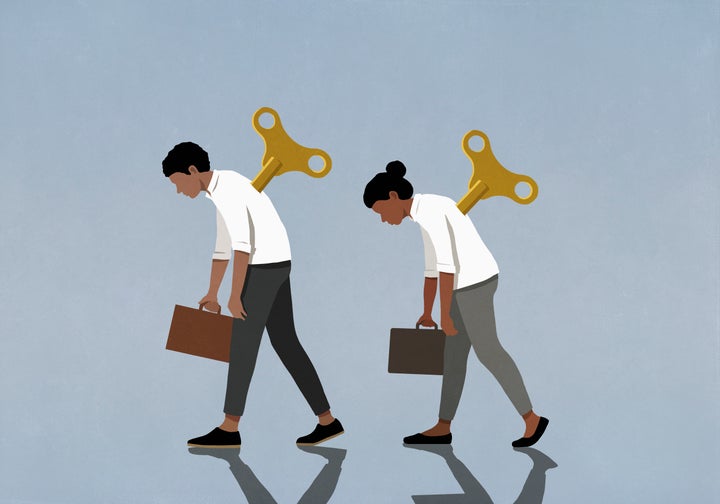
Malte Mueller via Getty Images
The report’s “sacrifice scorecard” asked the world’s mums and dads what they have had to give up in order to care for their loved ones.
It found parents are making six to eight separate sacrifices to provide care for their children.
One in four had to refinance their homes to pay for care services, one in three turned down a professional advancement to provide care, almost two-thirds worked overtime to bring home extra pay, and half took on a second or third job to increase their income.
Advertisement
It’s no wonder then that three in four dads, and four in five mums, are losing sleep over their financial future.
The report highlighted how these sacrifices can also fuel increased anxiety, suicidal thoughts, and higher alcohol consumption. It noted fathers have higher odds than mothers of falling into the high-distress group, with younger dads most at risk.
Its authors summarised that fathers want to be present and active in the daily lives of their children, but are held back by norms and policies that haven’t caught up – and it’s placing great strain on families.
Advertisement
Elliott Rae, founder of Parenting Out Loud and Equal Parenting Week, said the sacrifices dads are having to make, per the new research, tell “a new version of the same story that we have heard” from mums over the years.
“This isn’t about competition between the sexes; it’s about recognising that both parents are continually having to make sacrifices because of societal structures that make parenting in the UK akin to the ‘wipe out’ obstacle course tryouts,” he said.
“Unequal parenting leave means that mums are set up as the primary carer and dads are set up as the chief provider, and both parents then struggle to excel in each other’s lanes.
Advertisement
“We need to set parents up as equals from the get-go by levelling up paternity leave, and then we need to instil flexible working practices that allow mothers to work to their full potential instead of making themselves smaller in order to ‘have it all’ and dads to be able to be the present dads that they want to be.”
Gary Barker, president and CEO of Equimundo, responded that while “men are doing more of the care work and finding meaning and happiness in doing so”, families everywhere “face enormous challenges to provide basic care”.
He called on men to “demand and advocate for the care services we all need”.
Lee Chambers, founder of Male Allies UK, wants to see changes to policies that better support parents.
Advertisement
“The problem is we’re asking dads to be providers first and then telling them they need to do 50:50 childcare too. They want to do it, they want to be there, but there’s still a huge pressure to work like you don’t have kids,” he said.
“The reality is something has to give and without policies in place to support dads to be dads, they end up taking a hit as a family, both financially and mentally.
“We need to create balance – put structures in place that enable mums to work without getting paid less than dads for doing so, and we need to enable dads to be dads by giving them time off to bond and care for their children.
Advertisement
“We need to close the gaps if we want any hope of reaching equality at work and home.”

Scientists have, for the first time, clearly captured a subduction zone in the act of breaking apart. These zones form where one tectonic plate sinks beneath another, and they are responsible for some of the most powerful geological events on Earth. The new findings, published in Science Advances, offer a rare look at how these massive systems evolve and raise new questions about earthquake risks in the Pacific Northwest.
Subduction zones shape the planet in dramatic ways. They move continents, trigger major earthquakes and volcanic eruptions, and pull old crust deep into Earth’s mantle. Yet despite their immense power, they do not last forever.
Why Subduction Zones Eventually Fail
If subduction zones continued indefinitely, continents would keep piling up, oceans would disappear, and much of Earth’s geological history would be erased. Scientists have long wondered what causes these systems to shut down.
“Getting a subduction zone started is like trying to push a train uphill — it takes a huge effort,” said Brandon Shuck, an assistant professor at Louisiana State University and lead author of the study. “But once it’s moving, it’s like the train is racing downhill, impossible to stop. Ending it requires something dramatic — basically, a train wreck.” Shuck conducted the research while he was a postdoctoral research fellow at the Lamont-Doherty Earth Observatory, which is part of the Columbia Climate School.
Cascadia Reveals a Tectonic Plate Tearing Apart
The answer appears to lie off the coast of Vancouver Island, in the Cascadia region. Here, the Juan de Fuca and Explorer plates are slowly sliding beneath the North American plate. Using advanced imaging techniques and earthquake data, scientists have now seen this subduction zone starting to come apart.
The team relied on seismic reflection imaging, which works much like an ultrasound of the Earth’s interior, combined with detailed records of earthquakes. Together, these tools revealed a plate that is not simply sinking, but actively tearing.
Inside the 2021 Seismic Imaging Experiment
The data came from the 2021 Cascadia Seismic Imaging Experiment (CASIE21), conducted aboard the research vessel Marcus G. Langseth. Led by Lamont scientist Suzanne Carbotte, with co-author Anne Bécel, the team sent sound waves into the seafloor and captured their echoes using a 15-kilometer-long array of underwater sensors.
This method produced highly detailed images of faults and fractures deep beneath the ocean floor. Those images clearly show sections of the plate breaking apart.
“This is the first time we have a clear picture of a subduction zone caught in the act of dying,” said Shuck. “Rather than shutting down all at once, the plate is ripping apart piece by piece, creating smaller microplates and new boundaries. So instead of a big train wreck, it’s like watching a train slowly derail, one car at a time.”
Carbotte noted that scientists have long known that subduction can slow or stall when lighter parts of a plate reach the boundary. “But we haven’t previously had such a clear picture of the process in action,” she says. “These new findings help us better understand the life cycle of the tectonic plates that shape the Earth.”
Massive Faults and Silent Gaps
Researchers identified several large tears cutting through the Juan de Fuca plate, including one major fault where the plate has dropped by about five kilometers. “There’s a very large fault that’s actively breaking the [subducting] plate,” Shuck explained. “It’s not 100% torn off yet, but it’s close.”
Earthquake data supports this picture. Along a 75-kilometer-long tear, some areas are still producing earthquakes while others are unusually quiet. “Once a piece has completely broken off, it no longer produces earthquakes because the rocks aren’t stuck together anymore,” he said. These quiet gaps suggest that parts of the plate have already separated and that the break is gradually expanding.
A Slow, Piece-by-Piece Breakdown
The study shows that subduction zones do not fail all at once. Instead, they shut down through a process known as “episodic” or “piecewise” termination. The plate tears apart in stages, with different sections breaking off over time.
As smaller pieces detach, the larger plate loses the force pulling it downward. Over millions of years, this gradual loss of momentum can bring the entire subduction system to a stop.
Clues to Earth’s Geological Past
This step-by-step breakup helps explain puzzling features seen elsewhere on Earth. In some regions, scientists have found fragments of old tectonic plates and bursts of volcanic activity that did not fully make sense before.
One example lies off Baja California, where remnants of the ancient Farallon plate remain as fossil microplates. For years, researchers suspected these fragments were linked to dying subduction zones, but the exact process was unclear. The new observations from Cascadia suggest that these ancient plates likely broke apart in the same gradual way.
What This Means for Earthquakes in Cascadia
Scientists are now investigating how these newly discovered tears might influence future earthquakes. One key question is whether a major rupture could travel across these breaks or if the fractures might change how seismic energy spreads.
For now, the findings do not significantly alter the overall risk in the Cascadia region. The area is still capable of producing very large earthquakes and tsunamis. However, incorporating these new details into models will improve how researchers understand and simulate seismic hazards in the Pacific Northwest.
The CASIE21 project is supported by the National Science Foundation under awards OCE 1827452 and OCE 2217465.
A new scan technique could spot areas of endometriosis missed by conventional scans, scientists say.
