Cross-pollinating physicists use novel technique to improve the design of facilities that aim to harvest fusion energy

Physicists are like bees — they can cross-pollinate, taking ideas from one area and using them to develop breakthroughs in other areas. Scientists at the U.S. Department of Energy’s (DOE) Princeton Plasma Physics Laboratory (PPPL) have transferred a technique from one realm of plasma physics to another to enable the more efficient design of powerful magnets for doughnut-shaped fusion facilities known as tokamaks. Such magnets confine and control plasma, the fourth state of matter that makes up 99 percent of the visible universe and fuels fusion reactions.

Designing these magnets is not simple, especially when they must be precisely shaped to create complex, three-dimensional magnetic fields to control plasma instabilities. So it is appropriate that the new technique comes from scientists who design stellarators, cruller-shaped fusion devices that require such carefully constructed magnets. In other words, the PPPL scientists are using a stellarator computer code to envision the shape and strength of twisted tokamak magnets that can stabilize tokamak plasmas and survive the extreme conditions expected in a fusion reactor.

This insight could ease the construction of tokamak fusion facilities that bring the power of the sun and stars to Earth. “In the past, it was a journey of discovery,” said Nik Logan, a physicist at the DOE’s Lawrence Livermore National Laboratory who led the research while at PPPL. “You had to build something, test it , and use the data to learn how to design the next experiment. Now we can use these new computational tools to design these magnets more easily, using principles gleaned from years of scientific research.” The results have been reported in a paper published in Nuclear Fusion.

Fusion, the power that drives the sun and stars, combines light elements in the form of plasma — the hot, charged state of matter composed of free electrons and atomic nuclei — that generates massive amounts of energy. Scientists are seeking to replicate fusion on Earth for a virtually inexhaustible supply of power to generate electricity.

The findings could aid the construction of tokamaks by compensating for imprecision that occurs when a machine is translated from a theoretical design to a real-life object, or by applying precisely controlled 3D magnetic fields to suppress plasma instabilities. “The reality of building anything is that it isn’t perfect,” Logan said. “It has small irregularities. The magnets we are designing using this stellarator technique can both correct some of the irregularities that occur in the magnetic fields and control instabilities.” Doing so helps the magnetic field stabilize the plasma so potentially damaging bursts of heat and particles do not occur.

Logan and colleagues also learned that these magnets could act on the plasma even when placed at a relatively large distance of up to several meters from the tokamak’s walls. “That’s good news because the closer the magnets are to the plasma, the more difficult it is to design them to meet the harsh conditions near fusion reactors,” Logan said. “The more equipment we can place at a distance from the tokamak, the better.”

The technique relies on FOCUS, a computer code created mainly by PPPL physicist Caoxiang Zhu, a stellarator optimization scientist, to design complicated magnets for stellarator facilities. “When I was first building FOCUS as a postdoctoral fellow at PPPL, Nik Logan stopped by my poster presentation at an American Physical Society conference,” Zhu said. “Later we had a conversation and realized that there was an opportunity to apply the FOCUS code to tokamak projects.”

The collaboration between different subfields is exciting. “I’m happy to see that my code can be extended to a broader range of experiments,” Zhu noted. “I think this is a beautiful connection between the tokamak and stellarator worlds.”

Though long the number-two fusion facility behind tokamaks, stellarators are now becoming more widely used because they tend to create stable plasmas. Tokamaks are currently the first choice for a fusion reactor design, but their plasmas can develop instabilities that could damage a reactor’s internal components.

Presently, PPPL researchers are using this new technique to design and update magnets for several tokamaks around the world. The roster includes COMPASS-U, a tokamak operated by the Czech Academy of Sciences; and the Korea Superconducting Tokamak Advanced Research (KSTAR) facility.

“It’s a very practical paper that has practical applications, and sure enough we have some takers,” Logan said. “I think the results will be helpful for the future of tokamak design.”

Story Source:

Materials provided by DOE/Princeton Plasma Physics Laboratory. Original written by Raphael Rosen. Note: Content may be edited for style and length.


Share Button

Researchers develop novel strategy for tuberculosis vaccine

Innovators at Purdue University and Houston Methodist Research Institute have created a novel strategy for developing an effective vaccine for a widespread form of tuberculosis.

Mycobacterium tuberculosis (Mtb) is a leading cause of death worldwide, leading to over 1.5 million fatalities annually. Approximately one-third of the global population is infected with the latent form of Mtb. Bacillus Calmette-Guérin (BCG) is widely used as a vaccine against tuberculosis but has a variable protection against neonatal and adult pulmonary TB. That protection can, however, range from zero to 80% among infants. Children are routinely vaccinated, yet Mtb dissemination into brain and tuberculosis meningitis continues to occur.

Purdue and Houston Methodist researchers have created this novel TB vaccine formulation by incorporating autophagy-mediated antigen presentation, which initiates an enhanced T cell response. Chinnaswamy Jagannath, professor of pathology and genomic medicine at the Houston Methodist Research Institute, which is an affiliate of Weill Cornell Medical College, showed that the novel formulation improves the development of tuberculosis-specific immune responses. Jagannath collaborates with Dr. Suresh Mittal, Distinguished Professor of Virology in Purdue’s College of Veterinary Medicine.

“Our vaccine approach is equally effective without or with prior vaccination with BCG,” Mittal said.

“It is vital since the majority of people in Mtb-endemic countries are already immunized with BCG,” Jagannath said.

Mittal’s lab studies delivery platforms for vaccines, and Jagannath’s lab used the nasal delivery route for this TB vaccine development.

“The great thing about this work with TB is that it can translate to other infectious diseases and possibly cancer immunotherapy,” Mittal said.

The innovators have worked with the Purdue Research Foundation Office of Technology Commercialization to patent their technology. The innovators and OTC are looking for partners to continue developing it. The next step for the vaccine formulation is to conduct a vaccine efficacy study in a nonhuman primate model. Mittal said the successful completion of the study will form the basis for a human trial, though no human trial is currently planned.

Story Source:

Materials provided by Purdue University. Note: Content may be edited for style and length.

Share Button

How To Say No To Social Invitations Without Getting FOMO

PeopleImages via Getty Images

Learn to say no to social invitations and carve out time for self-care.

After the initial portion of the Covid-19 pandemic kept us apart for so long, many people pledged to take advantage of every opportunity to see loved ones again once vaccines were available. Thus, “hot vax summer” was born, with a focus on filling our social calendars with parties, trips, weddings and more.

Now, as coronavirus variants continue to spread and, with the onset of autumn, opportunities for socialisation could start to shrink again, we may be feeling even more pressure to cram in a bunch of activities.

But saying yes to every single social invitation can lead to feelings of being overwhelmed and to burnout. We let our FOMO (fear of missing out) create a sense of obligation that can negatively impact mental health. The solution? Embracing JOMO or the “joy of missing out.”

“JOMO allows you to redefine what actually brings joy into your life, instead of allowing other people, events or society dictate it for you,” Michelle Wax, founder of the American Happiness Project, tells HuffPost. 

“While in the past having a packed schedule of trips, events and activities may have been the norm, the past 18 months have allowed many of us to re-evaluate our lives and decide if how we’re spending our time and energy is what we actually want,” she adds. “JOMO allows you to choose the events, people and activities that will bring the most happiness into your life, and remove the ‘shoulds’ that are draining and time-consuming.”

If you’re someone who feels the pressure to go to every wedding, birthday party, picnic and day trip because you fear missing out, it will take more than just flipping a switch to feel the JOMO. But that doesn’t mean the situation is hopeless. Below, experts share their advice for how to embrace missing out. 

Stop saying ‘yes’ to everything

“While meaningful social connections are critical to our physical and emotional well-being, finding a balance is also key,” says Sophie Lazarus, a psychologist with the Ohio State University Wexner Medical Center. “Saying yes to and needing to be a part of everything can be exhausting and paradoxically reduce our ability to get the most out of the time that we do spend with others.”

Of course, caring about other people is important, but this shouldn’t come at the expense of your needs. Don’t feel obligated to attend events or do things you don’t enjoy simply because you feel like you “should.” It’s helpful to disconnect from guilt and obligation and use your time and resources for meaningful things in life. 

“For the next month, just say ‘no,’” recommends Matthew Ferry, a happiness coach and author of Quiet Mind Epic Life. “Intentionally abstain from doing more and saying yes. Practise being picky and selective with your time. Ask this question, ‘Will saying yes to this help me realise that all is well in my world?’ If not, then say no.”

JGI/Jamie Grill via Getty Images

Make a list of the things that bring you joy. 

Do a ‘joy audit’

“To embrace JOMO, it’s helpful to become self-aware of what really lights you up and rejuvenates you personally,” Wax says. “I recommend taking a ‘Joy Audit’ and writing down what people, places and activities bring joy to your life, and on the flip side, what people, places and activities drain your joy.”

Things that bring joy to your life could be as simple as cooking a new meal, reading a novel, turning off the news, getting out in nature or calling a loved one. When you find yourself with the opportunity to experience the joy of missing out, look to your list and choose one of these activities. 

Develop a healthy routine

Self-care is the name of the game when it comes to finding joy in “missing out” or taking a break from the endless chaos of life. Make this part of your daily routine, so that you can get used to prioritising your needs. 

“Take your ‘MEDS’ daily – meditation, exercise, diet and sleep,” Ferry says. He emphasises the power of nurturing our bodies with movement, nourishing food, mindfulness and rest. “When you do that, you feel empowered and satisfied with the moment,” Ferry adds.

Take a break from social media

“Nudge yourself into avoiding having to scroll, check, click and like all the time,” says Svend Brinkmann, a psychologist and author of The Joy of Missing Out: The Art of Self-Restraint in an Age of Excess.

Substitute this social media time with something more fulfilling to you on a personal level – whether that’s spending time with people in person or taking a nature walk alone. 

“Any changes that help you make wise decisions and also minimise the potential for FOMO can be really helpful,” Lazarus says. “If you know social media is going to make it hard for you to feel good about your decision, then unplug for a bit. Maybe make a plan to engage in a favourite solo activity to help you make the most out of the time you gained from ‘missing out.’”

katleho Seisa via Getty Images

Take breaks from social media or reframe the way you look at people’s posts. 

Reframe how you engage with social media

“You don’t have to unplug from social media altogether to avoid feeling the fear of missing out, but when you see people enjoying life online or on social media, another trick you can use is the ‘I am Next’ Strategy,” says Ken Honda, a happiness expert and author of Happy Money: The Japanese Art of Making Peace With Your Money.

“Whenever you feel jealousy or think other people are all out having a great time while you’re not, you can say to yourself, ‘Good for them! I’m next,’” he adds.

Rather than feeling bad about not being part of a certain event or trip, you can also think about how much more enjoyable your current and future life experiences are because you’re taking care of yourself and not getting burned out in the process. And remind yourself that individuals enjoy different things, so every little experience is not necessarily for you. 

Take stock of what you have

The joy of missing out can encompass social events and other experiences, as well as spending money on objects. JOMO is about realising that you cannot do or have everything – and it’s not necessarily a bad thing.

“There is much in human psychology that drives us towards more, achieving more, earning more money, experiencing more and so on,” Brinkmann says. “But as they rightly say, less can be more, and JOMO is about reminding oneself that more is not always better, but in the consumer society that we have constructed over the last 100 years, it takes a disciplined effort to go against these tendencies.”

To counter these instincts, Honda recommends taking stock of all of the wonderful experiences and items you can already call your own and making time to appreciate them. You can keep physical lists in a gratitude journal or make it a regular mental exercise.

“The hard truth is that you cannot get everything in life anyway. There are thousands of events and chances happening every day that we just don’t know about, so we just enjoy the bliss of ignorance,” Honda explains. “It’s all about where you place your attention. Instead of purposely putting your attention on things you can’t have, it’s better to put your attention on things that you either can have or things you already have that make you happy.”

AsiaVision via Getty Images

Engage with and appreciate the objects and memories you already have to shift your mind away from what you don’t have.

Let go of false urgency

“Oftentimes we don’t realise the impact of reacting to the assumption, ‘I have to show up to everything I am invited to,’” Ferry says. “We automatically assume that there will be a negative consequence for not attending the party, accepting the dinner invite, or participating in an event that is important to someone else in our life.”

This assumption creates a false sense of urgency, so we assign undue importance to things that are actually more commonplace and routine. 

“We behave like the relationship is on the line if I turn down an invitation,” Ferry explains. “Yet, accepting that invitation might not be what’s best for you mentally, emotionally, physically or financially. We are pack animals. We accidentally prioritise other people above ourselves. Put your needs first. Demand to be treated well. Demand to be at peace. Release false urgency and practice just being.”

Make time for reflection and mindfulness

“Since the pandemic started, our daily routines stretched, shifting us positively and negatively, causing us to turn inwards and witness our signals during uncertainty,” says life coach and Behaving Bravely author Anita Kanti. “It revealed a time to ponder life’s interpretations resulting in more gratification, an unexpected gift for many.”

Even as aspects of “normal life” become possible again, it’s important to continue setting aside time for reflection. Listen to what you need and let that guide you. Consider talking to a professional therapist if you don’t already.

Kanti also recommends mindfulness exercises to help with that process and mind shift. “Choosing JOMO while managing unproductive FOMO stimulates us to go deeper within ourselves,” she explains. “Try belly breathing exercises lying down, breathe by bringing the air down toward the belly. Do simple grounding techniques to detach, repeat affirmations, or focus on humour.” 

Covid-19 is more than a news story – it has changed every aspect of life in the UK. We are following how Britain is experiencing this crisis, the different stages of collective emotion, reaction and resilience. You can tell us how you are feeling and find further advice and resources here.

Share Button

Covid: CO2 monitors pledged to aid school ventilation

Schools in England are to be given CO2 monitors to as part of plans to limit the spread of Covid.

Share Button

New ways to estimate climate change impacts on agriculture

Most scientists agree climate change has a profound impact on U.S. agricultural production. But estimates vary widely, making it hard to develop mitigation strategies. Two agricultural economists at the University of Illinois take a closer look at how choice of statistical methodology influences climate study results. They also propose a more accurate and place-specific approach to data analysis.

“If you pay attention to forecasts of how the climate will affect U.S. agriculture, the results are completely different. Some scientists predict it’s going to have a positive impact for the nation in the long run, some report it’s going to have a negative impact,” says study co-author Sandy Dall’Erba, professor in the Department of Agricultural and Consumer Economics (ACE) and director of the Center for Climate, Regional, Environmental and Trade Economics (CREATE) at U of I.

Dall’Erba and Chang Cai, doctoral student in ACE and the paper’s lead author, take stock of all the academic literature that estimates the impact of climate change on U.S. farmland values and revenues, focusing on every U.S. county. The county-level scale is not only more accurate, the researchers say, but also important for regional policy makers, because they can make county-specific decisions in areas where climate change is anticipated to pose a serious challenge.

“There is not a single commodity that is produced all over the U.S. The only way we can really understand the relationship between climate and agriculture is that rather than focusing on a particular crop or livestock, we look at economic impacts,” Dall’Erba notes. “Looking at aggregated agricultural outcomes allows us to compare the situation across every county in the U.S.”

The researchers look at how studies group locations for analysis, and how such groupings affect the results.

“Early studies would assume one additional degree of Celsius or Fahrenheit in Arizona will have the exact same marginal effect on agriculture as one additional degree in Illinois, which makes very little sense because you’re looking on the one hand at a place that is quite used to high temperature and low precipitation, versus a place which is used to moderate temperature and much more precipitation,” Dall’Erba says.

Recently, studies have tried to differentiate results and estimate effects based on local conditions. A popular approach is to divide the U.S. into irrigated versus rainfed areas, roughly across a west/east partition along the 100th meridian. While Illinois and Arizona would thus belong to different groups, Arizona and Montana would still be expected to experience similar marginal effects of weather.

Another method, which Dall’Erba has used in his own research, compares low- versus high-elevation areas, while a third approach is to group locations along state lines. Dall’Erba says researchers use the latter approach because it is straightforward to estimate and relevant for policy measures, but it does not produce very accurate results, since state lines rarely conform to atmospheric characteristics.

While all these approaches have some merit, they also have shortcomings.

“We discovered that results really do differ in terms of what the future impact of climate change will be if you choose one grouping versus another, especially in primary agricultural areas,” Cai explains. “We also found out that none of those groupings is better than any other in predicting what the future outcome will be.”

Cai and Dall’Erba recommend using one of three new statistical approaches that offer county-specific climate-impact estimates. All of these methods are driven by data and start without any assumptions on what the groups will look like. Instead, these methods analyze data to determine both the number of groups and who belongs to what group. These scientific techniques, called C-Lasso, causal forest algorithm, and geographically weighted regressions, have been used for analysis in other fields, such as the labor market and energy conservation, but they have not been used in climate change research before.

“You really let the data speak for themselves; you do not impose anything on your model. As soon as you start making choices on how one should group the observations, you’ve already guided your results in one direction. And then you’ll want to defend your choice. We’re hoping future researchers will be more cautious about a priori choices,” Dall’Erba explains.

Dall’Erba and Cai are already working on applying these new approaches to a comprehensive analysis of climate change and U.S. agricultural production. They expect to present their results in a forthcoming paper, and to guide the implementation of place-tailored climate change adaptation strategies.

Share Button

Rachel Riley Spells Out ‘Poo Anally’ On Countdown, Reacts Accordingly

Rachel Riley had the perfect response after serving up a rather smelly solution to a puzzle on the latest edition of Countdown. 

The presenter couldn’t hide her smirk as “anally” was offered as a solution to a puzzle on the Channel 4 numbers and letters quiz show on Friday. 

But to top if off, the remaining letters of the anagram had also left “poo” up on the board. 

Channel 4

Rachel Riley couldn’t hide her smirk on the latest edition of Countdown

When one fan tweeted her commenting that it was quite a way to mark her 3000th show, Rachel responded: “Is there any other way?!”

Rachel has now co-hosted 3000 episodes of Countdown since taking over from previous maths whizz Carol Vorderman in 2008. 

To celebrate the occasion, she was visited by her partner, former Strictly Come Dancing professional Pasha Kovalev, and their daughter Maven in the studio and was also presented with flowers by the production team. 

Rachel tweeted: “Loved my surprise visitors for my 3000th show today! One of them was particularly disappointed when it was time to go.”

She added: “I’ll always be the new girl but who can believe it’s been 3000 shows already!Thanks Countdown family.”

Earlier this week, Countdown came under fire when a competitor’s answer of a seven-letter gay slur was left in the programme. 

Channel 4 later apologised admitting they had got it wrong.

“The airing of the word was an error of judgement,” the broadcaster said.

“It does not align with our values and we apologise for any offence caused.”

 Countdown airs weekdays at 2.15pm on Channel 4. 

Share Button

How schools of ‘microswimmers’ can increase their cargo capacity

A new study published in Physical Review Letters describes a way to increase the cargo capacity of microscopic, self-propelled droplets known as “microswimmers.” Researchers from the University of Pennsylvania and the Max Planck Institutefor Dynamics and Self-Organisation found that when a school of microswimmers move in the same direction inside a narrow channel, they can increase the number of particles they can carry by 10-fold. Their findings have implications for applications ranging from drug -elivery systems to materials with active coatings.

Like many scientific endeavors, this one began with a simple observation. While attending a conference dinner at the Georgia Aquarium, physicist Arnold Mathijssen and his colleagues noticed that large schools of swimming fish seemed to be carrying small particles and debris in their wake. This happens because of hydrodynamic entrainment, a process where, as an object moves through liquid, it generates a flow and causes nearby objects to be dragged along with it.

“We were wondering, As the fish in the aquarium are swimming forward, does a particle also get dragged forwards, or is it pushed backwards by their tails?” says Mathijssen. “Our central question was if these guys move things forward or not, and the hypothesis was that, if we can see this happening in the aquarium, maybe this is applicable under a microscope as well.”

To answer the question, Max Planck Institute researchers Chenyu Jin, Yibo Chen, and Corinna Maass ran experiments using synthetic microswimmers, self-propelled droplets of oil and surfactant that are a model system for microscopic robots. Using their microswimmers, the researchers were able to measure the strength of the flows generated by an individual swimmer and the amount of material that an individual could carry with them as they travelled through a two-dimensional channel. Then, once the data were collected, Mathijssen and his group developed a theoretical model to help explain their findings.

One particular challenge for developing the model was devising a way to describe the effects of the walls of the microscopic channel because, unlike at the aquarium, this experiment was conducted in a confined space. “That confinement really affects the flows and, as a result, affects the total volume of stuff you can transport. There is quite a bit of literature in terms of modeling active particles, but it’s difficult to get it right in complex environments,” Mathijssen says.

Using their data and newly-developed model, the researchers found that the transport capacity of an individual microswimmer could be increased by 10-fold when they swam together inside a narrow channel. They also found that the entrainment velocity, or the speed at which particles move forwards, was much larger than initially anticipated.

Compared to a more open system, like the aquarium, having a confined channel seems to enhance the movement of particles, says Mathijssen. “If you are in a three-dimensional world, the energy you inject into your system gets spread out in all directions. Here, where it gets focused into a two dimensional plane, the strength of the flows is larger. It’s almost as if you have a wake at the front and the back, so the effect is twice as strong, effectively,” he says.

Another surprising finding was how powerful this effect could be even over long distances in a system like this one with a low Reynolds number, a value used by scientists to predict liquid flow patterns. Systems with low Reynolds numbers have smooth, laminar flow (like a waterfall), and those with high values are more turbulent.

“Here, the differences between the low and high Reynolds numbers is that, at low Reynolds numbers, these flows tend to be very long-ranged. Even if you are 10 body lengths away, these flows are still significant. At higher Reynolds numbers, that is not necessarily true because you get a lot of turbulence, and that disturbs this entrainment effect,” Mathijssen says.

The researchers think that this could be due to the front and back symmetry that occurs in a closed system. “At low Reynolds numbers, you have a pressure in front of the droplet, and that pressure is pushing the liquid forwards for a large distance,” says Mathijssen.

Future experiments will look at how this effect plays out in systems that have higher Reynolds numbers. It’s thought that fish rely on a similar phenomenon when they swim close behind each other in large schools, akin to cyclists drafting off one another in a peloton, so the researchers think that a similar effect might be happening in other systems as well.

And because the underlying physics described in this study applies to many others as well, these findings also have implications for a number of other fields, from designing drug-delivery systems, understanding how biofilms transport nutrients, and designing active materials, ones that have unique coatings or properties that imbue them with dynamic features.

“The grander picture in terms of physics is to see how individual active components can work together in order to give rise to a shared functionality, what we call emergent phenomena, at a macroscopic scale,” says Mathijssen. “And there, there is no rule book, there are no laws of physics as of yet that describe these systems that are out of equilibrium, so there are fundamental theoretical physics questions that remain to be answered.”

Share Button

Army supporting ambulance services in England

High demand and staffing shortages have meant the Army has been called in to help look after patients.

Share Button

7 Reasons Greta Thunberg Is Spot On With Her Takedown Of UK Climate Promises

Greta Thunberg denounced the claim that the UK is a climate leading nation on Friday and said that is a “lie”.

The Swedish activist has a reputation for calling out world leaders when they don’t act on their climate promises – and it now seems the UK is in her sights. 

She attacked the claim that the UK has reduced its climate emissions by 44 percent since 1990, a comment prime minister Boris Johnson made at this year’s Leaders’ Climate Summit, and said that Downing Street is good at “creative carbon accounting” instead.

Thunberg added: “I am hoping that we stop referring to the UK as a climate leader. If you look at the reality, that is simply not true.”

Her words are particularly significant given the Intergovernmental Panel on Climate Change has just declared the environmental crisis a “code red”.

Here’s a breakdown of the top concerns about Britain’s battle against the climate crisis.

CARL-JOHAN UTSI via Getty Images

Swedish climate activist Greta Thunberg poses for a photo 

1. UK Emission targets aren’t as ambitious as they seem

The UK has technically promised to cut emissions faster than other developed nations by vowing to make 68% cuts by 2030 when compared to UK emissions released in 1990.

The UK does have the 2035 target to cut 78% too, according to the 2008 Climate Change Act, and it did cut more greenhouse gas emissions between 1990 and 2016 than any other G7 country.

However, the UK’s emission figures are misleading. Britain contributes to approximately 2% of the global emissions, meaning its target cuts are unlikely to have a major impact.

The US contributes 15% to global emissions, and has promised to cut around 50% when compared to 2005 levels – meaning by 2030, the States will have had more of an impact than the UK.

Emissions for UK transport have not shifted much at all over the past decade either, and home heating emissions are still very high.

Rachel Kyte, former top World Bank official at the Paris climate talks, told The Guardian: “What the UK is doing is like dad dancing – it is not that they’re evil, just that they are very uncoordinated. They have not yet perfected a whole government approach to getting to net zero.”

SOPA Images via Getty Images

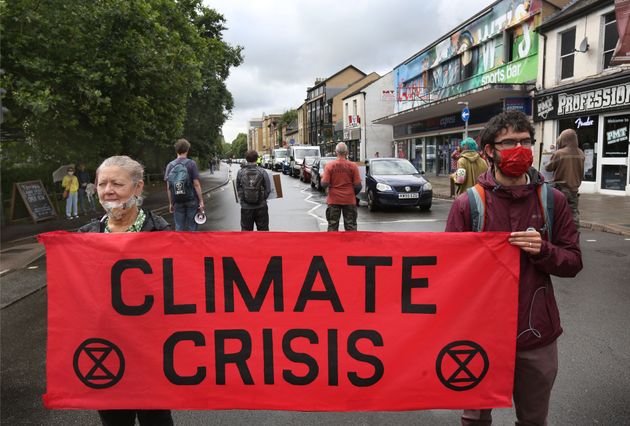
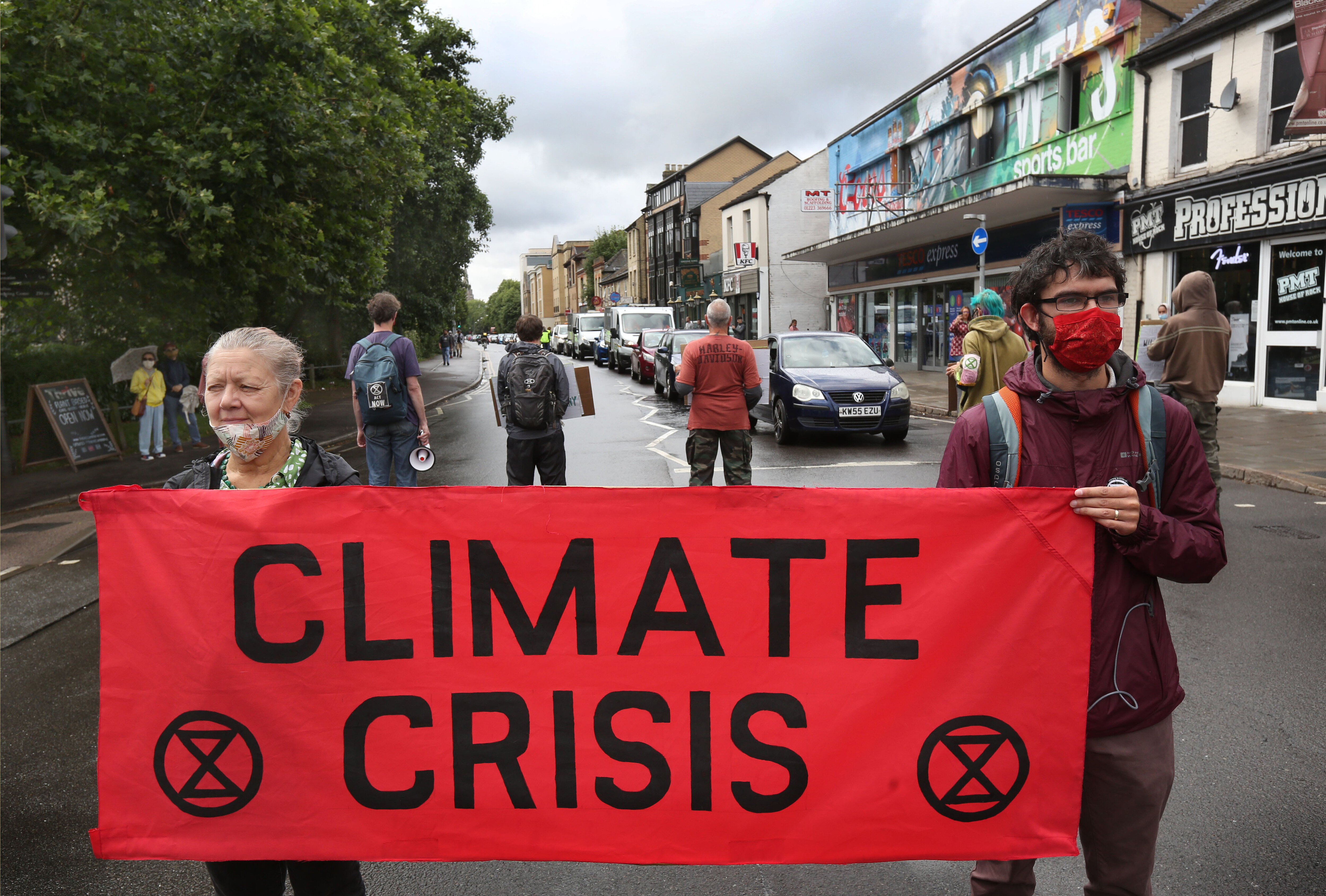
Protesters hold a banner saying climate crisis during the demonstration in Cambridge

2. Official climate advisers worry there’s no plan

The UN did actually urge more countries to follow the UK’s lead ahead of COP26, back in February.

The UK and the EU were the only two out of the world’s top 18 greenhouse gas emitters to submit plans for reducing emissions in the winter.

But, despite having a plan, there are concerns it was not thorough enough.

Chief executive of the Climate Change Committee, Chris Stark, shared his worries with Sky News in June about how the UK would reach net zero by 2050.

The government adviser said: “It is true the ambition of the country has changed in the last 12 months and this useful.

If we don’t take action now we risk falling to the back of the pack on tackling climate changeThe Energy and Climate Intelligence Unit’s Jess Ralston

“But unless it is being physically delivered, so the things that will drive us towards net zero, the changes we will see in homes, industry and transport, we can’t say we are credibly on track. The government has to change course.”

The committee advisers made 200 recommendations to Downing Street, including a Planning Bill to ensure new houses are low carbon and adapted for rising temperatures.

The committee also claimed the UK would only have to spend less than 1% of GDP a year to meet the net-zero target, and it could deliver a return boost of 2% by 2035.

The climate advisers also said the country was less prepared to tackle global warming than it was five years ago.

Stark said: “We’ve been raising our concerns consistently for some time now. [The government has] found it far too easy to dismiss those.”

Barcroft Media via Getty Images

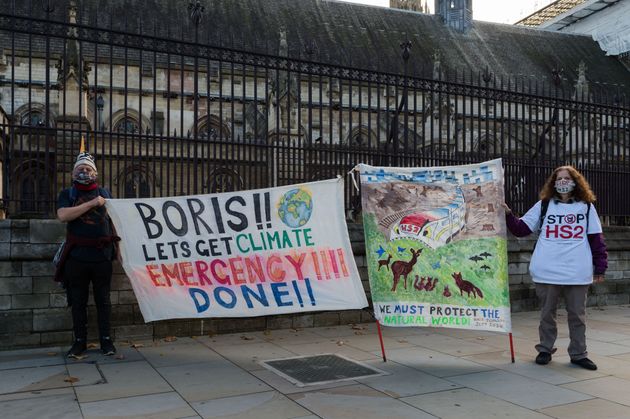
Environmental activists protest in Parliament Square against the UK’s High Speed 2 railway project as well as the Government’s failure to act on the climate and ecological crisis in October 

3. The UK is not adapting to a warmer future

The climate goals mean the world will have to adapt to an increase in temperature of between 1.5 degrees Celsius and 2 degrees Celsius in the next 80 years.

If not enough is done to reduce global warming, the average climate could rocket up to 4 degrees Celsius.

Professor Dame Julia King, chair of the Climate Change Committee, warned in June: “We cannot deliver net zero without adaptation.

“It’s absolutely illogical that we are not doing it.”

She also claimed it was a “failing” that the Treasury’s assessment did not consider the cost of adapting the nation to climate change.

Downing Street responded by acknowledging the report and saying it would examine its recommendations “closely”.

SOPA Images via Getty Images

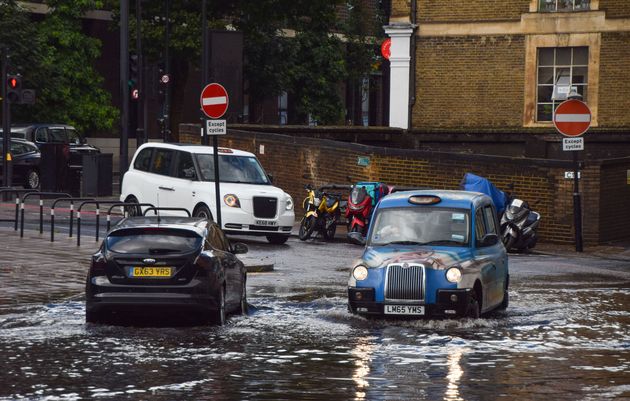
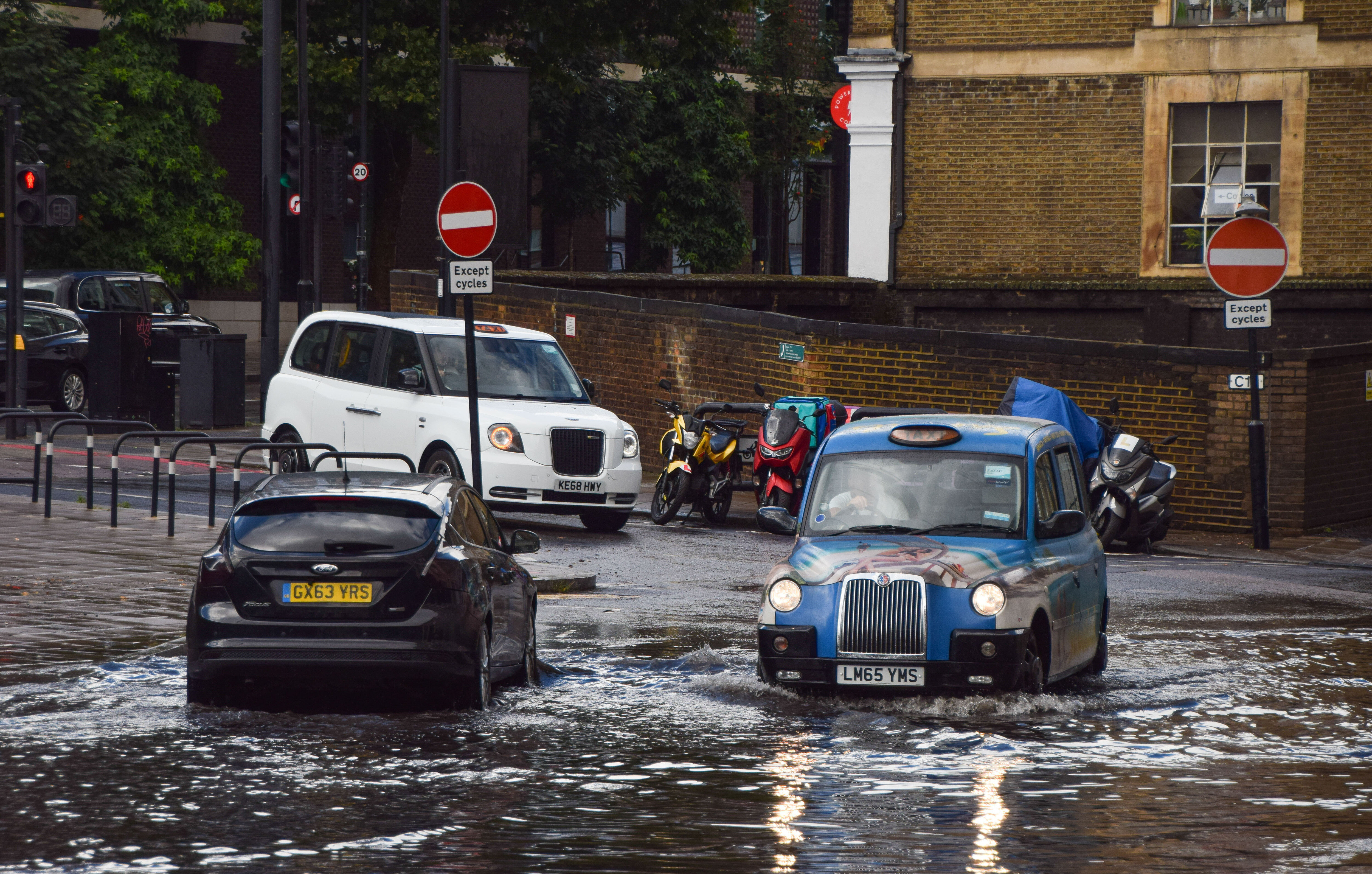
A taxi drives through a flooded Farringdon Lane in central London after a day of heavy rain in the capital in 2021

4. Time is ‘getting a bit thin’ to make a change

The Energy and Climate Intelligence Unit’s Jess Ralston said the UK needs to make an action plan ahead of the year it hosts the climate summit.

She told Sky News: “This year is the government’s chance to prove to the world that they are not just talking about this, they are delivering on it as well.

“Time is getting a bit thin.

“If we don’t take action now we risk falling to the back of the pack on tackling climate change. We also risk missing out on new life-long jobs in green industries, which are the future of the UK.”

However, the government did respond to Ralston’s complaints.

A spokesperson said: “Our forthcoming strategies on heat and buildings, hydrogen, transport and comprehensive net zero strategy this year will set out more of the very policies the Climate Change Committee is calling for as we redouble our efforts to end the UK’s contribution to climate change.”

John Keeble via Getty Images

Heatwaves are becoming more frequent in the UK

5. Many changes are already ‘locked in’

According to the Climate Change Committee, the UK has already seen the average land temperature rise by around 12 degrees Celsius from pre-industrial levels.

Sea levels from around the country have risen by 16cm since 1900 as well, and extreme heat is becoming more common.

In the last five years, more than 57,000 new homes have been built which the committee believes are not resilient enough to sustain higher temperatures.

In the last three years, there have been 4,000 deaths related to heat in England alone.

Nearly 60 percent of the total risks noted by the committee were also given the highest urgency score.

Peter Summers via Getty Images

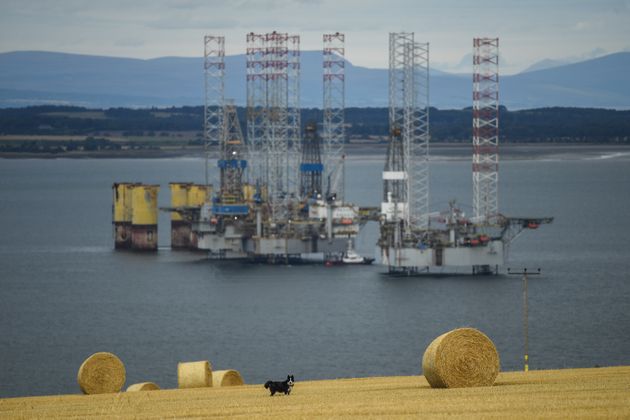
Oil rigs in Scotland

6. The UK gives a lot of subsidies to fossil fuel companies

Britain gives more subsidies to fossil fuel firms than any other country in Europe.

The government is also attempting to open a new coal mine in Cumbria, near Whitehaven, while continuing to grant new oil and gas exploration licenses.

There is an ongoing debate about the proposal to mine Cambo – an oil field in the North Sea – as well, even though it could undermine the UK’s credibility at COP26 in Glasgow come November.

This site could produce up to 880 million barrels of oil.

However, shouting down calls from activists not to open the oil field, Downing Street has said the initial exploration license was granted two decades ago.

It also claimed that if anything is extracted, the Oil and Gas Authority will only grant a license for 170 million barrels.

7. The UK relies on ‘false solutions’

The UK has been criticised for relying on “offsetting schemes” which promisees to reduce carbon emissions in the future.

However, delayed action could contribute to an additional 1.4 degrees Celcius of warming.

Friends Of The Earth claimed carbon offsetting does not work most of the time in practice, after a study for the European Commission found only 2% of offsetting projects were likely to resulted in additional emissions reductions.

The campaigners claimed carbon-offsetting was not the best way to tackle the climate crisis, and that it was best to prioritise the reduction of carbon emissions. This is a view also shared by renowned environmental organisation, Greenpeace.

Share Button

We can expect more emissions from oil refineries in the near-term future, analysis finds

A global inventory has revealed that CO2 emissions from oil refineries were 1.3 Gigatonnes (Gt) in 2018 and could be as large as 16.5 Gt from 2020 to 2030. Based on the results, the researchers recommend distinct mitigation strategies for refineries in different regions and age groups. The findings appear August 20 in the journal One Earth.

“This study provides a detailed picture of oil refining capacity and CO2 emissions worldwide,” says Dabo Guan of Tsinghua University. “Understanding the past and future development trends of the oil refining industry is crucial for guiding regional and global emissions reduction.”

Climate change is one of the most fundamental challenges facing humanity today, and continuous expansion of fossil-fuel-based energy infrastructure may be one of the key obstacles in achieving the Paris Agreement goals. The oil refining industry plays a crucial role in both the energy supply chain and climate change. The petroleum oil refining industry is the third-largest stationary emitter of greenhouse gases in the world, contributing 6% of all industrial greenhouse gas emissions. In particular, CO2 accounts for approximately 98% of greenhouse gases emitted by petroleum refineries.

In the new study, Guan and his collaborators developed a publicly available global inventory of CO2 emissions from 1,056 oil refineries from 2000 to 2018. CO2 emissions of the refinery industry were about 1.3 Gt in 2018. If all existing and proposed refineries operate as usual, without the adoption of any low-carbon measures, they could emit up to 16.5Gt of CO2 from 2020 to 2030. Based on the findings, the authors recommend mitigation strategies, such as improving refinery efficiency and upgrading heavy oil-processing technologies, which could potentially reduce global cumulative emissions by 10% from 2020 to 2030. The inventory will be updated and improved in the future as more and better data become available.

The study also showed that the average output of global oil refineries gradually increased from 2000 to 2018, in terms of barrels per day. But the results varied by refinery age group. Specifically, the average capacity of young refineries, which are mainly distributed in Asia-Pacific and the Middle East, increased significantly from 2000 to 2018, while the average capacity of refineries older than 19 years remained stable. “Given the greater committed emissions brought about by the long remaining operating time of young refineries, there is an urgent need for these refineries to adopt low-carbon technologies to reduce their CO2 emissions,” Guan says. “As for middle-aged and old refineries, improving operational efficiency, eliminating the backward capacity, and speeding up the upgrading of refining configuration are the key means to balance growing demand and reducing CO2 emissions.”

This work was supported by the National Natural Science Foundation of China and the UK Natural Environment Research Council.

Story Source:

Materials provided by Cell Press. Note: Content may be edited for style and length.

Share Button