A new study led by WCS-India documents how a big cat deity worshipped by Indigenous Peoples facilitates coexistence between humans and leopards.
The study, published in a special issue of the journal Frontiers in Conservation Science: Human-Wildlife Dynamics called Understanding Coexistence with Wildlife documents how the Indigenous Warli people of Maharashtra, India, worship Waghoba, a leopard/tiger deity to gain protection from leopards, and how they have lived side-by-side with them for centuries (formerly tigers, too). The researchers have identified over 150 shrines dedicated to worshipping Waghoba. The researchers note that while there are still negative interactions with leopards such as livestock depredation, they are likely to be more accepted under the institution of Waghoba.
Warlis believe in a reciprocal relationship, where Waghoba will protect them from the negative impacts of sharing spaces with big cats if the people worship the deity and conduct the required rituals, especially at the annual festival of Waghbaras.
Researchers suggest that such relationships facilitate the sharing of spaces between humans and leopards that live in the landscape. In addition, the study addresses the ways in which the range of institutions and stakeholders in the landscape shape the institution of Waghoba and thereby contribute to the human-leopard relationship in the landscape.
Said the study’s lead author Ramya Nair of WCS India: “The main aim of the study is to diversify the way we understand and approach human-wildlife interactions. It does so by shedding light on how local institutions that contribute to co-existence are not devoid of conflict, but have a role in negotiating the conflicts that arise.”
Locally produced systems that address issues surrounding human-wildlife interactions may exist in several other cultures and landscapes. The authors note that while conservation interventions have shown a movement toward the inclusion and participation of local communities, we have to recognize that landscapes have a history before our own point of entry into them. This is relevant for present-day wildlife conservation because such traditional institutions are likely to act as tolerance-building mechanisms embedded within the local belief system. Further, it is vital that the dominant stakeholders outside of the Warli community (such as the Forest Department, conservation biologists, and other non-Warli residents who interact with leopards) are informed about and sensitive to these cultural representations because it is not just the biological animal that the Warlis predominantly deal with.
The study was conducted by researchers from WCS-India, NINA, Norway, Inland Norway University of Applied Sciences, Norway and supported by Wildlife Conservation Trust. Fieldwork was conducted across Mumbai Suburban, Palghar and Thane districts of Maharashtra in 2018-19. An ethnographic approach was taken to collect data wherein researchers conducted semi-structured interviews and conducted participant observation (particularly attending worship ceremonies) concurrent to documenting Waghoba shrines. Questions were asked to explore narratives on the role of Waghoba in the lives of the Warli, the history of Waghoba worship, associated festivals, rituals and traditions, and the ties between Waghoba and human-leopard interactions.
Researchers at Johns Hopkins Medicine have shown that a type of echocardiogram, a common test to evaluate whether a person’s heart is pumping properly, may be useful in predicting which patients with COVID-19 are most at risk of developing atrial fibrillation — an irregular heartbeat that can increase a person’s risk for heart failure and stroke, among other heart issues. The new findings, published online May 30 in the Journal of the American Society of Echocardiography, also suggest that patients with COVID-19 who go on to develop atrial fibrillation more commonly have elevated levels of heart-related proteins called troponin and NT-proBNP in blood test samples.
If further studies confirm the findings, “this could lead to new therapies to prevent strokes and heart attacks in certain COVID-19 patients who are at the highest risk,” says Allison Hays, M.D., medical director of echocardiography programs at The Johns Hopkins Hospital and senior author of the published paper.
The COVID-19 pandemic has affected more than 170 million people around the world, and previous studies of complications and long-term effects of SARS-CoV-2 infection have found that patients who are hospitalized with COVID-19 have more than double the rate of arrhythmias, including atrial fibrillation and atrial flutter, a similar rapid rhythm that can lead to heart failure and stroke.
But exactly how the virus causes these heart complications, and who is most at risk of developing atrial fibrillation because of COVID-19, has been poorly understood.
In this study, Hays and her colleagues compared 80 patients with COVID-19 with 34 patients who did not have COVID-19 who were also treated at The Johns Hopkins Hospital in the intensive or intermediate care units for respiratory issues. None of the patients had a history of heart arrhythmia.
In the study, carried out between March and June 2020, the researchers analyzed echocardiograms of hospitalized patients, applying a special kind of analysis called speckle-tracking strain to determine how well the left atrium of the heart moves with each heartbeat.
advertisement
The team found that, overall, patients with COVID-19 had reduced function of their left atrium, the chamber of the heart that receives oxygenated blood from the lungs. Left atrial strain — a measure of the movement of the left atrium’s walls — was significantly lower in patients with COVID-19 (28.2% compared with 32.6%, p=0.026; normal >38%) and left atrial emptying fraction — a measure of how much blood the atrium empties with each contraction — was also lower in the patients with COVID-19 (55.7% compared with 64.1%, p<0.001).
Moreover, left atrial strain was even lower among the 30% of patients with COVID-19 who developed atrial fibrillation or flutter during their hospital stay compared with other patients with COVID-19 (22.3% compared to 30.4%, p<0.001). This suggests that speckle-tracking analysis — and specifically, left atrial strain measurement.
“A lot of patients already get echocardiograms while in the hospital; the addition of strain analysis requires no extra scanning of the patient,” says Erin Goerlich, M.D., a cardiology fellow at the Johns Hopkins University School of Medicine and first author of the new paper. “So this is a safe and affordable new data point that can clue us in about who might develop atrial fibrillation.” Echocardiograms cost on average about $2,000, and are generally covered by health insurance.
When the researchers looked at the blood of patients with COVID-19 who developed atrial fibrillation, they saw some differences compared with other patients with COVID-19. People who developed atrial fibrillation had higher levels of troponin (0.07 versus 0.03, p=0.011) and NT-proBNP (946 versus 231, p=0.0007), two known markers of heart stress.
“This tells us that COVID-19 patients with high levels of these biomarkers should be followed more closely and may benefit from an echocardiogram,” says Goerlich.
advertisement
Hays cautioned that the current study didn’t test whether treating patients with COVID-19 with blood thinners could help prevent the complications that can result from atrial fibrillation, which has been suggested by some clinicians. Blood thinners are generally prescribed to atrial fibrillation patients to lower the risk of blood clots and strokes.
However, the new study suggests that treating certain people — those with especially low left atrial strain, for instance — could be one path forward. More research is needed in this area, Hays says.
“We’re also actively studying how these effects on the heart might persist after SARS-CoV-2 infection,” she adds. “It’s important to know whether those measures of strain and emptying fraction improve over time.”
In addition to Allison Hays and Erin Goerlich, other authors on the JASE paper are Anum Minhas, Nisha Gilotra, Andreas Barth, Monica Mukherjee, Allyso Parziale and Katherine Wu of the Johns Hopkins University School of Medicine.
The research was supported by a Ruth L. Kirschstein Institutional National Research Service Award (T32HL007227); the National Heart, Lung, and Blood Institute (T32HL007024 and 1R01HL147660); the Magic That Matters Fund of Johns Hopkins Medicine; and a Johns Hopkins Clinician Scientist Award.
Proactive, frequent rapid testing of all students for COVID-19 is more effective at preventing large transmission clusters in schools than measures that are only initiated when someone develops symptoms and then tests positive, Simon Fraser University researchers have found. Professors Caroline Colijn and Paul Tupper used a mathematical model to simulate COVID-19’s spread in the classroom and published their research results today in the journal PLOS Computational Biology.
The simulations showed that, in a classroom with 25 students, anywhere from zero to 20 students might be infected after exposure, depending on even small adjustments to transmission rates for infected individuals or environments.
“When schools have reopened during the COVID-19 pandemic, in some places there have been large clusters of infections, and in others very little transmission,” says Colijn, SFU mathematics professor and Canada 150 Research Chair in Mathematics for Evolution, Infection and Public Health. “In our simulations, we explored what factors affect cluster size, and what interventions can be used to prevent large clusters.”
The researchers tested the effectiveness of two different transmission control strategies.
In the first, when a student (or teacher/staff member) develops symptoms, they are told to stay home, tested using a PCR test, and if the test result is positive, control measures are introduced in the classroom, such as telling the infected individual’s close contacts to stay home.
In the second strategy, all students in the class are tested using rapid tests on a regular basis, whether they have symptoms or not. When a student tests positive, there is an intervention to prevent further transmission.
advertisement
The researchers found that in scenarios with high transmission rates, interventions used in the first control strategy, where preventive actions took effect after a positive test result, were too slow to prevent large outbreaks. Using rapid tests to screen the whole population and catch infections before symptoms developed, as in the second strategy, led to preventing large outbreaks.
“We found that interventions that only took effect after someone developed symptoms and tested positive were too slow to prevent large clusters; only regular monitoring of asymptomatic individuals could prevent the worst outcomes,” says Colijn.
Their study is timely as B.C. is expected to enter Step 4 of its reopening in September and concerns remain about a resurgence of COVID-19 in the fall. Regular screening for COVID-19 in the form of rapid testing has not been widely used in B.C. schools, though Alberta and Saskatchewan have plans to deploy rapid testing in schools in the fall, and Nova Scotia has long embraced rapid testing in a variety of settings.
Tupper says they hope to use data on transmission and cluster sizes in schools to estimate key unknowns about COVID-19 in schools, such as the rate of transmission, and how much it varies from classroom to classroom.
“We could then see how transmission depends on preventative measures that are put in place, such as mask use, improved ventilation and hand washing,” he says. “This would inform which interventions, after a case is detected, would be the most effective.”
The research results could be applied to other settings in which people spend multiple hours per day with the same group of approximately 20-30 others.
“Our results were based on simulations of a classroom, but the same considerations apply to other settings such as workplaces, or communal living settings such as long-term care homes,” says Tupper, noting that their previous work points to the effectiveness of regular rapid testing in protecting residents of long-term care homes.
Tupper’s research was supported by an NSERC (Canada) Discovery Grant. Colijn was supported by a Genome BC grant (COV142) and by the Canada 150 Research Chairs program of the Federal Government of Canada. The researchers also thank Covid Écoles Québec for the data on cluster sizes in Québec schools.
Boris Johnson has been accused of making “empty promises” to British bioscience firms after it emerged that new rapid Covid tests offered to NHS staff are manufactured by a Chinese firm.
Lateral flow tests made by Zhejiang Orient Gene Biotech, based near Shanghai, have been bought up at undisclosed cost by the Department of Health and Social Care.
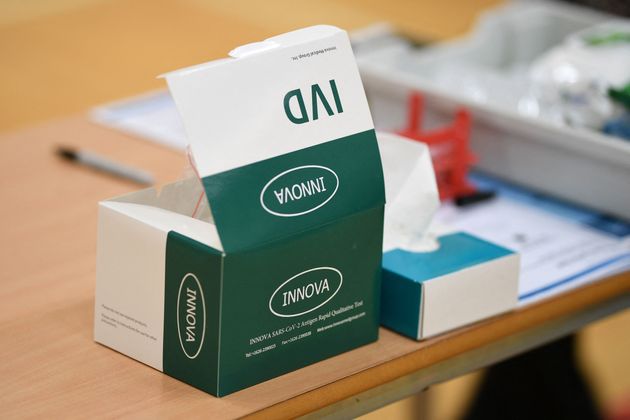
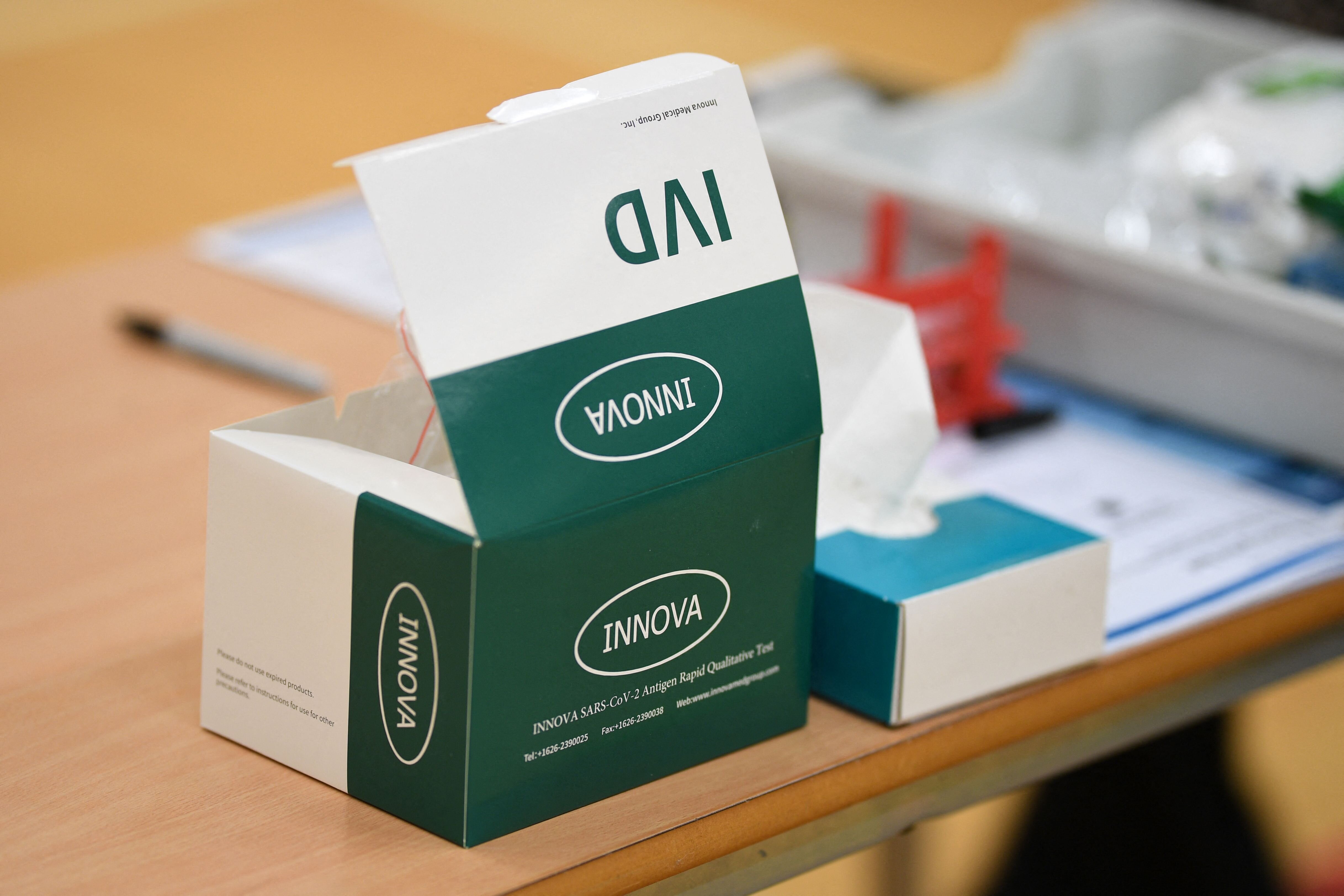
HuffPost UK has learned that the DHSC is shifting away from its reliance on tests made by Innova Medical Group, a US-registered company that has won nearly more than £2bn in contracts for its own Chinese-made products.
The move had sparked hopes that home-grown firms, which claim to offer more reliable and cheaper tests, would finally get a share of Test and Trace’s huge £37bn budget.
But only one small British firm, SureScreen in Derby, has been contracted to provide rapid tests, and the much bigger ‘Orient Gene’ – as it is known – is being used to provide large numbers of diagnostics instead.
OLI SCARFF via Getty ImagesInnova’s tests
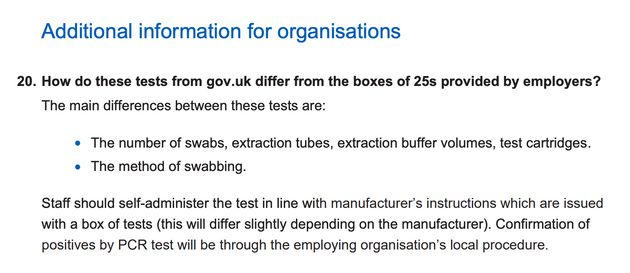
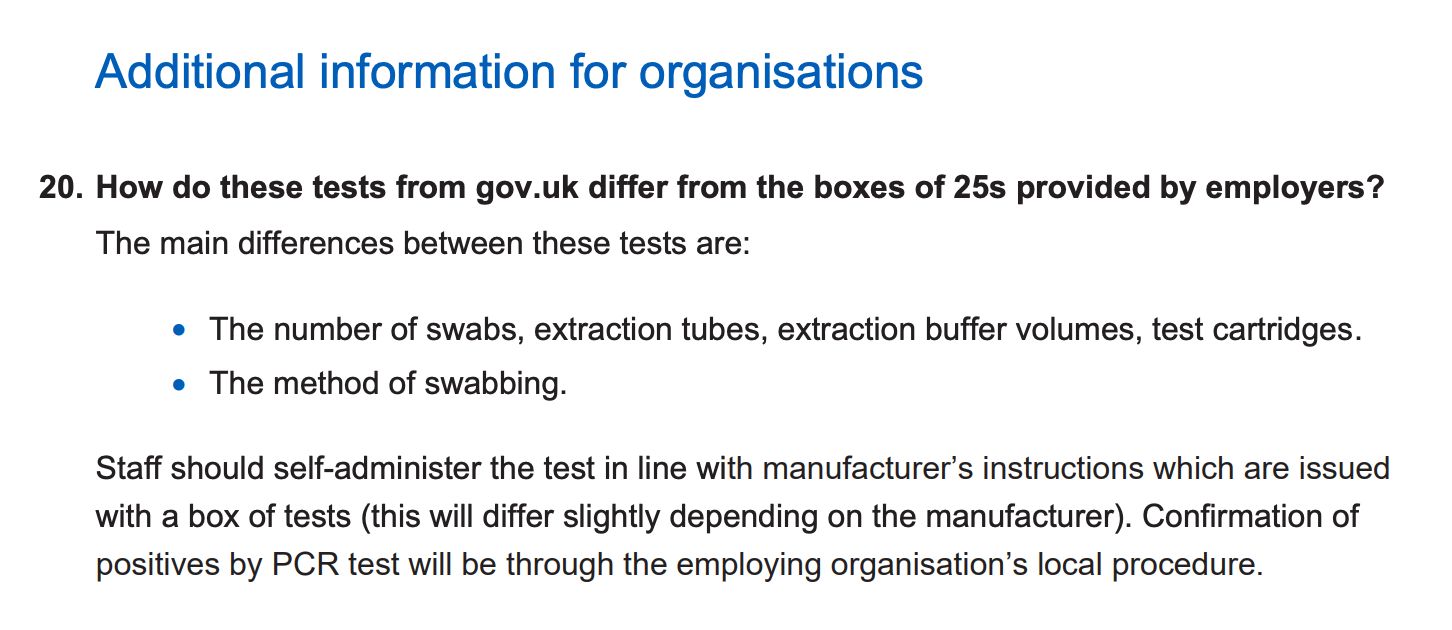
The first clue to the shift away from Innova came in new guidance for NHS managers and staff, which says they should expect a new test which differs in “the method of swabbing”.
The Innova test requires a swab from the back of the throat as well as the nose, a practice that is seen as uncomfortable for many. The OrientGene and SureScreen tests only need nasal swabs.
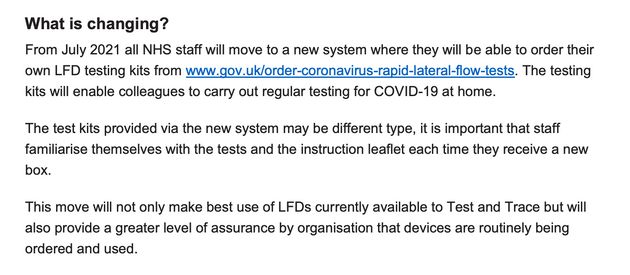
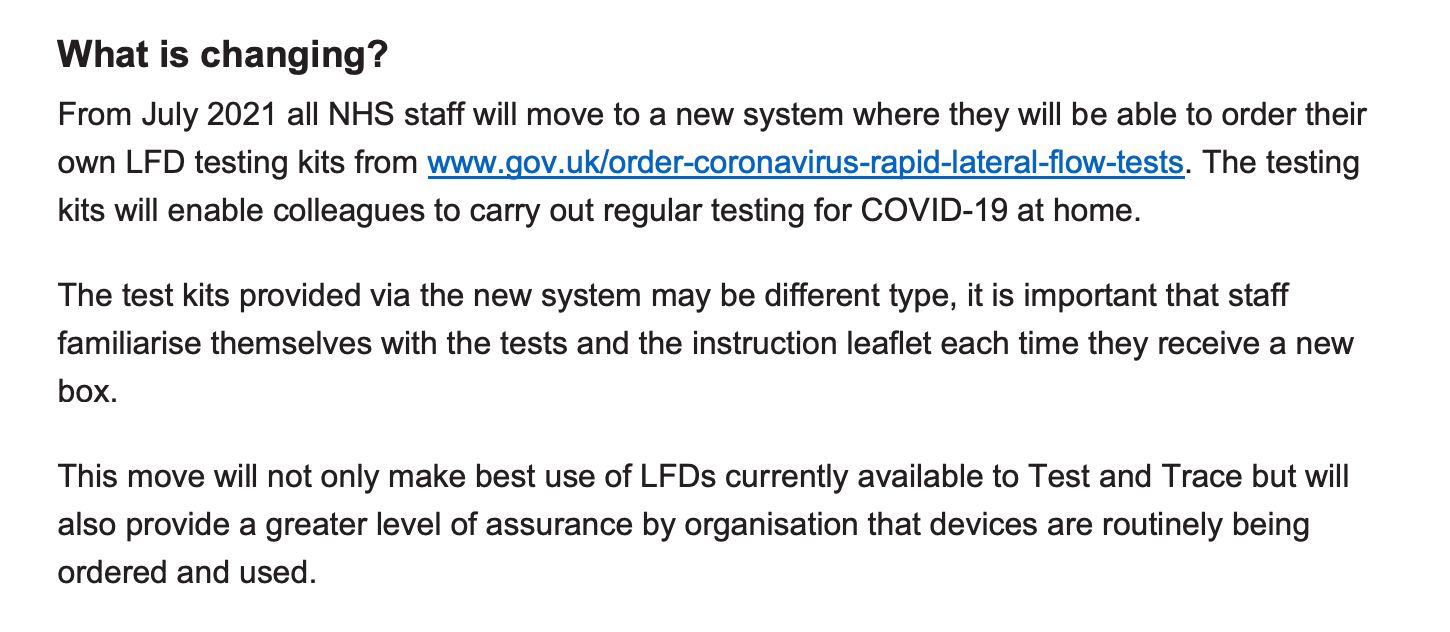
The new guidance, seen by HuffPost UK, states that all NHS staff can from July order their boxes of tests directly from the gov.uk website rather than have them supplied by their hospital trust.
Staff will be expected to use up their current Innova boxes, which contain 25 tests, before shifting to the new system.
HuffPost UKNHS lateral flow test guidance
HuffPost UKNHS lateral flow test guidance
The change also appears designed to ensure that tests are more accurately registered, following scathing criticism from the National Audit Office that nearly 600 million Innova tests were not being tracked.
Bridget Phillipson, Labour’s shadow chief secretary to the Treasury, said: “Handing this work to a Chinese company right after saying they wanted more lateral flow tests made in Britain is typical of this government’s empty promises to support British jobs and industries.
“Instead of using the powers they have to boost industry in Britain, they are instead happy to leave our economy weak and see British businesses losing out.
“Labour has a plan to buy, make and sell more in Britain to get our economy firing on all cylinders and for us to build up skills and businesses for the future as we recover from the pandemic.”
Speaking at the government’s Porton Down laboratory in November, Boris Johnson said: “We are seeing real progress on a UK-made lateral flow test. We’re not quite there yet but in the months ahead we’ll be making them in this country as well.”
Johnson went further earlier this year, when he declared: “We’ve created an indigenous industry not just to conduct lateral flow testing, but to make lateral flow tests.”
The DHSC told HuffPost UK it was “committed to ensuring that the UK has the testing supplies and equipment it needs”.
“As part of this, people may receive the DHSC branded Innova self LFD test, or an Orient Gene branded self LFD test. If the test will be conducted in an assisted setting, Innova, Orient Gene tests may be used.
“Collaboration between industry and government continues to be a priority and we are hugely grateful to all the manufacturers and suppliers who have come forward to offer their assistance in producing Lateral Flow Devices (LFDs).
“We are planning to diversify the supply of LFDs and have started to procure through fair and transparent competition via our LFD Dynamic Purchasing System.”
The DHSC insisted British innovation was at the forefront of its response to the pandemic and partnerships with British firms would help it “to build back better by tapping into the UK’s domestic talent, ingenuity and industry”.
Orient Gene tests have already been used by Test and Trace in its supplies to some schools and colleges, partly because their nasal swabbing is easier to use than back-of-the-throat swabs.
As part of the PM’s ‘moonshot’ plan to offer mass testing to the public, two free lateral flow tests per week have been offered in recent months, but that scheme is set to end in September.
If individuals are forced to pay for their own tests, a lucrative market could open up for those tests approved by regulators.
British firms have spent many months trying to persuade the Department of Health and Social Care (DHSC) to move away from the Chinese-made tests.
Earlier this year, DHSC agreed contracts with Omega Diagnostics, headquartered in Alva in Scotland and Global Access Diagnostics in Bedfordshire to provide manufacturing capacity for mass production of British alternatives.
Omega plans to use provide capacity for rapid tests tests using key pieces of manufacturing equipment loaned by the UK government, but it is still waiting for confirmation on which test it will be required to manufacture.
One UK company, Mologic, was so infuriated with the delays in approving its own test – which it says has passed WHO standards – that it threatened to sue the government.
One problem has been that British-made tests have failed to win full approval from the government lab at Porton Down, even though their own independent studies suggests they work well.
Frustrated biotech firms may end up selling their tests in Europe and the US rather than the UK, and some in Whitehall sympathise with their complaint that Porton Down processes are overly bureaucratic.
Neale Hanvey, MP for the Alba party, raised in prime minister’s question time on Wednesday the issue of Innova’s big government contracts and the failure to use rival tests made by Scottish-based firms such as Omega Diagnostics.
Hanvey pointed to the lack of progress since health minister James Bethell tweeted in March that British companies would be used to supply tests by May.
We’re investing in 2m LFDs per week by end May from British firms @OmegaDiagnostic (🏴) and @mologic to stop the spread of COVID-19. Details 👇
Investment in 🇬🇧 talent will help “build back better” & create 100s of jobs. 🙏 to all involved.
Hanvey asked: “Can the Prime Minister explain why his government is undermining the superior domestic diagnostics tests, while propping up discredited Chinese imports, to the tune of 3 billion pounds?”
Johnson replied: “I don’t think that’s an entirely fair characterisation of what the government is is doing. On the contrary, we have worked night and day to build up our domestic lateral flow capacity, and continue to do so.”
Innova, which is based in California and funded by a private capital group by a Chinese born businessman, uses tests produced by Chinese Biotime Biotechnology, in Xiamen city, Fujian province.
Concerns about cost and reliability have been raised repeatedly by critics, underscored when the US Food and Drug Administration (FDA) refused to approve its test after the firm made unfounded claims about its clinical data.
Americans were told last month to stop using Innova tests and throw them in the bin, but the UK’s Medicines and Healthcare products Regulatory Agency (MHRA) did its own risk assessment and found no similar action was needed here.
Despite the criticism, the UK government leaned heavily on Innova during the recent second wave of Covid in early 2021.
The gov.uk website shows that the most recent contract was worth a massive £1.2bn for tests supplied from March to April. However, there are no published contracts for Orient Gene.
Following pressure from the government to get costs down, industry sources say that British manufacturers have managed to now offer their own tests at around £5 each, cheaper than Chinese rivals.
British company Avacta had its own AffiDX rapid test approved for professional use by the Medicines and Healthcare products Regulatory Agency (MHRA) in June. But there is slow progress in wider approval for public use.
Innova’s tests have come under fire for their reliability during the pandemic, with some academics pointing out that while they can pick up cases they are unsuitable for ‘test and release’ policies.
A new study published in the British Medical Journal on Wednesday, which looked in depth at Innova tests used in mass testing in Liverpool, found “the LFT missed 10% of people with a high viral load…and most of the cases with a viral load…who might have contributed to virus transmission.
“This suggests that care is needed when conveying negative LFT results so as not to give false reassurance,” it said.
However, a technical update published by DHSC on Wednesday defended the continued use of the Innova test, also known as the ‘Biotime Lateral Flow Device’, a reference to the Chinese factory where it is made.
“The Biotime LFD remains suitable for deployment as part of the asymptomatic testing programme to identify infectious individuals in the population and to reduce onward transmission risk at a local and national population level.
“There is no difference in performance in its ability to detect the Delta variant in comparison to the Alpha variant.”
However the update did hint at the greater use of British-made tests to cope with more variants of the virus.
“As further new variants emerge, and with increased diversity of LFD product manufacturers planned for deployment in the future, the combination of routine in vitro and clinical post-market surveillance will remain a critical tool for rapid surveillance of device performance in a changing landscape.”
Going on holiday this summer just got a little bit easier, because the government has relaxed some of the quarantine rules on international travel.
From July 19, those who have had both doses of the coronavirus vaccine will no longer have to quarantine upon return from amber list destinations.
Advertisement
In addition, children under the age of 18 will not have to quarantine on their return to England from amber list destinations, transport secretary Grant Shapps confirmed.
The long awaited announcement will be music to the ears of Brits dreaming of sunshine, particularly those who’ve already got holidays booked to destinations such as Portugal, which moved from the green to amber list last month.
Advertisement
But there’s still a lot to consider before you jet off. Here are the essentials you need to know.
Sylvain Sonnet via Getty Images
Plaza de Espana, Seville, Spain
There’s still a traffic light system to contend with:
Advertisement
The traffic light system is still in place and while the quarantine rules may have softened a little, you’ll still need to take a number of coronavirus tests before and after travel. Here’s a reminder:
Green countries
People returning from green destinations must take a test before they depart, then another test on or before the second day of their return. You do not need to quarantine unless the test result is positive.
Amber countries
Advertisement
People returning from amber destinations, such as France, mainland Spain, and Portugal, will still be required to take a Covid-19 test before returning to the UK.
They will also have to take a test on or before the second day of their return, but will be exempted from the day eight test from July 19.
While double jabbed and under 18s are exempt from quarantine, adults who have only received one coronavirus vaccine (or none at all) will still need to self-isolate at home for 10 days after returning from an amber country. You need to have had your second vaccine at least 14 days before travel in order for it to kick and for you to be exempt.
Red countries
People returning from red destinations must take a test before they return to the UK. They’ll then be required to book a quarantine package in a government-approved quarantine hotel, plus two more tests, on or before day two and on or after day eight of quarantining.
You’ll need to find the correct test
There’s been a lot of confusion about which tests you can take for travel. The Department for Transport confirmed to HuffPost UK that lateral flow tests are allowed for pre-departure tests, as long as they abide by the sensitivity required (performance standards of ≥97% specificity, ≥80% sensitivity at viral loads above 100,000 copies/ml). The jargon is complicated, but do check your test to make sure it meets this requirement
You cannot take an NHS test abroad with you to use on yourself before you return. Instead, the government says you must buy a test from a reputable private company. It’s your responsibility to ensure the test meets the minimum standards for sensitivity, specificity and viral load details.
Once you’ve arrived back in the UK, tests taken on day two and day eight must be PCR tests, the Department for Transport confirmed. Again, you must use a test that meets the government’s minimum standards.
You’re required to book a “test pack” before you travel and leave enough time for tests to be delivered to your address in England.
If you’re struggling to find a test that meets the government’s standards, the government’s website has a list of providers that meet the threshold.
Advertisement
Remember: the traffic light system is not reciprocal
Just because a country is on the UK’s green or amber list, it does not necessarily mean Brits are able to travel there quarantine-free. Every country sets its own entry requirements.
Take Portugal, which is currently on the UK’s amber list, as an example. Portugal recently updated its rules to say all adults and children over the age of 12 must have proof of a negative Covid-19 test to travel to or through Portugal.
If you’ve travelled from the UK to mainland Portugal, you must also quarantine for 14 days in the place you’re staying – or at a place indicated by the Portuguese health authority – unless you can prove you’ve been double jabbed with an EU approved Covid-19 vaccine at least 14 days prior to travel.
The Portuguese tourist board confirmed to HuffPost UK “children under the age of 12 do not need to quarantine or show a negative test or proof of vaccination”. It means that those travelling with teens – who are not exempt from quarantine but can not yet get a vaccine in the UK – can’t now holiday in Portugal.
Malta, on the UK’s green list, also has strict rules. You can only enter Malta if you’re double-vaccinated. Children under 12 will be permitted to enter the country if they’re holidaying with parents who have been double jabbed. Although exempt from quarantine, those aged between five and 11 must also show evidence of a negative PCR test taken within the previous 72 hours before arrival.
The Balearic Islands of Mallorca, Menorca and Ibiza are other popular options for families this summer, as they recently moved to the UK’s green list. However, all visitors to the Spanish islands must present evidence of double vaccination or a negative coronavirus test.
Children under 12 are “not required to present these certificates or supporting documents”. If you’re travelling with kids aged 13-18 years old, they can enter the country as long as they can demonstrate a negative test.
It’s vital to check the entry requirements of a country before you book flights or accommodation. You can search your holiday destination on the Foreign, Commonwealth and Development Office (FCDO) website to see the latest guidance. And remember, all the rules are subject to change if Covid cases go up or down.
Injecting sulphur into the stratosphere to reduce solar radiation and stop the Greenland ice cap from melting. An interesting scenario, but not without risks. Climatologists from the University of Liège have looked into the matter and have tested one of the scenarios put forward using the MAR climate model developed at the University of Liège. The results are mixed and have been published in the journal The Cryosphere.
The Greenland ice sheet will lose mass at an accelerated rate throughout the 21st century, with a direct link between anthropogenic greenhouse gas emissions and the extent of Greenland’s mass loss. To combat this phenomenon, and therefore global warming, it is essential to reduce our greenhouse gas emissions. Every day new ideas emerge to slow down global warming, such as the use of solar geoengineering, a climate intervention that consists of artificially reducing solar radiation above the ice caps and thus limiting the melting of the ice. How can this be done? The idea is to inject sulphur into the stratosphere, a stable meteorological zone located between 8 and 15 km above sea level in the atmosphere,” explains Xavier Fettweis,climatologist and director of the Climatology Laboratory at ULiège. The sulphur will then act as a sort of mirror that will reflect part of the solar radiation back into space.” An intervention which therefore makes it possible to reduce the amount of sunshine on earth, similar to what happens during volcanic eruptions. In 1991, the eruption of Pinatubo (Philippines) injected millions of tonnes of sulphur dioxide into the stratosphere, causing a drop in global temperatures of around 0.5°C. This observation led to the development of solar geoengineering scenarios. Are these scenarios really reliable and risk-free? This is what the ULiège climatologists wanted to test.
We used a plausible scenario of solar geoengineering (G6solar) that would reduce global warming by a factor of 2 on a global scale compared with the most pessimistic scenario in which nothing would be done about the climate,” continues Xavier Fettweis. By forcing the MAR (Regional Atmospheric Model) developed at ULiège to use this scenario, we show that the reduction in solar radiation associated with this scenario would make it possible to locally reduce the melting at the surface of the Greenland ice sheet by 6% in addition to the global reduction in global warming. While these results seem encouraging, the researchers insist that this type of scenario would not be sufficient to maintain the ice cap in a stable state by the end of this century. Moreover, this type of intervention is not without risk since it could have a significant impact on the ozone layer and on water cycles and precipitation, accentuating the disparities between wet and dry regions. Only solar geoengineering scenarios, which are much more ambitious but becoming unrealistic and dangerous, would make it possible to save the cap,” concludes Xavier Fettweis. We are talking here about human and intentional intervention in the climate. A plan B that is not! It is therefore urgent to drastically reduce our greenhouse gas emissions by means that we know but are struggling to implement.
You’re reading The Waugh Zone, our daily politics briefing. Sign up now to get it by email in the evening.
It was just four seconds, but it felt like an age. That was the heavily pregnant pause, the strange silence amid the bearpit hubbub, that marked Boris Johnson’s delayed response to a direct hit from Keir Starmer in PMQs.
The Labour leader had picked up on widespread disruption being caused in schools and workplaces by the soaring numbers of people forced to isolate because of Covid’s Delta variant. Businesses were losing staff, holidays were being put at risk, parents and kids were missing school sports days, and some were even denied the chance to watch England in the pub, Starmer said.
Instead of a careful controlled unlocking of restrictions, didn’t the PM’s ‘big bang’ approach mean “we are heading for a summer of chaos and confusion?” Then came that pause. Johnson was still seated, reading his notes, and apparently unaware of Speaker Hoyles’ call to answer the question. “….er, no, Mr Speaker…” he finally blurted out.
PMQs is a chance for an Opposition leader to vent real-time frustrations on behalf of the public, simultaneously making a PM squirm while trying to act as a voice of the voters. And Starmer had been wise to use the weekly exchange to highlight the real concerns many are now feeling as they are ‘pinged’ by the NHS app, even if they are double jabbed.
With Tory newspapers as well as Tory MPs expressing fury at the four-week delay in changes to isolation policy until August 16, this was undoubtedly ripe territory. Starmer knew the real reason for the delay was a sensible fear that ditching isolation now could lead to even higher cases (possibly 25% higher, the Guardian has been told), but he exploited the issue for all it was worth.
Without crediting Dominic Cummings (not least as he’s irretrievably tarnished in the eyes of many of the public), Starmer picked up on the former No.10 adviser’s withering description of Johnson as a wonky supermarket trolley that crashes around uncontrollably. “He is doing what he always does, crashing over to the other side of the aisle,” he said.
It’s unclear if Cummings wants to assert his copyright, but The Trolley is a good attack line on the PM as it focuses not on his ability to mislead or his lack of moral fibre (which the public appear to have spotted and dismissed) but on his competence and that of his government. A fair chunk of floating voters don’t mind a quasi-comedian in charge, they do dislike chaos that affects them directly.
It was Cummings who revealed recently that the PM had told him: “The chaos means everyone will look to me as the man in charge.” The difficulty is that while you can get away with editing the Spectator in such a fashion, it’s hard to run the country on similar lines.
That Johnson replied to Starmer with a tired set of greatest hits (European Medicines Agency, vaccines-vaccines-vaccines) underscored the complacency that some of his own MPs have been worried about since his failure to sack Matt Hancock. And the string of similar non-sequitur answers to the Liaison Committee later may have confirmed that impression.
Asked if he had sacked Hancock, he replied that his Vote Leave bus’s £350m-a-week NHS claim was an underestimate and not worthy of all the ‘hoo-ha’. Asked about today’s confirmed cut in the £20 uplift to Universal Credit, he said jobs were better than welfare. Asked what he meant at the G7 by ‘building back better in a more feminine way’, he talked about the number of women diplomats.
This wasn’t a supermarket trolley with a mind of its own, it was a dodgem car veering forwards, backwards, sideways, moving in any direction other than one that answered a question. The problem may come when the public sees itself in the passenger seat. One man’s cheerful funfair ride is another’s painful whiplash, a condition felt not immediately but sometime afterwards.
Normally, the PM can get away with his chaos theory of leadership because he does it with a smile. The risk comes when, as with his replies to Tory equalities committee chair Caroline Nokes, he does it with a smirk that borders on a snarl. Claiming she “would find fault with almost anything that we did Caroline, with the greatest of respect”, he then added she should “send me a postcard” to suggest a better way to explain his own surreal phrase about building back in a feminine way.
On everything from his lack of a plan for climate change to the absence of a 10-year funding plan for schools, Johnson either changed the subject or promised action would come some day soon. The pauses in policy don’t feel pregnant so much as prevaricating.
As the committee was wrapping up, the PM suggested the public just weren’t that interested anyway right now. “I’m sure our viewers may be switching over to the football,” he joked. He was probably correct about the England football team’s rival appeal compared to the dull business of government. But one suspects the long pause can’t last beyond this summer.