The UK regulator says the vaccine is safe and effective and the benefits outweigh risks in this age group.


The UK regulator says the vaccine is safe and effective and the benefits outweigh risks in this age group.
Stefan Rousseau – PA Images via Getty Images
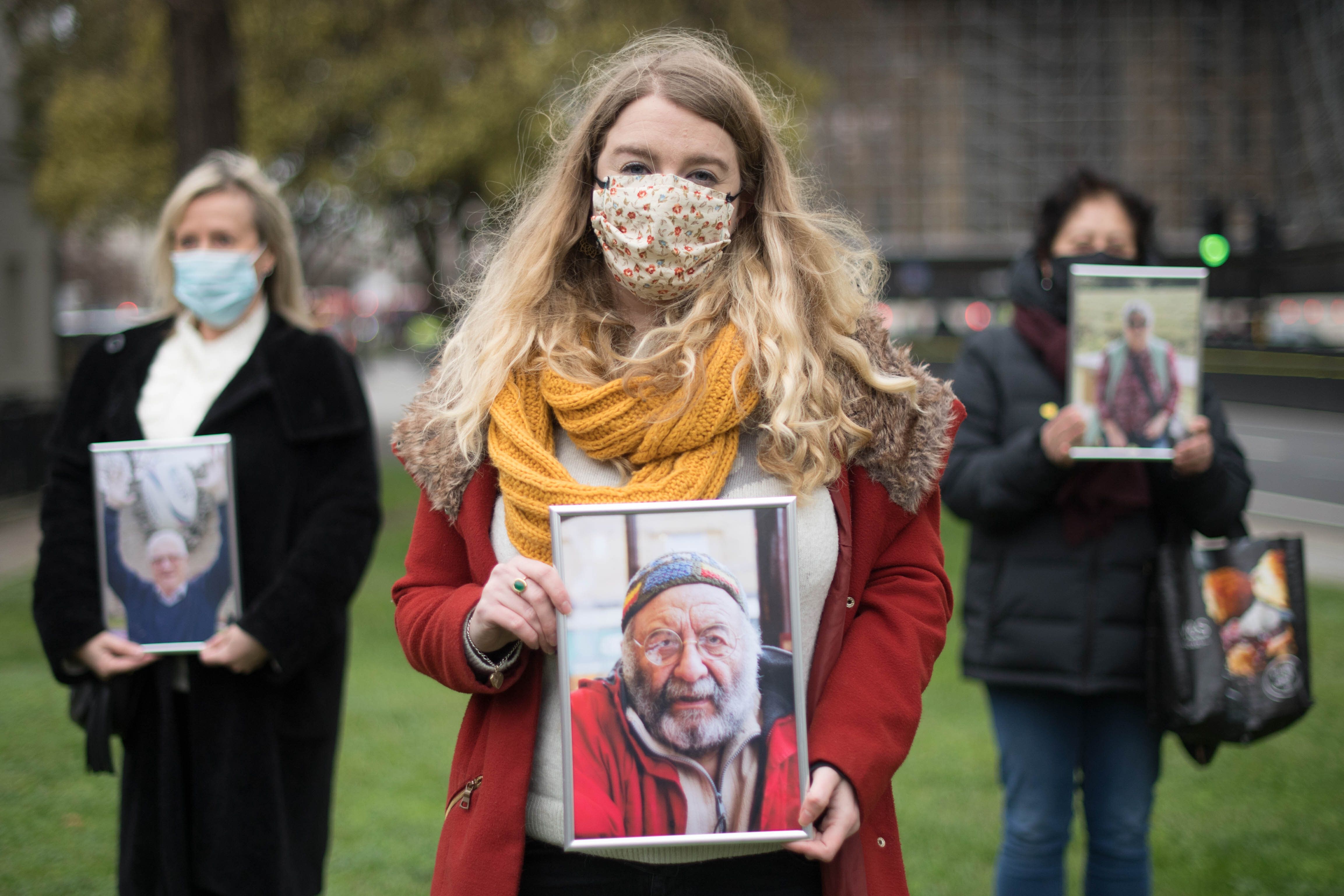
Boris Johnson faces growing calls to meet the families of Covid victims before the public inquiry into how his government handled the pandemic.
The prime minister has said an independent statutory inquiry that puts “state’s actions under the microscope” will begin in spring 2022.
But Covid-19 Families For Justice, which represents some 4,000 grieving families, has made an urgent call for ministers to consult with them about the aims, remit and chair of the inquiry.
The group’s key demand is the hearing allows for a rapid review phase.
Families fear lives may be lost in future if ministers fail to address gaps in the UK’s preparedness, such as on PPE, and government does not quickly learn from disastrous mistakes on lockdowns and sending infected back people to care homes.
However, ministers, including health secretary Matt Hancock, have refused to commit to meeting with families on the inquiry’s terms of reference.
Jo Goodman, co-founder of the families group lost her father Stuart, 72, to the virus during the first wave.

DANIEL LEAL-OLIVAS via Getty Images
She told HuffPost UK Johnson delayed a meeting because families threatened legal action over the inquiry’s delay.
“We stand ready and willing to meet government ministers but they’ve yet to set a date,” she said.
“Boris Johnson has previously promised to do so, but then went back on it because of the judicial review we had planned to seek.
“We have now dropped the judicial review, so there is no reason for the government not to meet with us. We are ready when you are prime minister.”
MPs have also been pressuring the government, confidence in the inquiry, which is likely to be traumatic for those hardest hit.
Jack Dromey, MP for Birmingham Erdington and shadow Cabinet Office minister, has written to chancellor of the duchy of Lancaster, Michael Gove, after questions in the House of Commons were ignored.
The letter, passed to HuffPost UK, underlines that “the country has experienced tragedy and human suffering on a scale not seen since the Second World War”.
Dromey stresses ministers were causing “deep hurt” to families who “simply want to know that the government is listening to them”.
Leon Neal via Getty Images
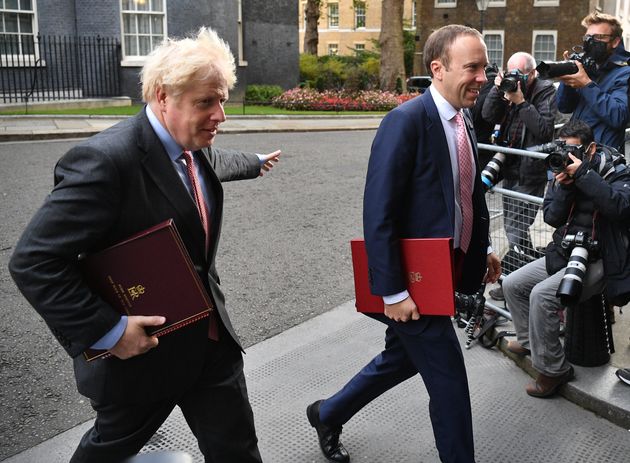
The letter says that Johnson and Hancock have seven times refused to meet families and adds: “MPs across the House will have met with constituents who have suffered great loss due to coronavirus. Meetings with bereaved families and listening to their stories are some of the most difficult and emotional meetings I have been involved in since being elected a member of parliament.
“Such meetings cannot fail but to bring home the sincere desire by the bereaved families that there be a meaningful public inquiry into the government’s handling of the coronavirus pandemic with outcomes the bereaved families can trust to be fair and reasonable.”
It adds: “That is why it is so important to the bereaved families that the government consults with them to ensure this is the case, by agreeing an appropriate chair and the right terms of reference.”
The government has said the inquiry’s remit and chair will be chosen “in due course” and that spring 2022 was the appropriate time to begin the hearing.
Asked about the inquiry in parliament, Gove has suggested families will have a role.
He told MPs: “A statutory inquiry is obviously the right way to ensure that all the right questions are asked and that full answers are arrived at.
“To ensure that the inquiry works, the experience, voices and views of those who have suffered so much must be a critical part in ensuring that it is set up appropriately.”
A government spokesperson, when asked if the PM would meet with the group, added: “Every death from this virus is a tragedy and our sympathies are with everyone who has lost loved ones.
“Throughout the pandemic senior ministers, including the prime minister, have met and will continue to meet with bereaved families.
“As the prime minister said, we have committed to holding a full public inquiry as soon as is reasonably possible.”


A survey of 15 countries finds the lowest level of trust in jabs is in Japan.

The risk of being infected with coronavirus is substantially reduced for up to 10 months after a first infection, a study suggests.
Researchers found that care home residents with a previous infection were 85% less likely to be infected between October 2020 and February 2021 than residents who had never been infected.
Meanwhile, staff with past infection were 60% less likely than staff who had not had the infection before, the study suggested.
According to the researchers, this showed strong protection in both groups, but they cautioned that the percentages may not be directly comparable, as staff might have accessed testing outside the care home, leading to positive tests not being included in the study.
Additionally, residents who tested positive for antibodies were likely to represent a particularly robust group, having survived the first wave of the pandemic.
Lead author Dr Maria Krutikov, of UCL Institute of Health Informatics, said: “It’s really good news that natural infection protects against reinfection in this time period. The risk of being infected twice appears to be very low.
“The fact that prior Covid-19 infection gives a high level of protection to care home residents is also reassuring, given past concerns that these individuals might have less robust immune responses associated with increasing age.
“These findings are particularly important as this vulnerable group has not been the focus of much research.”
“The fact that prior Covid-19 infection gives a high level of protection to care home residents is reassuring.”
– Lead author Dr Maria Krutikov, of UCL Institute of Health Informatics
Researchers looked at rates of coronavirus infections between October and February among more than 2,000 care home residents and staff. They compared those who had evidence of a previous infection up to 10 months earlier with those who had not been previously infected.
For the study, 682 residents (with a median age of 86) and 1,429 staff in 100 care homes in England took antibody blood tests in June and July last year after the first wave of the pandemic. About a third tested positive for antibodies, suggesting they had previously been infected.
Researchers then analysed the results of participants’ PCR tests, starting around 90 days after the blood samples were taken to ensure the tests did not pick up the initial infection. PCR tests were taken once a week for staff, and once a month for residents, with further testing in the event of an outbreak.
Positive tests were only included if they were more than 90 days apart to make sure the same infection was not included more than once. Based on the antibody test results, out of the 634 people who had been previously infected, reinfections occurred in only four residents and 10 members of staff.
Among the 1,477 participants who had never been infected, positive PCR tests occurred in 93 residents and 111 staff. The study excluded the impact of vaccination by removing participants from the analysis 12 days following their first vaccination dose.


You’re reading The Waugh Zone, our daily politics briefing. Sign up now to get it by email in the evening.
What was meant to be Boris Johnson’s ‘quiet week’ just keeps on getting noisier. Today started with a kicking over catch-up funding for schools, swiftly followed by warnings that the simmering unease over international aid cuts is ready to boil over into rebellion. To top it all, it looks like millions of Britons won’t be getting a summer holiday abroad after all.
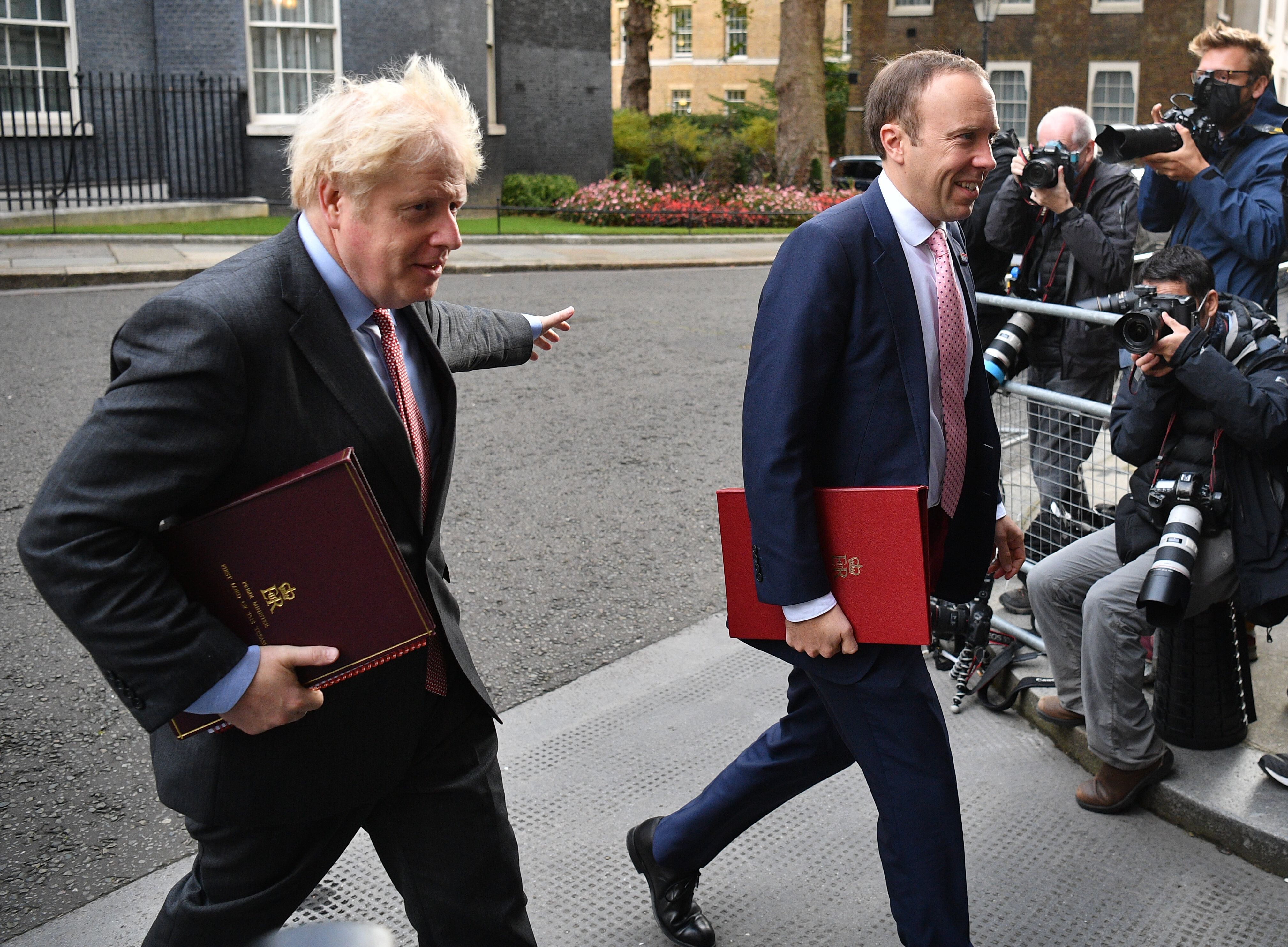
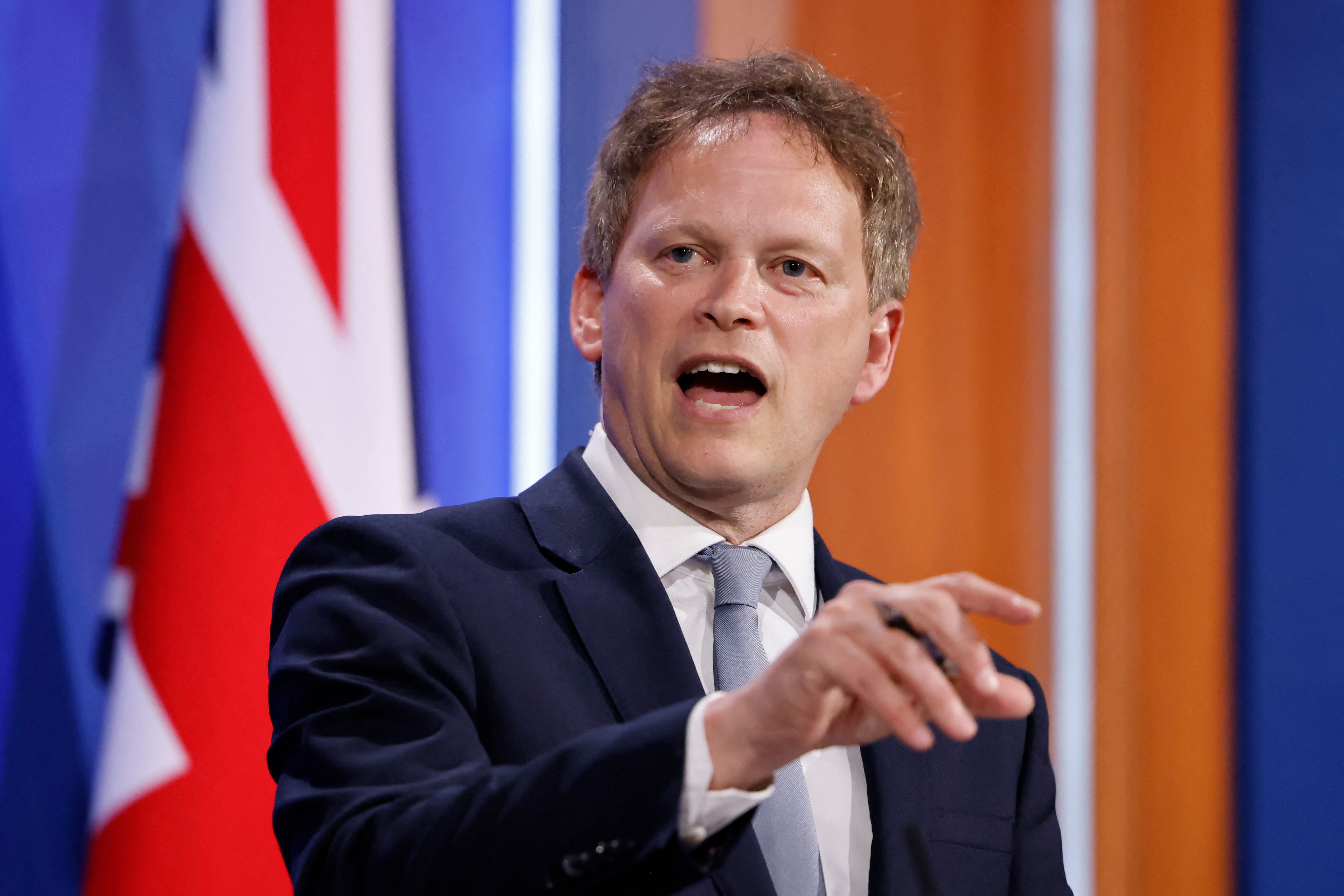
That’s the very downbeat conclusion many in the tourism industry have drawn from transport secretary Grant Shapps’ big announcement. Shifting Portugal from the “green list” to the “amber list” of travel destinations, albeit with a week’s notice, signals that holidays overseas are getting harder, not easier as some had assumed.
Politicians love using the phrase “direction of travel”, but that terminology will feel singularly inapt for those who had pinned their hopes on ending a long and gruelling year with at least a break in the Mediterranean sunshine. It’s still possible that in three weeks’ time the numbers may have fallen again in various European countries and islands, but no one is banking on it.
It’s worth pointing out that many Brits can’t afford or don’t want a foreign holiday. But a sizeable number of them very much do, and several Tory MPs will point out this is not some middle class obsession. “My working class constituents work bloody hard and save every penny for that week in the sun,” one tells me. “They’ll wonder why the hell they can’t still do that if they’re double jabbed.”
One problem lies in the traffic light system devised by the government, or more particularly, the amber bit of it. Because travel to amber list countries is legal, though not advised, there is no automatic right to a refund that would occur on the red list.
David Davis is another Tory who thinks there are political risks with Shapps’ announcement. “This is an irrational overreaction,” he tells me. “If you’re going to do this, at least make it a green-red system so people can get their money back.”
As it happens, that’s Labour’s position too. Shadow home secretary Nick Thomas-Symonds says the amber system is just a recipe for confusion, with reports of 50,000 travelling into the UK daily, each possibly bringing back a nasty souvenir in the shape of an infectious new variant of the virus.
I suspect that some Brits will actually hedge their bets by splitting up what would have been a fortnight abroad. They could take a risk on the first week holidaying in an amber country like Portugal, Spain or Greece, then using their second week’s holiday to quarantine at home before getting a test release after five days that lets them take a short trip in the UK too.
But only a minority will want to risk that. The real difficulty with the current traffic light system is that it’s hard to tell amber-flashing-red from amber-flashing-green. It is designed to offer a careful route from the most unsafe to the most safe environments and embodies a proportionality of risk that drives Boris Johnson’s thinking. That’s why he probably won’t ditch it.
Yet this virus doesn’t respect proportionality, and often the only language it understands is overwhelming force (we’ve learned lockdowns have to be hard and fast). The amber list is the overseas version of the domestic regional tiers system designed last year to contain Covid in defined areas. That system failed miserably this winter in the face of the Kent variant, which staged a deadly route march out of the south east across the whole country.
And again in and around Bolton and other “hotspots” where the even more transmissible Indian variant was found, the virus has shown a marked disrespect for borough boundaries, let alone national borders. The latest figures showing the big jump in cases in Blackburn, plus the wider spread of the virus across Lancashire, proves that once a new variant gets a foothold it moves fast.
As the PM ponders what this all means for his June 21 unlockdown date, history tells us he will want to have his cake and eat it. We shouldn’t forget that the public too quite like a bit of cakeism (European style public services, US-level taxes, anyone?), a factor that’s often forgotten when some are baffled why Johson is so popular.
The return of ordering at the bar (instead of table service) is seen by some of the PM’s allies as sacrosanct, both because it is vital to the economics of the pub industry and more importantly vital to some sense of normality and boosted morale after months of lockdown. There’s a view in government that this simple change would buy the PM enough political capital to keep in place other restrictions, like working from home and mask wearing on public transport.
The difficulty again is that while that may seem sensibly proportionate to the risk, a disproportionate response to the Indian or “delta” variant may be what’s really needed. The latest data from Public Health England, confirming the delta variant’s higher transmissibility, its “significantly higher risk of hospitalisation” and its higher vaccine escape, could force firmer action from No.10.
A short, two-week delay (which I’ve talked about before) for all the June 21 measures is gaining traction in Whitehall as perhaps the better solution, not least because it gives time for ramping up more jabs.
As the PM had his second dose today, he must have thought just how much safer the nation would be if as many over-50s as possible had the same protection before further unlockdown. That delay would be disproportionate to some, but may be just smart public health policy as much as smart politics.

Cases of Covid-19 caused by the Delta variant, which first originated in India, have risen by 5,472 since last week to 12,431.
Public Health England (PHE) suggests the variant has now overtaken the Alpha variant, which first originated in Kent, as the most dominant variant in the UK.
Last week, health secretary Matt Hancock said that up to three-quarters of new coronavirus cases in the UK were the Delta variant, when 6,959 cases were confirmed.
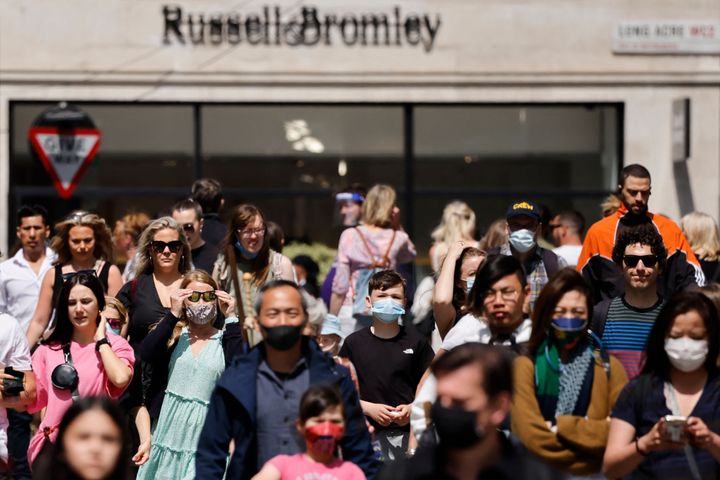
There are a few variants that originated in India circulating, but one is causing more worry than others.
The strain – B1617.2 (or the Delta variant) – is one of three related variants that have been detected in the UK. The others are B1617.1 and B1617.3.
There were originally four variants of concern (VOCs) in England – the so-called Kent, South Africa, Brazil and Bristol variants.
All three variants from India were originally designated as variants under investigation, however Public Health England (PHE) confirmed B1617.2 had become the fifth variant of concern as of May 7 due to rising cases.
Since then, cases have soared on a weekly basis, with scientists suggesting this new variant is more transmissible than the Alpha variant.
Early evidence also suggests there may be an increased risk of hospitalisation, although more data is needed to confirm this.
PHE said 278 people with the Delta variant attended A&E this week, resulting in 94 people being admitted to hospital overnight. Last week, 201 people attended A&E, with 43 admissions. The majority of these had not been vaccinated.
Bolton remains one of the most affected areas, where cases have risen by 795 to 2,149. Blackburn with Darwen has also seen 368 new cases, bringing it to 724 in total.
There are encouraging signs that the transmission rate in Bolton has begun to fall, PHE said, and that the actions taken by residents and local authority teams have been successful in reducing spread.
Other areas in England with more than 100 confirmed cases of the variant, as of last week, included: Leicester, Sefton, Nottingham, Wigan, Central Bedfordshire, Manchester and Hillingdon.
The health body also published a breakdown of outbreaks and clusters of variants in schools and other settings.
The latest data suggests there have been 97 confirmed Covid-19 outbreaks in primary and secondary schools that have had at least one variant case linked to them over the most recent four-week period.
This represents around one in 250 schools.
As it stands, the lifting of restrictions on June 21 hangs in the balance.
PHE experts urged the public to “remain cautious” as the country approaches the next stage of the roadmap.
Variant cases are on the increase in several areas and it is absolutely crucial that everyone plays their part in preventing their spread, PHE said.
Dr Jenny Harries, chief executive of the UK Health Security Agency, said: “With this variant now dominant across the UK, it remains vital that we continue to exercise caution particularly while we learn more about transmission and health impacts.
“The way to tackle variants is to use the same measures to reduce the risk of transmission of Covid-19 we have used before. Work from home where you can, and practise hands, face, space, fresh air at all times.”
She urged those who are eligible to get vaccinated as soon as possible.
Confirmed cases of the Indian variant have risen to 12,431 in the UK, according to new data from Public Health England
When you invite someone to have a shared experience together, professionally or personally, and consent is given grudgingly, this tells you that the invitation isn’t very aligned. Even if you’re ostensibly getting a yes, there are probably some unresolved objections behind that yes, so you’re getting a compromised version of a yes.
This in itself is another layer of invitation for you to unpack. Do you want to move forward with the consent you received, or do you want to go for a more aligned form of consent?
This isn’t a trick question. Sometimes you may be fine with the consent you received, especially if the invitation is fairly simple. It may not be worth the effort to aim for a more aligned version, especially if the consequences are minor either way. A grudging yes may be good enough in some situations.
Sometimes, however, you may not want to settle for a compromised yes. You may want to aim for a higher standard and go for a true win-win, such as by changing the offer or by addressing and resolving objections. And if you can’t reach win-win, then you may prefer to declare “no deal” and withdraw the offer,
One nice indicator that you have a real yes from the other person is that consent is given not plainly but enthusiastically. This is a pretty good sign that the other person likes your invitation. Such a response or the lack thereof is not, however, a reflection on the quality or overall generosity of your offer. It’s just a reflection of the other person’s emotional alignment with your offer.
Some people aren’t very emotionally expressive, so the lack of expressed enthusiasm isn’t necessarily a sign that your invitation isn’t landing well. But the presence of an enthusiastic response is generally a good sign.
Consider where it might be useful to look for enthusiastic consent as your minimum standard when it comes to following through with action in some areas. Consider where you might want to interpret resistant consent as a no.
You can apply this standard both to invitations you give, so you’re looking to see if other people respond enthusiastically, and to invitations you receive, so you’re gauging your own level of enthusiasm.
If you or someone else says yes to an invitation but without much enthusiasm, you’re probably looking at a partial match situation. While partial matches may provide some secondary gains now and then, they can also clutter your life and block full matches from coming through.
Are there any areas of life where it may be worthwhile to consider enthusiasm as a minimum standard rather than a nice-to-have?
One area is creative work. It’s easier to flow into action when the enthusiasm is there. If I get a creative idea, such as for a new article or course, but I’m not feeling much enthusiasm for it, I’m inclined to dismiss it as a partial match idea. The idea may still be good, but it’s not necessarily good for me at that time. I often get ideas that I reject due to a lack of personal enthusiasm, and this keeps the door open for more aligned ideas to come through. I find it better to keep my energy free and unattached instead of occupying it with partial matches.
Another area is doing anything romantic, playful, sexual, or adventurous with another person. Enthusiastic consent is a worthwhile standard to aim for, especially since the quality of the experience will probably depend on some mutual enthusiasm. You may even want to look for 4D consent, so there’s a positive response from the body, mind, heart, and spirit.
I’ve noticed that even if I’m initially enthusiastic about an invitation, but the other person clearly isn’t, their response effectively takes the wind out of my sails. Then I often feel it’s best to invite someone else, to make a different invitation, to invite something similar but at a later time, or to let the idea go.
If you raise your standard for the type of response you want to see, this challenges you to get better at crafting offers. This usually requires getting better at understanding people and making the offer more aligned for them.
One area where I see a lot of people fall flat is when they’re looking for a job. This is a form of invitation. You’re offering your services to a potential employer. Many people bemoan the unenthusiastic responses they receive, both as potential employers and employees. And many are willing to accept a grudging yes. Could that willingness to accept a grudging yes be part of the problem?
Consider that if you’ve already decided that a grudging yes is good enough, you probably won’t put as much effort into crafting a quality offer. But this also lowers your chances of getting any kind of yes.
Imagine how much better your offers might be if you held yourself to the standard of “enthusiastic consent or no deal.” Would you be more likely to land a good job if this is your minimum standard? I’d say yes.
I have received a lot of crappy and misaligned offers over the years, both personally and professionally, and I think one reason is that these offers have come from people who are willing to accept any kind of yes, even a very grudging or resistant yes. They aren’t even trying to meet the standard of win-win. If they were, they’d seek to craft a more personalized offer.
One of the best ways to aim for the higher standard of enthusiastic consent is to make less generic and more personalized invitations. Learn what would create a win for the other person before you think about crafting an invitation or offer.
For instance, before you show up for a job interview, do you already have a pretty good idea of what kind of candidate would receive an enthusiastic yes? Do you feel that what you’re able to offer has a decent likelihood of being met with enthusiastic consent? If not, then why are you wasting their time by showing up with a weak offer? At best you’ll get a partial match. Is that really what you want? Won’t it be easier to get hired if you aim for the standard of enthusiastic consent?
Enthusiastic consent may seem like a higher standard to meet, but it’s also an easier standard in a way. Aiming for this standard helps you elevate the quality of your offers and invitations, so you’re more likely to get an aligned yes in response. This standard helps you steer clear of the energy-sucking swamp of partial matches. It helps you craft better offers.

So-called quantum dots are a new class of materials with many applications. Quantum dots are realized by tiny semiconductor crystals with dimensions in the nanometre range. The optical and electrical properties can be controlled through the size of these crystals. As QLEDs, they are already on the market in the latest generations of TV flat screens, where they ensure particularly brilliant and high-resolution colour reproduction. However, quantum dots are not only used as “dyes,” they are also used in solar cells or as semiconductor devices, right up to computational building blocks, the qubits, of a quantum computer.
Now, a team led by Dr. Annika Bande at HZB has extended the understanding of the interaction between several quantum dots with an atomistic view in a theoretical publication.
Annika Bande heads the “Theory of Electron Dynamics and Spectroscopy” group at HZB and is particularly interested in the origins of quantum physical phenomena. Although quantum dots are extremely tiny nanocrystals, they consist of thousands of atoms with, in turn, multiples of electrons. Even with supercomputers, the electronic structure of such a semiconductor crystal could hardly be calculated, emphasises the theoretical chemist, who recently completed her habilitation at Freie Universität. “But we are developing methods that describe the problem approximately,” Bande explains. “In this case, we worked with scaled-down quantum dot versions of only about a hundred atoms, which nonetheless feature the characteristic properties of real nanocrystals.”
With this approach, after a year and a half of development and in collaboration with Prof. Jean Christophe Tremblay from the CNRS-Université de Lorraine in Metz, we succeeded in simulating the interaction of two quantum dots, each made of hundreds of atoms, which exchange energy with each other. Specifically, we have investigated how these two quantum dots can absorb, exchange and permanently store the energy controlled by light. A first light pulse is used for excitation, while the second light pulse induces the storage.
In total, we investigated three different pairs of quantum dots to capture the effect of size and geometry. We calculated the electronic structure with highest precision and simulated the electronic motion in real time at femtosecond resolution (10-15 s).
The results are also very useful for experimental research and development in many fields of application, for example for the development of qubits or to support photocatalysis, to produce green hydrogen gas by sunlight. “We are constantly working on extending our models towards even more realistic descriptions of quantum dots,” says Bande, “e.g. to capture the influence of temperature and environment.”
Story Source:
Materials provided by Helmholtz-Zentrum Berlin für Materialien und Energie. Note: Content may be edited for style and length.

Paleo researcher Charlotte Prud’homme, who until recently worked at the Max Planck Institute for Chemistry and is now a researcher at the Université Lausanne, explains: “The 80-meter-thick sedimentary sequence we found at Charyn Canyon in southeast Kazakhstan provides us with a virtually continuous record of five million years of climate change. This is a very rare occurrence on land!” The alternating dust and soil layers provide the first reliable evidence, in one place, of long-term interactions between major climate systems on the Eurasian continent. “Over the past five million years, the land surfaces of Eurasia appear to have more actively contributed to the land-atmosphere-ocean water-cycle than previously acknowledged. The sediments preserved at Charyn Canyon acted as a litmus test for the influx of freshwater into the Arctic Ocean, stimulating the transport of moist air masses from the North Atlantic back onto land via westerly air flows,” corresponding author Prud’homme says. The results of the research have now been published in the scientific journal Communications Earth and Environment.
The researchers focused their investigation on the Pliocene and Pleistocene periods. The Pliocene, five to 2.6 million years ago, represents the best analogue for the climatic conditions of the Anthropocene: this geologic time period was the last time concentration of carbon dioxide in the atmosphere was comparable to today, around 400 parts per million (ppm). “That’s why our insights from the Charyn Canyon sediments are so essential for understanding future climate,” Prud’homme says.
Until now, little has been known about the role Central Asia plays in global climate evolution past and present. Earth’s climate evolution over the past five million years has been understood mainly from the perspective of marine mechanisms. In contrast, the significance of climate feedbacks that originated on land — rather than in the oceans, lakes or ice cores — has remained largely unexplored. The international research team has filled this gap with their field research in Charyn Canyon.
Interactions between mid- and high-latitude climatic systems
The geographical location of the study site in the middle of Central Asia was of key importance to the team: “We needed to find a place that was inland and as far away from the ocean as possible,” Kathryn Fitzsimmons, Group Leader of the Terrestrial Paleoclimate Reconstruction Research Group at the Max Planck Institute for Chemistry, explains. “We could hardly find a more continental situation than at Charyn Canyon in southeastern Kazakhstan.” The semi-arid climate of the canyon, and its landscape, was shaped by the interaction between the mid-latitude westerlies and the high-latitude polar fronts, and by sediment transported from the nearby Tien Shan mountains. Charyn Canyon is ideal, according to Kathryn Fitzsimmons, for studying long-term land-climate feedback mechanisms.
The researchers examined the 80-meter-thick sedimentary succession and sampled by abseil to ensure continuous coverage of the record. By measuring the relative concentrations of isotopes within soil carbonates, they reconstructed the changing availability of moisture in the soil through time. A combination of paleomagnetic analyses and absolute uranium-lead dating of soil carbonates established the age and accumulation rates of the sediment record. The soil samples revealed a region characterized by ever-increasing aridity over the last five million years. In the early Pliocene, the soil was significantly wetter than in subsequent epochs or than today’s climate. This process of aridification was not linear, however; it was interrupted by short-term climate fluctuations which provide insights into the interaction between the mid-latitude westerly winds and the Siberian high-pressure system.
Interaction between the Siberian high and rain-bringing westerlies
The research at Charyn Canyon enabled the scientists to investigate the long-term interaction of the Siberian high with the rain-bringing westerlies. Kathryn Fitzsimmons says: “We’re confident that the changes in soil moisture we found at our site can also be used as a proxy for Siberian river activity further north.” The hydroclimate at Charyn Canyon reflects that of the steppe to the north, from where a number of large Siberian rivers, such as the Irtysh and Ob, flow, she says. These are similarly influenced by the dynamics of the Siberian high and westerly air masses. One particular phase where this link is important stands out: a sustained period of wet conditions at Charyn Canyon just prior to the first major global glaciation around 3.3 million years ago. It is likely that these wet conditions extended to the Siberian rivers to the north, whose outflow of fresh water to the Arctic ocean may have breached a tipping point for widespread increased sea ice formation.
The information from this most complete terrestrial climate archive for the past five million years provides a very valuable basis for future climate models. Charlotte Prud’homme literally says, “We have opened a door.”
Story Source:
Materials provided by Max Planck Institute for Chemistry. Note: Content may be edited for style and length.
