Cayman Islands sea turtles back from the brink

Sea turtles in the Cayman Islands are recovering from the brink of local extinction, new research shows.

Monitoring from 1998-2019 shows loggerhead and green turtle nest numbers increased dramatically, though hawksbill turtle nest numbers remain low.

In the first counts in 1998-99, just 39 sea turtle nests were found in total on the three islands. By 2019, the figure was 675.

Captive breeding of green turtles and inactivity of a traditional turtle fishery due to tightening of restrictions in 2008 contributed to this — but populations remain far below historical levels and still face threats including illegal hunting.

The study was carried out by the Cayman Islands Department of Environment and the University of Exeter.

“Our findings demonstrate a remarkable recovery for sea turtle populations that were once thought to be locally extinct,” said Dr Janice Blumenthal, of the Cayman Islands Department of Environment.

“A combination of factors is thought to have led to this conservation success story.

“It is likely that a captive breeding operation by the Cayman Turtle Farm (now the Cayman Turtle Centre) drove the increase in Grand Cayman’s green turtle population in the early years of monitoring.

“For loggerhead turtles, the most important factor was the restrictions placed on the legal turtle fishery in 2008.”

Dr Jane Hardwick, also of the Cayman Islands Department of Environment, added: “For both species, the recovery was assisted by protection efforts by the Cayman Islands Department of Environment on nesting beaches, including patrols by conservation officers to reduce illegal hunting.

“However, our study finds that illegal take is an ongoing threat, with a minimum of 24 turtles taken from 2015-19, many of which were nesting females.

“Artificial lighting on nesting beaches, which can direct hatchlings away from the sea, increased over the period of our study.

“Additionally, as highly migratory endangered species, sea turtles are influenced by threats and conservation efforts outside of the Cayman Islands, showing a need for international co-operation in sea turtle management.”

Historically, the Cayman Islands had among the world’s largest sea turtle nesting populations, with turtles numbering in the millions. By the early 1800s, the populations had collapsed due to human overexploitation.

The new study shows that, despite reaching critically low levels, nesting populations of green and loggerhead turtles have recovered significantly.

Hawksbill turtle nest numbers have not increased in tandem with loggerhead and green turtles — with a maximum of 13 hawksbill nests recorded in a single monitoring season.

Information on turtle nests is being used by the Cayman Islands authorities to target management efforts.

This includes “turtle-friendly lighting” initiatives, and a greater level of habitat protection for key areas has been proposed under the National Conservation Law of the Cayman Islands.

Professor Brendan Godley, of the University of Exeter, said: “I was fortunate to have been involved in establishing the turtle monitoring programme with the Department of Environment in the Cayman Islands back in 1998 and it is fantastic to see how protection and awareness has resulted in an increase in nesting turtles.

“The wonderful team and leadership of the Department of Environment have been instrumental in driving the monitoring and conservation.”

Department of Environment Director Gina Ebanks-Petrie said: “We are extremely grateful to the many volunteers, interns, property owners, businesses, organisations and members of the public who have assisted with sea turtle conservation efforts over the past two decades.

“Sea turtles are a national symbol of the Cayman Islands and our community has come together to demonstrate our commitment to their protection. This research gives us essential information for strategically targeted management efforts to secure future survival of these populations.”

Share Button

Teens, tech and mental health: Oxford study finds no link

The Oxford study used data from more than 430,000 young people, gathered over 28 years.

Share Button

India passes 20 million cases amid oxygen shortage

Officials say infections are slowing, but erratic testing and under-reporting cast doubt on their claims.

Share Button

How Simon Stevens changed the NHS

Sir Simon Stevens has been called the NHS’s most significant figure since its founder, Aneurin Bevan.

Share Button

Covax: How will Covid vaccines be shared around the world?

A scheme to distribute Covid-19 vaccines globally needs billions of dollars more. Here’s what you need to know.

Share Button

Social Distancing Rules Could Be Ditched From Next Month. What Would That Mean?

Hopes have been raised that the UK could move a step closer to pre-pandemic normality if the one-metre plus rule for social distancing is relaxed next month.

The government has been targeting June 21 as the earliest date on which the vast majority of coronavirus restrictions can be lifted as part of its four-step “roadmap” out of lockdown.

With around 50 million doses of a vaccine in people’s arms, the UK’s successful inoculation programme appears to be influencing the government’s thinking on how far it can go with re-opening.

While post-weekend reporting of Covid cases tends to be lower than the average, official figures on Monday showed the UK has recorded just one death in the latest 24-hour period.

What could happen?

The Times reported social distancing rules will be lifted to allow pubs, restaurants and theatres to open to full capacity for the first time in more than a year.

One-way systems, screens and mask-wearing while moving around might remain for hospitality venues but customer numbers will no longer be limited, the newspaper said.

Audiences in theatres and cinemas will have to wear face coverings during performances, while there will be strict guidance on ventilation and staggered entry, The Times reported.

A government insider told The Times: “The evidence we’ve got so far from the pilots is very positive and the general background on data is hugely encouraging in terms of numbers, falling deaths and hospitalisations.

“The pilots have shown us that mitigations have worked sufficiently to allow us to remove social distancing at least in the settings that we really need to in order to get them in a viable position again.

“The kind of thing we’re looking at is keeping in place mask wearing, extra ventilation, staggered entry — all of that has been shown to have worked so far.”

What has the government said?

Responding to the report, Boris Johnson said there was a “good chance” the one-metre plus rule for social distancing can be ditched next month.

The final decision on whether the change can be brought in from June 21 will depend on the data, the prime minister added.

Johnson said he feels like the next stage of reopening on May 17 – which covers indoor hospitality, entertainment and possibly foreign travel – “is going to be good”.

Speaking during a campaign visit to Hartlepool, Johnson told reporters: “As things stand, and the way things are going, with the vaccine rollout going the way that it is – we have done 50 million jabs as I speak to you today, quarter of the adult population, one in four have had two jabs.

“You are seeing the results of that really starting to show up in the epidemiology.

“I think that we will be able to go ahead, feels like May 17 is going to be good.

“But it also looks to me as though June 21 we’ll be able to say social distancing as we currently have to do it, the one-metre plus, I think we have got a good chance of being able to dispense with the one-metre plus from June 21.

“That is still dependent on the data, we can’t say it categorically yet, we have got to look at the epidemiology as we progress, we have got to look at where we get to with the disease. But that’s what it feels like to me right now.”

WPA Pool via Getty Images

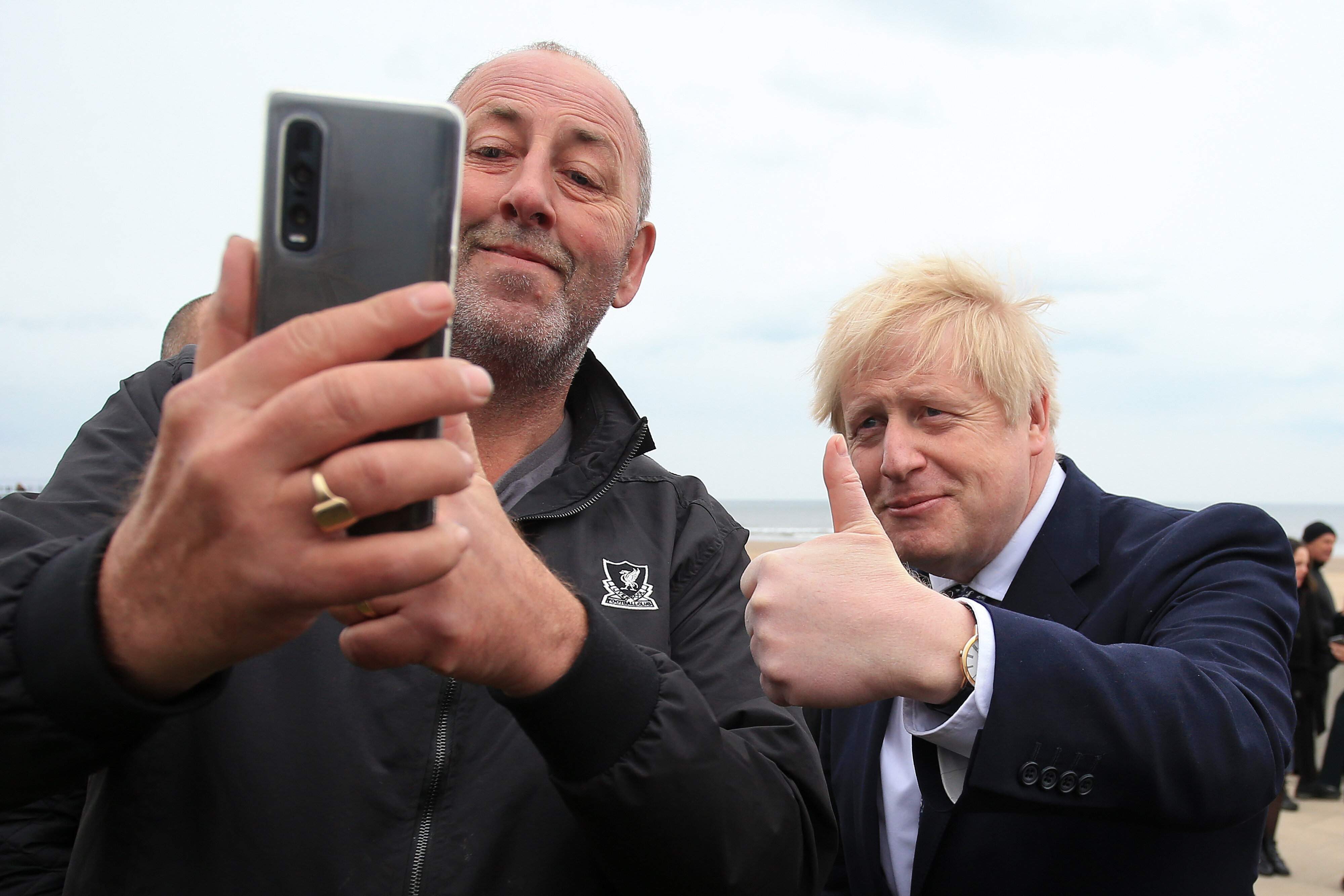
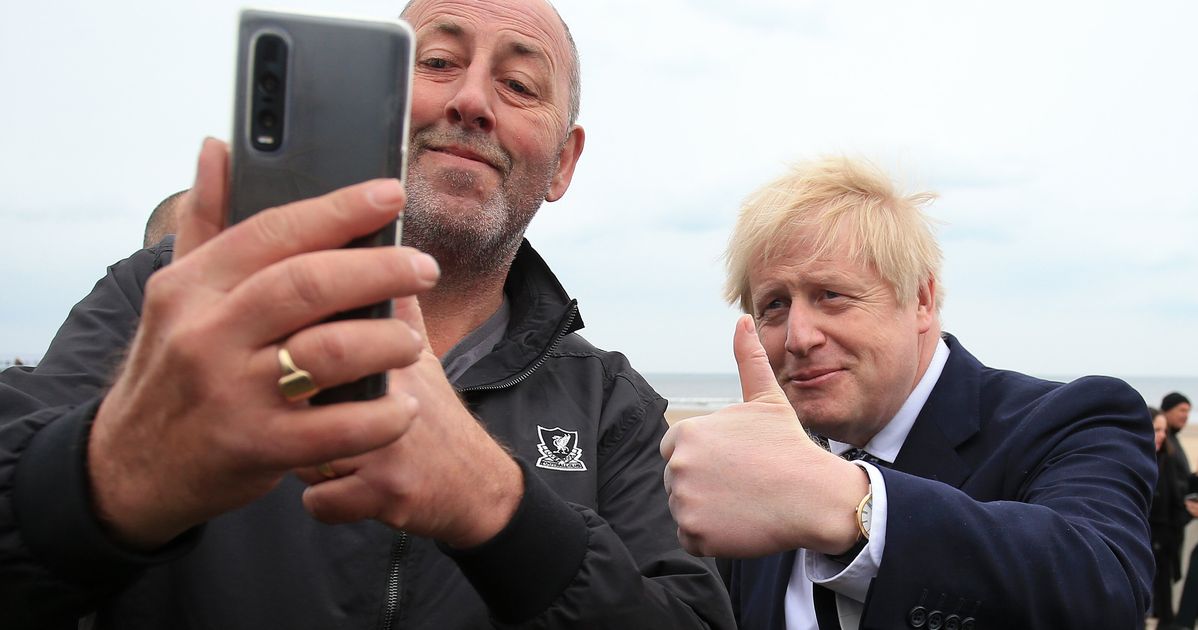
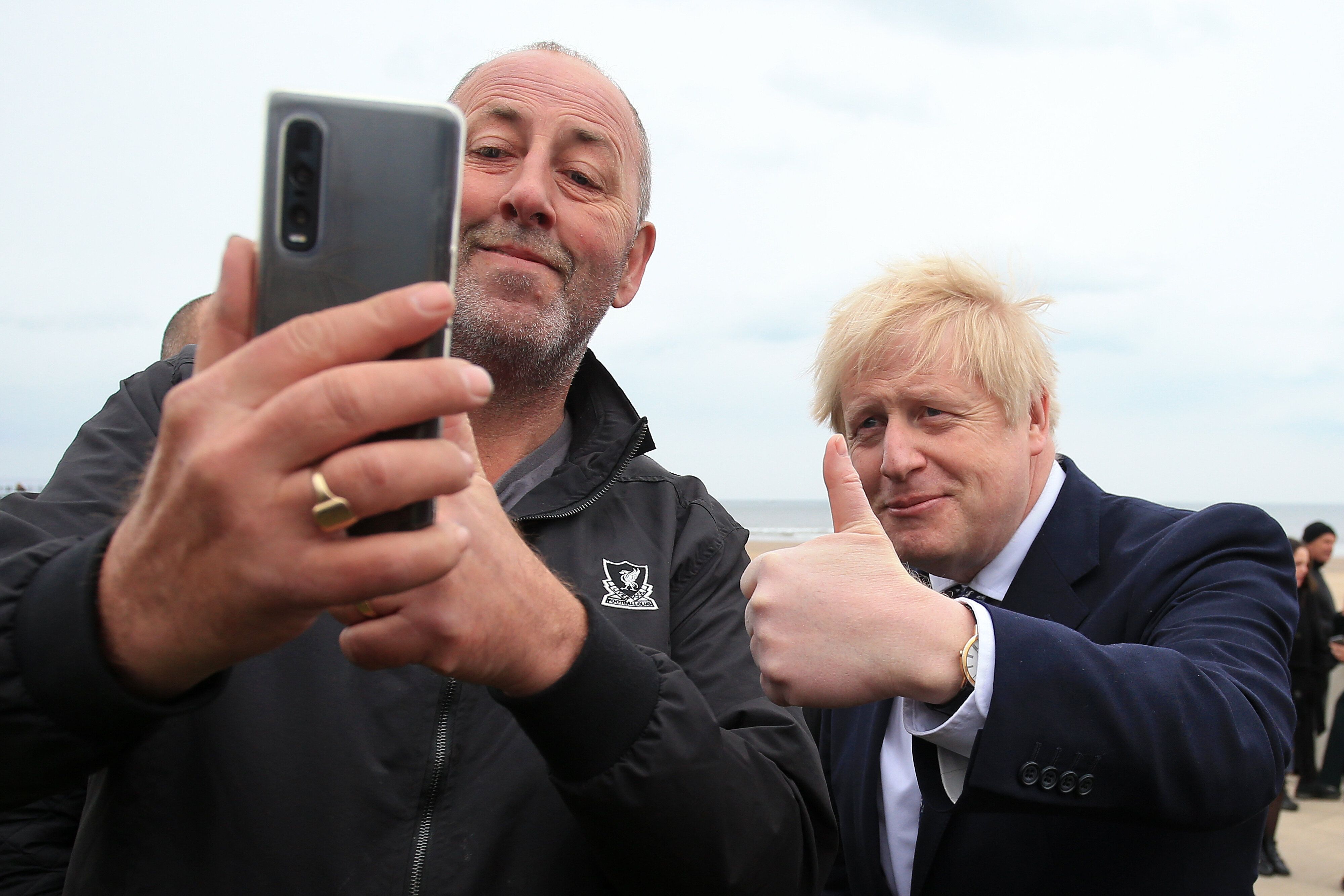
Boris Johnson poses for a ‘selfie’ photograph as he meets members of the public while campaigning in Hartlepool.

A Cabinet Office spokesman pointed back to the wording of the road map out of lockdown, which states that the government “will complete a review of social distancing measures and other long-term measures that have been put in place to limit transmission”.

The review’s findings “will help inform decisions on the timing and circumstances under which rules on one-metre-plus, face masks and other measures may be lifted”. 

What does the hospitality industry say?

One industry chief has said a return to unrestricted trading for hospitality from June 21 is “critical” and will mean firms can “come off life support”.

Kate Nicholls, chief executive of trade body UKHospitality, said: “These reports are very welcome if true.

“However, we must wait to see the full detail of plans as any restrictions in venues will continue to impact revenue and business viability.

“A return to unrestricted trading on June 21 is critical and will mean hospitality businesses (can) come off life support and be viable for the first time in almost 16 months.

“We urge the government to confirm reopening dates and these plans at the earliest opportunity, which will boost confidence and allow companies to step up planning and bring staff back.”

A spokesman for the UK Cinema Association indicated that the organisation hopes face coverings will not be a continued requirement.

He said: “We strongly believe that our exemplary record on safety – with not a single case of Covid traced back to a UK venue – and our ability to manage the movement of cinema-goers in modern, highly ventilated indoor environments offer ample evidence that any relaxation from June 21 can be undertaken safely without the need for further ongoing restrictions, including any requirement for face coverings.”

Do scientists agree?

Last month, government scientific advisers said the public should be able to remove face masks over the summer as vaccines do the heavy lifting in controlling Covid-19 – but they cautioned that masks and possibly other measures may be needed next autumn and winter if cases surge.

But there is a fierce debate within the scientific community.

In an open letter,  one group of scientists said last month “a good society cannot be created by obsessive focus on a single cause of ill-health” and that Covid-19 “no longer requires exceptional measures of control in everyday life”.

The 22 signatories – who include Professor Carl Heneghan, director of the Centre for Evidence Based Medicine at University of Oxford and Professor Karol Sikora from the medicine school at the University of Buckingham – say mandatory face coverings, physical distancing and mass community testing should end no later than June 21.

The letter states: “It is more than time for citizens to take back control of their own lives.”

But others were less optimistic.

Professor Stephen Reicher, from the University of St Andrews and a member of the Scientific Pandemic Insights Group on Behaviours, which advises ministers, said calls from scientists and academics to end coronavirus restrictions are “wrong” and “remarkably insular”.

He said: “We have heard from these people before, arguing that Covid isn’t a risk and that restrictions should be lifted.

“They were wrong then and they are wrong now.”

Prof Reicher said the irony of saying “it’s all over” makes such measures less likely, makes increased infections more likely and therefore makes lockdown restrictions “a real possibility”. 

What other measures have been relaxed?

And the last sign of progress being made, the government announced the limit on the number of mourners who can attend funerals is to be lifted in England.

The Ministry of Housing, Communities and Local Government said the legal restriction of a maximum of 30 mourners will be removed as part of the next stage of lockdown easing, expected on May 17.

The capacity will be determined by how many people venues, such as places of worship or funeral homes, can safely accommodate while maintaining social distancing, the department added. 

PAUL ELLIS via Getty Images

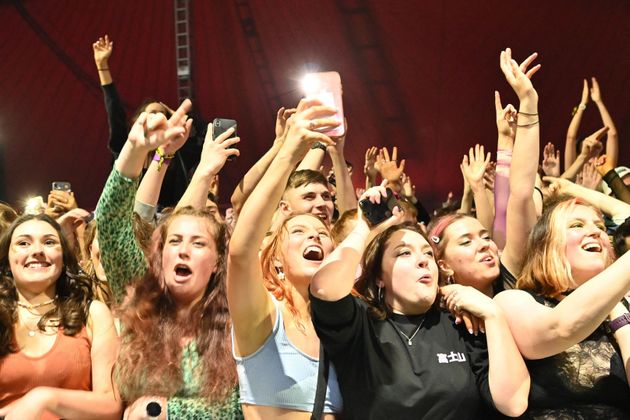
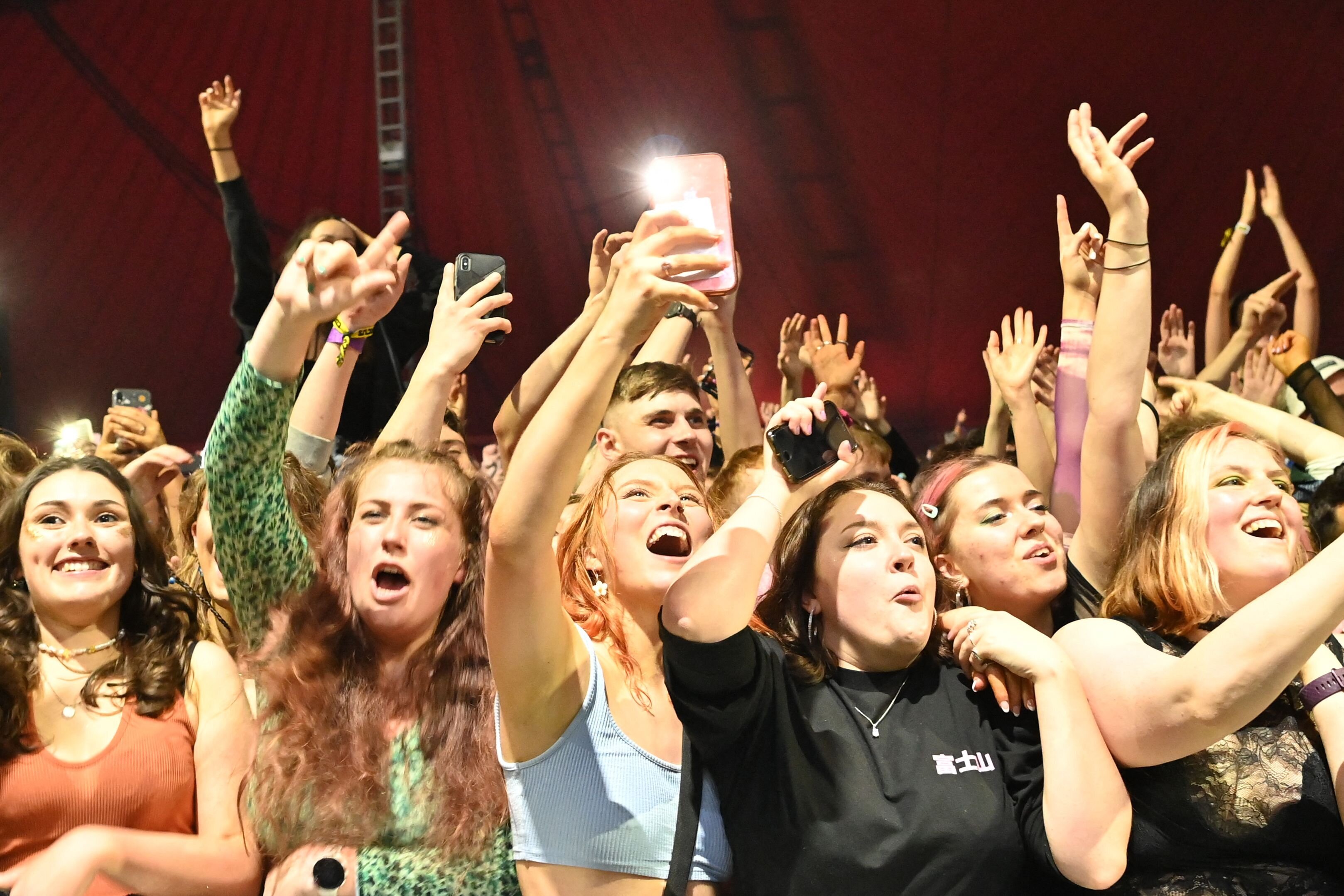
Fans watch Blossoms perform at a live music concert hosted by Festival Republic in Sefton Park in Liverpool.

Meanwhile, thousands of revellers without face coverings danced shoulder to shoulder to live music for the first time in more than a year at a pilot music festival.

Around 5,000 people packed into Sefton Park in Liverpool on Sunday for the outdoor gig which included performances from Blossoms, The Lathums and Liverpool singer-songwriter Zuzu.

Pictures and videos showed people packed together, arms in the air, dancing to the music at the event which has been hailed as a milestone towards getting live events running again.

Everyone had to produce negative coronavirus tests to enter the event but did not have to wear face coverings or follow social distancing rules.

It is hoped that test events like this will pave the way for festivals and venues across the country to reopen for mass gatherings again.

What about foreign holidays? 

The ban on foreign holidays is expected to be lifted for people in England from May 17 as part of the next easing of coronavirus restrictions.

But Johnson cautioned that while there will be “some openings up” from that date, the approach must be “sensible” to avoid an “influx of disease” when international travel resumes.

Johnson’s cautious tone came as some MPs called for restrictions on foreign holidays to be maintained to protect the country from Covid-19 variants, and Labour leader Keir Starmer urged a “careful” approach.

Johnson told reporters during a campaign visit to Hartlepool: “We do want to do some opening up on May 17 but I don’t think that the people of this country want to see an influx of disease from anywhere else.

“I certainly don’t and we have got to be very, very tough, and we have got to be as cautious as we can, whilst we continue to open up.”

Asked if people should be planning foreign holidays, he told reporters: “We will be saying more as soon as we can.

“I think that there will be some openings up on the 17th, but we have got to be cautious and we have got to be sensible and we have got to make sure that we don’t see the virus coming back in.”

Starmer criticised the “chopping and changing” of the travel corridors list introduced last year and said such a situation should be avoided this holiday season.

Share Button

Newly identified giant saber-toothed cat roamed North America 5-9 million years ago

A giant saber-toothed cat lived in North America between 5 million and 9 million years ago, weighing up to 900 pounds and hunting prey that likely weighed 1,000 to 2,000 pounds, scientists reported today in a new study.

The researchers completed a painstaking comparison of seven uncategorized fossil specimens with previously identified fossils and bone samples from around the world to describe the new species. Their finding makes a case for the use of the elbow portion of the humerus — in addition to teeth — to identify fossils of large saber-toothed cats whose massive forearms enabled them to subdue their prey.

The newly identified cat weighed an average of around 600 or so pounds and could have managed to kill prey weighing up to 6,000 pounds, the scientists estimate, suggesting that their findings provide evidence for another giant cat, one of the largest in Earth history.

“We believe these were animals that were routinely taking down bison-sized animals,” said study co-author Jonathan Calede, an assistant professor of evolution, ecology and organismal biology at The Ohio State University’s Marion campus. “This was by far the largest cat alive at that time.”

Calede completed the study with John Orcutt, assistant professor of biology at Gonzaga University, who initiated the project. Orcutt found a large upper arm bone specimen that had been labeled as a cat in the University of Oregon Museum of Natural and Cultural History collection when he was a graduate student, and collaborated with Calede on the years-long effort to figure out what kind of cat it could be.

They have determined that the new species is an ancient relative of the best-known saber-toothed cat Smilodon, the famous fossil found in the La Brea Tar Pits in California that went extinct about 10,000 years ago.

The Oregon specimen was excavated on the traditional lands of the Cayuse, a tribe joined with the Umatilla and Walla Walla in the Confederated Tribes of the Umatilla Indian Reservation. In recognition of its origin, Calede and Orcutt collaborated with the Tamástslikt Cultural Institute to name the new species Machairodus lahayishupup. Machairodus is a genus of large saber-toothed cats that lived in Africa, Eurasia and North America, and in the Old Cayuse language, Laháyis Húpup means “ancient wild cat.”

The study is published today (May 3, 2021) in the Journal of Mammalian Evolution.

Orcutt and Calede found similar uncategorized upper arm fossil specimens at the Idaho Museum of Natural History, where a big cat forearm was accompanied by teeth — generally considered the gold standard for identifying new species — as well as at the University of California Museum of Paleontology and Texas Memorial Museum.

“One of the big stories of all of this is that we ended up uncovering specimen after specimen of this giant cat in museums in western North America,” Orcutt said. “They were clearly big cats. We started with a few assumptions based on their age, in the 5 1/2 to 9 million-year-old range, and based on their size, because these things were huge.

“What we didn’t have then, that we have now, is the test of whether the size and anatomy of those bones tells us anything — and it turns out that yes, they do.”

The largest of the seven Machairodus lahayishupup humerus fossils available for the analysis was more than 18 inches long and 1.7 inches in diameter. By comparison, the average modern adult male lion’s humerus is about 13 inches long.

The researchers hypothesized that if an isolated forearm bone were useful in telling species apart, that would be true among the big cat species alive today. Calede and Orcutt visited numerous museums in the U.S., Canada and France to photograph forearm specimens of lions, pumas, panthers, jaguars and tigers, as well as fossils of previously identified extinct big cats.

Calede used software to place landmark points on each digitized sample that, when drawn together, would create a model of each elbow.

“We found we could quantify the differences on a fairly fine scale,” Calede said. “This told us we could use the elbow shape to tell apart species of modern big cats.

“Then we took the tool to the fossil record — these giant elbows scattered in museums all had a characteristic in common. This told us they all belonged to the same species. Their unique shape and size told us they were also very different from everything that is already known. In other words, these bones belong to one species and that species is a new species.”

The researchers calculated estimates of the new species’ body size based on the association between humerus size and body mass in modern big cats, and speculated about the cat’s prey based on its size and animals known to have lived in the region at that time: rhinoceros were particularly abundant, as well as giant camels and giant ground sloths.

The teeth from the Idaho Museum of Natural History came from the lower part of the jaw and did not include the saber-shaped canines, but provided additional evidence that the fossil belonged to the Machairodus genus, which gave its name to the machairodontines — the technical name for a saber-toothed cat, Orcutt said.

“We’re quite confident it’s a saber-toothed cat and we’re quite confident it’s a new species of the Machairodus genus,” he said. “The problem is, in part because we haven’t necessarily had a clear image in the past of how many species were out there, our understanding of how all these saber-toothed cats are related to each other is a little fuzzy, particularly early in their evolution.”

Establishing that the humerus alone can be analyzed to identify a fossil cat has important implications for the field — saber-toothed cats’ “big, beefy” forearm bones are the most common specimens of fossil cats found in excavations, he said.

Only a reconstruction of the evolutionary history of saber-toothed cats can determine where this new species fits in, but Orcutt and Calede believe Machairodus lahayishupup existed early in the evolution of the group.

A discovery that this giant cat in North America existed at the same time similar animals lived around the world also raises another evolutionary question, Calede said.

“It’s been known that there were giant cats in Europe, Asia and Africa, and now we have our own giant saber-toothed cat in North America during this period as well,” he said. “There’s a very interesting pattern of either repeated independent evolution on every continent of this giant body size in what remains a pretty hyperspecialized way of hunting, or we have this ancestral giant saber-toothed cat that dispersed to all of those continents.

“It’s an interesting paleontological question.”

Share Button

Will your future clothes be made of algae?

Living materials, which are made by housing biological cells within a non-living matrix, have gained popularity in recent years as scientists recognize that often the most robust materials are those that mimic nature.

For the first time, an international team of researchers from the University of Rochester and Delft University of Technology in the Netherlands used 3D printers and a novel bioprinting technique to print algae into living, photosynthetic materials that are tough and resilient. The material has a variety of applications in the energy, medical, and fashion sectors. The research is published in the journal Advanced Functional Materials.

“Three-dimensional printing is a powerful technology for fabrication of living functional materials that have a huge potential in a wide range of environmental and human-based applications.” says Srikkanth Balasubramanian, a postdoctoral research associate at Delft and the first author of the paper. “We provide the first example of an engineered photosynthetic material that is physically robust enough to be deployed in real-life applications.”

HOW TO BUILD NEW MATERIALS: LIVING AND NONLIVING COMPONENTS

To create the photosynthetic materials, the researchers began with a non-living bacterial cellulose — an organic compound that is produced and excreted by bacteria. Bacterial cellulose has many unique mechanical properties, including its flexibility, toughness, strength, and ability to retain its shape, even when twisted, crushed, or otherwise physically distorted.

The bacterial cellulose is like the paper in a printer, while living microalgae acts as the ink. The researchers used a 3D printer to deposit living algae onto the bacterial cellulose.

The combination of living (microalgae) and nonliving (bacterial cellulose) components resulted in a unique material that has the photosynthetic quality of the algae and the robustness of the bacterial cellulose; the material is tough and resilient while also eco-friendly, biodegradable, and simple and scalable to produce. The plant-like nature of the material means it can use photosynthesis to “feed” itself over periods of many weeks, and it is also able to be regenerated — a small sample of the material can be grown on-site to make more materials.

ARTIFICIAL LEAVES, PHOTOSYNTHETIC SKINS, AND BIO-GARMENTS

The unique characteristics of the material make it an ideal candidate for a variety of applications, including new products such as artificial leaves, photosynthetic skins, or photosynthetic bio-garments.

Artificial leaves are materials that mimic actual leaves in that they use sunlight to convert water and carbon dioxide — a major driver of climate change — into oxygen and energy, much like leaves during photosynthesis. The leaves store energy in chemical form as sugars, which can then be converted into fuels. Artificial leaves therefore offer a way to produce sustainable energy in places where plants don’t grow well, including outer space colonies. The artificial leaves produced by the researchers at Delft and Rochester are additionally made from eco-friendly materials, in contrast to most artificial leaf technologies currently in production, which are produced using toxic chemical methods.

“For artificial leaves, our materials are like taking the ‘best parts’ of plants — the leaves — which can create sustainable energy, without needing to use resources to produce parts of plants — the stems and the roots — that need resources but don’t produce energy,” says Anne S. Meyer, an associate professor of biology at Rochester. “We are making a material that is only focused on the sustainable production of energy.”

Another application of the material would be photosynthetic skins, which could be used for skin grafts, Meyer says. “The oxygen generated would help to kick-start healing of the damaged area, or it might be able to carry out light-activated wound healing.”

Besides offering sustainable energy and medical treatments, the materials could also change the fashion sector. Bio-garments made from algae would address some of the negative environmental effects of the current textile industry in that they would be high-quality fabrics that would be sustainability produced and completely biodegradable. They would also work to purify the air by removing carbon dioxide through photosynthesis and would not need to be washed as often as conventional garments, reducing water usage.

“Our living materials are promising because they can survive for several days with no water or nutrients access, and the material itself can be used as a seed to grow new living materials,” says Marie-Eve Aubin-Tam, an associate professor of bionanoscience at Delft. “This opens the door to applications in remote areas, even in space, where the material can be seeded on site.”

Share Button

Less precipitation means less plant diversity

Water is a scarce resource in many of the Earth’s ecosystems. This scarcity is likely to increase in the course of climate change. This, in turn, might lead to a considerable decline in plant diversity. Using experimental data from all over the world, scientists from the Helmholtz Centre for Environmental Research (UFZ), the German Centre for Integrative Biodiversity Research (iDiv), and the Martin Luther University of Halle-Wittenberg (MLU) have demonstrated for the first time that plant biodiversity in drylands is particularly sensitive to changes in precipitation. In an article published in Nature Communications, the team warns that this can also have consequences for the people living in the affected regions.

How will climate change affect the Earth’s ecosystems? How will biodiversity in different regions change? Such important questions about the future are difficult to answer. In order to do so, it is important to know how the individual species and their communities will react to changing precipitation conditions, for example. But despite numerous scientific experiments worldwide, we do not have synthetic, global answers to these questions. For example, experiments differ greatly in their methodology, such as whether they add small or large amounts of water. “These studies use different methods and are located in different regions of the world,” says first author Dr. Lotte Korell, a biologist at the UFZ. “And these studies yield contradictory results in many cases.” Together with her colleagues, she has therefore set out to derive a general understanding from the data collected worldwide. The focus was on how an increase or decrease in precipitation affects the plant diversity of terrestrial ecosystems.

In their search, she and her team found 23 usable publications, which presented results from 72 field experiments. With this data, they calculated various statistical variables that provided information about the biodiversity at the individual sites and related them to the increasing or decreasing amounts of rainfall.

“However, in such experiments, biodiversity depends on many factors,” says Prof. Dr. Tiffany Knight, last author of the study and ecologist at the UFZ, iDiv, and MLU. For example, the size of the experiment plays an important role. If you focus on only a single experimental plot, then you might see dramatic effects of treatments on biodiversity, as plots with less water have fewer plant individuals growing there, and thus fewer species. However, at least one individual of every species might be found in at the larger scale, and thus a lower effect of the treatment on biodiversity. Indeed, the researchers found that increasing dryness has a greater effect when it is considered at small compared to larger spatial scales. “Thus, in order to draw the right conclusions from the data, you have to take into account both the local climate conditions and the spatial scale of the experiments,” says Knight.

In this way, the researchers have identified a clear trend. In the drylands of the world, changes in precipitation levels have a much greater effect than in wetter regions.

Dry ecosystems currently occupy about 40% of the Earth’s land surface. It is not easy to predict what awaits these areas against the backdrop of climate change. Although climate models do predict increasing rainfall in some dry regions, the water shortage is likely to worsen in most of them.

According to the study, plant diversity is expected to increase where it becomes wetter. This is probably because the seeds of the species found there may have a better chance of germinating and becoming established.

However, in light of the projected expansion of drylands, this effect is likely to benefit only relatively few regions. According to the authors, this would lead to a noticeable decline in plant diversity. “Although the plants there have adapted to the challenges of their habitats over long periods of time,” says Korell, “at some point, even the most resilient survivor reaches its limits.” And with every species that dries up and can no longer germinate, biodiversity is reduced.

This could be bad news not only for the ecosystems but also for the inhabitants of the dry regions. After all, they account for about one third of the world’s population. Many of these people struggle to make a living from the land under the most difficult conditions. If biodiversity declines along with the rainfall, this is likely to become an even greater challenge. For Korell and her colleagues, this is another pressing argument for slowing climate change. “It is also important to protect the drylands particularly well,” says the researcher. The more these sensitive ecosystems are put under pressure from overgrazing and other stress factors, the more climate change is likely to affect plant diversity.

Share Button

Madonna Shows Off Results Of Second Ever Tattoo After Getting Inked On Instagram

Madonna has shared a video of herself getting her second tattoo on Instagram.

Having mostly abstained from body art during her life, the Queen of Pop revealed at the end of last year that she’d decided to have her first tat at the age of 62, having her six children’s initials inked on her wrist.

On Sunday, she revealed on Instagram that she’d decided to go under the needle for a second time, having a red “X” tattooed on her wrist in honour of her most recent album, Madame X.

After drinking a glass of wine in what she said was her attempt at numbing the pain, Madonna told her 15-year-old son David: “Look, I’m going to get another tattoo. It’s not anything different or new, that I was planning on doing, but I thought maybe you’d want to watch. Just for a second.”

“It’s going to be red, blood red” Madonna told the teenage aspiring footballer.

“Because this revolutionary business…” he then said, to which she responded: “Is a bloody business.”

As David cheered her on from the sidelines, Madonna was then heard telling tattoo artist Robbie Ra: “That hurts, oh my god, I really don’t like you right now. [But] even if I complain don’t feel like you have to stop. I’m used to people hurting me, and also I’m used to being in pain.”

“Why do you need a bigger needle?” she asks later in the clip, before adding: “Wait, you’re English? OK, everything’s coming into focus now.”

Showing off the finished tat, she posed saying: “Power to the people.”

The tattooist also posted the same clip on his own Instagram page, writing: “This was nuts!”

Share Button