Charts and maps tracking the progress of Covid vaccination programmes.


Charts and maps tracking the progress of Covid vaccination programmes.
The temporary hospitals, which were largely unused, are being shut as patient numbers fall.

Determining how rapidly the universe is expanding is key to understanding our cosmic fate, but with more precise data has come a conundrum: Estimates based on measurements within our local universe don’t agree with extrapolations from the era shortly after the Big Bang 13.8 billion years ago.
A new estimate of the local expansion rate — the Hubble constant, or H0 (H-naught) — reinforces that discrepancy.
Using a relatively new and potentially more precise technique for measuring cosmic distances, which employs the average stellar brightness within giant elliptical galaxies as a rung on the distance ladder, astronomers calculate a rate — 73.3 kilometers per second per megaparsec, give or take 2.5 km/sec/Mpc — that lies in the middle of three other good estimates, including the gold standard estimate from Type Ia supernovae. This means that for every megaparsec — 3.3 million light years, or 3 billion trillion kilometers — from Earth, the universe is expanding an extra 73.3 ±2.5 kilometers per second. The average from the three other techniques is 73.5 ±1.4 km/sec/Mpc.
Perplexingly, estimates of the local expansion rate based on measured fluctuations in the cosmic microwave background and, independently, fluctuations in the density of normal matter in the early universe (baryon acoustic oscillations), give a very different answer: 67.4 ±0.5 km/sec/Mpc.
Astronomers are understandably concerned about this mismatch, because the expansion rate is a critical parameter in understanding the physics and evolution of the universe and is key to understanding dark energy — which accelerates the rate of expansion of the universe and thus causes the Hubble constant to change more rapidly than expected with increasing distance from Earth. Dark energy comprises about two-thirds of the mass and energy in the universe, but is still a mystery.
For the new estimate, astronomers measured fluctuations in the surface brightness of 63 giant elliptical galaxies to determine the distance and plotted distance against velocity for each to obtain H0. The surface brightness fluctuation (SBF) technique is independent of other techniques and has the potential to provide more precise distance estimates than other methods within about 100 Mpc of Earth, or 330 million light years. The 63 galaxies in the sample are at distances ranging from 15 to 99 Mpc, looking back in time a mere fraction of the age of the universe.
“For measuring distances to galaxies out to 100 megaparsecs, this is a fantastic method,” said cosmologist Chung-Pei Ma, the Judy Chandler Webb Professor in the Physical Sciences at the University of California, Berkeley, and professor of astronomy and physics. “This is the first paper that assembles a large, homogeneous set of data, on 63 galaxies, for the goal of studying H-naught using the SBF method.”
Ma leads the MASSIVE survey of local galaxies, which provided data for 43 of the galaxies — two-thirds of those employed in the new analysis.
The data on these 63 galaxies was assembled and analyzed by John Blakeslee, an astronomer with the National Science Foundation’s NOIRLab. He is first author of a paper now accepted for publication in The Astrophysical Journal that he co-authored with colleague Joseph Jensen of Utah Valley University in Orem. Blakeslee, who heads the science staff that support NSF’s optical and infrared observatories, is a pioneer in using SBF to measure distances to galaxies, and Jensen was one of the first to apply the method at infrared wavelengths. The two worked closely with Ma on the analysis.
“The whole story of astronomy is, in a sense, the effort to understand the absolute scale of the universe, which then tells us about the physics,” Blakeslee said, harkening back to James Cook’s voyage to Tahiti in 1769 to measure a transit of Venus so that scientists could calculate the true size of the solar system. “The SBF method is more broadly applicable to the general population of evolved galaxies in the local universe, and certainly if we get enough galaxies with the James Webb Space Telescope, this method has the potential to give the best local measurement of the Hubble constant.”
The James Webb Space Telescope, 100 times more powerful than the Hubble Space Telescope, is scheduled for launch in October.
Giant elliptical galaxies
The Hubble constant has been a bone of contention for decades, ever since Edwin Hubble first measured the local expansion rate and came up with an answer seven times too big, implying that the universe was actually younger than its oldest stars. The problem, then and now, lies in pinning down the location of objects in space that give few clues about how far away they are.
Astronomers over the years have laddered up to greater distances, starting with calculating the distance to objects close enough that they seem to move slightly, because of parallax, as the Earth orbits the sun. Variable stars called Cepheids get you farther, because their brightness is linked to their period of variability, and Type Ia supernovae get you even farther, because they are extremely powerful explosions that, at their peak, shine as bright as a whole galaxy. For both Cepheids and Type Ia supernovae, it’s possible to figure out the absolute brightness from the way they change over time, and then the distance can be calculated from their apparent brightness as seen from Earth.
The best current estimate of H0 comes from distances determined by Type Ia supernova explosions in distant galaxies, though newer methods — time delays caused by gravitational lensing of distant quasars and the brightness of water masers orbiting black holes — all give around the same number.
The technique using surface brightness fluctuations is one of the newest and relies on the fact that giant elliptical galaxies are old and have a consistent population of old stars — mostly red giant stars — that can be modeled to give an average infrared brightness across their surface. The researchers obtained high-resolution infrared images of each galaxy with the Wide Field Camera 3 on the Hubble Space Telescope and determined how much each pixel in the image differed from the “average” — the smoother the fluctuations over the entire image, the farther the galaxy, once corrections are made for blemishes like bright star-forming regions, which the authors exclude from the analysis.
Neither Blakeslee nor Ma was surprised that the expansion rate came out close to that of the other local measurements. But they are equally confounded by the glaring conflict with estimates from the early universe — a conflict that many astronomers say means that our current cosmological theories are wrong, or at least incomplete.
The extrapolations from the early universe are based on the simplest cosmological theory — called lambda cold dark matter, or ?CDM — which employs just a few parameters to describe the evolution of the universe. Does the new estimate drive a stake into the heart of ?CDM?
“I think it pushes that stake in a bit more,” Blakeslee said. “But it (?CDM) is still alive. Some people think, regarding all these local measurements, (that) the observers are wrong. But it is getting harder and harder to make that claim — it would require there to be systematic errors in the same direction for several different methods: supernovae, SBF, gravitational lensing, water masers. So, as we get more independent measurements, that stake goes a little deeper.”
Ma wonders whether the uncertainties astronomers ascribe to their measurements, which reflect both systematic errors and statistical errors, are too optimistic, and that perhaps the two ranges of estimates can still be reconciled.
“The jury is out,” she said. “I think it really is in the error bars. But assuming everyone’s error bars are not underestimated, the tension is getting uncomfortable.”
In fact, one of the giants of the field, astronomer Wendy Freedman, recently published a study pegging the Hubble constant at 69.8 ±1.9 km/sec/Mpc, roiling the waters even further. The latest result from Adam Riess, an astronomer who shared the 2011 Nobel Prize in Physics for discovering dark energy, reports 73.2 ±1.3 km/sec/Mpc. Riess was a Miller Postdoctoral Fellow at UC Berkeley when he performed this research, and he shared the prize with UC Berkeley and Berkeley Lab physicist Saul Perlmutter.
MASSIVE galaxies
The new value of H0 is a byproduct of two other surveys of nearby galaxies — in particular, Ma’s MASSIVE survey, which uses space and ground-based telescopes to exhaustively study the 100 most massive galaxies within about 100 Mpc of Earth. A major goal is to weigh the supermassive black holes at the centers of each one.
To do that, precise distances are needed, and the SBF method is the best to date, she said. The MASSIVE survey team used this method last year to determine the distance to a giant elliptical galaxy, NGC 1453, in the southern sky constellation of Eridanus. Combining that distance, 166 million light years, with extensive spectroscopic data from the Gemini and McDonald telescopes — which allowed Ma’s graduate students Chris Liepold and Matthew Quenneville to measure the velocities of the stars near the center of the galaxy — they concluded that NGC 1453 has a central black hole with a mass nearly 3 billion times that of the sun.
To determine H0, Blakeslee calculated SBF distances to 43 of the galaxies in the MASSIVE survey, based on 45 to 90 minutes of HST observing time for each galaxy. The other 20 came from another survey that employed HST to image large galaxies, specifically ones in which Type Ia supernovae have been detected.
Most of the 63 galaxies are between 8 and 12 billion years old, which means that they contain a large population of old red stars, which are key to the SBF method and can also be used to improve the precision of distance calculations. In the paper, Blakeslee employed both Cepheid variable stars and a technique that uses the brightest red giant stars in a galaxy — referred to as the tip of the red giant branch, or TRGB technique — to ladder up to galaxies at large distances. They produced consistent results. The TRGB technique takes account of the fact that the brightest red giants in galaxies have about the same absolute brightness.
“The goal is to make this SBF method completely independent of the Cepheid-calibrated Type Ia supernova method by using the James Webb Space Telescope to get a red giant branch calibration for SBFs,” he said.
“The James Webb telescope has the potential to really decrease the error bars for SBF,” Ma added. But for now, the two discordant measures of the Hubble constant will have to learn to live with one another.
“I was not setting out to measure H0; it was a great product of our survey,” she said. “But I am a cosmologist and am watching this with great interest.”
Co-authors of the paper with Blakeslee, Ma and Jensen are Jenny Greene of Princeton University, who is a leader of the MASSIVE team, and Peter Milne of the University of Arizona in Tucson, who leads the team studying Type Ia supernovae. The work was supported by the National Aeronautics and Space Administration (HST-GO-14219, HST-GO-14654, HST GO-15265) and the National Science Foundation (AST-1815417, AST-1817100).

Without efforts to mitigate climate change, summers spanning nearly six months may become the new normal by 2100 in the Northern Hemisphere, according to a new study. The change would likely have far-reaching impacts on agriculture, human health and the environment, according to the study authors.
In the 1950s in the Northern Hemisphere, the four seasons arrived in a predictable and fairly even pattern. But climate change is now driving dramatic and irregular changes to the length and start dates of the seasons, which may become more extreme in the future under a business-as-usual climate scenario.
“Summers are getting longer and hotter while winters shorter and warmer due to global warming,” said Yuping Guan, a physical oceanographer at the State Key Laboratory of Tropical Oceanography, South China Sea Institute of Oceanology, Chinese Academy of Sciences, and lead author of the new study in Geophysical Research Letters, AGU’s journal for high-impact, short-format reports with immediate implications spanning all Earth and space sciences.
Guan was inspired to investigate changes to the seasonal cycle while mentoring an undergraduate student, co-author Jiamin Wang. “More often, I read some unseasonable weather reports, for example, false spring, or May snow, and the like,” Guan said.
The researchers used historical daily climate data from 1952 to 2011 to measure changes in the four seasons’ length and onset in the Northern Hemisphere. They defined the start of summer as the onset of temperatures in the hottest 25% during that time period, while winter began with temperatures in the coldest 25%. Next, the team used established climate change models to predict how seasons will shift in the future.
The new study found that, on average, summer grew from 78 to 95 days between 1952 to 2011, while winter shrank from 76 to 73 days. Spring and autumn also contracted from 124 to 115 days, and 87 to 82 days, respectively. Accordingly, spring and summer began earlier, while autumn and winter started later. The Mediterranean region and the Tibetan Plateau experienced the greatest changes to their seasonal cycles.
If these trends continue without any effort to mitigate climate change, the researchers predict that by 2100, winter will last less than two months, and the transitional spring and autumn seasons will shrink further as well.
“Numerous studies have already shown that the changing seasons cause significant environmental and health risks,” Guan said. For example, birds are shifting their migration patterns and plants are emerging and flowering at different times. These phenological changes can create mismatches between animals and their food sources, disrupting ecological communities.
Seasonal changes can also wreak havoc on agriculture, especially when false springs or late snowstorms damage budding plants. And with longer growing seasons, humans will breathe in more allergy-causing pollen, and disease-carrying mosquitoes can expand their range northward.
Going to extremes
This shift in the seasons may result in more severe weather events, said Congwen Zhu, a monsoon researcher at the State Key Laboratory of Severe Weather and Institute of Climate System, Chinese Academy of Meteorological Sciences, Beijing, who was not involved in the new study.
“A hotter and longer summer will suffer more frequent and intensified high-temperature events — heatwaves and wildfires,” Zhu said. Additionally, warmer, shorter winters may cause instability that leads to cold surges and winter storms, much like the recent snowstorms in Texas and Israel, he said.
“This is a good overarching starting point for understanding the implications of seasonal change,” said Scott Sheridan, a climate scientist at Kent State University who was not part of the new study.
It is difficult to conceptualize a 2- or 5-degree average temperature increase, he said, but “I think realizing that these changes will force potentially dramatic shifts in seasons probably has a much greater impact on how you perceive what climate change is doing.”

Found around the world, powdery mildew is a fungal disease especially harmful to plants within the sunflower family. Like most invasive pathogens, powdery mildew is understudied and learning how it affects hosts can help growers make more informed decisions and protect their crops.
Scientists at the University of Washington and the University of Central Florida inoculated 126 species of plants in the sunflower family with powdery mildew, growing 500 plants from seeds that were collected from the wild and provided from the USDA germplasm network. Through this large-scale study, they were able to measure the various plants’ susceptibility to powdery mildew.
“We observed that the amount of disease present on a host can be dependent on where that host lies on the tree of life — that is, the evolutionary history of a host can predict how susceptible that host is to disease,” explained Michael Bradshaw, a plant pathologist involved with the study.
They also measured common plant traits, such as biomass, trichome density, and chlorophyll content, and found that none of them were associated with the disease, underscoring the unimportance of commonly assessed host plant traits in powdery mildew severity and pointing further to the role that evolutionary history plays in plant susceptibility to disease.
“Any tools we can use to predict the severity of a disease can be valuable and improve management guidelines. Especially with fungal pathogens, where there is often a large lag time between the introduction of a pathogen and the formation of an epidemic,” Bradshaw said. “I am hopeful that this research could spur future work and provide ideas and techniques for other researchers studying the evolution of disease.”
This research provides information on species of sunflower plants that are resistant to powdery mildew disease, which can be beneficial to breeding programs. Bradshaw also hopes that this study will inspire other studies that mine the genome of different plant species involved to potentially locate genes involved with resistance.
Story Source:
Materials provided by American Phytopathological Society. Note: Content may be edited for style and length.
Bimini Bon Boulash’s performance as Katie Price has been one of the undoubted highlights of RuPaul’s Drag Race UK so far, and now we’ve finally got to hear what the woman herself makes of it all.
Katie has uploaded a YouTube video of herself reacting to the queen’s impression of her during the Snatch Game episode last month, and the whole thing is gloriously Pricey.
In the video, Katie is seen sat in front of her laptop with daughter Bunny and son Jett as they watch Bimini’s Bafta-approved performance on the hit BBC Three series.
She then tries to get Bunny and Jett to do impressions of her, repeating her famous catchphrase, “Never underestimate the Pricey.”
And it turns out her six-year-old daughter has got her mum down to a tee as well, perfectly capturing her KP’s mannerisms.
Katie then says of Bimini: “I think that was fantastic. And [Bimini] is right, I can take the piss out of myself and I do. But I think [they have] done a good job. I’d love to go on that show.
“Like you say, if you can’t take the piss out of yourself, who can you take the piss out of? So I think that’s really good, and it’s quite iconic to know that someone wanted to dress up as me.
“I’d love to meet them and do a dress up, [them] do me and me give [them] tips and stuff. So thank you so much, I loved it, loved it, loved it.”

BBC
Bunny then interjects, saying: “Guys, if mum was on the show, I know who she’d dress up as,” before naming Katie’s boyfriend Carl Woods.
“That could be interesting, a woman dressing up as a man,” Katie agrees, before Bunny starts impersonating them both.
“Are you taking the mick? Right you’re getting in the bath,” she teases.
Bimini was made up to see Katie’s video, sharing a link to it on Twitter.
“Ahhhh I love you @KatiePrice!!!!” they tweeted.
After the show aired, Bimini was sure to reiterate that the impression was done with a lot of love.
They tweeted: “I also ADORE AND LOVE @KatiePrice and I always have. She’s an absolute icon and I hope I did her proud.”
RuPaul’s Drag Race continues on Thursday, with the new episode available to stream on BBC Three from 7pm.


Boris Johnson will be too busy to take paternity leave to look after his son Wilf – but the prime minister’s aides insist he is a feminist.
The PM’s press secretary Allegra Stratton also said Johnson accepts his cabinet, overwhelmingly made up of men, does not represent “the public at large” and that he plans to promote women in future.
Johnson had a child with his partner Carrie Symonds last April but Stratton said the PM has a “huge workload” and will not be taking leave.
She told reporters on Monday, which marks International Women’s Day: “He is the prime minister and he works a very long day, he has a huge workload and I don’t think he will be taking paternity leave.”
Of the 26 senior ministers attending cabinet, just six are women, and last week Johnson replaced attorney general Suella Braverman, who is taking maternity leave, with Michael Ellis, a move equalities committee chair Caroline Nokes called “disappointing”.
Hinting at an impending reshuffle, Stratton said: “We know that there is improvement to come in the years ahead when he – who knows when this comes – when we have promotions to cabinet.
“He does accept that he would like to improve how representative his cabinet is of the population at large.”

Press Association
Stratton said Johnson had described himself as “a feminist” during a meeting with female Tory MPs.
She was pressed on numerous articles Johnson has written describing women in a derogatory way, including calling women “fickle”.
One Spectator article saw Johnson describe the children of single mothers “ill-raised, ignorant, aggressive and illegitimate”.
Stratton said it was “not unreasonable” to ask questions about Johnson’s previous journalism but insisted “the PM is leading the charge” on changing workplaces for women.
She also referenced more female Tory MPs being elected in December 2019 and said the only two female PMs the UK had had were Conservatives.
“There is room for improvement and progress always on many fronts but actually the Conservatives’ record here is not bad,” she said.
Johnson on Monday hosted a virtual roundtable with nine female business leaders.
The PM’s official spokesperson said: “The prime minister has said on numerous occasions that the contribution that women make to the economy is crucial, which is why we provided an unprecedented offer of support to help those sectors they most likely to be employed in.”
Stratton added that during the meeting, he was interested in hearing about more men taking paternity leave.
She said: “Lastly but not least, he was interested to hear on what they had to say about whether enough dads take time off to look after their children.”



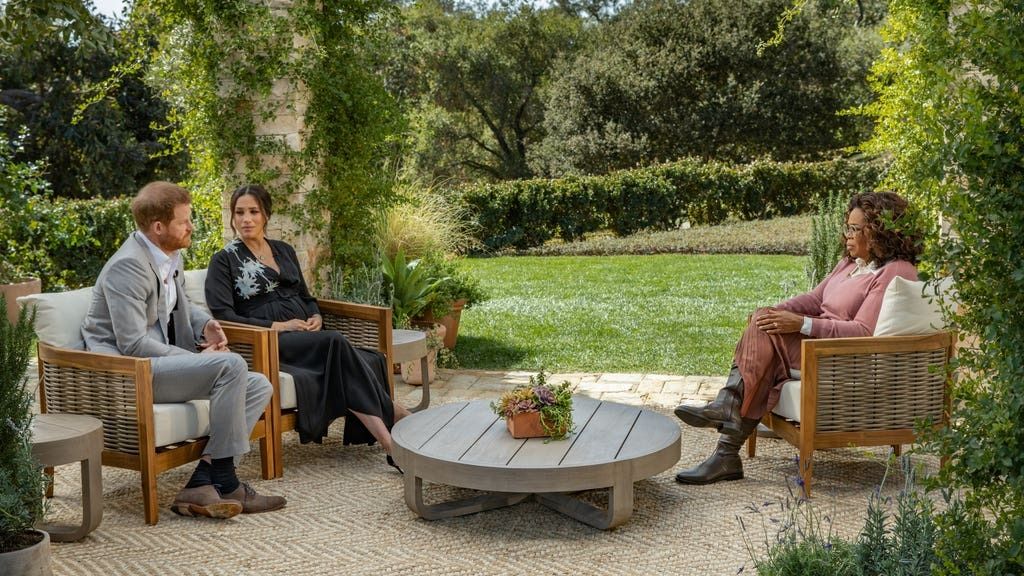
Appearing on CBS This Morning on Monday to discuss the interview, Oprah said: “He did not share the identity with me but he wanted to make sure that I knew, and if I had an opportunity to share it, that it was not his grandmother nor his grandfather [who] were a part of those conversations.
“He did not tell me who were a part of those conversations – as you can see, I tried to get that answer, on camera and off.”
Meghan previously told Oprah that the conversations about Archie were relayed to Prince Harry.
“I think that would be very damaging to them,” she said.
Prince Harry also said he would not reveal what transpired in the conversation, saying: “That conversation I’m never going to share. At the time, it was awkward. I was a little bit shocked.”
Meghan went on to talk about the importance of representation and how the disparaging remarks about Archie’s skin colour were hard for her to understand.
She explained: “I could never understand how it wouldn’t be seen as an added benefit and a reflection of the world today, especially right now, to go how inclusive is that that you can see someone who looks like you in this family, much less someone who was born into it.”
Buckingham Palace is under pressure to investigate the claims, with shadow education secretary Kate Green telling Sky News: “If there are allegations of racism, I would expect them to be treated by the palace with the utmost seriousness and fully investigated.”
The interview also saw Meghan candidly opening up about feeling suicidal during her time as part of the Royal Family, while Harry also revealed that his father, Prince Charles, stopped taking calls from him following the couple’s decision to step down from their roles as senior royals.
CBS Presents Oprah with Meghan and Harry airs on ITV at 9pm tonight and on ITV Hub



Press Association
Boris Johnson has claimed ministers gave NHS workers “as much as we can” as the angry backlash over the government’s proposed 1% pay rise offer continues.
Speaking on a visit to a vaccination centre in Brent in north London, the prime minister would not be drawn on whether he would perform a U-turn over the proposed hike in pay for healthcare staff, who have been on the frontline during the Covid pandemic.
Nurses and other staff who could be affected by the “insulting” rise were preparing to protest outside Downing Street, in London, and in Manchester, on Sunday afternoon.
Pressed on the issue, Johnson said: “I’m massively grateful to all NHS staff and indeed to social care workers who have been heroic throughout the pandemic.
“What we have done is try to give them as much as we can at the present time.
“The independent pay review body will obviously look at what we’ve proposed and come back.”
Asked if ministers could be forced into a U-turn over the pay offer, which is being looked at by an independent pay review board, Johnson said: “Don’t forget that there has been a public sector pay freeze, we’re in pretty tough times.
“We’ve tried to give the NHS as much as we possibly can and that means, in addition to the £140 billion of annual money, we’ve got another £62 billion we’ve found to help support the NHS throughout the crisis.
“My gratitude is overwhelming and I’m so grateful particularly to the nurses, and thankfully we are seeing more nurses now in our amazing NHS – there are 10,000 more nurses this year than there were last year.”
Speaking earlier on Sunday, education secretary Gavin Williamson said the offer was “part of a process”, suggesting the government could rethink the rise.
Shown a video of prime minister Boris Johnson and Sunak clapping for carers during the pandemic, as hospitals and care homes were struggling to cope with the pandemic, BBC One presenter Andrew Marr put it to Williamson that the minuscule hike was “frankly an insult” to staff.
“What we are having to deal with is incredibly challenging economic circumstances,” the education secretary said.

Press Association
“We have put forward a proposal. We have put forward what we believe that we can afford and it’s part of a process and that will sort of be looked at.
“But really, our focus is on making sure we recover from this pandemic.”
Pressed on a possible U-turn, he added: “We’ve stated that this is very much part of the process – what the government has put forward has been passed to an independent review.”
The “insulting” pay rise, reportedly insisted on by chancellor Rishi Sunak’s Treasury department, has provoked widespread anger.
The British Medical Association (BMA), the Royal College of Midwives, the Royal College of Nursing and Unison have said in a letter to ministers that the pay deal “fails the test of honesty and fails to provide staff who have been on the very frontline of the pandemic the fair pay deal they need”.
The letter adds: “Our members are the doctors, nurses, midwives, porters, healthcare assistants and more, already exhausted and distressed, who are also expected to go on caring for the millions of patients on waiting lists, coping with a huge backlog of treatment as well as caring for those with Covid-19.”
Shadow foreign secretary Lisa Nandy said it was “reprehensible” for ministers not to recommend putting NHS pay up by more than 1%.
The senior Labour politician told Sky News” “The government, to be clear, is not planning a pay rise.
“That is a real-terms pay cut because it doesn’t keep up with inflation and for nurses to be offered a pay cut is just reprehensible in our view.
“In the NHS long-term plan, the government budgeted for a 2.1% pay rise – that is what nurses were promised and last year they legislated for that in order to give nurses a cast-iron guarantee that after years of seeing their real-terms pay fall, that the Government would finally reverse that decision and start to see their pay increase.
“We think they ought to go into these negotiations at a bare minimum of honouring that promise of a 2.1% (increase) and then consider what more they can offer to our NHS staff who have done so much to put their families and themselves at risk every day going into work – some of them have died.”


British-Iranian dual national Nazanin Zaghari-Ratcliffe has been released after serving a five-year sentence, her lawyer has said.
Speaking to Iranian website Emtedad on Sunday, Hojjat Kermani said: “She was pardoned by Iran’s Supreme Leader last year, but spent the last year of her term under house arrest with electronic shackles tied to her feet. Now they’re cast off.
“She has been freed.” Kermani said a hearing for Nazanin’s second case has been scheduled for Monday March 8.
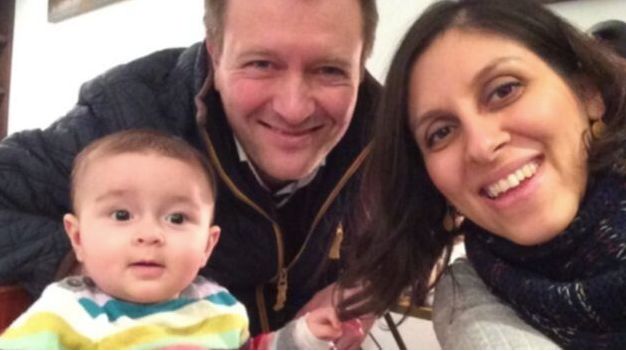
The mother-of-one is “genuinely happy” after having her ankle tag removed, her husband Richard Ratcliffe said, but he added: “We very clearly remain in the middle of this government game of chess.”
Change.org
Of the upcoming court date, Kermani said: “In this case, she is accused of propaganda against the Islamic Republic’s system for participating in a rally in front of the Iranian Embassy in London in 2009 and giving interview to the BBC Persian TV channel at the same time.”
But he hoped that “this case will be closed at this stage, considering the previous investigation”.
However, Labour MP Tulip Siddiq later said although she was no longer under house arrest, Nazanin “has been summoned once again to court next Sunday”. There was no immediate explanation for the discrepancy with the dates.
Nor is it clear whether Nazanin is allowed to leave Iran, though Foreign Secretary Dominic Raab said she should be allowed to return to the UK as soon as possible and described Iran’s treatment of her as “intolerable.”
Iran’s judiciary was not immediately available to comment on the release.
Jeremy Hunt, foreign secretary between July 2018 and July 2019, said on Twitter: “Beyond cruel to toy with an innocent mother & six year old child in this way.”
He tagged the Iranian foreign minister Javad Zarif saying: “Let her come home.”
Nazanin’s sister-in-law Rebecca Ratcliffe said she and Nazanin’s husband Richard had a video call with her on Sunday morning and she was “lit up with joy about having the ankle tag taken off”.
She told Sky News: “It was lovely seeing her face this morning. She’s very relieved to be able to leave the flat finally … but there’s still this threat of the second court case hanging over her, so we wait to see what’s going to happen.
“We don’t really know how to interpret what’s going to happen later this week.
“Is it they’re going to just finish off the paperwork and release her and give her her passport back, or is it that they are going to whack her with that second sentence?
“We don’t know and I think there’s a few more sleepless nights ahead.
“Until we know that the second court case has been quashed and she’s on that plane back home, we can’t celebrate.”
She said her brother Richard was “OK” and that “today is a day for processing and having a bit of a rest with his family”.
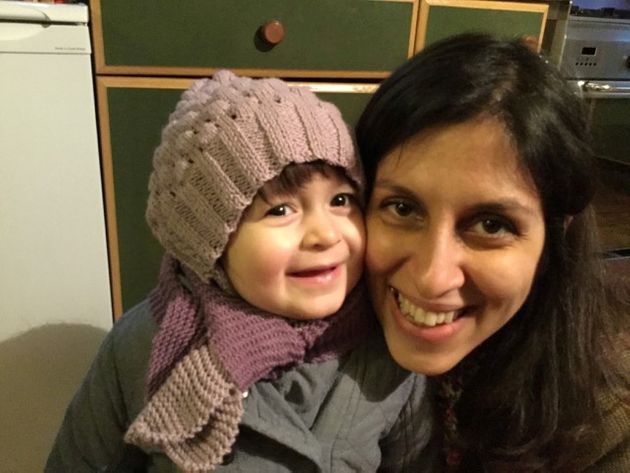
The news could be a significant development in the ordeal for Richard and the couple’s daughter Gabriella, who is now six. Richard has campaigned passionately for his wife’s release since she was jailed in Tehran in 2016.
Nazanin, a charity worker, was arrested at Tehran’s Imam Khomeini airport while travelling to introduce her then baby daughter to her parents.
The 42-year-old has been detained in Tehran since 2016, when she was sentenced over allegations, which she has steadfastly denied, of plotting to overthrow the Iranian government.
She has been out of prison since last spring due to the coronavirus crisis, and has been under house arrest at her parents’ home in Tehran.
Reuters
While the mother-of-one’s original sentence ended on Sunday, there had been fears her detention would continue after she appeared in court in November on charges of spreading propaganda against the regime. Her husband termed the charges “spurious”, saying the case presented the same evidence used when she was convicted in 2016.
Speaking to HuffPost UK in the days ahead of her release, Richard said he had hardly dared believe she would be released after a number of “false dawns”, including the invocation of rarely-used diplomatic protection for his wife in 2019 – to no avail.
He said: “Nazanin just wants to come home and have a cup of tea on the sofa. But I don’t think I will feel safe to imagine a reunion at the airport or the beginning of a new life until she’s out of Iranian airspace.”
Speaking after her release on Sunday, Kate Allen, director at Amnesty International UK, said: “This is such bittersweet news.
“After all Nazanin’s been through this feels like yet another example of the calculated cruelty of the Iranian authorities.
“The Iranian authorities have an appalling record of playing cruel games – not just with Nazanin, but also with other UK nationals and numerous people held in the country on politically-motivated grounds.
“Nazanin was convicted after a deeply unfair trial the first time around and this spurious new charge and possible trial is clearly designed to delay her release and exert yet more pressure on Nazanin and her family.
“This won’t be over until Nazanin has her passport and is on a flight heading home to the UK.
“The UK government must not take this lying down. All the past talk of not leaving any stone unturned to secure Nazanin’s release must now be translated into very serious diplomatic action.”
It has been claimed Nazanin was being held to force the UK into settling a multi-million-pound dispute with Iran. The debt dates back to the 1970s when the then-Shah of Iran paid the UK £400m for 1,500 Chieftain tanks.
After he was toppled in 1979, Britain refused to deliver the tanks to the new Islamic Republic and kept the money, despite British courts accepting it should be repaid.