A BBC investigation finds kits on sale containing more than 500 times the legal limit of bleach.


A BBC investigation finds kits on sale containing more than 500 times the legal limit of bleach.

Across nearly every country and historical era, women tend to live longer than men. While medical advances and improved living standards have reduced this gap in some places, new findings suggest the difference is deeply rooted in evolution and unlikely to vanish. Similar patterns appear across many animal species, hinting that the roots of longevity go far beyond modern life.
A team of scientists led by the Max Planck Institute for Evolutionary Anthropology in Leipzig, working with 15 collaborators around the world, carried out the largest and most detailed analysis ever of lifespan differences between male and female mammals and birds. Their results offer fresh insight into one of biology’s most enduring questions: why do the sexes age at different rates?
Longevity: A question of chromosomes?
In most mammal species, females live longer — for example, female baboons and gorillas often surpass males in age. But this pattern reverses in other groups. In many birds, reptiles, and insects, it is the males that have longer lifespans. One possible explanation, known as the heterogametic sex hypothesis, links these differences to sex chromosomes. Mammalian females possess two X chromosomes, while males have one X and one Y (making them the heterogametic sex). Having a pair of X chromosomes may shield females from harmful mutations and extend their lifespan. In birds, the system is reversed: females are the heterogametic sex.
Using data from more than 1,176 mammal and bird species in zoos around the world, researchers observed a striking contrast that supported this hypothesis. In most mammals (72 percent), females lived longer, by an average of twelve percent. In most bird species (68 percent), males were the longer-lived sex, averaging five percent longer lifespans. Yet the pattern was far from universal. “Some species showed the opposite of the expected pattern,” explained lead author Johanna Stärk. “For example, in many birds of prey, females are both larger and longer-lived than males. So sex chromosomes can only be part of the story.”
How mating and parenting shape longevity
In addition to genetics, reproductive strategies also play a role. Through sexual selection, males in particular develop conspicuous characteristics such as colorful plumage, weapons, or large body size, which increase reproductive success but can shorten lifespan. The new study supports this assumption: In polygamous mammals with strong competition, males generally die earlier than females. Many birds, on the other hand, are monogamous, which means that competitive pressure is lower and males often live longer. Overall, the differences were smallest in monogamous species, while polygamy and pronounced size differences were associated with a more pronounced advantage for females.
Parental care also plays a role. The researchers found evidence that the sex that invests more in raising offspring — in mammals, this is often the females — tends to live longer. In long-lived species such as primates, this is likely to be a selective advantage: females survive until their offspring are independent or sexually mature.
Zoo life reduces — but does not erase — lifespan gaps
A long-held idea suggests that environmental pressures, such as predators, disease, and harsh weather, drive differences in male and female lifespan. To test this, the scientists turned to zoo populations, where such risks are minimal. Even in these safe conditions, lifespan gaps persisted. Comparing zoo and wild data showed that while the differences were smaller in captivity, they rarely disappeared altogether. This pattern mirrors the human experience: better healthcare and living conditions may shrink the gap between men and women, but do not erase it.
Taken together, the findings indicate that lifespan differences between males and females are deeply embedded in evolution. They are shaped by sexual selection, parental care, and genetic factors linked to sex determination. The environment influences how large these gaps become but cannot remove them entirely. These contrasts between the sexes are not simply a product of circumstance — they are woven into our evolutionary past and are likely to persist far into the future.

Nigel Farage is facing a fresh headache after it emerged a Reform UK MP warned voters the UK could soon be led by an “appalling Hamas-supporting, LGBT-supporting nationalist party”.
Kruger, who dramatically left his position as a Tory frontbencher to join Reform last month, can be seen in a clip shared on the party’s YouTube page comparing supporting LGBT+ rights to backing Palestinian militants.
Advertisement
Speaking during a membership drive at the weekend, Kruger said his party was “up against Lib Dems, Labour, Greens, we’ve got the nationalists in Wales and Scotland, there’s Corbyn”.
In comments first obtained by the Mirror, he said: “You know that shows how bad things are in our country.
“What I worry about is they’re going to get together after the next election and have some sort of appalling, you know, Hamas-supporting, LGBT-supporting, you know, nationalist party against the United Kingdom trying to get us back into the EU.
Advertisement
“All the things that the British people have rejected time and again. The only way to stop that is Reform. And so that means, you know, including if you’re a former. Conservative, I’m afraid to say, you’ve got to join us.”
Kruger himself dodged a question on this issue at a pre-arranged Reform press conference today where he was outlining his party’s plans to reform Whitehall.
When asked for a response to his comments from the weekend, he said the public should vote for Reform if they want a “sensible moderate government”.
Advertisement
He told the Mirror: “You do have a kaleidoscope of people who proclaim their belief in gay rights on one hand and then their support for Hamas on the other, or at least for kind of Islamism in the Middle East. So I mean, I’m pointing out the incredible incoherence of the coalition that has ranged against us.
“I dread to think what would happen if there was some sort of deal of the election which ended up with that rabble in power. So that is the concern I have.”
Polly Billington, Labour MP for East Thanet, quickly hit out at Kruger’s “dinosaur” comments this morning.
Advertisement
She said: “Danny Kruger’s remarks are outdated and out of line. Stirring up division is Reform’s stock in trade and now LGBT people are being targeted.
“His words have direct consequences in our communities and should be condemned by Nigel Farage.
“It’s astounding that Kruger made these comments on the same day his colleague Sarah Pochin embarked on a racist rant about black and Asian people on TV.
“Our British values of decency, compassion and respect are under threat from Reform. That is what we’re up against – the politics of division and grievance that would take our great country to a very dark place.
Advertisement
“If Nigel Farage had any backbone, he’d stand up to these dinosaurs and take action. Failure to do so is an endorsement of these divisive views.”
Reform UK has been approaching for a response to Kruger’s comments.
The Mirror’s report comes a day after Farage admitted he was “angry” over another row caused by one of his five MPs.
Sarah Pochin triggered plenty of backlash when she complained about TV adverts being “full of black people, full of Asian people” at the weekend, although she later apologised.
Advertisement
Farage said in a press conference on Monday that these were “ugly” remarks and admitted he is “unhappy” with Pochin for these comments, but refused to punish her by withdrawing the whip.
He said: “If I thought the intention behind it was racist, I would have taken a lot more action that I have done today – and that is because I don’t.”
Kruger also responded to the backlash around Pochin, telling Times Radio on Tuesday morning: “I think that’s a really regrettable thing that she said, because it’s so offensive to suggest that seeing black and Asian faces made her mad.
Advertisement
“Obviously, she was trying to say something different. There’s no excuse, but it is the truth that she was talking about over-representation of minorities.”


The independent MP for Islington North, who is in the process of setting up a new party currently known only as Your Party and setting up its first ever conference next month, will also swap the Commons for the stage in honour of the festive season.
He will perform as the ‘Wizard of Oz-lington’ in a drag production of Wicked Witches, making an onscreen cameo in the north London play.
Corbyn’s spokesperson told HuffPost UK: “The Pleasance has been at the heart of our community for 30 years, and local theatre like this deserves our support.
“Panto brings people together – it’s fun, inclusive and a brilliant celebration of creativity. It’s a pleasure to conjure up a little festive magic with the Pleasance in their 30th year.
“Local theatre is where the real wizardry happens – sparking imagination and spreading a bit of joy.”
Head of the theatre at Pleasance London, Ellie Simpson, said: “Jeremy’s as much a part of Islington as the Yellow Brick Road is of Oz – so who better to play the Wizard of Oz-lington?
“His cameo adds a touch of local sparkle to our wickedly funny festive panto, which marks Pleasance’s first in over 20 years and raises the curtain on our 30th anniversary celebrations.”
Meanwhile the theatre said: “This Wicked-inspired pantomime Wicked Witches – A Popular Panto! will whisk audiences down the Yellow Brick (Caledonian) Road for a gloriously camp Christmas spectacular, packed with cabaret, pop parody and plenty of laughs for those young and old alike. Expect soaring vocals, sparkly spells, and more sass than you can shake a wand at.”



Not only are hobbies great for your mental health, but researchers and neuroscientists increasingly think they might help to protect your brain as you age too.
Advertisement
Take reading, for instance.
Some research suggests that reading twice a week or more can lead to decreased cognitive impairment, while neurologist and author of How To Prevent Dementia, Dr Richard Restak, said: “Reading for pleasure is perhaps the single most effective activity you can engage in for increasing cognitive reserve”.
And now, a new study published in the International Journal of Geriatric Psychiatry has linked listening to music to a significantly decreased rate of dementia among over-70s.
In this study, scientists looked at 10,893 Australian participants who were aged 70 and older.
None of them had dementia when the study began.
The researchers used Cox proportional hazard regression models to work out whether participants’ levels of music engagement (be it listening to music, playing an instrument, or a combination of both) seemed to be linked to their dementia risk from year three of the sudy onwards.
Advertisement
They found that “always” listening to music was associated with a 39% lower risk of developing dementia among their participants, compared to those who “never,” “rarely,” or “sometimes” did.
Playing an instrument was linked to 35% less risk, meanwhile, and those who both played an instrument and listened to music appeared to be 33% less likely to develop the condition too.
Listening to, and playing, music (as well as doing both) was also linked to less cognitive impairment in this study.
Advertisement
These findings seemed to be stronger among participants who’d had over 16 years of education.
“These results highlight music as a potential promising, accessible strategy to help reduce cognitive impairment and delay the onset of dementia in later life,” the paper reads.
No. It only found a link, and not a cause – we can’t say from this data that listening to music is the reason people with the hobby were less likely to develop dementia.
Advertisement
Study senior author Professor Joanne Ryan, however, said: “With no cure currently available for dementia, the importance of identifying strategies to help prevent or delay onset of the disease is critical.
“Evidence suggests that brain ageing is not just based on age and genetics but can be influenced by one’s own environmental and lifestyle choices.”
She continued: “Our study suggests that lifestyle-based interventions, such as listening and/or playing music can promote cognitive health.”
Advertisement

Terry White’s sister is giving evidence to the Lampard Inquiry into mental health deaths.

People who walk for 10-15 minutes at a time can reduce their risk of cardiovascular disease by up to two thirds compared to those who take only brief walks lasting less than five minutes. Even when covering the same total number of steps, longer, uninterrupted walks appear to provide greater benefits for the heart than short, scattered strolls throughout the day.
Study Finds Continuous Walking Improves Cardiovascular Health
An international team of researchers from the University of Sydney and the Universidad Europea in Spain discovered that sustained walking sessions offer stronger protection for heart health than fragmented activity. Their work, published in the Annals of Internal Medicine, explored how walking patterns affect the health of people who are generally inactive.
Among individuals averaging fewer than 8000 steps per day, those who concentrated their walking into one or two sessions lasting at least 10-15 minutes had a significantly lower risk of death and cardiovascular events (including heart attacks and strokes) than those whose steps came from many short bouts lasting under five minutes.
One or Two Steady Walks Can Make a Big Difference
Co-lead author Dr. Matthew Ahmadi, Deputy Director of the Mackenzie Wearables Research Hub and member of the Charles Perkins Centre at the University of Sydney, explained: “For the most inactive people, switching from brief walks here and there to longer continuous walks may come with some health benefits.
“There is a perception that health professionals have recommended walking 10,000 steps a day is the goal, but this isn’t necessary. Simply adding one or two longer walks per day, each lasting at least 10-15 minutes at a comfortable but steady pace, may have significant benefits — especially for people who don’t walk much.”
Tracking Step Patterns Over Time
The study involved 33,560 adults between the ages of 40 and 79 who typically walked fewer than 8000 steps a day and had no history of cardiovascular disease or cancer. Participants wore research-grade wristbands for one week to record both their step counts and how their steps were distributed throughout the day.
Researchers followed their health outcomes for about eight years and found striking differences in cardiovascular risk between those who walked in short versus longer bouts:
Why Step Patterns Matter
Senior author Professor Emmanuel Stamatakis, Director of the Mackenzie Wearables Research Hub and physical activity theme leader at the Charles Perkins Centre, noted: “We tend to place all the emphasis on the number of steps or the total amount of walking but neglect the crucial role of patterns, for example ‘how’ walking is done.
“This study shows that even people who are very physically inactive can maximize their heart health benefit by tweaking their walking patterns to walk for longer at a time, ideally for at least 10-15 minutes, when possible.”
Simple Changes, Big Results
Co-lead author Dr. Borja del Pozo from the Universidad Europea added: “Our research shows that simple changes can make all the difference to your health. If you walk a little, set aside some time to walk more often and in longer sessions. Such small changes can have a big impact.”
Jacqui Hunter died less than 24 hours after being told that her daughter had died in the womb.

Why doesn’t spaghetti fall apart when it’s boiled? According to new scientific findings, the key is gluten. The amount of salt added to the cooking water also plays a surprisingly important part in keeping pasta firm and intact.
Studying Pasta at the Microscopic Level
Researchers used advanced scientific tools to analyze the inner structure of both regular and gluten-free spaghetti purchased straight from the store. Their observations revealed that gluten provides vital structural support during cooking, helping pasta maintain its texture and shape.
“We were able to show that the gluten in regular spaghetti acts as a safety net that preserves the starch. The gluten-free pasta, which contains an artificial matrix, only works optimally under exactly the right cooking conditions — otherwise the structure easily falls apart,” explains Andrea Scotti, senior lecturer in physical chemistry at Lund University.
To uncover these details, Scotti employed small-angle neutron scattering and X-ray techniques. These methods allowed the team to examine food on a microscopic scale (down to a billionth of a meter) and connect those molecular observations to everyday characteristics like texture, shelf life, and glycemic index.
Salt’s Surprising Role in Pasta Perfection
The researchers also discovered that the salt added to the pasta water influences the final outcome.
“Our results show that regular pasta has higher tolerance, or better structural resistance, to less optimal cooking conditions such as being cooked for too long or too much salt being added to the water. So, cooking pasta with the right amount of salt is not just a matter of taste — it also affects the microstructure of the pasta and thus the whole dining experience,” says Andrea Scotti.
Toward Better Gluten-Free Alternatives
Next, the research team plans to expand its work by examining more pasta varieties and production methods. They also aim to simulate digestion to understand how the pasta’s molecular structure changes once inside the human stomach.
“With demand for gluten-free alternatives increasing, we hope that our methods can help develop more durable and nutritious products that stand up to the demands placed on them by both the cooking process and by consumers,” adds Scotti.
This study was carried out in collaboration with Judith Houston, lead instrument scientist for the LoKI instrument at the European Spallation Source (ESS) in Lund, Sweden, along with scientists from the Institut Laue-Langevin in France and the Diamond Light Source and ISIS Neutron and Muon Source in the UK.
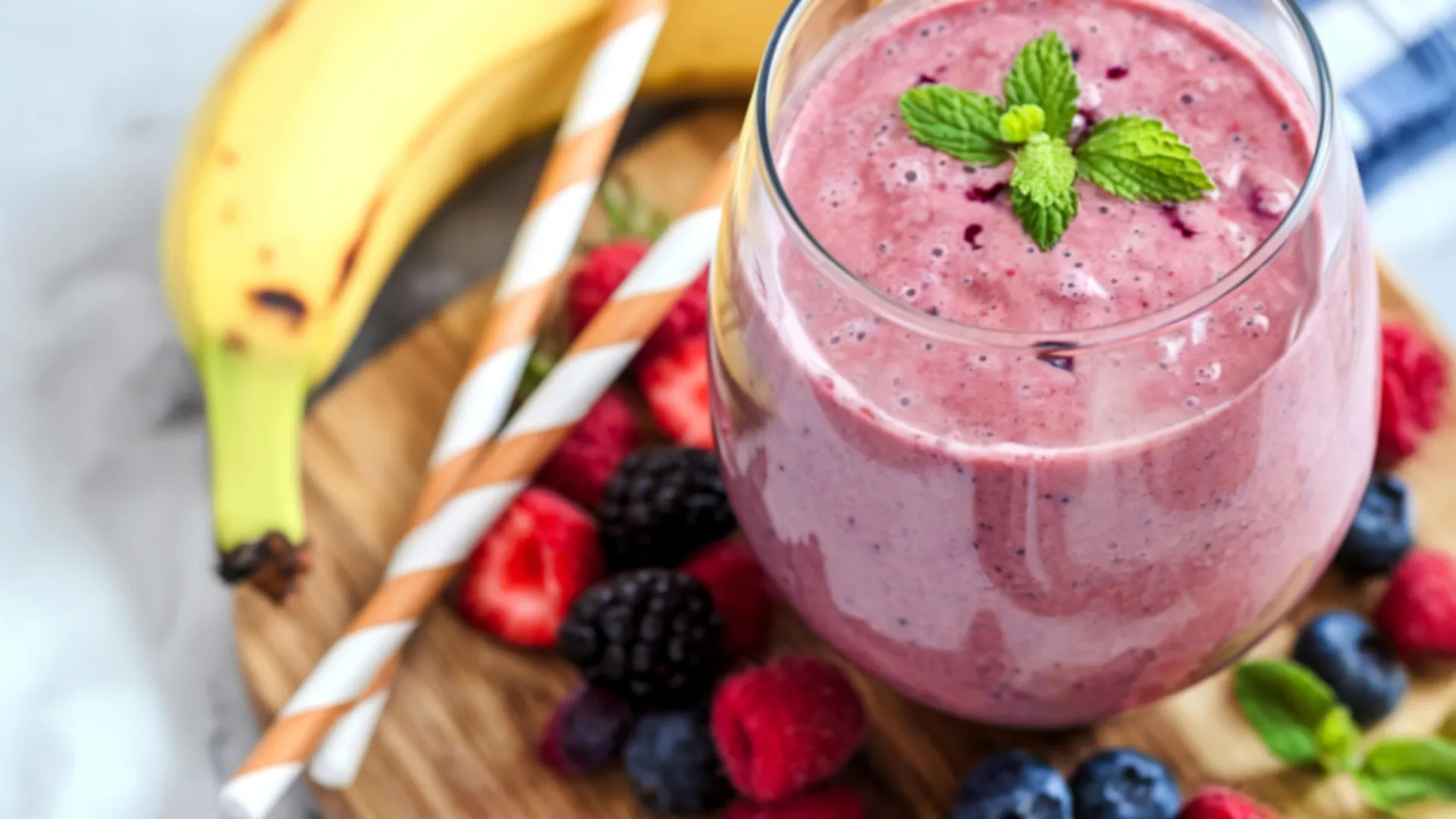
Smoothies are a quick and delicious way to load up on fruits and vegetables, but some ingredient combinations may not be as healthy as they seem. Scientists from the University of California, Davis, discovered that the types of fruits blended together can change how much nutrition your body actually absorbs.
Their research, published in the Royal Society of Chemistry’s journal Food and Function, examined how polyphenol oxidase (PPO) — an enzyme found naturally in many fruits and vegetables — affects the body’s ability to take in flavanols. These bioactive compounds are linked to improved heart and brain health and are abundant in foods like apples, pears, blueberries, blackberries, grapes, and cocoa (all popular smoothie ingredients).
Lead author Javier Ottaviani, director of the Core Laboratory of Mars Edge, part of Mars, Inc., and adjunct researcher at UC Davis, explained: “We sought to understand, on a very practical level, how a common food and food preparation like a banana-based smoothie could affect the availability of flavanols to be absorbed after intake.”
Anyone who has sliced an apple or peeled a banana has seen the fruit quickly turn brown. That browning occurs when PPO reacts with oxygen after the fruit is cut or bruised. The UC Davis team wanted to know if that same enzyme activity affects how much of these beneficial flavanols the body absorbs when fruits are blended together in smoothies.
Bananas vs. Berries: The Smoothie Showdown
To test this, participants consumed two different smoothies — one made with banana, which has high PPO activity, and another made with mixed berries, which have low PPO activity. They also took a flavanol capsule for comparison. Afterward, researchers measured flavanol levels in blood and urine samples.
The results were striking. People who drank the banana smoothie had 84% lower flavanol levels compared to those who took the control capsule.
“We were really surprised to see how quickly adding a single banana decreased the level of flavanols in the smoothie and the levels of flavanol absorbed in the body,” Ottaviani said. “This highlights how food preparation and combinations can affect the absorption of dietary compounds in foods.”
What Are Flavanols?
Flavanols are natural compounds found in foods like cocoa, berries, apples, and grapes. They’re part of a larger group of plant nutrients called polyphenols and are known for supporting heart and brain health. Research suggests that flavanols can help improve blood flow, support memory, and reduce inflammation when consumed regularly.
Choosing the Right Fruit Pairings
In 2022, the Academy of Nutrition and Dietetics recommended consuming 400 to 600 milligrams of flavanols each day for cardiometabolic health. Ottaviani noted that for people aiming to reach that target, it helps to pair flavanol-rich fruits such as berries with ingredients that have low PPO activity, like pineapple, oranges, mango, or yogurt.
Bananas are still a nutritious fruit, but Ottaviani advised that if you enjoy banana smoothies, it may be best not to mix them with flavanol-heavy foods like berries, grapes, or cocoa. The same principle applies to other foods with high PPO activity, including beet greens.
Ottaviani added that these findings could open the door to more studies on how food preparation affects nutrient absorption. For instance, tea is a major dietary source of flavanols, and the way it is brewed could alter how many of those compounds become available for the body to absorb.
“This is certainly an area that deserves more attention in the field of polyphenols and bioactive compounds in general,” said Ottaviani.
Jodi Ensunsa, Reedmond Fong, Jennifer Kimball and Alan Crozier, all affiliated with the UC Davis Department of Nutrition and researchers affiliated with the UC Davis Department of Internal Medicine, University of Reading, King Saud University and Mars, Inc. contributed to the research.
The study was funded by a research grant from Mars, Inc., which collaborates with researchers to study potential benefits of cocoa flavanols for human health.
