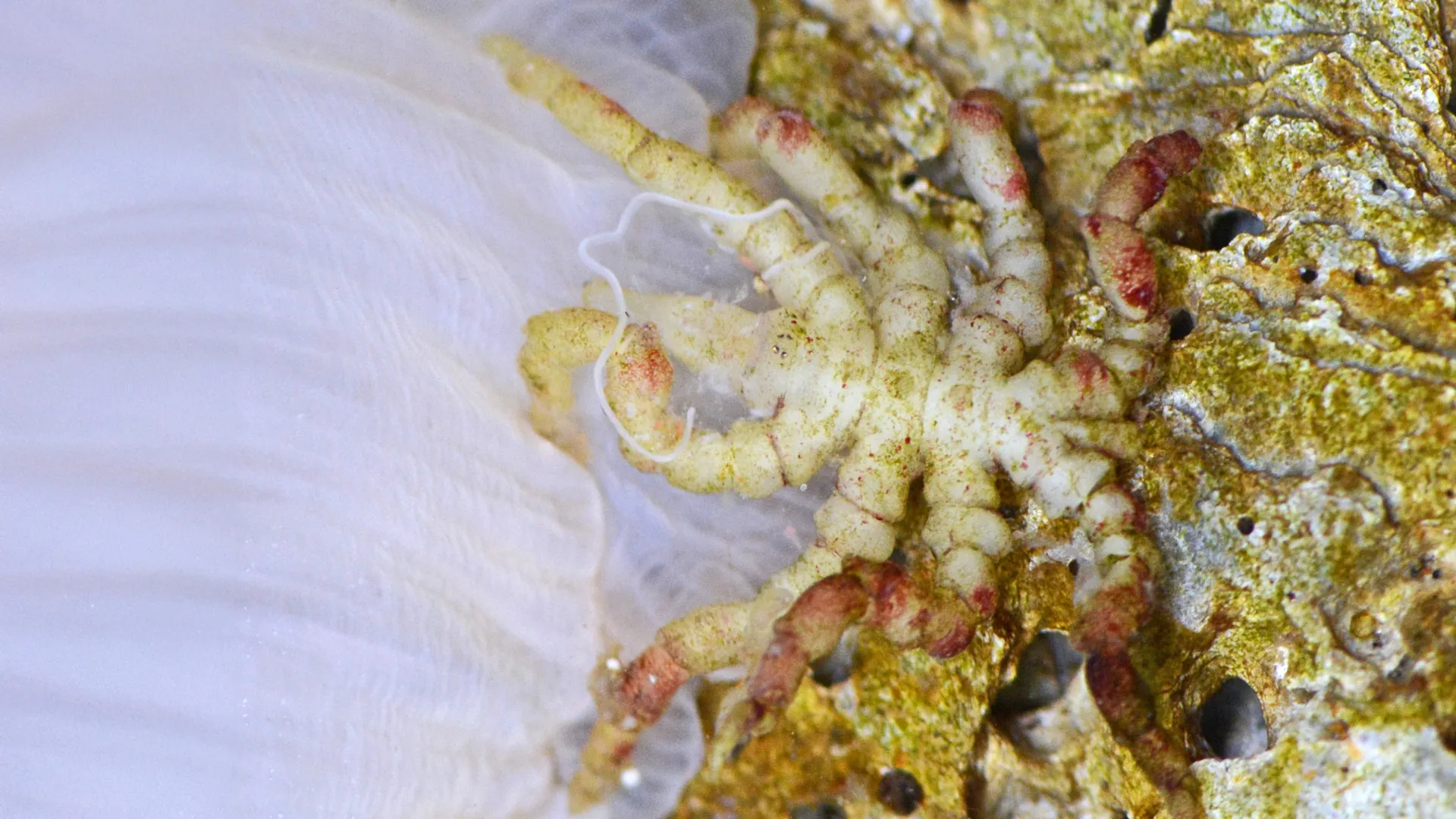
How a lost gene gave the sea spider its bizarre, leggy body

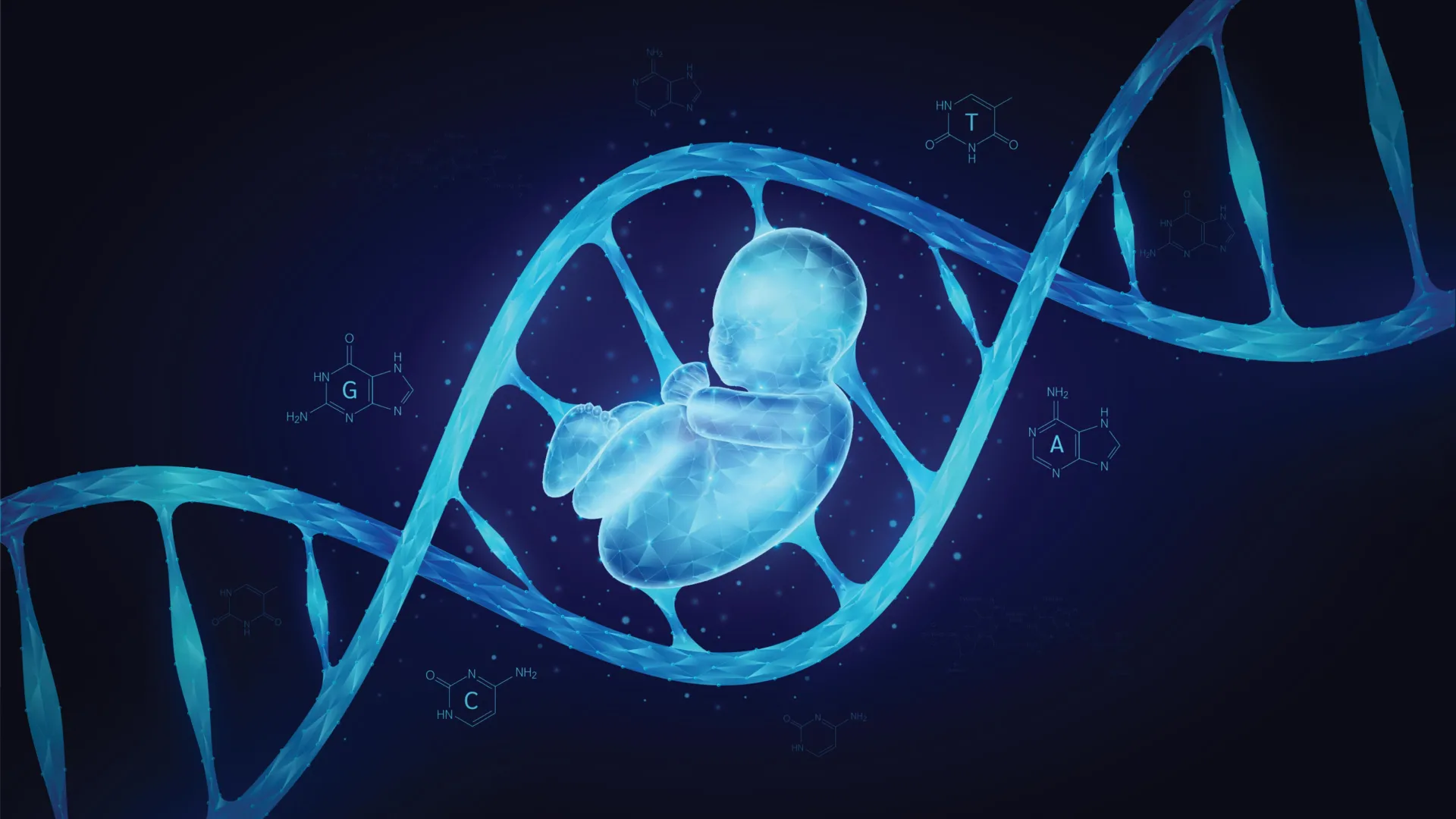
An international collaboration featuring the University of Vienna and the University of Wisconsin-Madison (USA) has led to the first-ever chromosome-level genome assembly of a sea spider (Pycnogonum litorale). The genome informs about the development of the characteristic sea spider body plan and constitutes a landmark for revealing the evolutionary history of chelicerates in general. The study was recently published in BMC Biology.

Sea spiders (Pycnogonida) are marine arthropods with highly unusual anatomy: their trunk is very narrow and short, many of their internal organ systems extend into their long legs, and their abdomen is extremely reduced, to the point of being almost unrecognizable. Together with much better known animals such as spiders, scorpions, mites, or horseshoe crabs, sea spiders belong to the group called chelicerates, named after their claw-like mouthparts, the chelicerae. The bizarre body plan of these “no-bodies” raises fascinating questions: what genetic factors underlie its formation? And what can this tell us about the evolutionary history of chelicerates? The answers lie in their genome.

A high-resolution genome

To produce the genome assembly, researchers combined complementary sequencing technologies. First, the genetic material of a single P. litorale individual was obtained using so-called “long-read sequencing,” a technology that is able to capture very long stretches of DNA. This facilitates the correct assembly of otherwise challenging repeated or complex genomic regions. Then, the spatial organization of the genome was assayed in a second P. litorale individual, revealing which DNA pieces lie close to each other in the cell nucleus. By leveraging the distance information, the correct order of the sequenced DNA stretches can be ascertained. This combination of data sources led to the assembly of 57 pseudochromosomes, representing almost the entirety of the sea spider genome in unprecedented resolution. This was additionally supplemented by novel datasets of gene activity in various developmental stages of P. litorale. “The genomes of many non-canonical laboratory organisms are challenging to assemble, and Pycnogonum is no exception. Only the combination of modern high-throughput data sources made a high-quality genome possible,” says the study’s first author Nikolaos Papadopoulos from the Department of Evolutionary Biology at the University of Vienna. “This can now serve as a stepping stone for further research.”

Lost genes, visible effects

The research team paid special attention to the so-called Hox cluster – a gene family that is evolutionarily conserved across the animal kingdom. “In arthropods, Hox genes play a central role in the correct specification of the different body segments; but also in many other animal groups they are essential ‘master controllers’ during body plan development,” explains Andreas Wanninger, one of the project leads at the Department for Evolutionary Biology at the University of Vienna. The exciting secret of Pycnogonum litorale: a part of the Hox cluster is missing completely from the genome, namely abdominal-A (Abd-A), a gene typically involved in specification and development of the posterior part of the body. Its absence could be linked to the extreme reduction of the pycnogonid abdomen. Similar conditions have been observed in other arthropods with reduced posteriors, such as certain mites and barnacles. Thus, sea spiders offer another example for the well-documented evolutionary relationship between Hox gene loss and body part reduction.

The genome also offers insights into broader evolutionary patterns. Unlike spiders and scorpions, whose genomes show clear signs of ancient whole-genome duplications, no such traces can be found in the genome of P. litorale. As pycnogonids are considered the sister taxon to all chelicerates, this suggests that the genome of the chelicerate ancestor did not already have these duplications; rather, they must have happened much later in evolution, for certain chelicerate sub-groups.

A new reference genome

This newly assembled high-quality genome paves the way for further comparative studies. P. litorale thus becomes a novel valuable reference species in regards to questions about the interrelationships between chelicerates and the evolution of their body plans, as well as the genetic mechanisms that underlie the diversity of arthropods. “From an evolutionary developmental perspective, sea spiders are very interesting: their mode of development may be ancestral for arthropods, but at the same time they boast multiple body plan innovations unique to themselves. Beyond this, they also possess remarkable regenerative abilities,” explains last author Georg Brenneis of the Department of Evolutionary Biology at the University of Vienna. He adds: “Now that we have the genome and comprehensive datasets on gene activities during development, we can systematically study all of these aspects on the molecular level.”

The researchers will use the novel reference genome for further studies on gene regulation, development, and regeneration in chelicerates, aiming to better understand the processes underlying the evolutionary success of this group.


Share Button

Panel Of 2024 Labour Voters Name The 1 Turning Point They Began To Like Farage

A panel of 2024 Labour voters said they started to like Reform UK after watching its leader Nigel Farage on I’m A Celebrity… Get Me Out Of Here!.

Back in late 2023 before he was elected to parliament, Farage caused a huge stir by appearing in the hit reality TV show.

Even the programme’s hosts Ant and Dec urged producers to take a break from having politicians as contestants.

But, Farage still won over voters and ended up in third place.

More than 18 months later, a panel of voters who backed Labour last July told pollsters that his appearance on the show marked the moment they started warming up to the MP for Clacton.

In footage aired by the BBC’s Sunday with Laura Kuenssberg, one voter told pollsters More in Common: “I really like Reform.

“I didn’t [like him], but it was I’m A Celeb… which turned my head for Nigel.

“I really saw a different side to him and I think he’s very misunderstood.”

“He’s more relatable to people, to the average person,” another woman said. “Whereas some politicians at the present seem far removed, they’re so in another world, because they are public school educated, they can’t relate to the average person.”

However, a different person did jump in at this point, saying: “Nigel Farage was publicly educated, while Keir Starmer is working class but he does present that.

“So Nigel Farage puts on this image of being one of the people, but actually he went to private school.”

Even so, some voters suggested they would fire Starmer for his “disappointing” performance over the last year unless he starts to “try harder”.

Good Morning Britain host Susanna Reid also told the BBC that this conversation demonstrated how voters “need to feel a material difference in their lives”.

She noted that they are still struggling with food inflation and cost of living, so the “government are getting this wrong”.

“Perhaps Sir Keir Starmer needs to go on I’m A Celebrity… or Strictly, in order for voters to know who he is,” Reid suggested. “The words that kept coming out of their mouths were: I don’t know who he is.”

The focus group’s findings were published to mark the anniversary of Labour’s landslide victory in the general election as political pundits look at how Starmer has fallen down in the polls ever since.

Sky News had its own devastating way of portraying Labour’s first year in office with some brutal word clouds, again from More in Common.

The pollsters asked the public: “In a word or two, what would you say has been Labour’s biggest achievement in government?”

The largest word by a healthy margin was “nothing”, although – in much smaller fonts – NHS, welfare, winter, election and Ukraine were all visible too.

A More in Common word cloud shown on Sky News
Share Button

Command Of Russian Army ‘Undermined’ After 16 Of Putin’s Generals Killed At War, UK Says

Vladimir Putin has reportedly lost 16 Russian generals in battle since declaring war on Ukraine, according to the UK.

The British Ministry of Defence (MoD) claimed this loss has subsequently undermined command and control in some parts of the army.

The MoD also noted in its latest update on X that two senior generals have died so far in 2025 and five in the last 12 months alone.

The MoD said: “The loss of so many high-ranking officers is likely to have had the effect of undermining command and control in parts of the Russian Armed Forces.

“This has likely contributed to Russian tactical and operational difficulties during the conflict.”

The MoD confirmed that Major General Mikhail Gudkov was the latest to be killed in battle after a Ukrainian strike on a Russian command post.

He died on July 2 in the Kursk oblast in western Russia, the region Ukrainian troops seized in a surprise incursion last August.

Russia has claimed to have retaken the area completely since April, while Ukraine has maintained that the fighting is ongoing.

The MoD said: “It is likely Gudkov was directing marine infantry units attempts to establish a buffer zone in the Ukrainian oblast of Sumy.

“Russia’s advances in Sumy have slowed due to Ukrainian counterattacks and significant Russian losses.”

The MoD has previously claimed Russia has now surpassed a million military losses since Putin first invaded Ukraine back in February 2022.

Despite the staggering attrition rate and Donald Trump’s efforts to secure a peace deal, the Russian president has refused to compromise on any long-term ceasefire deals with Ukraine.

Only last month, he confirmed that he still wants to annex all of Ukraine.

“I have said many times that the Russian and Ukrainian people are one nation, in fact. In this sense, all of Ukraine is ours,” Putin said.

Share Button

‘Tone Deaf!’ Tories Slammed After Strategy Chief Claims Party Has ‘Done The Apologies’

The Conservatives have been accused of being “tone deaf” after the party’s strategy chief claimed they have “done the apologies”.

According to The Telegraph, a leaked recording has revealed that a top ally of leader Kemi Badenoch, Baroness Maclean, told supporters the Tories have “done the mea culpas” now.

Speaking to the Conservative Women’s Organisation on June 18, she said the last government had a “tendency to make announcements without thinking through how they would be delivered.”

But, Maclean – who ran Kemi Badenoch’s leadership campaign – claimed the Tories will now be able to move forward with new policies and rebuild their reputation.

“We’ve done the mea culpas, we’ve done the apologies, we’ve done all that,” she said in the recording.

The Tories were in power for 14 years until they were unceremoniously kicked out of 10 Downing Street in last July’s general election.

Their historic defeat saw them reduced to just 121 MPs.

A year on, the party continue to decline in the polls as voters repeatedly punish them for their time in government.

Pollsters at Ipsos found the Tories were on just 15% in June, a distant third behind their right-wing rivals Reform (34%) and Labour (25%).

The Telegraph’s report comes after Badenoch issued an apology to business leaders, promising they were the “natural party of business”.

She added that she was “sorry if at any time over the last 14 years we did not seem like that.”

Responding to the leaked recording, Labour Party chair Ellie Reeves slammed the Tories for being “out of touch”.

She said: “It shows just how out of touch the Tories are that they believe they have said sorry for their 14 years of failure in government.

“The Conservatives crashed the economy and left working people picking up the tab with sky-high mortgages and rocketing bills. Yet they haven’t apologised even once for their dismal record.

“The Tories’ attitude to the mess they made is completely tone deaf. It’s the same old Tories – they haven’t learned a thing.”

Similarly, Liberal Democrat deputy leader Daisy Cooper said: “The Conservatives are completely deluded if they think the public have forgiven or forgotten the mess they’ve left behind.

“This is a slap in the face for families still paying out more for their mortgage because Liz Truss tanked the economy.

“Kemi Badenoch should urgently confirm whether she agrees with her own senior official on this, or if she will properly apologise to all those who suffered due to years of Conservative chaos under the government in which she served.”

Tory leader Kemi Badenoch

via Associated Press

Share Button

Cough medicine turned brain protector? Ambroxol may slow Parkinson’s dementia

Dementia poses a major health challenge with no safe, affordable treatments to slow its progression.

Researchers at Lawson Research Institute (Lawson), the research arm of St. Joseph’s Health Care London, are investigating whether Ambroxol — a cough medicine used safely for decades in Europe — can slow dementia in people with Parkinson’s disease.

Published on June 30 in the prestigious JAMA Neurology, this 12-month clinical trial involving 55 participants with Parkinson’s disease dementia (PDD) monitored memory, psychiatric symptoms and GFAP, a blood marker linked to brain damage. Parkinson’s disease dementia causes memory loss, confusion, hallucinations and mood changes. About half of those diagnosed with Parkinson’s develop dementia within 10 years, profoundly affecting patients, families and the health care system.

Led by Cognitive Neurologist Dr. Stephen Pasternak, the study gave one group daily Ambroxol while the other group received a placebo. “Our goal was to change the course of Parkinson’s dementia,” says Pasternak. “This early trial offers hope and provides a strong foundation for larger studies.”

Key findings from the clinical trial include:

  • Ambroxol was safe, well-tolerated and reached therapeutic levels in the brain
  • Psychiatric symptoms worsened in the placebo group but remained stable in those taking Ambroxol.
  • Participants with high-risk GBA1 gene variants showed improved cognitive performance on Ambroxol
  • A marker of brain cell damage (GFAP) increased in the placebo group but stayed stable with Ambroxol, suggesting potential brain protection.

Although Ambroxol is approved in Europe for treating respiratory conditions and has a long-standing safety record — including use at high doses and during pregnancy — it is not approved for any use in Canada or the U.S.

“Current therapies for Parkinson’s disease and dementia address symptoms but do not stop the underlying disease,” explains Pasternak. “These findings suggest Ambroxol may protect brain function, especially in those genetically at risk. It offers a promising new treatment avenue where few currently exist.”

Ambroxol supports a key enzyme called glucocerebrosidase (GCase), which is produced by the GBA1 gene. In people with Parkinson’s disease, GCase levels are often low. When this enzyme doesn’t work properly, waste builds up in brain cells, leading to damage. Pasternak learned about Ambroxol during a fellowship at The Hospital for Sick Children (SickKids) in Toronto, where it was identified as a treatment for Gaucher disease — a rare genetic disorder in children caused by a deficiency of GCase.

He is now applying that research to explore whether boosting GCase with Ambroxol could help protect the brain in Parkinson’s-related diseases. “This research is vital because Parkinson’s dementia profoundly affects patients and families,” says Pasternak. “If a drug like Ambroxol can help, it could offer real hope and improve lives.”

Funded by the Weston Foundation, this study is an important step toward developing new treatments for Parkinson’s disease and other cognitive disorders, including dementia with Lewy bodies. Pasternak and his team plan to start a follow-up clinical trial focused specifically on cognition later this year.

Share Button

Multisensory VR forest reboots your brain and lifts mood—study confirms

In Japan, Shinrin Yoku or forest bathing has already been used for therapeutic applications, for instance, to lower blood pressure and stress levels. For their study, the researchers wanted to find out whether forest bathing – consciously immersing oneself in nature – can also be effective when done virtually, and focused on whether the positive effect is stronger when several senses are addressed simultaneously.

For the project, a high-quality 360° VR video was produced in Europe’s largest Douglas fir forest, the Sonnenberg nature reserve near Parchim – complete with original sounds and the scent of essential oils from the Douglas fir. The participants experienced the virtual forest scenery either as a full sensory experience (with images, sound and scent) or in a reduced form whereby forest stimuli appealing to just a single sense – visual, auditory or olfactory – were used. In variants where only hearing or scent was activated, participants were placed in a neutral virtual environment to minimize visual stimuli and the influence of VR technology.

Significantly better effect with sensory combination

More than 130 participants were first put into an acute stress situation using stress-inducing images. Then, equipped with VR glasses, they experienced one of the four forest stimulation/ bathing variants. The results show that the combination of all three sensory stimuli led to a significantly greater improvement in mood and a stronger feeling of connection with nature compared to when individual sensory stimuli were presented. In addition to positive effects on mood, there were also limited improvements in working memory – the cognitive function that enables us to store, process and retrieve information in the short term.

However, the researchers point out that the effects are area-specific and cannot yet be considered universally valid. Further studies with larger samples are needed to confirm the results and provide a better understanding of the mechanisms behind the restorative effects of virtual nature experiences.

“We can already say that digital nature experiences can absolutely produce an emotional effect – even if they don’t replace actual nature,” reports Leonie Ascone, lead author of the study and researcher in the Neuronal Plasticity working group at the University Medical Center Hamburg-Eppendorf (UKE).

Potential for clinics, waiting rooms and urban spaces

Simone Kühn, head of the study and Director of the Center for Environmental Neuroscience at the Max Planck Institute for Human Development, adds: “Especially in places with limited access to nature – such as clinics, waiting areas or urban interiors – multisensory VR applications or targeted nature staging could support mental well-being. The images, sounds and scents of nature offer previously underestimated potential for improving mood and mental performance in everyday situations.” Kühn conducts intensive research into the effects of the environment on the human brain and, together with colleagues from universities in Vienna, Exeter and Birmingham, was recently able to prove that just from watching nature videos, patients perceive physical pain as less intense (Steininger et al., 2025).

In brief:

  • Forest bathing in Virtual Reality improves emotional well-being and increases connectedness to nature, particularly when several senses (sight, hearing, smell) are simultaneously engaged
  • The study used a 360° VR forest video complete with original sounds and the scent of Douglas fir essential oils
  • There is potential for application especially in clinical, urban and other environments with limited access to nature
Share Button

Pregnancy’s 100-million-year secret: Inside the placenta’s evolutionary power play

An international research team led by scientists from the University of Vienna has uncovered new insights into how specialized cell types and communication networks at the interface between mother and fetus evolved over millions of years. These discoveries shed light on one of nature’s most remarkable innovations – the ability to sustain a successful pregnancy. The findings have just been published in Nature Ecology & Evolution.

Pregnancy that lasts long enough to support full fetal development is a hallmark evolutionary breakthrough of placental mammals – a group that includes humans. At the center of this is the fetal-maternal interface: the site in the womb where a baby’s placenta meets the mother’s uterus, and where two genetically distinct organisms – mother and fetus – are in intimate contact and constant interaction. This interface has to strike a delicate balance: intimate enough to exchange nutrients and signals, but protected enough to prevent the maternal immune system from rejecting the genetically “foreign” fetus.

To uncover the origins and mechanisms behind this intricate structure, the team analyzed single-cell transcriptomes – snapshots of active genes in individual cells – from six mammalian species representing key branches of the mammalian evolutionary tree. These included mice and guinea pigs (rodents), macaques and humans (primates), and two more unusual mammals: the tenrec (an early placental mammal) and the opossum (a marsupial that split off from placental mammals before they evolved complex placentas).

A Cellular “Atlas of Mammal Pregnancy”

By analyzing cells at the fetal-maternal interface, the researchers were able to trace the evolutionary origin and diversification of the key cell types involved. Their focus was on two main players: placenta cells, which originate from the fetus and invade maternal tissue, and uterine stromal cells, which are of maternal origin and respond to this invasion.

Using molecular biology tools, the team identified distinct genetic signatures – patterns of gene activity unique to specific cell types and their specialized functions. Notably, they discovered a genetic signature associated with the invasive behavior of fetal placenta cells that has been conserved in mammals for over 100 million years. This finding challenges the traditional view that invasive placenta cells are unique to humans, and reveals instead that they are a deeply conserved feature of mammalian evolution. During this time, the maternal cells weren’t static, either. Placental mammals, but not marsupials, were found to have acquired new forms of hormone production, a pivotal step toward prolonged pregnancies and complex gestation, and a sign that the fetus and the mother could be driving each other’s evolution.

Cellular Dialogue: Between Cooperation and Conflict

To better understand how the fetal-maternal interface functions, the study tested two influential theories about the evolution of cellular communication between mother and fetus.

The first, the “Disambiguation Hypothesis,” predicts that over evolutionary time, hormonal signals became clearly assigned to either the fetus or the mother – a possible safeguard to ensure clarity and prevent manipulation. The results confirmed this idea: certain signals, including WNT proteins, immune modulators, and steroid hormones, could be clearly traced back to one source tissue.

The second, the “Escalation Hypothesis” (or “genomic Conflict”), suggests an evolutionary arms race between maternal and fetal genes – with, for example, the fetus boosting growth signals while the maternal side tries to dampen them. This pattern was observed in a small number of genes, notably IGF2, which regulates growth. On the whole, evidence pointed to fine-tuned cooperative signaling.

“These findings suggest that evolution may have favored more coordination between mother and fetus than previously assumed,” says Daniel J. Stadtmauer, lead author of the study and now a researcher at the Department of Evolutionary Biology, University of Vienna. “The so-called mother-fetus power struggle appears to be limited to specific genetic regions. Rather than asking whether pregnancy as a whole is conflict or cooperation, a more useful question may be: where is the conflict?”

Single-Cell Analysis: A Key to Evolutionary Discovery

The team’s discoveries were made possible by combining two powerful tools: single-cell transcriptomics – which captures the activity of genes in individual cells – and evolutionary modeling techniques that help scientists reconstruct how traits might have looked in long-extinct ancestors. By applying these methods to cell types and their gene activity, the researchers could simulate how cells communicate in different species, and even glimpse how this dialogue has evolved over millions of years.

“Our approach opens a new window into the evolution of complex biological systems – from individual cells to entire tissues,” says Silvia Basanta, co-first author and researcher at the University of Vienna. The study not only sheds light on how pregnancy evolved, but also offers a new framework for tracking evolutionary innovations at the cellular level – insights that could one day improve how we understand, diagnose, or treat pregnancy-related complications.

The research was conducted in the labs of Mihaela Pavličev at the Department of Evolutionary Biology, University of Vienna, and Günter Wagner at Yale University. Wagner is Professor Emeritus at Yale and a Senior Research Fellow at the University of Vienna. The study was supported by the John Templeton Foundation and the Austrian Science Fund (FWF).

Share Button

‘Menopause made me forget my name’

Kirsty Dixon from York runs support groups for women going through the menopause.

Share Button

Reform UK MP James McMurdock Gives Up Party Whip Over Covid Loans Allegations

A Reform UK MP has suspended himself from the party over allegations about “business propriety during the pandemic”.

James McMurdock removed the whip from himself after being contacted by The Sunday Times.

The paper approached him about £70,000 in government Covid “bounce back” loans he allegedly took out in 2020 and 2021 for two firms he owned.

In a statement, Reform MP Lee Anderson said: “I have today received a call from James McMurdock who has advised me, as chief whip, that he has removed the party whip from himself pending the outcome of an investigation into allegations that are likely to be published by a national newspaper.

“The allegations relate to business propriety during the pandemic and before he became an MP.”

He said the party “take these matters very seriously and James has agreed to cooperate in full with any investigation”.

McMurdock was elected the MP for South Basildon and East Thurrock last year.

It later emerged that he was jailed nearly 20 years ago for repeatedly kicking his then girlfriend.

At the time, Reform UK leader Nigel Farage said he was “a fine young man who’s turned out really very, very well”.

McMurdock is the second of the five Reform MPs elected last July to no longer have the party whip.

Rupert Lowe was suspended by the party in March amid allegations of bullying, which he denied, and now also sits as an independent MP in the Commons.

Share Button

Scientists thought the Arctic was sealed in ice — they were wrong

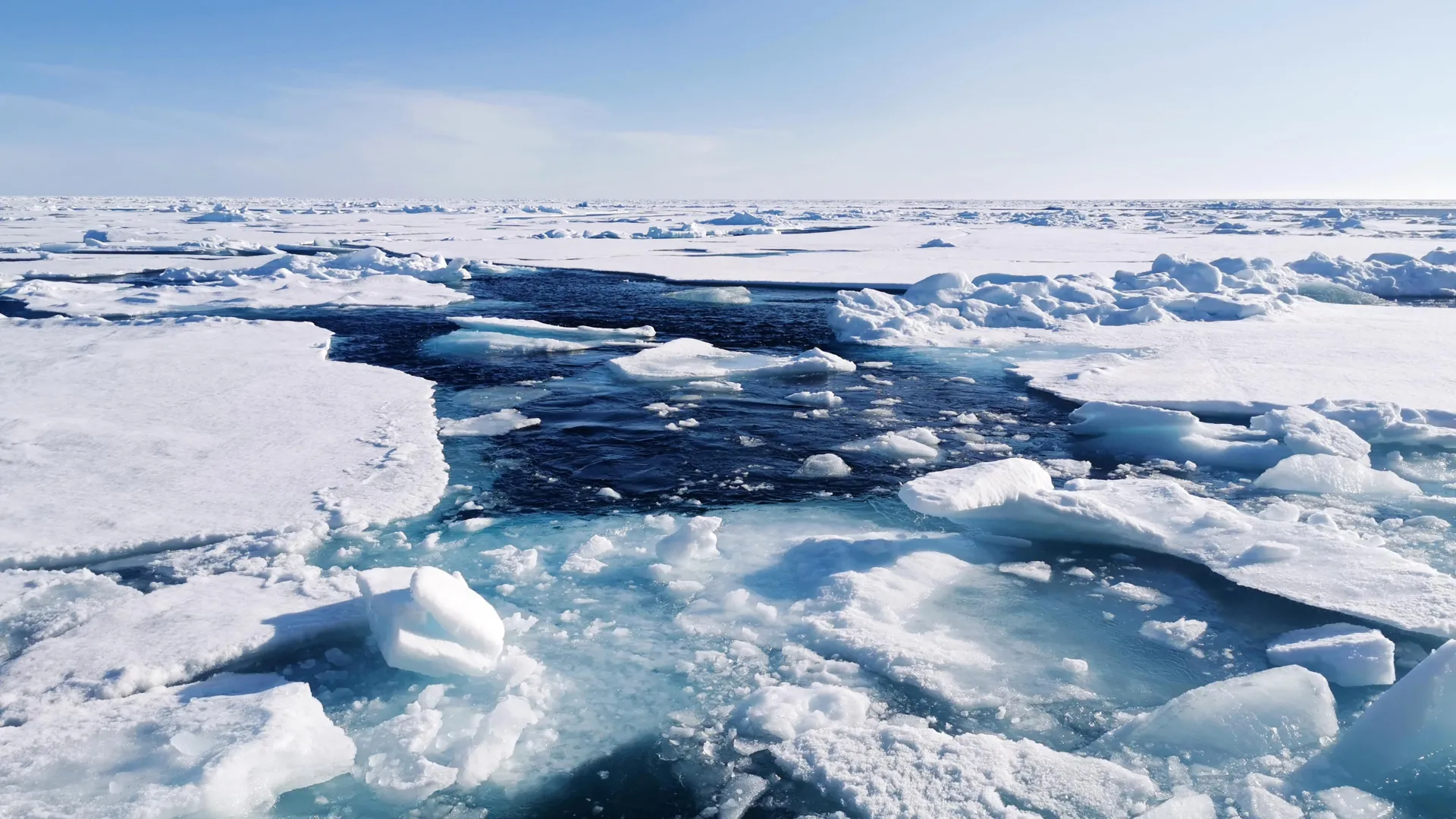
For years, scientists have debated whether a giant thick ice shelf once covered the entire Arctic Ocean during the coldest ice ages. Now a new study published in Science Advances, challenges this idea as the research team found no evidence for the presence of a massive ~1km ice shelf. Instead, the Arctic Ocean appears to have been covered by seasonal sea ice — leaving open water and life-sustaining conditions even during the harshest periods of cold periods during the last 750,000 years. This discovery gives insights crucial for our understanding of how the Arctic has responded to climate change in the past — and how it might behave in the future.

Tiny traces of life in ancient mud

Led by the European Research Council Synergy Grant project Into the Blue — i2B, the research team studied sediment cores collected from the seafloor of the central Nordic Seas and Yermak Plateau, north of Svalbard. These cores hold tiny chemical fingerprints from algae that lived in the ocean long ago. Some of these algae only grow in open water, while others thrive under seasonal sea ice that forms and melts each year.

“Our sediment cores show that marine life was active even during the coldest times,” said Jochen Knies, lead author of the study, based at UiT The Arctic University of Norway and co-lead of the Into The Blue — i2B project. “That tells us there must have been light and open water at the surface. You wouldn’t see that if the entire Arctic was locked under a kilometre-thick slab of ice.”

One of the key indicators the team looked for was a molecule called IP25, which is produced by algae that live in seasonal sea ice. Its regular appearance in the sediments shows that sea ice came and went with the seasons, rather than staying frozen solid all year round.

Simulating ancient Arctic climates

To test the findings based on the geological records, the research team used the AWI Earth System Model — a high-resolution computer model — to simulate Arctic conditions during two especially cold periods: the Last Glacial Maximum around 21,000 years ago, and a deeper freeze about 140,000 years ago when large ice sheets covered a lot of the Arctic.

“The models support what we found in the sediments,” said Knies. “Even during these extreme glaciations, warm Atlantic water still flowed into the Arctic gateway. This helped keep some parts of the ocean from freezing over completely.”

The models also showed that the ice wasn’t static. Instead, it shifted with the seasons, creating openings in the ice where light could reach the water — and where life could continue to thrive. This research not only reshapes our view of past Arctic climates but also has implications for future climate predictions. Understanding how sea ice and ocean circulation responded to past climate extremes can improve models that project future changes in a warming world.

“These reconstructions help us understand what’s possible — and what’s not — when it comes to ice cover and ocean dynamics,” said Gerrit Lohmann, co-author of this study, based at Alfred Wegener Institute, Helmholtz Centre for Polar and Marine Research (AWI) and co-lead of Into The Blue — i2B. “That matters when trying to anticipate how ice sheets and sea ice might behave in the future.”

Re-thinking the giant ice shelf theory

Some scientists have argued that features on the Arctic seafloor suggest that a huge, grounded ice shelf once covered the entire ocean. But this new study offers another explanation.

“There may have been short-lived ice shelves in some parts of the Arctic during especially severe cold phases,” said Knies. “But we don’t see any sign of a single, massive ice shelf that covered everything for thousands of years.”

One possible exception could have occurred about 650,000 years ago, when biological activity in the sediment record dropped sharply. But even then, the evidence points to a temporary event, not a long-lasting frozen lid over the Arctic.

Understanding the Arctic’s future

The study sheds new light on how the Arctic has behaved under extreme conditions in the past. This matters because the Arctic is changing rapidly today. Knowing how sea ice and ocean circulation responded to past climate shifts helps scientists understand what might lie ahead.

“These past patterns help us understand what’s possible in future scenarios,” said Knies. “We need to know how the Arctic behaves under stress — and what tipping points to watch for — as the Arctic responds to a warming world.”

The full paper, “Seasonal sea ice characterized the glacial Arctic-Atlantic gateway over the past 750,000 years,” is available in Science Advances.

This research is part of the European Research Council Synergy Grant project Into the Blue — i2B and the Research Council of Norway Centre of Excellence, iC3: Centre for ice, Cryosphere, Carbon, and Climate.

Share Button