Volodymyr Zelenskyy Defends His Stance During Oval Office Clash With Trump

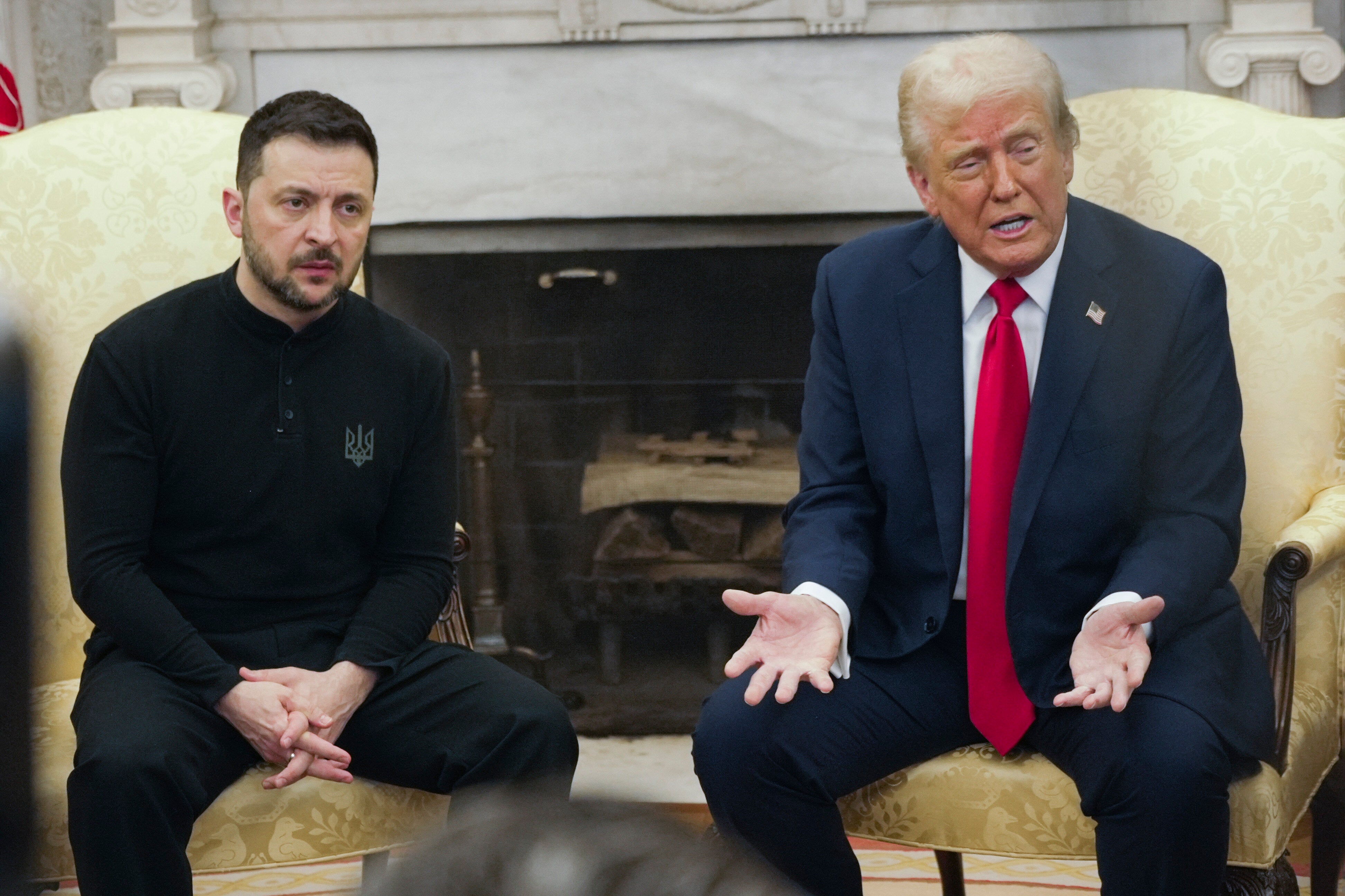
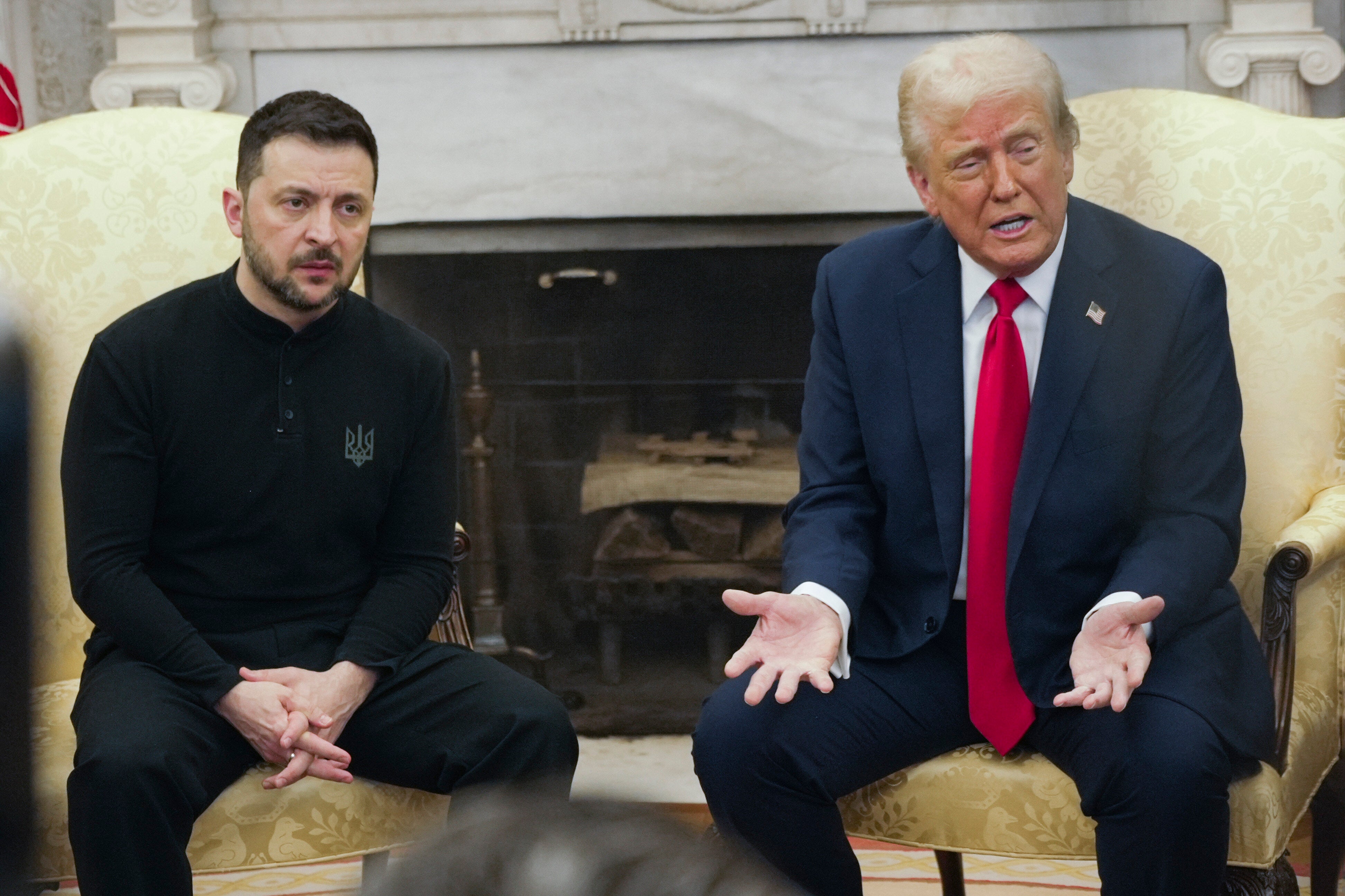
Ukrainian President Volodymyr Zelenskyy is speaking about his historic Oval Office clash with US President Donald Trump, defending his decision to speak up for his country at a critical juncture in its war against Russia.

The two leaders sparred inside the White House in front of the whole world last month with Trump accusing his Ukrainian counterpart of “gambling with World War III” for arguing that Russian President Vladimir Putin can’t be trusted. The episode led to a temporary pause in US aid and intelligence sharing with the country.

In an interview with Time released on Monday, Zelenskyy addressed the fact that Ukrainians rallied around him after his tense exchange with Trump rather than blame him for the diplomatic failure three years into the war.

Zelenskyy explained that Ukrainians “are very emotional, and when it comes to our sense of dignity, freedom, democracy, our people rise up and unite,” noting that his country expected the Trump administration to show that the U.S. still sees Kyiv as an ally.

“But in that moment there was the sense of not being allies, or not taking the position of an ally,” he said. “In that conversation, I was defending the dignity of Ukraine.”

At the infamous White House meeting, the Ukrainian leader said he planned to gift Trump the championship belt of heavyweight world champion Oleksandr Usyk. However, Zelenskyy chose to start out by showing Trump images depicting how badly Russia has treated Ukrainian prisoners of war.

“That’s tough stuff,” Trump said looking at the photos.

In his interview with Time, Zelenskyy defended his choice to give Trump the images, adding that he was hoping to appeal to the president’s humanity.

“What I wanted to show were my values,” Zelenskyy said. “But then, well, the conversation went in another direction.”

After the meeting went off the rails, Zelenskyy left the White House early and never got the chance to give Trump the belt. However, Time reported that a White House staffer found the gift in the Oval Office and placed it in Trump’s dining room.

Since then, Russia and Ukraine have agreed in principle to a limited ceasefire after Putin rejected a US proposal for an unconditional ceasefire which was approved by Kyiv. A US delegation on Monday met with Russian officials in Saudi Arabia a day after holding a separate meeting with their Ukrainian counterparts to discuss the implementation of that agreement.

Meanwhile, White House envoy Steve Witkoff told Tucker Carlson Putin “has got huge respect” for Trump, suggesting that Zelenskyy made a mistake by crossing Trump when he visited the White House.

“You saw what happened in the Oval Office with Zelenskyy and the president, right?” Witkoff said in an interview released on Friday. “Disrespecting him is not a healthy way to have a good relationship.”

“Hopefully we’ll chalk it up to a misunderstanding and we’ll get to a peace solution here,” he continued.

Zelenskyy also spoke out against granting Moscow major concessions with no reciprocation, citing Trump’s previous statement that Russia should rejoin the Group of 7 following its annexation of Crimea in 2014.

“That’s a big compromise,” Zelensky told Time. “Imagine releasing Hitler from his political isolation.”
Share Button

First case of bird flu in sheep found on UK farm

The UK’s chief veterinary officer confirms the case was discovered on a farm in Yorkshire.

Share Button

DNA testing site 23andMe files for bankruptcy protection

The company said that it will now attempt to sell itself under the supervision of a court.

Share Button

Scans in shopping centres and AI – can ideas like these help save the NHS?

Government says more NHS funds in England will go to social care as we look at how it can deliver change.

Share Button

Household electricity three times more expensive than upcoming ‘eco-friendly’ aviation e-fuels, study reveals

Existing tax policies during the energy transition from fossil fuels to renewable sources will lead to major energy injustices and skewed priorities, new research published in Climate Policyshows.

The peer-reviewed study found that electricity serving primary needs, such as heating or lighting, ultimately costs three times more than electricity for tertiary needs such as long-distance mobility — mostly due to taxation policies.

Further highlighting the ongoing social inequalities of fuel and related policies, the findings also demonstrate within the European Union (EU), the wealthiest 1% of all its population is responsible for 66% of the distance currently travelled by air. In fact, air travel is almost non-existent for 50%, and even quite limited for 90% of EU citizens the paper shows.

This 90% of people, therefore, emit less than 0.1 ton of CO2 equivalent emissions per person, per year. Meanwhile the top 1% emit more than 22 tons per person/year.

Dr Jean-Baptiste Jarin, from the TREE laboratory (Energy and Environment Transitions) at the University of Pau and Pays de l’Adour, who carried out the research, used France as an example of current and future electricity use as a basis for similar countries worldwide — especially across Europe. And although based on EU regulations applied to France, the methodology and conclusions of this study can be transposed to other countries, and to other energy carriers based on electricity, such as hydrogen.

To evaluate the impacts of these electricity tax schemes and final prices, he collected data on electricity consumption for primary (household), secondary (electric vehicle local mobility) and tertiary (e-fuel long distance mobility) needs, and then compared electricity prices, before and after taxation.

Results demonstrate:

  • Electricity serving household and local mobility needs cost 194 €/Mwh (euros per megawatt-hour). This was three times more than e-fuel (synthetic sustainable aviation fuels, that are renewable jet fuels produced from fossil-free electricity and recycled carbon dioxide) for aviation — 65.5 €/Mwh.
  • Tax policies accounted for 120 €/Mwh of this cost in the case of household and local mobility fuel needs but only 11.2 €/Mwh in the case of aviation.
  • Electro-intensive facilities that produce aviation e-fuel benefit from little or no taxation, and jet fuel is also untaxed.
  • A round trip by air between Paris and New York for one person, when using this low carbon (which is designed to be more eco-friendly) e-fuel, still requires 7,300 kWh — exceeding the total annual primary and secondary needs (5,000 kWh) of an individual.

The European Union recently introduced the obligation to incorporate e-fuels for aviation as soon as 2030. In the UK, this obligation is as soon as 2028; in-line with its Renewable Transport Fuel Obligations Order 2024.

Dr Jarin has 25 years of experience in the aviation industry, prior to his career in academia. He recommends to key policymakers that ahead of any transformational policies and strategies, aimed at achieving low emissions in aviation, provisions should be made to “not interfere with energy justice.”

Additionally, he indicates that future taxation rates should become proportional to the final purpose of the energy, and this principle should be a “pillar of energy justice.”

Commenting, Dr Jarin says: “As e-fuel, along with other energy carriers based on electricity, is still within its infancy, it’s time for policy-makers to address the potential social injustices which may arise when formulating e-fuel policies.

“Electricity for basic needs such as heating or cooking benefits everyone but using it for air mobility mostly benefits the upper classes. Taxation rates should be proportional to the final purpose of the energy, and policies should drive not only production but also consumption, within a distributive justice perspective.”

Dr Jarin adds: “And that is what I find most worrying about the findings from within my paper, that, essentially, low carbon policies could foster energy injustice to people across society.

“Sadly, a massive production of e-fuel — especially when dedicated to aviation — could mean that tax inequalities, along with volume inequalities, spread the gap between the very wealthiest and the rest. That is why policy makers need to pay close attention.

“I feel that most people perhaps do not yet understand that energy, and therefore electricity, especially when low carbon, is not gifted!

“In the Global South, but also within the EU, during winters of 2022 and 2023, electricity bills were so high in most EU countries that people had to — and even were asked to by some — reduce heating and other appliances consumptions.”

Limitations of the paper include that while all EU countries follow the same tax directive on energies, the focus is limited to France and since electricity prices in Europe vary for each country, the results, when expressed in €/MWh, could be slightly different.

Also, carbon tax and redistribution mechanisms are not addressed in this study, and “where to tax within the value chain remains an important issue,” Dr Jarin adds.

“This,” Dr Jarin says, “is a particularly important issue as low carbon electricity with high load factor is a must to produce e-fuel.

“As such, the EU has significant assets to become a potential producer, rather than a potential importer.”

Share Button

‘It’s unforgivable’: The problem at the heart of the NHS’s maternity care failures

An inquest into the death of Ida Lock has shone light on repeat mistakes – and wider failures in certain hospitals across England

Share Button

‘The time for inquiries is over’: The problem at the heart of the NHS’s maternity care failures

An inquest into the death of Ida Lock has shone light on repeat mistakes – and wider failures in certain hospitals across England

Share Button

My baby’s premature birth was humbling, says Beatrice

The royal describes “months of sheer worry” she experienced over the birth of her second child.

Share Button

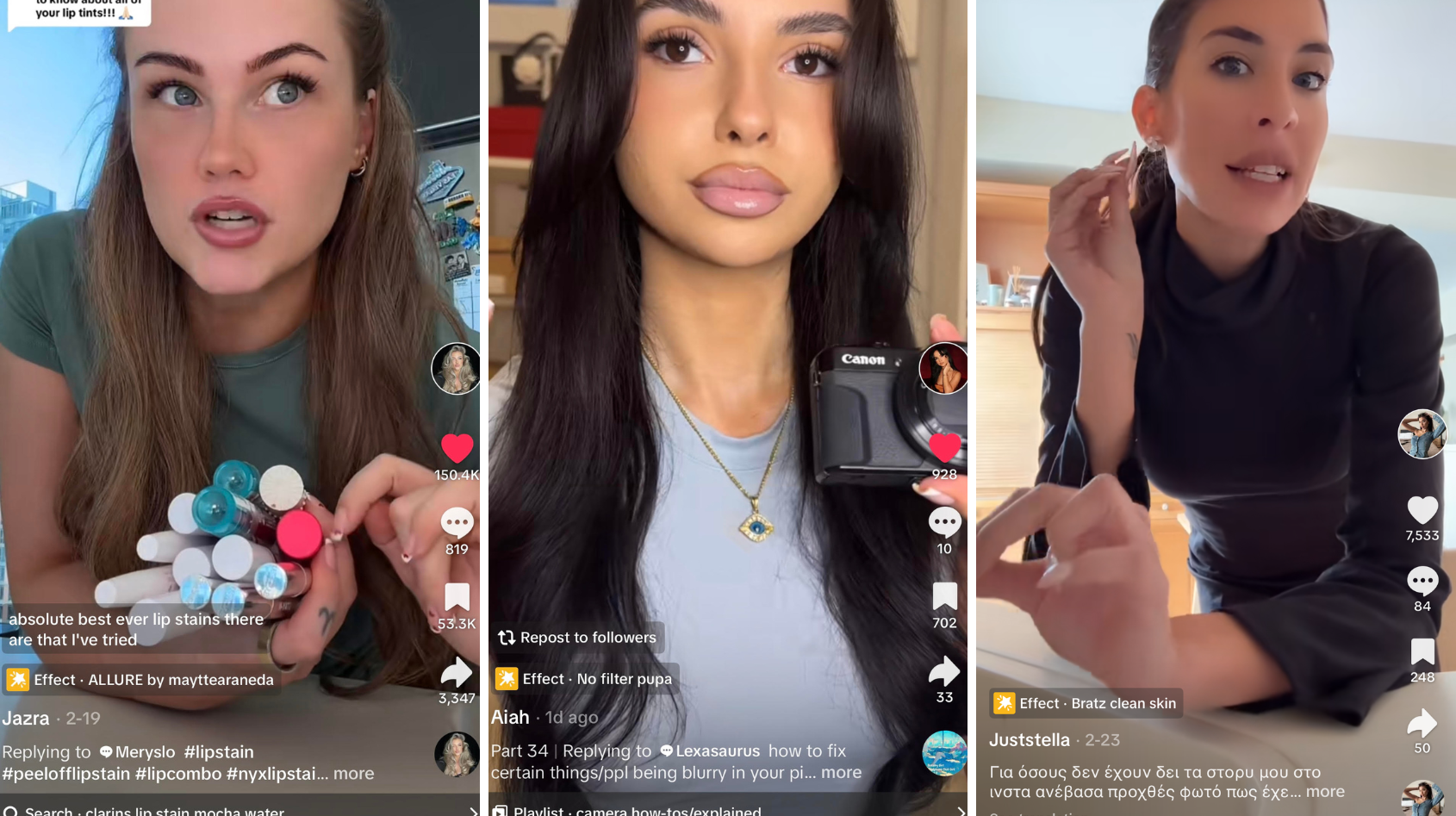
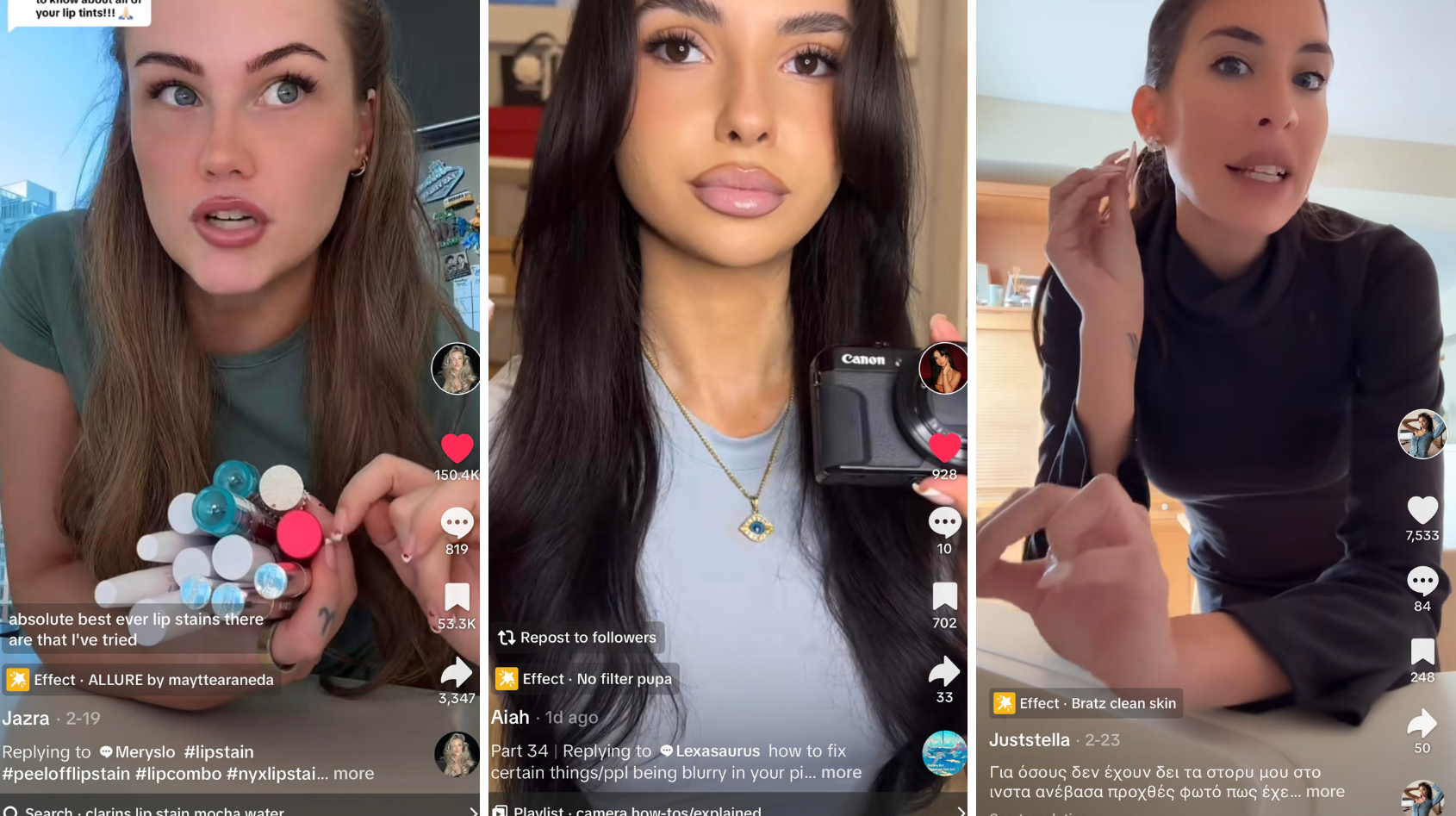
3 Influencers Explain Why They Still Use Beauty Filters, Even After Knowing Their Dangers

When the “Bold Glamour” filter on TikTok was created in early 2023, people were shocked by how seamless it looked, and that it wasn’t glitching like other face-altering filters. Despite everyone admiring its technological improvement, it led to an uproar online and offline, with celebrities like Katherine Heigl showing the shocking difference it made.

It’s been widely reported that filters on social media can create a disconnect between online and real life and lower one’s self-esteem. The issue doesn’t just affect teens — it can negatively affect anyone. The curation of social media leads many people to use filters in order to receive positive feedback, which then reinforces the belief that we should be relying on them, explained Natalie Buchwald, a therapist and founder of Manhattan Mental Health Counseling.

You can, of course, still use filters and have a healthy self-image, but experts advise considering the reasons you use filters in the first place.

“While occasional use of filters doesn’t inherently indicate low self-esteem, dependence on them can be problematic,” Buchwald said. “Maintaining a healthy self-image involves recognizing one’s intrinsic worth without relying on digital enhancements.”

Long-term exposure to a filtered image of yourself may create issues in your self-image, even leading to seeking cosmetic surgery to achieve that image of yourself. “Often called ‘Snapchat dysmorphia,’ it describes individuals seeking cosmetic surgery to replicate their filtered selfies. This can manifest in body insecurity and dysmorphia,” Buchwald added.

HuffPost spoke to three influencers who regularly use beauty filters to understand why and how these filters affect their self-esteem.

“I’m super open about beauty standards, filters and treatments on my page. I use beauty filters pretty often! Most of the time, while filming on TikTok I’m using one because of ease, and sometimes TikTok automatically puts them on your face.

“I prefer filters that don’t make me look like a completely different person. I try to remind myself that skin texture, blemishes, redness, undereye bags are all normal. Most things you see online are very unrealistic and you shouldn’t compare yourself to them.

“Filters did change how I saw myself. Social media is so unrealistic, so when you look at yourself in a mirror and you don’t have a smooth foundation filter on, it will look different. A few years back when the filters were heavier, I would wear a lot more makeup in real life to really smooth out my skin or contour my face, and I also ended up getting lip filler and Botox done because I was comparing myself to a filter that made my lips bigger or my skin smooth. Seeing myself with plumper lips or no wrinkles has influenced the treatments I’ve done. I still get minimal lip filler to this day. I’ve always been super transparent about getting procedures done online, even back then. Now I’m pretty confident in myself with or without makeup.

“Looking at the ‘perfect’ version of yourself can make you a bit critical of your natural features. Generally, being a content creator can make you critical about yourself and your appearance; with or without filters, I’m staring at my face all day long editing videos. This often will make you notice things most people probably don’t see.

“If social media removed beauty filters, it wouldn’t affect my content at all! I’m super open on my page, with and without filters, and always will be. I think I might put a little bit of makeup on before I film some of my content to make myself more presentable than I do now, but I would be totally fine with that. I think it would make social media a healthier space for everyone, including myself.”

“I use beauty filters occasionally when filming my TikTok videos, usually ones that enhance smoothness subtly without drastically changing my features. Without a filter, I feel just as confident. For me, it’s less about changing how I look and more about maintaining a particular style, visually.

“I wouldn’t say I’m addicted to using filters. They don’t necessarily make me criticize myself, but more aware of how different enhancements can affect one’s perception. I don’t rely on them to define my self-image.

“Filters can certainly influence beauty standards and make people more self-critical. I think that’s all a byproduct of being on social media. Unless people are openly mentioning they are using filters, it’s hard to tell. As consumers, we may assume these creators are like this in real life, too.

“Personally, using filters hasn’t influenced me to get cosmetic treatments, but I can see how constant exposure to ‘perfect’ images can create unrealistic expectations, which is why I make it known to my audience when I use beauty filters, rather than hide the fact that I am using them. I do have lip filler, and in hindsight, I may have been influenced by the ‘perfect’ images we see on social media.”

Stella Dadini, influencer and business owner

“I use filters that smooth out the skin very often. I initially started using them out of curiosity, and now it has become a habit — I do it automatically. Honestly, I have no issue with how I look without filters. The only reason I use light filters is because I used to have acne, and it used to bother me.

“I have created content without a filter many times, and I have no problem with that, nor does it make me uncomfortable.

“I wouldn’t say filters make me critical of my natural features, just that I liked how my skin looked without blemishes and acne marks when I had acne. Many women have been influenced by filters, trying to achieve this smooth image in real life. I know from some doctor friends that people ask to look like their filtered selves [via medical intervention]. However, that has never happened to me.”

What’s the best way to navigate filters?

Of course, users aren’t necessarily to blame; the platforms have to take responsibility, noted Buchwald. “Similar to how certain posts are highlighted as #Advertisement, the social media platforms need to demand users who edit their photos to add a similar #filtered tag to avoid skewing the public perception of what is normal.”

There may be some changes soon on that front, as TikTok is said to be banning face-altering filters like “Bold Glamour” for teen use, as these can have dramatic effects on the self-esteem of impressionable young people.

“Young people and parents saw the benefit in being authentic online and recognised the positive impact of belonging and connecting online,” wrote Christine Grahn, head of public policy and government relations for TikTok in Europe, in a recent newsroom statement.

Comparing yourself to online filtered images can trigger social comparison, explained Buchwald. “This can lead to feelings of inadequacy and diminished self-worth, as one’s unfiltered reality may not match the enhanced images presented online. It’s a competition where no one can win as there’s always ‘something else you can improve,’ which can be a very toxic mentality to have about your self-image.”

There are ways to combat negative self-image created by one’s online presence. Buchwald recommends a few different ways; seeking professional advice like therapy to foster self-acceptance, mindfulness practices and spending time in nature as a way to ground yourself and distance yourself from the bubble of the online world. Finally, avoid consuming content that makes you feel bad about yourself or even limit your social media usage until these feelings don’t consume you.

Interviews have been condensed and edited for clarity and length.

Help and support:

  • Mind, open Monday to Friday, 9am-6pm on 0300 123 3393.
  • Samaritans offers a listening service which is open 24 hours a day, on 116 123 (UK and ROI – this number is FREE to call and will not appear on your phone bill).
  • CALM (the Campaign Against Living Miserably) offer a helpline open 5pm-midnight, 365 days a year, on 0800 58 58 58, and a webchat service.
  • The Mix is a free support service for people under 25. Call 0808 808 4994 or email help@themix.org.uk
  • Rethink Mental Illness offers practical help through its advice line which can be reached on 0808 801 0525 (Monday to Friday 10am-4pm). More info can be found on rethink.org.
Share Button

Keir Starmer Admits UK Was ‘Under Pressure’ To Weigh In On Trump-Zelenskyy Spat

Keir Starmer has claimed the UK was “under pressure” to speak out after Donald Trump’s explosive spat with Volodymyr Zelenskyy last month.

The US president accused his Ukrainian counterpart of being ungrateful for America’s support for Kyiv since Russia invaded, criticised Zelenskyy for wearing military fatigues in the Oval Office and told him he had “no cards” with which to negotiate a deal with Moscow.

The White House then cancelled a scheduled joint press conference and appeared to kick Zelenskyy out of the building without signing the expected shared mineral agreement.

Trump went on to pull US military aid and intelligence sharing with Ukraine.

It was not until, with the UK’s encouragement, Zelenskyy publicly said he backed Trump’s efforts to secure a quick peace in Ukraine and said he was open to a 30-day ceasefire that the US reinstated aid and intel sharing.

Speaking to the New York Times, the prime minister has now revealed that there were plenty of tensions behind the scenes for No.10 around this time.

He said: “On the day in which the Oval Office meeting between President Trump and President Zelenskyy didn’t go particularly well, we were under pressure to come out very critically with, you know, flowery adjectives to describe how others felt.

“I took the view that it was better to pick up the phone and talk to both sides to try and get them back on the same page.”

The prime minister also recognised Trump has caused “quite a degree of disorientation” just two months into his second administration where he’s announced a string a dramatic orders – including imposing 25% tariffs on British steel.

Starmer then told the NYT that he still believes the best position for the UK right now is to remain as a bridge between the US and Europe, despite growing concerns about the White House’s relationship with Moscow.

He said: “Many people are urging us to choose between the US and Europe. Churchill didn’t do it. Attlee didn’t do it. It’d be a big mistake, in my view, to choose now.”

The PM defended Trump’s call for an increase in defence spending among European allies too, saying the US president “has a point”.

The PM also noted that he has a good relationship with Trump, adding: “I like and respect him. I understand what he’s trying to achieve.”

However the PM made it clear he does not share Trump’s warmth towards the Russian leader after the US president has repeatedly claimed he trusts Putin.

Starmer said: “I don’t trust Putin. I’m sure Putin would try to insist that Ukraine should be defenceless after a deal because that gives him what he wants, which is the opportunity to go in again.”

Share Button