Oscar Murphy has an aggressive form of the blood cancer and is the first to get CAR-T therapy in the UK.


Oscar Murphy has an aggressive form of the blood cancer and is the first to get CAR-T therapy in the UK.
Oscar Murphy has an aggressive form of the blood cancer and is the first to get CAR-T therapy in the UK.

Keir Starmer has ditched plans to force all workers to have digital ID cards in his 13th U-turn since becoming prime minister.
In a major humiliation for the PM, the Cabinet Office confirmed that the controversial cards would no longer be compulsory for those seeking employment.
Advertisement
When the policy was announced in September last year, Starmer said: “Let me spell it out, you will not be able to work in the United Kingdom if you do not have digital ID.”
But Starmer’s latest climbdown means that the digital ID cards will be optional, giving workers the choice of whether to use other ways of proving their identity.
A government spokesperson said: “We are committed to mandatory digital right to work checks.
“Currently, right to work checks include a hodge podge of paper-based systems with no record of checks ever taking place. This is open to fraud and abuse.
Advertisement
“We have always been clear that details on the digital ID scheme will be set out following a full public consultation which will launch shortly.
“Digital ID will make everyday life easier for people, ensuring public services are more personal, joined-up, and effective, while also remaining inclusive.”
The U-turn follows climbdowns on other flagship government policies like scrapping winter fuel payments and cuts to disability benefits.
Advertisement
But Tory MP Mike Wood, the shadow Cabinet Office minister, said: “While we welcome the scrapping of any mandatory identification, this is yet another humiliating U-turn from the government.
“Keir Starmer’s spinelessness is becoming a pattern, not an exception.
“What was sold as a tough measure to tackle illegal working is now set to become yet another costly, ill-thought-out experiment abandoned at the first sign of pressure from Labour’s backbenches.
“Only the Conservatives have the plan and the team to restore common sense to public policy.”
Liberal Democrat Cabinet Office spokeswoman Lisa Smart said: “Number 10 must be bulk ordering motion sickness tablets at this rate to cope with all their U-turns.
Advertisement
“It was clear right from the start this was a proposal doomed to failure, that would have cost obscene amounts of taxpayers’ money to deliver absolutely nothing.”

The numbers 15 and 20 might sound reasonable when you’re deciding how much to tip your server at a restaurant. But when they refer to an age gap between romantic partners, they’re more likely to raise eyebrows.
Even if you’re not a fan of May-December romances, experts say that age-gap friendships are one type of intergenerational relationship we can all get behind. According to research, we tend to gravitate toward people who are similar to us, a phenomenon called homophily.
Consequently, our friend groups often include people who share our interests, education, politics and life experience.
Advertisement

SDI Productions via Getty Images
And while it might seem like a good idea to prioritise friendships with people you can relate to, you might be missing out on what other generations have to offer. Below, experts discuss the benefits of befriending someone who is 10-plus years older or younger than you.
When your friends are of a similar age, it’s hard to avoid comparing your life to theirs. Maybe they just received a promotion or set off on their honeymoon. On the outside, you might be congratulating them for reaching these milestones, but it’s only natural to worry about falling behind.
Advertisement
“One of the benefits of having older friends who are in a different life stage is the freedom to share without conflicted feelings,” Charlynn Ruan, a licensed clinical psychologist and the founder of Thrive Psychology Group, told HuffPost. “We can share our wins without feeling like we are bragging or triggering our friends who might not be doing well in that area.”
Jenny Woo, a Harvard-trained emotional intelligence researcher and founder/CEO of Mind Brain Emotion, and author of 52 Essential Relationships, agreed, saying, “Age-gap friendships help younger people zoom out from the comparison trap by reminding them that timelines are flexible and growth is nonlinear.” An older friend can provide a safe space to talk without the pressure of having to compete or project an image of success.
“Historically, across many cultures we used to live in much more supportive multi-generational communities where younger people had access to older individuals who had more life experience and advice to pass down,” Natalie Moore, LMFT, owner of Space for Growth Therapy & Coaching, told HuffPost. She said that many of her clients, most of whom are in their 20s and 30s, don’t have emotional support from mentors or role models.
Advertisement
“So, it makes sense that younger adults would seek out older friends to fill that gap,” she said. “Additionally, so many adults do not have positive relationships with their parents, so an older friend can act as almost a surrogate parent to provide the type of support they need.”
Aside from support, an older friend can promote a sense of continuity by sharing memories and traditions. For example, they can pass along recipes or inspire you to take up so-called “grandma hobbies,” like crocheting, knitting and gardening. We know from research that taking a break from your phone can improve your mental health.

zeljkosantrac via Getty Images
Advertisement
If you spend a lot of time interacting with same-age peers, especially online, this can limit your perspective on the world. “We often see this where millennials and Gen Zs complain about the tone-deaf responses of older generations to their struggles to buy houses and afford to move out,” Ruan said. In this politically divisive climate, it’s important to be able to have respectful conversations with people who see the world differently than you do.
“An older friend can offer candid, judgment-free feedback without the power dynamics of a parent or boss,” Woo said. Whereas a peer can empathise with the current job market, an older friend can tell you what it was like to make a career pivot or adjust to life in a new city.
In addition, someone who is 20 years your senior is more likely to have experience with navigating career uncertainty, identity questions or relationship concerns. “Younger people often feel more motivated to invest in their physical and emotional well-being when they see the real impacts in someone older,” Woo said.
Advertisement
“Being around someone younger can reignite a sense of vitality, spontaneity and playfulness,” Woo said. You can learn about new trends and technologies, or rediscover past hobbies and interests. For instance, a 2024 study found that playing a musical instrument can keep your mind sharp as you age.
Similar to young adults, the trend of having friends who are similar to you persists as you get older. “This can cause people to become narrow-minded and judgmental, so having younger friends can help keep your mind open and curious,” Ruan said.
Moore agreed, explaining that a younger friend may expose an older friend to new ideas or ways of seeing the world. “This can challenge them to be more relevant with current events, technology or the ever-changing zeitgeist,” she added.
Advertisement
“Sadly, social comparisons don’t lessen that much with age,” Ruan said. An older friend may struggle to find support from same-age peers. For example, they might feel judged for having their adult children move back home or continuing to work because they can’t afford to retire.
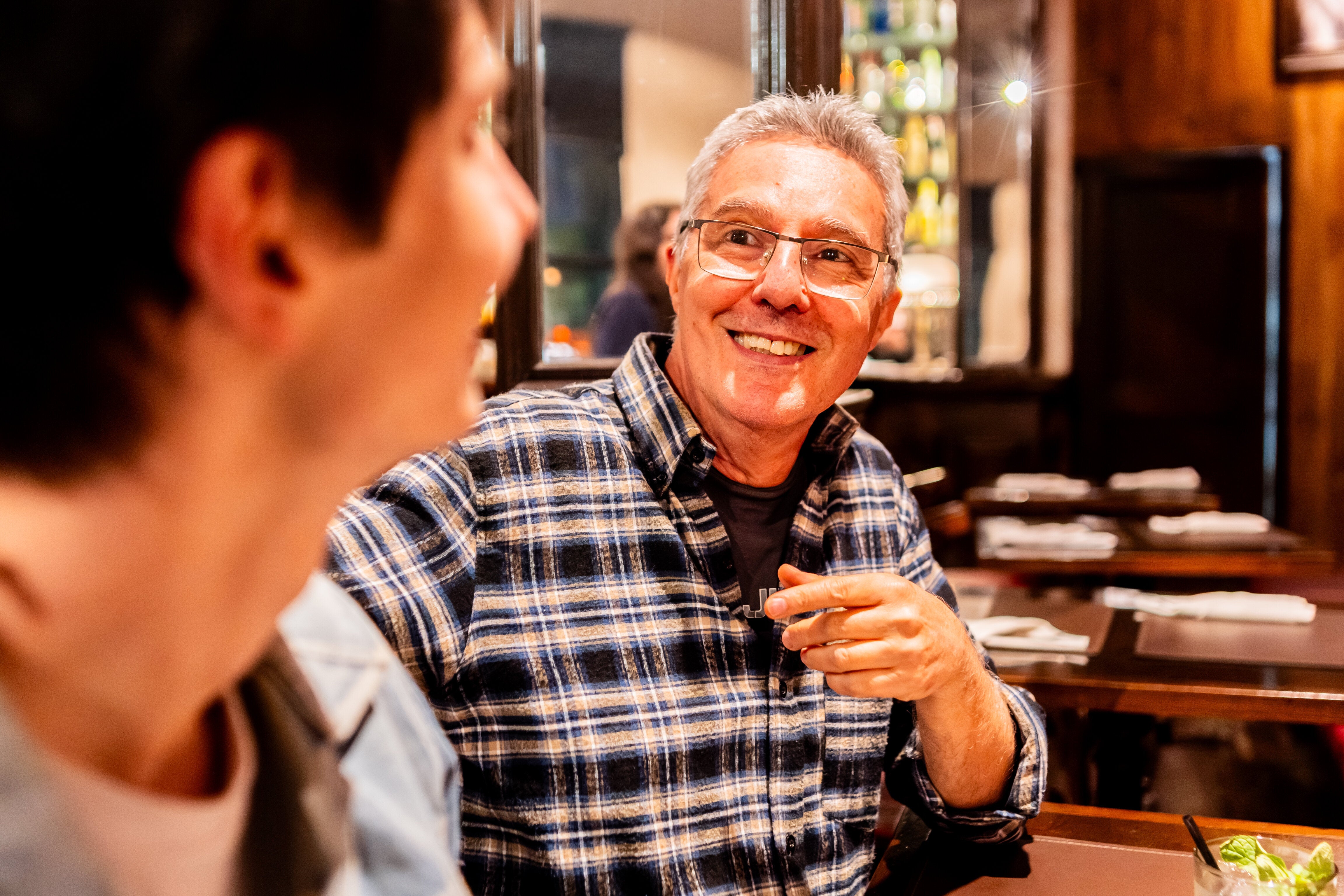
“Sharing these concerns with a younger friend can feel liberating because the younger adult can just listen and express comfort without the compulsion to give unhelpful advice,” she said. A younger friend may also be more empathetic about marriage and kids, considering they’re closer to the beginning of their journey.
Frazao Studio Latino via Getty Images
Advertisement
“The act of sharing hard-earned wisdom gives older friends a sense of purpose and value, which can counteract ageism and a fear of irrelevance,” Woo said. Research shows that having a sense of meaning and direction can help you weather life transitions such as divorce, retirement or an illness diagnosis.
In fact, “There’s a phenomenon of brain development where younger adults are more geared toward learning, whereas adults in midlife and beyond are more inclined toward sharing what they’ve learned,” Moore said. She said that this makes sense from an evolutionary perspective because a younger person with less life experience has more learning to do than someone who has knowledge that can benefit future generations.
Sometimes, age-gap friendships can resemble a mentorship relationship where the younger person is expecting career advice or networking opportunities. In such cases, an older friend might have a hard time being vulnerable because they feel pressured to have all the answers.
Advertisement
“If an older friend is falling into a role of providing all the advice and not receiving any, they could point that out or adjust their behavior,” Moore said. Likewise, Ruan suggested encouraging your older friend to speak about their struggles, so it becomes a two-way street. You can also make a habit of asking them for updates on things they’ve shared recently to avoid doing all the talking or advice-seeking.
Over time, the younger friend may eclipse their older friend’s accomplishments. “This can cause a strain on the relationship if there is an undercurrent of teacher and student in their dynamic,” Ruan said. Your relationship is more likely to survive if you’re both willing to be vulnerable and support each other through periods of loss and transition.
Woo agreed, saying that it’s best to avoid having an age-gap friendship that’s focused primarily on mentorship. Her advice was to set boundaries, so the younger friend doesn’t come to rely on the older friend as a therapist or life coach. She also suggested participating in activities that aren’t centered on advice-giving, such as physical activity and shared interests like art projects or a book club.
Advertisement
“Healthy age-gap friendships are built on mutual respect and curiosity,” Woo said. “Both people should bring effort and energy to the relationship.”



A member of Greenland’s government says they feel “betrayed” by Donald Trump’s threat to take over the Arctic island.
The US president has said he plans to seize Greenland “one way or the other” and has refused to rule out sending in American troops.
Advertisement
But speaking at Westminster following talks with MPs, Naaja Nathanielsen said the island – which is part of the kingdom of Denmark – has no interest in becoming American.
Nathanielsen, who is Greenland’s minister for business, mineral resources, energy, justice and gender equality, said: “If you ask the people of Greenland, people are concerned about the messages from the US about annexing or buying Greenland.
“People are reporting difficulties to sleep. This is fuelling the discussions around the households. We are trying to keep calm and work our way through it.”
Advertisement
She added: “We have no intention of becoming American. We have worked towards more collaboration with the Americans, but we are quite happy being part of the kingdom of Denmark.
“We feel betrayed. We feel the rhetoric is offensive and bewildering. We have done nothing but support the US.
“We are allies of allies of the US and are bewildered that we have to discuss possible selling of annexing of Greenland. This is not something we deserve. We have been good partners.”
Advertisement
Trump has said that America needs to “own” Greenland to stop China and Russia from trying to take it over.
But Nathanielsen said Greenland wanted a “peaceful solution” to the crisis, and warned that the whole world would be thrown into crisis if Trump orders troops to invade the Arctic island.
She said: “If that scenario was to happen, everybody in your countries will have a focus on what the new world order is about. We will be in a new situation.
Advertisement
“We would all be under attack. It would be a breakdown of international law and existing treaties, and that would be a bad outcome for all of us. I do hope we will not get to that situation.”
Nathanielsen also insisted that Greenland is facing no “imminent threat” from Russia or China, despite Trump’s claims to the contrary.

NHS bosses are urging people to only come to A&E if it is an emergency.
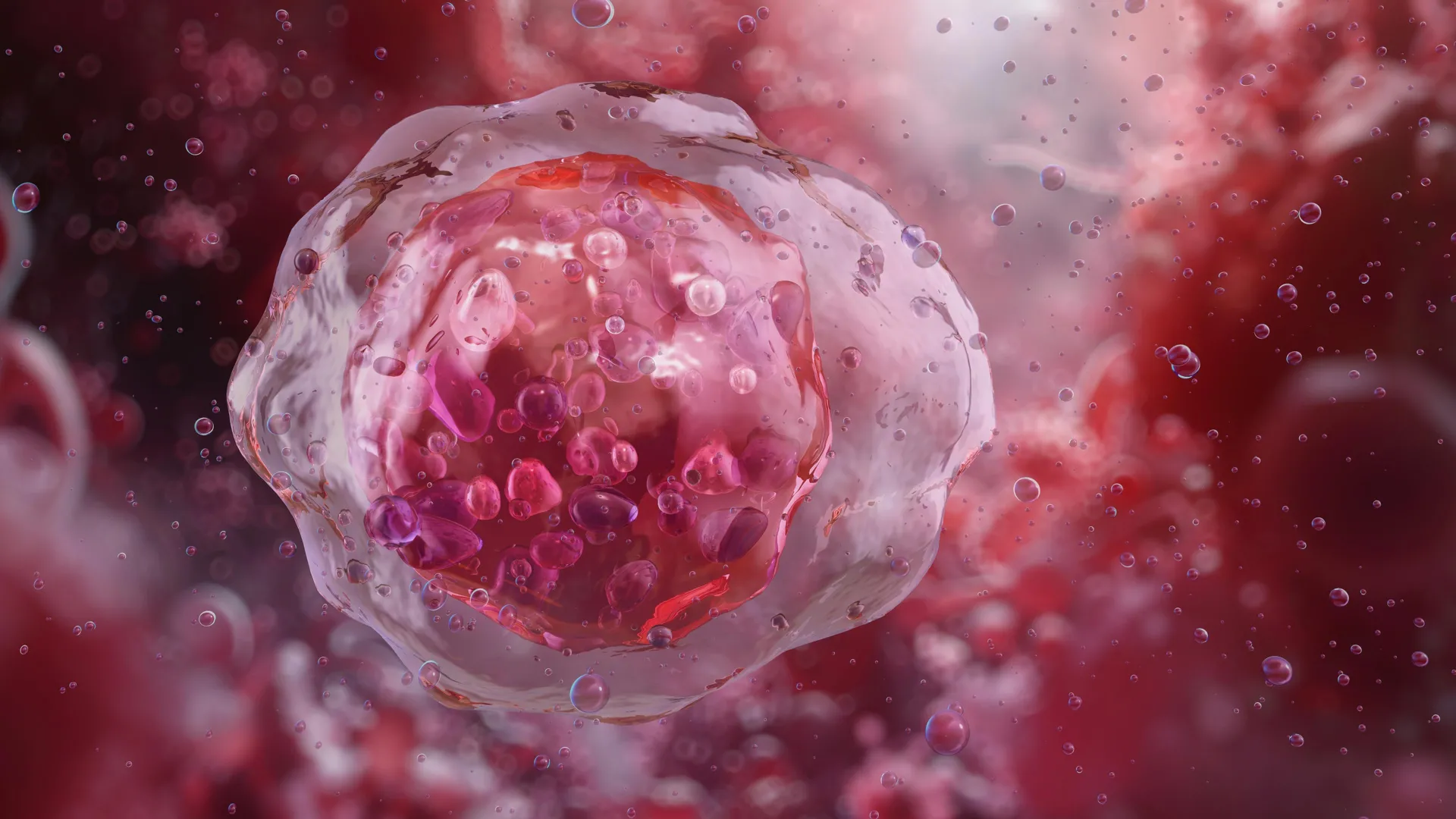
A new artificial intelligence system that examines the shape and structure of blood cells could significantly improve how diseases such as leukemia are diagnosed. Researchers say the tool can identify abnormal cells with greater accuracy and consistency than human specialists, potentially reducing missed or uncertain diagnoses.
The system, known as CytoDiffusion, relies on generative AI, the same type of technology used in image generators such as DALL-E, to analyze blood cell appearance in detail. Rather than focusing only on obvious patterns, it studies subtle variations in how cells look under a microscope.
Moving Beyond Pattern Recognition
Many existing medical AI tools are trained to sort images into predefined categories. In contrast, the team behind CytoDiffusion demonstrated that their approach can recognize the full range of normal blood cell appearances and reliably flag rare or unusual cells that may signal disease. The work was led by researchers from the University of Cambridge, University College London, and Queen Mary University of London, and the findings were published in Nature Machine Intelligence.
Identifying small differences in blood cell size, shape, and structure is central to diagnosing many blood disorders. However, learning to do this well can take years of experience, and even highly trained doctors may disagree when reviewing complex cases.
“We’ve all got many different types of blood cells that have different properties and different roles within our body,” said Simon Deltadahl from Cambridge’s Department of Applied Mathematics and Theoretical Physics, the study’s first author. “White blood cells specialize in fighting infection, for example. But knowing what an unusual or diseased blood cell looks like under a microscope is an important part of diagnosing many diseases.”
Handling the Scale of Blood Analysis
A standard blood smear can contain thousands of individual cells, far more than a person can realistically examine one by one. “Humans can’t look at all the cells in a smear — it’s just not possible,” Deltadahl said. “Our model can automate that process, triage the routine cases, and highlight anything unusual for human review.”
This challenge is familiar to clinicians. “The clinical challenge I faced as a junior hematology doctor was that after a day of work, I would face a lot of blood films to analyze,” said co-senior author Dr. Suthesh Sivapalaratnam from Queen Mary University of London. “As I was analyzing them in the late hours, I became convinced AI would do a better job than me.”
Training on an Unprecedented Dataset
To build CytoDiffusion, the researchers trained it on more than half a million blood smear images collected at Addenbrooke’s Hospital in Cambridge. The dataset, described as the largest of its kind, includes common blood cell types, rare examples, and features that often confuse automated systems.
Instead of simply learning how to separate cells into fixed categories, the AI models the entire range of how blood cells can appear. This makes it more resilient to differences between hospitals, microscopes, and staining techniques, while also improving its ability to detect rare or abnormal cells.
Detecting Leukemia With Greater Confidence
When tested, CytoDiffusion identified abnormal cells associated with leukemia with much higher sensitivity than existing systems. It also performed as well as or better than current leading models, even when trained with far fewer examples, and was able to quantify how confident it was in its own predictions.
“When we tested its accuracy, the system was slightly better than humans,” said Deltadahl. “But where it really stood out was in knowing when it was uncertain. Our model would never say it was certain and then be wrong, but that is something that humans sometimes do.”
Co-senior author Professor Michael Roberts from Cambridge’s Department of Applied Mathematics and Theoretical Physics said the system was evaluated against real-world challenges faced by medical AI. “We evaluated our method against many of the challenges seen in real-world AI, such as never-before-seen images, images captured by different machines and the degree of uncertainty in the labels,” he said. “This framework gives a multi-faceted view of model performance which we believe will be beneficial to researchers.”
When AI Images Fool Human Experts
The team also found that CytoDiffusion can generate synthetic images of blood cells that look indistinguishable from real ones. In a ‘Turing test’ involving ten experienced hematologists, the specialists were no better than random chance at telling real images apart from those created by the AI.
“That really surprised me,” Deltadahl said. “These are people who stare at blood cells all day, and even they couldn’t tell.”
Opening Data to the Global Research Community
As part of the project, the researchers are releasing what they describe as the world’s largest publicly available collection of peripheral blood smear images, totaling more than half a million samples.
“By making this resource open, we hope to empower researchers worldwide to build and test new AI models, democratize access to high-quality medical data, and ultimately contribute to better patient care,” Deltadahl said.
Supporting, Not Replacing, Clinicians
Despite the strong results, the researchers emphasize that CytoDiffusion is not intended to replace trained doctors. Instead, it is designed to assist clinicians by quickly flagging concerning cases and automatically processing routine samples.
“The true value of healthcare AI lies not in approximating human expertise at lower cost, but in enabling greater diagnostic, prognostic, and prescriptive power than either experts or simple statistical models can achieve,” said co-senior author Professor Parashkev Nachev from UCL. “Our work suggests that generative AI will be central to this mission, transforming not only the fidelity of clinical support systems but their insight into the limits of their own knowledge. This ‘metacognitive’ awareness — knowing what one does not know — is critical to clinical decision-making, and here we show machines may be better at it than we are.”
The team notes that additional research is needed to increase the system’s speed and to validate its performance across more diverse patient populations to ensure accuracy and fairness.
The research received support from the Trinity Challenge, Wellcome, the British Heart Foundation, Cambridge University Hospitals NHS Trust, Barts Health NHS Trust, the NIHR Cambridge Biomedical Research Centre, NIHR UCLH Biomedical Research Centre, and NHS Blood and Transplant. The work was carried out by the Imaging working group within the BloodCounts! consortium, which aims to improve blood diagnostics worldwide using AI. Simon Deltadahl is a Member of Lucy Cavendish College, Cambridge.
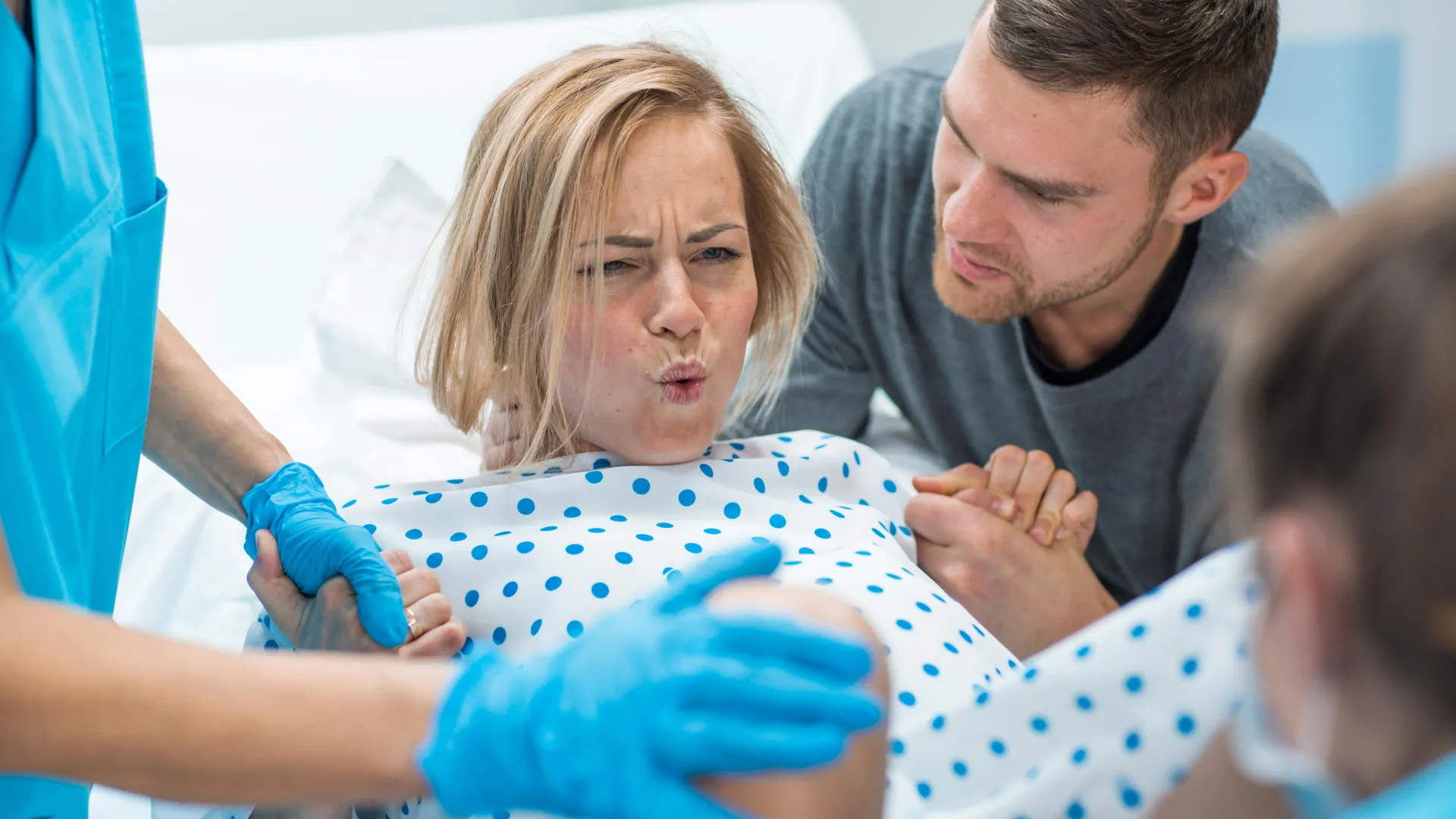
Successful childbirth depends on the uterus producing steady, well-organized contractions that move the baby safely through delivery. Hormones such as progesterone and oxytocin play a major role in controlling this process. For years, however, researchers have also suspected that physical forces involved in pregnancy and birth, including stretching and pressure, contribute in important ways.
New research from Scripps Research, published in Science, now shows how the uterus detects and responds to these physical forces at the molecular level. The findings shed light on why labor sometimes slows or begins too early and could guide future efforts to improve treatments for pregnancy and delivery complications.
Pressure and Stretch as Biological Signals
“As the fetus grows, the uterus expands dramatically, and those physical forces reach their peak during delivery,” says senior author Ardem Patapoutian, a Howard Hughes Medical Institute Investigator and the Presidential Endowed Chair in Neurobiology at Scripps Research. “Our study shows that the body relies on special pressure sensors to interpret these cues and translate them into coordinated muscle activity.”
Patapoutian shared the 2021 Nobel Prize in Physiology or Medicine for identifying the cellular sensors that allow organisms to detect touch and pressure. These sensors are ion channels built from proteins known as PIEZO1 and PIEZO2, which enable cells to respond to mechanical force.
Two Sensors With Different Roles in Childbirth
In the new study, researchers found that PIEZO1 and PIEZO2 perform separate but complementary tasks during labor. PIEZO1 operates primarily within the smooth muscle of the uterus, where it detects rising pressure as contractions strengthen. PIEZO2, in contrast, is located in sensory nerves in the cervix and vagina. It becomes activated as the baby stretches these tissues, triggering a neural reflex that boosts uterine contractions.
Together, these sensors convert stretch and pressure into electrical and chemical signals that help synchronize contractions. If one pathway is disrupted, the other can partially compensate, helping labor continue.
What Happens When Force Sensors Are Removed
To test how essential these sensors are, the team used mouse models in which PIEZO1 and PIEZO2 were selectively removed from either uterine muscle or surrounding sensory nerves. Tiny pressure sensors measured contraction strength and timing during natural labor.
Mice lacking both PIEZO proteins showed weaker uterine pressure and delayed births, indicating that muscle-based sensing and nerve-based sensing normally work together. When both systems were lost, labor was significantly impaired.
Wiring the Uterus for Strong Contractions
Further investigation revealed that PIEZO activity helps regulate levels of connexin 43, a protein that forms gap junctions. These microscopic channels connect neighboring smooth muscle cells so they contract together rather than independently. When PIEZO signaling was reduced, connexin 43 levels dropped and contractions became less coordinated.
“Connexin 43 is the wiring that allows all the muscle cells to act together,” says first author Yunxiao Zhang, a postdoctoral research associate in Patapoutian’s lab. “When that connection weakens, contractions lose strength.”
Evidence From Human Tissue
Samples of human uterine tissue showed patterns of PIEZO1 and PIEZO2 expression similar to those seen in mice. This suggests that a comparable force-sensing system likely operates in people. The findings may help explain labor problems marked by weak or irregular contractions that prolong delivery.
The results also align with clinical observations that fully blocking sensory nerves can lengthen labor.
“In clinical practice, epidurals are given in carefully controlled doses because blocking sensory nerves completely can make labor much longer,” notes Zhang. “Our data mirror that phenomenon; when we removed the sensory PIEZO2 pathway, contractions weakened, suggesting that some nerve feedback promotes labor.”
Potential Implications for Labor Care
The study opens the door to more targeted approaches to managing labor and pain. If researchers can develop safe ways to adjust PIEZO activity, it may become possible to either slow or strengthen contractions when needed. For those at risk of preterm labor, a PIEZO1 blocker, if developed, could work alongside current medications that relax uterine muscle by limiting calcium entry into cells. On the other hand, activating PIEZO channels might help restore contractions in stalled labor.
Although these applications remain far off, the underlying biology is becoming clearer.
How Hormones and Force Work Together
The research team is now examining how mechanical sensing interacts with hormonal control during pregnancy. Earlier studies show that progesterone, the hormone that keeps the uterus relaxed, can suppress connexin 43 expression even when PIEZO channels are active. This helps prevent contractions from starting too soon. As progesterone levels fall near the end of pregnancy, PIEZO-driven calcium signals may help set labor in motion.
“PIEZO channels and hormonal cues are two sides of the same system,” points out Zhang. “Hormones set the stage, and force sensors help determine when and how strongly the uterus contracts.”
Mapping the Nerve Pathways of Labor
Future studies will focus on the sensory nerve networks involved in childbirth, since not all nerves around the uterus contain PIEZO2. Some may respond to different signals and act as backup systems. Distinguishing nerves that promote contractions from those that transmit pain could eventually lead to more precise pain relief methods that do not slow labor.
For now, the findings highlight that the body’s ability to sense physical force extends beyond touch and balance. It also plays a central role in one of biology’s most critical processes.
“Childbirth is a process where coordination and timing are everything,” says Patapoutian. “We’re now starting to understand how the uterus acts as both a muscle and a metronome to ensure that labor follows the body’s own rhythm.”
In addition to Patapoutian and Zhang, authors of the study “PIEZO channels link mechanical forces to uterine contractions in parturition,” include Sejal A. Kini, Sassan A. Mishkanian, Oleg Yarishkin, Renhao Luo, Saba Heydari Seradj, Verina H. Leung, Yu Wang, M. Rocío Servín-Vences, William T. Keenan, Utku Sonmez, Manuel Sanchez-Alavez, Yuejia Liu, Xin Jin, Li Ye and Michael Petrascheck of Scripps Research; Darren J. Lipomi of the University of California San Diego; and Antonina I. Frolova and Sarah K. England of WashU Medicine.
This work was supported by the Abide-Vividion Foundations; the Baxter Foundation; the BRAIN Initiative; the Chan Zuckerberg Initiative; the Dana Foundation; the Dorris Scholar Award; the George E. Hewitt Foundation for Medical Research postdoctoral fellowship; the Howard Hughes Medical Institute Investigators; the Merck Fellow of the Damon Runyon Cancer Research Foundation (DRG-2405-20); the National Institutes of Health (NIH Director’s New Innovator Award DP2DK128800, and grants R35 NS105067, R01 AT012051 and R01 AG067331); the National Science Foundation (grant CMMI-2135428); the WashU Reproductive Specimen Processing and Banking Biorepository (ReProBank); and the Whitehall Foundation.
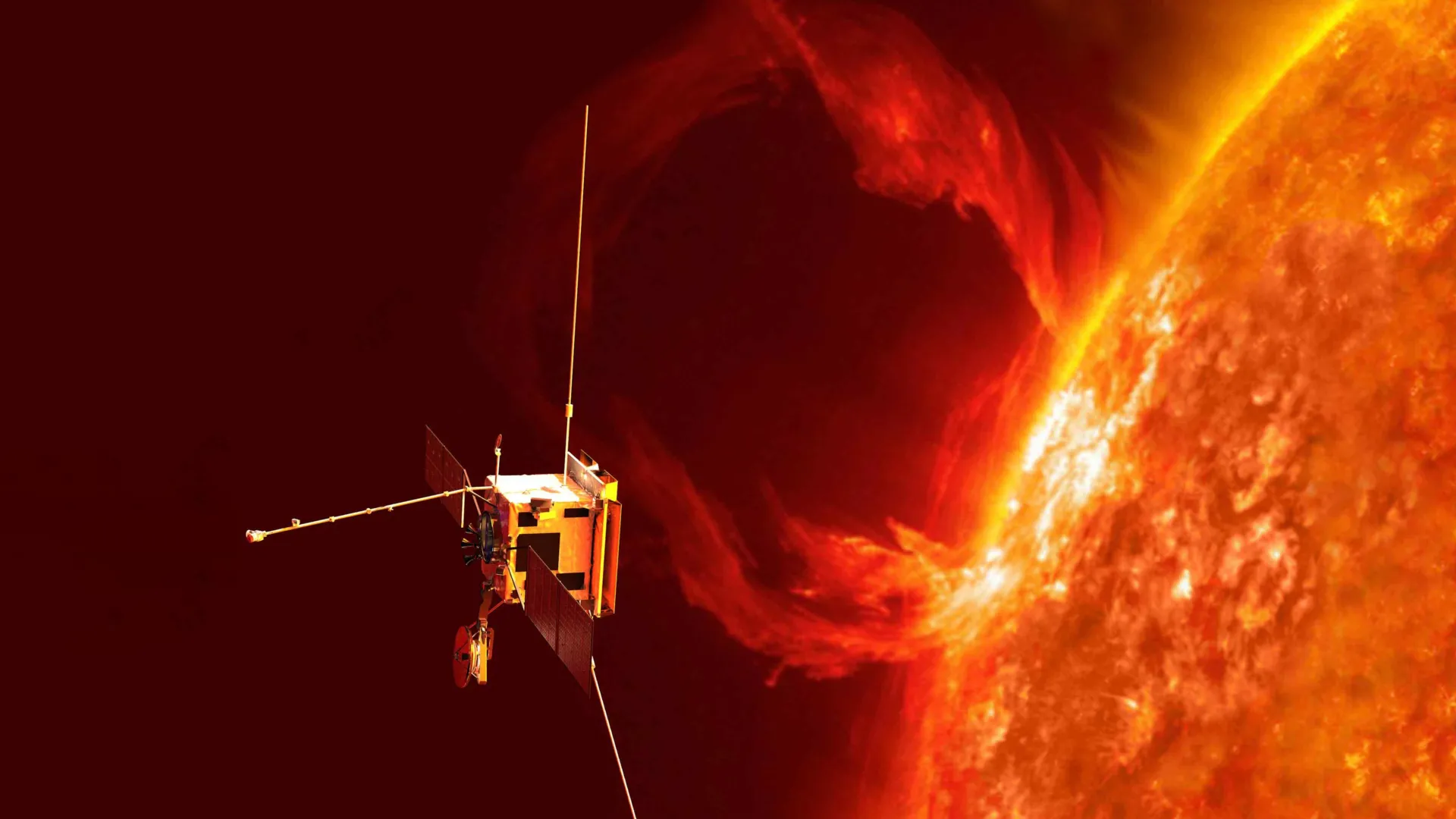
The Sun completes one full rotation about every 28 days. Because of this slow spin, observers on Earth can only see any given active region on the Sun’s surface for about two weeks. Once that region rotates away from our line of sight, it disappears from view for another two weeks before returning.
“Fortunately, the Solar Orbiter mission, launched by the European Space Agency (ESA) in 2020, has broadened our perspective,” says Ioannis Kontogiannis, solar physicist at ETH Zurich and the Istituto ricerche solari Aldo e Cele Daccò (IRSOL) in Locarno.
Unlike Earth-based observatories, Solar Orbiter follows a wide orbit that circles the Sun once every six months. This path allows the spacecraft to observe areas of the Sun that are normally hidden from Earth, including its far side.
A Rare View of an Exceptionally Active Solar Region
Between April and July 2024, Solar Orbiter captured detailed observations of one of the most intense solar regions seen in the past two decades. In May 2024, this region, known as NOAA 13664, rotated into view from Earth and immediately made its presence known.
It went on to trigger the strongest geomagnetic storms to hit Earth since 2003. “This region caused the spectacular aurora borealis that was visible as far south as Switzerland,” says Louise Harra, professor at ETH Zurich and director of the Davos Physical Meteorological Observatory.
Combining Data From Two Spacecraft
To better understand how extreme solar regions form and evolve, Harra and Kontogiannis assembled an international research team. The scientists combined observations from two different spacecraft to create a much more complete picture of NOAA 13664.
Solar Orbiter provided data from the far side of the Sun, while NASA’s Solar Dynamics Observatory supplied continuous observations from the Earth-Sun line, where it monitors the side of the Sun facing Earth.
By merging these datasets, researchers were able to follow NOAA 13664 almost without interruption for 94 days.
A Record-Breaking Solar Observation
“This is the longest continuous series of images ever created for a single active region: it’s a milestone in solar physics,” says Kontogiannis.
The team observed NOAA 13664 from its initial emergence on 16 April 2024, when it first appeared on the far side of the Sun, through its full evolution and eventual decay after July 18, 2024. This extended timeline allowed scientists to capture changes that would normally go unseen.
How Magnetic Fields Drive Solar Storms
Active regions on the Sun are dominated by powerful and complex magnetic fields. These regions form when highly magnetized plasma rises from the Sun’s interior and breaks through its surface. When magnetic fields become tangled and unstable, they can release energy in dramatic ways.
Such eruptions produce intense bursts of electromagnetic radiation called solar flares. They can also hurl massive amounts of plasma and high-energy particles into space, creating solar storms that travel across the solar system.
Real-World Impacts on Modern Technology
While solar storms are famous for producing auroras, their effects extend far beyond colorful skies. Severe space weather can disrupt power grids, interfere with communication systems, and increase radiation exposure for aircraft crews. Satellites are also vulnerable.
One recent example occurred in February 2022, when 38 of 49 Starlink satellites belonging to US space company SpaceX were lost just two days after launch due to heightened solar activity.
Disruptions Closer to Home
“Even signals on railway lines can be affected and switch from red to green or vice versa,” says Harra. “That’s really scary.”
NOAA 13664 caused additional disruptions in May 2024. “Modern digital agriculture was particularly affected,” says the scientist. “Signals from satellites, drones and sensors were disrupted, causing farmers to lose working days and leading to crop failures with considerable economic losses.”
“It’s a good reminder that the sun is the only star that influences our activities,” adds Kontogiannis. “We live with this star, so it’s really important we observe it and try to understand how it works and how it affects our environment.”
Watching a Solar Region Across Multiple Rotations
For the first time, researchers were able to follow a single superactive solar region through three full solar rotations. This allowed them to observe how its magnetic structure evolved step by step, becoming increasingly complex over time.
Eventually, the magnetic fields formed a tightly intertwined structure. This buildup culminated in the most powerful solar flare of the past twenty years, which erupted on the far side of the Sun on May 20, 2024.
Improving Space Weather Forecasts
Scientists hope these observations will lead to better predictions of solar storms and their potential effects on Earth. More accurate space weather forecasts could help protect satellites, power systems, and other sensitive technologies.
“When we see a region on the sun with an extremely complex magnetic field, we can assume that there is a large amount of energy there that will have to be released as solar storms,” explains Harra.
For now, predicting the exact timing and strength of eruptions remains difficult. Researchers cannot yet determine whether a region will produce one major event or several smaller ones, or precisely when those eruptions will occur.
“We’re not there yet. But we’re currently developing a new space probe at ESA called Vigil which will be dedicated exclusively to improving our understanding of space weather,” says the scientist. The mission is planned for launch in 2031.
Party leader Ed Davey calls for £1.5bn to be spent on ending a “deadly corridor crisis” in the NHS.
