Experts in Leeds say new technology now allows them to reach previously “inoperable” tumours.


Experts in Leeds say new technology now allows them to reach previously “inoperable” tumours.
Women can ask for adjustments and this may encourage some people to get tested, the Eve Appeal says.

Ecologists from the School of Biological Sciences (SBS) and the Swire Institute of Marine Science (SWIMS) at The University of Hong Kong (HKU) have identified significant ecological risks associated with the release of hybrid groupers into Hong Kong’s coastal waters, a practice often linked to religious ‘mercy release’ rituals.
Their study highlights how the Tiger Grouper-Giant Grouper hybrid (TGGG), also known as the Sabah grouper, disrupts local marine ecosystems by exploiting unique ecological niches and potentially becoming a dominant predator. This research, the first to use advanced DNA metabarcoding to analyse the diet of this hybrid species, underscores the urgent need for public education and conservation measures to mitigate unintended ecological impacts. The findings have been published in the journal Reviews in Fish Biology and Fisheries.
Hybrid Groupers: A Popular Market Species with Hidden Ecological Threats
The TGGG is a hybrid species bred through aquaculture by crossing the Tiger Grouper (Epinephelus fuscoguttatus) with the Giant Grouper (Epinephelus lanceolatus). Valued for its large size and rapid growth, it is a common sight in Hong Kong’s fish markets. Its affordability and impressive size have also made it a popular choice for local mercy release practices, where animals are released into the wild as an act of spiritual merit. However, this seemingly benevolent act has significant ecological consequences.
To explore the potential ecological effects of releasing hybrid groupers into Hong Kong’s coastal waters, our research team utilised DNA metabarcoding to analyse the diet of TGGG. Becoming the first to apply this method to study the dietary habits of this hybrid species, the team extracted and sequenced DNA from the hybrid’s stomach contents, allowing them to identify its prey, even when the prey was fully digested or fragmented. This innovative approach provides a detailed and accurate picture of the hybrid’s dietary habits and its interactions with local marine ecosystems.
Innovative DNA Analysis Highlights the Threat
The study found that the TGGG is a formidable predator with a distinctive diet, feeding on various prey species not typically consumed by native species — including fish, crustaceans, and cephalopods. By exploiting broader ecological niches and gaps in the ecosystem where resources or habitats are underused, the TGGG disrupts local food webs and is highly likely to thrive and establish itself as a dominant predator.
‘Our findings show that the TGGG is not just another introduced species, it has the potential to significantly disrupt trophic dynamics and reshape coastal ecosystems,’ said Professor Celia SCHUNTER of HKU SBS and SWIMS, the study’s lead investigator.
The researchers warn that the rapid growth, large size, and absence of natural predators in Hong Kong’s waters make it an exceptionally competitive species. These traits, combined with the availability of vacant ecological niches, pose a serious threat to the balance of marine biodiversity in Hong Kong’s coastal ecosystems.
The study also draws attention to the role of mercy release practices in introducing non-native species like the TGGG into local waters. Dr Arthur CHUNG, the postdoctoral fellow of HKU SBS and SWIMS and co-author of the study, emphasised the importance of addressing these risks, ‘This study underscores the need for careful monitoring and management to mitigate the unintended impacts of human activities on biodiversity.’
The researchers stressed that public education and stricter conservation measures are essential to minimising the ecological damage caused by mercy release and other human activities. These efforts are critical for preserving the health of Hong Kong’s marine ecosystems.

A cabinet minister has slapped down Sadiq Khan after he suggested that the return of Donald Trump shows that “the spectre of a resurgent fascism haunts the West”.
Darren Jones, the chief secretary to the Treasury, said he and the government do not agree with the London mayor’s comments, which he made in an article in The Observer ahead of Trump’s inauguration as president on Monday.
Advertisement
Khan said: “We should be in no doubt, this is a perilous moment. The spectre of a resurgent fascism haunts the West.
“But in London, we’ve shown that we can defeat the politics of fear and division, with hope, unity and practical policies – such as free school meals, fares freezes, free skills training and social housebuilding that improve people’s lives.
“To ward off the far right, we must be unflinching in defence of our democracy and values, and in our determination to enhance the welfare and material conditions of our communities.”
Advertisement
On BBC1 this morning, Laura Kuenssberg told Jones: “This is something that your colleague Sadiq Khan, the London mayor, has said. He told the Observer newspaper he’s worried about fascism and the march of the Right.
“Now that is aimed pretty directly at Donald Trump. Is he wrong?”
Jones replied: “Yes, and I don’t agree with that. President-elect Trump won an enormous election victory in the United States. As a democracy we support democracy and the American people elected Donald Trump and the Republican Party and we respect that mandate.”
Kuenssberg said: “So why is a senior Labour figure out there making that case?”
The minister said: “Well he’s allowed to, but I don’t agree with it. I speak on behalf of the government and we don’t agree with it.
Advertisement
“President-elect Trump has an important mandate in the United States and we look forward to working with him in the interests of both our economies.”
Sadiq Khan has had a number of run-ins with Trump in the past.
In June, Trump said London the was “unrecognisable” after “Europe opened its doors to Jihad”.
But Khan hit back: “Today is an opportunity to show Donald Trump and my Tory opponent that London will always choose hope over fear and unity over division.”
Trump’s comments echoed those he made ahead of a visit to the UK in 2018, in which he personally attacked London mayor Khan over the London Bridge terror attack the previous year.
Advertisement
The then president said: “I think allowing millions and millions of people to come into Europe is very, very sad. I look at cities in Europe, and I can be specific if you’d like. You have a mayor who has done a terrible job in London. He has done a terrible job.”
In response, Khan told HuffPost UK: “I’m happy to meet President Trump and to explain to him, in a respectful, courteous manner, where I think he’s wrong on a number of issues.”


Liz Truss has gone to America for Donald Trump’s inauguration as president – and the social media reaction is pretty much what you would expect.
The UK’s shortest-serving prime minister donned a ‘Make America Great Again’ baseball cap to pose for a picture in Washington DC.
Posting on X, Truss – who lost her seat at the general election – said: “In DC. The Donald Trump term can’t come soon enough. The West needs it.”
Unfortunately for the former Tory leader, who only lasted 44 days in No. 10 before being ousted by her MPs in the aftermath of her disastrous mini-Budget, her presence across the pond has been widely ridiculed online.
Some pointed out that with her red hat, blue coat and bag, she bore more than a passing resemblance to Paddington Bear.
The prime minister hit back last week: “It wasn’t written in green ink but it might as well have been.”
The New European magazine simply said: “Many people thought Liz Truss couldn’t embarrass herself further. But they seriously underestimated her on that front.”
More obscurely, there was even a reference to Scottish band The Proclaimers’ most famous song, “Letter From America”.


President-elect Donald Trump on Friday used his Truth Social platform to reveal that he wants “Peggy Schwinn” to serve as the deputy secretary of education in his new administration.
But his announcement didn’t get a passing grade, as he misstated the name of his own pick, former Tennessee Commissioner of Education Penny Schwinn.
Advertisement
Trump, who praised Schwinn’s “strong record of delivering results for children and families” and pointed to her résumé, repeatedly referred to his pick as “Peggy” in the post.
“A former teacher herself, Peggy became the founding principal of a charter school, because she believes in the power of School Choice, and is committed to delivering the American Dream to the next Generation by returning Education BACK TO THE STATES,” Trump wrote.
“Congratulations to Peggy and her wonderful family!”
The post with the “Peggy” error remained on Truth Social as of early Saturday morning.
Advertisement
Trump has a history of fumbling or outright forgetting names, once misspelling his own name on social media.
Last year, after questioning President Joe Biden’s mental acuity and urging him to take a cognitive test, Trump referred to Representative Ronny Jackson — a White House physician for part of his own first term in the Oval Office — as “Ronny Johnson.”
Trump, while on the 2024 campaign trail, memorably mixed up the names of former South Carolina Governor Nikki Haley and ex-House Speaker Nancy Pelosi before suggesting that he “purposely” meant to “interpose” their names. (Critics noted that he didn’t accurately use the word “interpose” at the time).
Advertisement
Trump has also called officials by the wrong name as they sat next to him, referred to his future vice presidential running mate JD Vance as “JP” and “JD Mandel,” called former President Jimmy Carter “Jimmy Connors” and used the name “Rick Gates” while talking about then-Representative Matt Gaetz.

Some women are opting for fertility tracking apps to avoid mood swings and weight gain on “hormonal” contraception.
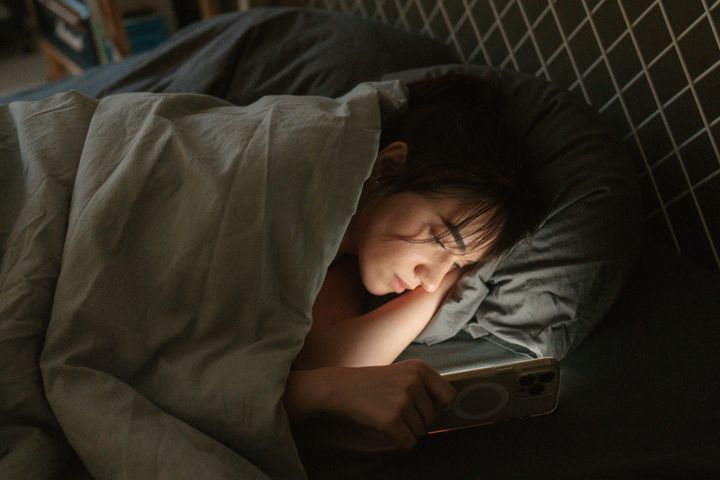
I’ll say it: The power TikTok has on my nighttime routine is unmatched. After I’ve popped a melatonin, brushed my teeth and settled under the covers, I’m heading to the app for funny videos and relatable content.
Whether or not TikTok is here to stay is up in the air, although it’s increasingly looking like a ban might take effect in the coming days. But until then, I think it’s safe to say I’m one of many users who enjoys the platform. From recipes and beauty trends to mood-boosting hacks and products that are actually useful, dare I say that TikTok is low-key a lifestyle hub?
Advertisement
As with anything, though, too much of a good thing is… well, not a good thing. At what point can endless scrolling be unhelpful, or even harmful? At what point can TikTok use point toward addiction, affect work and relationships, and even cause a sour mood?
Ahead, therapists and counsellors who specialise in addiction share a major sign you’re addicted to TikTok, why TikTok is so addicting and what to do if your usage causes problems.
Addiction experts agree that one sign stands out: Your use of the app takes over your life.
“The biggest red flag is when TikTok starts to interfere with daily responsibilities or relationships,” said Michael Villarreal, the CEO of Tres Vistas Recovery, an addiction treatment centre in California. “If someone finds themselves skipping work tasks, ignoring family or friends, or struggling to keep up with school or chores because they’re too wrapped up in endless scrolling, that’s a strong sign that their usage has become very unhealthy.”
Advertisement
That comes down to one thing. “As with any addiction, the main indicator of a problem is lack of control,” said Beth Chippendale Katona, a licensed clinical professional counsellor and a licensed clinical addiction counsellor with Thriveworks in Kansas City, Missouri. “The individual experiences consequences and is not able to curb the behaviour.”
It’s important to note that people experiencing addiction may feel like they’re in control, but that’s not necessarily the case.
If all of that sounds a little too familiar, you’re far from the only one. Villarreal shared an example from his practice. “I once worked with a client who realised her sleep patterns were entirely off because she’d get caught up in the ‘just one more video’ loop until 3 a.m.,” he recalled.
Advertisement
Addiction and unhealthy usage can present themselves in other noteworthy ways, too. Providers urge people to look out for the following signs.
Whether you’re taking a break at work, going to the bathroom or fighting the need to get out of bed, an urge to watch TikTok may arise — and that’s not necessarily a great thing.
“If TikTok is the first thing you think about in the morning and the last thing before bed, or if you’re constantly replaying videos in your head during other activities, that’s a sign your brain is hyper-focused on it,” Villarreal said.
Advertisement
Feeling anxious, bored or irritable without TikTok, or relying on it for validation, are other signs of dependency, according to Villarreal.
Claire Wilson, a therapist with Kelley Counselling & Wellness, also pointed this out. “There can be abrupt shifts in mood when access to TikTok is restricted,” she said. “One may notice a tendency to frequently incorporate TikTok into discussions with others, leading to comparisons with individuals featured on the platform, which can adversely impact one’s mood and mental well-being.”
Yep, spending too much time on TikTok can even cause physical problems, unfortunately.
“Spending hours glued to your phone can lead to physical issues like eye strain, headaches or neck pain — what some jokingly call ’tech neck,’” Villarreal said.
Advertisement
AleksandarNakic via Getty Images
Loving TikTok isn’t necessarily an addiction, so at what point is it?
According to Wilson, it’s when “dependency may distort one’s understanding of reality, resulting in a loss of personal identity, alterations in personality, decreased self-esteem and even suicidal thoughts.”
Katona summarised her take with three key words: level of impact. When your work, school, relationships and goals suffer greatly because of TikTok, she said, you may be looking at an addiction.
Advertisement
“In essence, an unhealthy relationship is problematic but can usually be addressed with intentional changes, while addiction is more compulsive and often requires outside help or intervention,” she explained.
So why is it so dang easy to get lost in the sauce of TikTok? How are silly videos so engaging that they can cause real damage?
“TikTok is brilliantly designed to keep you hooked,” Villarreal said. “It’s like a slot machine: You don’t know what’s coming next, but you’re sure it’ll be entertaining, so you keep scrolling.”
Advertisement
Besides the way it provides endless entertainment and excitement, TikTok’s formulation is also strategic. Katona spoke to the algorithm tailoring content for you, the stress relief it provides and how it can help you feel connected to others in a more comfortable, easy way.
Wilson added that the dopamine high is “similar to a high one can get from a drug” and can even “lead to withdrawal symptoms and the onset of addiction, escalating to more serious forms of dependency.”
“Comprehending the functionality of TikTok and its impact on users is essential,” Wilson said. “Acknowledging a potential addiction to TikTok is a crucial first step.”
Advertisement
The same holds true for other social media apps. Consider the following expert-backed tips:
Since the “just one more video” mindset can be a slippery slope (been there, done that), try to set specific, firm boundaries around how much time you want to spend on the app. For example, maybe an hour spread out over the day, or only when you’re in line at the store.
Certain tools can make this easier. Villarreal mentioned TikTok’s built-in screen time settings, which Apple phones typically have, too.
Villarreal suggested dedicating certain spaces — like your bedroom or the dinner table — as tech-free areas. “This helps you reconnect with life outside the screen,” he said.
Advertisement
What else do you like to do in your downtime? That may be an easier, more enjoyable way to replace screen time.
Examples of activities Villarreal mentioned include reading, walking and other hobbies. Maybe it’s time to finally meet that reading goal or even bring back the hot girl walk.
Feel a compulsion to get on the app? Ask yourself why.
“Are you bored, stressed or avoiding something?” Villarreal asked. “Address the root feeling instead of escaping into the app.”
Advertisement
For example, maybe you’re trying to avoid an uncomfortable feeling that’s better addressed, at least long-term, in therapy. Or maybe you’re bored and realise pursuing another weeknight activity would fulfil you more.
You’re not alone in this journey. Besides having settings and goals to help keep you accountable, you can also talk to someone.
“If you’re struggling to cut back, talk to someone, maybe a trusted friend, therapist or support group,” Villarreal said. “There’s no shame in reaching out for help.”
Advertisement
Looking for a therapist who specialises in addiction or practices cognitive behavioral therapy may be especially fruitful. CBT is a type of therapy that looks at a person’s thoughts and how they affect mood and behaviour.
“This method aids in restructuring cognitive patterns and unlearning detrimental habits, while also equipping individuals with coping strategies and alternatives,” Wilson explained.
Group therapy may also be advantageous, she added. For example, users may benefit from a Media Addicts Anonymous group, which is similar to the more commonly known Alcoholics Anonymous.
Advertisement
TL;DR? “It’s normal to enjoy social media, but the distinction lies in impact,” Villarreal said. “Unhealthy use becomes a full-blown addiction when it starts significantly disrupting someone’s mental, emotional or physical health.”
At that point or earlier, these suggestions may be needed for truly happier living.

While wildfires are ravaging L.A and right-wing internet personalities are making terrifying waves, it may feel like optimism is the most impossible emotion to find in these times.
However, optimism and hope are forces for good, and it turns out, can actually benefit both your physical and mental health, too.
Advertisement
Speaking to Futurity, lawyer Scott L Rogers says: “Optimism shapes how individuals interpret situations, often reducing their perceived stressfulness.
“Moreover, when faced with a stressful situation, optimism can help navigate it more effectively, leading to better outcomes that enhance emotional well-being.”
He adds: “Research suggests that approaching life’s events with a more optimistic outlook can enhance physical health, partly due to the release of hormones and neurotransmitters that improve mood and provide protective effects on the body.
Advertisement
“Additionally, positive emotions associated with optimism may boost the immune system, making the body more resistant to infections, reducing the risk of chronic diseases, and offering protection against anxiety and depression.”
Dr Ricardo Twumasi, lecturer in organisational psychiatry and psychology at King’s College London spoke with The i Paper about optimism and said: “I would generally define optimism as, in a situation where a positive and negative outcome are both likely, to expect the favourable outcome. There’s still a groundedness and rationality to it. You can be optimistic but pragmatic.”
So, optimism is less blind faith and more believing that the good thing that’s posisble to happen, will happen. If it’s just as likely as the bad possibility, where’s the harm in looking on the bright side?
Advertisement
He recommends setting small, practical goals for yourself and acknowledging when you’ve achieved them.
He said: “Changing to the point that you think about life in a more positive way is a big change, but it happens behaviourally on a really small level, and all those small behaviours build up into the way we interact with the world.”
Make tiny changes it is.

Norovirus is one of those nasty winter bugs that just does not relent.
It can survive even the most potent of hand gels, as well as freezing temperatures, and it takes as few as 10 viral particles to make you sick.
So it’s no wonder really that so many people in the UK get struck down, and even end up hospitalised, with the illness each year.
Advertisement
The bug, which is characterised mainly by violent bouts of vomiting and diarrhoea, typically goes away in 48 hours.
But those two days can seem like a lifetime when you’re firmly glued to the loo.
If you’re sat there smugly thinking you haven’t been bitten by the noro-bug this year, there might be a reason why.
According to Professor Patricia Foster, an expert in biology at Indiana University Bloomington, your blood type as well as whether you make a certain antigen in your body, could influence your vulnerability to the winter illness.
Advertisement
She explained that people with the B blood type tend to be more resistant to the bug, while those with A, AB and O blood types are more likely to become ill.
And here’s where things get a little complicated.
Prof Foster previously explained that a person’s blood type – whether A, B, AB or O – is “dictated by genes that determine which kinds of molecules, called oligosaccharides, are found on the surface of your red blood cells”.
These oligosaccharides are made up of sugars that are linked together. They attach to red blood cells – a bit like little koala bears – and can also be found in the cells that line your small intestine.
Advertisement
Now norovirus and some other viruses love these oligosaccharides because they can easily attach to them and then infect you via the intestine (cue: lovely gastro symptoms).
And a lot of norovirus strains need one oligosaccharide in particular, known as the H1-antigen, to hop on board.
Now some people – about 20% of the European-derived population, Prof Foster suggested – don’t make the H1-antigen in their intestinal cells. And, as a result, they are less likely to get sick from norovirus.
Advertisement
And for a similar reason, those with the B blood type tend to be more resistant because, as the BBC reported, fewer strains of norovirus have evolved to attach to their oligosaccharides.
Whew. The more you know…

