Researchers at UCLA Health uncovered new information about the role inflammation plays in mitigating liver fibrosis, which is associated with metabolic-associated fatty liver disease (MAFLD), one of the most common diseases in the world affecting up to 40 percent of U.S. adults. While inflammation in the liver has long been considered a prerequisite to developing liver fibrosis, the scarring and thickening of tissue that can impair the liver’s ability to function, this new research suggests that reducing inflammation may not influence the extent of fibrosis.
“Liver fibrosis is the critical feature that creates chronic liver disease and liver cancer. If we can keep fibrosis in check then we can meaningfully impact liver disease,” said Tamer Sallam, MD, corresponding author of the study and vice chair and associate professor in the department of medicine at the David Geffen School of Medicine at UCLA.
“For decades we have believed that targeting inflammation is one of the most important ways to reduce MAFLD. But this new research indicates that inflammation, while still important, may not be the main driver of fibrosis.”
The study, published in the Journal of Clinical Investigation, looked specifically at a protein called lipopolysaccharide binding protein (LBP), which is involved in the body’s immune response, and how LBP functions in mice. Findings showed that mice without LBP in their liver cells had lower levels of liver inflammation and better liver function but no change in fibrosis.
In addition to mouse models, the researchers also studied genetic analyses from large human datasets and human tissue samples from MAFLD patients at different stages in the disease, to examine the consequence of loss of LBP function. The evidence combined showed that the LBP does not alter scar tissue markers.
Sallam indicated a need to further explore how LBP influences inflammation and whether other factors can offer a more potent reduction in inflammation and have an impact on reducing fibrosis.
“Reducing scar burden is one of the holy grails in the treatment of advanced liver diseases,” Sallam said. “These results suggest that certain ways of targeting inflammation may not be a viable option and that more directed therapies against other pathways could help us better target fibrosis and improve outcomes for patients.”
New research from a collaborative team featuring Texas A&M University atmospheric scientist Dr. Andrew Dessler is exploring the climate impact of the 2022 Hunga Tonga volcano eruption and challenging existing assumptions about its effects in the process.
The remarkable two-day event, which occurred in mid-January 2022, injected vast amounts of volcanic aerosols and water vapor into the atmosphere. Historically, large volcanic eruptions like Tambora in 1815 and Mt. Pinatubo in 1991 have led to significant cooling effects on the global climate by blocking sunlight with their aerosols. However, Hunga Tonga’s eruption presented a unique scenario: As a submarine volcano, it introduced an unprecedented amount of water vapor into the stratosphere, increasing total stratospheric water content by about 10%.
Because water vapor is a powerful greenhouse gas, Dessler says there was initial speculation that it might account for the extreme global warmth in 2023 and 2024. Instead, the results of the team’s research, published Wednesday (July 24) in the Journal of Geophysical Research: Atmospheres, reveal the opposite: The eruption actually contributed to cooling the Earth, similar to other major volcanic events.
A Volcanic Eruption’s Cooling Effect
The team’s paper, titled “Evolution of the Climate Forcing During the Two Years after the Hunga Tonga-Hunga Ha’apai Eruption,” includes insight and analysis from Dessler, a professor in the Texas A&M Department of Atmospheric Sciences and the director of the Texas Center for Climate Studies; first author Dr. Mark Schoeberl, chief scientist at the Virginia-based Science and Technology Corporation in Hamburg, Virginia; and multiple scientists from the National Aeronautics and Space Administration (NASA).
Their methodology involved analyzing NASA and National Oceanic and Atmospheric Administration (NOAA) satellite data observations of aerosols and water vapor, among other variables, to estimate the energy balance of the Earth’s climate system. Their analysis revealed that the eruption resulted in more energy leaving the climate system than entering it, thereby inducing the slight cooling effect.
“Our paper pours cold water on the explanation that the eruption caused the extreme warmth of 2023 and 2024,” Dessler explained. “Instead, we need to focus primarily on greenhouse gases from human activities as the main cause of the warming, with a big assist from the ongoing El Nino.”
Implications And Future Research
According to Dessler, this research has important implications for both scientists and the general public. By dismissing the volcanic eruption as a major factor in the recent warming, the team’s study reinforces his point that human-induced greenhouse gas emissions are the primary driver of climate change. This focus is particularly relevant, given the ongoing debate and misinformation about the causes of global warming.
Moreover, Schoeberl says the study underscores the importance of continued investment in satellite-based stratospheric measurements.
“Our understanding of the Hunga Tonga eruption is largely thanks to the investment in stratospheric satellite measurements by NOAA and NASA over the past two decades,” Schoeberl added. “However, we need to be cautious about a potential ‘stratospheric data desert,’ as some of the most critical instruments are not being replaced.”
The Challenging Path Ahead
While this paper answers several important questions, Dessler acknowledges that it simultaneously introduces new ones. For instance, the researchers highlighted some unresolved issues related to the Hunga Tonga eruption, such as the unexpectedly low levels of sulfur dioxide produced by such a violent eruption and the minimal impact the eruption had on the 2023 ozone hole. The 2023 ozone hole refers to a significant thinning of the ozone layer over Antarctica, which allows more harmful UV radiation to reach the Earth’s surface. Additionally, the persistence of water vapor in the stratosphere beyond what was predicted by models suggests that there is still much to learn about stratospheric circulation processes.
As scientists work to resolve ongoing questions and deepen our understanding of the stratosphere, Schoeberl says the team’s work highlights the critical need for continued research and precise data to tackle the challenges of climate change.
While human activity has had a massive effect on the natural world, a new study from North Carolina State University finds that climate is still the most influential factor in determining where mammals can thrive. The work sheds light on how climate change will affect wildlife populations.
Roland Kays, lead author of a paper on the work, said the study’s goal was to compare the importance of climate versus human factors in where mammals chose to live. To do so, researchers collected data on 25 mammal species from 6,645 locations across the United States. The study is one of the largest camera trap data analyses ever done. The data came largely from Snapshot USA, which is a national mammal camera trap survey conducted with collaborators across the country.
“One of our ideas was that humans may have changed our landscape so much that we have become the primary determinants of which animals live where,” said Kays, who is a research professor at NC State and scientist at the N.C. Museum of Natural Sciences. “What we found was that in fact humans were not the most important. Climate, including temperature and the amount of rainfall, was the most important factor across most of the species we observed.”
However, human activity in the form of large population centers and agriculture was still a significant factor in where mammals chose to live. Some species struggled in the presence of cities and farms, Kays said, but many thrived.
“There are a lot of species that do well when humans are around. The Eastern gray squirrel for instance is the most common squirrel in Raleigh, and it does great around people. But there’s another species called the Eastern fox squirrel, and that one does well around agriculture but not as well around people,” he said. “We can see those differences in many other species. The snowshoe hare does poorly around both people and around agriculture. This study allows us to see the species that are sensitive to our impacts, and which ones benefit.”
This information helped researchers create maps which predict how common various mammals are across the contiguous U.S., which allowed them to separate the country into regions based on what kinds of mammals were common in each. These regions, known as ecoregions, are commonly used when studying plants but have never before been applied to mammal populations.
“When you look at something like the Eastern deciduous forest, that is an ecoregion classified by how common a type of tree is,” Kays said. “We’re now able to do that with mammal species and then compare that to the plant ecoregions. What we found was a striking similarity between the two. For instance, in the east where there is more rainfall, you have more plants growing. That lined up with a greater abundance of mammals that we saw in that region as well, because more plants mean more food for those animals to eat.”
The open access paper, “Climate, food and humans predict communities of mammals in the United States” is available to read in Diversity and Distributions. In identifying climate as the number one influence on mammal habitat choice, the study presents a new tool for predicting the impacts of climate change on mammal populations. Rising global temperatures will cause shifts in where animals are able to live, as well as influence precipitation levels and plant growth. Understanding these factors will be important to making sustainable decisions about mammal population management in the future.
New research has revealed that misdiagnosis of symptoms women are experiencing is exacerbating debilitating conditions and leaving thousands untreated.
In a survey of 500 women who have experienced a misdiagnosis, Higgs LLP found that 86% of women have had at least one symptom related to periods misdiagnosed.
Advertisement
For example, despite the condition impacting 1 in 10 women, the most frequently misdiagnosed condition was endometriosis, which can cause chronic pain, heavy periods, and fatigue, just to name a few symptoms.
Symptoms that are most often misdiagnosed in women
The top ten most common misdiagnosed symptoms found from the survey were as follows:
Health expert and founder of healthcare company Maxwellia, Anna Maxwell said: “On average women will experience 480 periods in their lifetime, which means they bleed for around 7 years of their lives.
Advertisement
“The normalisation and dismissal of period problems can potentially be really damaging for women, both physically and emotionally. Early intervention is key for managing chronic menstrual conditions; it’s so important that women feel heard and that they are being taken seriously to help improve women’s quality of life.”
This research correlates with long waits women have for diagnosis. Endometriosis alone takes around 7 years to diagnose.
The conditions that women were mostly commonly misdiagnosed with were anxiety and depression, irritable bowel syndrome, stress, and skin conditions.
Clare Langford, Medical Negligence Expert at Higgs LLP commented: “The issue of misdiagnosis is not just a failing among medical professionals but a deeply concerning gendered problem that desperately requires reform.
“We must recognise that these misdiagnoses are a trend. They are not just mistakes but symptoms of a larger, systemic problem within the healthcare system where women’s symptoms are too often dismissed or misunderstood.”
It’s not exactly a new political tactic – see the Conservatives’ ongoing claim Labour told them there was “no money left” when they took over in 2010 – but it is one they seem to be laying on rather thick so far.
Since getting the keys to No.10, the government has, almost without fail, blamed every major issue on the Tories.
Advertisement
In fact, Keir Starmer said on Thursday the last government “left us the worst inheritance since the Second World War”.
He added: “Every day we are finding more mess they’ve left for us to clear up.”
The prime minister also tried to buy his government some time, saying: “We’ve started the rebuilding but the problems that have been left to fester for years, cannot be fixed overnight.”
His health secretary, Wes Streeting, said their legacy was “shocking”.
Obviously the Conservatives have not taken to this lying down.
Tory leadership hopeful, Mel Stride, on Friday dismissed any such claims against his party, saying: “This is all pitch rolling, smoke and mirrors, to suggest that they’ve come in and it’s far, far worse than they ever could possibly have imagined. ”
So, just how bad is it? Let’s take a step-back from the political spin and a look at some of the cold, hard facts around some of Labour’s most eye-catching claims from recent weeks.
It found the Care Quality Commission, which is responsible for inspecting NHS hospitals, GP surgeries and care homes in England, is not fit for purpose.
Inspectors were found to be lacking experience, with some having never been in a hospital before or met a person with dementia.
Its inspections backlog is so large that a fifth of services had never been given a rating – and one NHS hospital has not had an inspection for a decade.
Meanwhile, the independent public spending watchdog, the National Audit Office (NAO) found the “scale of challenge facing the NHS today and foreseeable in the years ahead is unprecedented”.
Advertisement
It found a growing number of NHS bodies “have been unable to break even” with the amount of funding they’ve received, and the “pace of change” has been slow.
The authors of the NAO report said: “We are concerned that the NHS may be working at the limits of a system which might break before it is again able to provide patients with care that meets standards for timeliness and accessibility.”
It suggested policymakers must explain the potential mismatch between demand and funding, adding the NHS would need a larger budget or service levels would “deteriorate further”.
via Associated Press
Economy
The full extent of the economic inheritance will be revealed in full by chancellor Rachel Reeves on Monday.
Advertisement
She is expected to reveal a “black hole” in the government finances worth tens of billions of pounds – possibly exceeding £20bn per year.
It said the last 14 years have been “extraordinary” – with earnings growing at their slowest rate in more than 200 years, and interest rates at a historic low.
“The period from 2010 to 2019 saw the biggest and most sustained cuts to public spending since World War 2,” the report said, adding that this all benefited the older generations.
The last five years have been a particularly lethal combination, due to the uncertainty of Brexit, the Covid pandemic and borrowing “on a scale even greater than seen during the financial crisis”, all of which meant taxes rose by more during the last five years than in any parliament since at least 1945.
Advertisement
“The legacy for the next government will be a difficult one,” the IFS said. “Expected economic growth is slow.
“The fiscal policy responses to the three shocks of the financial crisis, Covid-19 and the cost of living crisis mean that public sector debt is high, and a combination of high interest rates and low growth means that even running a primary surplus will not be enough to get it on a downward trajectory.”
It also called out the repeatedly failed promises to raise fuel duties in line with inflation, which is “another unwanted legacy” for Labour.
It predicted that the future “looks harder” for the British economy compared to its other developed countries’ economies with low productivity and high inflation.
The IFS also noted that Labour’s note to the Tories from 2010 that “there is no money left” can be applied to the current government as it “remains true today”.
Advertisement
“The biggest and most sustained cuts to public spending since World War 2”
– Institute for Fiscal Studies
Prisons
The new justice secretary Shabana Mahmood said last week that the UK is facing “the imminent collapse of the criminal justice system”, which sounded liek “some dystopian film”.
She said: “This is the legacy of the last Conservative government. This is the legacy of the guilty men.”
And figures released by the Ministry of Justice on Thursday showed how deep the overcrowding prison crisis is.
There were 73,804 recorded self-harm incidents in the last year, and 28,292 violent assaults in prisons over the last 12 months.
Advertisement
Overcrowding in prisons increased for a third year in a row, meaning 23.6% of jails now have too many inmates.
Meanwhile, the performance of four in 10 prisons are either of concern or serious concern.
The NAO’s latest report found that the Tories spent £592m buying land and property along parts of the route which are no longer going ahead.
Construction costs have soared by £16.1bn just since 2020, too.
It will take three more years to cancel parts of the route at an additional cost of around £100m.
The trains, which will still run between Birmingham and Manchester, will also have less space than current services – a decline of up to 17%, NAO said.
According to the NAO, the government may need to decrease demand by “incentivising people to travel at different times or to not travel by rail”, although the spending watchdog warned that this this may constrain economic growth and increase environmental costs.
Alternatively, the government was advised to try “improving or adding infrastructure” – but that may be expensive and disruptive, too.
With the economy, the NHS, HS2 and the prison system all struggling, it seems Labour may have a point – they really did inherit quite the legacy.
Advertisement
But now they’re in power, they can only blame the Conservatives for so long until the public get bored. The real question now is, how will they fix it?
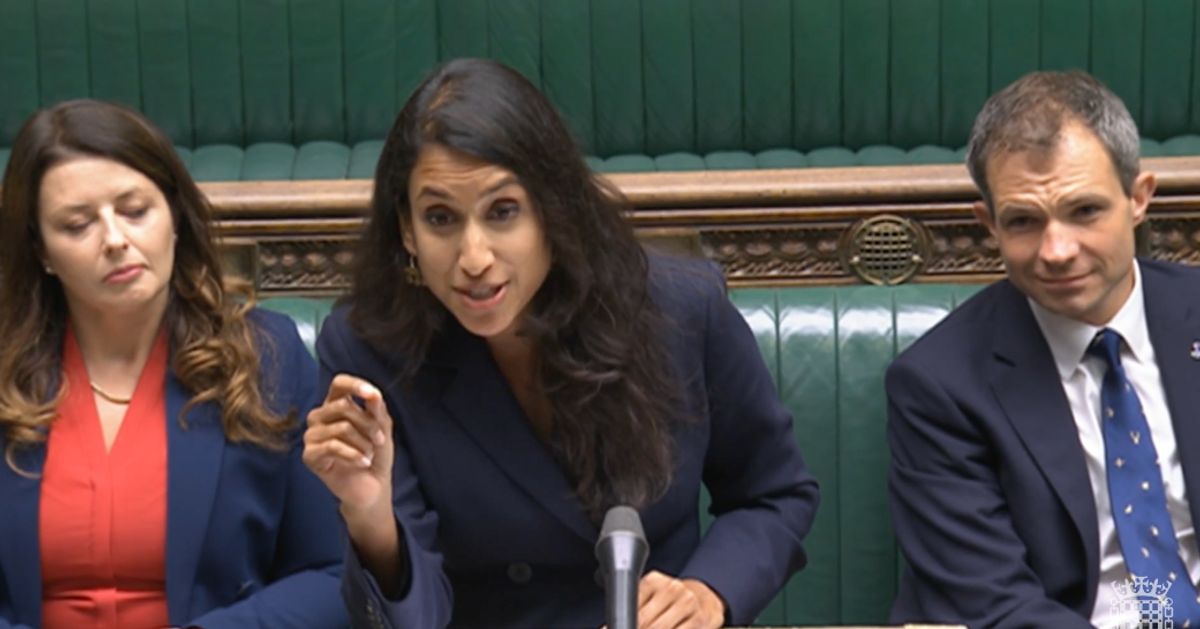
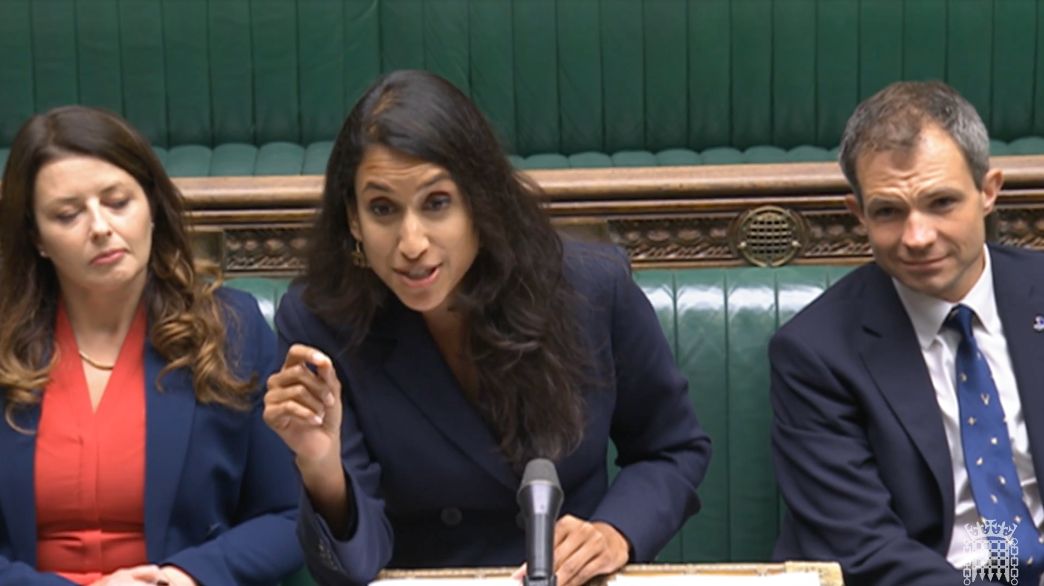
Claire Coutinho was mocked in the Commons today after advising Labour not to use numbers “for which you have no basis” while in government.
The former net zero and energy security secretary, who now serves in the shadow cabinet, was trying to call Labour out over its supposed claim that each household would see its energy bills cut by £300 by 2030.
Advertisement
She claimed Labour had been advertising that number everywhere in their election campaign, but now they are in power, their ministers have barely mentioned it.
Coutinho said: “When you get into government, and you speak in the House, you cannot use numbers for which you have no basis.
“They will learn this. They will learn this.”
The top Tory seemed to forget that her own party was widely accused of dishonesty when in government.
While Labour did use talk about savings on energy bills, they promised to save households “up to £300” – although some top figures in the party did forget to say “up to” during their election campaigns.