Glastonbury 2024: What Will The Weather (And The Traffic) Will Be Like This Year?

Planning for any big festival takes a sufficient amount of organising before the partying starts, but Glastonbury is an entirely different beast.

The UK’s world famous music festival returns for yet another year from Wednesday 26 to Sunday 30 June, where Dua Lipa, Coldplay and SZA are all set to headline on the iconic Pyramid stage.

With the annual bash kicking off this week, some 200,000 festival goers are preparing to descend on Worthy Farm.

Here’s everything you need to know to prepare – including the weather forecast…

When is the best time to travel to Glastonbury?

Most car parks at the festival will be open from 9pm on Tuesday 25 June, although it’s worth pointing out that festival-goers are not allowed to camp in them. If you’re willing, you could get there nice and early to secure a good parking spot – but that will mean waiting in either your vehicle or the entrance queue overnight.

Most people travel to the site on Wednesday, which is why it’s usually the worst day of the five-day stretch in terms of traffic delays. Thursday is significantly quieter, but that does mean you would miss the initial excitement of the festival, and, of course, potentially your preferred camping spot.

Entering and leaving the festival on Friday and Saturday is usually quite easy because it’s already the middle of the extravaganza, so traffic levels are quite low.

The National Highways’ emergency planner for the South West, John Ingram has previously encouraged festival-goers to “check our traffic and travel information channels” and to “set off early and allow plenty of time”.

He added that warm weather means it’s worth “pre-checking your vehicles for oil, fuel and coolant levels” as well as correctly inflated tyres.

Travel with drinking water too, and don’t forget to take breaks!

What is the best route to get into Glastonbury?

The busiest road is usually the M5, particularly junctions 25 and 23.

But, the A39 and A361 get pretty full too on the peak travel days.

The A303 and A37 are the main ways for drivers to travel from London too, especially the A303 eastbound.

However, the actual village of Glastonbury is five miles away from the site meaning it’s normally pretty undisturbed by the excitement of the music festival.

If you’re dropping people off, try to avoid doing so on local roads as that can lead to more build-ups (and can mean a long trek to the actual event).

Instead, try using the Bath and West Showground as a drop-off spot – festival-goers can jump on the free bus to Pedestrian Gate A.

When is the best time to leave Glastonbury?

Traffic starts to build up again on Sunday, with many choosing to leave after the headline act finishes up.

And this congestion only gets worse through Monday, with experts arriving setting off at around 6am as the optimum time (4pm is apparently the “worst time” to start that long journey home).

What will the weather be like at Glastonbury?

What will the weather be like at Glastonbury 2024?

According to the Met Office, Glastonbury is looking like a dry one this year. For the most part, at least…

Wednesday

You’re going to need to lay sunscreen on thick for day one, as sunny intervals are expected throughout the day – with highs of 27°C.

Thursday

Things will cool down by Thursday, with highs of 19°C, and cloud cover forecasted for most of the day (still, don’t forget that SPF!). There’s also a 50% chance of rain from around 1pm.

Friday

The Met predicts “sunny intervals changing to partly cloudy” and a high of 17°C by 1pm, but the farm should remain dry as Dua Lipa takes to the stage as the festival’s first headliner.

Saturday

There should be some sun early Saturday, but cloud cover is expected by late morning. However, there will still be highs of 20°C and – thankfully! – no rain predicted.

Sunday

The final day of the festival might just be the most pleasant weather-wise, as temperatures are expected to reach 19°C at 1pm and the sun is out for most of the day.

Monday

Thankfully things are looking dry for the packing up too, and by midday there will probably be some cloud cover. But still expect sunny intervals and a temperature high of 19°C by 1pm.

Share Button

Low child vaccine uptake sees tipping-point warning

There are concerns over the spread of diseases such as whooping cough in England, as vaccine rates fall.

Share Button

NHS confirms patient data stolen in cyber attack

The NHS said Patients should continue to attend their appointments unless they have been told otherwise.

Share Button

Facial recognition linked to close social bonds, not social butterflies

Do you have trouble recognising faces, or do you never forget a face? The better you are at facial recognition, the more supportive relationships you are likely to have, regardless of your personality type.

In a world-first study published last weekend in the journal Cognition, a team of international researchers has reported some surprising findings relating to facial recognition.

The first discovery is that one’s ability to recognise faces has nothing to do with how extraverted, sociable, or gregarious a person is. What is clear, however, is that good facial recall is linked to the number of close, high-quality relationships that people have.

Researchers from the University of South Australia (UniSA), University of Western Australia (UWA) and Curtin University, along with US colleagues from Wellesley College and Harvard Medical School, undertook four separate studies involving more than 3000 people to tease out the relationship between facial recognition, social networks and personality traits.

In tests where participants memorised new faces or identified celebrity faces, their scores correlated with the number of close relationships they enjoyed.

“People who identified more faces typically had larger supportive social networks, which bodes well for their overall health and happiness,” says lead researcher UniSA psychologist Dr Laura Engfors.

“In concrete terms, the rise from the lowest (two) to the highest (28) number of faces that were successfully recognised on one test coincided with six additional close relationships, increasing from nine to 15. That’s an increase of two thirds and it is one extra strong social bond per four famous people recognised.”

The research did not find any link between facial recognition and a more social personality.

“Our findings rule out the idea that being sociable means you’ll probably be great at recognising faces. It also helps to dispel the common misconception that not recognising someone means you are less sociable.

“The ability to recognise faces more easily also means people may develop relationships faster.

“Imagine you’ve had an engaging conversation with someone you have only just met. A few weeks later you run into them again. If you recognise them quickly and easily, it opens the door to develop the rapport you established in your first meeting, helping the relationship to progress.

“On the flip side, if you don’t recognise them, you’ve missed the chance to build on that initial interaction,” Dr Engfors says.

Curtin University researcher and co-author Dr Linda Jeffery says being recognised by someone is a boost to a person’s self-esteem.

“It can make us feel important and valued, leading us to relate to that person more warmly, whereas we feel snubbed if someone we have met before does not recognise us.”

Wellesley College psychologist and co-author Associate Professor Jeremy Wilmer hopes the findings will be used to build stronger communities that facilitate human connection.

“Understanding that not everyone finds it easy to recognise people can help us to support those around us in social interactions,” Prof Wilmer says.

“Something as simple as name tags at a community barbecue or school event can make the difference between a connection built and a connection lost. Similarly, if you catch a flicker of uncertainty on someone’s face when you say hello, a subtle reminder to help them place you will be appreciated.”

People can test their own celebrity face recognition at the researchers’ citizen science website TestMyBrain.org.

Share Button

New study confirms forever chemicals are absorbed through human skin

A study of 17 commonly used synthetic ‘forever chemicals’ has shown that these toxic substances can readily be absorbed through human skin.

New research, published today in Environment International proves for the first time that a wide range of PFAS (perfluoroalkyl substances) — chemicals which do not break down in nature — can permeate the skin barrier and reach the body’s bloodstream.

PFAS are used widely in industries and consumer products from school uniforms to personal care products because of their water and stain repellent properties. While some substances have been banned by government regulation, others are still widely used and their toxic effects have not yet been fully investigated.

PFAS are already known to enter the body through other routes, for example being breathed in or ingested via food or drinking water, and they are known to cause adverse health effects such as a lowered immune response to vaccination, impaired liver function and decreased birth weight.

It has commonly been thought that PFAS are unable to breach the skin barrier, although recent studies have shown links between the use of personal care products and PFAS concentrations in human blood and breast milk. The new study is the most comprehensive assessment yet undertaken of the absorption of PFAS into human skin and confirms that most of them can enter the body via this route.

Lead author of the study, Dr Oddný Ragnarsdóttir carried out the research while studying for her PhD at the University of Birmingham. She explained: “The ability of these chemicals to be absorbed through skin has previously been dismissed because the molecules are ionised. The electrical charge that gives them the ability to repel water and stains was thought to also make them incapable of crossing the skin membrane.

“Our research shows that this theory does not always hold true and that, in fact, uptake through the skin could be a significant source of exposure to these harmful chemicals.”

The researchers investigated 17 different PFAS. The compounds selected were among those most widely used, and most widely studied for their toxic effects and other ways through which humans might be exposed to them. Most significantly, they correspond to chemicals regulated by the EU’s Drinking Water Directive.

In their experiments the team used 3D human skin equivalent models — multilayered laboratory grown tissues that mimic the properties of normal human skin, meaning the study could be carried out without using any animals. They applied samples of each chemical to measure what proportions were absorbed, unabsorbed, or retained within the models.

Of the 17 PFAS tested, the team found 15 substances showed substantial dermal absorption — at least 5% of the exposure dose. At the exposure doses examined, absorption into the bloodstream of the most regulated PFAS (perfluoro octanoic acid (PFOA)) was 13.5% with a further 38% of the applied dose retained within the skin for potential longer-term uptake into the circulation.

The amount absorbed seemed to correlate with the length of the carbon chain within the molecule. Substances with longer carbon chains showed lower levels of absorption, while compounds with shorter chains that were introduced to replace longer carbon chain PFAS like PFOA, were more easily absorbed. Absorption of perfluoro pentanoic acid for example was four times that of PFOA at 59%.

Study co-author, Dr Mohamed Abdallah, said “our study provides first insight into significance of the dermal route as pathway of exposure to a wide range of forever chemicals. Given the large number of existing PFAS, it is important that future studies aim to assess the risk of broad ranges of these toxic chemicals, rather than focusing on one chemical at a time.”

Study co-author, Professor Stuart Harrad, of the University of Birmingham’s School of Geography, Earth and Environmental Sciences, added: “This study helps us to understand how important exposure to these chemicals via the skin might be and also which chemical structures might be most easily absorbed. This is important because we see a shift in industry towards chemicals with shorter chain lengths because these are believed to be less toxic — however the trade-off might be that we absorb more of them, so we need to know more about the risks involved.”

Share Button

A hidden treasure in the Milky Way — Astronomers uncover ultrabright x-ray source

X-ray binaries are intriguing systems consisting of two celestial bodies: a normal star and a compact, dead object such as a black hole or a neutron star that sucks material from its stellar companion. A few hundred such sources have been identified thus far in our Galaxy. When it comes to the most powerful phenomena in the Universe, the release of gravitational energy in X-ray binary systems stands out as a highly efficient process.

Among the first X-ray binary systems discovered in the cosmos is the system Cygnus X-3. Since the early 1970s, this binary system was noted for its ability to briefly emerge as one of the most intense radio sources, yet in a few days it dims or vanishes altogether. This peculiar characteristic spurred early efforts, coordinated by telephone calls, to unite astronomical observations across the globe. The unique behavior of the system during these short-lived, highly energetic events, contrasting its otherwise “normal” nature, led to it being dubbed the “astronomical puzzle Cygnus X-3” by R.M. Hjellming in 1973. Numerous efforts have been aimed at understanding its nature ever since.

The breakthrough in unravelling this puzzle has been achieved thanks to the study of this system with the satellite Imaging X-ray Polarimetry Explorer (IXPE) that was launched by NASA in December 2021. According to Alexandra Veledina, an Academy Research Fellow at the University of Turku in Finland and the lead author of the study, the use of X-ray polarized vision has provided insights into the configuration of matter surrounding the compact object in the nearest proximity to the black hole.

“We have discovered that the compact object is surrounded by an envelope of a dense, opaque matter. The light that we observe is a reflection off the inner funnel walls formed by the surrounding gas, resembling a cup with a mirror interior,” Veledina explains.

This revelation has led to the identification of Cygnus X-3 as a member of the class of ultra-luminous X-ray sources (ULXs), which consume matter at such a gargantuan rate that a considerable fraction of the infalling material does not fit inside the event horizon, but rather is being spat away from the system.

“ULXs are typically observed as luminous spots in the images of distant galaxies, with their emissions amplified by the focusing effects of the compact object’s surrounding funnel, acting akin to a megaphone,” elaborates Juri Poutanen, Professor at the Department of Physics and Astronomy of the University of Turku and a co-author of the research.

“However, due to the vast distances to these sources, thousands of times beyond the span of the Milky Way, they appear relatively faint to X-ray telescopes. Our discovery has now unveiled a bright counterpart of these distant ULXs residing within our own Galaxy.”

This significant finding marks a new chapter in the investigation of this extraordinary cosmic source, offering an opportunity for in-depth exploration of extreme matter consumption.

Share Button

What does hot weather do to the body?

What impact do high temperatures have on our bodies?

Share Button

Tories Heading For Electoral Wipeout As New Poll Predicts 250-Seat Labour Majority

Labour is on course for a 250-seat Commons majority, according to yet another poll predicting wipeout for the Tories.

The Focaldata survey forecast that the Conservatives are set to lose a staggering 262 seats on July 4, leaving the party with just 110 MPs.

Labour, meanwhile, will gain 250 to leave them on 450 seats.

The Lib Dems will also see their number of MPs almost treble to 50, according to the poll, while the SNP would slump to just 16 MPs, down from the 48 they won in 2019.

The poll was conducted using the so-called “MRP” method, which uses a bigger than normal sample.

It also uses demographic data to calculate what the result would be on a seat-by-seat basis.

The Focaldata poll echoes a number of such surveys carried out by other pollsters since the campaign started, all of which pointed to huge Labour victories.

However, Focaldata’s chief research officer, James Kanagasooriam, said the final result could be even worse for the Tories as many of the seats they are forecast to win could end up falling another way.

Share Button

Man Had ‘Real Intention’ To Kidnap, Rape And Murder Holly Willoughby, Court Hears

This article contains discussions of violence and sexual assault.

A man plotted to kidnap, rape and murder TV personality Holly Willoughby, a court has heard.

In October 2023, it was first reported by The Sun that the former This Morning host was “under police guard” after “sinister” messages were found on a man’s phone reportedly threatening to “seriously harm” the daytime TV presenter.

He was later charged with soliciting to commit murder and incitement to commit kidnap, with the trial getting underway on Monday at Chelmsford Crown Court.

Prosecution Alison Morgan KC said that Gavin Plumb, a security guard from Harlow in Essex, had a serious and “real intention” to kidnap the daytime star from her home and take her to “a location where she would be raped repeatedly”, before murdering her.

Plumb has denied accusations of soliciting murder, inciting kidnap and inciting rape made against him.

“It was not just the ramblings of a fantasist; the defendant had carefully planned what he would do,” Morgan said.

The prosecution added that Plumb’s alleged plans only came to light after he shared them with an undercover police officer based in the US, with whom he’d been speaking online.

Morgan told the court: “The defendant explained his plans to kidnap, rape and murder the celebrity Holly Willoughby. The defendant set out his plans and sought to encourage the other person to commit those offences with him.

“The defendant’s plans as to what he would do to Holly Willoughby were graphic and were obviously sexually motivated. They were real to him, members of the jury, and were based on an obsession with Holly Willoughby that had developed over a number of years.”

Holly Willoughby at the National Television Awards in September 2023

Joe Maher via Getty Images

“What the defendant did not know then, was that the person that he was communicating with online was an undercover police officer based in the USA and not, in fact, a like-minded abductor,” she added.

“The defendant’s planning of the offences was then interrupted and he was arrested by the police.”

Plumb apparently described his plan as his “ultimate fantasy”, claiming: “I’m now at the point that fantasy isn’t enough anymore. I want the real thing.”

BBC News has reported that the trial is expected to continue for the next two weeks.

When details of the kidnap plot were first made public, it was reported that Holly was “under police guard at her home”.

She subsequently made the decision to step down from This Morning after 14 years at the helm, and took an extended break from the media spotlight.

Willoughby made her return to TV in January when she and new co-host Stephen Mulhern presented the latest series of Dancing On Ice.

Help and support:

  • Rape Crisis services for women and girls who have been raped or have experienced sexual violence – 0808 802 9999
  • Survivors UK offers support for men and boys – 0203 598 3898
Share Button

There’s Been An Intriguing Update From Liam Gallagher Amid Fresh Oasis Reunion Claims

Liam Gallagher has spoken out amid rumours that he and his brother Noel had recently been planning an Oasis reunion.

The Gallagher brothers were part of Oasis for 18 years before they ultimately went their separate ways in 2009 , and have been embroiled in a very public feud ever since.

In the years that followed, there’ve been repeated calls for Oasis to reform in some capacity, with The Mirror reporting over the weekend that Liam and Noel had even quietly set dates aside this year to perform at Wembley Stadium, which would have taken place in July.

However, the tabloid cited an undisclosed “source” who claimed these plans “collapsed” when Noel decided not to be involved and the booked dates were then cancelled.

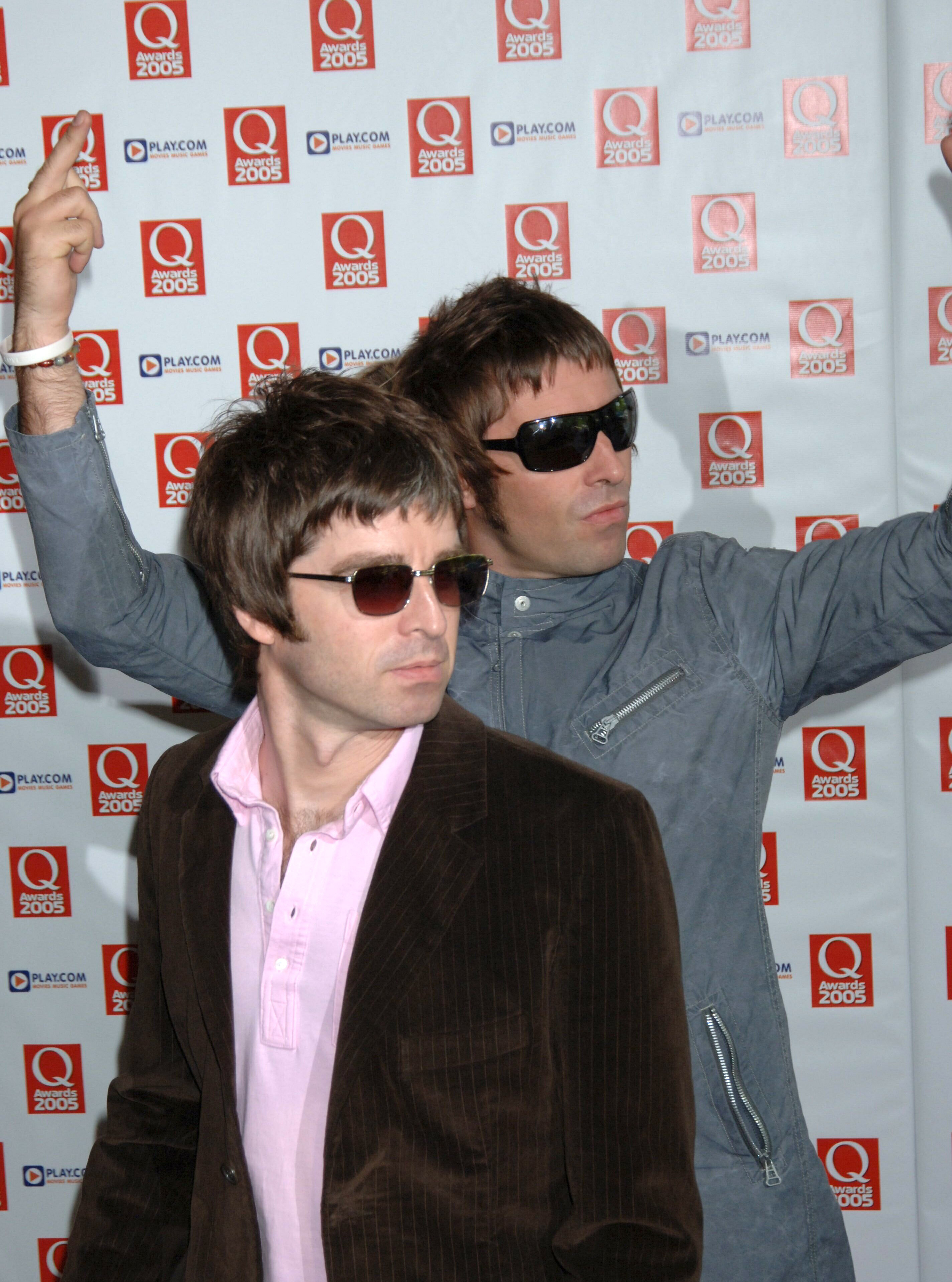
Noel and Liam Gallagher pictured in 2005

Brian Rasic via Getty Images

On Sunday morning, one fan asked Liam on X if an Oasis reunion was “actually happening”, to which he responded: “Nobody’s told me, maybe [they’re] getting a new singer like the dude out of Queen.”

The following day, another fan asked Liam more directly about the rumours of three nights at Wembley.

“What you asking me for? I know nothing,” Liam wrote back.

Back in February, Liam told Mojo magazine that an offer had been put “on the table” for Oasis to get back together, but Noel wasn’t interested.

“Noel? He ain’t fucking doing it,” he said. “We put an offer on the table for an Oasis thing, because we got offered it – he said no. It was a big tour, a lot of money.”

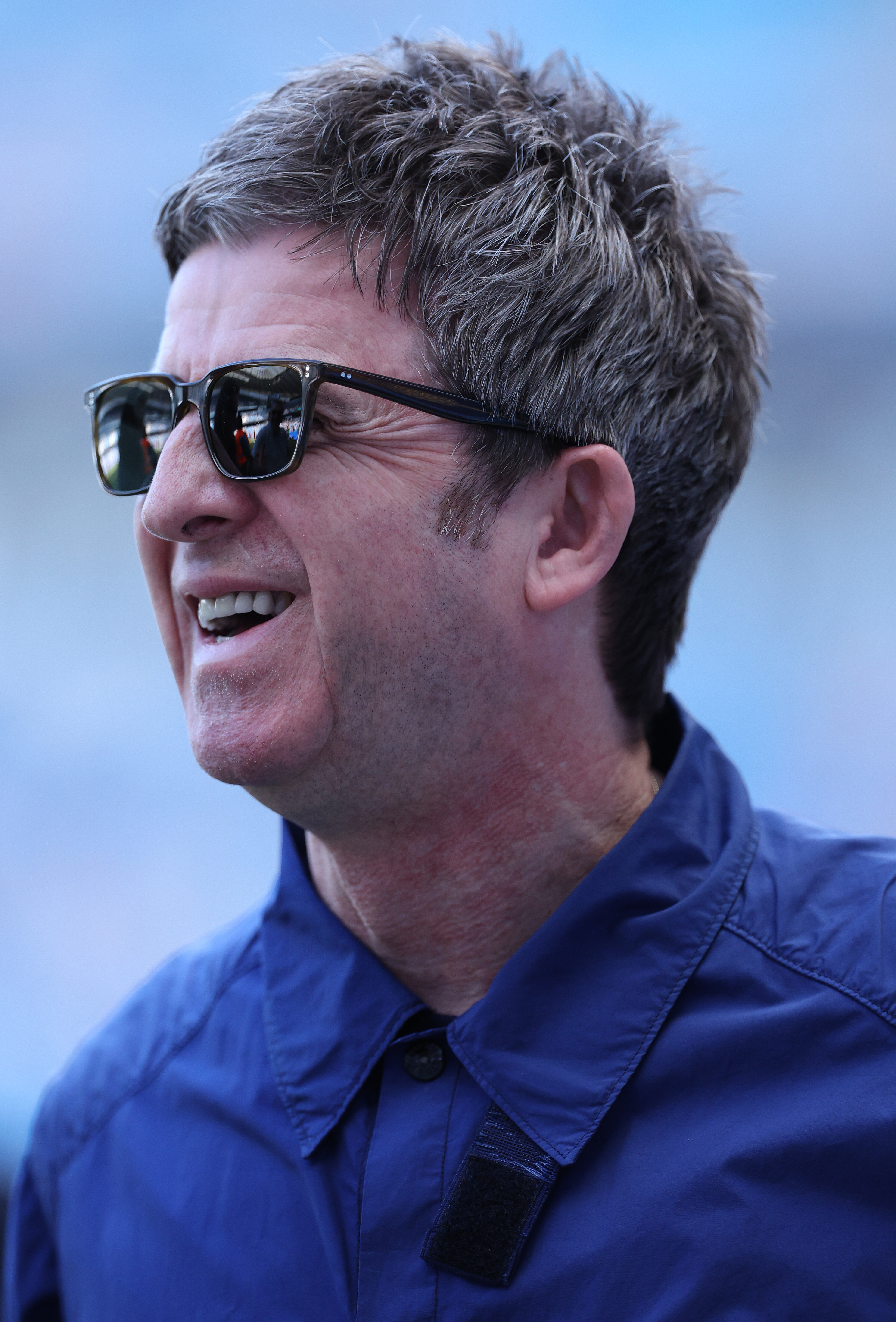
Noel Gallagher
Noel Gallagher

Alex Livesey – Danehouse via Getty Images

When Liam claimed around this time that his “greedy” brother had turned down £100 million to reunite, Noel made a rare comment on X, insisting: “I am not aware of any offer from anybody for any amount of money to reform the legendary Mancunian Rock’n’Roll group Oasis.”

“I am fully aware though that someone has a single to promote so that’s maybe where the confusion lies,” he also quipped.

Liam is currently in the middle of an arena tour, performing Oasis’ seminal Definitely Maybe album in full to commemorate its 30th anniversary.

Share Button