Italy’s PM Seems To Ask Sunak The Only Diplomatic Question Possible Amid Brutal Election Campaign

Giorgia Meloni appeared to ask Rishi Sunak the only diplomatic question she possibly could when the two leaders met today at the start of the G7 summit.

As they greeted each other with an embrace in front of the cameras, the Italian PM leaned towards her beleaguered British counterpart and appeared to say: “Are you OK?”

A seemingly innocent question, but accompanied with quite the worried expression.

It’s not clear how Sunak answered – Meloni just smiled in response and leant away from him as he continued to grip her hands tightly, while the conversation seemed to move onto casual niceities.

Watch their strange encounter here:

This exchange came hours after the prime minister faced a brutal grilling from both Sky News’ political editor Beth Rigby and a live audience.

He was even booed by the crowd when he blamed industrial action for long NHS waiting lists – despite pledging to bring them down himself at the start of 2023.

Viewers also decided that Keir Starmer outperformed the PM last night, with almost two-thirds of the public thinking Sunak had not come across as well, according to YouGov.

But, the debate was just the latest catastrophe of the last three weeks of Sunak’s disastrous campaign.

From calling a snap election while standing in the pouring rain and facing awkward encounters with furious members of the public to leaving D-Day commemorations early only to be ridiculed for saying he had to go without Sky TV growing up, Sunak has lurched from PR crisis to PR crisis.

Meloni, on the other hand, has had an excellent week.

Her far-right party, the Brothers of Italy, experience a stomping victory in the European parliament elections, making her the only Western European leader to be strengthened by the controversial vote.

Share Button

‘We Want To Be A Party Of Power’: Keir Starmer Slaps Down Heckler At Labour Manifesto Launch

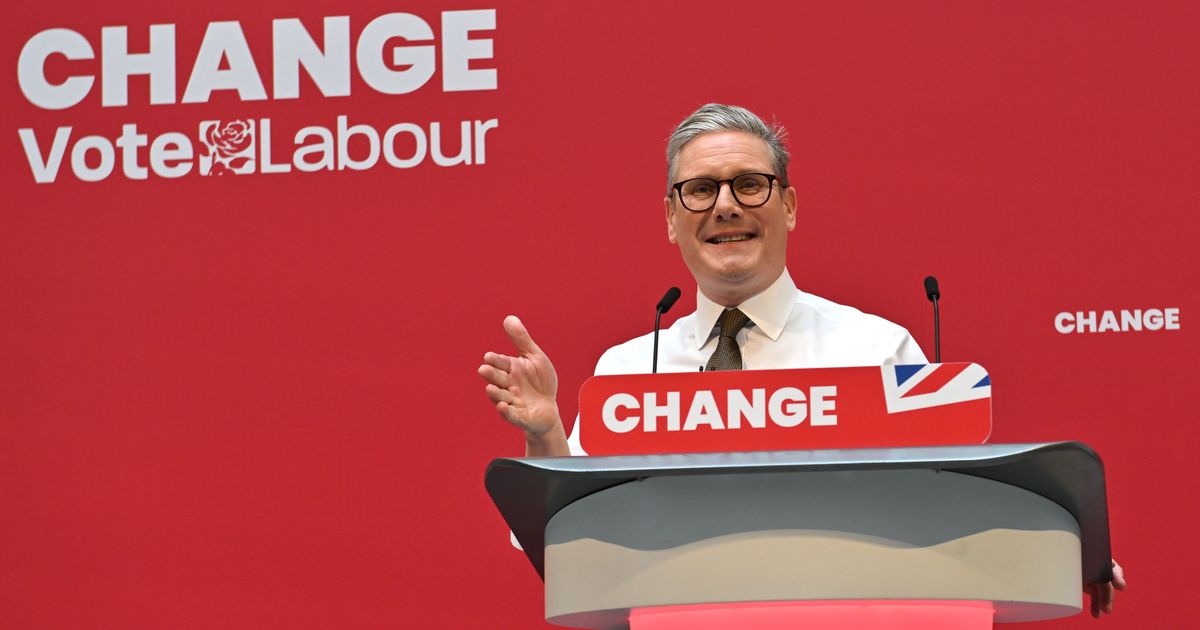
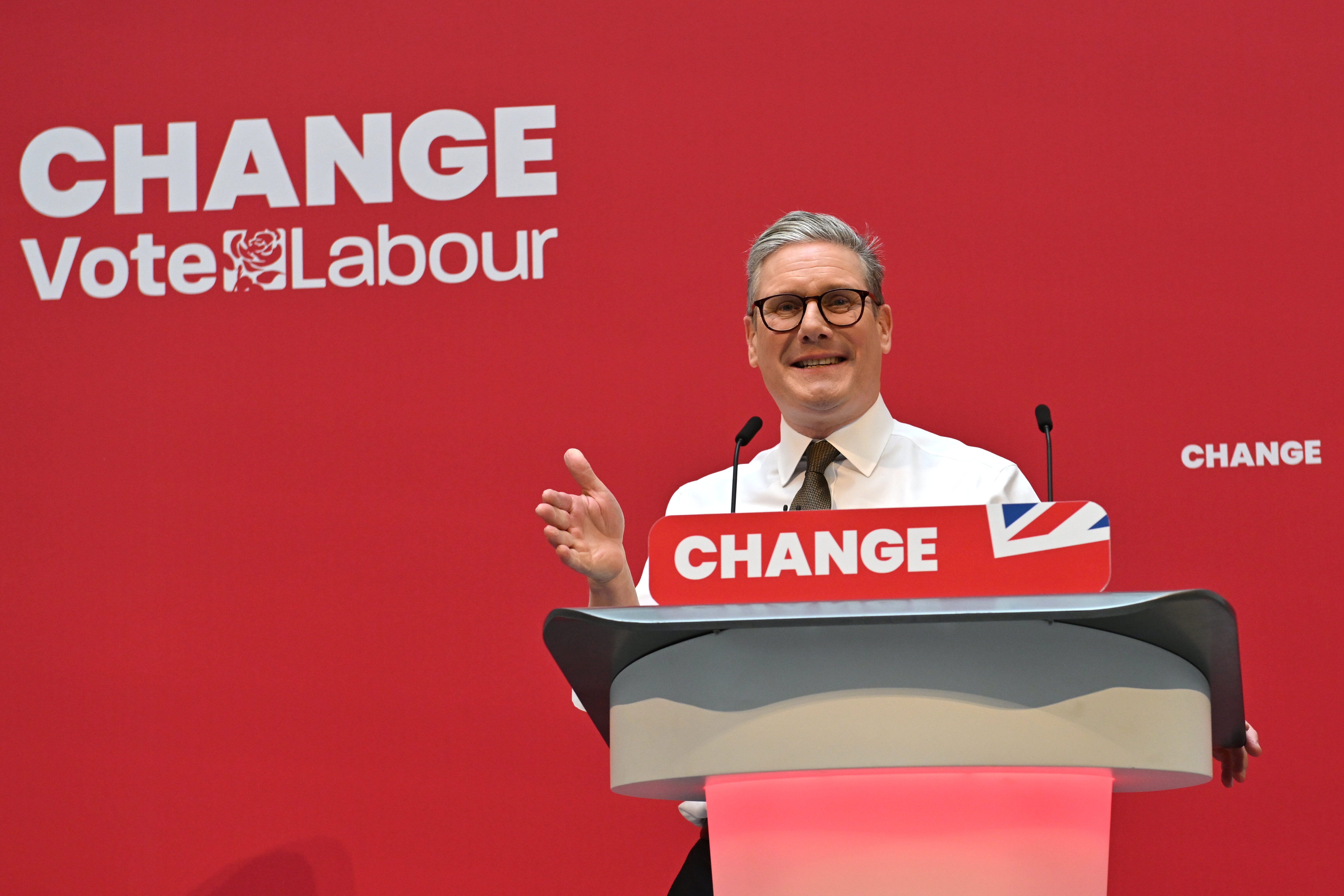
Keir Starmer declared Labour is now “a party of power” as he unveiled his election manifesto.

The Labour leader had to slap down a heckler who accused him of following “Tory policies”.

“We gave up being a party of protest five years ago,” Starmer said. “We want to be a party of power. That’s not in the script but that is part of the change.”

As expected, the 133-page manifesto contained no new policies as the Labour tries to protect its huge poll lead over the Conservatives with just three weeks to go until polling day on July 4.

Instead, it contained pre-announced pledges including plans to put VAT on private school fees, extend the windfall tax on oil and gas companies, and reform planning rules to build 1.5 million more homes.

Other policies include lowering the voting age to 16, recruiting 6,500 more teachers, delivering 40,000 more NHS appointments to bring down waiting lists and setting up a Border Security Command to tackle the small boats crisis.

Rejecting accusations that he is too boring, Starmer said: “It’s not about rabbits out the hat, it’s not about pantomime. We’ve had that.

“I’m running as a candidate to be prime minister, not a candidate to run the circus.”

The Labour boss said the election was a chance for voters to “stop the chaos” of the last 14 years of Tory rule.

“I have changed the Labour Party, and I am ready to change Britain,” he said.

“Labour’s first steps for change are a downpayment on our long-term plan for the country – an immediate repair job on the damage that has been caused under 14 years of Conservative chaos and decline.

“We know we can’t wave a magic wand and pretend that everything will be fixed overnight.

“But with Labour, our first steps for change will deliver economic stability, cut NHS waiting times, launch a new Border Security Command, create Great British Energy, crack down on ant-isocial behaviour and recruit 6,500 new teachers. They are the first steps towards our long-term plan.

“But to get change, you have to vote for it. The choice at this election is another five years of chaos under the Conservatives, with people paying £4,800 more on their mortgages, or change with Labour. It’s time to stop the chaos, turn the page and start rebuilding Britain.”

Share Button

The Critics Have Spoken… So, How Does Inside Out 2 Measure Up To The Beloved Original Film?

One of the most beloved Pixar films in the studio’s history is getting a sequel, with Inside Out 2 hitting cinemas this weekend.

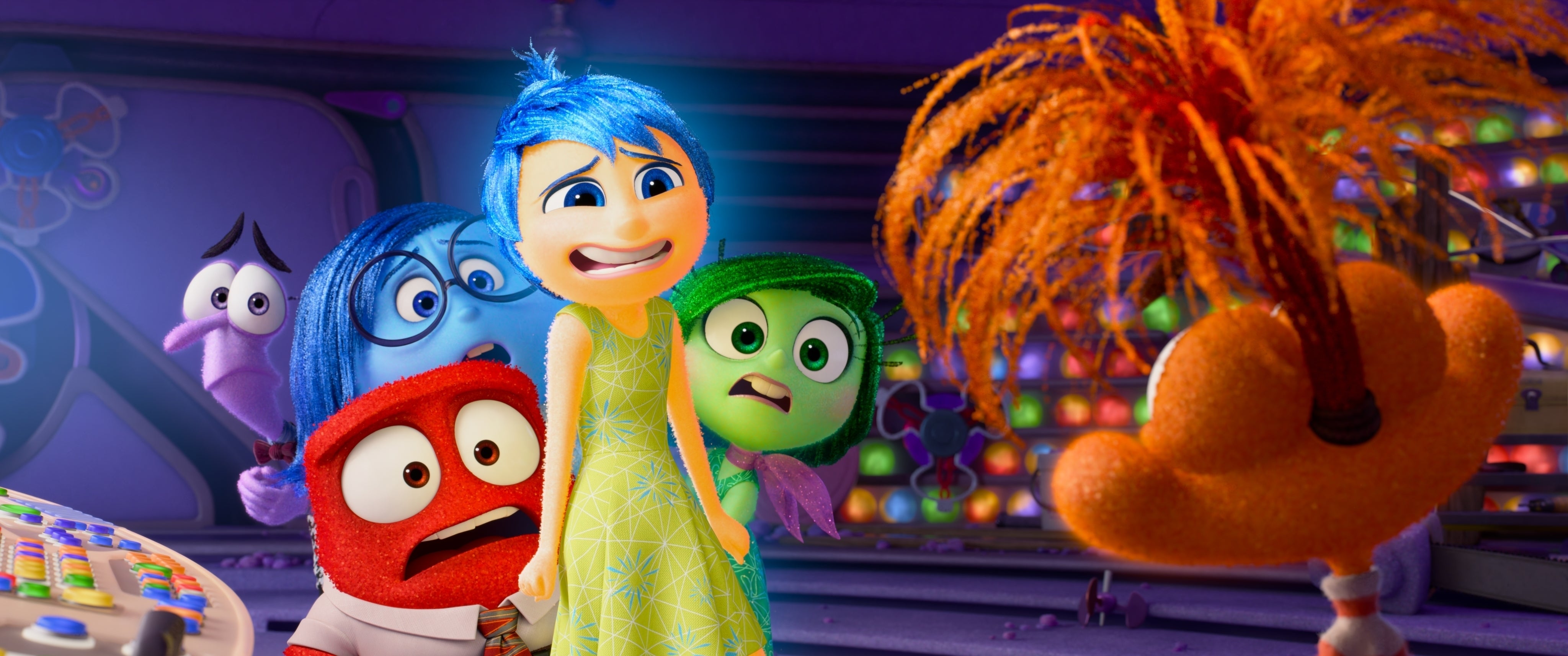
The new movie takes us back into the mind of a now 13-year-old Riley and the mission control centre of emotions inside her head.

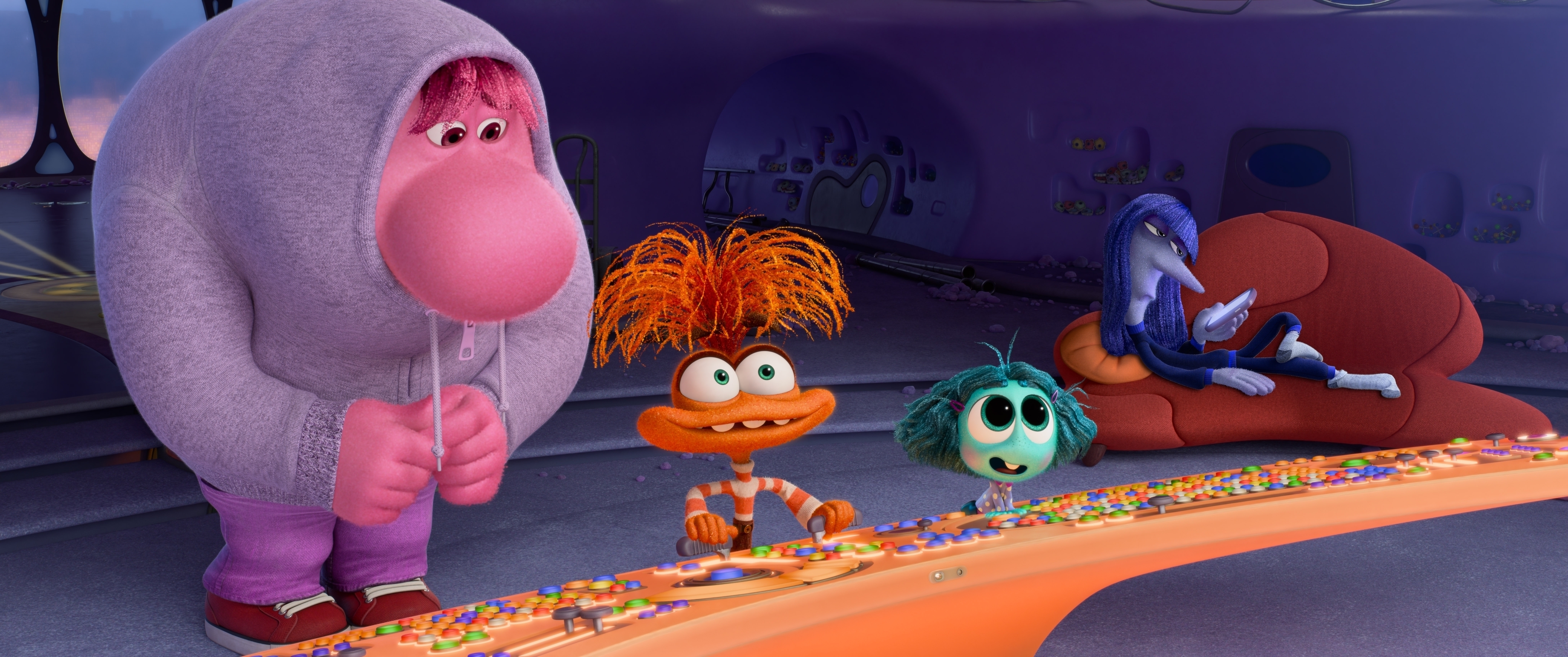
However, this time around, there’s a whole host of new feelings added into the mix, thanks to the help of a stellar expanded cast, including The Bear’s Ayo Edebiri as Envy, Stranger Things’ Maya Hawke as Anxiety and Passages’ Adèle Exarchopoulos as Ennui.

The first reviews for Inside Out 2 have been hugely positive, praising the sequel for living up to the magic of the first film. That being said, others have said that it’s missing a certain spark that made the original so popular.

Here’s a sample of what critics have had to say so far…

“Inside Out 2 glimmers with diamond-hard truths about the complex business of being a human being – especially a teenage human being – but it’s still a fast-paced and playful comedy adventure with even more jokes and more puns than Inside Out.”

“Through this decade so far, Pixar’s films have held great ideas that haven’t quite reached their full potential. This is probably its best film since Coco, and best sequel since Toy Story 3.”

“It’s a lovely sequel, without a trace of cynicism to it, that also by necessity lacks a little of the freshness and originality of 2022’s Turning Red or 2021’s Luca…What was once a lesson in the necessity of negative emotions, such as sadness, has now matured into its second stage: a bittersweet, tear-jerking reminder that we’re better, more rounded people when we embrace our flaws and insecurities.”

Inside Out 2 reintroduces us to Riley as a 13-year-old

“Wanting Inside Out 2 to match the first movie was always set to be an unlikely challenge as it was such a unique concept. What the sequel does achieve is being a worthy follow-up that expands the world with brilliant tweaks to the concept, as well as delivering witty gags that simplify big ideas.”

“New feelings propel a Pixar sequel enchanting enough to second that emotion… Inside Out 2 marks a triumphant creative return for Pixar, bringing off the thing that this studio, at its best, has done better than anyone: finding the sweet spot that merges the gaze of children and adults.”

“Pixar has been good at tackling thorny emotional terrain in an accessible, translatable-for-all-ages way since Buzz first met Woody. When Inside Out went the extra step of giving us a literalized emotional terrain and rendering everything with such a heart-rending wallop, it lifted the bar that much higher. Inside Out 2 makes good on that film’s promise by making good on its next-step premise.”

“After a period of some ups and more downs, Pixar can at least boast of following up one of their later classics respectfully. [Inside Out 2] deserves the healthy audiences it will surely stir up.”

“Delightful sequel set in turbulent early adolescence…The message of Inside Out 2 is as universal and good-hearted as that of its predecessor: You might not know from one minute to the next what emotion is driving a teenage mind, but every messy part of the mechanism has both function and beauty.”

Inside Out 2 welcomes new emotions into the fold

“There are some laughs, but it sees the teen transition in terms of a moral crisis, of abandoning and then reclaiming the niceness of childhood innocence; it’s a little bit convoluted and repetitive and, in its sanitised, Disneyfied way, this film can’t quite bring itself to mention the most important new teen emotion of all. Have the grown-ups in charge of this film really forgotten?”

IGN (7/10)

“While its chaotic new cast serves a clear purpose, Inside Out 2 is more metaphor than meaning. It explains plenty about the confusing emotions associated with puberty, often in intelligent ways, but it rarely lets them be felt or experienced, the way its predecessor did.”

“Pixar’s talky, uneventful sequel doesn’t have much fun in mind… Battle-weary parents of surly teens will have some fun here and there, especially when Ennui’s blasé influence opens up a ‘sar-chasm’ in Riley’s brain that makes everything sound, well, sarcastic. But, when all’s said and done, the stakes are so minor, it’s hard to imagine anyone will leave this desperate to see an Inside Out 3.”

“All brains and no heart, this disappointing sequel proves Pixar learned all the wrong lessons from its pandemic years… Pixar’s obsession with universal relatability results in another movie that feels more like a corporate spreadsheet than a glimpse into a real person’s brain.”

Inside Out 2 comes to UK cinemas on Friday 14 June.

Share Button

England’s hospital waiting lists rise to 7.57m

Jump in England comes after ministers claimed the NHS backlog had started to come down.

Share Button

Warning over habitual delays for cancer treatment

A survey found the number of cancer centres experiencing severe delays had almost doubled in a year.

Share Button

Pacific coast gray whales have gotten 13% shorter in the past 20-30 years, Oregon State study finds

Gray whales that spend their summers feeding in the shallow waters off the Pacific Northwest coast have undergone a significant decline in body length since around the year 2000, a new Oregon State University study found.

The smaller size could have major consequences for the health and reproductive success of the affected whales, and also raises alarm bells about the state of the food web in which they coexist, researchers say.

“This could be an early warning sign that the abundance of this population is starting to decline, or is not healthy,” said K.C. Bierlich, co-author on the study and an assistant professor at OSU’s Marine Mammal Institute in Newport. “And whales are considered ecosystem sentinels, so if the whale population isn’t doing well, that might say a lot about the environment itself.”

The study, published in Global Change Biology, looked at the Pacific Coast Feeding Group (PCFG), a small subset of about 200 gray whales within the larger Eastern North Pacific (ENP) population of around 14,500. This subgroup stays closer to shore along the Oregon coast, feeding in shallower, warmer waters than the Arctic seas where the bulk of the gray whale population spends most of the year.

Recent studies from OSU have shown that whales in this subgroup are smaller and in overall worse body condition than their ENP counterparts. The current study reveals that they’ve been getting smaller in recent decades.

The Marine Mammal Institute’s Geospatial Ecology of Marine Megafauna (GEMM) Lab has been studying this subgroup of gray whales since 2016, including flying drones over the whales to measure their size. Using images from 2016-2022 of 130 individual whales with known or estimated age, researchers determined that a full-grown gray whale born in 2020 is expected to reach an adult body length that is 1.65 meters (about 5 feet, 5 inches) shorter than a gray whale born prior to 2000. For PCFG gray whales that grow to be 38-41 feet long at full maturity, that accounts for a loss of more than 13% of their total length.

If the same trend were to happen in humans, that would be like the height of the average American woman shrinking from 5 feet, 4 inches to 4 feet, 8 inches tall over the course of 20 years.

“In general, size is critical for animals,” said Enrico Pirotta, lead author on the study and a researcher at the University of St. Andrews in Scotland. “It affects their behavior, their physiology, their life history, and it has cascading effects for the animals and for the community they’re a part of.”

Whale calves that are smaller at weaning age may be unable to cope with the uncertainty that comes with being newly independent, which can affect survival rates, Pirotta said.

For adult gray whales, one of the biggest concerns is reproductive success.

“With them being smaller, there are questions of how effectively these PCFG gray whales can store and allocate energy toward growing and maintaining their health. Importantly, are they able to put enough energy toward reproduction and keep the population growing?” Bierlich said.

Scarring on PCFG whales from boat strikes and fishing gear entanglement also makes the team concerned that smaller body size with lower energy reserves may make the whales less resilient to injuries.

The study also examined the patterns of the ocean environment that likely regulate food availability for these gray whales off the Pacific coast by tracking cycles of “upwelling” and “relaxation” in the ocean. Upwelling sweeps nutrients from deeper to shallower regions, while relaxation periods then allow those nutrients to remain in shallower areas where light allows for growth of plankton and other tiny organisms, including the prey of gray whales.

“Without a balance between upwelling and relaxation, the ecosystem may not be able to produce enough prey to support the large size of these gray whales,” said co-author Leigh Torres, associate professor and director of the GEMM Lab at OSU.

The data show that whale size declined concurrently with changes in the balance between upwelling and relaxation, Pirotta said.

“We haven’t looked specifically at how climate change is affecting these patterns, but in general we know that climate change is affecting the oceanography of the Northeast Pacific through changes in wind patterns and water temperature,” he said. “And these factors and others affect the dynamics of upwelling and relaxation in the area.”

Now that they know the PCFG gray whales’ body size is declining, researchers say they have a lot of new questions about downstream consequences of that decline and the factors that could be contributing to it.

“We’re heading into our ninth field season studying this PCFG subgroup,” Bierlich said. “This is a powerful dataset that allows us to detect changes in body condition each year, so now we’re examining the environmental drivers of those changes.”

The other co-authors on the paper were Lisa Hildebrand, Clara Bird and Alejandro Ajó at OSU and Leslie New at Ursinus College in Pennsylvania.

Share Button

Western agricultural communities need water conservation strategies to adapt to future shortages

The Western U.S. is heavily reliant on mountain snowpacks and their gradual melt for water storage and supply, and climate change is expected to upend the reliability of this natural process. Many agricultural communities in this part of the country are examining ways to adapt to a future with less water, and new research shows that a focus on supplementing water supply by expanding reservoir capacity won’t be enough to avert future water crises.

Led by scientists at the Desert Research Institute (DRI), the study published June 11 in Earth’s Future. By identifying agricultural communities considered at-risk from looming changes in snowfall and snowmelt patterns, the researchers found that water conservation measures like changes in crop type and extent were more stable adaptive strategies than changes to reservoir capacity. By the end of the century, many areas could have less than half the water they have historically relied on to refill their reservoirs, but changing the types and extent of their crops could help by restoring an average of about 20% of reservoir capacity.

The research team included scientists with the diversity of expertise needed to capture the complexities of water systems while balancing concerns for locally focused adaptation. Beatrice Gordon, lead author of the study and sociohydrologist and postdoctoral researcher at DRI, says the research is needed to inform water management at the local level, where most decisions are made. Gordon herself grew up on a ranch in Wyoming, where she learned firsthand the challenges that face water-insecure communities — an experience that helped lead to her research focus on agriculture and water in the Western U.S.

“A lot of decisions about water are made at the local level, but there’s this big disconnect between that reality and the macro-scale level of most research on this topic,” Gordon says. “We really wanted to understand what the future could look like at the scale that most communities manage their water resources. What are the levers that folks in these communities have when it comes to a future with less snow?”

Mountain snowpacks have historically acted as nature’s water towers across much of the region by storing winter precipitation and releasing it downstream during drier months. Water management systems were designed with this process in mind, but climate change is altering snowmelt patterns in ways that will make it difficult for existing systems to meet the needs of downstream water users. As the world’s largest user of freshwater, irrigated agriculture is at particularly high risk from these changes.

Strategies for addressing water shortages that focus on augmenting supply include expanding reservoirs and replenishing groundwater with surplus water, but these approaches become less effective as the timing and availability of precipitation become more unpredictable. In contrast, water conservation strategies such as reducing total crop acreage, periodic crop fallowing, and shifting toward higher value crops can help manage these risks.

To find out how risk management practices could work on a community-level scale, the researchers built a comprehensive risk assessment framework based on guidance from the Intergovernmental Panel on Climate Change (IPCC). For each of 13 communities, they gathered historical data on irrigation water supply, agricultural water demand, snow storage and snowmelt patterns, and more. They then used projections for the future climate through 2100 to understand how supply and demand dynamics may change in the near future.

“We gathered all these data together and looked at the picture of risk, and then also the ways that adaptation could reduce risk,” Gordon says. “Our goal was really to make this as relevant as possible for the people who are actually making decisions on the ground.”

“Dr. Gordon assembled a very impressive and unprecedented dataset for this paper linking agricultural water supply and demand across the Western United States,” says study co-author Gabrielle Boisramé, assistant research professor at DRI.

The Western agricultural communities the researchers selected are located in headwaters areas, making them both subject to significant changes in future climate and sentinels for the future of the West. Several of them are located in the Upper Colorado River Basin, which feeds into the main stem of the river — a water system that supports more than 40 million people.

“A lot of these areas are providing downstream water to other communities,” Gordon says. “So, if they have an increase in demand and a decrease in supply, it impacts not only that area, but also the areas that rely on that water downstream.”

The study results show that there will be a stark decline in how much many of these communities will be able to refill their reservoirs in just a few decades, with some seeing declines to about half of the water they were historically able to store. A drop that significant is particularly acute in many of the smaller reservoirs that can only hold about a year’s worth of water.

“It shows how important it is to dedicate effort — now, not in 20 to 50 years — to figuring out how we, as scientists, can provide better information about water conservation,” Gordon says. “And I think that there’s an opportunity to really think about how we support communities in these efforts, especially small communities in headwaters regions that might be fully dependent on agriculture.”

“Our results indicate the importance of water conservation as an adaptive strategy in a warmer future with less snow,” she continues. “And that’s broadly true across a lot of different places in the Western U.S.”

Share Button

Does having a child with low birth weight increase a person’s risk of dementia?

People who give birth to infants less than 5.5 pounds may be more likely to have memory and thinking problems later in life than people who give birth to infants who do not have a low birth weight, according to a study published in the June 12, 2024, online issue of Neurology®, the medical journal of the American Academy of Neurology. The effect on memory and thinking skills was equivalent to one to two years of aging for those with low-birth-weight deliveries.

The study does not prove that delivery of a low-birth-weight infant causes memory and thinking problems. It only shows an association.

“Previous research has shown that people who have had a low-birth-weight delivery have a higher risk of cardiovascular disease and high blood pressure,” said study author Diana C. Soria-Contreras, PhD, of the Harvard T.H. Chan School of Public Health in Boston, Massachusetts. “Our study found that a history of having a child with a low birth weight may also be a marker of poorer cognition later in life.”

The study involved 15,323 female participants with an average age of 62 at completion of thinking and memory tests. All the participants had at least one birth. Of the total participants, 1,224 people, or 8%, had a history of low-birth-weight delivery. Low birth weight was defined as less than 5.5 pounds for pregnancies lasting more than 20 weeks.

Participants completed a questionnaire about their pregnancy complications, birth outcomes, birth weight and other information.

They also completed a series of thinking and memory tests.

Researchers then combined average scores of the two tests of participants’ memory and ability to quickly and accurately respond to a situation as well as the two tests of learning and working memory. Higher scores indicated better memory and thinking. On average, the difference in scores between those with and without a low-birth-weight delivery was -0.06 for speed and attention tests and -0.05 for learning and working memory. This is comparable to the difference associated with one to two additional years of age in this population.

The results were similar after researchers adjusted for factors that could affect both birth weight and cognitive function, such as age, smoking status and high blood pressure. The results were also similar when researchers did not include people with premature deliveries, pregnancies with twins or other multiples or those affected by pregnancy-related high blood pressure disorders.

In addition, they found that the more low-birth-weight deliveries people had, the lower their scores were.

“Future research is needed to confirm our findings and to look at whether screening women with a history of low-birth-weight deliveries for cognitive issues and taking steps to promote their brain health could help prevent or delay cognitive impairment and dementia later on,” Soria-Contreras said.

A limitation of the study is that most of the participants were non-Hispanic white people, so results may not be generalizable to other populations.

The study was supported by the National Institute of Mental Health, the National Institute of Environmental Health Sciences, the National Institute on Aging and the Office of Research on Women’s Health.

Share Button

£8m Longitude Prize won for tackling superbug rise

The winning test rapidly detects whether bacteria are causing an infection and identifies the best antibiotics.

Share Button

Putin Makes Rare Admission That Life Is ‘Not Easy’ For Russians Right Now

Vladimir Putin has just acknowledged life in Russia is “not easy” right now – although he dodged any explanation as to why.

Speaking on the national holiday of Russia Day, the president tried to convey a message of unity amid these times of difficulty.

According to state news agency TASS, Putin said: “At the time that is not easy for our country, we are again united by patriotism and responsibility for the fate of the Motherland.

“They serve as a reliable bedrock for the participants in the special military operation.”

This is the phrase the Kremlin has repeatedly used to refer to Russia’s invasion of Ukraine.

Putin has only used the word “war” in public on a handful of occasions since he ordered his troops into Ukraine more than two years ago.

As he continued to speak in these indirect phrases, Putin said: “It is possible to solve the major tasks our country is facing only together, only in a concerted way.”

This call for unity comes as small groups of protesters are starting to push back against the war.

Women are calling on Putin to return their loved ones from the frontline after they were forced to serve in the 2022 partial mobilisation.

Putin also claimed that, on Russia Day, the public should show “reverence” to the country’s “centuries-long history”.

He added: “I therefore consider necessary, historically proper to celebrate the Russia Day as the symbol of continuity of the millennia-old way of our Fatherland.”

Russia Day, first celebrated more than three decades ago after the fall of the Soviet Union, was meant to signal a new chapter for the country – and to stop the public looking back at its past.

And, earlier this week, the president bizarrely revealed that he had deliberately chosen not to take the controversial flag of the Russian Empire of a building down.

He said: “Everything happens for a reason. This is it. No need to look for any underlying connotations, for any sort of imperial ambitions in this regard. There are none.”

Meanwhile, Russia’s former president and Putin’s close ally Dmitry Medvedev posted a provocative video on social media to mark the national occasion.

It showed the Russian flag unfurling over the whole of the country – and Ukraine, suggesting they were completely one.

Share Button