This Underrated Italian City Is A Dream Destination For Cheese Lovers

With a last name like Bologna, I suppose I shouldn’t be surprised that I am one of many Italian Americans who love travelling to “Il Bel Paese”. Italy is by far my most-visited destination outside the United States, and I’ve been fortunate to spend time in eight of the country’s 20 regions.

Although delicious foods are available in abundance across Italy, I recently explored an area that should probably be high up on cheese lovers’ travel bucket lists: Parma.

As you might’ve deduced, Parma – along with its neighbour Reggio Emilia – is the namesake of the beloved hard cheese, Parmigiano Reggiano.

The so-called “king of cheeses” can, in fact, only be legally produced under that name in those two provinces, plus Modena, Mantova and Bologna.

The Parmigiano Reggiano moment

It’s no secret that Parmigiano Reggiano is having a moment, finding its way into headlines (and bellies) around the world. This past November, news broke that United Talent Agency had signed the Parmigiano Reggiano Consortium to help place the cheese in movies and shows and raise awareness about these official products.

That came just two months after the governing body for the Italian cheese announced a strategic partnership with the New York Jets football team – an initiative that included stadium concession offerings, video segments and more.

Around the 2024 Paris Olympics, Parmigiano Reggiano also made waves as fans of Italian gymnast Giorgia Villa discovered her previous sponsorship deal with the consortiumcomplete with amazing photos of the athlete posing with big wheels of cheese. (Whether we’ll be seeing more cheese-y sponsorships at the upcoming Milan-Cortina Olympics remains to be seen, but given the host location and the consortium’s PR push, the synergy feels almost inevitable.)
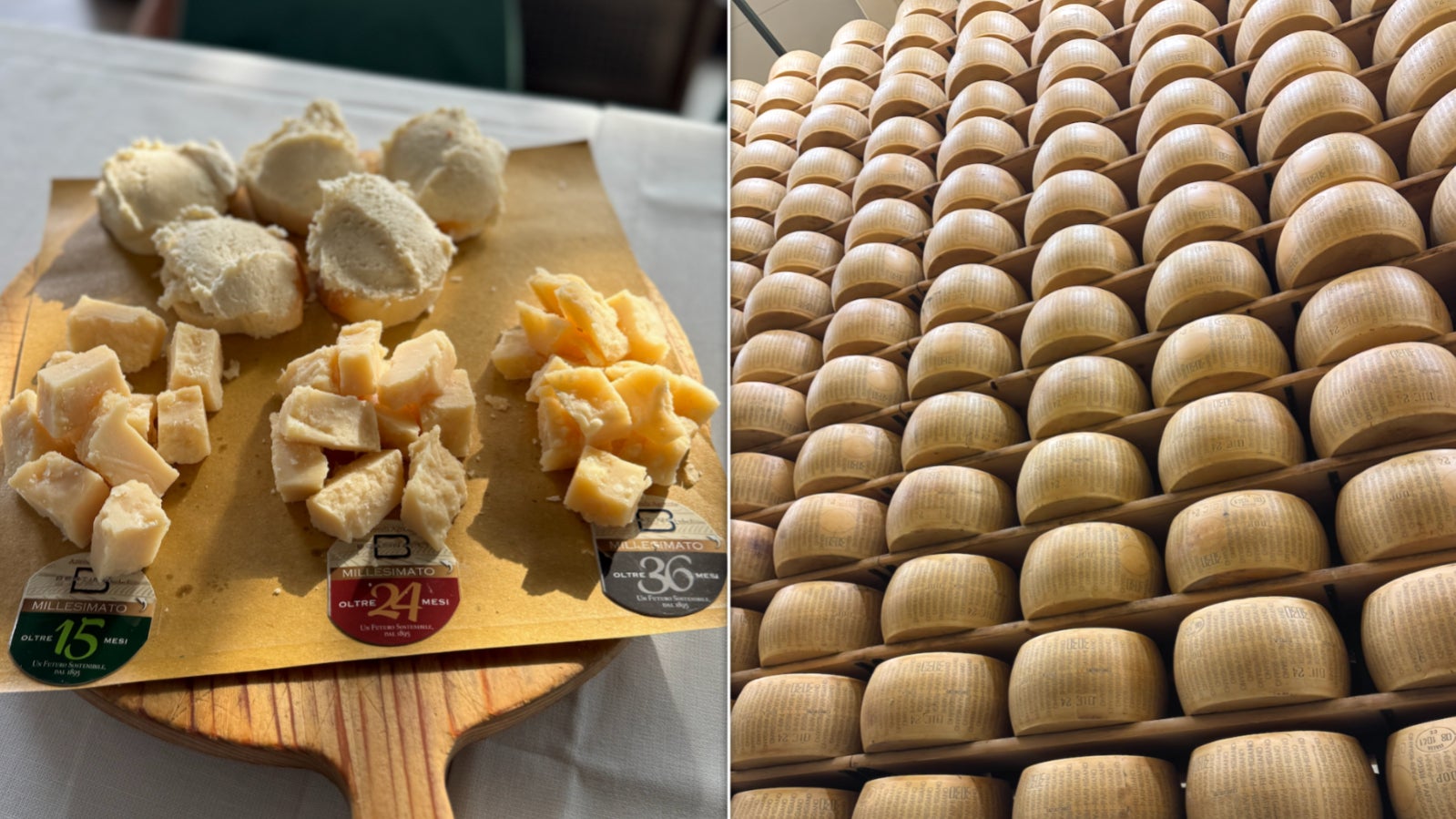
My visit to Parma included a stop at Azienda Agricola Bertinelli, a family-owned dairy that offers Parmigiano Reggiano tastings and tours to educate visitors about the production process behind this highly regulated cheese.

Caroline Bologna/HuffPost

My visit to Parma included a stop at Azienda Agricola Bertinelli, a family-owned dairy that offers Parmigiano Reggiano tastings and tours to educate visitors about the production process behind this highly regulated cheese.

With protein’s dominance in our culture, the cheese is getting extra attention for its naturally high protein content. Italian scientists have published studies highlighting the health benefits of authentic Parmigiano Reggiano.

And then there are the seemingly endless social media videos of mouthwatering pasta prepared in hollowed-out wheels of Parmigiano Reggiano tableside at restaurants and in home kitchens. The Italian brainrot trend naturally featured a “Parmigiano” character as well.

I was pumped to visit the home of the king of cheeses in Parma, a lovely province and city in Italy’s Emilia-Romagna region.

Despite its world-famous food exports, Parma still flies under the radar compared to flashier Italian destinations that dominate most itineraries, like Florence, Rome and Venice. And as it turns out, there’s plenty to do there beyond stuffing your face with dairy goodness.

What to eat in Parma

Reaching Parma is fairly easy. You can drive from Milan in less than two hours or take the train from many destinations around Italy, including Milan, Bologna, Florence, Venice and more. The train station was a breezy stroll to the centre of the action and the whole city felt very walkable.

As the first Italian destination to earn UNESCO’s “City of Gastronomy” title, Parma is unsurprisingly filled with excellent eateries. I had great multi-course meals at Cortex and Croce di Malta, wine and snacks at Tra L’uss e L’asa and Tabarro, and sandwiches at Pepen and Bel Grano Focaccia.

Other restaurants recommended by locals in town included Osteria del 36, Ombre Rosse, Ristorante Cocchi, Trattoria Corrieri and Trattoria del Tribunale.
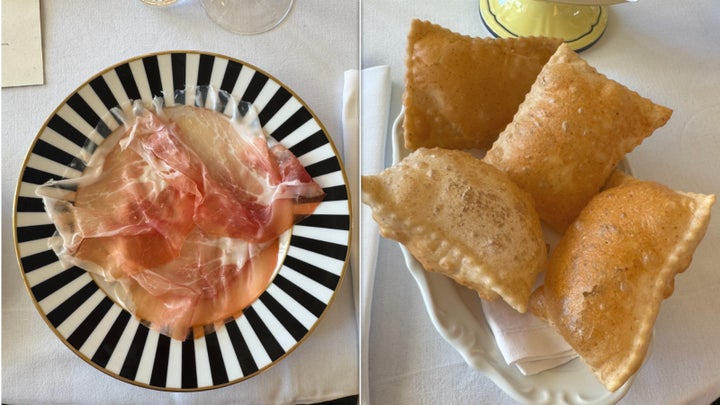
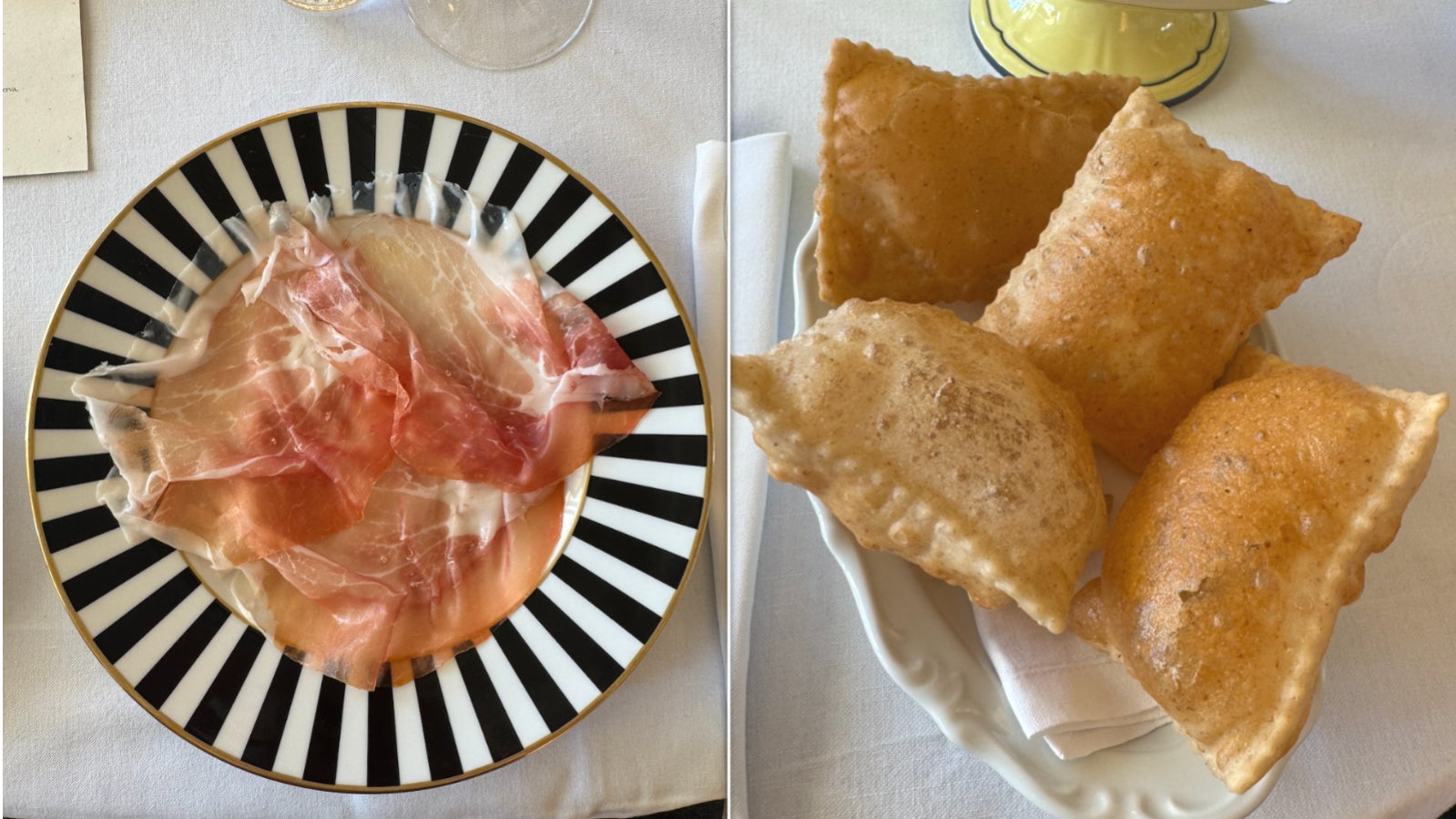
Cured meat and torta fritta are local staples.

Caroline Bologna/HuffPost

Cured meat and torta fritta are local staples.

In the broader province of Parma, I dined at Trattoria Antichi Sapori, Al Vedel and Trattoria Ai Due Platani. But the most exciting stop was Azienda Agricola Bertinelli, a family-owned dairy that offers Parmigiano Reggiano tastings and tours to educate visitors about the production process behind this highly regulated cheese.

Indeed, authentic Parmigiano Reggiano can only be made using three ingredients: raw cow’s milk, salt and rennet. Each wheel is aged for a minimum of 12 months, with most varieties on the market aged between 24 and 36 months.

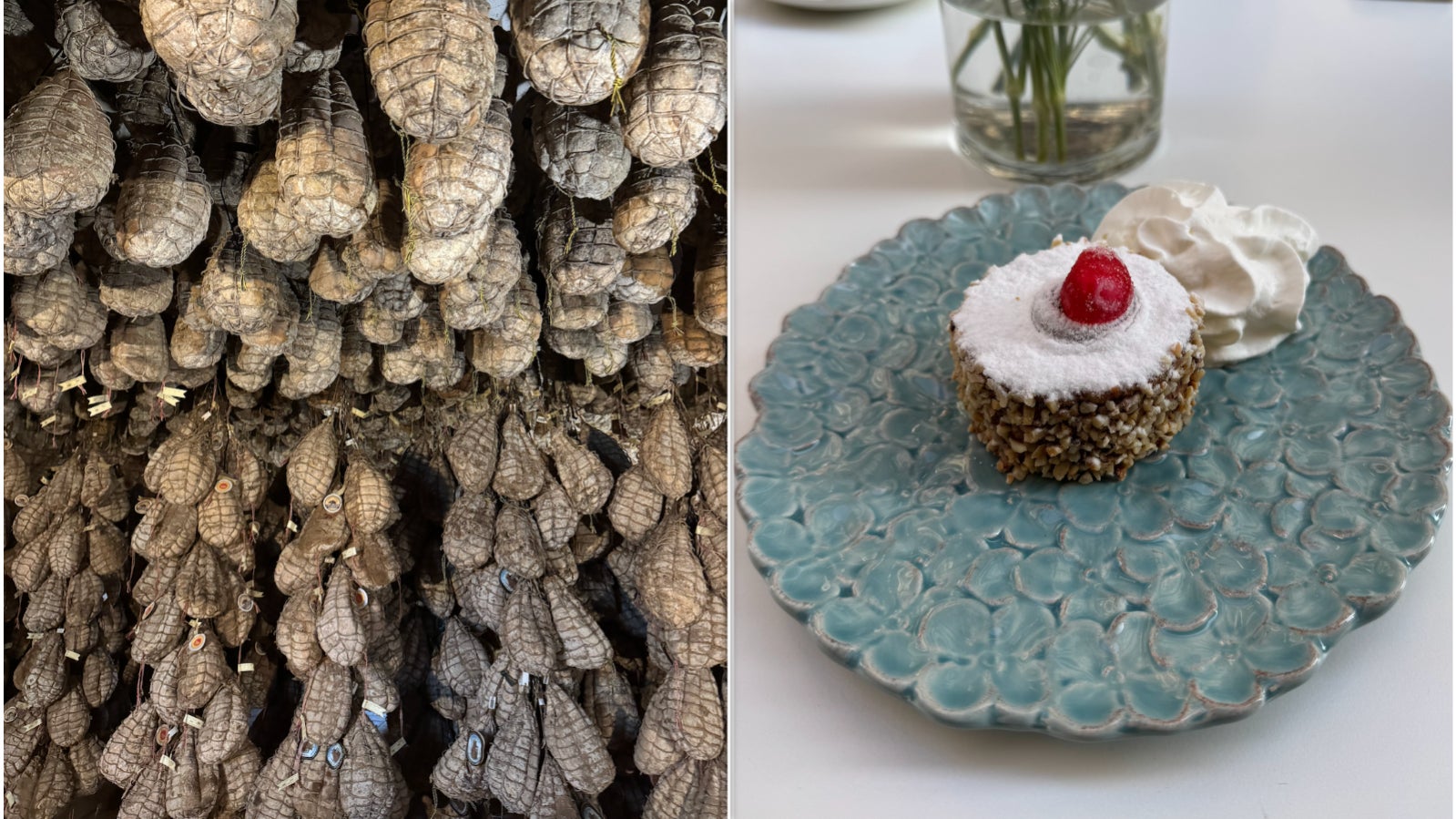
Beyond the cheese, Parma’s rich food culture also centres on the iconic Prosciutto di Parma and highly-prized Culatello di Zibello, aka the “king of salumi” – a rare cured meat that’s aged in a pig’s bladder. Cold cuts in the province are often served with torta fritta, a puffy fried dough.
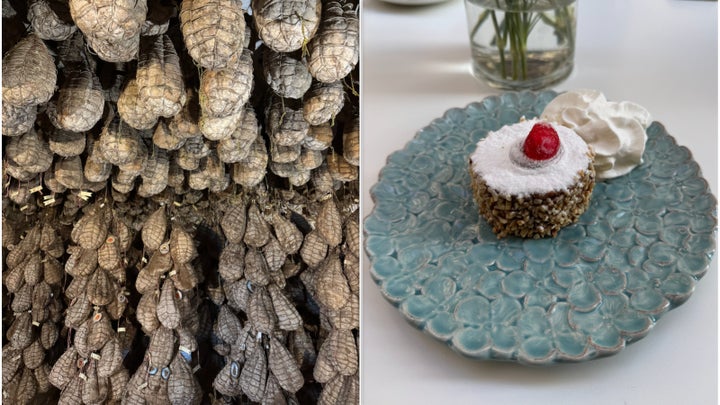
I had the chance to try Culatello di Zibello and “Duchess of Parma” cake.

Caroline Bologna/HuffPost

I had the chance to try Culatello di Zibello and “Duchess of Parma” cake.

Local restaurants tend to offer tortelli d’erbetta (pasta stuffed with cheese and greens), anolini in brodo (beef-filled pasta in broth) and a minced horse meat delicacy known as caval pist.

Other highlights of a Parma trip

Although my Parma visit understandably centred around food, I also took some time to explore the history of the city and province in between meals.

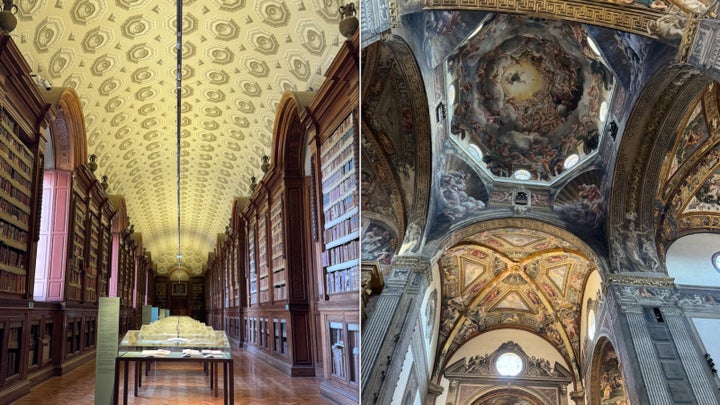
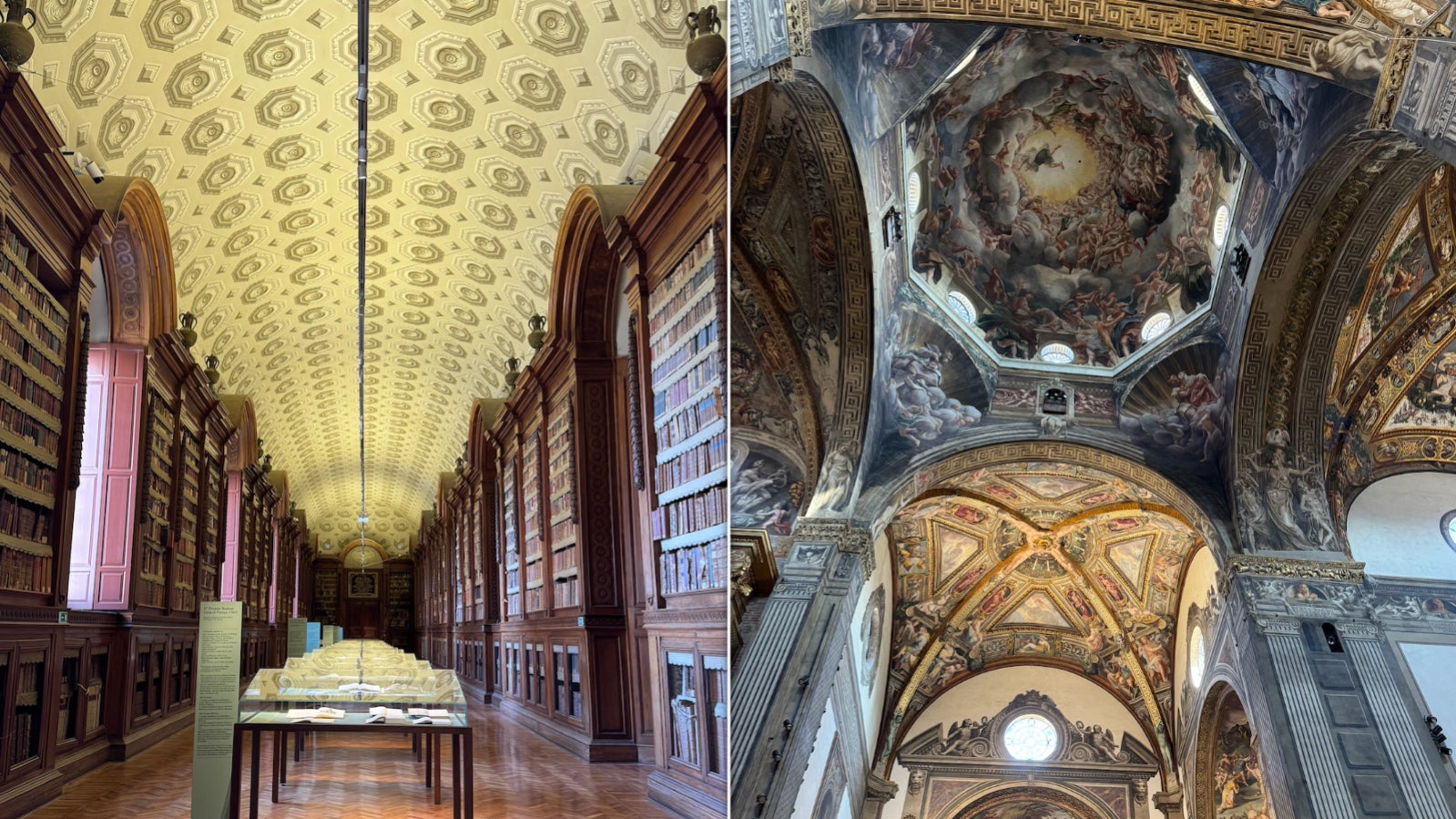
The Palazzo della Pilotta complex houses multiple interesting museums and sites, including the National Gallery of Parma, the National Archaeological Museum and the Bodoni Museum. The Palatina Library is particularly stunning, as is the wooden Farnese Theater, one of the largest baroque theatres in Europe.

Beyond food, visitors to Parma can check out sites like the Palatina Library and Parma Cathedral.

Caroline Bologna/HuffPost

Beyond food, visitors to Parma can check out sites like the Palatina Library and Parma Cathedral.

Just across the street is the Glauco Lombardi Museum, a unique museum featuring personal belongings and items related to the life and times of Napoleon’s second wife, Marie Louise, Duchess of Parma. I fittingly followed my visit with a mini “Duchess of Parma” cake at a nearby cafe called San Biagio.

The impressive Parma Cathedral and octagonal baptistery next door were also worthwhile stops on my trip. The same goes for the Correggio frescoes in the former Monastery of San Paolo.

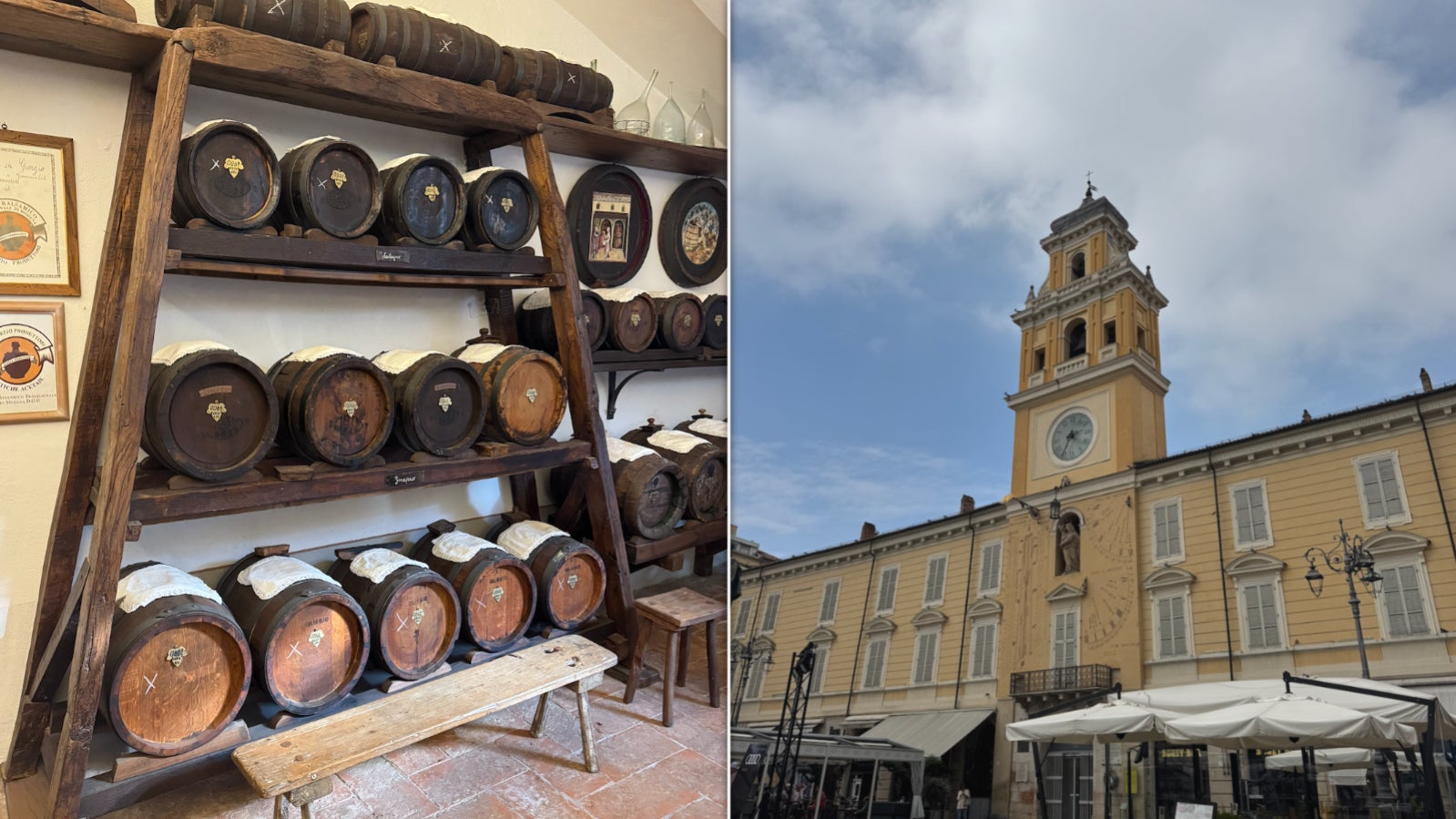
And I enjoyed strolling the Piazza Giuseppe Garibaldi and Parco Ducale in the afternoons, embracing the “slow travel” ethos and getting a real feel for the city.
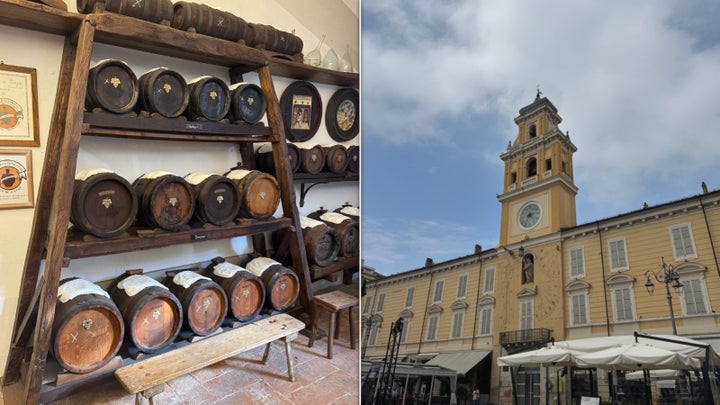
I ventured to Modena to try some authentic balsamic vinegar and then strolled around Piazza Giuseppe Garibaldi back in Parma.

Caroline Bologna/HuffPost

I ventured to Modena to try some authentic balsamic vinegar and then strolled around Piazza Giuseppe Garibaldi back in Parma.

Visitors to Parma can also add stops in other parts of the Emilia-Romagna region or plan a few easy half-day jaunts. I visited a small balsamic vinegar producer, Acetaia di Giorgio, in Modena and had lunch at the Michelin-starred Osteria del Viandante in Reggio Emilia. Many people also add in the Ferrari and Lamborghini museum experiences as well.

At a time when overtourism is straining destinations like Florence, Rome, Venice and the Amalfi Coast, travellers craving a relaxing and authentic Italian experience might want to consider adding Parma to their itineraries.

And if travel budgets are tight, a taste of real Parmigiano Reggiano at home may also help scratch the itch in the meantime.

Share Button

Forget The Amalfi Coast. This City Is Italy’s Most Underrated Destination.

Take A Break is your ultimate guide to the perfect trips to recharge, rediscover yourself and your relationships, and reengage with the world. We’ll cover shopping stops, great bars, restaurants worth your money, photo opportunities, memorable drives and experiences, and other important details you need before you book.

Year after year, Italy remains one of the most popular international destinations for American travelers. During the peak summer season, tourists from all across the United States flock to Rome, Florence, the Amalfi Coast and other Instagram hotspots.

But another amazing place in Italy that often gets overlooked is Turin. Known as Torino in Italian, the impressive city is the capital of the Piedmont region in the northwest (and was even the first capital of the unified Kingdom of Italy in the 19th century). Visitors to Turin can enjoy beautiful mountain landscapes, opulent palaces, world-class museums and more.

On the culinary side, the city boasts a vibrant restaurant scene, featuring prominently in an episode of Stanley Tucci’s food and travel show “Searching for Italy.” And as the host of the 2006 Winter Olympic Games and two World Cups, Turin has plenty to offer sports and history fans.

Despite all this cultural clout, Turin is rather overshadowed by its more famous counterparts, at least among American travellers. When I had the opportunity visit last summer, I was immediately charmed by the city’s unassuming elegance, welcoming locals and sense of tranquility, free from the endless hordes of tourists that overrun many other destinations in Italy at this time of year.

To compel more travellers to add Turin to their Italian vacation itineraries, I’ve compiled my favourite dishes, attractions and more highlights from the “Città Magica.”

Where To Stay

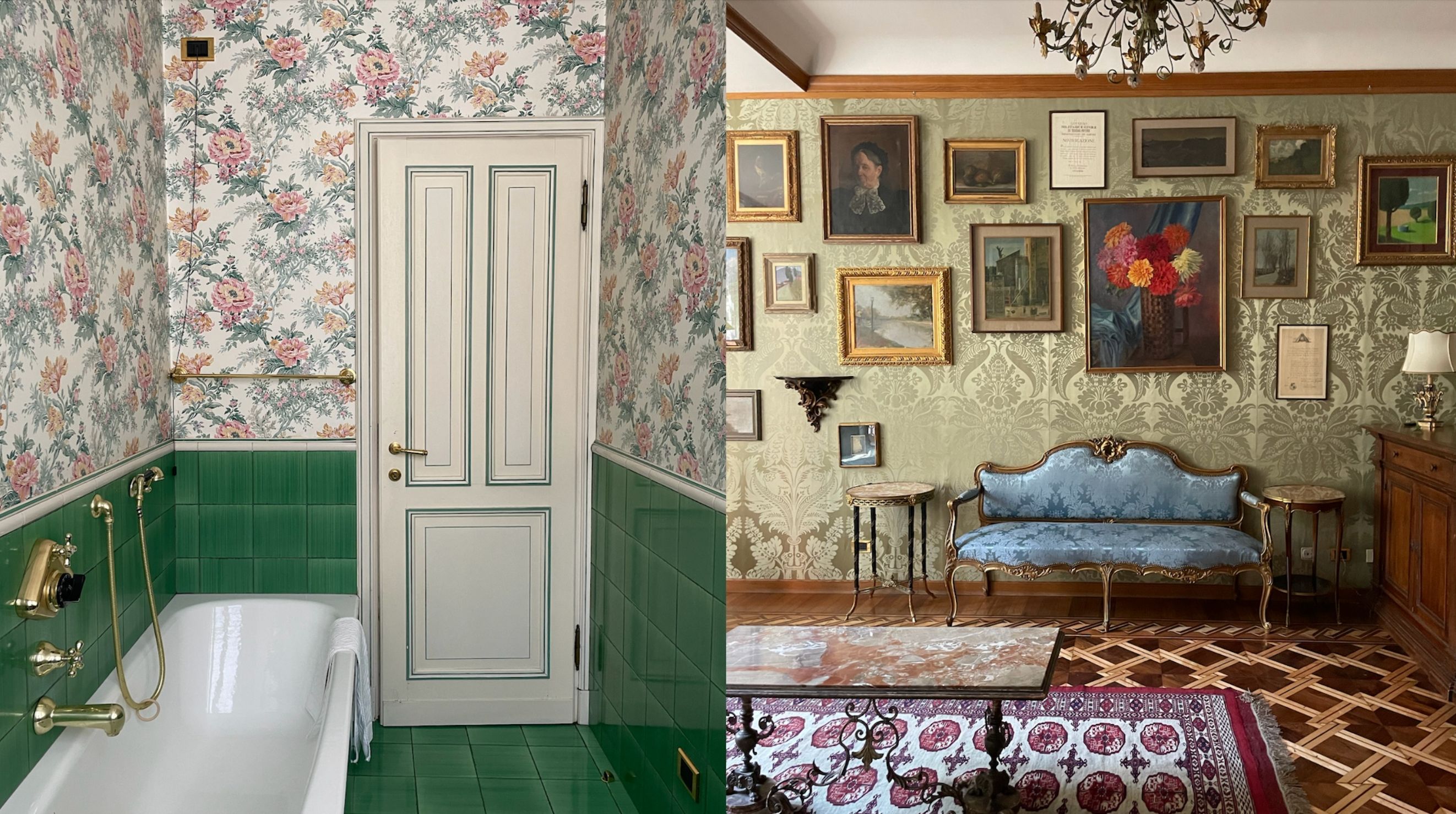
I visited Turin with a large group of friends, and we stayed at an Airbnb that felt like our own mini palazzo. Spanning three floors, the apartment was ornately decorated with lots of wallpaper, upholstered furniture, framed art and other embellishments.

Scenes from our palatial Airbnb.

Caroline Bologna/HuffPost

Scenes from our palatial Airbnb.

Those looking for a hotel experience will find plenty of options as well. The Turin Palace Hotel is in a restored building right in the city centre. The nearby Grand Hotel Sitea is a historic property with spacious rooms and a Michelin-starred restaurant.

For something with a more contemporary feel, the NH Collection Torino Piazza Carlina is also a popular option.

What To Eat

Italian food is famously delicious, but this cuisine is not a monolith by any means. So, I always aim to eat regional delicacies wherever I travel in Italy.

In Turin, my favorite Piedmontese dish was tajarin ― a rich, egg-heavy pasta typically served with truffles and butter or a local meat sauce called sugo d’arrosto. The meat-filled agnolotti pasta is another tasty specialty.

Other classic dishes to try include vegetables dipped in bagna cauda, a warm sauce made with garlic and anchovies, and crunchy breadsticks known as grissini. Although I wasn’t a massive fan, I’m glad I sampled vitello tonnato ― cold, thinly sliced veal topped with a creamy tuna sauce.

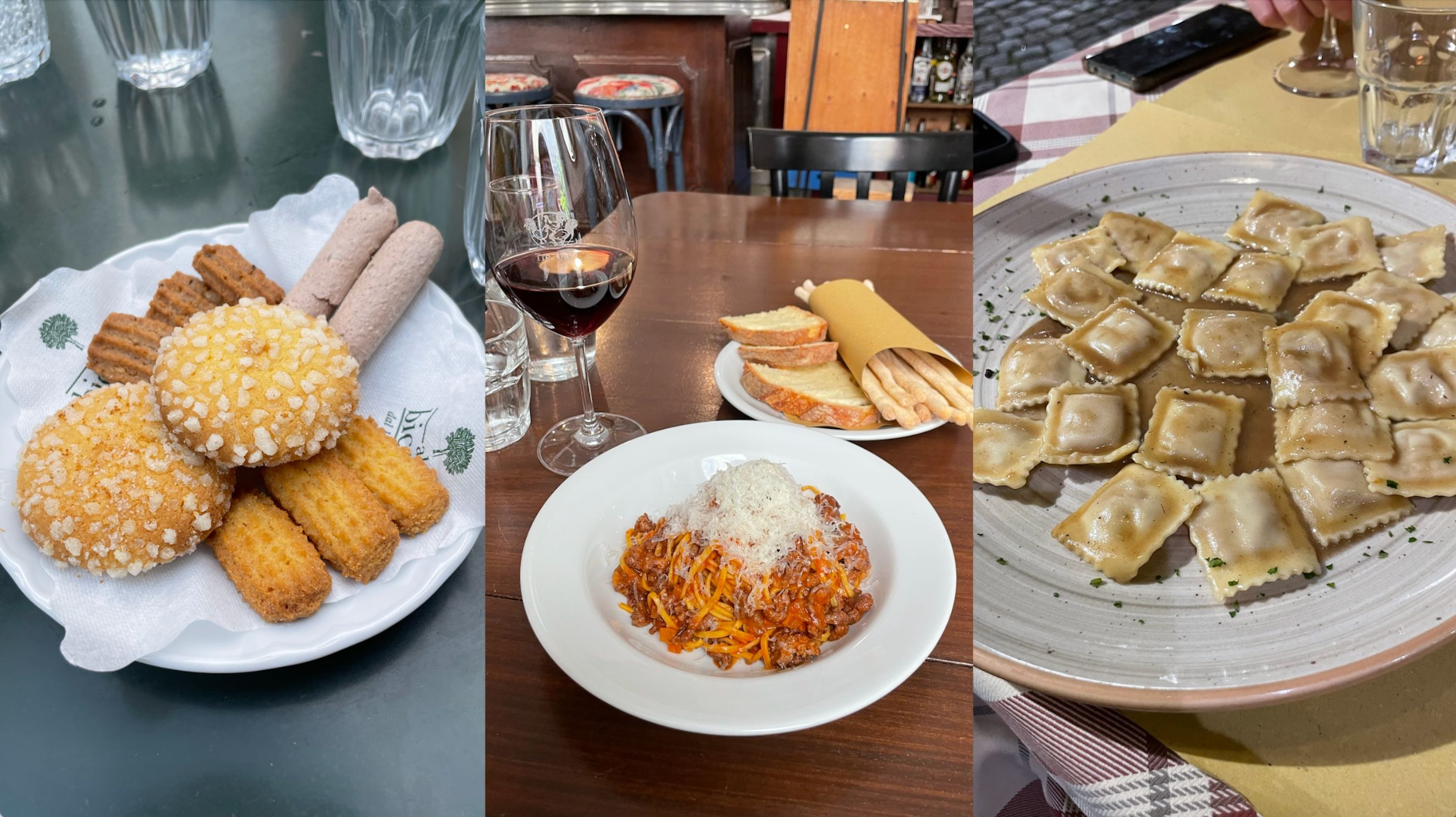
From left: assorted Piedmontese cookies, tajarin with meat sauce and agnolotti.

Twitter/Canva

From left: assorted Piedmontese cookies, tajarin with meat sauce and agnolotti.

My best meal in Turin was a lovely solo lunch at a restaurant called Tre Galli. I also enjoyed classic Torinese food at Osteria al Tagliere and L’Osto del Borgh Vej. The Mercato Centrale Torino food hall offers something for everyone, which is perfect when traveling with a group. You might also want to make time to visit the world’s very first Eataly as well.

Spazio7 and Piola da Cianci also came highly recommended, as did the historic Caffè Platti and Caffè Mulassano. And to cap off any meal with a sweet treat, look no further than Gelateria Pepino.

What To Drink

The Piedmont region is famous for its Barolo and Barbaresco wines, which pair well with many dishes or even as a key ingredient (as in brasato al Barolo or risotto al Barolo).

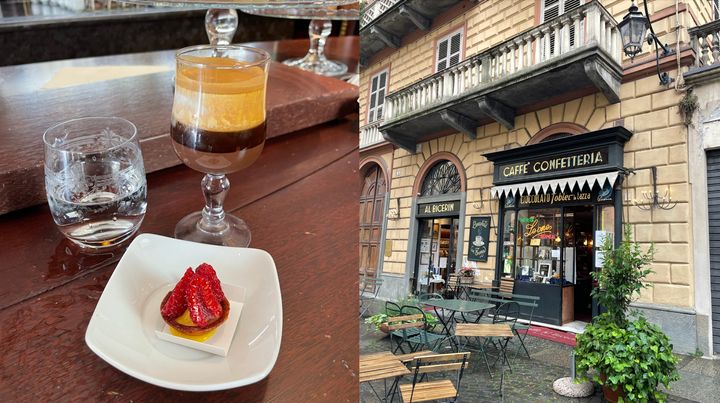
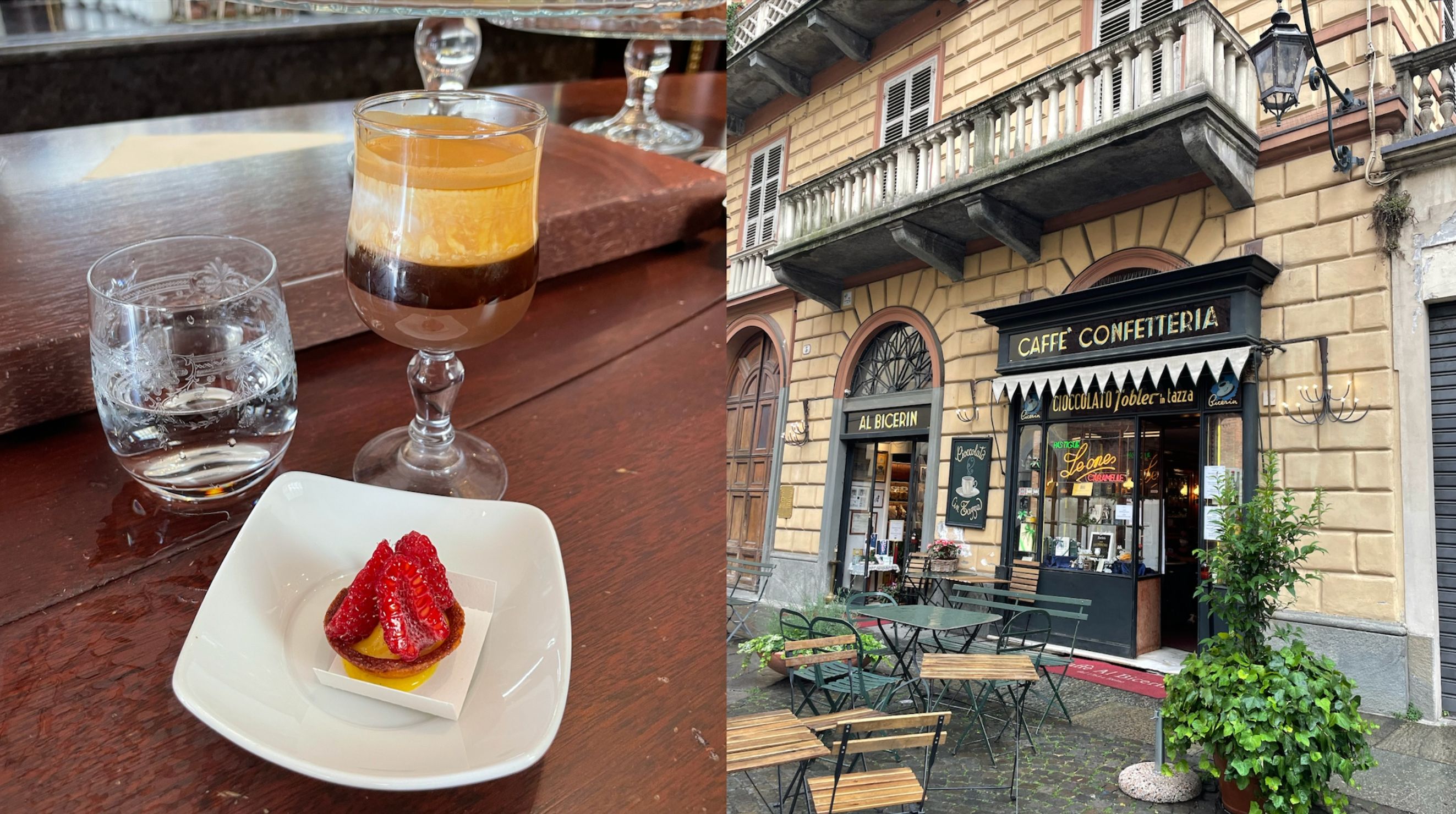
But truly no visit to Turin is complete without at least one bicerin. This decadent drink is made with coffee, chocolate and milk, perfectly layered in a way that just screams to be photographed. I’m pleased to report it also tastes amazing.

From left: A bicerin and a fruit tart at Farmacia del Cambio, and the exterior of the historic Caffè Al Bicerin.

Caroline Bologna/HuffPost

From left: A bicerin and a fruit tart at Farmacia del Cambio, and the exterior of the historic Caffè Al Bicerin.

My bicerin-tasting journey led me to delicious and picturesque establishments like Farmacia del Cambio, Caffe al Bicerin dal 1763 and Caffé Baratti & Milano.

I even tried an alcoholic version of a bicerin at Piano35 ― a lounge at the top of the Intesa Sanpaolo Skyscraper. The breathtaking views alone made it worth the visit, but the creative cocktails were an added bonus.

Casa Proseccheria was another nice spot for aperitivi, with plenty of prosecco, cocktail and snack offerings.

What To Do

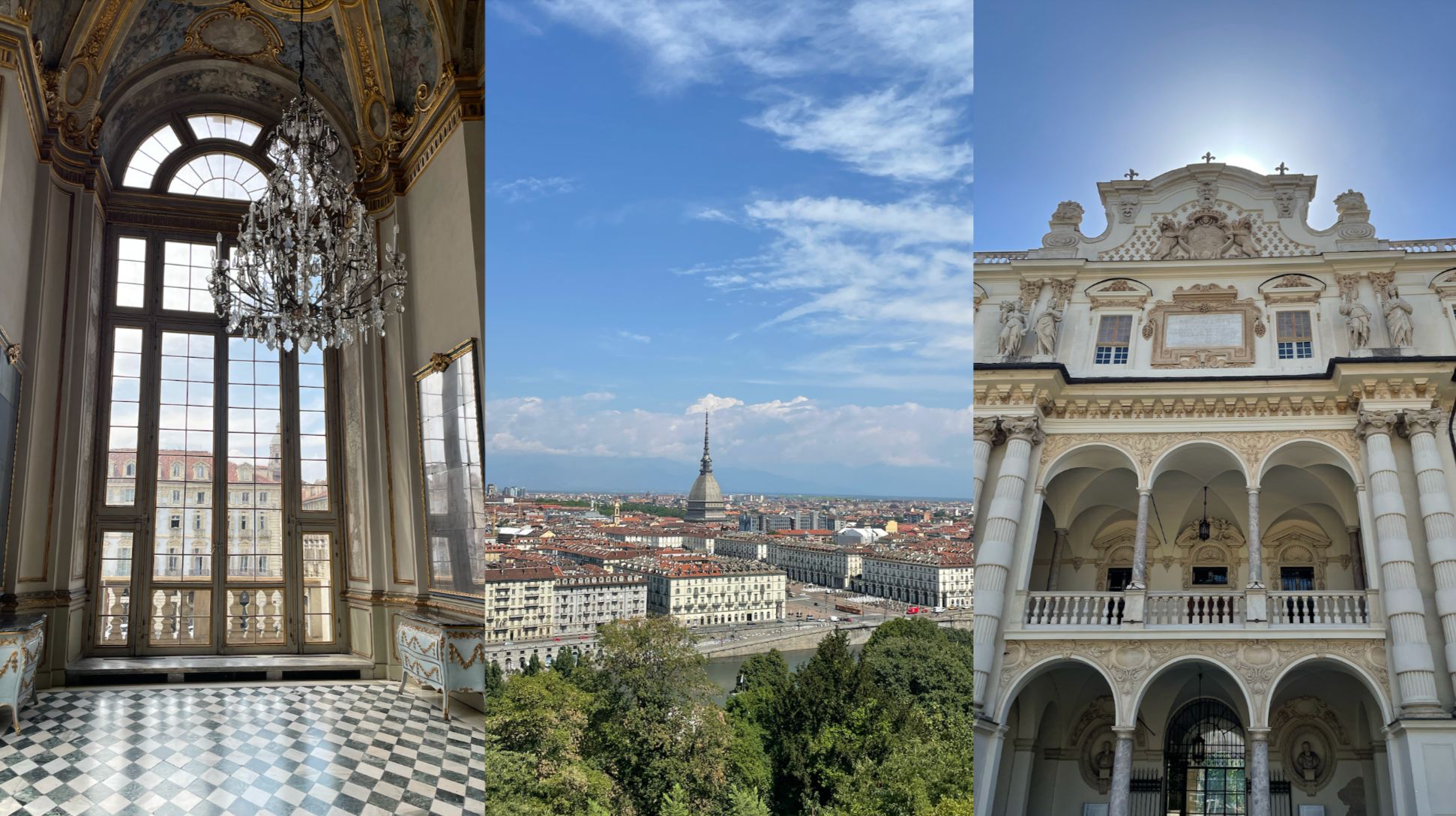
On my first morning in Turin, I began the day with a hike up to Chiesa di Santa Maria del Monte dei Cappuccini, a hilltop church with gorgeous views of the city. I later visited another church, the Baroque-style Chiesa di San Lorenzo.

For something farther afield, you can make a journey to the famous Basilica di Superga. And if you’re into royal history, you might also want to schedule a visit to La Venaria Reale ― a large palace estate just outside city and one of the area’s many UNESCO World Heritage Sites.

For a taste of grand architecture, tourists hardly need to venture beyond Turin’s city centre, however. There’s Piazza San Carlo, a stately square surrounded by Baroque buildings, and Piazza Castello, home to the majestic Palazzo Madama Torino (now an art museum). The nearby Royal Palace of Turin transports visitors back in time to the city’s regal past.

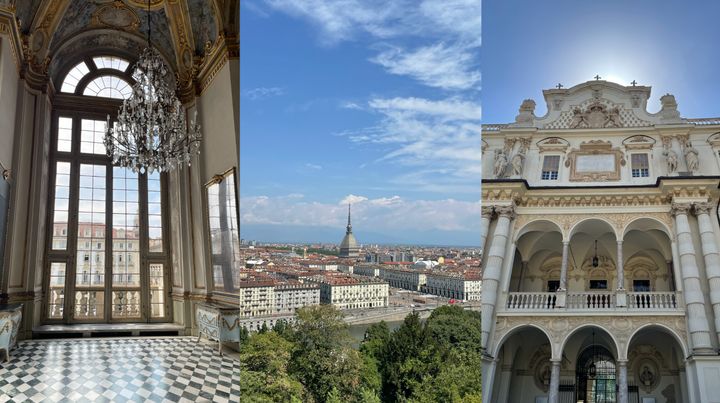
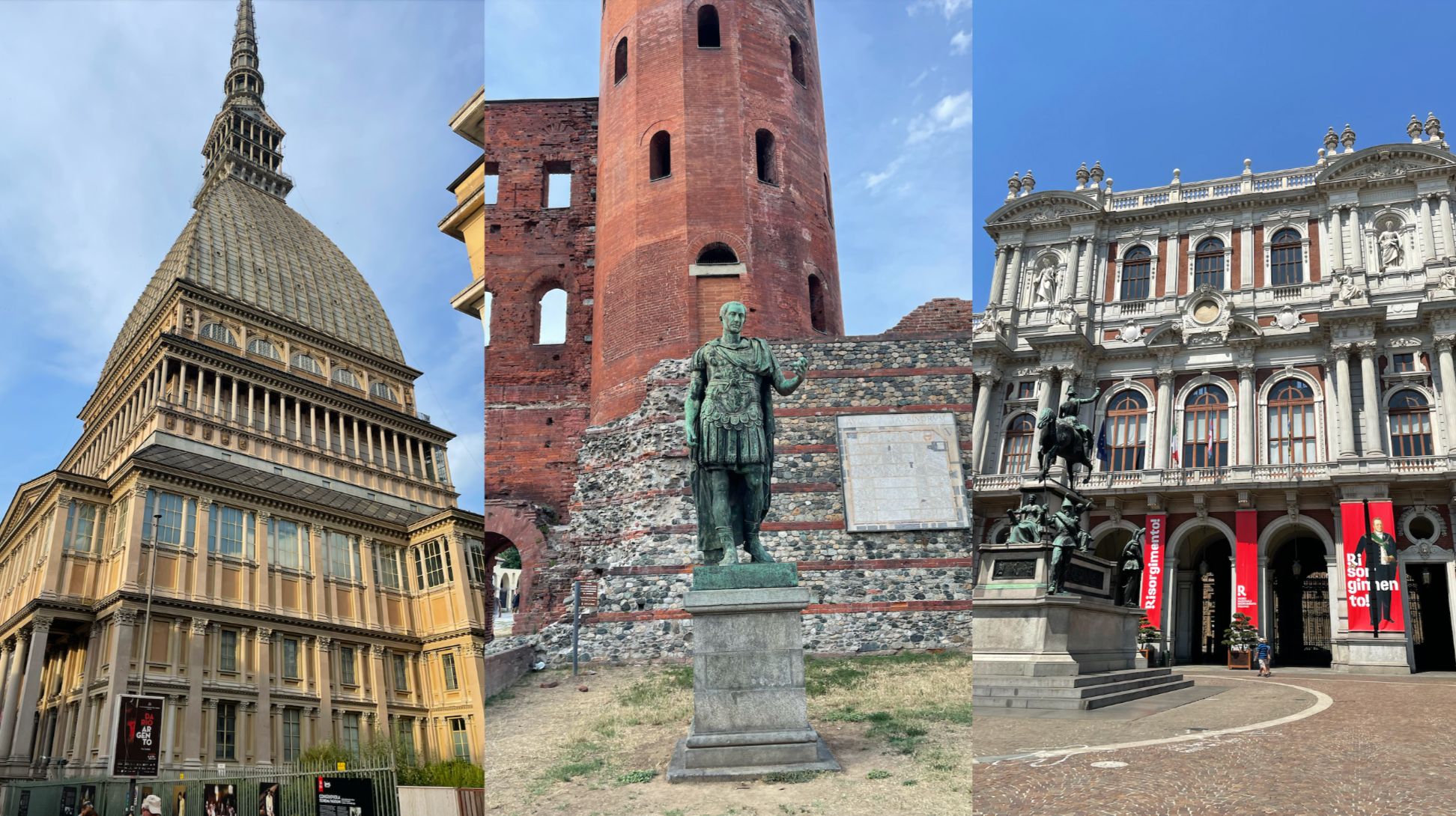
From left: the Mole Antonelliana, Palatine Gate and Palazzo Carignano.

Caroline Bologna/HuffPost

From left: the Mole Antonelliana, Palatine Gate and Palazzo Carignano.

Perhaps the most iconic part of Turin’s skyline is the Mole Antonelliana, which houses the film museum ― Museo Nazionale del Cinema. Another notable museum is the Museo Egizio, where history buffs can find an extensive collection of Egyptian artefacts.

Fans of contemporary art will enjoy the Castello di Rivoli, a former royal residence that now showcases cutting-edge exhibitions juxtaposed against its restored 17th-century castle backdrop. Don’t sleep on the Pinacoteca Giovanni e Marella Agnelli art gallery, either.

Those interested in the unification of Italy will no doubt want to explore the Museum of the Risorgimento, which is located in another famous old building, Palazzo Carignano. And for some ancient history, don’t forget to check out the Palatine Gate, a well-preserved gateway dating back to the first century BC.

From left: Palazzo Madama Torino, view from Chiesa di Santa Maria del Monte dei Cappuccini and Castello del Valentino.

Caroline Bologna/HuffPost

From left: Palazzo Madama Torino, view from Chiesa di Santa Maria del Monte dei Cappuccini and Castello del Valentino.

In addition to my climb up to the hilltop church, I also stretched my legs quite a bit by strolling along the River Po and exploring the expansive Parco del Valentino. The park boasts a number of notable attractions, like the distinguished Castello del Valentino and Borgo Medievale, a reconstructed medieval village and open air museum.

Getting more into modern times, Turin is strongly associated with the Italian automotive industry, with iconic brands like Fiat, Lancia and Alfa Romeo headquartered in the city. It’s unsurprisingly also home to the Museo Nazionale dell’Automobile (National Automobile Museum).

And of course, sports fans should check the schedule to see if the famous Juventus football club or its rival Torino have any matches scheduled during their time in the area.

With so much to offer tourists of all ages and interests, Turin is truly a hidden gem that captivates visitors with its incredible cuisine, deep history and vibrant charm. As Americans flock elsewhere in Italy, Turin visitors don’t need too much advance booking to experience the rich cultural tapestry that makes the city so magical.

Share Button

Here’s The Only Italian Seasoning Italians Actually Use, And It’s Not The One In Your Cupboard

Before you even ask, I’ll come clean. Yes, I do own a tub of “Italian herbs” myself.

To be honest, though, I’m something of a seasonings libertarian ― I’ve never understood how people trusted a stranger to find the perfect mix of flavours for every dish.

So, I’m not surprised food site My Recipes says the invention of the generic “Italian herbs” mix is likely American, adding that you’d be “hard-pressed” to find an equivalent in Italy.

Eva Santaguida, cookbook author and the Italian half of YouTube couple Pasta Grammar, seemed baffled by the concept in a video about the topic. “They put everything together without a defined taste,” she said of the mix.

One version is native to Italy, however; and it sounds delicious.

What is it?

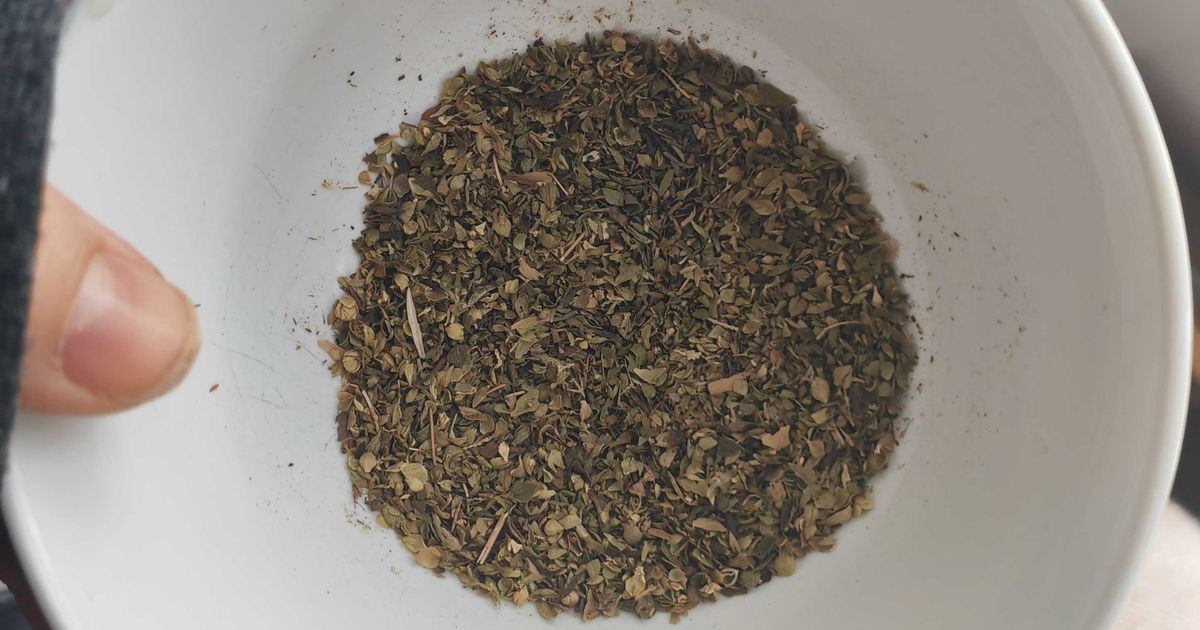
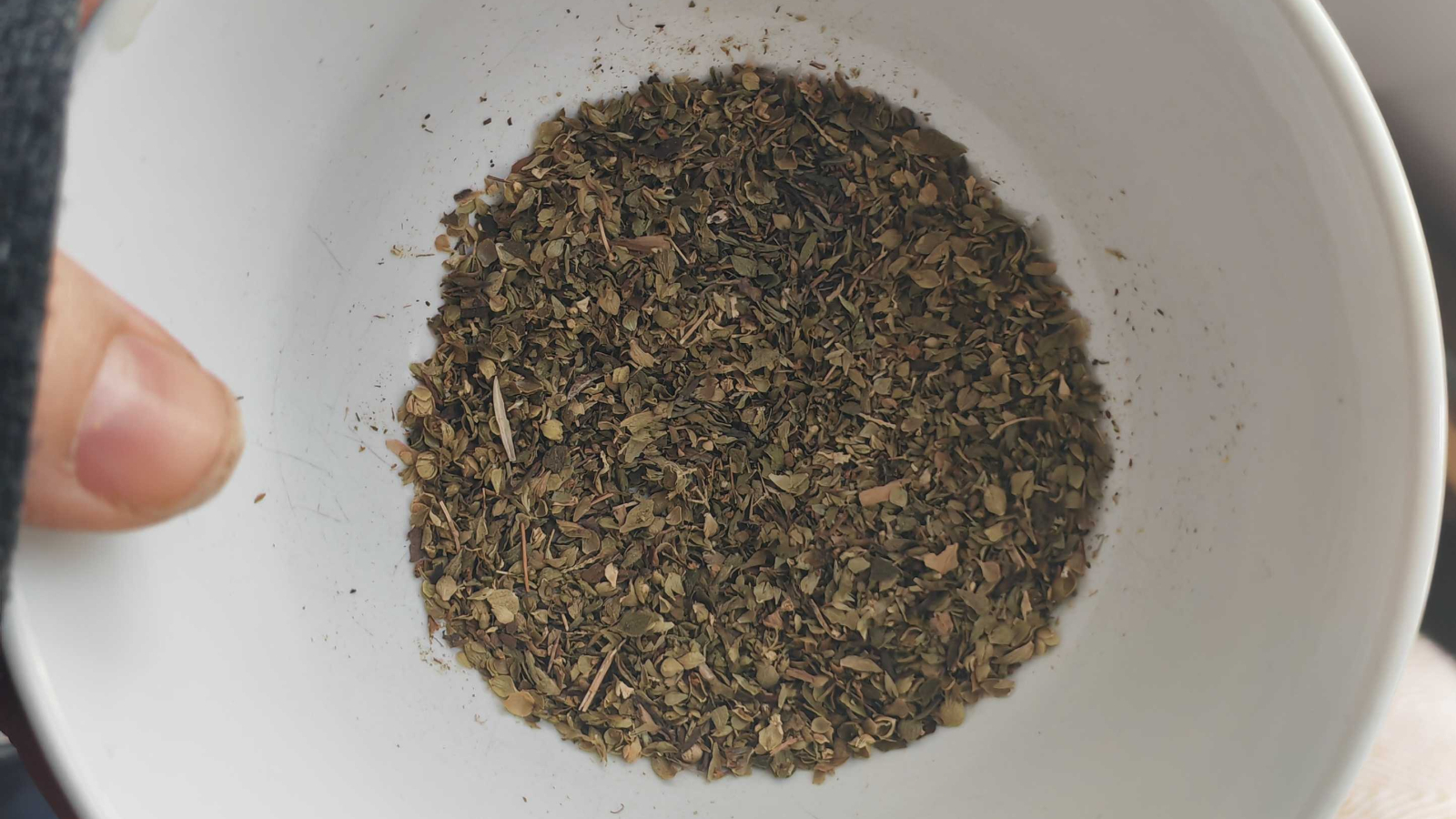
“Salamoia Bolognese, a blend of rosemary, sage, garlic, salt, and black pepper, is popular in Bologna and beyond,” My Recipe says.

Italian restaurateur and celeb chef Massimo Capra seems to confirm that.

In a TikTok, he sniffed a metal container of the stuff ― “smells like a roasted chicken,” he said between whiffs.

“It smells like roast veal,”Capra added, writing in the caption of his video that “it’s something you need in your pantry right now”.

It’s used on grilled meat, fish, vegetables, and (obviously) veal and chicken; Italian food YouTuber Janna’s Cooking Show used it in her chicken marsala recipe.

It also makes soups, stews, and spuds sing (perhaps reassuringly, if inconveniently, most of the recipes I saw for it online were in Italian).

How do I make it?

It’s pretty simple, though as with all seasoning mixes, there’s no one true recipe.

Slow food cooking site Hare & Tortoise suggests mixing equal parts salt and rosemary with one clove of garlic per two teaspoons of salt or rosemary; there’s one teaspoon of black peppercorns per two teaspoons, or one clove, of the rest.

They whizz the lot up in a blender.

Italian cooking site Il Cucchiano D’Argento’s more complex affair puts sage, bay leaves, and lemon zest in their “easy” recipe too.

Their large-scale recipe uses 1kg of salt, the zest of two unwaxed lemons (though they admit these aren’t “traditional”), half a head of garlic, five sage leaves, four bay leaves, three sprigs of rosemary, and 45g (ish) of black peppercorns.

“The [herb’s] oils released are absorbed by the salt, [which is] left to dry… for a couple of days: a process that guarantees its shelf life for a few months,” the cooking site adds.

They say the final product’s texture should be halfway between coarse and fine salt. You can store it in an airtight glass jar when it’s done.

BRB, just taking out my blender…

Share Button

Italy’s PM Seems To Ask Sunak The Only Diplomatic Question Possible Amid Brutal Election Campaign

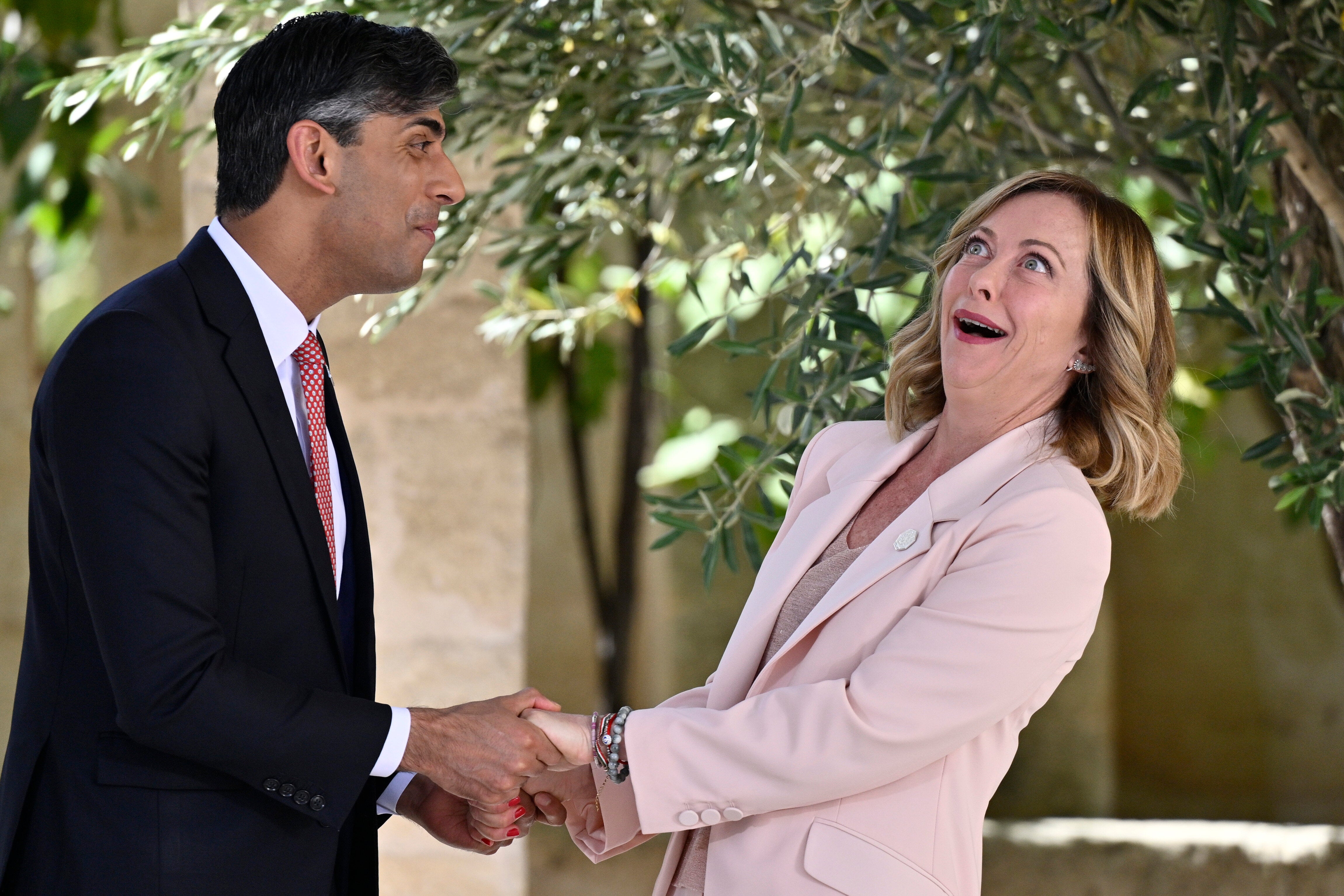
Giorgia Meloni appeared to ask Rishi Sunak the only diplomatic question she possibly could when the two leaders met today at the start of the G7 summit.

As they greeted each other with an embrace in front of the cameras, the Italian PM leaned towards her beleaguered British counterpart and appeared to say: “Are you OK?”

A seemingly innocent question, but accompanied with quite the worried expression.

It’s not clear how Sunak answered – Meloni just smiled in response and leant away from him as he continued to grip her hands tightly, while the conversation seemed to move onto casual niceities.

Watch their strange encounter here:

This exchange came hours after the prime minister faced a brutal grilling from both Sky News’ political editor Beth Rigby and a live audience.

He was even booed by the crowd when he blamed industrial action for long NHS waiting lists – despite pledging to bring them down himself at the start of 2023.

Viewers also decided that Keir Starmer outperformed the PM last night, with almost two-thirds of the public thinking Sunak had not come across as well, according to YouGov.

But, the debate was just the latest catastrophe of the last three weeks of Sunak’s disastrous campaign.

From calling a snap election while standing in the pouring rain and facing awkward encounters with furious members of the public to leaving D-Day commemorations early only to be ridiculed for saying he had to go without Sky TV growing up, Sunak has lurched from PR crisis to PR crisis.

Meloni, on the other hand, has had an excellent week.

Her far-right party, the Brothers of Italy, experience a stomping victory in the European parliament elections, making her the only Western European leader to be strengthened by the controversial vote.

Share Button

Boris Johnson Causes A Stir With Claims About Europe’s Initial Response To Russian Aggression

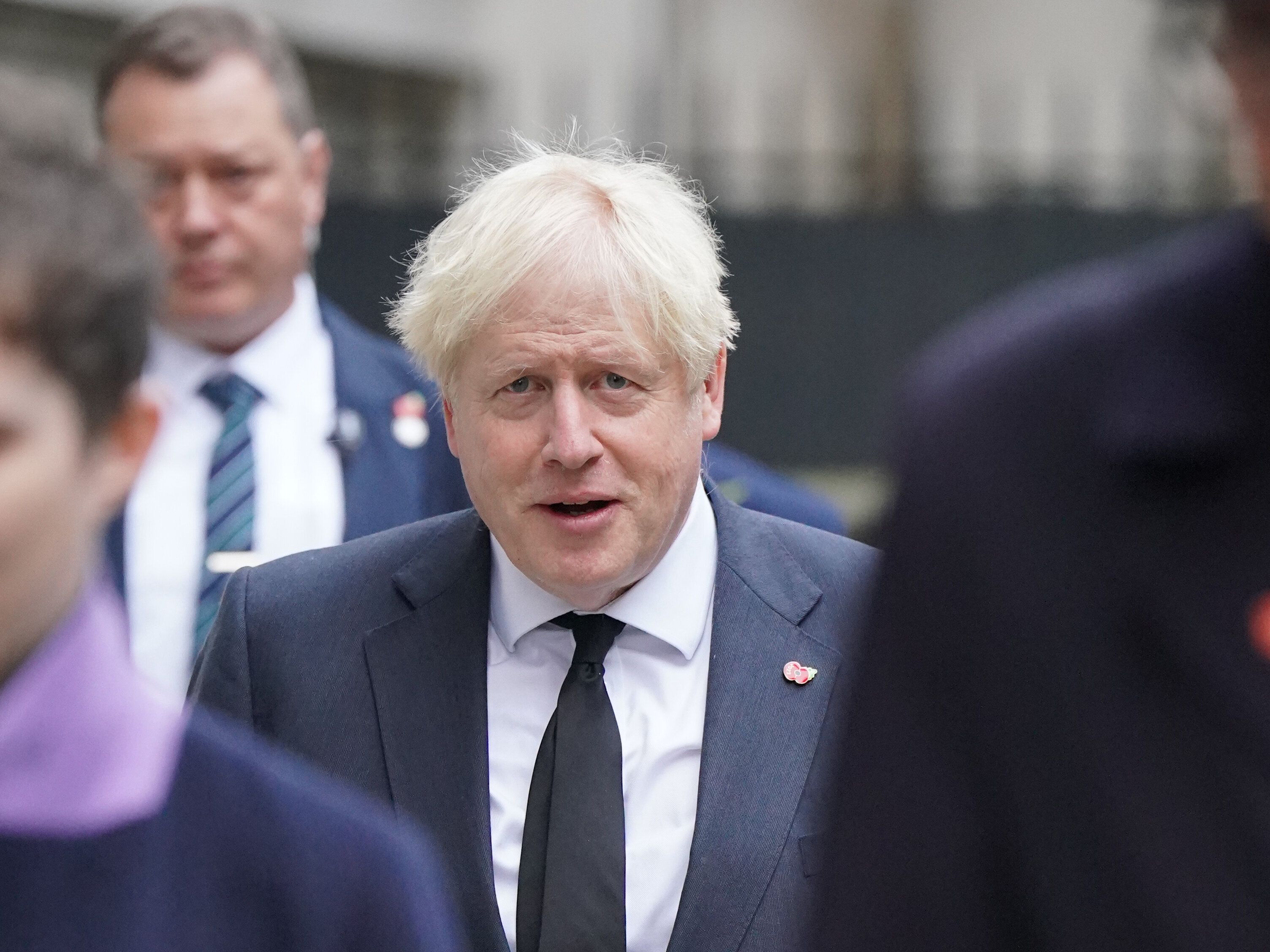
Boris Johnson has taken aim at some of his former European counterparts over Russia’s aggression towards Ukraine, claiming not everyone on the continent had the same immediate reaction.

The former PM, who has tried to make his support for Ukraine one of the lasting legacies of his premiership, went a step further in a new broadcast interview with CNN Portugal.

Speaking on Monday, he said Germany, France and Italy all had very different responses compared to him when Russia was closing in on its European neighbour at the end of February.

“This thing was a huge shock,” Johnson alleged on Wednesday. “We could see the Russian battalion tactical groups amassing, but different countries had very different perspectives.”

He began: “The German view was at one stage that if it were going to happen, which would be a disaster then it would be better for the whole thing to be over quickly, and for Ukraine to fold.”

Germany had a substantial dependency on Russia’s fuel exports prior to the war, due to the Nord Stream pipelines which transmitted natural gas from Russia int Europe. However, it has been trying to wean itself off ever since the war started.

Johnson then claimed there were “all sorts of sound economic reasons” behind that way of thinking, but added: “I couldn’t support that, I thought that was a disastrous way of looking at it.

“But I can understand why they thought and felt as they did.”

An aide of Germany’s chancellor Olaf Scholz has since rebuffed these claims, claiming that Johnson has “his own relationship with the truth”, and said the idea Germany wanted a quick end to the war was “utter nonsense”.

Scholz’s spokesman Steffen Hebestreit also told reporters in Berlin: “I think I can say that first-hand, because I took part in talks with the then British prime minister in Munich only a few days before the start of the war. Namely that he always has a very personal approach toward the truth.”

Germany’s economic cooperation secretary Jochen Flasbarth also tweeted that Johnson’s claims were “crazy”.

The former prime minister also targeted France in his interview, claiming the UK’s neighbour was “in denial” over the possibility of a war on the fringes of Europe.

He claimed: “Be in no doubt that the French were in denial right up until the last moment.”

French president Emmanuel Macron led Europe’s attempts to prevent Vladimir Putin’s aggression tipping into war earlier this year, and even went to Kremlin just weeks shortly before Russia ordered the attack.

Then Johnson went after Italy. He told CNN that the Italian government, then led by Mario Draghi, was “at one stage simply saying that they would be unable to support the position we were taking” due to their “massive” reliance on Russian hydrocarbons.

However, Johnson said that once the actual invasion began, a sense of unity emerged.

“What happened was everybody – Germans, French, Italians, everybody, Joe Biden – saw that there was simply no option.

“Because you couldn’t negotiate with this guy (Putin). That’s the key point.”

He added in unusual praise for the bloc that the EU “has done brilliantly” opposing Putin.

“After all my anxieties…I pay tribute to the way the EU has acted. They have been united. The sanctions were tough.”

Interestingly, the prominent Eurosceptic who led the Vote Leave campaign said that if Ukraine wants to join the EU “they should go for it and I think it would be a good thing for Ukraine”.

Kyiv applied to join the EU earlier this year as part of its efforts to move away from Russia’s sphere of influence.

Ukraine has been vocal in its admiration for Johnson – and even tweeted out a suggestion that he return to Downing Street again after Liz Truss’s resignation, but it was quickly deleted.

New prime minister Rishi Sunak made his first official visit to the country last week, and pledged £50 million in defence aid.

Despite the ongoing support from Western allies for Ukraine, Russia has continued its relentless attacks on the nation, leaving entire regions without power as the winter looms.

Share Button

These 7 Tropical Destinations Are Cheaper Than UK Staycations

You are reading Anywhere But Here, our summer-long series on travel at home and abroad, serving up the information and inspiration you need.

Staycations are all the rage right now for obvious reasons. But their prices? Not so great. In fact, new research by BBC Panorama and consumer group Which? found that trips around the UK can cost an average of £300 more per week in August compared to before the pandemic.

And if you were thinking of heading to Brighton – hold your horses, it looks to be the seaside resort with the highest prices, with average rental costs almost doubling.

For one night of self-catered accommodation for two people in Brighton, it would have been £109 in 2019, but is now £206 – a rise of 89% – according data by AirDNA, which monitors websites such as Airbnb and Vrbo.

Places in St Helier in Jersey increased by 76% from 2019, while Lyme Regis on the south coast jumped up 74%.

Which? also published the differences between trips in the UK and abroad, even with flights included. The group compared prices for late August getaways for two people in the UK and overses, looking at the cheapest, highly-rated hotel available in a central location, and transport costs.

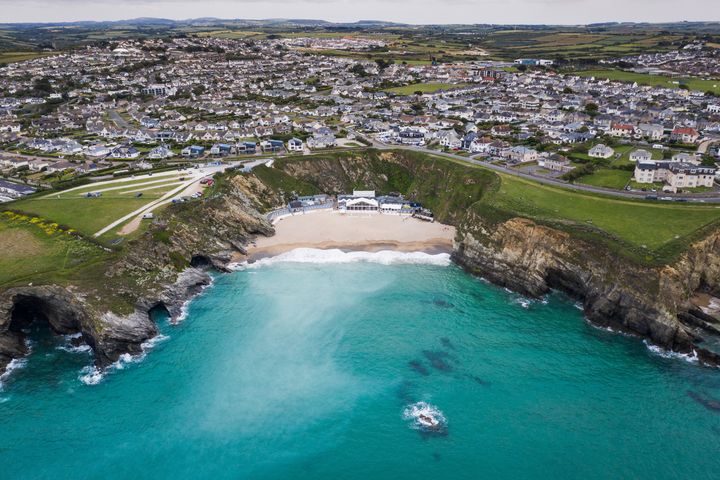
Oh, you want to go to Cornwall? It's going to cost you.

Oh, you want to go to Cornwall? It’s going to cost you.

South of France versus Brighton

According to Which’s research, a coastal break in the UK, such as Brighton, will set you back £1,131, a hotel in Nice, in the south of France costs £1,085, and that’s with flights included.

Lake Garda, Italy versus Lake District

A week in Lake Windermere in England’s Lake District costs £2,424, compared to £802 for flights and accommodation for a week in Lake Garda in northern Italy.

Corfu versus Cornwall

Get ready to have your mind blown. For a luxury three-bedroom villa with an ocean view in Carbis Bay, you’re looking at £12,000 for weekend dates in mid September (it sleeps up to six people, so that’s £2,000 a person).

Meanwhile in Corfu, Greece, prices have only increased by 13%. Search the exact same dates for flights and a five-star hotel and you can find one for as little as £273 (and you’d save further if you were to share the hotel room).

Turkey versus Cheshire

For the first available weekend in September, you’re looking at £1,895 for a week’s holiday rentals in Delamere Forest, Cheshire (that’s for four bedrooms, two beds are currently sold out).

By comparison, the cost of private accommodation in Marmaris, Turkey, has increased by just 7% since 2019. A quick search on Kayak for the same September dates throws up flight and hotel deals for as little as £230 (so, for a family of four, you’d be looking at £920). Even with the PCR costs included, a trip to Marmaris would be cheaper.

Tenerife versus Dorset

A holiday home in Berehayes Farm in Dorset for two people can cost £655 (for four people, it’s £986). In comparison, you can stay in a five-star hotel near the beach in Tenerife for £210, including flights.

Costa del Sol, Spain versus Wales

The only holiday Which? found for this August that worked out cheaper in the UK than abroad was a beach break in Tenby, Wales, compared to Estepona, on the Costa del Sol in Spain – but only by £10.

The accommodation in Tenby was still more expensive than Estepona, costing £880 for seven nights in Tenby compared to £837 for seven nights in a similarly rated hotel in Estepona. Only transport costs made the Tenby break marginally cheaper, with the journey estimated at £43, while return flights to Estepona cost an estimated £96.

And just in case you were wondering what prices were like for trips further afield – you can fly to Dubai and stay in a bouji hotel (The Hilton Garden Inn) and it will only set you back £346 at the moment. Brilliant!

Travel is the story of our summer. The rules (and traffic lights) are always changing, but one thing’s clear, we dream of being Anywhere But Here. This seasonal series offers you clear-headed travel advice, ideas-packed staycation guides, clever swaps and hacks, and a healthy dose of wanderlust.

Share Button

Coronavirus Fears Over “Zero Checks” Made On Passengers Flying From Italy To UK

HuffPost is part of Verizon Media. Click ‘I agree‘ to allow Verizon Media and our partners to use cookies and similar technologies to access your device and use your data (including location) to understand your interests, and provide and measure personalised ads. We will also provide you with personalised ads on partner products. Learn more about how we use your data in our Privacy Centre. Once you confirm your privacy choices here, you can make changes at any time by visiting your Privacy dashboard.

Click ‘Learn more‘ to learn and customise how Verizon Media and our partners collect and use data.

Share Button

Italy’s Coronavirus Death Toll Rises By 133 In A Day

HuffPost is part of Verizon Media. Click ‘I agree‘ to allow Verizon Media and our partners to use cookies and similar technologies to access your device and use your data (including location) to understand your interests, and provide and measure personalised ads. We will also provide you with personalised ads on partner products. Learn more about how we use your data in our Privacy Centre. Once you confirm your privacy choices here, you can make changes at any time by visiting your Privacy dashboard.

Click ‘Learn more‘ to learn and customise how Verizon Media and our partners collect and use data.

Share Button

24 Hours In The Coronavirus Outbreak: How Global Concern Has Surged In A Day

HuffPost is part of Verizon Media. Click ‘I agree‘ to allow Verizon Media and our partners to use cookies and similar technologies to access your device and use your data (including location) to understand your interests, and provide and measure personalised ads. We will also provide you with personalised ads on partner products. Learn more about how we use your data in our Privacy Centre. Once you confirm your privacy choices here, you can make changes at any time by visiting your Privacy dashboard.

Click ‘Learn more‘ to learn and customise how Verizon Media and our partners collect and use data.

Share Button