Locusts’ sense of smell boosted with custom-made nanoparticles

Our sensory systems are highly adaptable. A person who cannot see after turning off a light in the night slowly achieves superior power to see even small objects. Women often attain a heightened sense of smell during pregnancy. How can the same sensory system that was underperforming can also exceed the expectation based on its prior performance?

Since nature has perfected its sensory systems over evolutionary time scales, an interdisciplinary team of researchers in the McKelvey School of Engineering at Washington University in St. Louis tapped into these capabilities to adapt the system on demand to perform at its peak performance. Their tools to achieve this goal: locusts and nanomaterials too small to see.

Srikanth Singamaneni and Barani Raman, both professors in the McKelvey School of Engineering, led a team that harnessed the power of specially made nanostructures that can absorb light and create heat, known as the photothermal effect, and act as containers to store and release chemicals on demand. They used these nanostructured materials to boost neural response in the locust’s brain to specific odors and to improve their identification. Results of the research were published in Nature Nanotechnology Jan. 25, 2024.

Singamaneni, the Lilyan & E. Lisle Hughes Professor in the Department of Mechanical Engineering & Materials Science, and Raman, professor of biomedical engineering, have collaborated for years with Shantanu Chakrabartty, the Clifford W. Murphy Professor in the Preston M. Green Department of Electrical & Systems Engineering, to harness the superior sensing capabilities of the locust olfactory system. Recently they demonstrated the feasibility of using a bio-hybrid electronic nose for sensing explosive vapors.

“We let the biology do the harder job of converting information about vaporous chemicals into an electrical neural signal,” Raman said. “These signals are detected in the insect antennae and are transmitted to the brain. We can place electrodes in the brain, measure the locusts’ neural response to odors, and use them as fingerprints to distinguish between chemicals.”

The idea, though sound, has a potential roadblock.

“We are limited by the number of electrodes and where we can place them,” Singamaneni said. “Since we will get only a partial signal, we want to amplify this signal. This is where we turned to heat and neuromodulation to enhance the signal we get.”

In the new research, the team used two strategies to boost the locusts’ ability to detect odors. First, the team created a biocompatible and biodegradable polydopamine nanoparticle that converts light to heat through a process called photothermal effect.

“Heat affects diffusion,” Raman said. “Imagine adding cold milk to hot coffee. The idea is to use the heat generated by nanostructures to locally heat, for example, a nanoheater, and enhance the neural activity.”

Second, these nanostructured materials can be made to load chemicals for storage. However, they need to be encapsulated by a covering material. The team used a phase-change material called tetradecanol which is solid at room temperature and transitions to liquid upon heating. When heated, the same nanoheaters will ooze the chemicals stored within them in addition to generating heat.

Singamaneni and the team stored octopamine, a neuromodulator involved in various functions, and released it on demand. Usually, these neuromodulators are released based on the needs of the organism. However, using the nanostructured heaters, they were released on demand to enhance the neural signals.

“Our study presents a generic strategy to reversibly enhance neural signals at the brain site where we place the electrodes,” Raman said.

“The nano-enabled neuromodulation strategy we developed opens new opportunities to realize tailored cyborg chemical sensing approaches,” said Prashant Gupta, a graduate student in Singamaneni’s lab and first author of the paper. “This approach would change an existing passive approach where information is simply read into an active one where the capabilities of the neural circuits as a basis for information processing are fully used.”

Share Button

Duchess’s diagnosis prompts skin cancer searches

The Duchess of York, Sarah Ferguson, revealed she had malignant melanoma this week.

Share Button

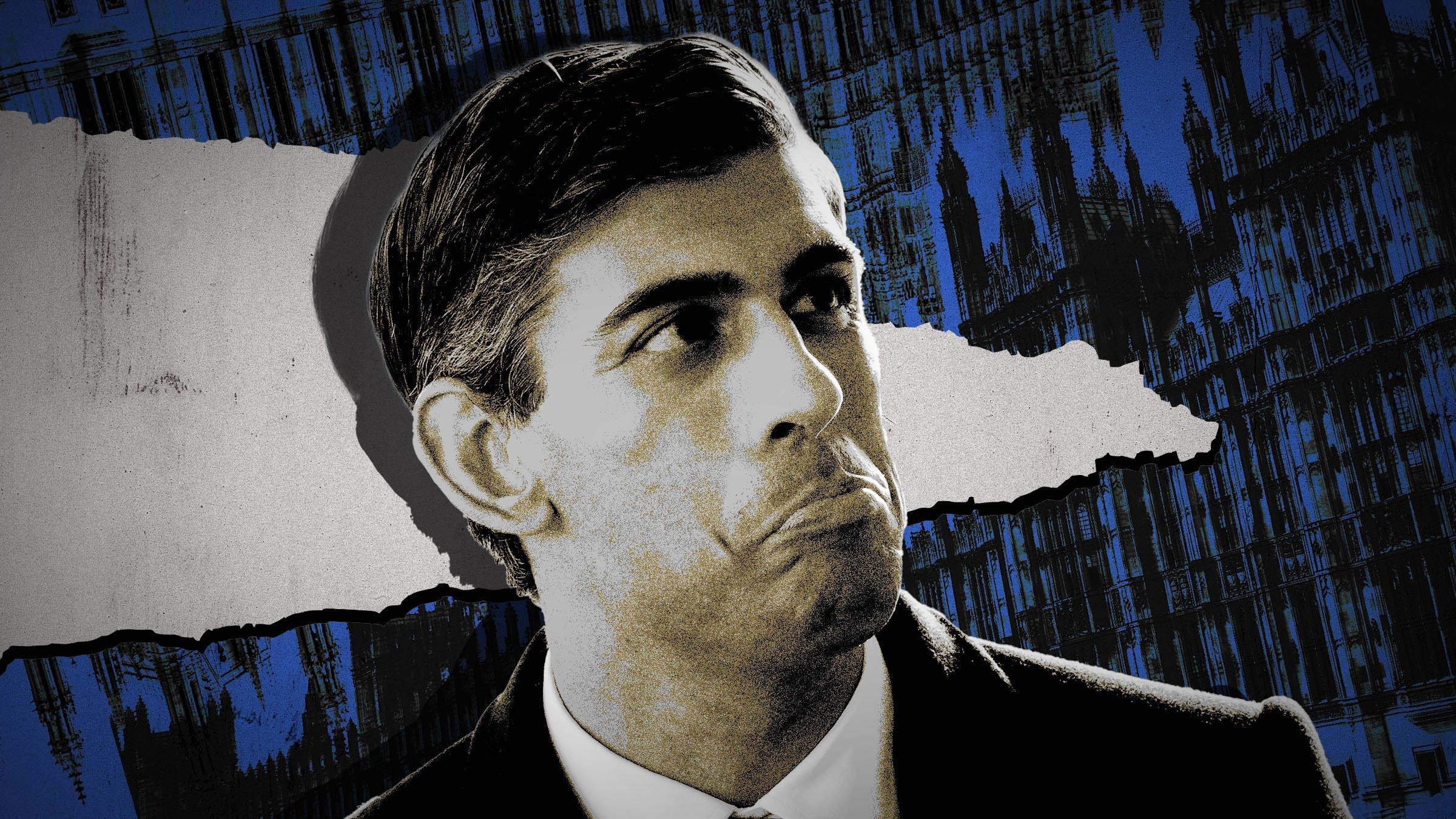
Rishi Sunak Clings On As Tory MPs Lose The Plot (Again)

If a Hollywood scriptwriter came up with the storyline, it would be instantly dismissed as too far-fetched.

Even House of Cards, the seminal tale of political intrigue at the heart of power – written by a Tory peer, incidentally – did not go this far.

Incredibly, there is a growing number within the Conservative Party who believe that installing the fourth prime minister of this parliament is a desirable state of affairs.

The alternative, the anti-Rishi Sunak plotters believe, is to stand back and watch as Keir Starmer sweeps to power with a Tony Blair-style Commons majority.

Simon Clarke, the former cabinet minister and a man who backed both Boris Johnson and Liz Truss to the hilt, spoke for many Conservatives this week when he said the PM must be ousted to prevent the party being “massacred” at the general election.

The Middlesborough South and East Cleveland MP, who was Sunak’s number 2 at the Treasury in Johnson’s government, told the BBC: “No one likes the guy who’s shouting ‘iceberg’. But I suspect that people will be even less happy if we hit the iceberg. And we are on course to do that.”

The backlash against Clarke by Tory MPs was swift and brutal, but that does not mean he is a lone wolf. The plotters, who include right-wing peer Lord Frost, believe time is on their side.

Upcoming by-elections in Wellingborough and Kingswood are not expected to go well for the Conservatives, with May’s local elections across England and Wales also set to be a bloodbath for the party.

Faced with such stark evidence of Sunak’s electoral toxicity, the plotters believe, enough Tory MPs would be willing to take the radical step of ditching yet another leader in order to potentially save their seats at the general election.

The anti-Sunak faction were bolstered by a mega-poll last week which suggested Labour are on course for a landslide.

The survey of 14,000 people by YouGov was commissioned by yet another Tory grouping, the Conservative Britain Alliance, paid for by persons unknown. We do know, however, that one of those involved was Will Dry, Sunak’s former pollster.

He quit No.10 before Christmas and this week said the Tories are “heading for the most almighty of defeats” with his former boss at the helm.

The smart money at Westminster is still on Sunak somehow keeping the Tory show on the road until his preferred election date of November 14, not least because his enemies can’t agree on who out of Kemi Badenoch, Suella Braverman, Penny Mordaunt and Rob Jenrick should replace him.

One Conservative insider told HuffPost UK: “Tory leaders are always vulnerable – never dismiss the sheer lunacy of some MPs.

“However, I think most will take the view that Rishi is the PM we have and we have to fight hard to retain as many seats as we can. To change leader again isn’t going to shift the polls by magic, if anything it will anger the electorate even more. It’s simply pie in the sky stuff to think otherwise.

“And no one can decide which person is really the answer – each faction has its own ‘favourite’ and is busy telling all the other factions they are wrong. Hardly coherent or joined up, is it?”

Sunak may well end up being saved by the sheer ineptitude of his opponents.

“To nick a phrase from Blackadder – a war hasn’t been fought this badly since Olaf the Hairy, high chief of all the vikings, accidentally ordered 80,000 battle helmets with the horns on the inside,” one source said.

A senior MP described the attempts to oust Sunak as “more plop than plot”, while others it is all really about positioning for the leadership race which will follow a thumping Tory election defeat.

Labour, meanwhile, are happy to hold the jackets on the sidelines as the Conservative civil war continues.

Intriguingly, some around Starmer remain convinced that Sunak will end up calling a May election – a contest which, on current polling numbers, Labour would win easily.

“The longer this farce goes on, the more obvious it is that the country needs change,” said one senior Labour source.

“There’s obviously no complacency, but we are ready for whenever he calls it.”

Share Button

King Charles ‘doing well’ after prostate treatment

The King is recovering after having treatment on an enlarged prostate at a London hospital.

Share Button

Martin Lewis Issues Warning For Those Planning A Summer Holiday

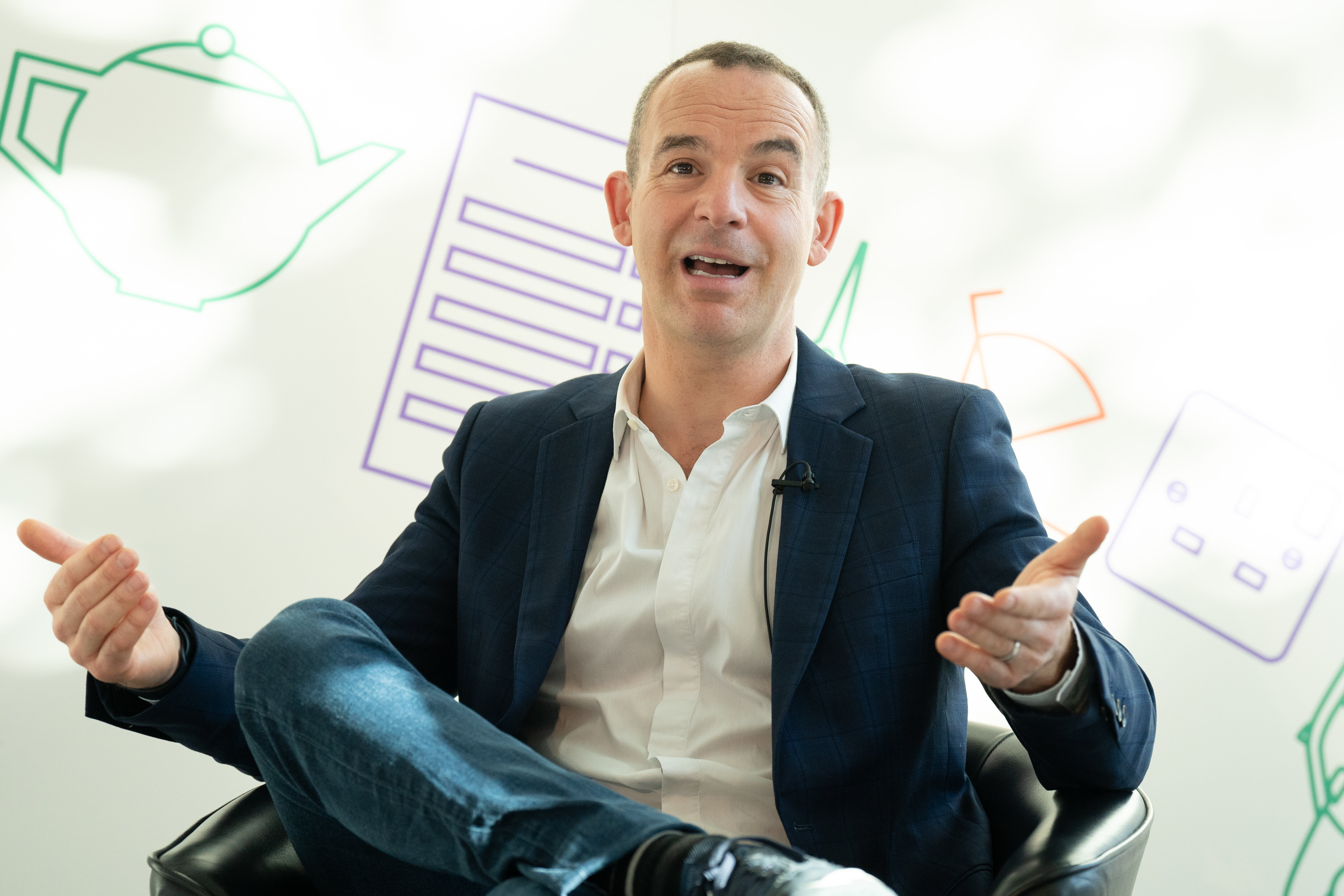
If you’re planning on going on a summer break abroad this year, Martin Lewis’s team have issued a warning for you.

The team has warned that not only should you check that your passport doesn’t need to be renewed but also that it’s valid for the country you’re visiting. This is because many countries have laws for how long you can have left on the passport in order to visit and how old the passport is. Since Brexit, this includes some EU countries, too.

The expert added, “If you fall foul of these, you could be refused entry – we’ve heard one story of a family’s four-year-old girl being refused entry to Turkey because she had less than two months left on her passport.”

The EU encompasses Austria, Belgium, Bulgaria, Croatia, Republic of Cyprus, Czech Republic, Denmark, Estonia, Finland, France, Germany, Greece, Hungary, Ireland, Italy, Latvia, Lithuania, Luxembourg, Malta, Netherlands, Poland, Portugal, Romania, Slovakia, Slovenia, Spain and Sweden.

If you renewed your 10-year passport early, ensure that you’re still in the valid period as extra months may have been added at the beginning of the passport’s validity, meaning that your passport may be technically over 10 years old and excluded from some travel destinations.

However, if you’re travelling to Ireland, it’s not quite as strict. Ireland is part of the common travel area with the UK and a passport isn’t required from British nationals travelling from the UK. However, as immigration officers check the identification of people arriving by flight and may ask for proof of nationality. Money Saving Expert recommends taking your passport anyway and ensuring it’s valid for the entire stay.

For information on the specific country you’re visiting, the government has an online tool which tells you the latest information on travelling and entry requirements

The only website to use to apply for a passport is the Gov.uk website. On there, you can get your first passport, renew an old one or get one for your child. You can also apply by paper at the Post Office.

Renewing a passport can take three weeks and Money Saving Expert urges that travellers apply early to avoid disappointment.

Share Button

Safety plea over co-sleeping baby deaths figures

A quarter of infant deaths in Scotland last year involved parents bedsharing with babies, the BBC learns.

Share Button

Austin Butler Reveals The 1 Blockbuster He Walked Away From For Once Upon A Time In Hollywood

In 2019, the Oscar nominee appeared as “Manson Family” member and murderer Tex Watson in Quentin Tarantino’s hit movie.

However, around the same time, he’d been invited to do a screen test for the Top Gun sequel Maverick, but People has reported he told the Happy Sad Confused podcast he opted for Once Upon A Time In Hollywood as he’d long wanted to work with Quentin Tarantino.

“I’d already met with him, so I did that,” he explained.

As it turns out, this was probably the right call, as Variety reports that the Top Gun team were unsure whether Austin was old enough to play the role of Rooster, which ultimately went to Miles Teller.

It wasn’t all in vain, though, as the Top Gun casting process ultimately led to him landing the part of Elvis Presley in the 2022 musical biopic.

However, Austin has revealed there was one obstacle he had to overcome before filming began – his still-prevalent Elvis Presley voice that he picked up while making the hit Baz Luhrmann film.

Share Button

Nottingham attacks: NHS to investigate Valdo Calocane’s case

Valdo Calocane was detained four times under the Mental Health Act before killing three people.

Share Button

Tiny ant species disrupts lion’s hunting behavior

Researchers say it’s more than just high hopes.

In a study published today in the journal Science, a team of scientists reports that a tiny and seemingly innocuous invasive ant species is changing tree cover in an East African wildlife area, making it harder for lions, the world’s most iconic predator, to hunt its preferred prey, zebra.

“These tiny invaders are cryptically pulling on the ties that bind an African ecosystem together, determining who is eaten and where,” said Todd Palmer, an ecologist and professor in the Department of Biology at the University of Florida.

The study, which spans research over three decades, comprised a combination of hidden camera traps, collared lions tracked by satellites and statistical modeling. It illustrates the complex web of interactions among ants, trees, elephants, lions, zebras and buffaloes.

The disruption begins in the acacia trees in the Ol Pejeta Nature Conservancy, an African wildlife area in central Kenya. The trees are historically protected from leaf-eating animals by a species of ant that nests in the trees’ bulbous thorns. In return for their home, the ants ferociously defend the trees from gigantic plant eaters, like elephants, giraffes and other herbivores — an arrangement ecologists call mutualism.

In published studies from the early 2000s, Palmer began to unravel the complexities of this congenial relationship in East Africa between plant and animal species.

“Much to our surprise, we found that these little ants serve as incredibly strong defenders and were essentially stabilizing the tree cover in these landscapes, making it possible for the acacia trees to persist in a place with so many big plant-eating mammals,” Palmer said.

In the latest study, however, scientists say the arrival of an invasive insect known as the “big-headed” ant (Pheidole megacephala) is setting off a chain of events that has resulted in a shift in predator-prey behavior that may further jeopardize populations of lions — a species already on the brink of endangerment.

The big-headed ants are small but voracious hunters of insects, destroying colonies of the tree-protecting ants but not defending the trees from the larger animals. Having lost their bodyguards, the acacia trees are being obliterated by elephants. The lions, which are ambush predators, rely on the tree cover to stalk and hide before pouncing on zebras. Less tree cover means lions are not as successful at ambushing their prey.

“Oftentimes, we find it’s the little things that rule the world,” Palmer said. “These tiny invasive ants showed up maybe 15 years ago, and none of us noticed because they aren’t aggressive toward big critters, including people. We now see they are transforming landscapes in very subtle ways but with devastating effects.”

Making the best out of a bad situation, the lions are turning their attention to buffaloes, Palmer said. However, buffaloes are larger than zebras and hang out in groups, making them much more formidable prey.

“Nature is clever, and critters like lions tend to find solutions to the problems they face,” he said, “but we don’t yet know what could result from this profound switch in the lions’ hunting strategy. We are keenly interested in following up on this story.”

The field work in Kenya was led by University of Wyoming doctoral candidate and Kenyan scientist Douglas Kamaru. Palmer, along with Jake Goheen, from the University of Wyoming, and Corinna Riginos, with The Nature Conservancy, were co-principal investigators on the National Science Foundation grant that funded the work. In addition to studying the phenomenon, the researchers say they also are interested in finding solutions to halt the loss of tree cover in these iconic landscapes.

“These ants are everywhere, especially in the tropics and subtropics. You can find them in your backyard in Florida, and it’s people who are moving them around,” Palmer said. “We are working with land managers to investigate interventions, including temporarily fencing out large herbivores, to minimize the impact of ant invaders on tree populations.”

As science continues to move toward highly advanced technologies like AI-powered data collection, Palmer said their group’s persistent focus on Kenyan wildlife has involved traditional methods over several decades, showing the staying power of boots-on-the-ground research.

“There are a lot of new tools involving big data approaches and artificial intelligence that are available today,” he said, “but this study was born of driving around in Land Rovers in the mud for 30 years.”

Share Button

NHS consultants reject latest pay offer

Senior doctors in England reject the proposed deal, as the BMA union says it “doesn’t go far enough”.

Share Button