UK Government Guilty Of ‘Cultural Appropriation’ Over Dennis The Menace, Says SNP MP

UK ministers have been accused of “cultural appropriation” after appearing to suggest that Dennis the Menace was “created in London”.

SNP MP Chris Law reacted angrily after the comic book character and his dog Gnasher were used in a government advert.

The billboard, for the GREAT campaign, shows the pair standing on a man’s shoulder beside the message: “Created in London, unleashed in more than 100 countries.”

That is despite the fact that Dennis the Menace was in fact created in Dundee by George Moonie, the then editor of The Beano.

Law, who is the MP for Dundee West, said the advert was “utter garbage”.

Writing on X (formerly Twitter), he said: “Dundee city created Dennis the Menace and Gnasher through the publishers DC Thomson. Cultural appropriation is a desperate measure to claim credibility.”

A government spokesperson said: “The Dennis and Gnasher animated series was created in London, based on the brilliant Beano cartoon that originated in Dundee.

“In this way it is the perfect representation of the ‘Made in the UK, Sold to the World’ campaign, which seeks to highlight success stories from across our great union of nations.

“We work closely with businesses like Beano to tell their start-up story, demonstrating the support the UK government provides to help companies grow and export around the world.”

Share Button

Justin Trudeau Responds After Canadian Parliament Accidentally Honoured Ex-Nazi

Justin Trudeau has spoken up after the Canadian parliament gave a Ukrainian man who fought for the Nazis in World War 2 a standing ovation.

Yaroslav Hunka was declared a hero by the Canadian House of Commons speaker, Anthony Rota, on Friday, while the Ukrainian president Volodymyr Zelenskyy was visiting.

Rota pointed to Hunka when he was sitting in the gallery, calling him a “Ukrainian hero, a Canadian hero”, adding: “We thank him for all his service.”

However, the 98-year-old veteran’s connections to the Nazis have since been uncovered.

He actually served in a voluntary unit primarily made up of ethnic Ukrainians under Nazi command. The unit has been accused of killing Polish and Jewish civilians, but has not been found guilty of war crimes.

It was renamed the First Ukrainian Division before its surrender in 1945.

The speaker of the House, who had invited Hunka, said in a statement on Sunday that he only became aware of such information after the veteran’s visit, and now “regrets” his decision.

“No one, including fellow parliamentarians and the Ukraine delegation, was aware of my intention or of my remarks before I delivered them,” Rota said.

He added: “This initiative was entirely my own, the individual in question being from my [district] and having been brought to my attention.”

He extended his “deepest apologies” to the Jewish communities around the world, and accepted full responsibility for the incident.

He apologised again in person on Monday from the house.

Opposition politicians have called on him to stand down.

But, Trudeau has not echoed these calls, even though they belong to the same Liberal party.

He told reporters on Monday that it was “extremely upsetting that this happened”, while denying he had a private meeting with Hunka or had a hand in choosing to invite the veteran.

He added: “This is something that is deeply embarrassing to the parliament of Canada and by extension to all Canadians.”

Ukrainians fought both for Germany and the Soviet Red Army during World War 2.

Some of those who joined the Nazis reportedly aimed to achieve independence from the Soviet Union.

The Canadian Jewish group, the Centre for Israel and Jewish Affairs said it appreciated the apology, but called for ”proper vetting” to prevent “such an unacceptable incident” happening again.

Poland’s ambassador to Canada has expressed anger too, saying he wants an apology.

This is an especially unfortunate turn of events because the Russian president Vladimir Putin has repeatedly claimed Kyiv is operated by neo-Nazis – and claiming his invasion of Ukraine will be a “de-nazification”.

These claims are baseless – Zelenskyy is Jewish, and had relatives who died in the Holocaust. He was also democratically elected in 2019.

Trudeau noted on Monday that the incident in the Canadian parliament would help reinforce that rhetoric.

Kremlin spokesperson Dmitry Peskov has already waded into the saga, claiming inviting Hunka was an “outrageous” act.

He said: “Many Western countries, including Canada, have raised a young generation that does not know who fought whom or what happened during the Second World War.

“And they know nothing about the threat of fascism.”

Share Button

6 Dangerous Multicooker Mistakes, According To Food Safety Experts

If there is a time of year that begs for multicookers — Crockpots, air fryers and Instant Pots — it’s fall. The season is synonymous with slow cooker chilis and dips for football games, soups for cold days and batch-cooking meals for school lunches. And multicookers make it easy to do.

“They really are wonderful pieces of cooking equipment that we need to keep properly maintained as well as properly cleaned,” said Angela Anandappa, the CEO and founding executive director of Alliance for Advanced Sanitation.

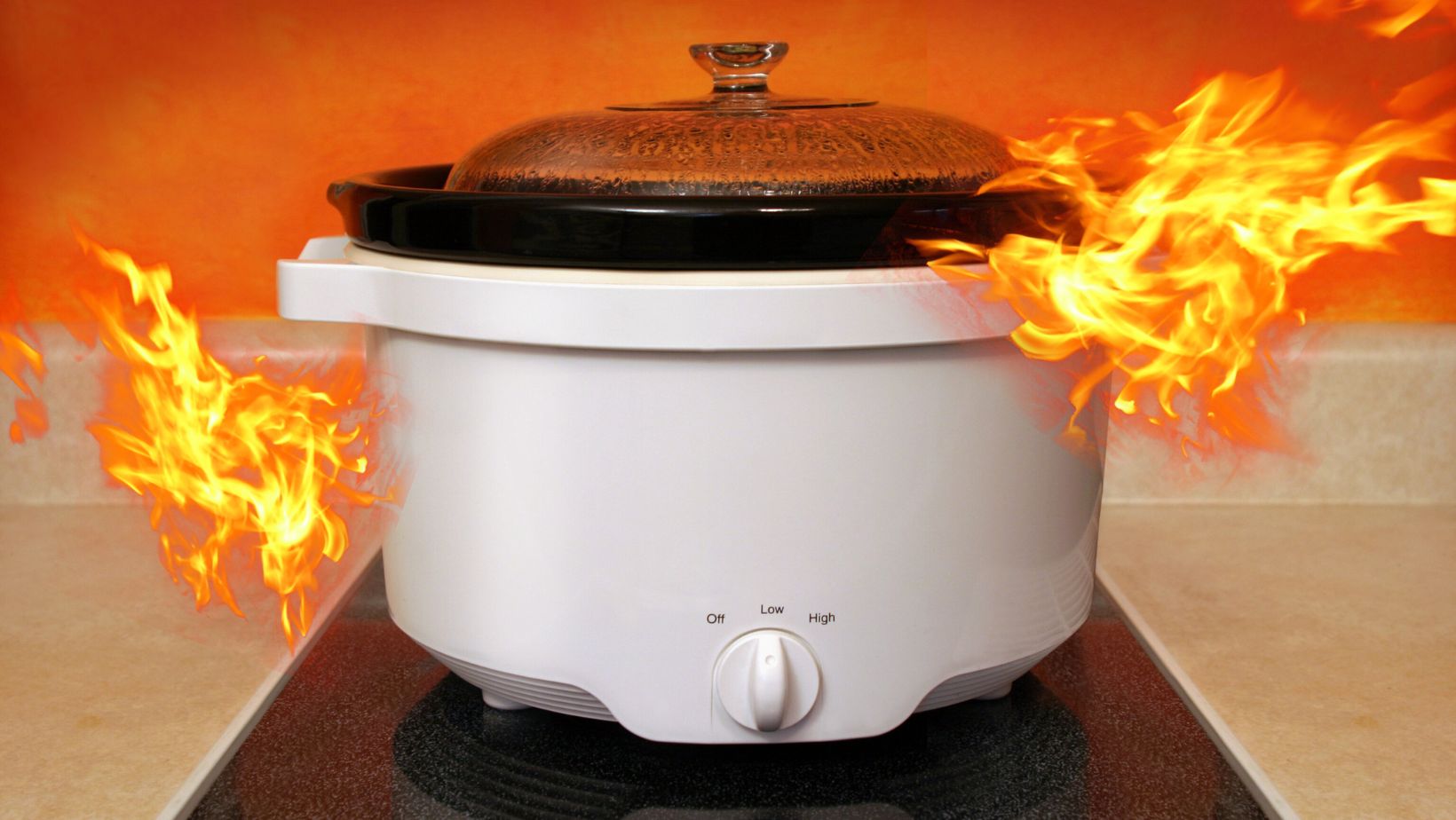
When multicookers aren’t used properly, they can create cleanliness and health issues, food experts say. In fact, on the popular television show “This Is Us,” a slow cooker malfunctioned and set the family’s home on fire, scaring many avid users of the appliance.

While fires aren’t the No. 1 concern of the food safety experts we spoke to, there are other problems that could cause you trouble, and specific behaviors and habits that contribute to those problems. Here’s what they are:

Not Checking The Temperature Of Meat

“I am primarily concerned about home cooks that will just trust that a given recipe is sufficient for food safety without checking food internal temperatures (of meats specifically) at the end of cooking,” Donald Schaffner, the department chair and extension specialist in food science at Rutgers University, told HuffPost.

Even after cooking for hours, meat still may not be at the temperature necessary for a safe meal.

Schaffner suggests that you use a tip-sensitive digital meat thermometer to check the internal temperature of your meat before you start eating.

You can find the proper cooking temperatures for food on the USDA website, he said.

Eating undercooked meat is the most dangerous mistake that can occur when you prepare food with a slow cooker, said Kali Kniel, the associate chair of the Department of Animal and Food Sciences at the University of Delaware.

“If chicken is undercooked, then there is a potential risk of a person getting sick from salmonella,” Kniel told HuffPost.

Kniel added that the food temperature danger zone — from 40 degrees to 140 degrees Fahrenheit — should always be avoided. In this range, “bacteria are likely to multiply,” she said.

“If foods are not kept hot, then bacteria like [staphylococcus] aureus, which can be on human hands, can grow in the food product and then produce a toxin that can be ingested with the food and make people sick,” Kniel said.

Washing your hands before cooking or eating can be one way to reduce this risk, she said.

Not Following The Machine’s Rules

How many times have you gotten a new gadget and immediately cast aside the direction booklet? Probably too many to count.

In the case of multicookers, it’s crucial that you read and follow the directions every time you use them, according to Kniel.

“It is important to [use] your machine according to instructions of the machine. If you don’t have the instructions that came with the appliance, look for the guide online,” Kniel said.

This is especially true for the Instant Pot (or other brands of electric pressure cookers), she said.

“With an Instant Pot … foods are cooked at high temperatures under pressure. It is important that the [Instant Pot] be allowed to reach temperature under pressure and then when finished cooking, the [Instant Pot] must be vented properly,” Kniel said.

If the Instant Pot isn’t properly vented, it can be dangerous, she noted. In some instances, electric pressure cookers have exploded, and the hot steam can burn your skin if you hover over it.

It’s also important to follow any food or liquid limits in your appliance’s manual, said Trevor Craig, the corporate director of technical training and consulting at Microbac Laboratories.

“Sometimes I see people overfill air fryers because of a party [and] they’re trying to make a lot of food at once … you can actually affect the way it cooks, so [your] food might not be cooked all the way through,” Craig said.

This again highlights the importance of using a meat thermometer before chowing down.

Properly cleaning your multi-cooker after each use is crucial, food safety experts say.

Grace Cary via Getty Images

Properly cleaning your multi-cooker after each use is crucial, food safety experts say.

Not Following Legit Recipes

Beyond following the machine’s manual, it’s important to follow recommended recipes, too.

“One of the things that happens is that if you don’t follow those recommended instructions and you try to be creative, you may make a change that you didn’t know is going to be hazardous to you,” Anandappa said.

Specifically, a lot of people turn to social media for recipes, which isn’t always a great idea for machines that require specific steps.

“Sometimes they are recommending things that aren’t safe for people — one of those things is cooking time and temperature,” Anandappa said.

In other words, if you cut the cook time down, you could end up with a meal that’s raw in the middle. Or, if you put too many items in your multicooker, you could change what is needed for the machine to reach the necessary temperature when it’s turned on.

So be sure to use recipes vetted by professionals to ensure you’re not eating something that is undercooked or using your machine in an unsafe way. You can look at your multicooker’s brand website for recipes; Instant Pot has a range of recipes online, and Ninja has a variety of air fryer recipes on its site. Or visit trusted resources like Bon Appétit or Real Simple.

Using Plastic Bags In The Pot

Anandappa said she would also warn about “plastic bags that can be put into various types of cookers.”

This is specifically true for slow cookers, she said.

“Some of these plastic bags are not supposed to be used for very long, but people are using them, particularly in things like Crockpot cooking, for 8, 10, 12 hours sometimes,” Anandappa said.

Why is it dangerous? According to Anandappa, the plastic can migrate into the food, “which is not a safe thing.”

There is some debate surrounding the safety of plastic slow cooker liners, according to EatingWell, which points to the potential additives in these products, while TastingTable points to the environmental impact of single-use plastics. If you do use a plastic liner, it’s important that you use liners that are FDA-approved, according to EatingWell.

Additionally, Craig said, if you do use a plastic liner, you should still wash your slow cooker.

“Those liners aren’t going to prevent any bacteria from getting underneath it, or tiny food particles,” Craig said.

This is true even if your multicooker looks totally clean.

“You can’t see bacteria, [and] you might not be able to see all the food particles — clean it anyway,” Craig added.

Not Using Appropriate Utensils

According to Craig, if you’re serving food for a multicooker at a gathering, it’s important to have a designated utensil for folks to use. It’s not safe to have people dipping in various spoons and forks.

“You’re just leading to an area where you’re going to introduce cross-contamination, and that’s a big concern,” Craig said.

It’s particularly concerning if someone has an allergy to another food that’s being served, or if someone with a cold puts their dirty spoon in a big serving of crock pot chilli.

If you’re using a cooker with a nonstick lining, you should also be careful not to scratch the inner pot with a metal appliance. Take care to use food-safe utensils that won’t scratch the nonstick liner, remnants of which could end up in your food.

Not Cleaning Your Appliance

You wouldn’t put a pot away without properly cleaning it first, and the same goes for multicookers.

“[Make] sure that you treat these as items that you have to clean regularly. You wouldn’t reuse the same utensil over and over and over again without cleaning it,” Craig said, “but, for some reason, when people use air fryers, they don’t want to clean up that basket.”

And, as mentioned above, having a liner in your slow cooker does not negate the need to wash it with soap and water.

“I’m a big proponent of making sure you have a clean kitchen. Treat it like you would want to see the inside of a restaurant,” Craig said.

Share Button

Breast cancer: The Asian survivors tackling taboo in the community

Asian women are being encouraged to push past cultural stigma and get checked for breast cancer.

Share Button

Scientists reveal what fuels wildfires in Sierra Nevada Mountains

Wildfires in California, exacerbated by human-driven climate change, are getting more severe. To better manage them, there’s a growing need to know exactly what fuels the blazes after they ignite. In a study published in Environmental Research Letters, Earth system scientists at the University of California, Irvine report that one of the chief fuels of wildfires in California’s Sierra Nevada mountains is the decades-old remains of large trees.

“Our findings support the idea that large-diameter fuel build-up is a strong contributor to fire severity,” said Audrey Odwuor, a Ph.D. candidate in the UCI Department of Earth System Science and the lead author of the new study.

Researchers have known for decades that an increasing number of trees and an increasing abundance of dead plant matter on forest floors are the things making California wildfires more severe — but until now it was unclear what kinds of plant debris contribute most to a fire.

To tackle the question, Odwuor and two of the study’s co-authors — James Randerson, professor of Earth system science at UCI, and Alondra Moreno from the California Air Resources Board — drove a mobile lab owned and operated by the lab of study co-author and UCI alumna Francesca Hopkins at UC Riverside, to the southern Sierra Nevada mountains during 2021’s KNP Complex Fire.

The KNP Complex Fire burned almost 90,000 acres in California’s Sequoia and Kings Canyon National Parks. In the fire’s smoke, the team took samples of particulate matter-laden air and analyzed the samples for their radiocarbon content at UCI’s W.M. Keck Accelerator Mass Spectrometer facility with co-author and UCI Earth system science professor Claudia Czimczik.

Different fuel types, explained Czimczik, have different radiocarbon signatures, such that when they analyzed the smoke they discovered radiocarbon values associated with large fuel sources like fallen tree logs.

“What we did was pretty distinctive, as we were able to identify fuel sources by measuring the wildfire smoke,” said Czimczik. “Our approach provides what we think of as an integrated picture of the fire because we’re sampling smoke produced over the course of the fire that has been transported downwind.”

The team also saw elevated levels of particulate matter that is 2.5 microns in diameter or less, which includes particles that, if inhaled, are small enough to absorb into the bloodstream.

advertisement


The preponderance of large-diameter fuels is new in western forests. “We’re really in a situation that’s a consequence of both management strategies and climate warming since European-American settlement began in California,” Odwuor said. “These fuels are building up on the forest floor over periods of decades, which is not typically how these forests were maintained.”

It’s information that, according to Odwuor, could help California better manage its wildfires.

“The knowledge that large-diameter fuels drive fires and fire emissions — at least in the KNP Complex Fire — can be useful for knowing which fuels to target with fuel treatments and what might end up in the smoke from both wildfires and prescribed fire,” said Odwuor. “The idea is that because we can’t control the climate, we can only do our best to manage the fuels, which will theoretically have an impact on fire severity and the composition of the smoke.”

But the solution isn’t as straightforward as removing trees from forest floors, because, among other things, they provide habitat for wildlife. That, and “once you get them out, where do you send them? There are only so many mills in California that can handle all the wood,” Odwuor said.

Where the new knowledge could be helpful is with prescribed burns, wherein teams burn tracks of forest in a planned fashion with the aim of reducing the amount of fuel available for future wildfires.

“We’re hoping to build some urgency for these management strategies,” said Odwuor.

Share Button

New insights into the atmosphere and star of an exoplanet

Astronomers led by a team at Université de Montréal has made important progress in understanding the intriguing TRAPPIST-1 exoplanetary system, which was first discovered in 2016 amid speculation it could someday provide a place for humans to live.

Not only does the new research shed light on the nature of TRAPPIST-1 b, the exoplanet orbiting closest to the system’s star, it has also shown the importance of parent stars when studying exoplanets.

Published in Astrophysical Journal Letters, the findings by astronomers at UdeM’s Trottier Institute for Research on Exoplanets (iREx) and colleagues in Canada, the U.K. and U.S. shed light on the complex interplay between stellar activity and exoplanet characteristics.

Captured the attention

TRAPPIST-1, a star much smaller and cooler than our sun located approximately 40 light-years away from Earth, has captured the attention of scientists and space enthusiasts alike since the discovery of its seven Earth-sized exoplanets seven years ago. These worlds, tightly packed around their star with three of them within its habitable zone, have fueled hopes of finding potentially habitable environments beyond our solar system.

Led by iREx doctoral student Olivia Lim, the researchers employed the powerful James Webb Space Telescope (JWST) to observe TRAPPIST-1 b. Their observations were collected as part of the largest Canadian-led General Observers (GO) program during the JWST’s first year of operations. (This program also included observations of three other planets in the system, TRAPPIST-1 c, g and h.) TRAPPIST-1 b was observed during two transits — the moment when the planet passes in front of its star — using the Canadian-made NIRISS instrument aboard the JWST.

“These are the very first spectroscopic observations of any TRAPPIST-1 planet obtained by the JWST, and we’ve been waiting for them for years” said Lim, the GO program’s principal Investigator.

advertisement


She and her colleagues used the technique of transmission spectroscopy to peer deeper into the distant world. By analysing the central star’s light after it has passed through the exoplanet’s atmosphere during a transit, astronomers can see the unique fingerprint left behind by the molecules and atoms found within that atmosphere.

‘Just a small subset’

“This is just a small subset of many more observations of this unique planetary system yet to come and to be analysed,” adds René Doyon, Principal Investigator of the NIRISS instrument and co-author on the study. “These first observations highlight the power of NIRISS and the JWST in general to probe the thin atmospheres around rocky planets.”

The astronomers’ key finding was just how significant stellar activity and contamination are when trying to determine the nature of an exoplanet. Stellar contamination refers to the influence of the star’s own features, such as dark spots and bright faculae, on the measurements of the exoplanet’s atmosphere.

The team found compelling evidence that stellar contamination plays a crucial role in shaping the transmission spectra of TRAPPIST-1 b and, likely, the other planets in the system. The central star’s activity can create “ghost signals” that may fool the observer into thinking they have detected a particular molecule in the exoplanet’s atmosphere.

This result underscores the importance of considering stellar contamination when planning future observations of all exoplanetary systems, the sceintists say. This is especially true for systems like TRAPPIST-1, since the system is centred around a red dwarf star which can be particularly active with starspots and frequent flare events.

advertisement


“In addition to the contamination from stellar spots and faculae, we saw a stellar flare, an unpredictable event during which the star looks brighter for several minutes or hours,” said Lim. “This flare affected our measurement of the amount of light blocked by the planet. Such signatures of stellar activity are difficult to model but we need to account for them to ensure that we interpret the data correctly.”

A range of models explored

Based on their collected JWST observations, Lim and her team explored a range of atmospheric models for TRAPPIST-1 b, examining various possible compositions and scenarios.

They found they could confidently rule out the existence of cloud-free, hydrogen-rich atmospheres — in other words, there appears to be no clear, extended atmosphere around TRAPPIST-1 b. However, the data could not confidently exclude thinner atmospheres, such as those composed of pure water, carbon dioxide, or methane, nor an atmosphere similar to that of Titan, a moon of Saturn and the only moon in the Solar System with its own atmosphere.

These results are generally consistent with previous (photometric, and not spectroscopic) JWST observations of TRAPPIST-1 b with the MIRI instrument. The new study also proves that Canada’s NIRISS instrument is a highly performing, sensitive tool able to probe for atmospheres on Earth-sized exoplanets at impressive levels.

Share Button

Newcastle Hospitals blames computer error for losing patient letters

The healthcare regulator has sought urgent assurances over patient safety at Newcastle Hospitals.

Share Button

Warning sick days at highest level for decade

Workers are taking more days off due to stress, Covid and the cost-of living crisis, research suggests.

Share Button

Caribbean parrots thought to be endemic are actually relicts of millennial-scale extinction

In a new study published in PNAS, researchers have extracted the first ancient DNA from Caribbean parrots, which they compared with genetic sequences from modern birds. Working with fossils and archaeological specimens, they showed that two species thought to be endemic to particular islands were once more widespread and diverse. The results help explain how parrots rapidly became the world’s most endangered group of birds, with 28% of all species considered to be threatened. This is especially true for parrots that inhabit islands.

On his first voyage to the Caribbean in 1492, Christopher Columbus noted that flocks of parrots were so abundant they “obscured the sun.” Today, more than half of parrot species in the Caribbean have gone extinct, from large particolored macaws to a parrotlet the size of a sparrow.

Biologists attempting to conserve the remaining parrot species are stymied by how little is known of their former distributions. This is due, primarily, to their complicated history with humans.

“People have always been obsessed with parrots,” said lead author Jessica Oswald, a senior biologist with the U.S. Fish and Wildlife Service Forensics Lab. “Indigenous peoples have moved parrots across continents and between islands for thousands of years. Later, European colonists continued that practice, and we’re still moving them around today.”

Centuries of exchange and trade have made it difficult to know how parrots wound up where they are now. Half of the 24 parrot species that currently live in the Caribbean were introduced from other areas, and it’s unclear whether native parrots evolved on the islands they inhabit or were similarly transported there.

Fortunately, their popularity with humans means parrots are occasionally found in archaeological sites as well. Their bones have been recovered from refuse piles — called middens — alongside shells, fish bones and other scraps from previous meals.

“There are records of parrots being kept in homes, where they were valued for their feathers and, in some cases, potentially as a source of food,” said senior author Michelle LeFebvre, curator of South Florida archaeology and ethnography at the Florida Museum of Natural History.

advertisement


Parrots also have an uncharacteristically good fossil record in the Caribbean, compared with other tropical regions. However, specimens are rarely found intact. More often, their bones are broken or isolated, and it’s not always possible to determine which species they belonged to.

DNA can provide unequivocal answers where physical comparisons fall short, and co-author David Steadman was eager to see if they could extract any residual genetic material preserved in bone tissue. Oswald — who worked as a graduate student and postdoctoral associate at the Florida Museum — had recently completed a proof of concept, in which she successfully sequenced the first DNA from an extinct Caribbean bird that had been preserved in a blue hole for 2,500 years. Using the same methods, she later discovered that an extinct flightless bird from the Caribbean was most closely related to similarly bygone, ground-dwelling birds from Africa and New Zealand.

“For me, the single most satisfying thing about this project is we can use fossils in ways that weren’t even imaginable when they came out of the ground,” said Steadman, a retired curator of ornithology at the Florida Museum.

The authors pieced together the long history of parrots in the genus Amazona, focusing on two species — the Cuban (A. leucocephala) and Hispaniolan (A. ventralis) parrots — for which they could obtain ancient DNA samples.

Of the two, Cuban parrots are currently the most widespread, with isolated populations in Cuba and on a few islands in the Bahamas and Turks and Caicos. They’re one of the only native parrots in the region not in imminent danger of extinction.

The Hispaniolan parrot has had a harder time adapting to human-wrought changes. It’s listed as vulnerable to extinction on the International Union for Conservation of Nature’s Red List and is entirely endemic to its eponymous island.

advertisement


Most of the fragmentary fossils collected outside of Hispaniola and Puerto Rico were consequently identified as belonging to the more common Cuban parrots. But when the DNA results came back, they told a different story. The fossils from the Bahamian paleontological sites were actually from Hispaniolan parrots, indicating that this species formerly had a range that extended up through the Bahamas before human arrival to the islands.

Similarly, the results indicate that Cuban parrots once inhabited the largest island in the Turks and Caicos, from which they are now absent.

“One of the striking things about this study is the discovery of what could be considered dark extinctions,” LeFebvre said. “We’re learning about diversity we didn’t even know existed until we took a closer look at museum specimens.”

Bones from archaeological sites in the Turks and Caicos and from Montserrat — an island far to the south in the Lesser Antilles — were also determined to be from Hispaniolan parrots. These had likely been transported there by humans, and the species is no longer present on the islands.

According to Oswald, knowing where species once thrived — both naturally by their own devices and artificially with the aid of humans — is the first step to conserving what’s left of their diversity.

“We have to think about what we consider to be natural,” she said. “People have been altering the natural world for thousands of years, and species that we think are endemic to certain areas might be the product of recent range loss due to humans. It takes paleontologists, archaeologists, evolutionary biologists and museum scientists all working together to really understand the long-term role of humans on diversity change.”

The authors published their study in the journal PNAS. Brian Smith of the American Museum of Natural History, Julie Allen of Virginia Tech and Robert Guralnick of the Florida Museum of Natural History are also co-authors on the study.


Share Button

New method can improve assessing genetic risks for non-white populations

A team led by researchers at Johns Hopkins Bloomberg School of Public Health and the National Cancer Institute has developed a new algorithm for genetic risk-scoring for major diseases across diverse ancestry populations that holds promise for reducing health care disparities.

Genetic risk-scoring algorithms are considered a promising method to identify high-risk groups of individuals who could benefit from preventive interventions for various diseases and conditions, such as cancers and heart diseases. These risk-scoring algorithms are based on large-scale genetic studies that link certain DNA variants to higher or lower disease risks.

The vast majority of subjects in these genetic studies have been people of European ancestry. The resulting risk-scoring algorithms have not always performed well in other populations, due to genetic differences across populations.

The new method, described in a paper that appears online today in Nature Genetics, has been applied to data from genetic studies from 23andMe Inc. and other sources involving more than 5 million individuals across diverse populations to generate genetic scores for 13 traits, including health conditions like coronary artery diseases and depression, in five different ancestry categories: European, African, Latino, East Asian, and South Asian. The researchers also tested the new method in large-scale simulation studies.

“We showed that our method can help close the risk-scoring performance gap for non-European-ancestry populations,” says study senior author Nilanjan Chatterjee, PhD, Bloomberg Distinguished Professor in the Bloomberg School’s Department of Biostatistics. “At the same time, we also concluded that we can’t fully close the gap with new methods alone — we also need larger datasets on these populations.”

Many risk-scoring models derived from genetic studies in non-European-ancestry populations often fall short because those studies typically are relatively small in scale. This results in a performance gap in risk-scoring between European-ancestry and other-ancestry populations, which may contribute to health care disparities.

The new method — which the researchers call CT-SLEB — used a combination of AI techniques including machine learning and Bayesian statistical modeling. In addition to the 23andMe database, the researchers “trained” CT-SLEB on data from the Global Lipids Genetics Consortium, the National Institutes of Health’s All of Us research program, and UK Biobank.

advertisement


The research team’s benchmarking analyses showed that these new ancestry-specific risk-scoring models for the non-European populations generally outperformed standard polygenic risk score models that are based on mostly European-ancestry datasets, or are based on smaller non-European-ancestry datasets.

The researchers also compared CT-SLEB to a number of alternative methods. They found the proposed method is particularly helpful to improve genetic risk scores in African ancestry populations where scoring accuracy is generally the lowest. The team also found that CT-SLEB is computationally much fastercompared to its closest competitors, and thus could be amenable to analyzing much larger numbers of DNA variants and more populations.

The team is now working with more advanced methods that are even better performing but are still computationally fast, Chatterjee says.

He also emphasizes that, as the team’s calculations in the study showed, having polygenic risk score models that work equally well in non-European-ancestry and European-ancestry populations will require more genome-wide association studies in non-European-ancestry populations.

“A lot of people think machine-learning and AI can do magic but without large, well-designed studies, algorithms will not be as useful,” Chatterjee says.

The paper’s lead author is Haoyu Zhang, PhD, who was a doctoral student at the Bloomberg School at the time the study began and is currently an investigator at the National Cancer Institute. Researchers from 23andMe contributed to development of the new method and the analysis of the data. The CT-SLEB code is publicly available via GitHub. The code availability section in the paper includes a link to GitHub which includes the CT-SLEB code.

Funding was provided by the National Institutes of Health (K99 CA256513-01, R00 HG012223, 5T32HL007604-37, R35-CA197449, U19-CA203654, R01-HL163560, U01-HG009088, U01-HG012064, R01 HG010480-01 and U01HG011724).

Share Button