The inquiry is being upgraded to statutory by the health secretary after criticism from her victims’ families.


The inquiry is being upgraded to statutory by the health secretary after criticism from her victims’ families.

Antibiotic-resistant bacteria get extra nutrients and thrive when the drugs kill ‘good’ bacteria in the gut.
This is according to new research led by Imperial College London scientists, which could lead to better patient risk assessment and ‘microbiome therapeutics’ treatments to help combat antibiotic-resistant bacteria.
Some antibiotics target specific bacteria, but some are ‘broad spectrum’, meaning they can kill a wide range of bacteria including both ‘bad’ pathogenic bacteria that cause infections and ‘good’ bacteria that live in our guts and help with digestion and other processes.
Carbapenems are broad-spectrum antibiotics that are strong but often used as a last resort, due to their negative impacts on beneficial bacteria. Some pathogenic bacteria in the class Enterobacteriaceae however are even resistant to carbapenems, including strains of E. coli. These pathogenic bacteria colonise the gut but can spread to other sites in the body, causing difficult-to-treat infections such as bloodstream infections or recurrent urinary tract infections.
Now, a new study shows how these resistant bacteria thrive after antibiotic use, allowing them to multiply in the gut, forming a ‘reservoir’ of disease-causing bacteria. The results are published in Nature Communications.
More nutrients, less impairment
To determine the effect of antibiotics, the team tested them on samples of human faeces in the lab, alongside experiments in mice and lab tests of carbapenem-resistant Enterobacteriaceae (CRE).
advertisement
Bacteria in the gut, whether ‘good’ or ‘bad’, need nutrients to grow and reproduce. The experiments showed that when antibiotics killed beneficial bacteria, the pathogenic bacteria were able to take advantage of the extra nutrients available due to less competition.
The team also showed that killing beneficial bacteria reduced the level of metabolites — waste products that inhibit pathogenic bacteria from growing further. This helped the pathogenic bacteria to thrive.
First author Alexander Yip, from the Centre for Bacterial Resistance Biology in the Department of Life Sciences at Imperial, said: “Understanding how antibiotics cause carbapenem-resistant Enterobacteriaceae to grow in the intestine means that we can develop new treatments to restrict their growth in the intestine, which will lead to a reduction in these antibiotic-resistant infections.”
Microbiome therapeutics
The team are now working on ways to interfere with this process. First, they want to identify which beneficial bacteria can ‘out-compete’ pathogenic bacteria in the absence of antibiotics: which good bacteria are able to make better use of the same nutrients and produce metabolites that restrict pathogenic bacterial growth.
With this information they hope to create ‘microbiome therapeutics’. Lead researcher Dr Julie McDonald, from the Department of Life Sciences at Imperial, explained: “When a patient is taking antibiotics we could give them inhibitory metabolites to restrict the growth of resistant bacteria. After a patient has stopped taking antibiotics we could give them a mixture of beneficial gut bacteria to help their gut microbiome recover, restore depletion of nutrients, and restore production of inhibitory metabolites.
“These microbiome therapeutics could reduce the risk of patients developing invasive antibiotic resistant infections, reduce the recurrence of invasive CRE infections in chronically colonised patients, and reduce the spread of CRE to susceptible patients.”
In the short term, the researchers say their results could be used to help reduce the risk of patients harbouring reservoirs of CRE in their guts. For example, clinicians could avoid prescribing antibiotics that elevate certain nutrients and deplete certain metabolites. Doctors could also screen patient faecal samples for these nutrients and metabolites, to identify those at increased risk of CRE colonisation.

Researchers have a new way to connect quantum devices over long distances, a necessary step toward allowing the technology to play a role in future communications systems.
While today’s classical data signals can get amplified across a city or an ocean, quantum signals cannot. They must be repeated in intervals — that is, stopped, copied and passed on by specialized machines called quantum repeaters. Many experts believe these quantum repeaters will play a key role in future communication networks, allowing enhanced security and enabling connections between remote quantum computers.
The Princeton study, published Aug. 30 in Nature, details the basis for a new approach to building quantum repeaters. It sends telecom-ready light emitted from a single ion implanted in a crystal. The effort was many years in the making, according to Jeff Thompson, the study’s principal author. The work combined advances in photonic design and materials science.
Other leading quantum repeater designs emit light in the visible spectrum, which degrades quickly over optical fiber and must be converted before traveling long distances. The new device is based on a single rare earth ion implanted in a host crystal. And because this ion emits light at an ideal infrared wavelength, it requires no such signal conversion, which can lead to simpler and more robust networks.
The device has two parts: a calcium tungstate crystal doped with just a handful of erbium ions, and a nanoscopic piece of silicon etched into a J-shaped channel. Pulsed with a special laser, the ion emits light up through the crystal. But the silicon piece, a whisp of a semiconductor stuck onto the top of the crystal, catches and guides individual photons out into the fiber optic cable.
Ideally, this photon would be encoded with information from the ion, Thompson said. Or more specifically, from a quantum property of the ion called spin. In a quantum repeater, collecting and interfering the signals from distant nodes would create entanglement between their spins, allowing end-to-end transmission of quantum states despite losses along the way.
Thompson’s team first started working with erbium ions several years before, but first versions used different crystals that harbored too much noise. In particular, this noise caused the frequency of the emitted photons to jump around randomly in a process known as spectral diffusion. This prevented the delicate quantum interference that is necessary to operate quantum networks. To solve this problem, his lab started working with Nathalie de Leon, associate professor of electrical and computer engineering, and Robert Cava, a leading solid-state materials scientist and Princeton’s Russell Wellman Moore Professor of Chemistry, to explore new materials that could host single erbium ions with much less noise.
advertisement
They winnowed the list of candidate materials from hundreds of thousands down to a few hundred, then a couple dozen, then three. Each of the three finalists took half a year to test. The first material turned out to be not quite clear enough. The second caused the erbium to have poor quantum properties. But the third, the calcium tungstate, was just right.
To demonstrate that the new material is suitable for quantum networks, the researchers built an interferometer where photons randomly pass through one of two paths: a short path that is several feet long, or a long path that is 22 miles long (made of spooled optical fiber). Photons emitted from the ion can go on the long path or the short path, and about half the time, consecutive photons take opposite paths, and arrive at the output at the same time.
When such a collision occurs, quantum interference causes the photons to leave the output in pairs if and only if they are fundamentally indistinguishable — having the same shape and frequency. Otherwise, they leave the interferometer individually. By observing a strong suppression — up to 80 percent — of individual photons at the interferometer output, the team proved conclusively that the erbium ions in the new material emit indistinguishable photons. According to Salim Ourari, a graduate student who co-led the research, that puts the signal well above the hi-fi threshold.
While this work crosses an important threshold, additional work is required to improve the storage time of quantum states in the spin of the erbium ion. The team is currently working on making more highly refined calcium tungstate, with fewer impurities that disturb the quantum spin states.
Vaccines for the most vulnerable will start being given in September instead of October in England.
Vaccines for the most vulnerable will start being given in September instead of October in England.
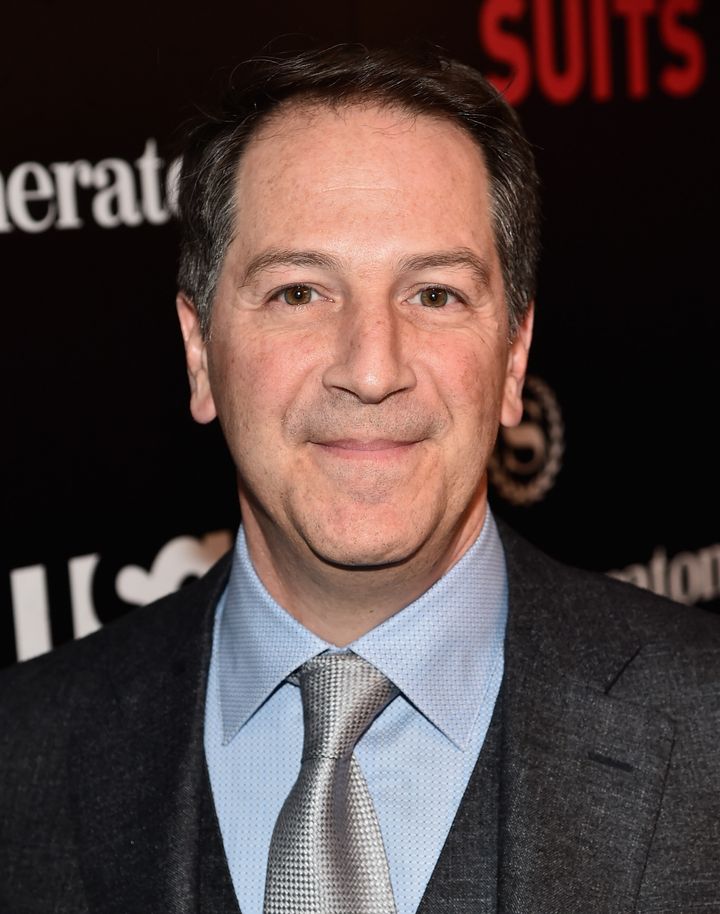
Suits creator Aaron Korsh has claimed he was “irritated” by the Royal Family’s supposed interventions when it came to Meghan Markle’s character after she began dating Prince Harry.
The Duchess of Sussex was still playing Rachel Zane in the US drama when she met her future husband, and her character was eventually written out of the show in the lead-up to their wedding.
Advertisement
Prior to that, however, Aaron has alleged that the Royal Family “weighed in on some stuff” to do with Meghan’s character, which left him rather displeased.
He told The Hollywood Reporter: “I will say, and I think Harry put this in the book, because I heard people talking about it — [the royal family] weighed in on some stuff.
“Not many things, by the way, but a few things that we wanted to do and couldn’t do, and it was a little irritating.”
Aaron went on to say that one particular grievance was related to the term “poppycock”, which he’d planned to have Meghan’s character say as a nod to his in-laws, who use the term regularly.
Advertisement

USA Network via Getty Images
“The Royal Family did not want her saying the word,” the producer and writer claimed. “They didn’t want to put the word ‘poppycock’ in her mouth. I presume because they didn’t want people cutting things together of her saying ‘cock’.”
Interestingly, Aaron said the term was then changed to “bullshit” in the script, adding: “There was maybe one or two more things, but I can’t remember.”
Asked how the Royal Family got their hands on the script in the first place, Aaron said: “I don’t know how they got ’em. I was aware that they were reading them because I got the feedback, but I don’t remember the process by which they got them.”
Alberto E. Rodriguez via Getty Images
Advertisement
Buckingham Palace had no comment when contacted by HuffPost UK. We have also contacted representatives for the Duchess of Sussex.
Prince Harry previously wrote about Meghan leaving Suits – and the alleged royal interference that preceded it – in his book Spare, which was released at the beginning of this year.
“Meg packed up her house, gave up her role in Suits. After seven seasons,” he wrote.
“A difficult moment for her, because she loved that show, loved the character she was playing, loved her cast and crew – loved Canada.
“On the other hand life there had become untenable. Especially on set. The show writers were frustrated because they were often advised by the Palace comms team to change lines of dialogue, what her character would do, how she would act.”
Harry and Meghan’s wedding in 2018 was attended by a number of her former Suits co-stars, who have also publicly jumped to her defence on several occasions since.
Advertisement



Former New Jersey Governor Chris Christie boasted that he’s living “rent-free” inside Donald Trump’s head after the former president launched another attack on him.
Trump on Tuesday fired off a rant on his Truth Social website saying Christie “SHOULD DROP OUT OF THE RACE.”
Advertisement
Christie, one of a number of candidates running against Trump for the Republican presidential nomination, said that won’t happen.
“He only wishes I was going away,” Christie said, saying Trump was “obviously” watching as he criticised the former president on TV when he posted that message.
“I was laying out the truth about him,” Christie said, saying the “one thing he cannot stand” is when someone credible calls him out.
“He knows I’m not just some politician talking about his problems. I’m someone who’s done it, and done it well,” Christie said, noting his 130 wins and zero losses in prosecuting political corruption cases when he was a U.S. attorney.
Advertisement
“I know how deep his problems are, and how much they’re damaging both the Republican Party and the country,” Christie said. “I’m not getting out this race. Maybe he should think about getting out of the race since he’ll be spending most of March and half of April in a courtroom in Washington, DC.”
That’s a reference to the March 4 start of Trump’s election interference trial, one of four criminal cases against the former president.
Christie is polling in the low-to-mid single digits, far behind Trump and behind a number of other candidates such as Florida Gov. Ron DeSantis, political newcomer Vivek Ramaswamy and former United States Ambassador Nikki Haley.
Yet the former president seems to devote outsized attention to Christie, frequently responding to his TV appearances by attacking him on social media despite the fact that the two were once close allies.
In 2016, Christie became one of the first prominent Republicans to endorse Trump, and remained a loyal insider for the duration of Trump’s presidency, but turned into a critic afterward.
Advertisement
See his full conversation with CNN’s Kaitlan Collins below:


Thousands of Russian troops are refusing to return to the frontline in Ukraine as their morale plummets, according to the UK.
Two soldiers were last week sentenced to serve at least two years in a penal colony after being convicted of disobeying orders to fight.
Advertisement
The Ministry of Defence (MoD) said it was reported last month that nearly 100 Russian soldiers a week after being convicted for refusing to go into battle as the war drags on.
“If this trend continues, there will be approximately 5,200 convictions a year for refusing to fight,” the MoD’s latest intelligence update said.
“The high rate of convictions demonstrates the poor state of morale in the Russian Army and the reluctance of some elements to fight.”
The MoD said that was a result of a “lack of training, motivation and high stress situations” faced by Russian forces in the war.
Advertisement
They added: “Although some soldiers have refused to fight and attrition rates remain high, Russia highly likely mitigates their loss by committing a mass of poorly trained soldiers to the frontline.”
It emerged yesterday that Russia is failing to hit its army recruitment targets despite a massive rise in forces’ pay.
Russia is estimated to have suffered more than 200,000 casualties so far in the Ukraine war.
The MoD revealed last month that up to half of Russian fatalities in the war could also have been prevented “with proper first aid”, while crude battlefield medical treatment is causing a huge number of preventable fatalities and amputations.
Meanwhile, at least half of the elite 30,000 Russian paratroopers deployed to Ukraine have probably been killed or wounded.
Advertisement


Astronomers have uncovered a link between Neptune’s shifting cloud abundance and the 11-year solar cycle, in which the waxing and waning of the Sun’s entangled magnetic fields drives solar activity.
This discovery is based on three decades of Neptune observations captured by NASA’s Hubble Space Telescope and the W. M. Keck Observatory in Hawaii, as well as data from the Lick Observatory in California.
The link between Neptune and solar activity is surprising to planetary scientists because Neptune is our solar system’s farthest major planet and receives sunlight with about 0.1% of the intensity Earth receives. Yet Neptune’s global cloudy weather seems to be driven by solar activity, and not the planet’s four seasons, which each last approximately 40 years.
At present, the cloud coverage seen on Neptune is extremely low, with the exception of some clouds hovering over the giant planet’s south pole. A University of California (UC) Berkeley-led team of astronomers discovered that the abundance of clouds normally seen at the icy giant’s mid-latitudes started to fade in 2019.
“I was surprised by how quickly clouds disappeared on Neptune,” said Imke de Pater, emeritus professor of astronomy at UC Berkeley and senior author of the study. “We essentially saw cloud activity drop within a few months,” she said.
“Even now, four years later, the most recent images we took this past June still show the clouds haven’t returned to their former levels,” said Erandi Chavez, a graduate student at the Center for Astrophysics | Harvard-Smithsonian (CfA) in Cambridge, Massachusetts, who led the study when she was an undergraduate astronomy student at UC Berkeley. “This is extremely exciting and unexpected, especially since Neptune’s previous period of low cloud activity was not nearly as dramatic and prolonged.”
To monitor the evolution of Neptune’s appearance, Chavez and her team analyzed Keck Observatory images taken from 2002 to 2022, the Hubble Space Telescope archival observations beginning in 1994, and data from the Lick Observatory in California from 2018 to 2019.
advertisement
In recent years, the Keck observations have been complemented by images taken as part of the Twilight Zone program and by Hubble’s Outer Planet Atmospheres Legacy (OPAL) program.
The images reveal an intriguing pattern between seasonal changes in Neptune’s cloud cover and the solar cycle — the period when the Sun’s magnetic field flips every 11 years as it becomes more tangled like a ball of yarn. This is evident in the increasing number of sunspots and increasing solar flare activity. As the cycle progresses, the Sun’s tempestuous behavior builds to a maximum, until the magnetic field beaks down and reverses polarity. Then the Sun settles back down to a minimum, only to start another cycle.
When it’s stormy weather on the Sun, more intense ultraviolet (UV) radiation floods the solar system. The team found that two years after the solar cycle’s peak, an increasing number of clouds appear on Neptune. The team further found a positive correlation between the number of clouds and the ice giant’s brightness from the sunlight reflecting off it.
“These remarkable data give us the strongest evidence yet that Neptune’s cloud cover correlates with the Sun’s cycle,” said de Pater. “Our findings support the theory that the Sun’s UV rays, when strong enough, may be triggering a photochemical reaction that produces Neptune’s clouds.”
Scientists discovered the connection between the solar cycle and Neptune’s cloudy weather pattern by looking at 2.5 cycles of cloud activity recorded over the 29-year span of Neptunian observations. During this time, the planet’s reflectivity increased in 2002 then dimmed in 2007. Neptune became bright again in 2015, then darkened in 2020 to the lowest level ever observed, which is when most of the clouds went away.
The changes in Neptune’s brightness caused by the Sun appear to go up and down relatively in sync with the coming and going of clouds on the planet. However there is a two-year time lag between the peak of the solar cycle and the abundance of clouds seen on Neptune. The chemical changes are caused by photochemistry, which happens high in Neptune’s upper atmosphere and takes time to form clouds.
advertisement
“It’s fascinating to be able to use telescopes on Earth to study the climate of a world more than 2.5 billion miles away from us,” said Carlos Alvarez, staff astronomer at Keck Observatory and co-author of the study. “Advances in technology and observations have enabled us to constrain Neptune’s atmospheric models, which are key to understanding the correlation between the ice giant’s climate and the solar cycle.”
However, more work is necessary. For example, while an increase in UV sunlight could produce more clouds and haze, it could also darken them, thereby reducing Neptune’s overall brightness. Storms on Neptune rising up from the deep atmosphere affect the cloud cover, but are not related to photochemically produced clouds, and hence may complicate correlation studies with the solar cycle. Continued observations of Neptune are also needed to see how long the current near-absence of clouds will last.
The research team continues to track Neptune’s cloud activity. “We have seen more clouds in the most recent Keck images that were taken during the same time NASA’s James Webb Space Telescope observed the planet; these clouds were in particular seen at northern latitudes and at high altitudes, as expected from the observed increase in the solar UV flux over the past approximately 2 years,” said de Pater.
The combined data from Hubble, the Webb Space Telescope, Keck Observatory, and the Lick Observatory will enable further investigations into the physics and chemistry that lead to Neptune’s dynamic appearance, which in turn may help deepen astronomers’ understanding not only of Neptune, but also of exoplanets, since many of the planets beyond our solar system are thought to have Neptune-like qualities.

Researchers at the Babraham Institute are proposing an alternative link between diet and ageing based on studies in yeast. Dr Jon Houseley and his team have published their experiments, showing that healthy ageing is achievable through dietary change without restriction by potentially optimising diet, and that ill-health is not an inevitable part of the ageing process.
Scientists have long known that caloric restriction — intentionally consuming far less calories than normal without becoming malnourished — improves health in later life and may even extend life. However, studies in mice show that caloric restriction really needs to be maintained throughout life to achieve this impact, and the health benefits disappear when a normal diet is resumed. Dr Houseley’s new research conducted in yeast suggests an alternative to calorie restriction can lead to improved health through the lifecycle.
“We show that diet in early life can switch yeast onto a healthier trajectory. By giving yeast a different diet without restricting calories we were able to suppress senescence, when cells no longer divide, and loss of fitness in aged cells.” Said Dr Dorottya Horkai, lead researcher on the study.
Rather than growing yeast on their usual glucose-rich diet, the researchers swapped their diet to galactose and observed that many molecular changes which normally accompany ageing did not occur. The cells grown on galactose remained just as fit as young cells even late in life, despite not living any longer, showing that the period of ill-health towards the end of life was dramatically reduced.
“Crucially, the dietary change only works when cells are young, and actually diet makes little difference in old yeast. It is hard to translate what youth means between yeast and humans, but all these studies point to the same trend — to live a long and healthy life, a healthy diet from an early age makes a difference.” explains Dr Houseley.
Yeast are good model organisms for studying ageing as they share many of the same cellular machinery as animals and humans. This avenue of research in yeast helps us to seek a more achievable way to improve healthy ageing though diet compared to sustained and severe calorie restriction, although more research is needed.
